Gorilla Documentaries and Filming Safaris in Uganda & Rwanda
Gorilla Documentaries and Filming Safaris in Uganda and Rwanda represent the highest level of wildlife storytelling in Africa. For decades, filmmakers, conservationists, broadcasters, and production crews have traveled to this region to produce some of the world’s most powerful mountain gorilla footage. If you are planning Gorilla Documentaries and Filming Safaris, there is no other destination on earth with the same concentration of habituated mountain gorillas, ecological diversity and conservation structure as southwestern Uganda and northern Rwanda.
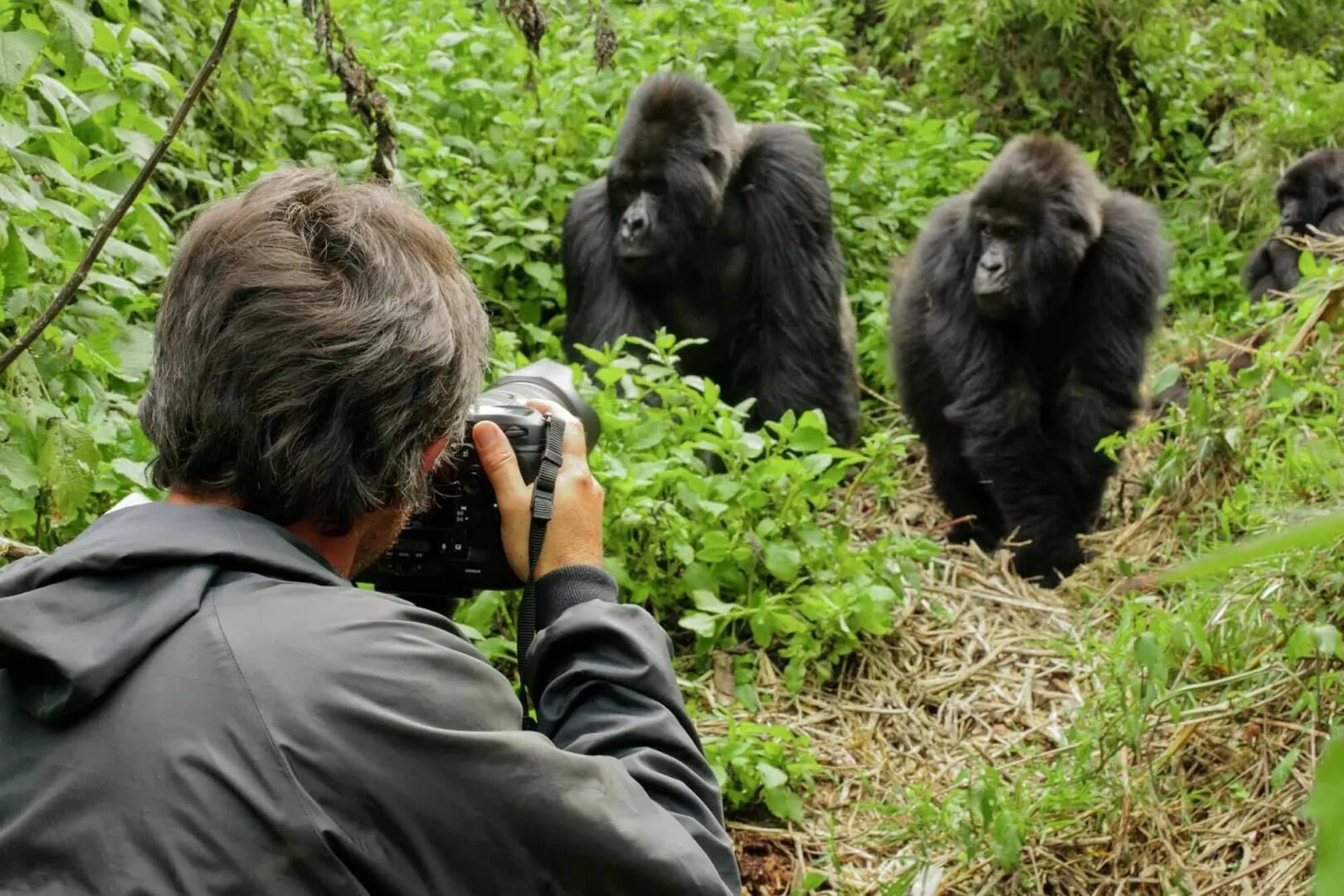
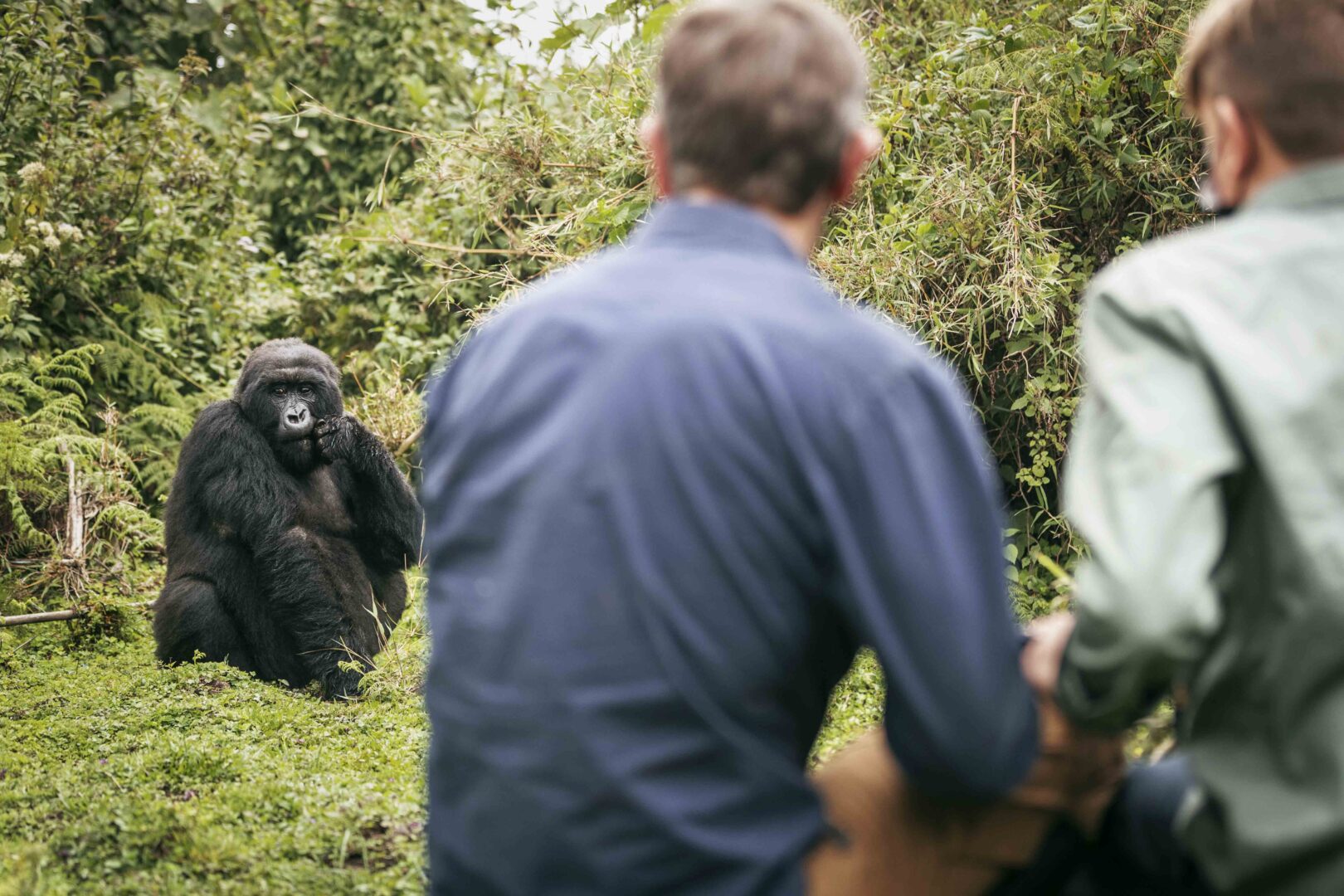
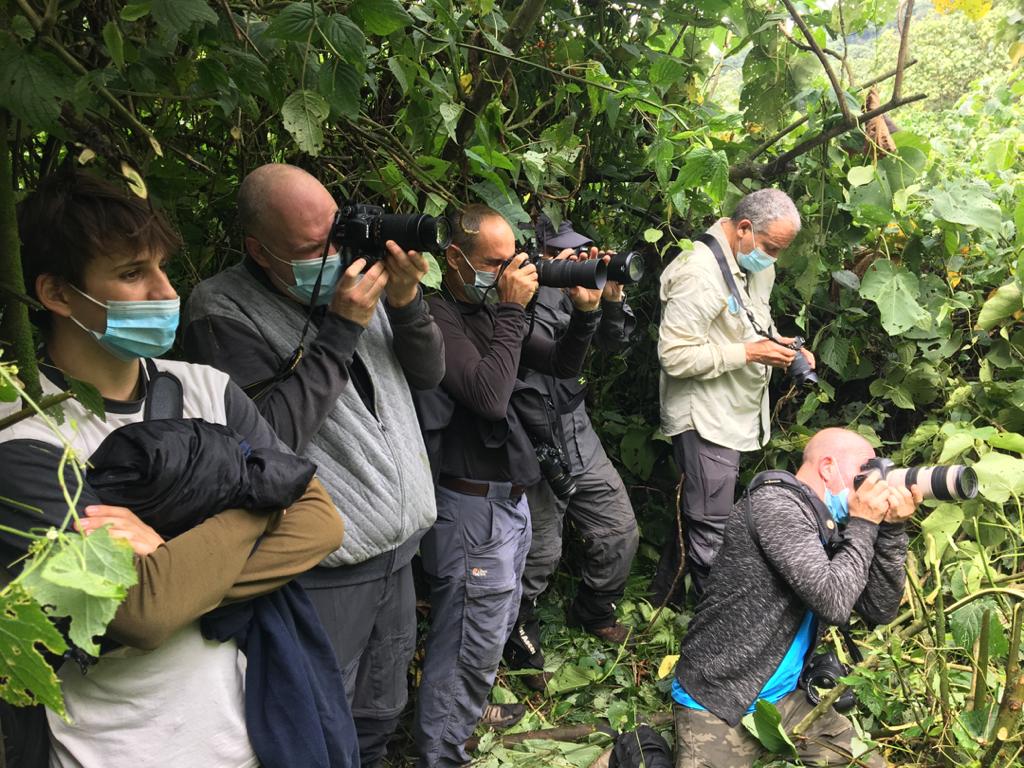
Uganda and Rwanda are widely regarded as the global epicenter for Gorilla Documentaries and Filming Safaris because they protect the majority of the world’s remaining mountain gorilla population within accessible and well-managed national parks. In Uganda, filming takes place primarily in Bwindi Impenetrable National Park and Mgahinga Gorilla National Park. In Rwanda, production teams operate within Volcanoes National Park. These protected areas form part of the greater Virunga–Bwindi ecosystem, one of the most biologically significant primate habitats on the planet.
The opportunity to conduct Gorilla Documentaries and Filming Safaris in this region is made possible by decades of structured habituation programs, conservation monitoring, and strict filming regulations that protect gorilla families while allowing controlled media access. Unlike general gorilla trekking tours, filming safaris require specialized permits, equipment clearance, ranger supervision, and careful logistical coordination.
Bwindi Impenetrable National Park offers dense, ancient rainforest backdrops ideal for immersive documentary scenes. The thick canopy, filtered light, and layered vegetation create cinematic depth for professional wildlife filming. Mgahinga Gorilla National Park provides dramatic volcanic landscapes with sweeping slopes and high-altitude vistas, adding geographic contrast to production footage. Volcanoes National Park in Rwanda combines bamboo forests and volcanic terrain, offering both accessibility and visual scale that appeals to large-scale production teams planning Gorilla Documentaries and Filming Safaris.
Uganda and Rwanda also maintain structured wildlife authority systems that regulate media activity to protect endangered species. This regulatory framework ensures that Gorilla Documentaries and Filming Safaris operate ethically, sustainably and with minimal disruption to gorilla behavior. Filming time is controlled, crew size may be limited, and equipment such as drones requires special authorization.
At Nextgen Safaris, we specialize in coordinating Gorilla Documentaries and Filming Safaris for international production companies, conservation organizations, photographers, and media professionals. As licensed cross-border safari operators in Uganda with established working relationships across Rwanda, we manage filming permits, park approvals, crew logistics, equipment transport, border documentation and secure accommodation in proximity to filming zones.
Professional wildlife filming in this region is not simply a tourism activity; it is a conservation partnership. Conducting Gorilla Documentaries and Filming Safaris requires experience in navigating wildlife authority requirements, scheduling around habituated gorilla groups, and aligning production timelines with environmental conditions such as dry seasons and forest visibility.
For documentary producers, wildlife networks, YouTube conservation creators, and photography expedition leaders, Uganda and Rwanda remain the most stable and productive destinations for mountain gorilla filming in Africa. With proper planning and licensed coordination, Gorilla Documentaries and Filming Safaris in these countries can yield rare behavioral footage, intimate family interactions, and globally significant conservation storytelling.
In this guide, we will explore permits, filming regulations, best parks for production, drone restrictions, logistical support, and how to structure professional Gorilla Documentaries and Filming Safaris in Uganda and Rwanda responsibly and effectively.
Why Uganda & Rwanda Are the World’s Best Locations for Gorilla Documentaries and Filming Safaris
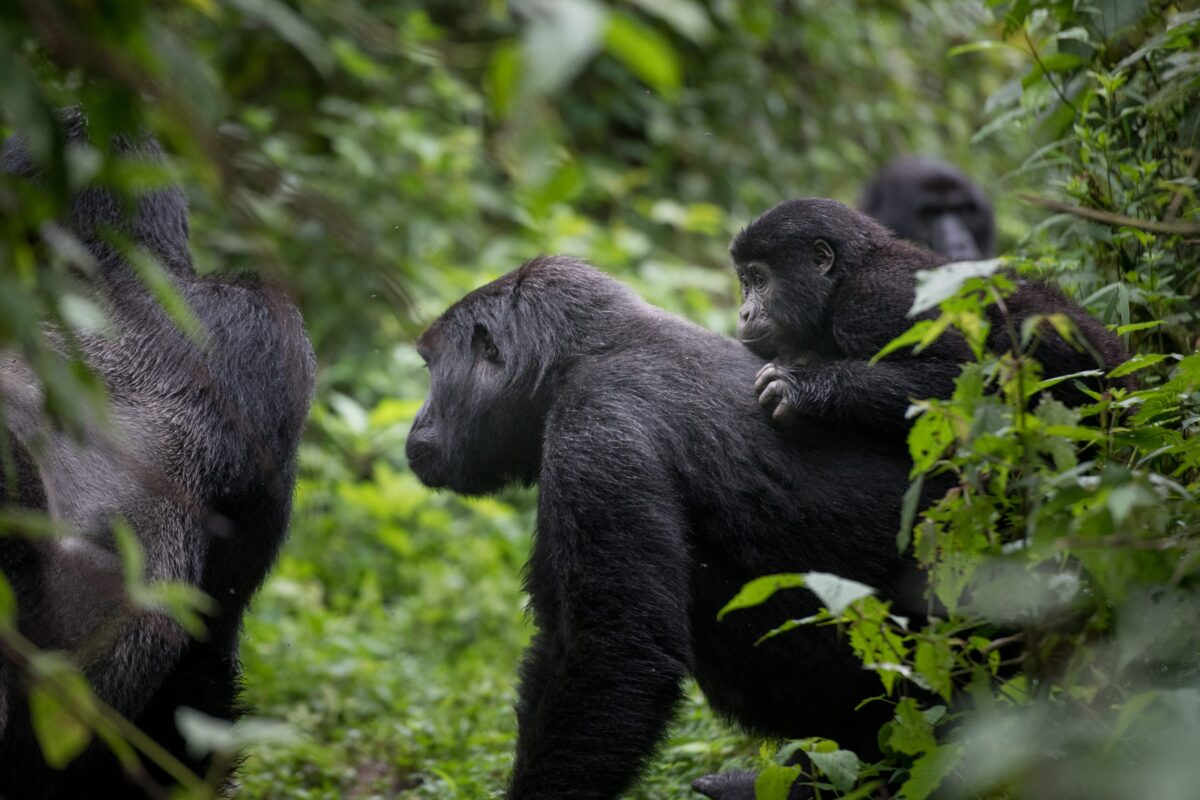
When it comes to Gorilla Documentaries and Filming Safaris, Uganda and Rwanda stand in a category of their own. Nowhere else in the world offers the same concentration of mountain gorillas, structured habituation programs, conservation stability, and controlled filming access within such visually diverse landscapes. For production teams seeking rare primate footage, these two countries represent the global epicenter of mountain gorilla storytelling.
Mountain Gorilla Population Concentration
Uganda and Rwanda together protect the majority of the world’s remaining mountain gorillas. The highest density of habituated groups is found in Bwindi Impenetrable National Park, which alone holds nearly half of the global mountain gorilla population. Rwanda’s Volcanoes National Park forms part of the greater Virunga ecosystem, another critical stronghold.
This concentration matters for Gorilla Documentaries and Filming Safaris because it increases the probability of stable group access, diverse family structures, and long-term monitoring continuity. Production teams are not entering isolated territories; they are working within one of the most intensively protected primate ecosystems in Africa.
Habituated Gorilla Families
Successful Gorilla Documentaries and Filming Safaris depend on habituated gorilla families—groups that have undergone years of gradual human exposure under strict conservation guidelines. Both Uganda and Rwanda have invested decades in habituation programs that allow controlled human presence without disrupting natural behavior.
In Bwindi, multiple sectors host habituated families, each with unique social structures and dominant silverbacks. Rwanda’s Volcanoes National Park offers additional habituated groups in bamboo and volcanic terrain. In southwestern Uganda, Mgahinga Gorilla National Park provides a more intimate filming environment with fewer groups but dramatic high-altitude settings.
For documentary filmmakers, this diversity of habituated families enhances narrative depth. It allows crews to compare group dynamics, observe feeding patterns, and capture authentic interactions under professional ranger supervision.
Conservation Stability and Long-Term Protection
Mountain gorillas remain critically endangered, and filming requires operating in politically and environmentally stable environments. Uganda and Rwanda have demonstrated consistent conservation leadership, strong anti-poaching enforcement, and regulated tourism systems.
For Gorilla Documentaries and Filming Safaris, conservation stability translates into predictable access, structured permit systems, and long-term research data. Wildlife authorities maintain detailed records of gorilla groups, movements, and health conditions. This scientific foundation supports responsible media production while safeguarding the species.
Filming in unstable or unregulated environments increases ethical and logistical risk. Uganda and Rwanda provide structured frameworks that allow professional crews to operate responsibly.
Film-Friendly Wildlife Authorities
Another reason Uganda and Rwanda lead in Gorilla Documentaries and Filming Safaris is the existence of formal filming permit systems. Wildlife authorities have established clear processes for documentary production, including special filming permits, equipment approval, ranger accompaniment, and ethical guidelines.
Filming is not treated as casual tourism. It is regulated as a conservation-sensitive activity. Production teams receive guidance on:
- Group proximity rules
- Equipment positioning
- Time allocation
- Sound recording considerations
- Health protocols to protect gorillas
This structured environment ensures that Gorilla Documentaries and Filming Safaris can be conducted professionally while maintaining conservation integrity.
Landscape Diversity for Cinematic Storytelling
Uganda and Rwanda offer exceptional geographic diversity within a relatively compact region. For filmmakers, this variety allows visual contrast without relocating to different continents.
Bwindi Impenetrable National Park provides dense equatorial rainforest with layered canopy, filtered light, and immersive jungle textures ideal for intimate behavioral sequences. Mgahinga offers volcanic ridges and open slopes that frame gorillas against sweeping mountain backdrops. Volcanoes National Park combines bamboo forests, mist-covered peaks, and high-altitude terrain that creates dramatic cinematic scale.
This range of environments makes Gorilla Documentaries and Filming Safaris in Uganda and Rwanda uniquely versatile. Within a single cross-border production schedule, filmmakers can capture rainforest depth, volcanic drama, and community conservation context.
The Global Filming Epicenter
When considering mountain gorilla storytelling at a global level, no other region matches the combination of population density, habituation history, conservation governance, and visual diversity found in Uganda and Rwanda.
For production companies seeking high-quality primate footage, conservation NGOs documenting field operations, or broadcasters developing wildlife series, Gorilla Documentaries and Filming Safaris in these countries provide unmatched access within ethically regulated frameworks.
The ecosystem is not only biologically significant—it is structurally prepared for responsible, professional wildlife filmmaking.
Permits Required for Gorilla Documentaries and Filming Safaris
Conducting Gorilla Documentaries and Filming Safaris in Uganda and Rwanda is very different from booking a standard gorilla trekking experience. Filming mountain gorillas is a regulated conservation activity, not a casual tourism add-on. Production teams must secure the correct permits, approvals, and operational clearances before entering the forest with professional equipment.
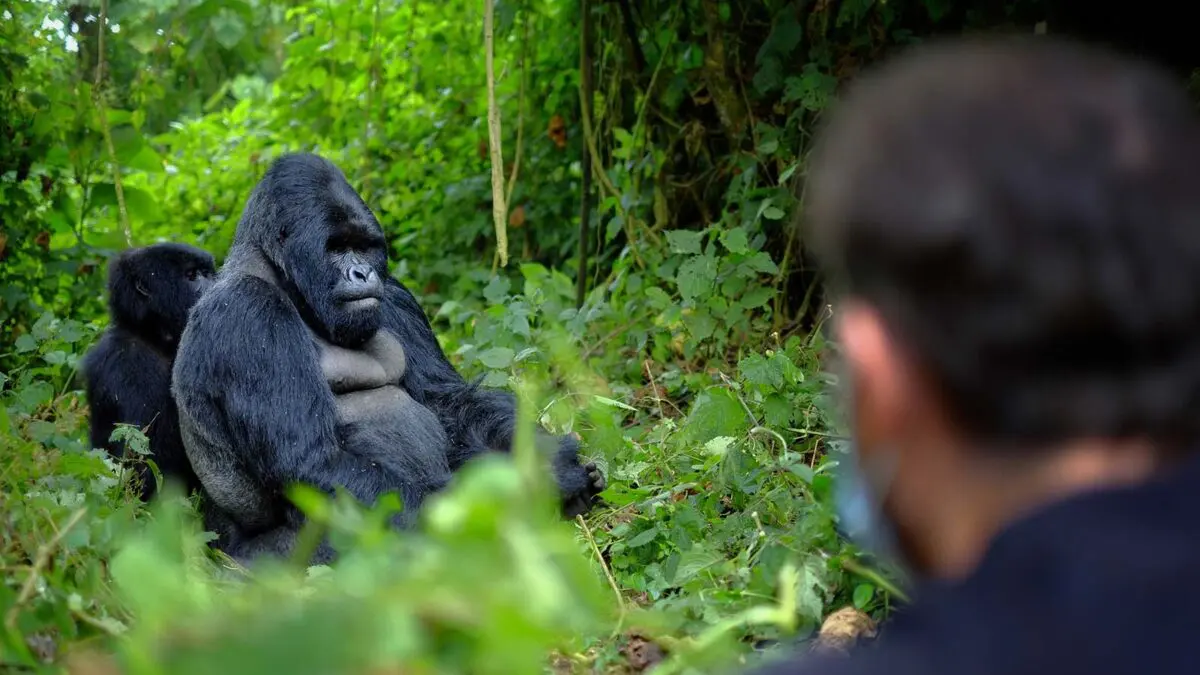
Understanding the full permit structure is essential for any serious documentary crew planning Gorilla Documentaries and Filming Safaris in East Africa.
Standard Trekking Permit vs Filming Permit
A standard gorilla trekking permit allows one hour with a habituated gorilla family for tourism purposes. This permit is designed for individual travelers and small groups and does not automatically grant filming rights for commercial production.
For Gorilla Documentaries and Filming Safaris, production teams typically require more than a standard trekking permit. Wildlife authorities distinguish between:
- Tourism photography (personal use)
- Commercial filming (broadcast, documentary, YouTube monetization, streaming platforms)
- Professional media production with advanced equipment
If filming content is intended for commercial release, monetization, broadcast distribution or public exhibition, a special filming authorization is required in addition to standard trekking access.
Failure to declare commercial filming intentions can result in penalties, equipment confiscation, or denied park access.
Special Filming Authorization
For professional Gorilla Documentaries and Filming Safaris, production teams must apply for a dedicated filming permit from the relevant wildlife authority.
In Uganda, applications are submitted through the wildlife authority responsible for Bwindi Impenetrable National Park and Mgahinga Gorilla National Park. In Rwanda, filming approvals are processed through the governing authority for Volcanoes National Park.
The application process generally requires:
- Production proposal outlining objectives
- Intended distribution platform
- Crew size details
- Equipment list
- Filming duration request
- Dates and location plans
Approval timelines vary depending on production scale. Larger crews or international broadcasters may require additional government-level review.
Planning well in advance is critical for successful Gorilla Documentaries and Filming Safaris.
Equipment Approval
All professional equipment must be declared in advance. This includes:
- Cinema cameras
- Stabilization rigs
- Audio recording systems
- Long telephoto lenses
- Lighting equipment
- Satellite communication devices
Wildlife authorities evaluate whether equipment poses any disturbance risk to gorillas. Artificial lighting is typically restricted, and flash photography is prohibited.
Sound recording presents unique challenges in rainforest environments. Production teams must ensure that boom microphones and recording devices do not violate minimum distance regulations.
Proper equipment disclosure is a non-negotiable component of legal Gorilla Documentaries and Filming Safaris.
Drone Restrictions
Drone use in gorilla habitats is highly restricted and often prohibited. Gorillas are sensitive to unfamiliar aerial noise, and drones can cause stress or behavioral disturbance.
In most cases, drone filming within gorilla trekking zones requires:
- Special government authorization
- Environmental impact assessment
- High-level conservation approval
Unauthorized drone use can result in immediate penalties or revocation of filming rights.
For most Gorilla Documentaries and Filming Safaris, ground-based filming remains the standard and safest approach. If aerial footage is required, separate scenic permits may be arranged outside core gorilla interaction zones.
Ranger Supervision and Conservation Protocols
All Gorilla Documentaries and Filming Safaris operate under ranger supervision. Rangers and trackers accompany filming crews to ensure compliance with:
- Minimum 7-meter distance rules
- Time allocation limits
- Health protocols (including mask requirements where applicable)
- Group movement coordination
Unlike standard tourist treks, filming groups may require more precise positioning and extended coordination. However, conservation guidelines remain strict and non-negotiable.
Filming teams must adhere to instructions from park authorities at all times. Gorillas remain priority subjects of protection, not production assets.
Fees Structure for Gorilla Filming
The cost structure for Gorilla Documentaries and Filming Safaris depends on several factors:
- Country of operation (Uganda or Rwanda)
- Crew size
- Duration of filming
- Nature of production (independent, NGO, broadcaster, commercial brand)
- Equipment category
Fees typically include:
- Gorilla access permits
- Filming authorization fees
- Daily park entry charges
- Ranger supervision costs
- Media clearance documentation
Large-scale international productions may also incur government filming licenses beyond park-level approval.
Because fee structures are periodically updated, professional coordination with a licensed safari operator is essential to obtain accurate budgeting before production.
Why Proper Permit Planning Matters
Mountain gorillas are critically endangered, and their protection remains the primary objective of park authorities. The permit structure exists to balance conservation with responsible media access.
Attempting informal filming or undeclared commercial recording risks not only legal consequences but also long-term conservation trust.
Serious Gorilla Documentaries and Filming Safaris require structured planning, transparent communication, and strict adherence to wildlife authority regulations.
At Nextgen Safaris, we coordinate filming permit applications, liaise with wildlife authorities, manage equipment declarations, and ensure ranger-supervised compliance for professional productions operating in both Uganda and Rwanda.
Fees Structure for Gorilla Documentaries and Filming Safaris – Uganda vs Rwanda
When budgeting for Gorilla Documentaries and Filming Safaris, understanding the country-specific fee structure is critical. Uganda and Rwanda both protect mountain gorillas under strict conservation frameworks, but their filming permit systems and pricing models differ. The final cost depends on production scale, duration, crew size, and intended distribution platform.
Below is a realistic breakdown of how fees are structured in each country.
Uganda – Filming Fees Structure
In Uganda, Gorilla Documentaries and Filming Safaris operate under the authority responsible for national parks such as Bwindi Impenetrable National Park and Mgahinga Gorilla National Park.
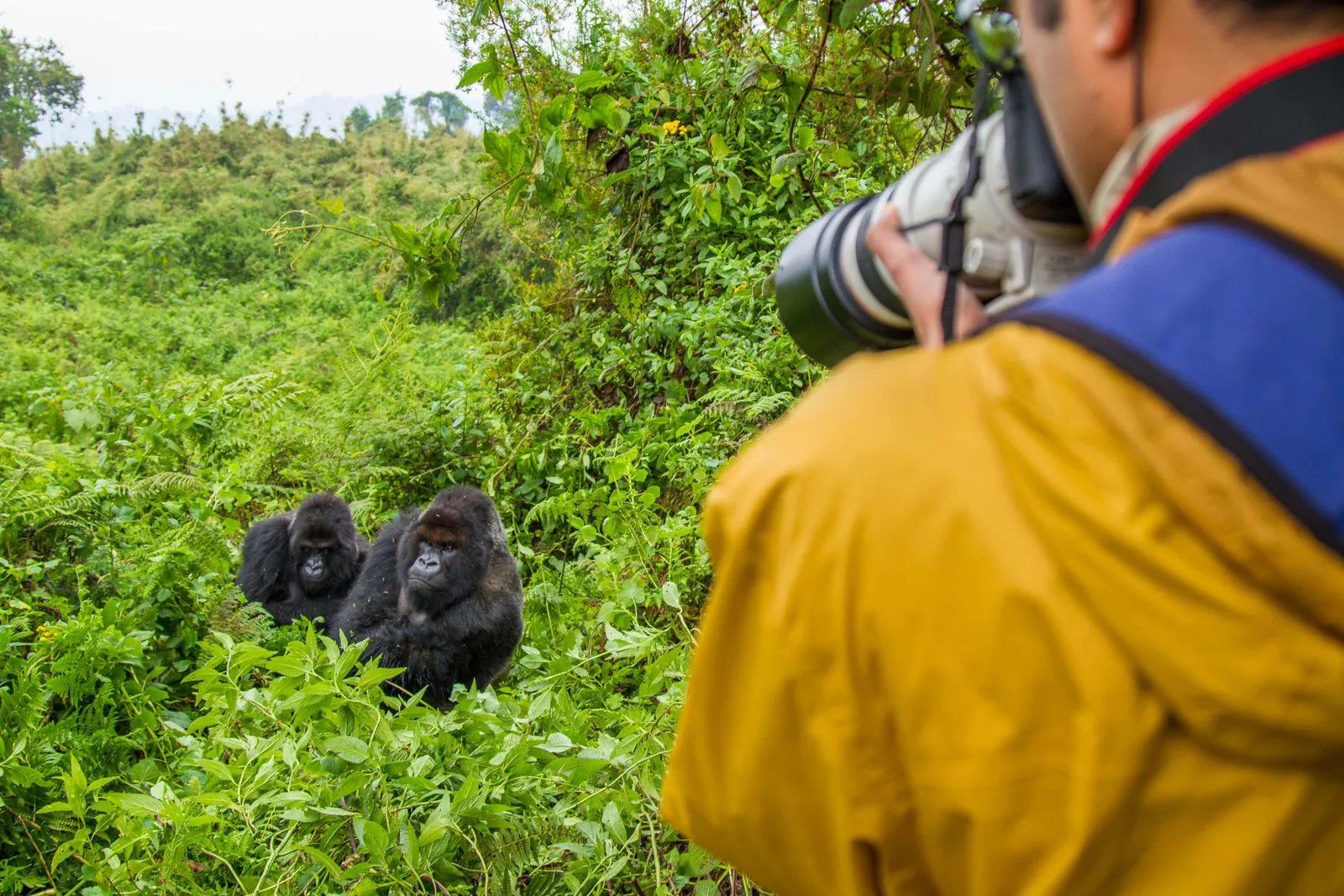
1. Gorilla Access Permit
Every crew member entering the gorilla trekking zone must hold a valid gorilla permit. For foreign non-residents, the standard permit is typically around USD 800 per person (subject to official updates).
For filming productions, this permit alone is not sufficient for commercial recording. It grants physical access to a habituated gorilla family but does not authorize professional filming.
2. Commercial Filming Permit
For Gorilla Documentaries and Filming Safaris, Uganda requires an additional filming authorization. Fees vary depending on:
- Nature of the production (NGO, educational, commercial broadcaster, private brand)
- Distribution scale (local vs international broadcast)
- Duration of filming days
- Number of crew members
Filming permits are often charged on a per-day basis. Larger international productions typically incur higher daily filming fees compared to small conservation-focused projects.
In some cases, authorities may request detailed production budgets before determining the final permit cost.
3. Crew Size and Ranger Supervision
Each filming group is assigned ranger supervision. Additional ranger or guide costs may apply depending on crew size. The more personnel entering the forest, the higher the supervision requirement.
Uganda enforces strict distance rules and health protocols during Gorilla Documentaries and Filming Safaris, and supervision fees reflect conservation monitoring obligations.
4. Equipment Declaration Fees
High-end cinema equipment, long telephoto lenses, satellite uplinks, or specialized recording devices may require declared equipment clearance. In some cases, additional equipment-related fees may apply.
Drone filming within gorilla zones is generally prohibited without high-level authorization.
5. Government Media Accreditation
For international productions, separate media accreditation through Uganda’s national media authority may be required. This is distinct from park-level filming permission and can involve additional administrative costs.
Rwanda – Filming Fees Structure
In Rwanda, Gorilla Documentaries and Filming Safaris operate under the authority responsible for Volcanoes National Park.
Rwanda positions itself as a premium conservation destination, and its permit structure reflects that strategy.
1. Gorilla Access Permit
The standard gorilla trekking permit in Rwanda is typically USD 1,500 per person per trek (subject to updates). For filming productions, every crew member entering the gorilla zone must hold this permit.
Because Rwanda’s permit pricing is higher than Uganda’s, overall production budgets may increase when operating in Volcanoes National Park.
2. Commercial Filming Authorization
In addition to the trekking permit, Rwanda requires formal filming authorization for professional productions. The filming fee structure depends on:
- Production category (documentary, commercial, feature film, NGO)
- International distribution plans
- Number of filming days
- Equipment complexity
Rwanda often applies premium pricing to commercial filming projects, especially for large-scale international networks or streaming platforms.
3. Equipment and Drone Regulation
Equipment declaration is mandatory for Gorilla Documentaries and Filming Safaris in Rwanda. Authorities carefully review filming gear to ensure no disturbance to gorillas.
Drone use in or near Volcanoes National Park requires high-level government approval and is rarely granted for gorilla proximity filming. Unauthorized drone usage results in severe penalties.
4. Government-Level Film Permits
Large productions in Rwanda may require national film board clearance in addition to park permits. This is particularly true for international broadcasters and feature-length productions.
This layered structure reflects Rwanda’s centralized and tightly managed conservation model.
Comparing Uganda and Rwanda for Filming Costs
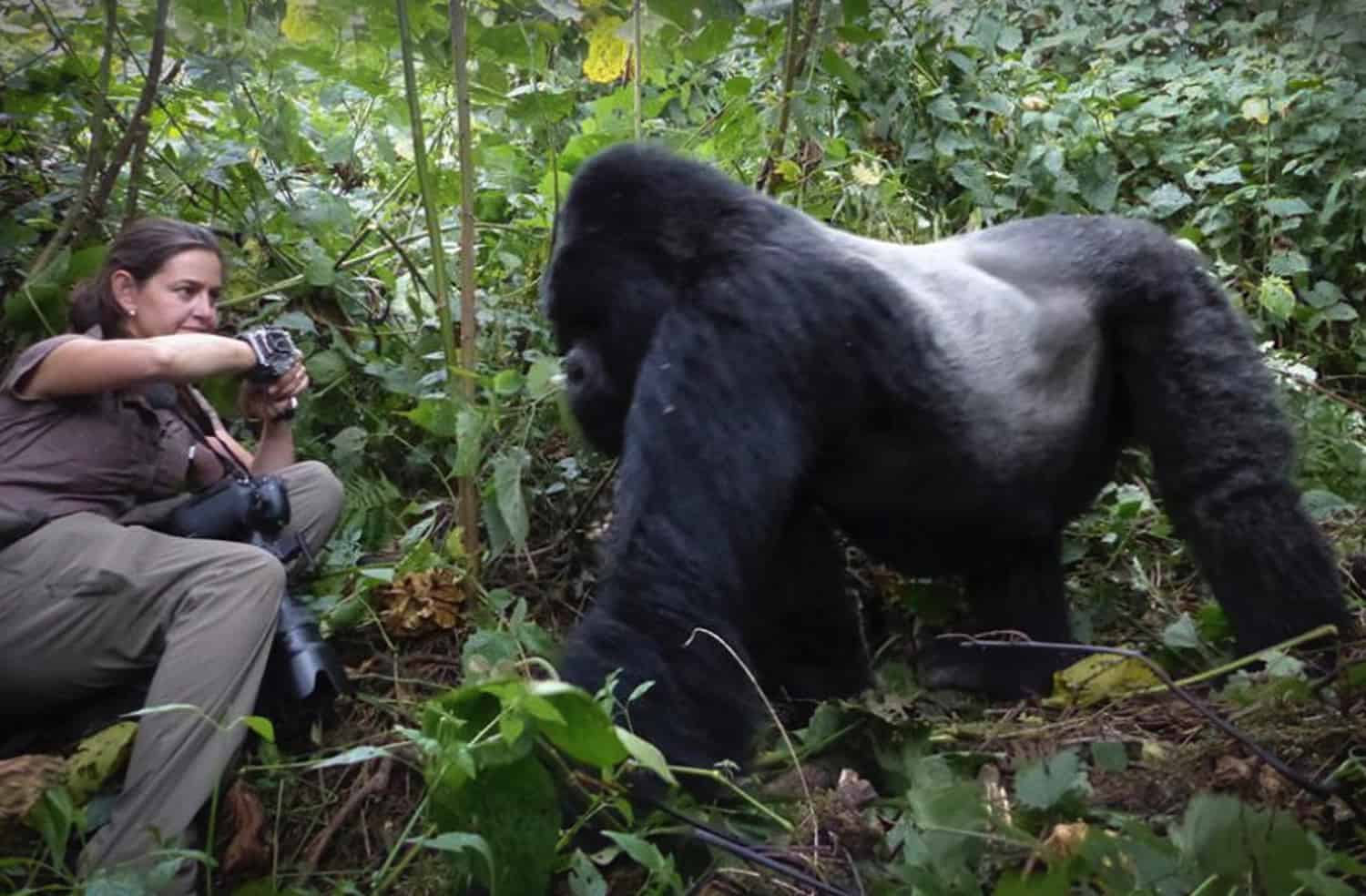
When evaluating Gorilla Documentaries and Filming Safaris, cost differences typically reflect:
- Permit base price (Rwanda higher than Uganda)
- Filming authorization tiers
- Crew size
- Production scale
- Equipment category
Uganda often provides more flexibility for mid-scale documentary teams, NGOs, and conservation productions. Rwanda, while more expensive, offers efficient access due to its shorter transfer distance from Kigali to Volcanoes National Park.
For cross-border productions filming in both countries, permit planning must account for two separate wildlife authorities, two fee structures, and potentially two media accreditation processes.
Why Advance Budget Planning Is Essential
Filming mountain gorillas is not a standard tourism expense. Gorilla Documentaries and Filming Safaris involve conservation-sensitive environments where access is carefully controlled.
Budgets must account for:
- Gorilla permits for each crew member
- Daily filming authorization fees
- Park entry fees
- Ranger supervision
- Government media permits
- Equipment declaration clearance
Attempting to film without proper authorization risks permit cancellation and legal consequences.
At Nextgen Safaris, we coordinate budget forecasting, permit applications, cross-border approvals, and filming logistics to ensure Gorilla Documentaries and Filming Safaris are structured legally, ethically, and efficiently in both Uganda and Rwanda.
Best Parks for Gorilla Documentaries and Filming Safaris
Choosing the right location is one of the most important creative decisions when planning Gorilla Documentaries and Filming Safaris. Uganda and Rwanda each offer distinct filming environments shaped by forest density, terrain, gorilla population distribution, and accessibility. Understanding these differences allows production teams to match storytelling goals with the most suitable landscape.
Below is a detailed breakdown of the three premier filming locations for mountain gorilla productions.
Bwindi Impenetrable National Park – Dense Rainforest Depth
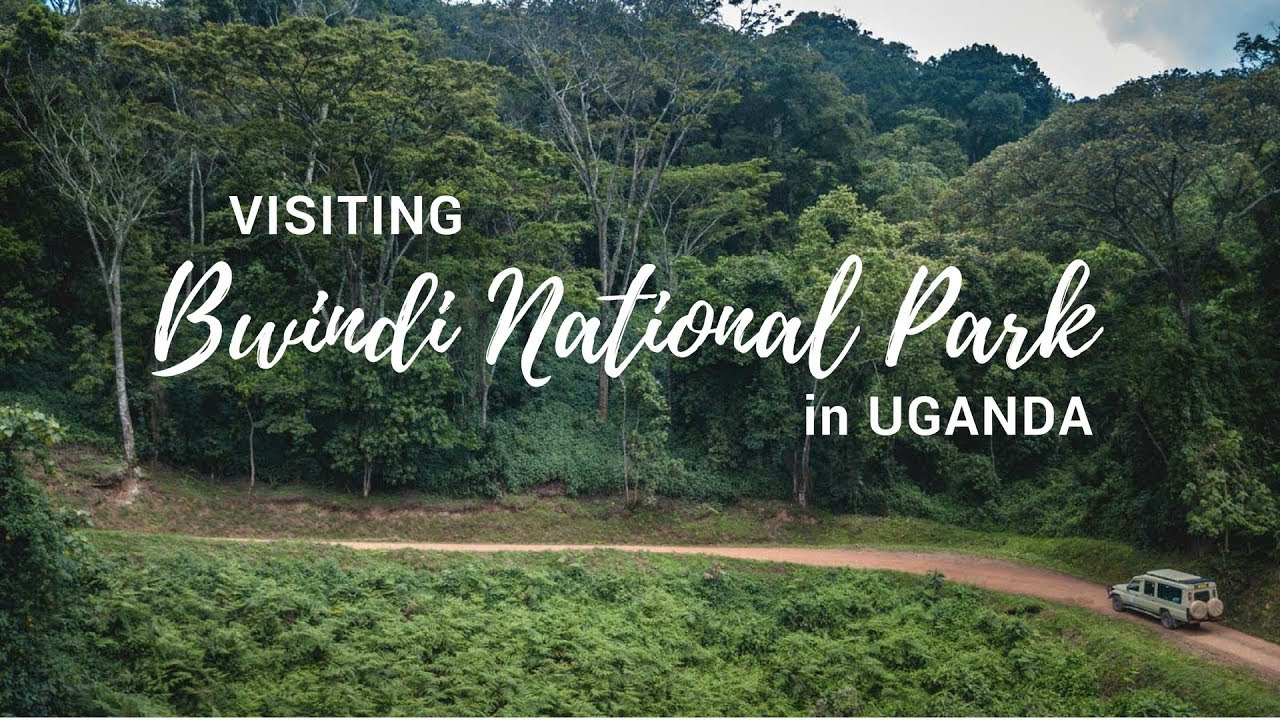
Bwindi Impenetrable National Park is often considered the most immersive and biologically rich setting for Gorilla Documentaries and Filming Safaris. The forest here is ancient, dense, and layered, with thick canopy cover and dramatic vegetation textures.
Forest Type Differences:
Bwindi Impenetrable National Park is a true equatorial rainforest. Towering hardwood trees, hanging vines, moss-covered trunks, and thick undergrowth create cinematic depth. For filmmakers, this provides powerful jungle immersion and atmospheric visuals. The environment feels raw and untouched, which enhances conservation-focused storytelling.
Lighting Conditions:
Because of the dense canopy, lighting in Bwindi Impenetrable National Park is often filtered and diffused. Morning shoots can produce misty, atmospheric scenes. However, low light levels may require high-performance camera equipment and careful exposure management. This makes Bwindi Impenetrable National Park ideal for intimate, close-range behavioral filming rather than wide, open landscape shots.
Gorilla Density:
Bwindi holds nearly half of the world’s mountain gorilla population, making it the most densely populated gorilla habitat globally. Multiple habituated families are spread across different sectors. For Gorilla Documentaries and Filming Safaris, this increases the probability of consistent group access and varied social dynamics.
Accessibility:
Reaching Bwindi requires a longer road transfer from Entebbe or Kampala, though domestic flights to nearby airstrips reduce travel time. The final approach involves mountain roads that demand proper planning. While less immediately accessible than Rwanda, Bwindi rewards productions with unmatched ecological richness.
Bwindi is ideal for documentaries emphasizing conservation, forest ecology, and deep jungle immersion.
Mgahinga Gorilla National Park – Volcanic Drama and Intimacy
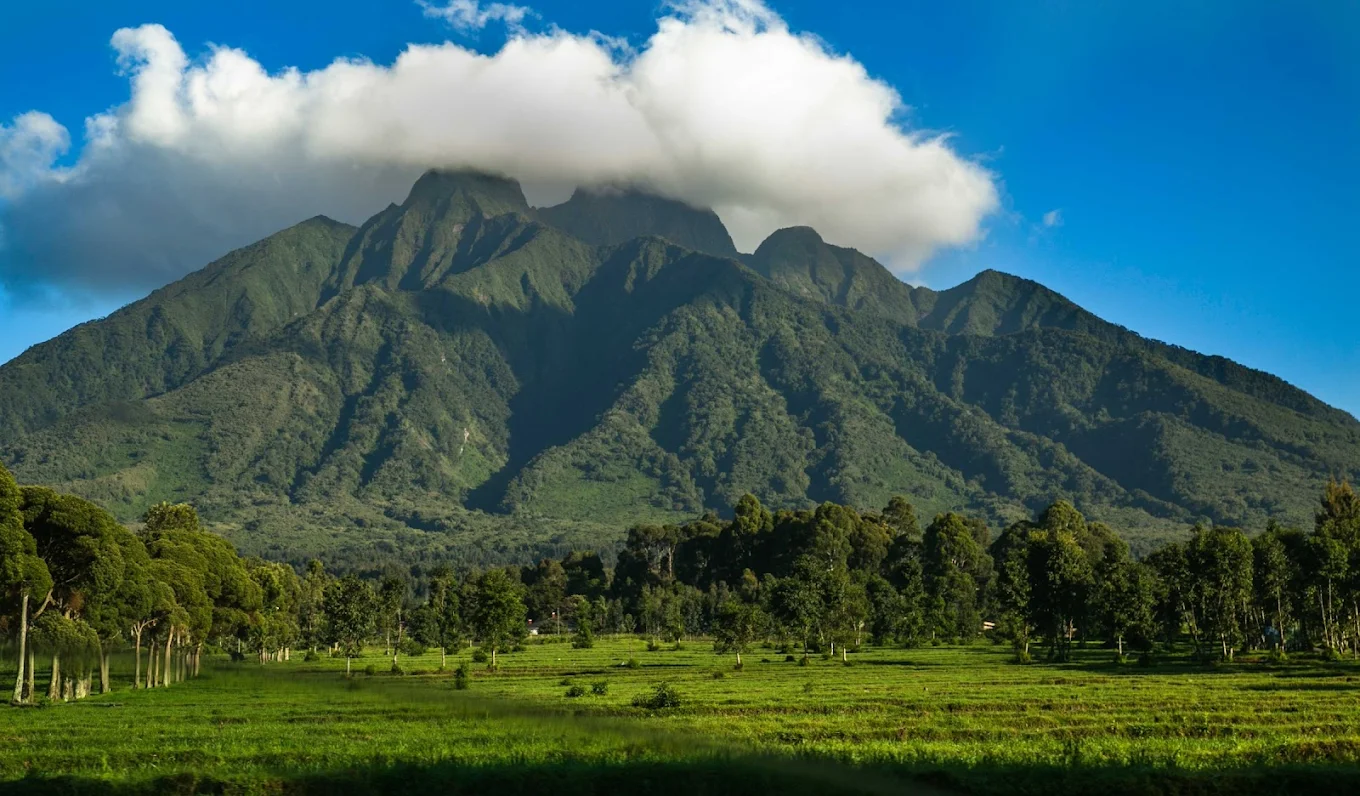
Mgahinga Gorilla National Park offers a completely different aesthetic for Gorilla Documentaries and Filming Safaris. Located in Uganda’s southwestern highlands, it forms part of the greater Virunga volcanic chain.
Forest Type Differences:
Unlike Bwindi’s dense rainforest, Mgahinga Gorilla National Park combines bamboo forests, montane vegetation, and volcanic slopes. The terrain feels more open in certain areas, providing clearer sightlines and broader framing opportunities.
Lighting Conditions:
Because vegetation is less dense in some zones, natural light penetration is stronger than in Bwindi. This can create brighter scenes and improved visibility for long-lens filming. Volcanic ridgelines also offer dramatic backdrops when weather conditions are favorable.
Gorilla Density:
Mgahinga hosts fewer habituated families compared to Bwindi, which makes access more limited. However, the smaller scale can create a more controlled filming environment. For focused productions, this intimacy can be advantageous.
Accessibility:
Access roads are mountainous but manageable with proper vehicles. Kisoro town serves as the gateway, with basic services and accommodation options. Compared to Bwindi, Mgahinga may offer slightly simpler internal navigation once inside the park.
Mgahinga is well suited for productions seeking volcanic scenery combined with gorilla encounters.
Volcanoes National Park – Premium Access and Structured Filming
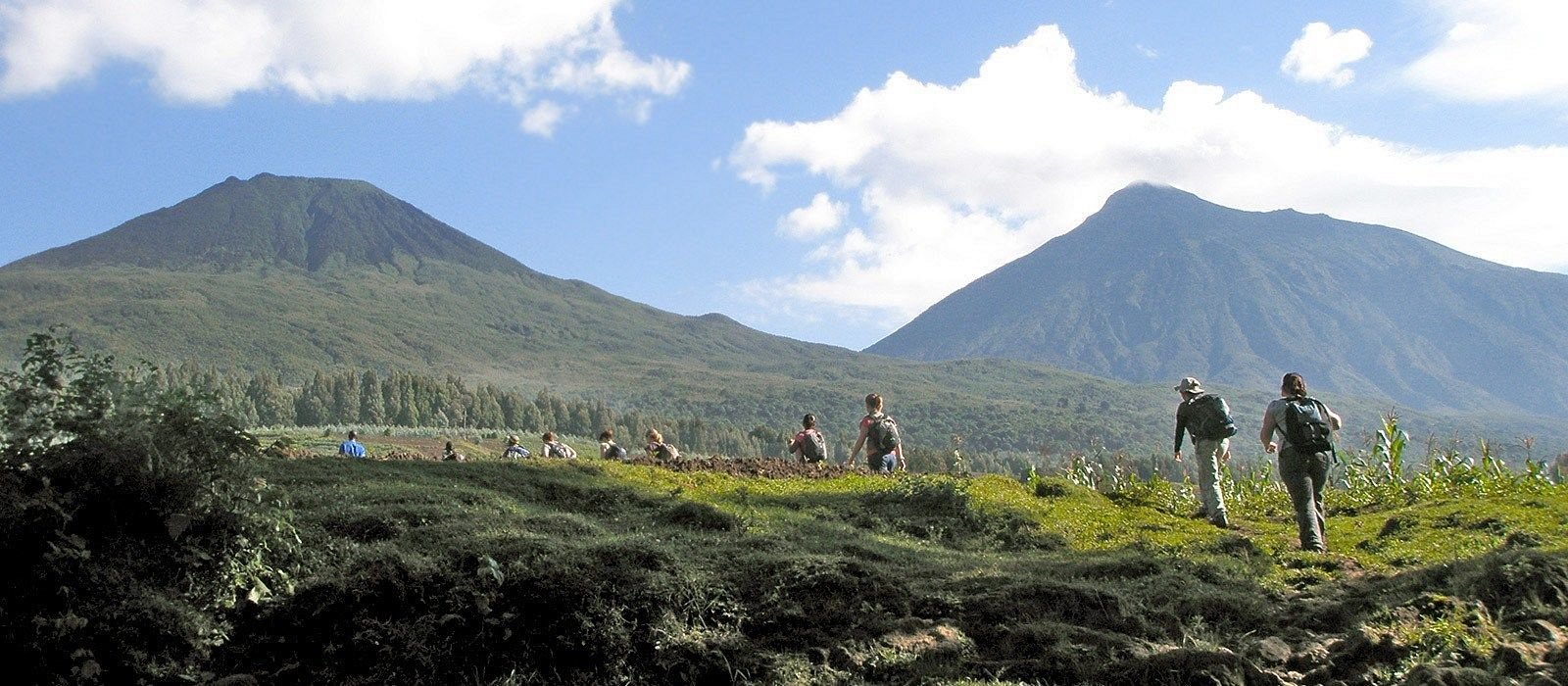
Volcanoes National Park in Rwanda is internationally recognized for mountain gorilla trekking and high-end tourism infrastructure. It is one of the most accessible destinations for Gorilla Documentaries and Filming Safaris.
Forest Type Differences:
Volcanoes National Park features bamboo forests at lower elevations and afro-alpine vegetation higher on the slopes. The volcanic landscape creates dramatic mountain silhouettes and expansive backgrounds.
Lighting Conditions:
Compared to Bwindi, lighting in Volcanoes National Park can be more open in bamboo zones. Early morning light often filters through mist rising from volcanic slopes, creating visually striking scenes. However, weather patterns can shift quickly due to altitude.
Gorilla Density:
The park hosts multiple habituated families within a compact geographic area. While Rwanda’s overall gorilla population is smaller than Uganda’s, its concentrated park boundary makes gorilla tracking highly structured and organized.
Accessibility:
One of Rwanda’s greatest advantages for Gorilla Documentaries and Filming Safaris is proximity. Volcanoes National Park is approximately 2.5 hours by road from Kigali International Airport. This reduces travel complexity and allows tighter filming schedules.
Volcanoes National Park is ideal for productions requiring efficient access, premium accommodation, and structured park systems.
Choosing the Right Park for Your Production
Each park offers a distinct creative environment for Gorilla Documentaries and Filming Safaris:
- Bwindi delivers dense rainforest immersion and the highest gorilla density.
- Mgahinga provides volcanic landscapes and intimate filming conditions.
- Volcanoes National Park offers accessibility, dramatic mountain backdrops, and structured logistics.
For cross-border productions, combining parks in both Uganda and Rwanda allows filmmakers to capture visual diversity within one cohesive project.
Selecting the correct filming location depends on narrative goals, technical requirements, and logistical considerations. With professional coordination, each park can serve as a world-class stage for mountain gorilla storytelling.
What Makes Gorilla Documentaries and Filming Safaris Different from Normal Gorilla Trekking?
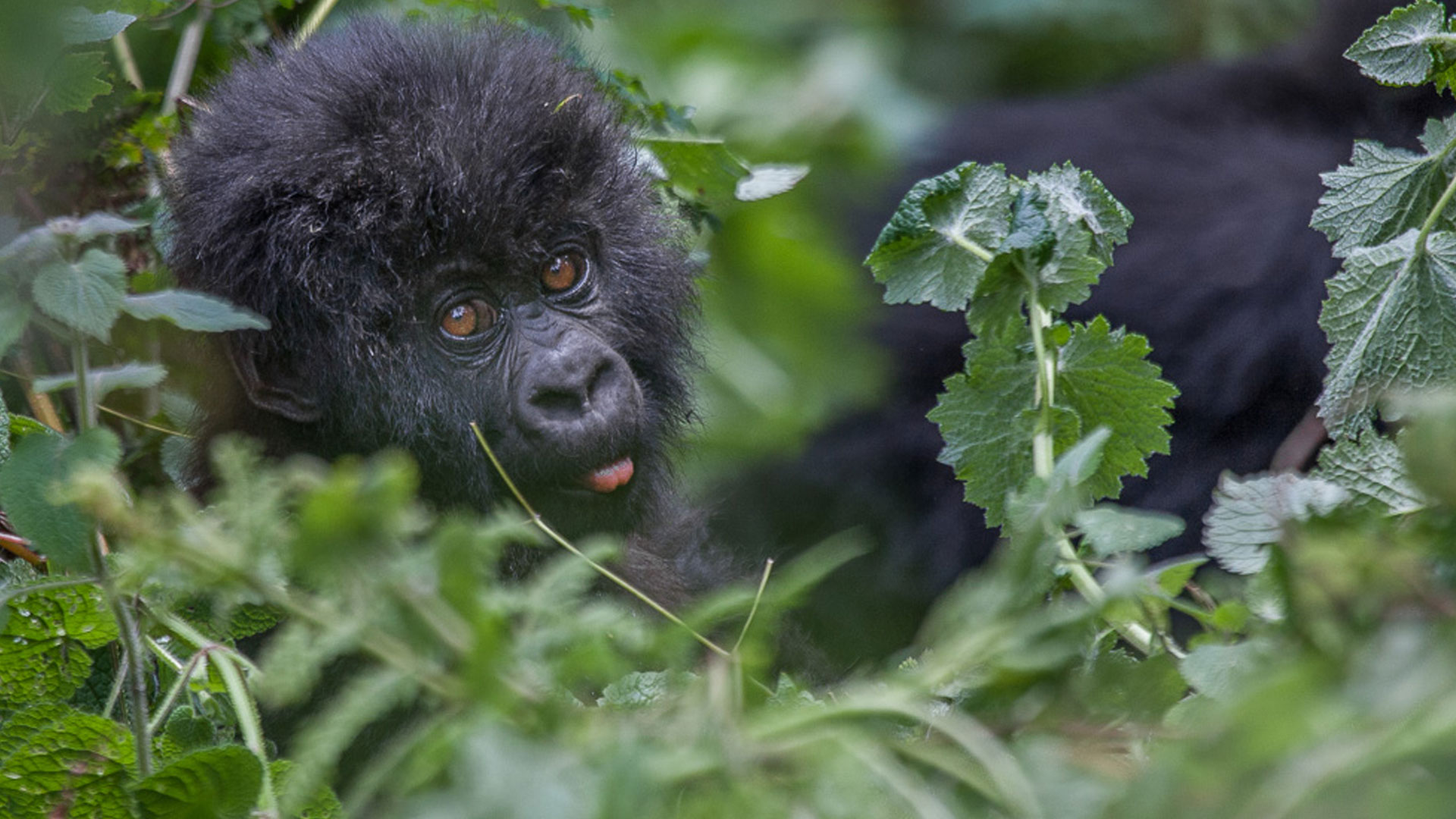
At first glance, Gorilla Documentaries and Filming Safaris may appear similar to standard gorilla trekking experiences. Both involve entering protected forests, guided by rangers, to encounter habituated gorilla families. However, the similarities end there. Filming safaris operate under a completely different operational, ethical, and logistical framework.
Understanding these differences is essential for production teams planning professional Gorilla Documentaries and Filming Safaris in Uganda and Rwanda.
Extended Time Requests
Standard gorilla trekking permits typically allow one hour with a habituated gorilla family. This one-hour limit is strictly enforced to minimize stress on the animals.
For Gorilla Documentaries and Filming Safaris, production teams may request extended access time. Approval for extended filming sessions is not automatic and depends on conservation authority authorization. Additional fees and ranger supervision apply.
Even with extended time approval, gorilla welfare remains the priority. Time extensions are carefully regulated and may vary depending on the gorilla group’s health, behavior, and conservation status.
Controlled Positioning
In standard trekking, visitors are guided to a viewing distance and reposition as instructed by rangers. During Gorilla Documentaries and Filming Safaris, positioning becomes more technical.
Camera operators must maintain:
- Minimum 7-meter distance rules
- Non-intrusive movement
- Stable filming angles without blocking gorilla movement
- Compliance with ranger instructions
Rangers coordinate crew movement to prevent crowding and to ensure that filming does not interfere with natural behavior. Camera placement, lens selection, and crew spacing are managed more strictly than during tourist treks.
Private Group Allocation
Unlike public trekking groups that may include up to eight visitors, Gorilla Documentaries and Filming Safaris often require private group allocation.
This allows:
- Controlled crew size
- Reduced disturbance
- Coordinated filming strategy
- Clear communication between rangers and production team
Private allocation significantly increases permit costs but ensures production quality and conservation compliance. It also prevents conflict between tourists and professional filming crews.
Equipment Management
Standard trekkers may carry small cameras or smartphones. Professional Gorilla Documentaries and Filming Safaris involve complex equipment such as cinema cameras, stabilization rigs, long telephoto lenses, directional microphones, and backup batteries.
All equipment must be declared in advance. Authorities review whether equipment poses disturbance risks. Artificial lighting, flash photography, and intrusive gear are typically restricted.
Equipment must also be transported through mountainous rainforest terrain, often requiring porters. Logistics planning is therefore much more complex than a standard trek.
Sound Recording Challenges
Capturing clean audio during Gorilla Documentaries and Filming Safaris presents unique challenges. Rainforest environments contain constant ambient noise from insects, birds, wind through canopy, and distant wildlife.
Boom microphones must be positioned without breaching minimum distance regulations. Lavalier microphones are not applicable to wildlife subjects. Sound technicians must work within strict movement boundaries.
Additionally, sudden gorilla vocalizations, grunts, chest beats, foliage movement; require rapid adaptation while maintaining ethical distance.
Ethical Filming Standards
Perhaps the most important distinction is ethical responsibility. Gorilla Documentaries and Filming Safaris operate under conservation-first principles.
Filming teams must:
- Avoid influencing gorilla behavior
- Refrain from obstructing feeding or movement
- Maintain health protocols (including masks when required)
- Follow ranger instructions at all times
Gorillas are critically endangered. Their welfare supersedes production priorities. Ethical compliance is non-negotiable.
In short, Gorilla Documentaries and Filming Safaris are conservation-sensitive productions requiring higher-level permits, stricter oversight, and professional discipline far beyond normal trekking tourism.
Drone Filming Rules for Gorilla Safaris
Drone usage is one of the most searched topics related to Gorilla Documentaries and Filming Safaris, and it is also one of the most restricted.
Generally Prohibited Near Gorillas
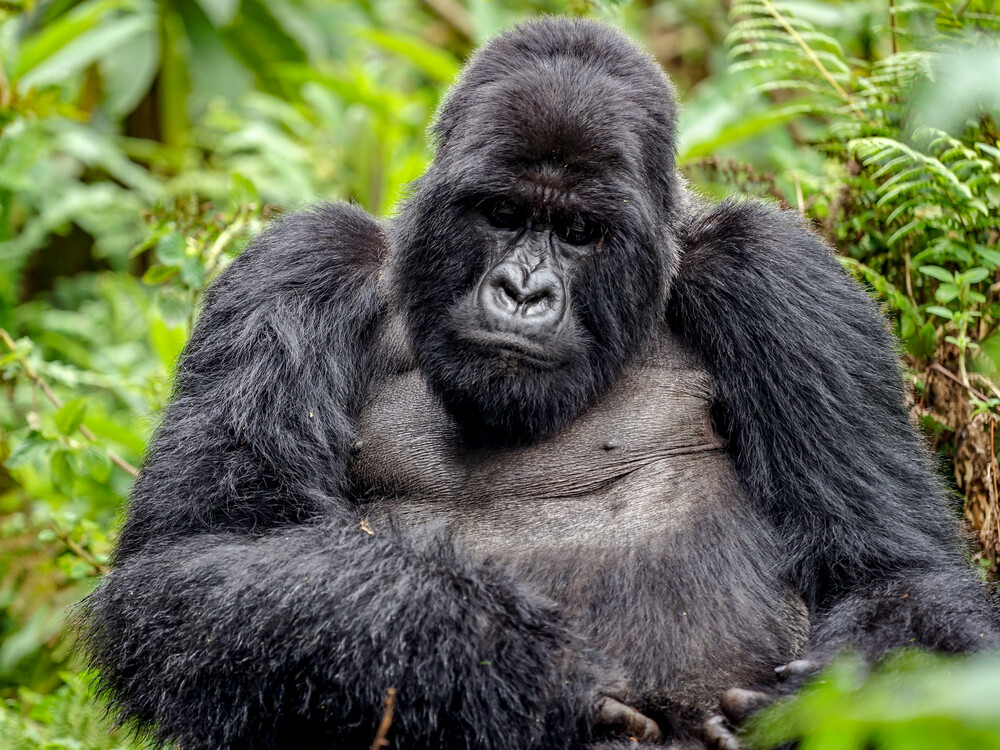
In most cases, drone filming is prohibited within gorilla trekking zones. Gorillas are highly sensitive to unfamiliar sounds, especially aerial buzzing. Drone noise can trigger stress responses, defensive behavior, or group movement.
Because mountain gorillas are endangered and closely monitored, authorities prioritize minimizing disturbance. As a result, most Gorilla Documentaries and Filming Safaris rely exclusively on ground-based filming.
Special Government Approval
In rare cases, drone filming may be approved, but this requires:
- Formal government-level authorization
- Environmental impact assessment
- Detailed flight plan submission
- Proof of professional drone licensing
- Additional conservation clearance
Approval is not guaranteed and is typically reserved for high-level documentary productions working in partnership with wildlife authorities.
Unauthorized drone usage can result in:
- Immediate permit cancellation
- Confiscation of equipment
- Legal penalties
- Blacklisting from future filming permits
For this reason, all drone requests must be declared during the early planning stages of Gorilla Documentaries and Filming Safaris.
Conservation Concerns
Drone restrictions are based on scientific and conservation concerns. Gorillas live in tight social groups with complex communication systems. Unexpected aerial disturbances can:
- Disrupt feeding patterns
- Cause temporary group displacement
- Increase stress hormones
- Impact long-term habituation stability
Filming authorities prioritize animal welfare above cinematic ambition.
If aerial footage is required for broader landscape context such as volcanic backdrops or forest canopy shots, it may be approved outside direct gorilla interaction zones, under controlled supervision.
The Practical Reality
For most professional Gorilla Documentaries and Filming Safaris, cinematic storytelling relies on:
- Long-lens ground-based filming
- Natural light
- Stable tripod positioning
- Carefully managed ranger-guided movement
This approach preserves conservation integrity while still allowing powerful wildlife storytelling.
Filming Logistics & Production Support
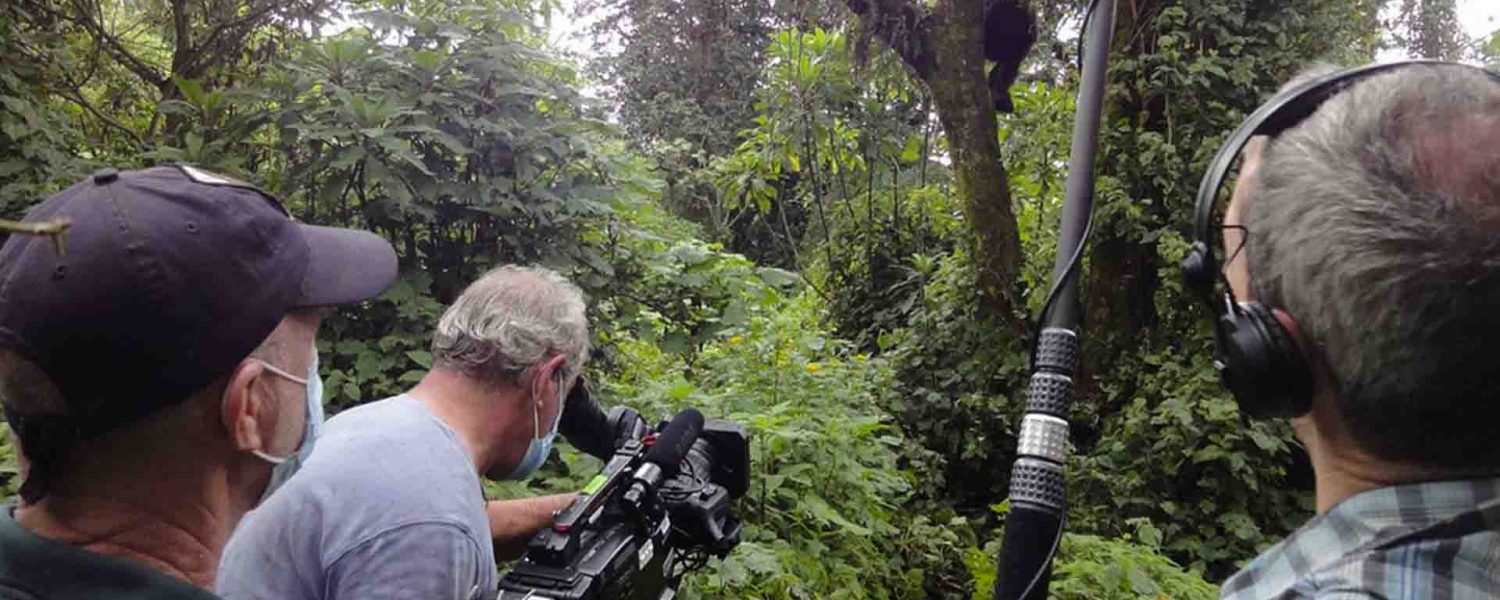
Successful Gorilla Documentaries and Filming Safaris depend as much on logistics as on storytelling. Mountain gorilla habitats are remote, mountainous, and conservation-sensitive. Professional production requires detailed coordination long before the first camera enters the forest. Transport planning, equipment handling, cross-border documentation, and local regulatory compliance are central to any serious filming expedition in Uganda and Rwanda.
Crew Transport in Remote Terrain
Production teams operating Gorilla Documentaries and Filming Safaris must account for long-distance transfers from international arrival points to national parks. In Uganda, crews typically arrive via Entebbe International Airport and then travel to southwestern regions hosting Bwindi Impenetrable National Park or Mgahinga Gorilla National Park. In Rwanda, arrival is through Kigali International Airport before transferring to Volcanoes National Park.
Road journeys in Uganda can range from six to ten hours depending on sector location. Mountain roads require experienced drivers familiar with steep inclines and unpredictable weather shifts. Larger production teams often require multiple 4×4 vehicles to separate crew members, guides, and equipment safely.
For tight schedules, chartered domestic flights reduce transit time to regional airstrips near gorilla trekking zones. However, weight restrictions on small aircraft require careful equipment allocation.
Equipment Vehicles and Handling
Professional Gorilla Documentaries and Filming Safaris involve specialized gear that must be transported securely across rugged landscapes. Cinema cameras, tripods, stabilizers, audio equipment, batteries, and data storage systems require dust-proof and moisture-resistant handling.
Dedicated equipment vehicles are often necessary to:
- Separate sensitive gear from passenger seating
- Distribute load weight evenly on mountainous roads
- Ensure rapid deployment upon arrival
Inside national parks, equipment must often be carried on foot by trained porters. Filming in rainforest terrain involves steep slopes, mud, and dense vegetation. Advance logistical planning prevents delays and protects production assets.
Border Permits Between Uganda and Rwanda
Cross-border productions filming in both countries require structured immigration and customs coordination. When conducting Gorilla Documentaries and Filming Safaris across Uganda and Rwanda, border crossings typically occur at Cyanika or Katuna.
Production teams must manage:
- Equipment declaration forms
- Temporary import documentation for filming gear
- Visa compliance
- Media accreditation recognition
The East Africa Tourist Visa may simplify crew movement for eligible nationalities, but equipment clearance remains separate. Early coordination prevents delays at border posts and ensures uninterrupted filming schedules.
Accommodation for Production Teams
Unlike standard trekking visitors, production crews require lodging that supports operational needs. Reliable electricity, secure storage space, internet connectivity for data backup, and early breakfast schedules are critical during Gorilla Documentaries and Filming Safaris.
High-end lodges near Volcanoes National Park provide strong infrastructure for large crews, while Bwindi and Mgahinga offer a range of options depending on production scale. For extended projects, exclusive lodge buyouts may be arranged to ensure privacy and minimize disruptions.
Power reliability is particularly important due to battery charging demands. Backup generators and voltage stabilizers are often essential.
Media Clearance and Regulatory Compliance
Beyond park-level filming permits, international productions may require national media clearance from government authorities. This applies especially to broadcast networks, commercial brand projects, or feature-length documentaries.
Clearance processes may include submission of:
- Production synopsis
- Crew passport copies
- Distribution intent
- Equipment inventory
Operating without proper media accreditation can jeopardize Gorilla Documentaries and Filming Safaris and result in equipment confiscation or project suspension.
Local Fixers and Field Coordination
Local fixers are indispensable in mountain gorilla filming operations. A fixer acts as a liaison between production teams and wildlife authorities, manages local logistics, coordinates permits, arranges transport adjustments, and resolves unexpected field challenges.
Because rainforest filming environments are unpredictable, having experienced local coordinators ensures that Gorilla Documentaries and Filming Safaris proceed efficiently. They understand park dynamics, ranger expectations, weather patterns, and community sensitivities.
Strong local coordination transforms complex filming operations into structured, conservation-aligned productions.
Best Time for Gorilla Documentaries and Filming Safaris
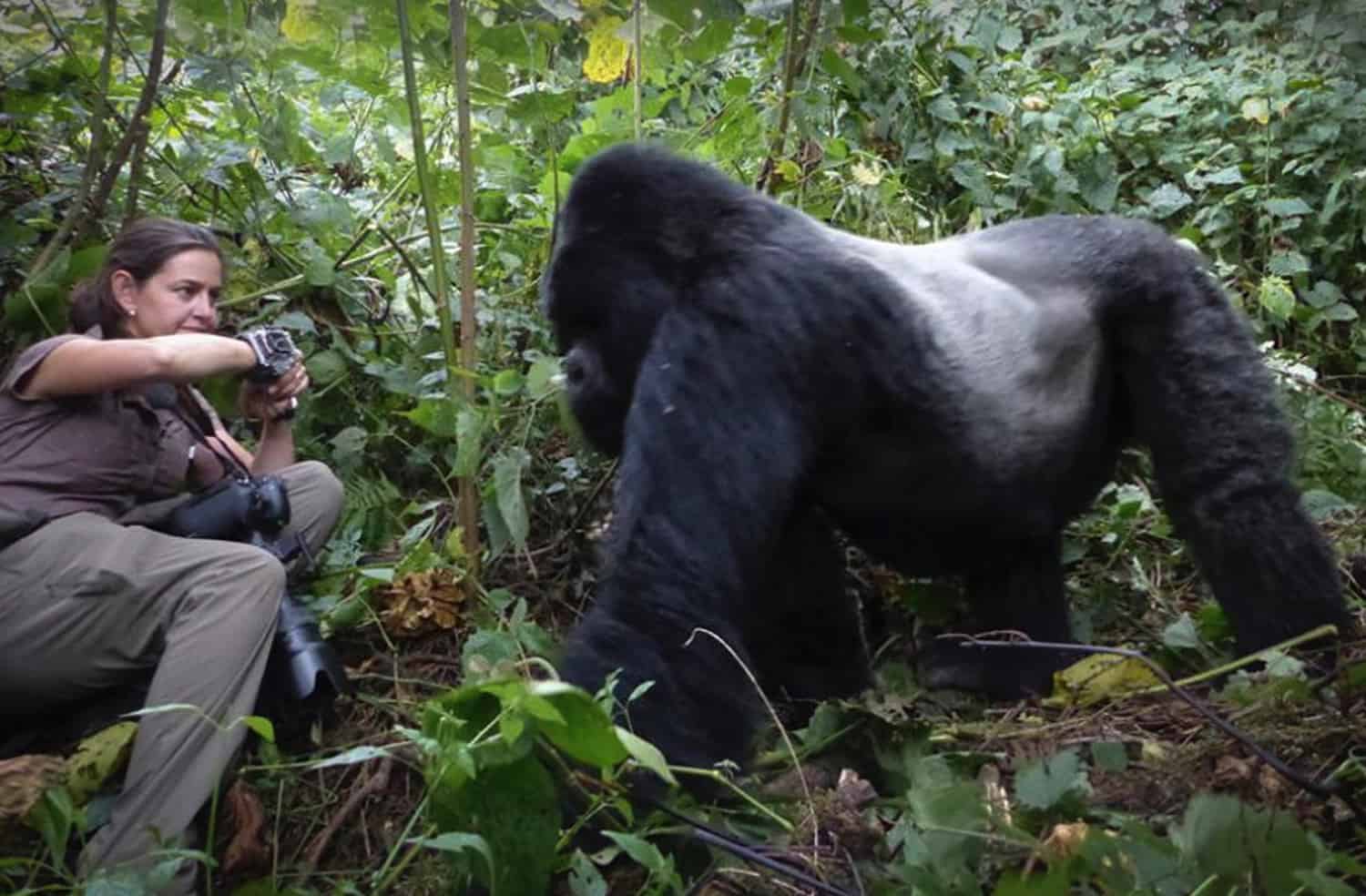
Seasonal timing significantly influences production quality during Gorilla Documentaries and Filming Safaris. Mountain gorilla habitats experience equatorial weather patterns that affect light, visibility, and equipment safety.
Dry Seasons
The primary dry seasons typically run from June to September and December to February. These periods are widely considered the best times for Gorilla Documentaries and Filming Safaris.
During dry months:
- Trails are less muddy
- Access roads are more stable
- Forest movement is easier
- Equipment transport is safer
Reduced rainfall also improves crew mobility and decreases risk of camera moisture damage.
Light Conditions
Lighting inside gorilla habitats varies by park. In dense rainforest environments like Bwindi, light penetration is limited even during dry seasons. Early morning mist can create cinematic atmosphere but requires careful exposure control.
In Volcanoes National Park and Mgahinga, bamboo zones and volcanic slopes may allow brighter natural light conditions compared to dense rainforest canopy.
Planning shooting schedules around morning light and mid-day exposure conditions is essential for high-quality Gorilla Documentaries and Filming Safaris.
Forest Visibility
Vegetation growth is denser during rainy months. While lush green landscapes can enhance visual richness, thick undergrowth may obstruct camera sightlines.
Dry seasons often improve visibility within the forest, making it easier to capture full-body gorilla movements and social interactions.
However, production goals matter. Some filmmakers prefer the dramatic mist and heavy foliage of rainy months for mood-driven storytelling.
Rain Impact on Equipment
Rainforest environments present technical challenges during wet seasons. Persistent rainfall increases risks of:
- Lens fogging
- Moisture damage to electronics
- Slippery terrain affecting tripod stability
- Reduced sound clarity due to rain noise
Professional Gorilla Documentaries and Filming Safaris during rainy periods require weather-sealed equipment, protective covers, and additional battery management due to humidity effects.
While filming is possible year-round, careful season selection optimizes both safety and cinematic quality.
With strong logistics and strategic timing, Gorilla Documentaries and Filming Safaris in Uganda and Rwanda can deliver world-class conservation storytelling within ethical and professionally managed frameworks.
Who Should Book Gorilla Documentaries and Filming Safaris?
Gorilla Documentaries and Filming Safaris are not standard wildlife tours. They are specialized, conservation-sensitive productions designed for serious storytellers, media professionals, and organizations committed to responsible wildlife representation. Mountain gorillas are among the most protected primates on earth, and filming them requires structured permits, ethical compliance, and logistical expertise.
Below are the primary groups who benefit most from professionally coordinated Gorilla Documentaries and Filming Safaris in Uganda and Rwanda.
Documentary Producers
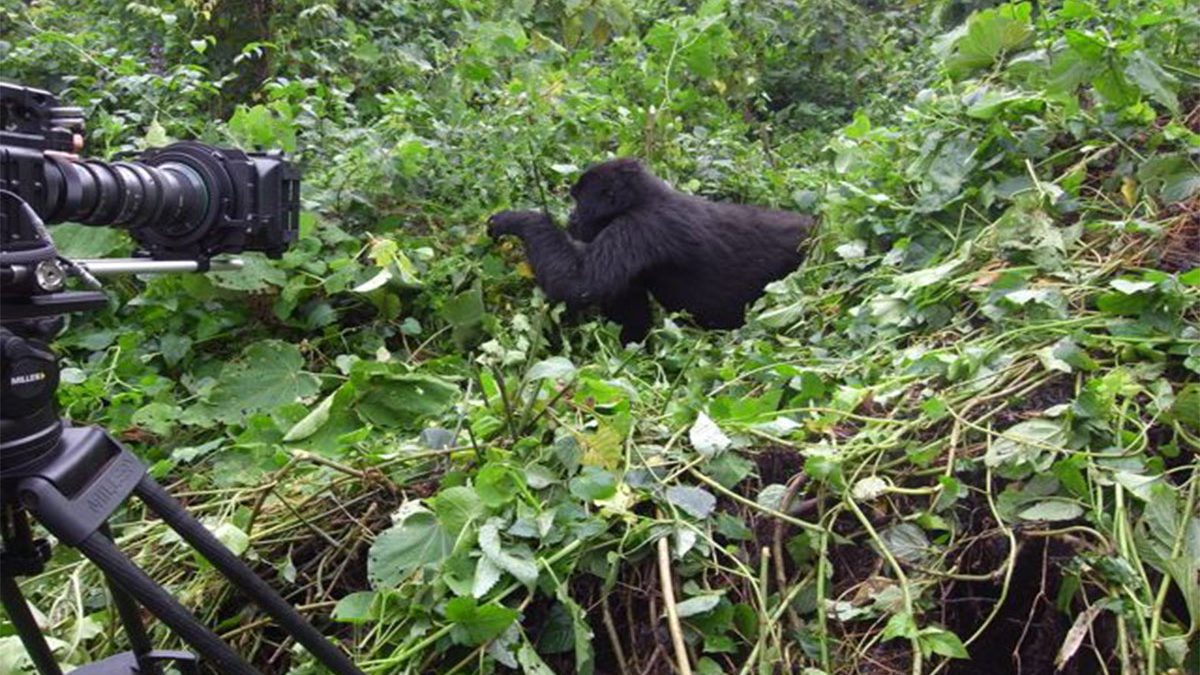
Independent documentary producers and feature-length wildlife filmmakers are among the primary clients for Gorilla Documentaries and Filming Safaris. Whether producing a conservation film, environmental awareness project, or cinematic wildlife series, producers require controlled access to habituated gorilla families under ranger supervision.
Professional productions demand:
- Filming permits beyond standard trekking access
- Extended time approvals where applicable
- Structured positioning for high-quality footage
- Cross-border coordination when filming in both Uganda and Rwanda
The dense rainforest of Bwindi Impenetrable National Park and the volcanic landscapes of Volcanoes National Park provide contrasting visual environments ideal for narrative storytelling.
Documentary producers seeking rare behavioral footage, conservation context, and ethical access will find Gorilla Documentaries and Filming Safaris in East Africa unmatched globally.
Conservation NGOs
Conservation-focused non-governmental organizations often require visual documentation to support fundraising campaigns, research reports, and global awareness initiatives. For these organizations, Gorilla Documentaries and Filming Safaris provide structured access to mountain gorilla habitats while maintaining strict conservation compliance.
NGOs filming educational material or impact documentaries must operate within wildlife authority guidelines. Coordinated filming safaris allow NGOs to:
- Document conservation efforts
- Highlight anti-poaching initiatives
- Capture community engagement stories
- Showcase habitat protection strategies
Responsible storytelling strengthens global conservation messaging while protecting endangered species.
Television Networks and Streaming Platforms
Major television networks and streaming platforms frequently produce wildlife content centered on rare species and fragile ecosystems. For these broadcasters, Gorilla Documentaries and Filming Safaris offer access to one of the most compelling wildlife subjects in Africa.
Broadcast-level productions require:
- National media accreditation
- High-capacity filming permits
- Crew coordination and ranger supervision
- Detailed production planning
Mountain gorilla documentaries often attract international audiences due to their emotional depth, family dynamics, and conservation narrative. Uganda and Rwanda remain the only viable global destinations for large-scale mountain gorilla filming operations.
Wildlife YouTubers and Digital Creators
The growth of digital wildlife content has increased demand for professionally managed Gorilla Documentaries and Filming Safaris among independent creators. Wildlife YouTubers and conservation influencers often monetize their content, which classifies their filming as commercial activity.
Even small-scale digital creators must:
- Declare filming intentions
- Secure appropriate permits
- Follow ethical distance guidelines
- Avoid unauthorized drone use
Responsible digital storytelling requires structured coordination with wildlife authorities. Filming mountain gorillas without proper permits risks legal penalties and long-term conservation harm.
For digital creators seeking high-quality, ethical wildlife footage, organized Gorilla Documentaries and Filming Safaris provide the safest and most compliant approach.
Photography Expedition Leaders
Professional photography expedition leaders and workshop organizers represent another important segment. High-end photographic safaris focusing on endangered primates often require customized group allocations and structured positioning.
While still photography differs from broadcast filming, commercial photo expeditions fall under regulated activity. Leaders organizing group-based Gorilla Documentaries and Filming Safaris must ensure:
- Proper permit coordination
- Private group allocation where necessary
- Equipment declaration
- Compliance with distance rules
The layered rainforest of Bwindi and the volcanic backdrops of Mgahinga Gorilla National Park provide dramatic photographic settings for professionals seeking rare wildlife imagery.
The Common Thread
All of these groups share a common need: ethical access, legal compliance, and logistical expertise. Gorilla Documentaries and Filming Safaris are designed for professionals who understand that mountain gorillas are critically endangered and that filming them carries responsibility.
These safaris are not casual tourism experiences. They are structured conservation collaborations requiring planning, permits, and experienced field coordination.
Uganda and Rwanda remain the world’s most stable and professionally regulated destinations for mountain gorilla filming. For producers, NGOs, networks, digital creators, and photography leaders seeking responsible access, Gorilla Documentaries and Filming Safaris offer unmatched opportunity within a protected and scientifically managed ecosystem.
Frequently Asked Questions About Gorilla Documentaries and Filming Safaris
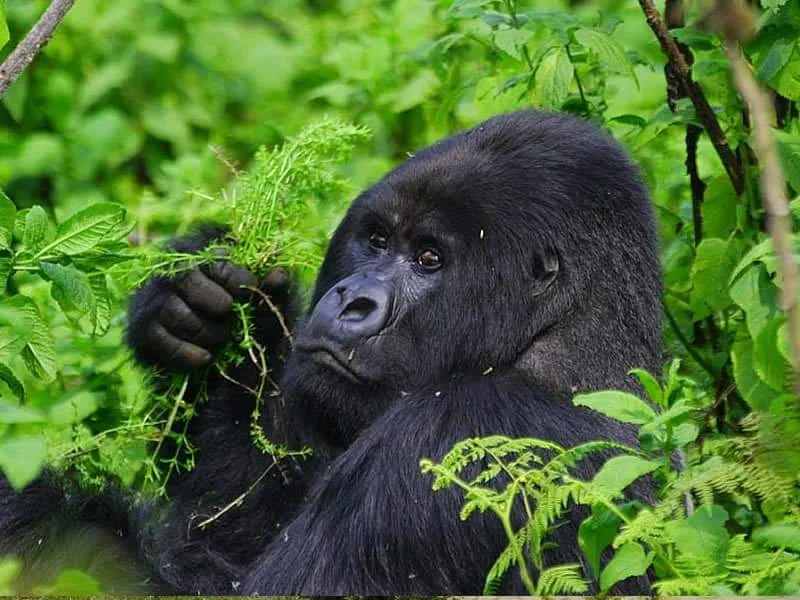
Do you need special permits to film gorillas?
Yes. Standard trekking permits do not automatically authorize commercial filming. Gorilla Documentaries and Filming Safaris require dedicated filming permits issued by the relevant wildlife authority in Uganda or Rwanda. Production teams must declare equipment, crew size, filming duration, and intended distribution platform before approval is granted. Unauthorized commercial filming can result in penalties or revocation of park access.
Are drones allowed when filming gorillas?
In most cases, drones are prohibited near mountain gorillas. Gorilla Documentaries and Filming Safaris operate under strict conservation rules, and aerial noise can disturb gorilla groups. Special government-level approval may be required for drone use, and such approval is rarely granted for filming in direct proximity to gorillas. Ground-based cinematography remains the standard and safest approach.
How much does it cost to film gorillas?
The cost of Gorilla Documentaries and Filming Safaris depends on the country of operation, crew size, duration of filming, and production scale. Expenses typically include gorilla access permits for each crew member, commercial filming authorization fees, park entry charges, ranger supervision, and possible government media accreditation. Rwanda generally has higher base permit costs than Uganda. Large-scale international productions may incur additional regulatory fees.
Can you get private gorilla filming access?
Yes, but private allocation must be formally requested and approved. For professional Gorilla Documentaries and Filming Safaris, wildlife authorities may assign a gorilla family exclusively to a production crew to avoid interference from tourist groups. This increases costs but ensures controlled positioning, coordinated movement, and uninterrupted filming conditions under ranger supervision.
Is gorilla filming ethical?
Gorilla filming can be ethical when conducted under strict conservation guidelines. Responsible Gorilla Documentaries and Filming Safaris prioritize animal welfare, maintain minimum distance rules, avoid behavioral interference, and follow ranger instructions at all times. Ethical production supports conservation awareness and contributes to long-term protection of endangered mountain gorillas.
Final Close
Mountain gorilla filming is not a standard safari activity. It is a conservation-sensitive, highly regulated production process that requires experience, planning, and compliance at every level. Gorilla Documentaries and Filming Safaris demand more than permits, they require structured coordination between wildlife authorities, park rangers, government agencies, and professional production teams.
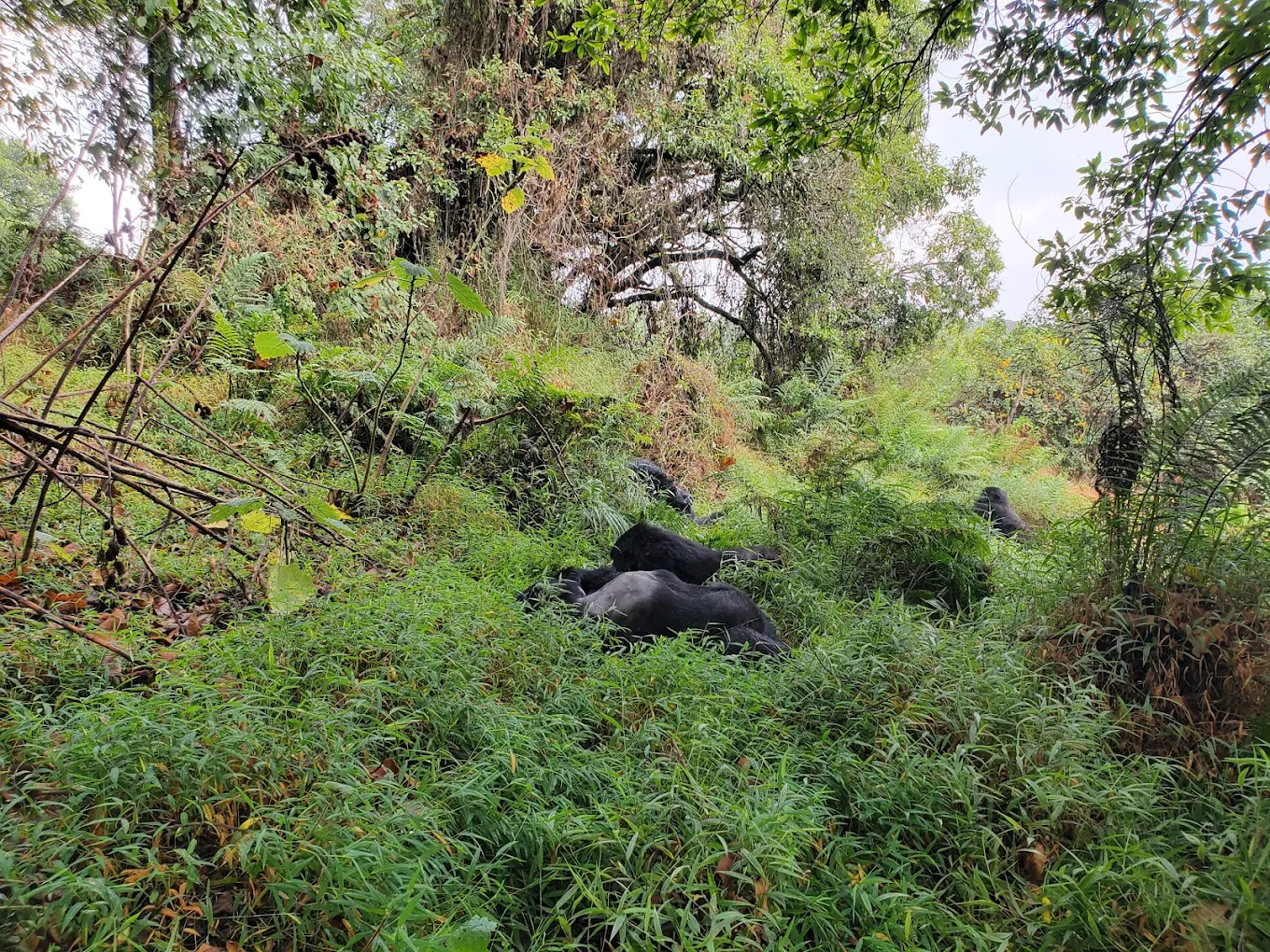
Nextgen Safaris operates as a licensed cross-border safari company in Uganda with structured operational coordination across Rwanda. We specialize in managing complex Gorilla Documentaries and Filming Safaris, including permit applications, commercial filming authorization, equipment clearance, ranger allocation, border documentation, and production logistics in both countries.
Our team provides:
- Cross-border filming coordination between Uganda and Rwanda
- Structured permit and media clearance management
- Experienced logistical planning for remote forest environments
- Professional transport and equipment handling
- Confidential and discreet production support
We understand that high-level productions require precision, privacy, and reliability. From independent documentary teams to international broadcasters, our approach to Gorilla Documentaries and Filming Safaris is structured, ethical, and conservation-aligned.
Mountain gorillas are among the most protected species on earth. Filming them requires responsibility equal to ambition.
If you are planning a professional wildlife production in East Africa, we are prepared to manage the process from concept to field execution.