
Gorilla naming ceremony in Rwanda
Ultimate Gorilla Naming Ceremony in Rwanda – Kwita Izina Conservation Celebration
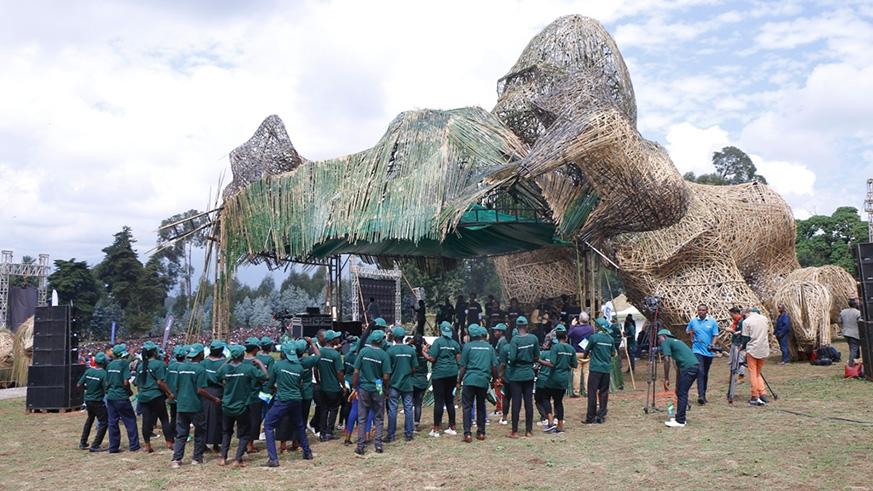
The Gorilla naming ceremony in Rwanda, locally and internationally known as Kwita Izina, is one of Africa’s most distinctive celebrations of wildlife conservation, Rwandan culture and community participation. Held at the foothills of Volcanoes National Park in Kinigi, Musanze District, this remarkable annual occasion brings together conservationists, local communities, researchers, park rangers, tourism professionals, international visitors and specially selected namers to celebrate newborn mountain gorillas and the people who dedicate their lives to protecting them. What might initially sound like a simple ceremony of assigning names to young gorillas has evolved into a major conservation platform connecting tourism, environmental protection, scientific monitoring and community development.
Kwita Izina translates from Kinyarwanda as “to give a name.” The modern celebration draws inspiration from Rwanda’s centuries-old cultural tradition in which families and communities gather to name a newborn child. Before the official public ceremony was established, researchers and park rangers had already been naming mountain gorillas for decades so that individual animals could be identified and monitored within their families. Rwanda transformed this conservation practice into an official annual celebration in 2005. Since then, the ceremony has grown into an internationally recognized event while retaining its powerful connection with Rwandan cultural traditions.
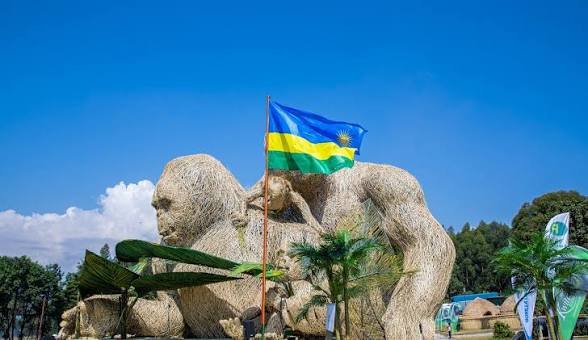
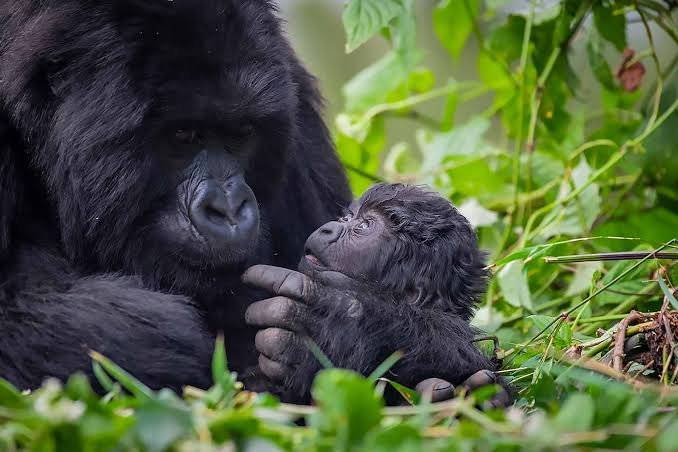
The most recent Gorilla naming ceremony in Rwanda was the 21st Kwita Izina, held on 4 September 2026 in Kinigi. Twenty-two baby mountain gorillas were officially named under the theme “Conservation is Life: Sustaining the Future.” Following those 22 new names, the cumulative number of mountain gorillas named through the official Kwita Izina celebrations reached 460 across the first 21 editions.
For travelers visiting Rwanda with NextGen Safaris, Kwita Izina can become the centerpiece of a much wider journey incorporating gorilla trekking in Rwanda, the Dian Fossey hike, golden monkey trekking, luxury stays around Volcanoes National Park and relaxing extensions to Lake Kivu. Experiencing the ceremony before or after entering the rainforest gives visitors a deeper understanding of why Rwanda’s mountain gorillas are individually known, closely monitored and celebrated as part of the country’s conservation heritage.
What Is the Gorilla Naming Ceremony in Rwanda?
The Gorilla naming ceremony in Rwanda is Rwanda’s annual celebration for newly born mountain gorillas in Volcanoes National Park. Rather than treating gorillas simply as anonymous members of a wildlife population, conservation teams identify individual animals and maintain detailed knowledge about the families to which they belong. Naming assists with this system of recognition while also allowing the public to develop a stronger connection with the individual animals being protected.
Kwita Izina developed from practices already used by researchers and rangers. For approximately three decades before the first official public ceremony in 2005, newborn gorillas were given names as part of monitoring programs. Rwanda later transformed that scientific practice into a national conservation celebration rooted in the traditional Rwandan custom of naming newborn children in the presence of relatives and the wider community.
Today the ceremony is much larger than the moment each baby receives its name. It celebrates the work of park rangers, trackers, veterinarians, researchers, guides, conservation organizations and communities surrounding Volcanoes National Park. It also provides an international platform through which Rwanda communicates the relationship between wildlife tourism, biodiversity protection and local economic development.
The ceremony usually includes cultural performances, conservation messages, entertainment and the introduction of each baby gorilla together with information about its mother and family. Names are chosen carefully and generally carry meanings connected with conservation, strength, unity, resilience, hope, culture or the circumstances surrounding the infant’s birth.
Meaning of Kwita Izina
Understanding the significance of the Gorilla naming ceremony in Rwanda requires understanding the meaning of Kwita Izina itself. In Kinyarwanda, the phrase means “to give a name.” It originates from the long-standing Rwandan tradition of gathering relatives, neighbors and friends to celebrate a newborn child and formally give the baby a name.
When Rwanda applied this tradition to mountain gorillas, the country created a symbolic connection between human cultural heritage and wildlife conservation. Gorilla naming ceremony in Rwanda,,A newly born gorilla was no longer discussed only as a population statistic. It became an identifiable individual with a mother, family and name.
The concept also reinforces an important principle of long-term gorilla research. Individual identification makes it possible for researchers and trackers to follow animals throughout their lives. They can document births, deaths, movements, changes in dominant silverbacks, transfers of females between groups and the development of young gorillas.
Kwita Izina therefore connects cultural symbolism with practical science. The public ceremony celebrates the animal, while daily monitoring teams continue collecting information about that gorilla long after international guests and cameras have left Kinigi.
The History of Kwita Izina Since 2005
Rwanda officially launched Kwita Izina as an annual national celebration in 2005. The ceremony took an activity previously carried out principally by researchers and rangers and transformed it into a public event capable of increasing awareness of mountain gorilla conservation.
The early editions established a pattern that has continued to evolve. Newborn gorillas were introduced, prominent guests and conservation champions were invited to give names, and communities living close to Volcanoes National Park became central participants in the celebration. Over time, Kwita Izina attracted increasing international interest and developed into one of Rwanda’s most visible conservation events.
The growth can be seen through the cumulative number of gorillas named. By 2019, 281 baby gorillas had been named since the official event began. Later editions continued increasing that figure, and Visit Rwanda now reports that 460 mountain gorillas have been named across the 21 editions through 2026.
The ceremony has also adapted when circumstances required it. During the COVID-19 period, editions were held virtually rather than through the traditional large gathering in Kinigi. Rwanda returned to the major in-person format in 2022, demonstrating that the conservation purpose of the event could continue even when tourism conditions changed.
For travelers interested in the history behind Rwanda’s gorilla conservation story, Kwita Izina combines naturally with a visit to the Karisoke Research Center story and Dian Fossey sites. Dian Fossey established the Karisoke Research Center in 1967, decades before the modern naming ceremony began, helping establish the long-term individual monitoring traditions that remain fundamental to mountain gorilla conservation.
The 2026 Gorilla Naming Ceremony in Rwanda
The 2026 edition provided the latest chapter in the history of the Gorilla naming ceremony in Rwanda. The 21st Kwita Izina was held on Friday, 4 September 2026 at the foothills of Volcanoes National Park in Kinigi, Musanze District. The ceremony officially named 22 baby mountain gorillas and carried the theme “Conservation is Life: Sustaining the Future.”
The theme emphasized that gorilla protection cannot be separated from the future of ecosystems and communities. Representatives from conservation, tourism, business, sport, entertainment, philanthropy and public service participated as namers, reflecting the increasingly international profile of Kwita Izina.
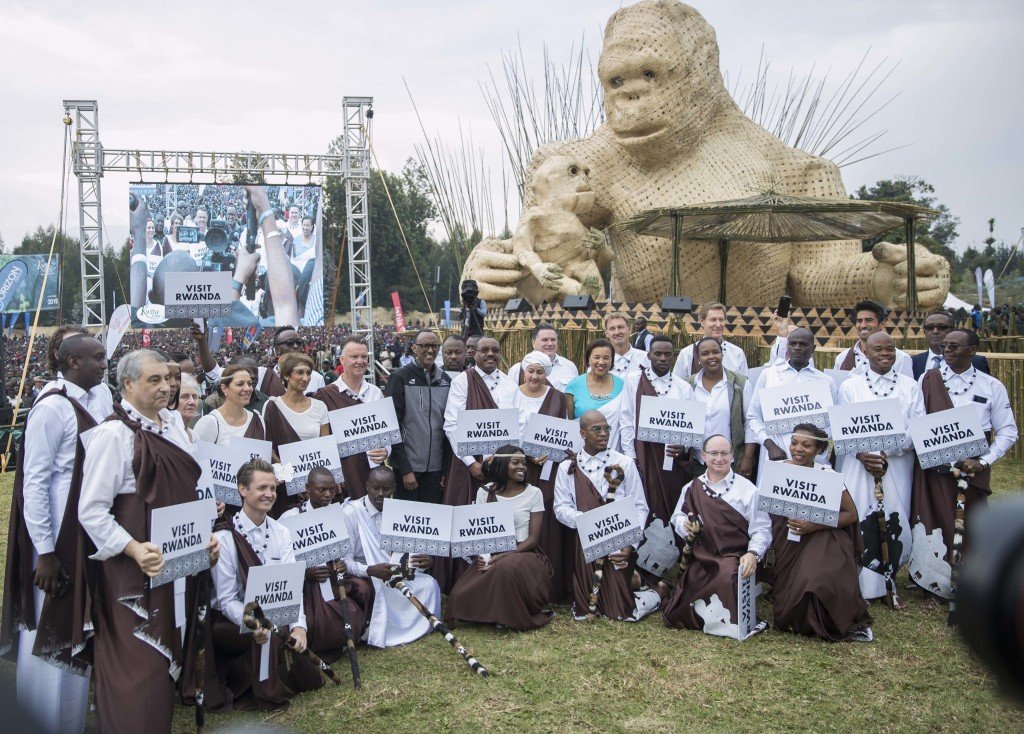
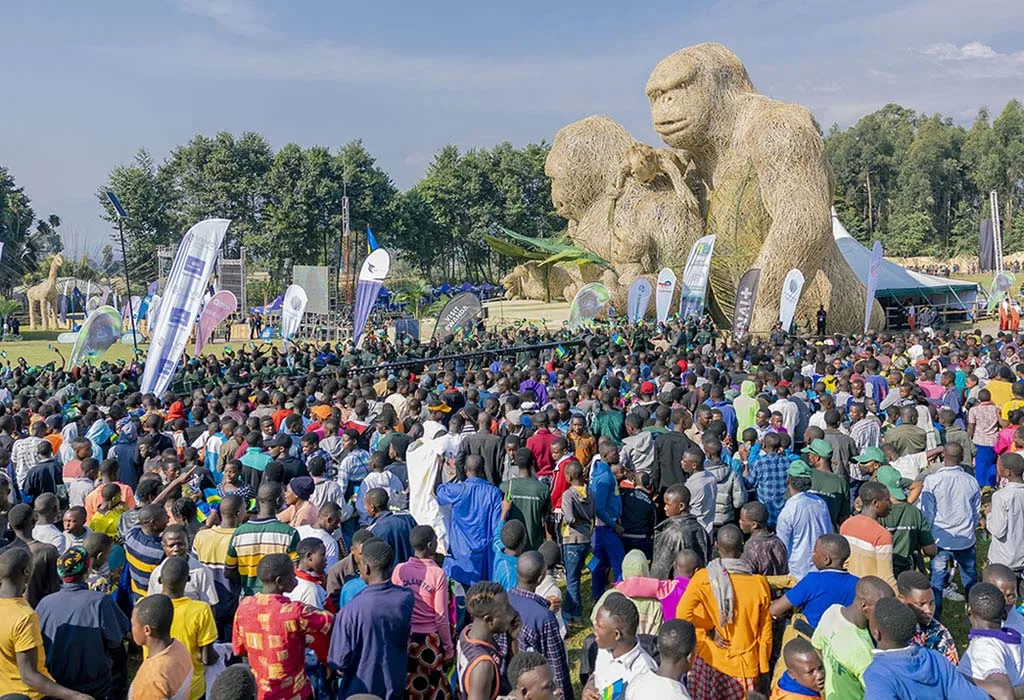
The names selected in 2026 carried different messages. Ishakwe, meaning determination, was given to a female from the Muhoza family. Shikama, meaning stand strong, was given to a male in the historic Susa family. Mucyo, meaning light, was selected for an infant belonging to the Ntambara family, while Muhuza, referring to one who connects or brings together, reflected the shared responsibility of Rwanda, Uganda and the Democratic Republic of Congo in protecting the mountain gorilla’s transboundary habitat.
Other names celebrated bravery, leadership, unity, thanksgiving, resilience and conservation progress. The individual meanings make the ceremony particularly engaging because visitors do not simply hear a series of names. Each name communicates an idea about the animal, its family, Rwanda or the wider conservation effort.
Where Is the Gorilla Naming Ceremony Held?
The Gorilla naming ceremony in Rwanda is associated with Kinigi in Musanze District at the foothills of Volcanoes National Park. The location could hardly be more appropriate because the dramatic Virunga volcanoes rise behind the communities and landscapes connected with Rwanda’s mountain gorillas.
Kinigi is also the principal tourism gateway for gorilla trekking. Visitors staying around Musanze and Volcanoes National Park generally travel to the park headquarters area in the morning for gorilla trekking registration and briefing before being allocated to their groups.
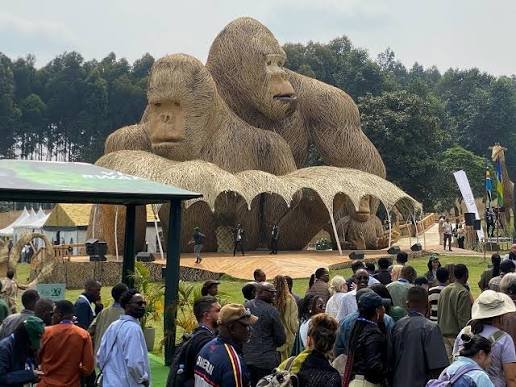
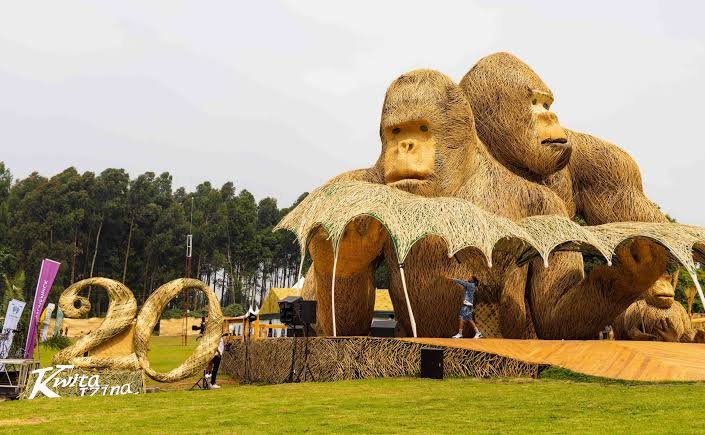
The road journey from Kigali into the Volcanoes region passes through Rwanda’s characteristic hilly countryside and usually requires approximately two and a half to three hours depending on traffic, road conditions and the exact accommodation being used. This accessibility makes it possible to include Kwita Izina in a relatively short Rwanda itinerary without requiring domestic flights or extremely long transfers.
NextGen Safaris can arrange private transportation from Kigali and accommodation near Kinigi so travelers do not need to begin the ceremony day with a long early-morning drive from the capital.
Why Are Baby Mountain Gorillas Given Names?
Naming is both symbolic and practical. Mountain gorillas live in family groups whose individual members are closely observed by trackers, researchers and conservation teams. Recognizing each individual makes it possible to maintain accurate histories of the population.
A baby’s identity can be linked with its mother, family group, approximate birth date and later stages of development. Over the years, conservation teams may record how the young gorilla interacts with siblings, how it responds to the dominant silverback and how its social position changes as it matures.
Females may eventually transfer between groups, while males can remain with their birth families or develop different social roles. Family groups themselves may split when leadership changes or when mature animals establish new relationships. Individual names make these complex histories much easier to document and communicate.
The public Gorilla naming ceremony in Rwanda brings this scientific practice to a much larger audience. Instead of a new birth remaining known only to researchers and trackers, the arrival becomes a national conservation event.
Who Names the Baby Gorillas at Kwita Izina?
Rwanda invites a diverse selection of people to participate as official namers. These have included conservation professionals, park personnel, researchers, community representatives, business leaders, athletes, artists, international personalities and other individuals connected with conservation, Rwanda or global causes.
The intention is not simply to attract famous names. Kwita Izina uses the international attention generated by participating guests to expand awareness of mountain gorilla conservation.
The 2026 ceremony again followed this approach, with namers coming from conservation, tourism, business, sport, entertainment, philanthropy and public service. Previous editions have also recognized the importance of the people working directly with gorillas. During the 2020 virtual celebration, for example, park rangers, guides, wardens, trackers, porters and veterinary professionals were among those naming the babies.
This combination reinforces the idea that gorilla protection depends on many different people rather than one organization or celebrity.
Mountain Gorilla Conservation and Kwita Izina
The most important purpose of the Gorilla naming ceremony in Rwanda is conservation awareness. Rwanda uses Kwita Izina to celebrate new births while reminding visitors that mountain gorilla recovery has required decades of intensive protection.
More than 1,060 mountain gorillas now live in the wild across the Virunga Massif and Bwindi ecosystem, according to Rwanda Development Board’s 2026 Kwita Izina information. Their survival has depended on collaboration between governments, conservation organizations, researchers, veterinary teams, rangers and surrounding communities.
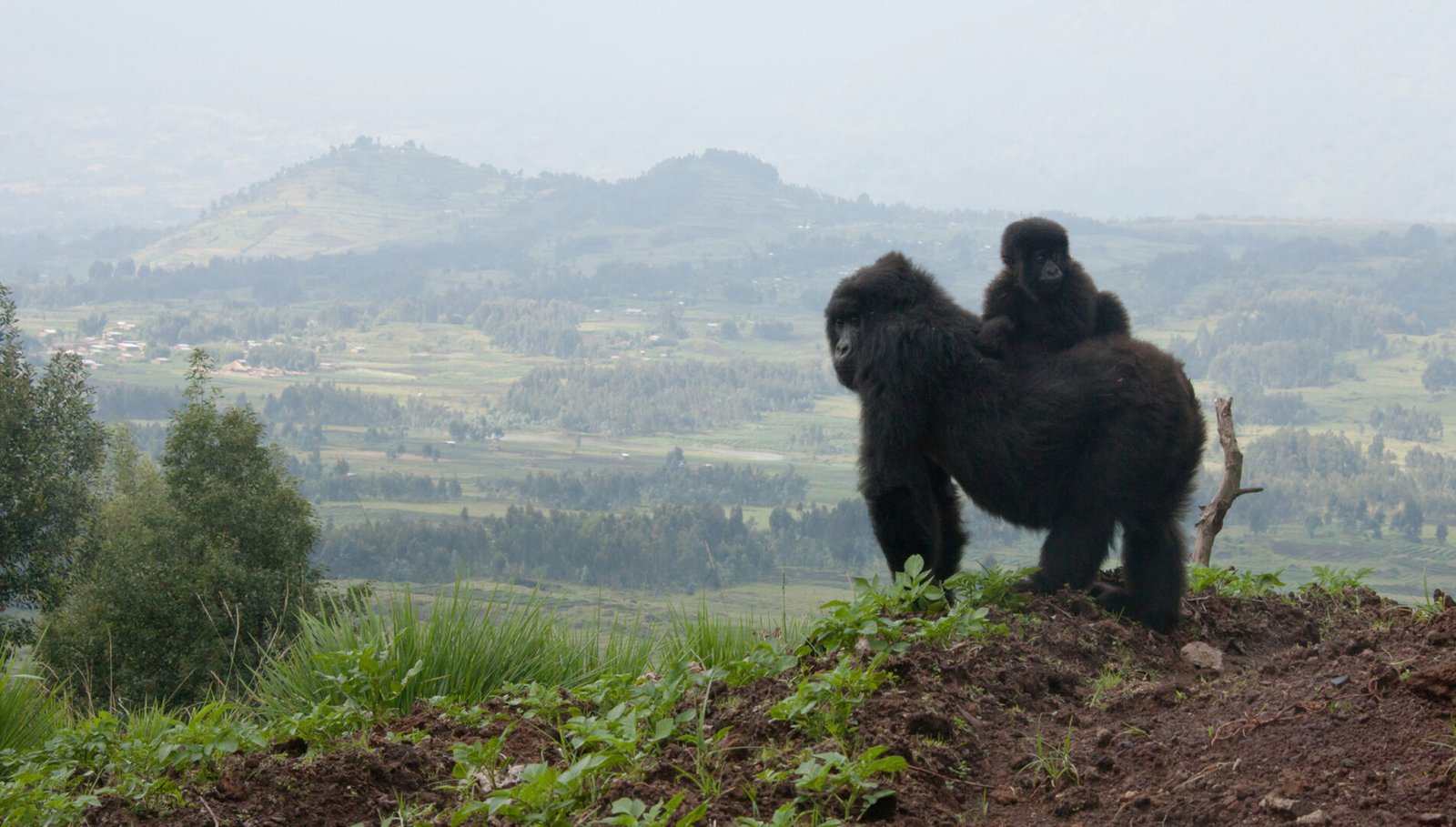
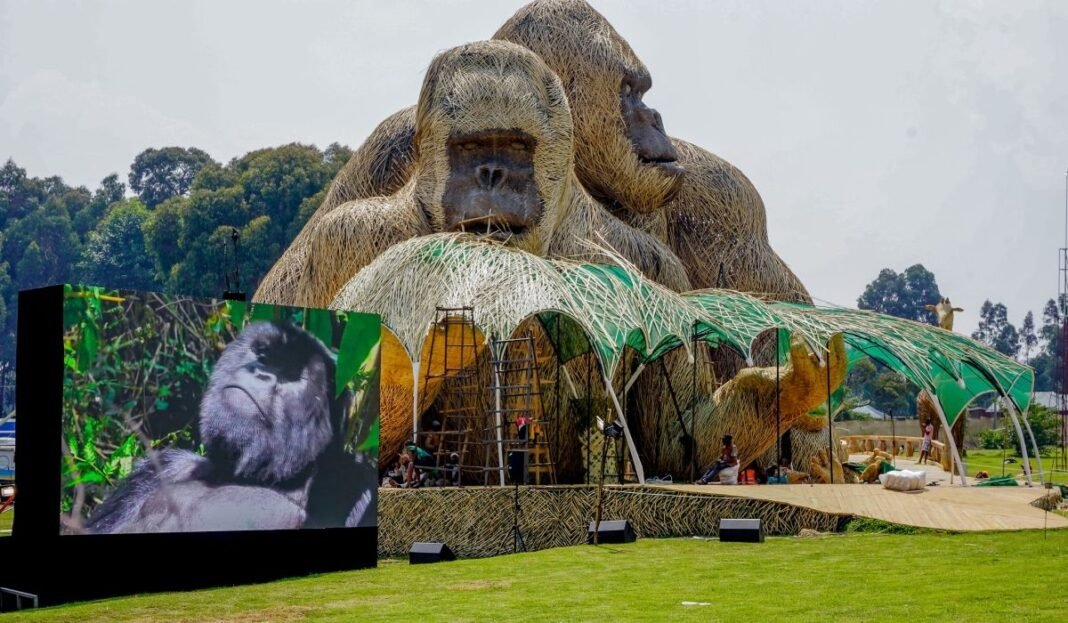
The Virunga population is shared between Rwanda, Uganda and the Democratic Republic of Congo. Rwanda’s gorillas occupy Volcanoes National Park, Uganda protects mountain gorillas in Bwindi Impenetrable and Mgahinga Gorilla national parks, while the Democratic Republic of Congo protects gorillas within Virunga National Park.
This geographical reality means conservation cannot stop at national borders. Gorillas and ecosystems are part of a wider landscape, making cooperation important for research, habitat management and protection. Travelers can experience Rwanda’s part of this conservation story through our Rwanda Gorilla Trekking Guide or compare different regional experiences through a combined Rwanda and Uganda gorilla itinerary.
The Expansion of Volcanoes National Park
Rwanda’s conservation ambitions extend beyond protecting the current boundaries of Volcanoes National Park. The country is pursuing a long-term program intended to increase habitat while simultaneously addressing the needs of surrounding communities.
During the 2026 Kwita Izina celebrations, Rwanda Development Board described plans to expand Volcanoes National Park by approximately 3,740 hectares and establish roughly 6,620 hectares of buffer zones. The broader program is expected to improve livelihood conditions for more than 17,000 people while creating additional space around one of Africa’s most important mountain gorilla habitats.
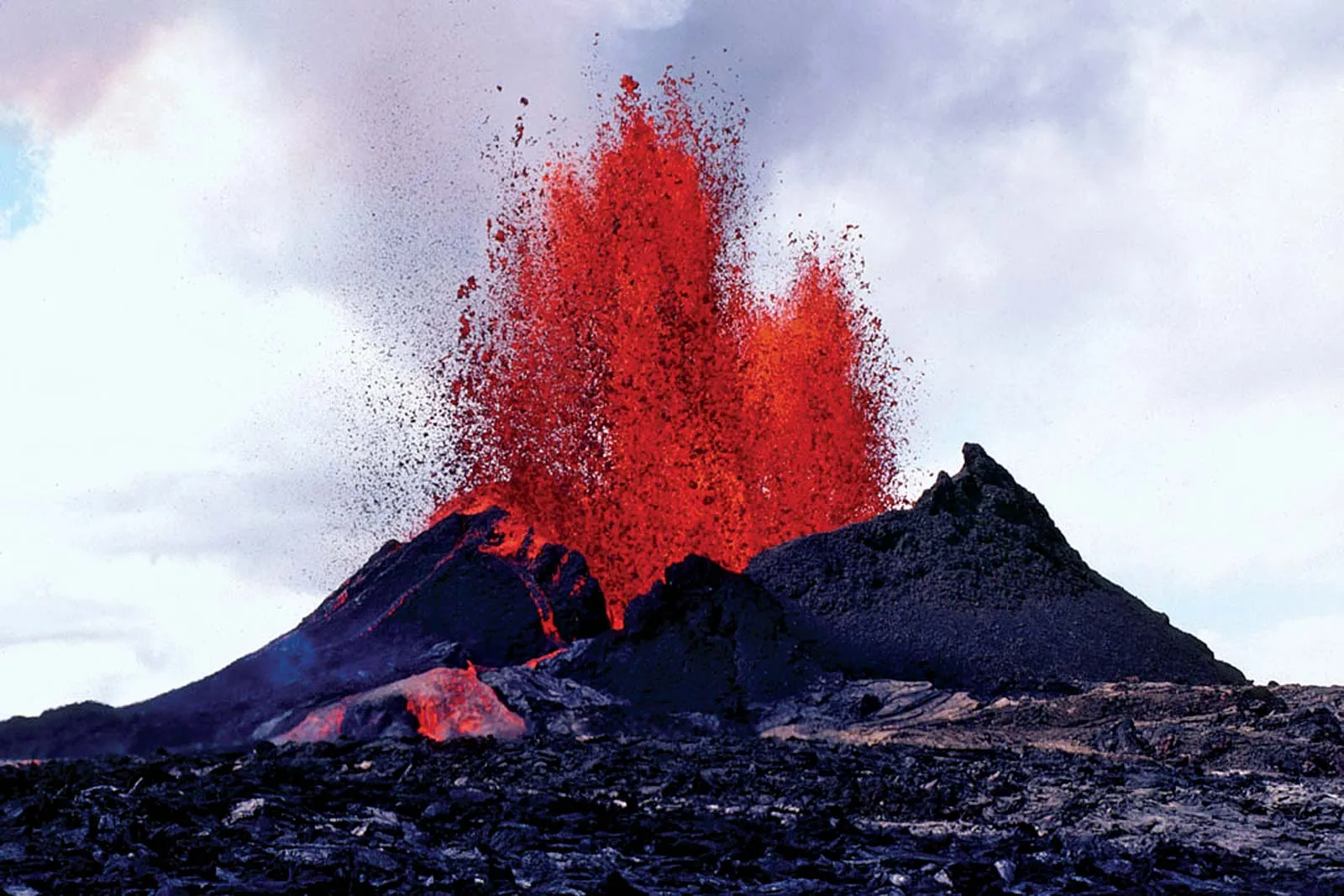
Habitat is critical because an increasing gorilla population eventually requires sufficient space for groups to establish territories, forage and move. Conservation success therefore creates new management challenges.
Kwita Izina gives these longer-term issues international visibility. Celebrating baby gorillas is joyful, but every new birth also reinforces the need for continued habitat protection.
Combining Kwita Izina with Gorilla Trekking
The most rewarding way to experience the Gorilla naming ceremony in Rwanda is to combine it with an actual mountain gorilla trek. Kwita Izina introduces the conservation story at the national level. Gorilla trekking then takes you directly into the rainforest environment where the animals live.
The experience begins with an early briefing before travelers are allocated to habituated gorilla families. Professional trackers and guides lead visitors into Volcanoes National Park, with trekking time depending on the location of the allocated family that morning.
Once the gorillas are located, visitors observe their social interactions while following strict conservation rules. Seeing young gorillas playing around their mothers after having attended a ceremony celebrating new births creates a particularly meaningful connection between the conservation message and the animals themselves.
The current standard international visitor permit costs US$1,500 per person, and the minimum age for gorilla trekking is 15 years. Rwanda Development Board advises visitors to report for registration at 07:00, while permit categories and promotional rates may vary according to nationality and residency.
Our 3 Days Mountain Gorilla Trekking in Rwanda can be extended around Kwita Izina, while travelers seeking premium accommodation can consider our Rwanda Luxury Safari.
Visiting the Karisoke and Dian Fossey Conservation Legacy
Kwita Izina becomes even more meaningful when travelers understand the scientific history behind Rwanda’s mountain gorilla conservation.
Dian Fossey established the Karisoke Research Center in the Virunga Mountains in 1967 and helped establish some of the long-term methods through which individual gorillas became known and studied. The scientific habit of identifying gorillas individually long predates the modern public naming festival.
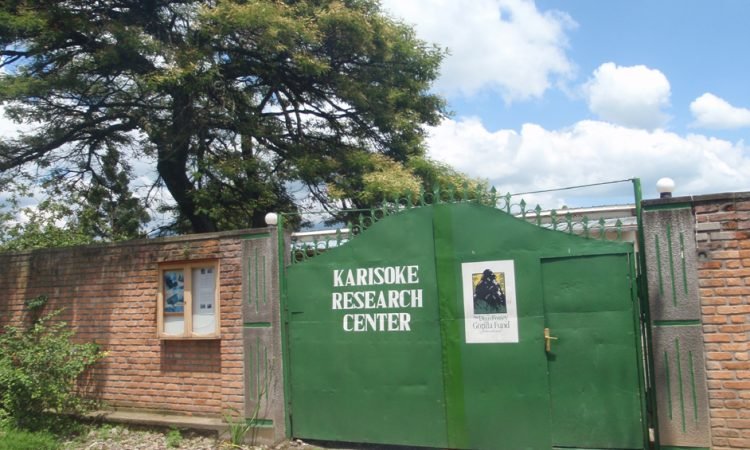
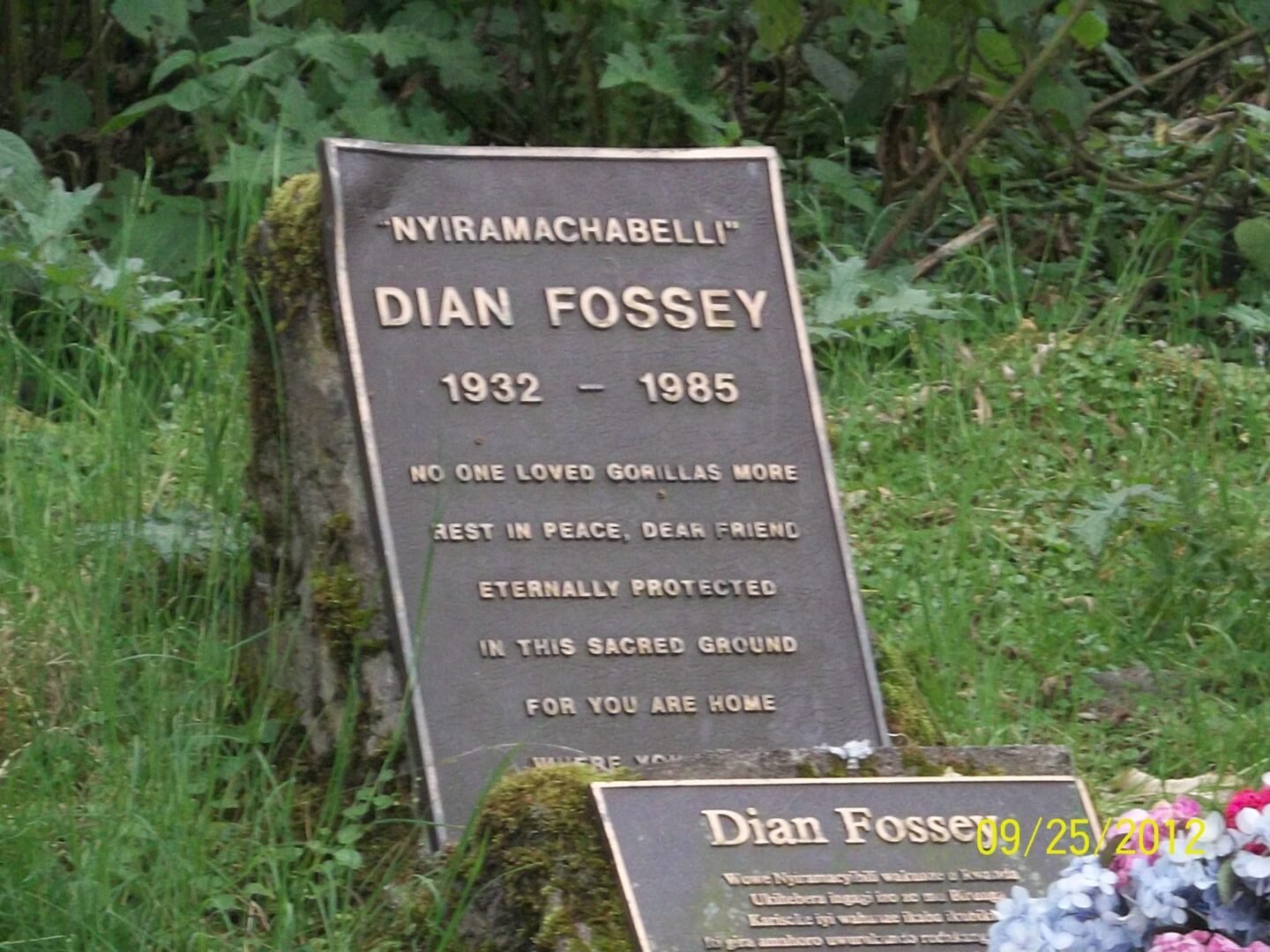
Travelers can explore this history through the Dian Fossey hike toward the historic Karisoke area and Fossey’s burial site.
The modern Ellen DeGeneres Campus of the Dian Fossey Gorilla Fund near Volcanoes National Park provides another option for travelers interested in research and conservation without undertaking the more demanding forest hike.
Adding one of these experiences gives context to Kwita Izina. The ceremony celebrates new life, while Karisoke demonstrates how decades of research allow scientists to understand what happens to those individuals as they grow.
Golden Monkey Trekking After Kwita Izina
Mountain gorillas are not the only remarkable primates living within Volcanoes National Park. Travelers staying several nights around Musanze can also participate in golden monkey trekking.
Golden monkeys occupy bamboo-rich areas of the Virunga Mountains and provide an experience quite different from gorilla trekking. They are smaller, highly active and frequently move rapidly through vegetation.
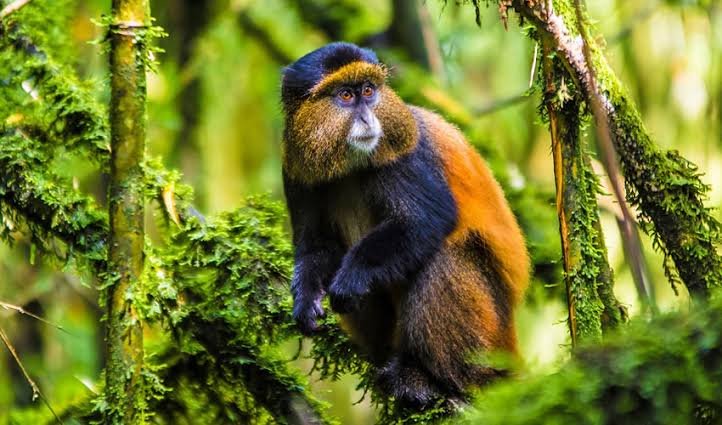
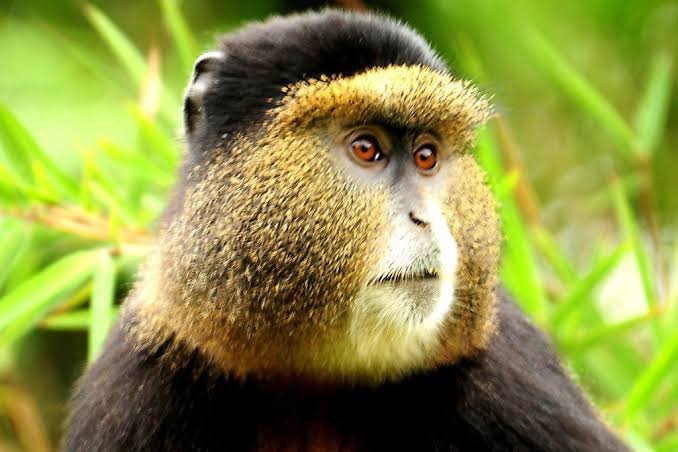
Adding golden monkeys can also justify spending an additional night around Volcanoes National Park instead of leaving immediately after the naming ceremony or gorilla trek.
This slower pace is especially useful during Kwita Izina because accommodation demand and visitor numbers around Musanze can increase considerably. Rather than constantly transferring between Kigali and Kinigi, travelers can remain within the region and explore multiple activities.
Kwita Izina and Lake Kivu
After the excitement of Kwita Izina and a physically active gorilla trek, Lake Kivu provides an attractive change of pace. Travelers can leave the volcanic highlands and continue toward Rwanda’s western lakeshore for a quieter stay. The scenery around Lake Kivu offers dramatic hills, water views and opportunities to relax before continuing to Kigali or another national park.
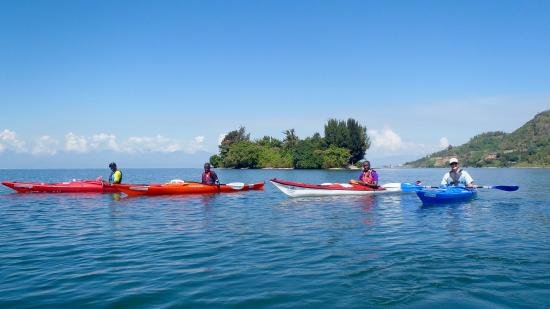
For couples and honeymooners, this combination works particularly well. Kwita Izina provides culture and conservation, gorilla trekking delivers the central wildlife experience, and Lake Kivu introduces time for relaxation. NextGen Safaris can therefore design a journey that feels balanced rather than scheduling strenuous activities on every morning.
Why Experience Kwita Izina with NextGen Safaris?
NextGen Safaris can design a private Rwanda journey around Kwita Izina while coordinating the logistics that surround the ceremony. Instead of booking the event, gorilla permit, accommodation and transfers independently, travelers can have the wider itinerary organized as one complete journey.
We can arrange your airport reception in Kigali, private transportation to Musanze, accommodation around Volcanoes National Park and your gorilla trekking arrangements. The itinerary can then be extended with the Dian Fossey hike, Lake Kivu, Akagera or Nyungwe according to the time available.
Travelers wanting a short journey can begin with our 3 Days Mountain Gorilla Trekking in Rwanda, while those wanting more comfort and additional nights can explore our Rwanda Luxury Safari.
Frequently Asked Questions About the Gorilla Naming Ceremony in Rwanda
1. What is the Gorilla naming ceremony in Rwanda?
The Gorilla naming ceremony in Rwanda is an annual conservation celebration known as Kwita Izina. During the event, newly born mountain gorillas from Volcanoes National Park are officially given names in a ceremony inspired by Rwanda’s traditional practice of naming newborn children.
2. What does Kwita Izina mean?
Kwita Izina means “to give a name” in Kinyarwanda. The event reflects Rwanda’s cultural tradition of gathering family and community members to name a newborn child, with the same idea adapted to celebrate newly born mountain gorillas.
3. Where is the Gorilla naming ceremony in Rwanda held?
The Gorilla naming ceremony in Rwanda is held in Kinigi, Musanze District, at the foothills of Volcanoes National Park. This location is especially meaningful because it is close to the natural habitat of Rwanda’s mountain gorillas.
4. When is the Gorilla naming ceremony in Rwanda held?
Kwita Izina is generally held in September, although the exact date changes from year to year. Travelers should check the officially announced date before booking flights and accommodation.
5. Why are baby gorillas given names in Rwanda?
Naming helps researchers, trackers and conservation teams identify individual gorillas and follow their development over time. The public ceremony also helps raise awareness about mountain gorilla conservation and celebrates successful births within protected gorilla families.
6. Who chooses the names during the Gorilla naming ceremony in Rwanda?
Names are selected carefully and are usually connected with conservation, hope, resilience, leadership, unity, strength or the circumstances surrounding the baby gorilla’s birth. The names are then officially presented by invited namers during Kwita Izina.
7. Who can become a gorilla namer at Kwita Izina?
Rwanda invites different personalities to serve as official namers, including conservationists, researchers, athletes, artists, business leaders, philanthropists, public figures and people who have contributed to wildlife conservation or Rwanda’s development.
8. Can tourists attend the Gorilla naming ceremony in Rwanda?
Yes, international visitors travel to Rwanda specifically for Kwita Izina. However, access arrangements, seating and registration procedures can vary each year, so travelers should confirm current event information before arrival.
9. Can I combine Kwita Izina with gorilla trekking?
Yes. Combining the ceremony with gorilla trekking in Rwanda is one of the best ways to experience the conservation story in greater depth. The ceremony introduces the individual gorillas and conservation work, while trekking allows visitors to observe a habituated gorilla family inside Volcanoes National Park.
10. How many days should I spend in Rwanda for Kwita Izina?
A four- to five-day itinerary works well for travelers who want to attend Kwita Izina and also include gorilla trekking, Kigali and another Volcanoes National Park activity. Additional days can be added for Lake Kivu, Akagera or Nyungwe.
11. Can I visit the Dian Fossey site during the Gorilla naming ceremony in Rwanda?
Yes. Travelers can add the Dian Fossey hike to learn more about Rwanda’s mountain gorilla research and conservation history. This experience complements Kwita Izina very well because it connects the modern naming celebration with the long history of individual gorilla monitoring.
12. Is Kwita Izina only about naming baby gorillas?
No. Although naming the gorillas is the central feature, Kwita Izina also celebrates conservation, community development, tourism, park rangers, researchers and the people who work to protect mountain gorillas and their habitat.
13. Does the Gorilla naming ceremony in Rwanda involve bringing baby gorillas to the event?
No. The baby gorillas remain safely inside their natural forest habitat with their families. The naming is symbolic, and information, photographs or videos of the gorillas may be presented during the ceremony.
14. What should I book early for a Kwita Izina safari?
Travelers should book accommodation around Musanze and Volcanoes National Park early because demand can increase around the event. Gorilla permits should also be secured in advance if trekking is part of the itinerary.
15. How can I book a Gorilla naming ceremony in Rwanda safari with NextGen Safaris?
You can begin by sharing your preferred travel dates, number of travelers and the activities you want to include. NextGen Safaris can arrange accommodation, private transport, gorilla trekking logistics and additional experiences around Kwita Izina through the NextGen Safaris booking page.
Plan Your Gorilla Naming Ceremony in Rwanda Safari
The Gorilla naming ceremony in Rwanda represents far more than a colorful annual festival. Kwita Izina connects an ancient Rwandan naming tradition with modern wildlife science, international tourism, community development and the long-term protection of one of the world’s most remarkable primates.
Since the official ceremony began in 2005, it has evolved into a global conservation platform. By the conclusion of the 21st edition on 4 September 2026, 460 mountain gorillas had been named through Kwita Izina, including the 22 babies celebrated during the latest ceremony.
Those numbers tell a conservation story, but attending the ceremony reveals something deeper. Visitors see communities celebrating alongside researchers, rangers, conservationists and international guests. They hear names carrying messages of courage, connection, resilience and hope. They stand beneath the Virunga volcanoes only a short distance from the forests where those babies remain safely with their mothers and families.
Combining Kwita Izina with gorilla trekking in Rwanda transforms the journey further. The ceremony introduces the meaning behind the names, while the forest encounter reveals the living family structures that researchers and trackers work every day to understand and protect.
Your Rwanda journey can continue through the Dian Fossey conservation legacy, include golden monkeys, relax beside Lake Kivu or expand into a complete countrywide journey using our Best Rwanda Safari Packages.
When you are ready to experience a future Gorilla naming ceremony in Rwanda, contact NextGen Safaris with your expected travel dates and preferred safari length. We can design the journey around the official Kwita Izina program, arrange your gorilla trekking logistics and build enough time around Volcanoes National Park for you to experience not only Rwanda’s famous mountain gorillas, but also the conservation culture that has helped protect them for future generations.