
Luambe National Park Safari Guide, Wildlife, Best Time & Travel Tips
Overview of Luambe National Park
Luambe National Park is one of Zambia’s smallest yet most fascinating national parks. Located in the heart of the Luangwa Valley, Luambe sits between two of Zambia’s most famous wildlife destinations, South Luangwa National Park and North Luangwa National Park.
Although Luambe National Park covers a relatively small area of approximately 254 square kilometers, it plays an important ecological role within the greater Luangwa Valley ecosystem. The park protects important wildlife corridors along the Luangwa River and provides habitat for a wide range of animals and bird species.
For travelers seeking a quieter and more exclusive safari experience, Luambe National Park offers an exceptional opportunity to explore Zambia’s wilderness away from large crowds. Unlike some popular safari destinations, Luambe remains largely untouched by mass tourism, allowing visitors to experience the African bush in a peaceful and authentic setting.
The park is known for its diverse landscapes, including riverine forests, lagoons, woodland areas, and floodplains that support abundant wildlife. The Luangwa River, which forms the eastern boundary of the park, provides water for animals throughout the year and attracts wildlife during the dry season.
Luambe National Park is also part of one of Africa’s most important conservation regions. Together with South Luangwa and North Luangwa National Parks, it forms a protected wilderness corridor that supports large populations of elephants, predators, antelope species, and birdlife.
Because of its location within the Luangwa Valley, Luambe National Park provides excellent opportunities for game drives, birdwatching, photography safaris, and guided walking safaris.
For travelers looking to explore a lesser-known safari destination with rich biodiversity and scenic landscapes, Luambe National Park offers a unique and rewarding experience.
Where is Luambe National Park Located?
Luambe National Park is located in eastern Zambia within the Luangwa Valley, one of the most wildlife-rich ecosystems in southern Africa.
The park lies directly between two larger protected areas:
- South Luangwa National Park to the south
- North Luangwa National Park to the north
This central position makes Luambe National Park an important wildlife corridor connecting the northern and southern sections of the Luangwa Valley.
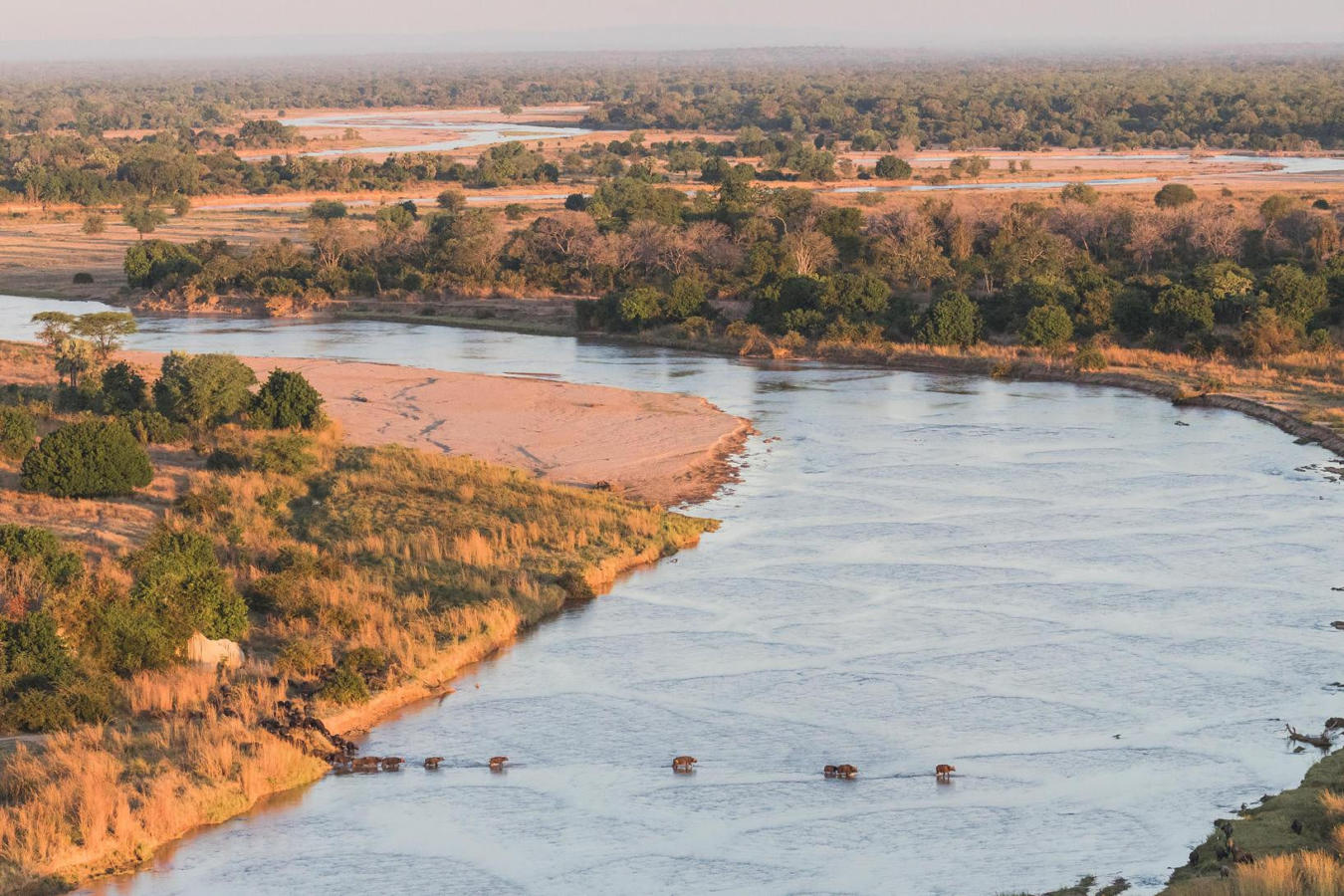
The Luangwa River forms the eastern boundary of the park and plays a crucial role in supporting its ecosystems. The river provides water for wildlife, nourishes vegetation through seasonal flooding, and creates habitats for aquatic species such as hippos and crocodiles.
The western boundary of Luambe National Park rises toward the Muchinga Escarpment, a dramatic geological formation that overlooks the Luangwa Valley. This escarpment creates scenic landscapes and influences rainfall patterns in the region.
The park is accessible through Mfuwe Airport, which serves as the primary gateway for travelers visiting the Luangwa Valley. From Mfuwe, visitors can reach Luambe National Park via guided safari vehicles or charter flights.
Because Luambe is less developed than some neighboring parks, access roads are more remote, which contributes to the park’s sense of wilderness and exclusivity.
History of Luambe National Park
Luambe National Park was officially established in 1972, the same year that North Luangwa National Park was created. The goal of establishing Luambe was to protect an important section of the Luangwa Valley ecosystem and create a conservation corridor between the northern and southern parks.
Before its designation as a national park, the region was used primarily for wildlife hunting and local resource use. However, conservation authorities recognized that protecting this area would help safeguard wildlife populations that move between different parts of the Luangwa Valley.
For many years, Luambe National Park remained largely undeveloped and received very few visitors. Limited infrastructure and its relatively small size meant that most safari tourism focused on South Luangwa National Park.
In recent years, however, conservation organizations and safari operators have begun to recognize the ecological importance of Luambe. Efforts have been made to restore wildlife habitats, strengthen anti-poaching patrols, and develop sustainable tourism activities within the park.
Today, Luambe National Park is gaining attention as a hidden gem of the Luangwa Valley, offering visitors a chance to explore one of Zambia’s lesser-known wilderness areas.
Landscapes and Ecosystems of Luambe National Park
Despite its relatively small size, Luambe National Park contains a surprising diversity of landscapes and ecosystems.
The Luangwa River floodplain forms one of the park’s most important habitats. During the rainy season, the river floods surrounding areas, creating fertile soils that support grasses and vegetation.
These floodplains attract grazing animals such as buffalo, antelope, and elephants.
Riverine forests grow along the banks of the Luangwa River and seasonal lagoons. These forests provide shade, food, and shelter for many animals including monkeys, birds, and smaller mammals.
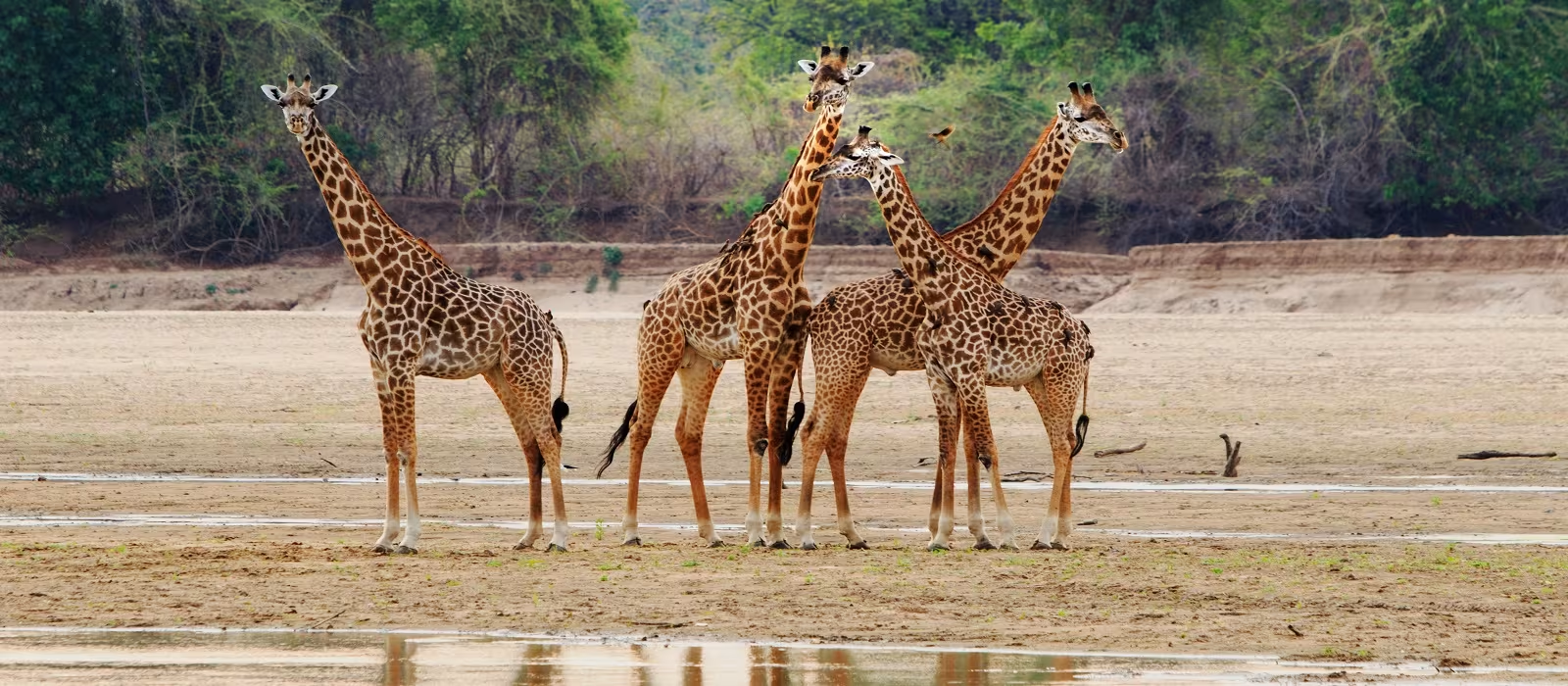
Miombo woodlands cover much of the interior of Luambe National Park. These woodlands are dominated by tall trees and seasonal vegetation that support giraffes, antelope species, and birdlife.
The park also contains numerous oxbow lagoons, which form when the Luangwa River changes course over time. These lagoons become essential water sources for wildlife during the dry season.
Because of this combination of river systems, floodplains, forests, and woodlands, Luambe National Park supports a wide variety of wildlife species.
The Role of Luambe in the Luangwa Valley Ecosystem
Luambe National Park plays an important ecological role within the greater Luangwa Valley.
Many animals move between South Luangwa National Park and North Luangwa National Park during seasonal migrations. Luambe serves as a critical wildlife corridor that allows these animals to move safely between protected areas.
Without this corridor, wildlife populations could become fragmented and vulnerable.
The park’s river ecosystems also help support aquatic species such as fish, crocodiles, and hippos while providing feeding grounds for birds and mammals.
Because Luambe remains relatively undisturbed, it helps maintain the ecological balance of the Luangwa Valley.
Wildlife in Luambe National Park
Luambe National Park may be one of Zambia’s smaller protected areas, but it supports an impressive variety of wildlife species due to its strategic location within the Luangwa Valley ecosystem. Positioned between South Luangwa National Park and North Luangwa National Park, Luambe serves as an important wildlife corridor that allows animals to move freely between these larger protected areas.
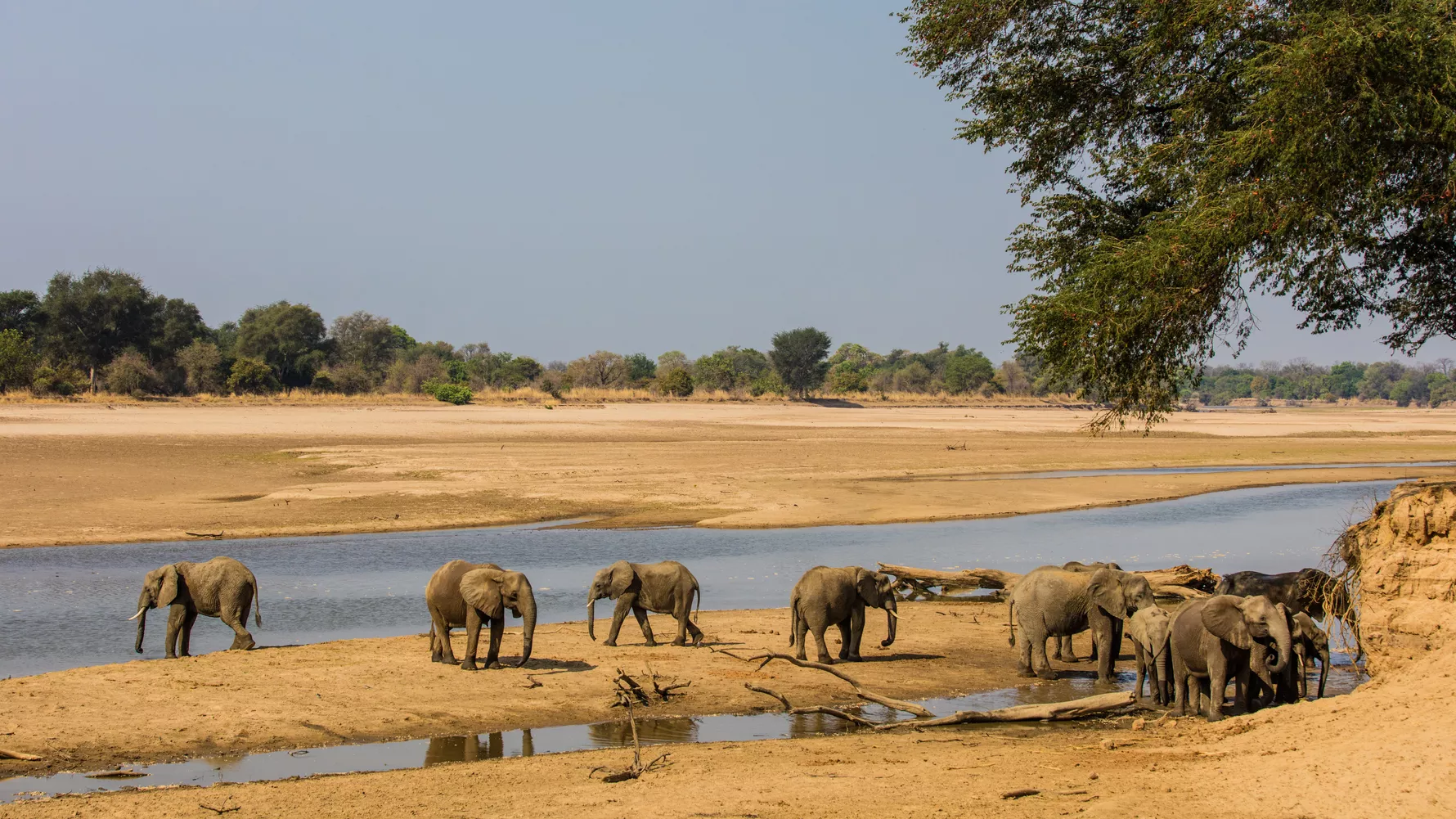
The Luangwa River, which forms the eastern boundary of Luambe National Park, plays a crucial role in sustaining wildlife populations. During the dry season, animals gather along the riverbanks to drink and feed on the lush vegetation that grows near the water.
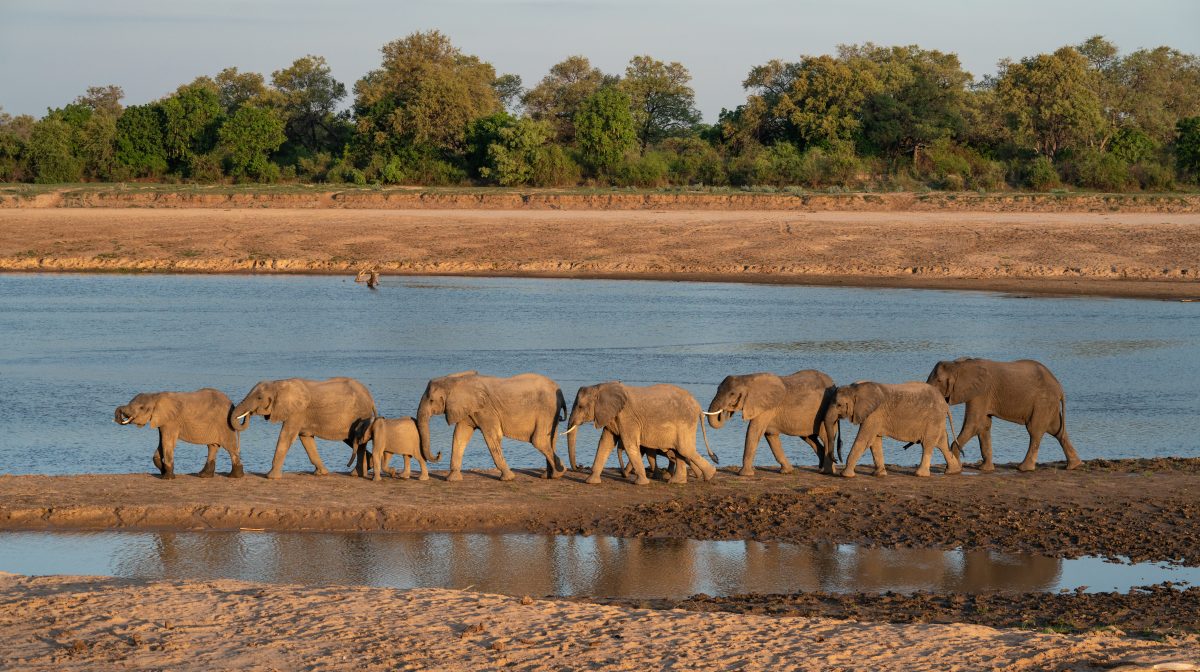
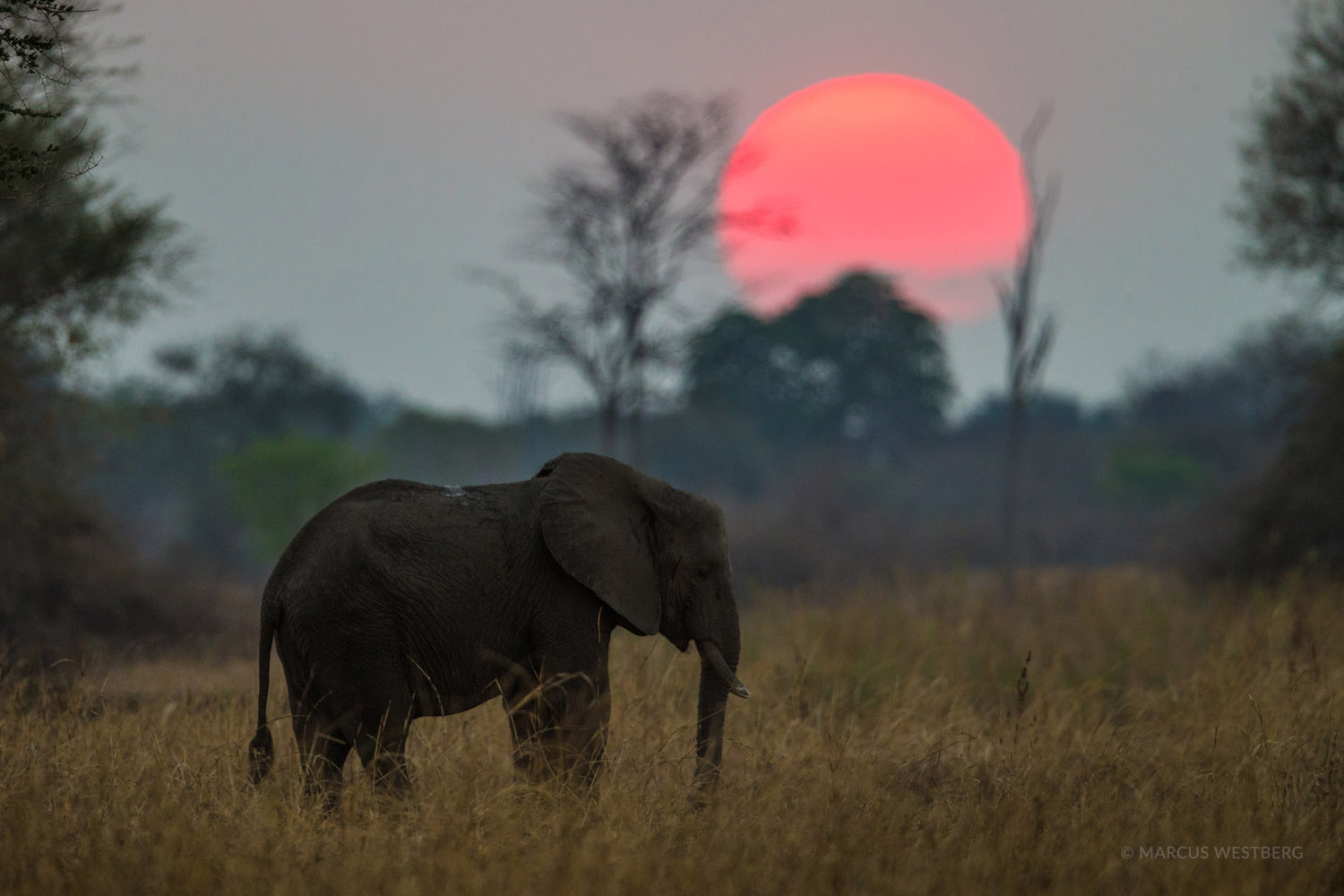
One of the most commonly seen animals in Luambe National Park is the African elephant. Herds of elephants frequently move through the park’s woodlands and floodplains, especially during the dry months when water becomes scarce in surrounding areas. Elephants often gather near the Luangwa River to drink, bathe, and cool themselves during the heat of the day.
Cape buffalo are another dominant species in Luambe National Park. These powerful herbivores often form large herds that graze across the park’s floodplains and woodland areas. Buffalo play an important ecological role by shaping vegetation and providing prey for large predators.
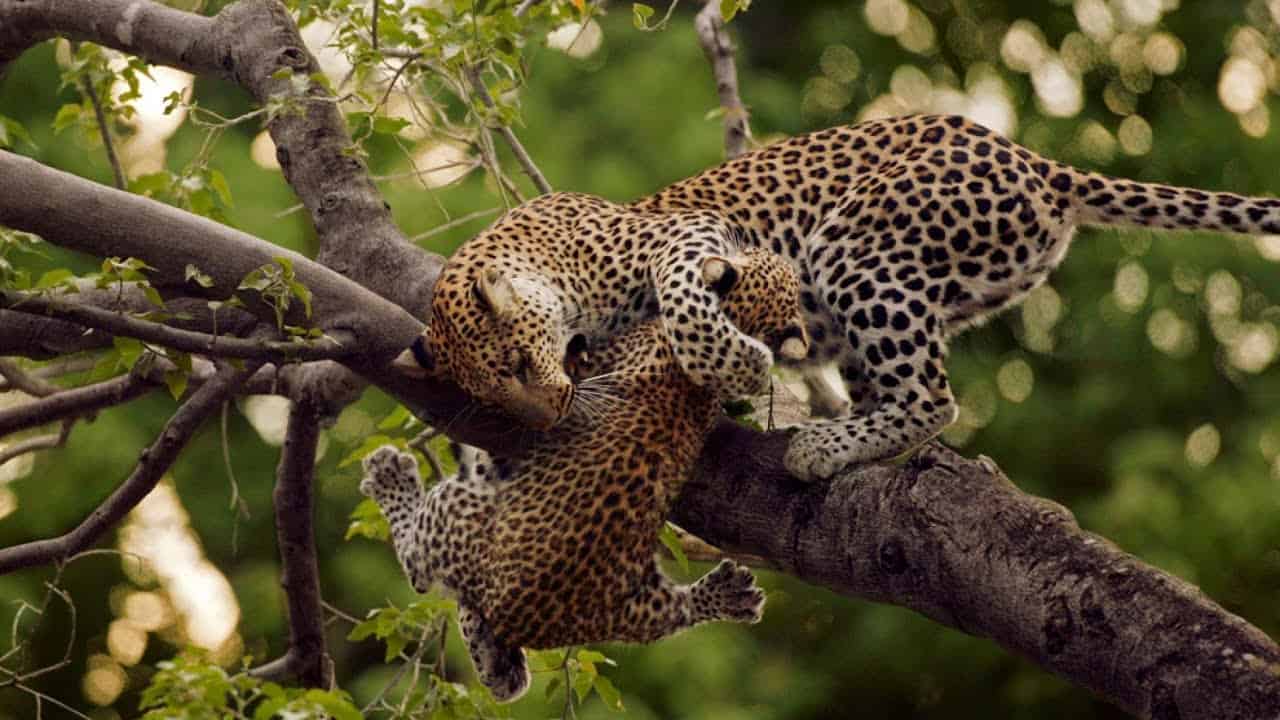
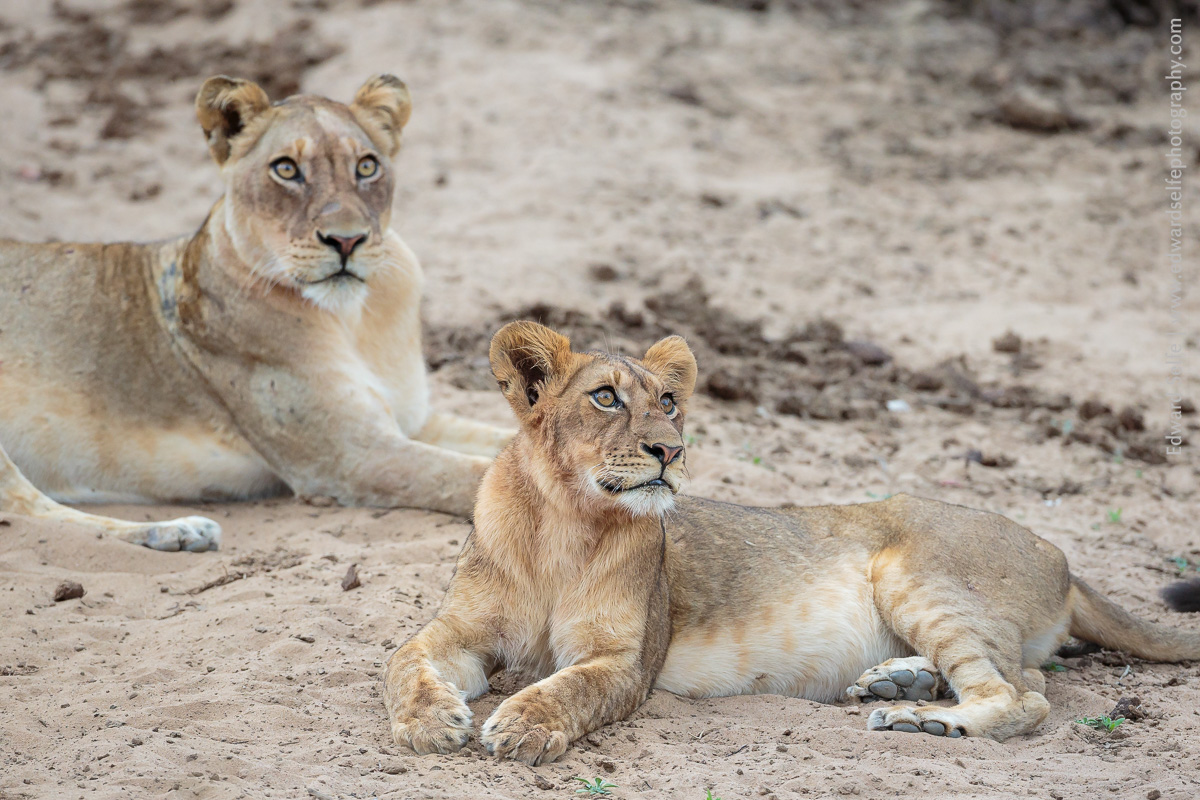
Predators such as lions, leopards, and spotted hyenas are occasionally seen in Luambe National Park, particularly near the river corridors where prey animals gather. Leopards in particular are known to inhabit the dense riverine forests along the Luangwa River.
Several species of antelope thrive within Luambe National Park. These include puku, impala, bushbuck, waterbuck, kudu, and reedbuck. These animals are commonly seen grazing on floodplains or browsing within woodland habitats.
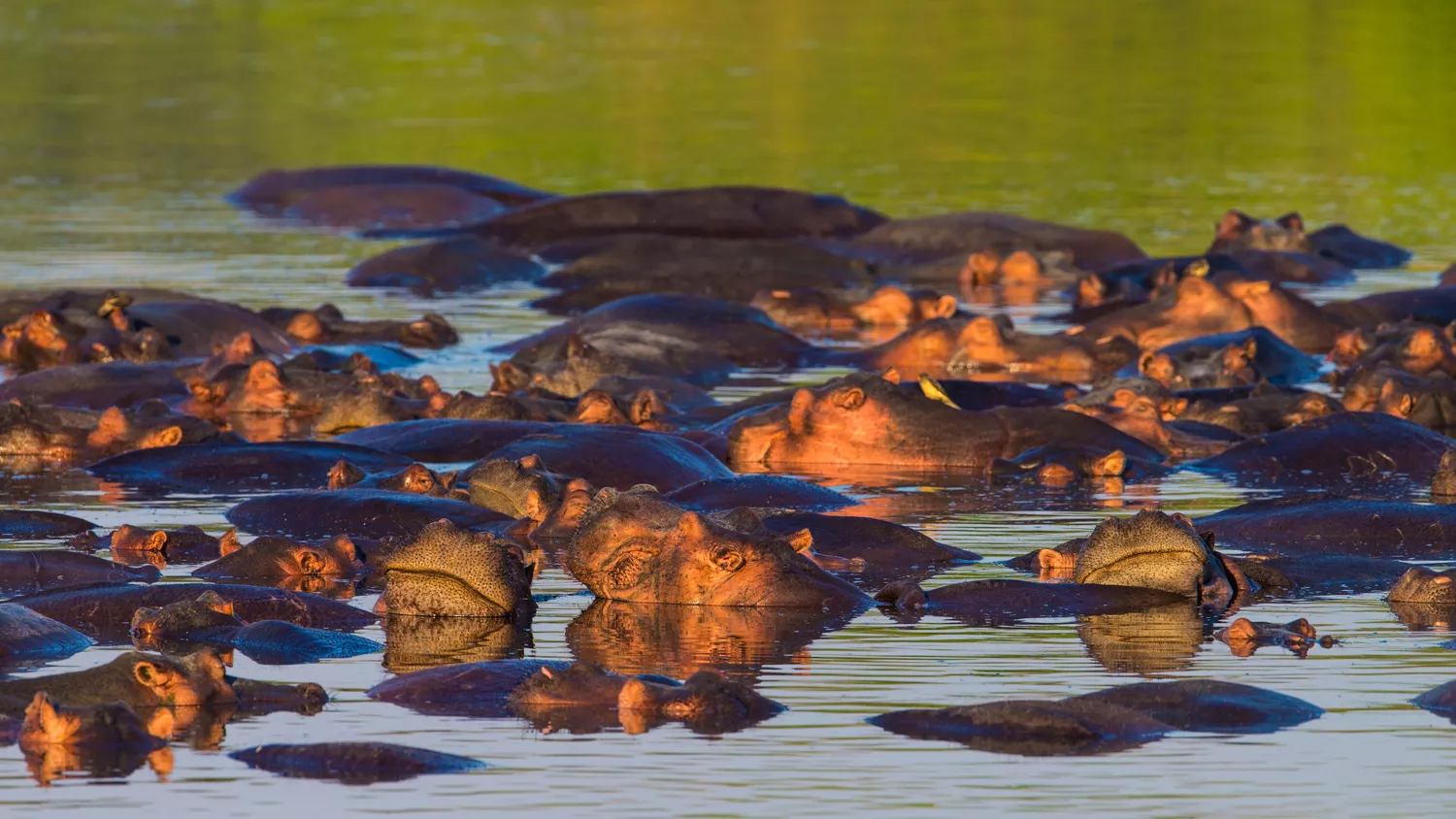
The Luangwa River itself supports large populations of hippos and Nile crocodiles. Hippos spend most of the day submerged in the water before emerging at night to graze on nearby grasslands, while crocodiles bask on sandbanks and hunt fish and other animals along the river.
Because Luambe National Park receives fewer visitors than some other safari destinations in Zambia, wildlife encounters here often feel more natural and undisturbed. For travelers seeking a quieter safari experience with excellent wildlife viewing opportunities, Luambe National Park provides a rewarding destination.
Birds of Luambe National Park
Luambe National Park is also an excellent destination for birdwatching enthusiasts. The park’s diverse habitats, including riverine forests, lagoons, floodplains, and woodlands, support a wide range of bird species throughout the year.
More than 400 bird species have been recorded in the Luangwa Valley, and many of these can be seen within Luambe National Park.
The Luangwa River and its surrounding wetlands provide ideal conditions for waterbirds and wading birds. Visitors frequently encounter herons, egrets, storks, and pelicans searching for fish in shallow waters.
One of the most iconic birds found along the Luangwa River is the African fish eagle, whose distinctive call echoes across the valley. These powerful birds of prey are often seen perched in tall trees overlooking the river as they search for fish.
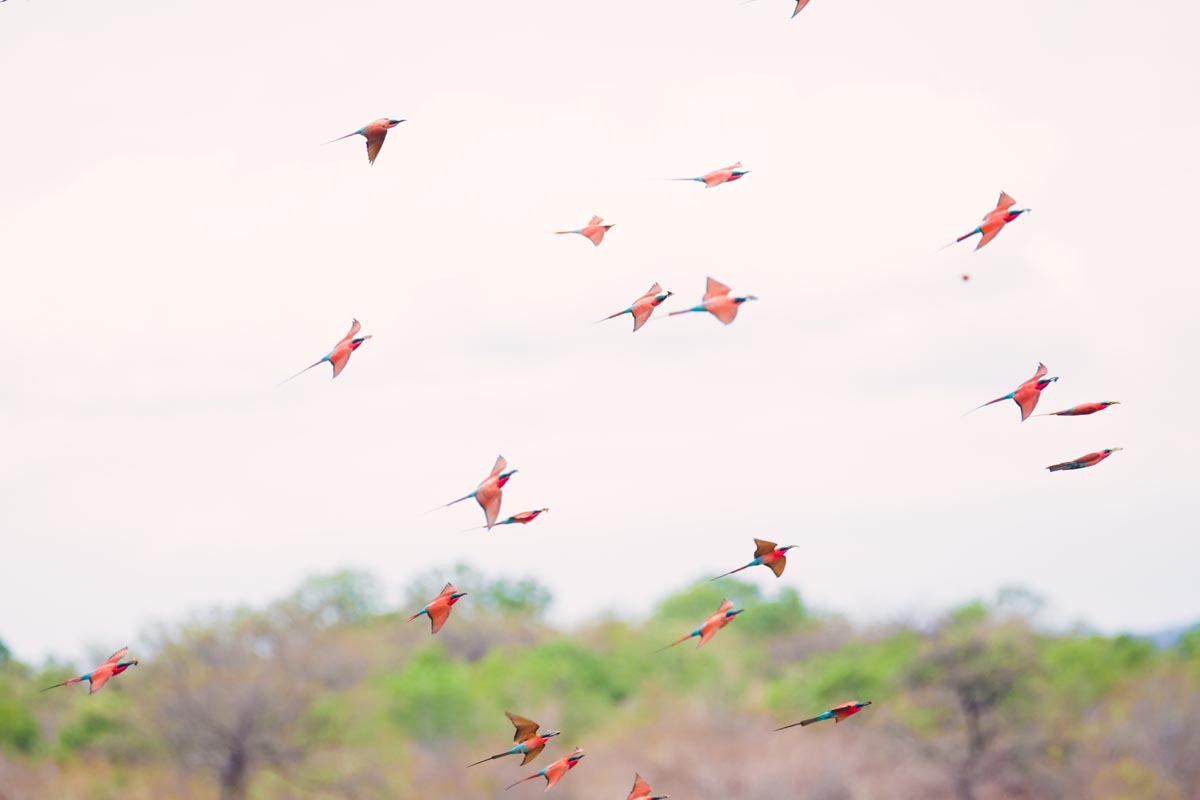
Another spectacular sight within Luambe National Park is the carmine bee-eater, a brightly colored bird that nests in large colonies along sandy riverbanks. These birds are known for their striking red plumage and aerial hunting behavior as they catch insects in flight.
The park’s woodland areas support numerous species of hornbills, kingfishers, rollers, and woodpeckers. Raptors such as martial eagles, bateleurs, and African hawk eagles can often be seen soaring above the floodplains.
During the rainy season, migratory bird species arrive in the Luangwa Valley, further increasing the diversity of birdlife within Luambe National Park.
For birdwatchers visiting Zambia, Luambe offers a peaceful and rewarding location to observe both resident and migratory bird species in a natural environment.
Safari Activities in Luambe National Park
Luambe National Park offers a variety of safari activities that allow visitors to explore the landscapes and wildlife of the Luangwa Valley.
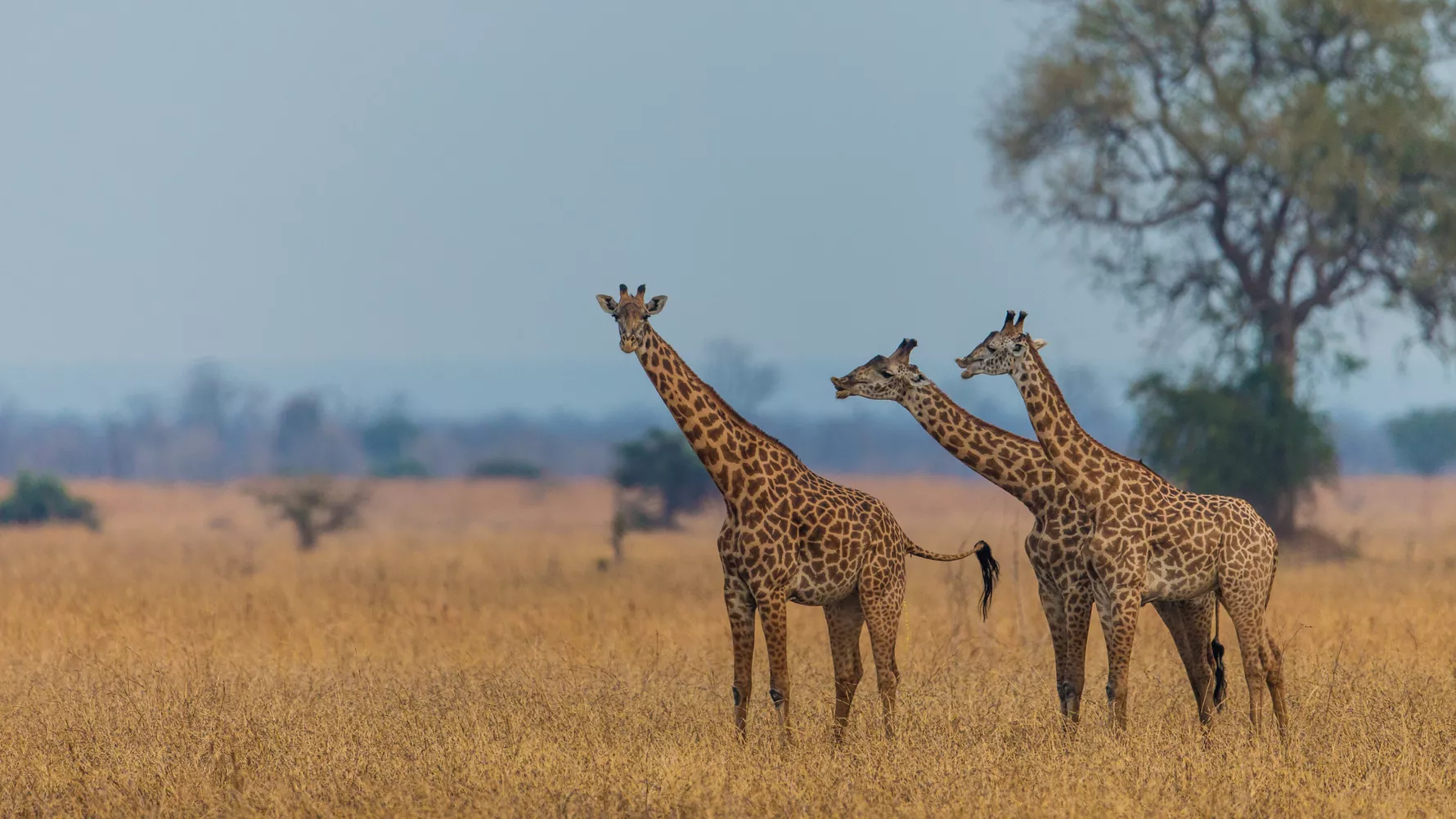
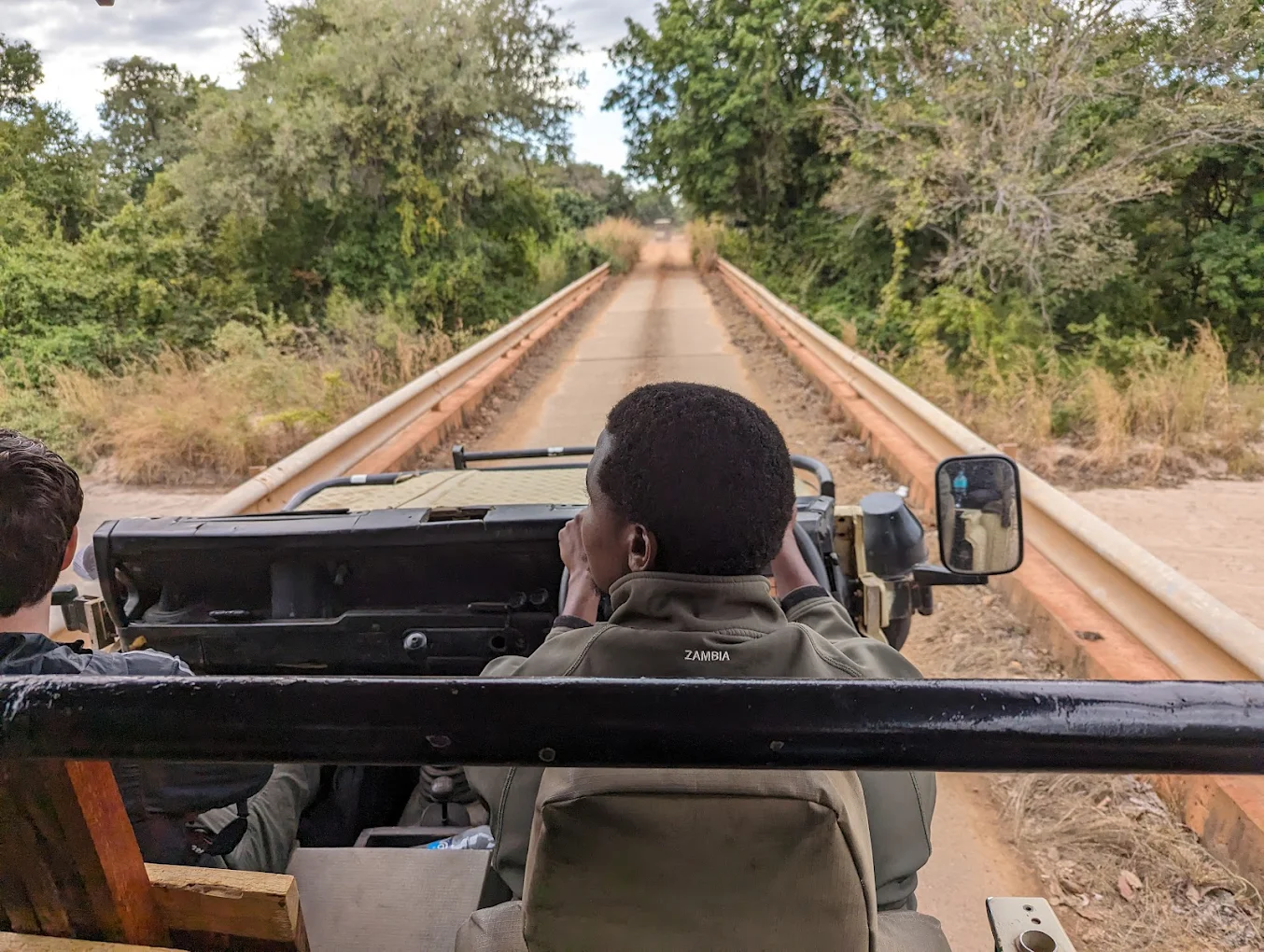
The most popular activity in the park is the classic game drive safari. During game drives, visitors travel through the park in specialized safari vehicles while experienced guides search for wildlife and explain the behavior of different species.
Game drives are usually conducted during the early morning and late afternoon when wildlife is most active. These drives often produce sightings of elephants, buffalo, antelope, and occasionally predators moving through the landscape.
Walking safaris are another exciting activity that can be experienced in Luambe National Park. Guided walking safaris allow visitors to explore the African bush on foot while accompanied by trained guides and armed wildlife scouts.
Walking safaris offer a deeper understanding of the ecosystem, allowing travelers to observe animal tracks, plants, insects, and smaller details that may be overlooked during vehicle safaris.
Birdwatching safaris are also popular in Luambe National Park. The park’s wetlands and riverbanks provide excellent opportunities to observe a variety of bird species.
Photography safaris are particularly rewarding due to the park’s scenic landscapes and abundant wildlife. Photographers often capture stunning images of animals along the Luangwa River, especially during sunrise and sunset when lighting conditions are ideal.
Some safari lodges located near Luambe National Park also offer night game drives, allowing visitors to observe nocturnal wildlife such as civets, genets, bush babies, and hunting predators.
These diverse safari activities allow visitors to experience Luambe National Park from multiple perspectives while exploring one of Zambia’s lesser-known wilderness areas.
Best Time to Visit Luambe National Park
The best time to visit Luambe National Park largely depends on weather conditions and wildlife movements throughout the year.
The dry season from May to October is generally considered the best time for safari activities and wildlife viewing. During this period, vegetation becomes thinner and animals concentrate around permanent water sources such as the Luangwa River.
Between May and June, the landscapes remain green after the rainy season while temperatures are relatively cool and comfortable for safari activities.
From July to September, wildlife viewing conditions become excellent as animals gather near rivers and lagoons. These months are particularly popular for safari travelers visiting the Luangwa Valley.
The months of September and October are typically the hottest months of the year, but they can also offer some of the best wildlife sightings as animals compete for limited water sources.
The rainy season from November to April transforms the landscapes of Luambe National Park into lush green wilderness. During this time, migratory birds arrive in the valley and birdwatching becomes particularly rewarding.
However, heavy rains may make some roads difficult to access, and certain safari camps may close temporarily during the wet season.
For most travelers planning a safari in Luambe National Park, the dry months remain the most recommended time to visit due to the excellent wildlife viewing opportunities.
Luambe National Park vs South Luangwa National Park
Luambe National Park and South Luangwa National Park are both located within the Luangwa Valley, yet they offer different safari experiences.
South Luangwa National Park is one of the most famous safari destinations in Africa and attracts visitors from around the world. The park is known for its abundant wildlife, luxury safari lodges, and excellent guiding services.
Luambe National Park, by contrast, remains far less developed and receives fewer visitors. This creates a quieter and more exclusive safari experience where travelers can explore the wilderness without large crowds.
Another difference between the two parks is infrastructure. South Luangwa offers a wide range of accommodation options, from luxury lodges to budget camps, as well as extensive road networks for game drives.
Luambe National Park has more limited tourism infrastructure, which contributes to its sense of remoteness and authenticity.
Wildlife populations in both parks are strong due to their connection within the Luangwa Valley ecosystem. However, South Luangwa generally offers more frequent wildlife sightings due to its larger size and established safari routes.
For travelers seeking a classic safari with luxury accommodations and frequent wildlife sightings, South Luangwa National Park is an excellent choice.
For those looking for a quieter and more off-the-beaten-path adventure, Luambe National Park offers a unique opportunity to experience Zambia’s wilderness in a peaceful setting.
How to Get to Luambe National Park
Luambe National Park is located in eastern Zambia within the remote and wildlife-rich Luangwa Valley. Although the park is smaller and less developed than neighboring parks, reaching Luambe National Park is relatively straightforward with the right travel planning.
Most international travelers begin their journey by flying into Kenneth Kaunda International Airport in Lusaka, Zambia’s main international gateway. Lusaka serves as the central hub for domestic flights connecting travelers to Zambia’s major safari destinations.
From Lusaka, visitors usually take a domestic flight to Mfuwe Airport, which is the primary entry point for the Luangwa Valley. The flight between Lusaka and Mfuwe typically takes about one hour and is operated by several regional airlines.
Mfuwe Airport is located near the entrance to South Luangwa National Park, and it acts as the main logistical hub for safaris throughout the Luangwa Valley region.
From Mfuwe, travelers can reach Luambe National Park through guided road transfers or charter flights. The drive from Mfuwe to Luambe takes several hours and passes through scenic landscapes of the Luangwa Valley, often offering early wildlife sightings along the way.
Because Luambe lies between South Luangwa National Park and North Luangwa National Park, many safari itineraries include the park as part of a multi-park Luangwa Valley safari.
Travelers often combine Luambe National Park with other destinations such as:
- South Luangwa National Park
- North Luangwa National Park
- Lower Zambezi National Park
- Victoria Falls
These combined itineraries allow visitors to explore diverse ecosystems and wildlife experiences across Zambia.
Due to the park’s remote wilderness setting, it is highly recommended that travelers arrange their trip through an experienced safari operator who can coordinate flights, transfers, accommodation, and guided activities.
Accommodation in Luambe National Park
Accommodation options in Luambe National Park are limited compared to larger safari destinations in Africa. However, this limited development is part of what makes the park so attractive for travelers seeking a peaceful and exclusive wilderness experience.
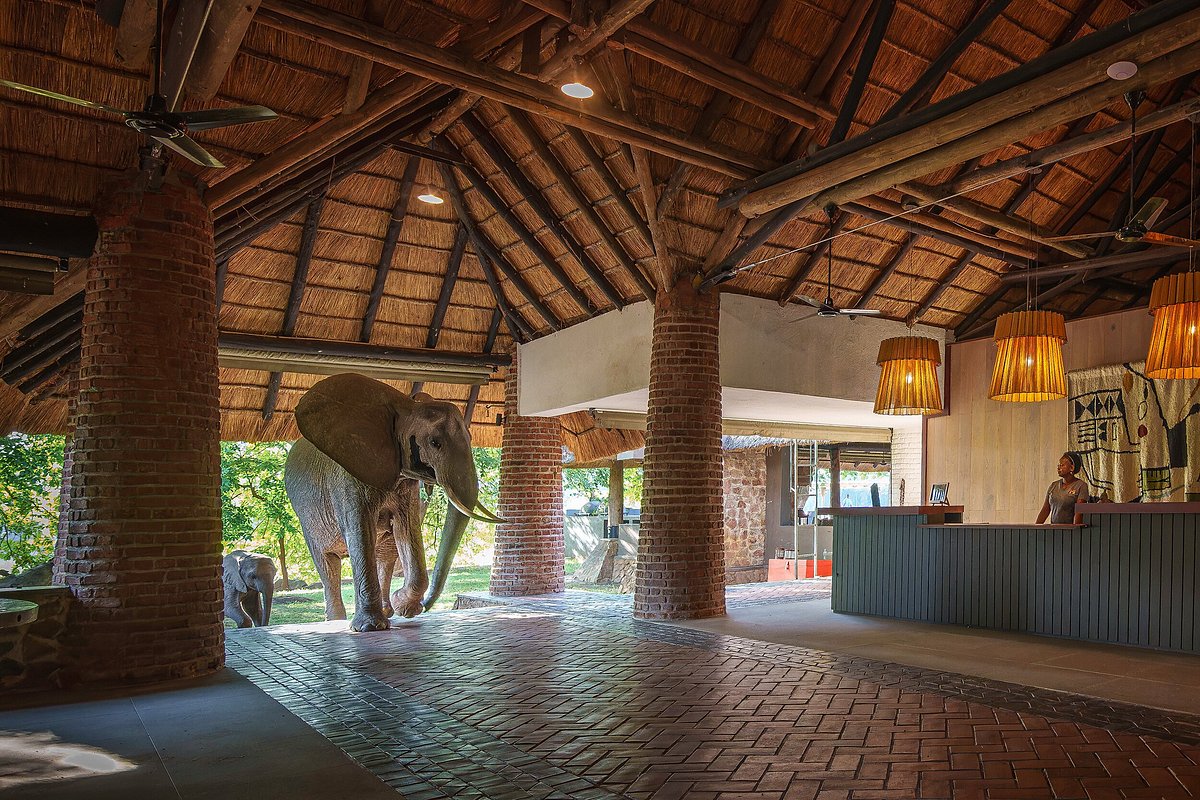
Most accommodation near Luambe National Park consists of small safari camps and eco-lodges designed to blend into the surrounding natural environment.
These camps typically offer comfortable safari tents or chalets with essential amenities such as beds, mosquito nets, en-suite bathrooms, and communal dining areas where guests gather for meals and storytelling around the campfire.
Some camps are located close to the Luangwa River, providing stunning views of wildlife activity along the riverbanks. Guests often observe elephants, antelope, and birds directly from their lodge decks.
Because of the park’s remote location, accommodation in Luambe National Park tends to focus on low-impact eco-tourism that prioritizes sustainability and wildlife conservation.
These camps provide guided safari activities such as game drives, walking safaris, and birdwatching excursions.
Travelers looking for a wider range of accommodation options often stay in South Luangwa National Park, which offers luxury lodges, mid-range camps, and budget safari accommodation.
From South Luangwa, visitors can still explore Luambe National Park as part of extended safari itineraries within the Luangwa Valley.
Because Luambe remains one of Zambia’s lesser-known safari destinations, booking accommodation in advance is recommended, especially during peak travel months.
Cost of a Luambe Safari
The cost of a safari to Luambe National Park varies depending on the type of safari experience, level of accommodation, and travel logistics involved.
Budget-style safaris visiting Luambe National Park may cost approximately USD 200 to USD 350 per person per day, typically including accommodation in tented camps, meals, and guided safari activities.
Mid-range safari experiences usually range between USD 350 and USD 700 per person per day, offering more comfortable lodges, experienced guides, and additional safari activities such as walking safaris and night drives.
Luxury safari itineraries that include exclusive lodges, private guides, and charter flights within the Luangwa Valley may range from USD 800 to USD 1,500 or more per person per day.
Several factors influence the total cost of a Luambe safari, including:
- park entrance fees
- accommodation category
- safari guiding services
- domestic flights within Zambia
- private vehicle arrangements
- length of the safari itinerary
Because Luambe National Park is often visited as part of a broader Luangwa Valley safari, many travelers combine the park with nearby destinations such as South Luangwa National Park.
This approach allows visitors to experience multiple ecosystems and wildlife habitats during a single safari trip.
Travel Tips for Visiting Luambe National Park
Visiting Luambe National Park offers a unique opportunity to explore one of Zambia’s quieter wilderness areas. Travelers planning a safari to the park can enhance their experience by preparing carefully for the conditions of the African bush.
One of the most important tips is to pack lightweight clothing in neutral colors such as khaki, olive, or beige. These colors blend into the environment and are suitable for game drives and walking safaris.
Long-sleeved shirts and lightweight trousers help protect against sun exposure and insects, while comfortable walking shoes are recommended for bush walks.
Essential safari items include sunscreen, insect repellent, sunglasses, a wide-brimmed hat, and binoculars for wildlife viewing.
Because Luambe National Park is located in a remote region, internet access may be limited or unavailable in some camps. Many travelers appreciate this opportunity to disconnect from technology and fully immerse themselves in nature.
Photography enthusiasts should bring a camera with a zoom lens to capture wildlife sightings from safe distances.
Working with experienced safari guides is also highly recommended. Professional guides have extensive knowledge of wildlife behavior and know the best areas within the park for wildlife viewing.
By preparing properly, travelers can enjoy a comfortable and rewarding safari experience in Luambe National Park.
Frequently Asked Questions About Luambe National Park
Where is Luambe National Park located?
Luambe National Park is located in eastern Zambia within the Luangwa Valley. The park lies between South Luangwa National Park and North Luangwa National Park along the Luangwa River.
What animals live in Luambe National Park?
Luambe National Park is home to elephants, buffalo, antelope species, hippos, crocodiles, lions, leopards, and a wide variety of bird species.
When is the best time to visit Luambe National Park?
The best time to visit Luambe National Park is during the dry season from May to October, when wildlife gathers around the Luangwa River and safari conditions are ideal.
Is Luambe National Park worth visiting?
Yes, Luambe National Park offers a quieter and more exclusive safari experience compared to more popular destinations in the Luangwa Valley.
How many days should I spend in Luambe National Park?
Most travelers spend two to three days exploring Luambe National Park, often as part of a longer safari itinerary that includes South Luangwa National Park.
Plan Your Luambe Safari
Luambe National Park is one of Zambia’s hidden safari gems, offering travelers a peaceful and authentic wildlife experience in the heart of the Luangwa Valley.
With its scenic landscapes, abundant wildlife, and close connection to the Luangwa River ecosystem, the park provides an excellent opportunity to explore Zambia’s wilderness away from crowded safari destinations.
Many travelers combine Luambe National Park with nearby destinations such as South Luangwa National Park, North Luangwa National Park, and Lower Zambezi National Park to create a diverse and unforgettable Zambia safari itinerary.
Whether you are interested in wildlife photography, birdwatching, walking safaris, or classic game drives, Luambe National Park offers a rewarding safari experience.
Contact our safari experts today to start planning your Luambe National Park safari adventure.