
Why Do Mountain Gorillas Look So Calm Around Researchers and Guides? 9 Amazing Reasons Revealed
Why Do Mountain Gorillas Look So Calm Around Researchers and Guides? Mountain gorillas often appear relaxed around experienced researchers, trackers and ranger-guides because selected wild gorilla families have gradually become accustomed to predictable, carefully managed human presence. Through a process known as gorilla habituation, conservation professionals repeatedly observe the animals while working to minimise disturbances to their natural behaviour. As a result, habituated gorillas may continue feeding, resting, grooming and interacting with their families while researchers monitor them nearby. This remarkable relationship between wildlife conservation and responsible tourism makes Uganda gorilla trekking, Rwanda gorilla trekking tours, Bwindi gorilla safaris, luxury gorilla trekking holidays and private African wildlife adventures extraordinary experiences.
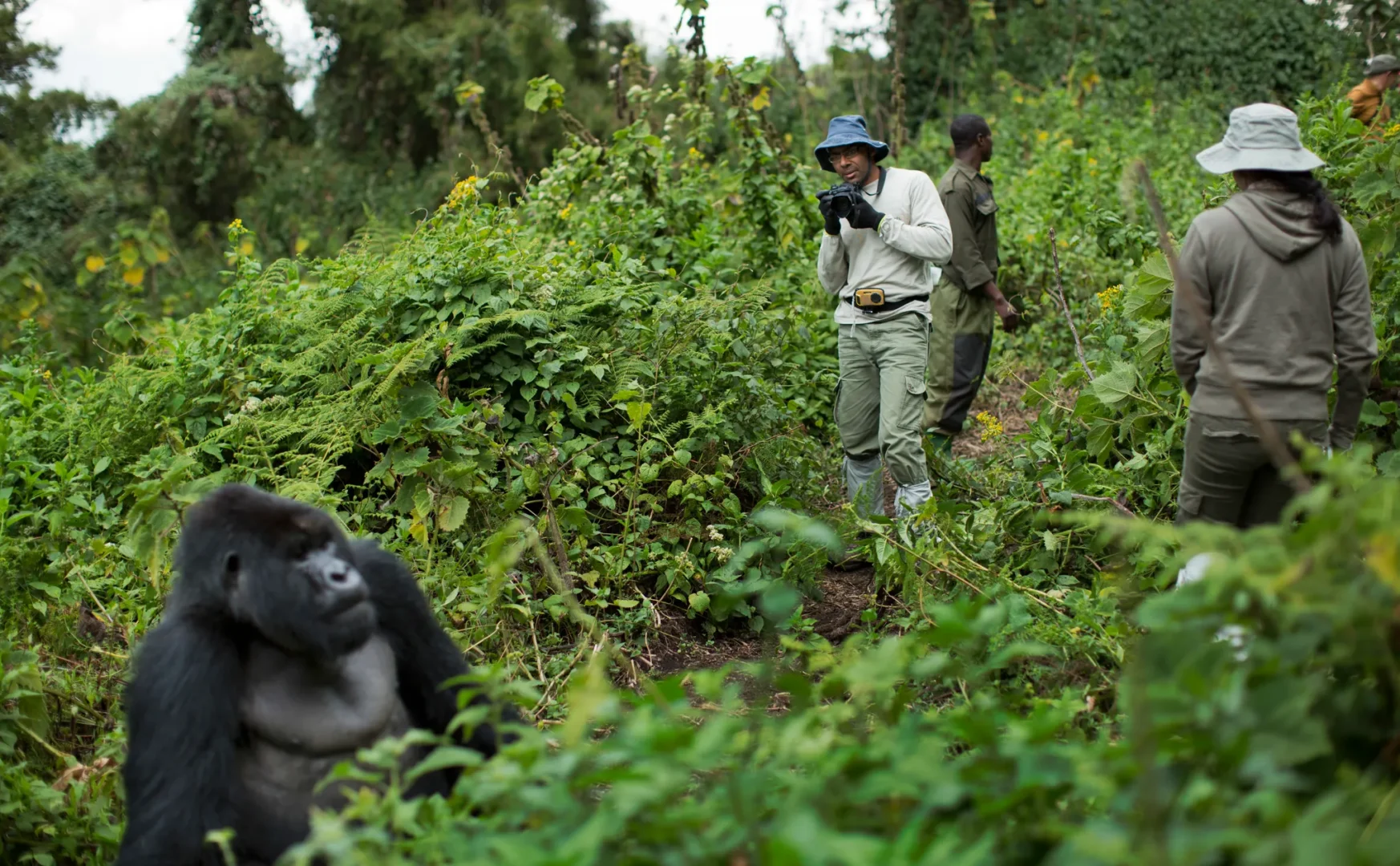
Why Do Mountain Gorillas Look So Calm Around Researchers and Guides? Their behaviour reflects familiarity with controlled human observation, individual differences, established family relationships and the experience of conservation personnel who understand gorilla communication. However, a gorilla appearing peaceful does not necessarily mean it is completely unaffected by people. Scientific studies in Uganda have demonstrated changes in gorilla social behaviour and stress-related indicators during some tourist encounters, particularly when people approach too closely. Understanding these differences helps visitors appreciate gorilla habituation experiences, Uganda mountain gorilla holidays, Rwanda gorilla adventures, responsible gorilla trekking rules and romantic African gorilla honeymoons.
Understanding Why Mountain Gorillas Remain Calm Around Researchers
Why Do Mountain Gorillas Look So Calm Around Researchers and Guides? Their apparent tolerance of familiar observation conditions is primarily associated with habituation, a gradual process that reduces the tendency of selected wild animals to avoid human observers. Initially, unhabituated gorillas may retreat, display defensive behaviour or maintain greater distances from people. Over repeated encounters, some families become sufficiently accustomed to carefully managed observation that researchers can monitor their ordinary activities. However, individual gorillas may respond differently throughout the process. Visitors can learn about these interactions through Uganda gorilla habituation safaris, Bwindi gorilla trekking, Rwanda gorilla trekking, gorilla trekking and habituation and guided gorilla safaris.
Mountain Gorillas Become Accustomed to Repeated Human Presence
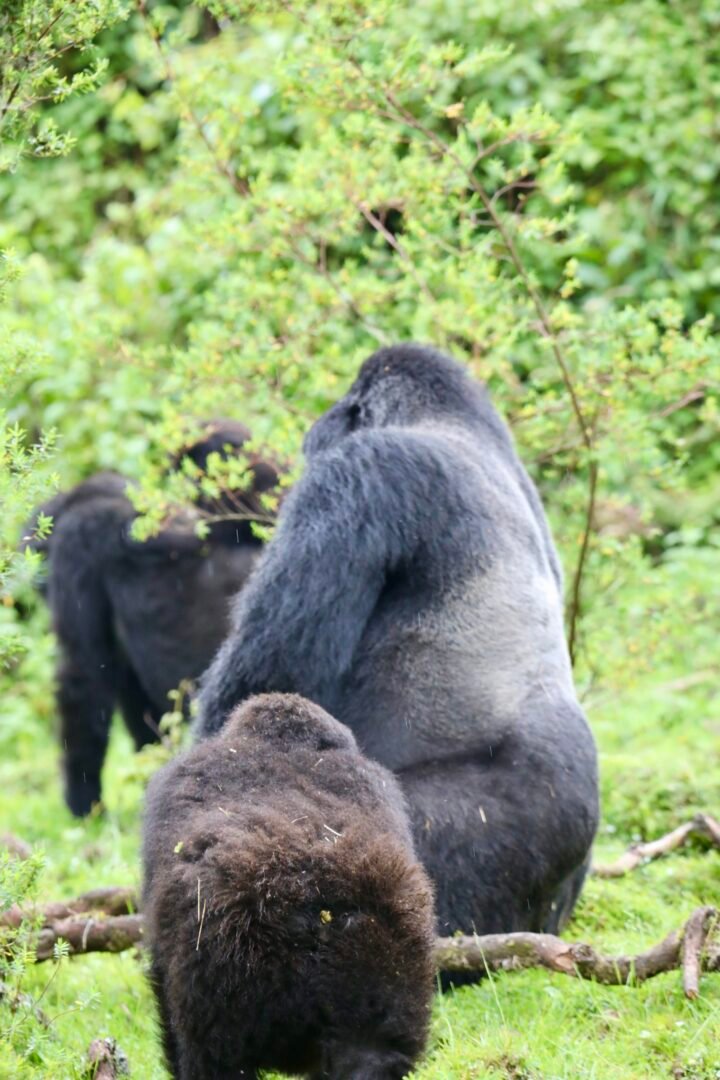
Habituation is one of the most important explanations for why selected mountain gorilla families remain relatively calm around researchers and guides. Conservation teams gradually establish a pattern of carefully controlled visits, allowing gorillas to encounter humans without continually experiencing threatening interactions. Why Do Mountain Gorillas Look So Calm Around Researchers and Guides? Repeated exposure to predictable, non-threatening observation can reduce avoidance responses over time. Nevertheless, habituation does not domesticate gorillas or guarantee identical reactions from every family member. Discover Uganda gorilla habituation, Bwindi rainforest trekking, Rwanda gorilla safari holidays, private gorilla trekking tours and luxury Uganda gorilla experiences.
Researchers Follow Predictable Observation Procedures
Experienced gorilla researchers follow established field procedures designed to collect information while limiting unnecessary disturbance. Their work may involve observing feeding behaviour, monitoring social relationships, recording births or documenting changes in group composition. Why Do Mountain Gorillas Look So Calm Around Researchers and Guides? The consistency of careful observation can make human encounters more predictable for habituated animals. Researchers are not training gorillas to perform tricks or respond to commands; instead, they aim to observe natural behaviour under controlled conditions. Explore gorilla conservation experiences, Uganda mountain gorilla trekking, Rwanda gorilla trekking tours, gorilla habituation programmes and responsible African safaris.
Ranger-Guides Understand Important Gorilla Behavioural Signals
Professional ranger-guides develop experience recognising gorilla postures, vocalisations, movements and responses to disturbances. This knowledge helps them manage visitor groups and respond appropriately when gorillas change their behaviour. Why Do Mountain Gorillas Look So Calm Around Researchers and Guides? Trained personnel help maintain controlled viewing conditions and avoid unnecessary human actions that might disturb the animals. However, not every quiet encounter can be attributed to a guide’s behaviour, because the gorillas themselves make independent decisions. Learn more through Uganda gorilla trekking rules, guided Bwindi gorilla safaris, Rwanda gorilla trekking packages, private Uganda trekking experiences and professionally planned safari holidays.
Habituated Gorilla Families May Continue Their Normal Activities
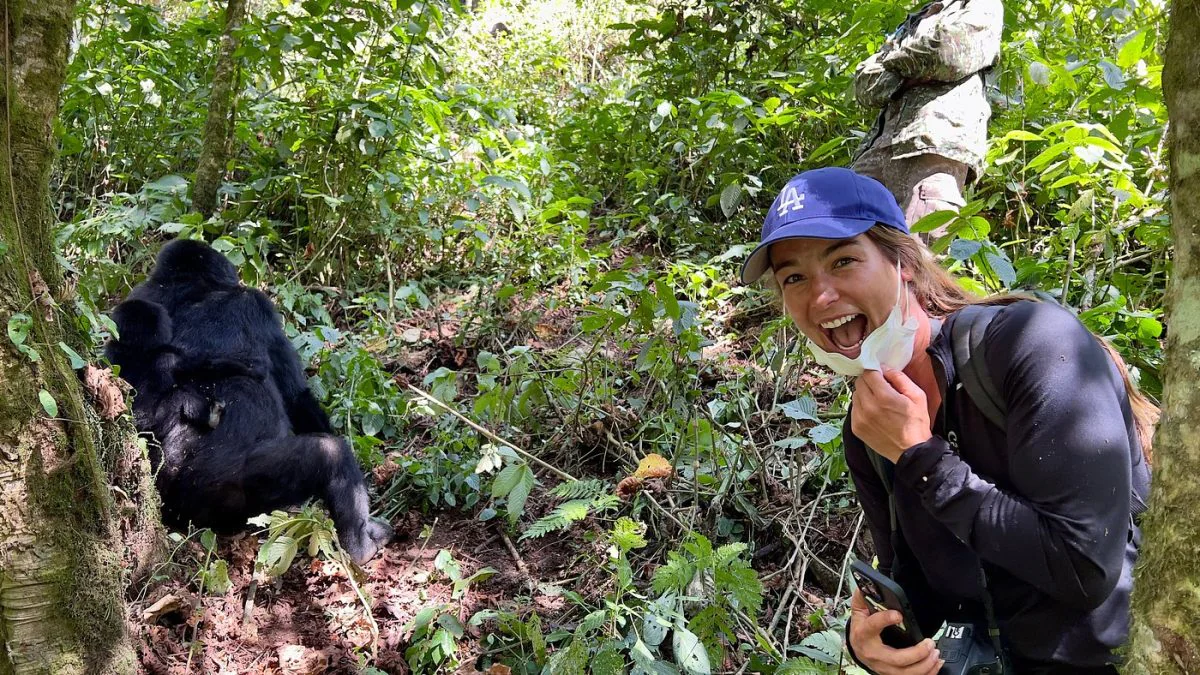
Mountain gorillas spend much of their day feeding, resting, grooming and interacting with companions. Studies of habituated groups in Bwindi have documented gorillas continuing these ordinary activities during authorised human observation. Why Do Mountain Gorillas Look So Calm Around Researchers and Guides? When gorillas remain focused on familiar activities, they may appear uninterested in nearby people. A resting silverback or feeding mother is not necessarily inviting contact; the animal may simply be following its daily routine. Discover Bwindi gorilla trekking, Uganda gorilla trekking packages, Rwanda mountain gorilla holidays, luxury gorilla safaris and private wildlife encounters.
Familiar Group Environments Influence Gorilla Responses
Mountain gorillas generally live in stable social groups containing adult males, females, juveniles and infants. Familiar relationships influence how individuals behave during feeding, resting and interactions with other gorillas. Why Do Mountain Gorillas Look So Calm Around Researchers and Guides? Their ordinary social environment may provide continuity during carefully managed visits, allowing members to remain near familiar companions. However, researchers cannot conclude that every gorilla feels secure simply because it stays close to its family. Visitors can appreciate these relationships through Uganda gorilla trekking, Bwindi family encounters, Rwanda gorilla trekking holidays, private mountain gorilla adventures and romantic gorilla honeymoon safaris.
Silverbacks May Tolerate Controlled Human Observation
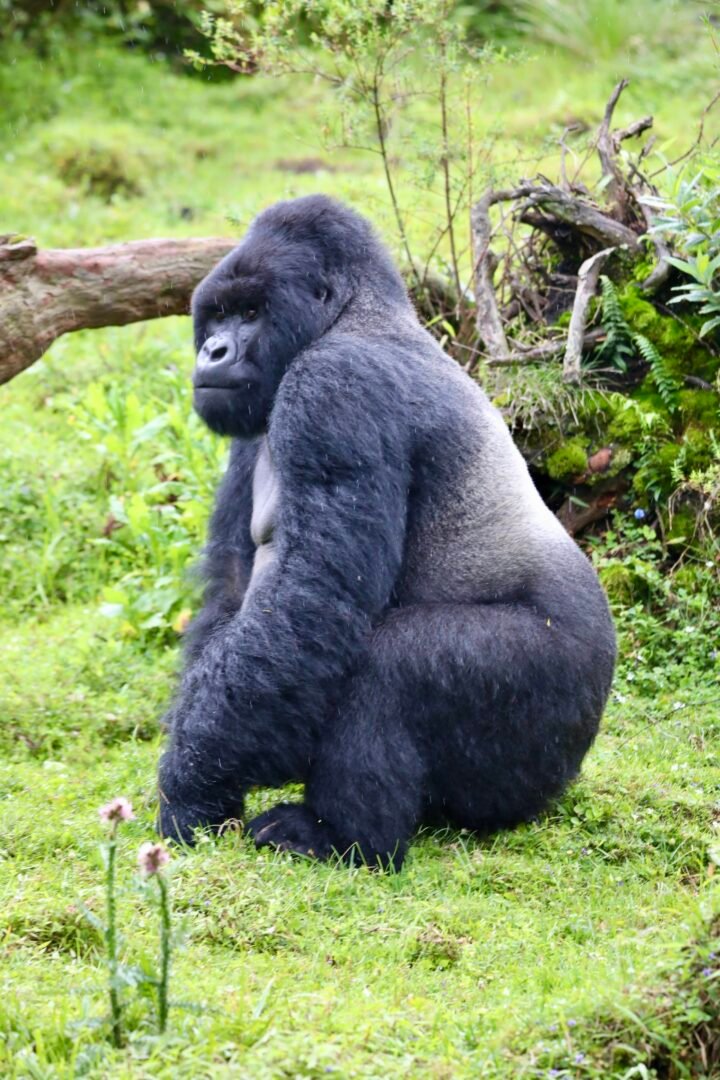
Dominant silverbacks occupy important positions within mountain gorilla families and may respond defensively when circumstances require. Nevertheless, they also spend substantial time resting, feeding and maintaining social relationships. Why Do Mountain Gorillas Look So Calm Around Researchers and Guides? A habituated silverback may continue ordinary activities during a managed visit without producing a chest-beating display or other defensive response. His apparent tolerance does not guarantee complete comfort or remove the need for caution. Discover Uganda silverback gorilla trekking, Bwindi forest adventures, Rwanda gorilla safaris, luxury mountain gorilla holidays and responsible gorilla observation.
Some Young Gorillas Grow Up With Regular Human Observation
Certain mountain gorillas are born into families that have already undergone habituation. Throughout their early lives, these youngsters may encounter researchers and trackers during regular conservation monitoring. Why Do Mountain Gorillas Look So Calm Around Researchers and Guides? Familiarity with controlled human presence from an early age may influence how some youngsters respond to observers as they develop. Nevertheless, individual responses differ, and being born into a habituated family does not guarantee an absence of disturbance. Explore Bwindi mountain gorilla trekking, Uganda gorilla safari packages, Rwanda gorilla holidays, gorilla habituation experiences and family-focused African safaris.
Controlled Visitor Behaviour Helps Reduce Disturbance
Tourist behaviour can influence how gorillas respond during trekking encounters. Quiet observation, appropriate distances, controlled movement and respect for ranger instructions help reduce avoidable disturbances. Why Do Mountain Gorillas Look So Calm Around Researchers and Guides? Experienced conservation personnel manage human activity so that the animals can continue their natural routines wherever possible. Sudden approaches, loud noises or attempts to interact directly with gorillas can undermine these precautions. Explore gorilla trekking safety guidelines, Uganda gorilla trekking, Rwanda gorilla safari packages, Bwindi forest experiences and responsible wildlife holidays.
Gorillas Have Individual Differences in Their Responses to People
Not every mountain gorilla reacts to researchers or guides in the same way. Some individuals may remain relatively relaxed during observation, while others display avoidance, heightened attention or other responses. Differences in previous experience, age, social relationships and circumstances may contribute to this variation. Why Do Mountain Gorillas Look So Calm Around Researchers and Guides? Their apparent tolerance reflects individual experiences as well as habituation, rather than a universal personality shared by all mountain gorillas. This makes every forest encounter unique. Discover Uganda gorilla trekking tours, Bwindi gorilla families, Rwanda gorilla trekking, private gorilla holidays and luxury African wildlife experiences.
How Does Mountain Gorilla Habituation Actually Work?
Why Do Mountain Gorillas Look So Calm Around Researchers and Guides? Understanding habituation helps explain the difference between carefully monitored gorilla families and those that remain largely unaccustomed to humans. Habituation involves repeated, controlled observation over an extended period, with conservation teams carefully monitoring animal responses. The process can take years, depending on the family, habitat and previous experiences with humans. Some gorillas tolerate observation sooner than others, and the process cannot be forced safely or predictably. Explore gorilla habituation safaris, Uganda habituation booking, Bwindi gorilla trekking, combined trekking and habituation and three-day habituation experiences.
Do Mountain Gorillas Recognise Individual Researchers and Guides?
Mountain gorillas possess sophisticated social abilities and can distinguish familiar individuals within their own families. Repeated exposure to human observers may also influence how they respond to familiar people, although it is difficult to demonstrate precisely which researchers or guides a gorilla recognises. Why Do Mountain Gorillas Look So Calm Around Researchers and Guides? Familiarity with repeated human observation is supported by habituation research, but claims that gorillas recognise every ranger personally or develop human-like friendships are not established. Explore Uganda mountain gorilla trekking, Rwanda gorilla safari tours, Bwindi gorilla experiences, gorilla habituation programmes and guided safari holidays.
Does a Calm Gorilla Mean It Is Completely Free From Stress?
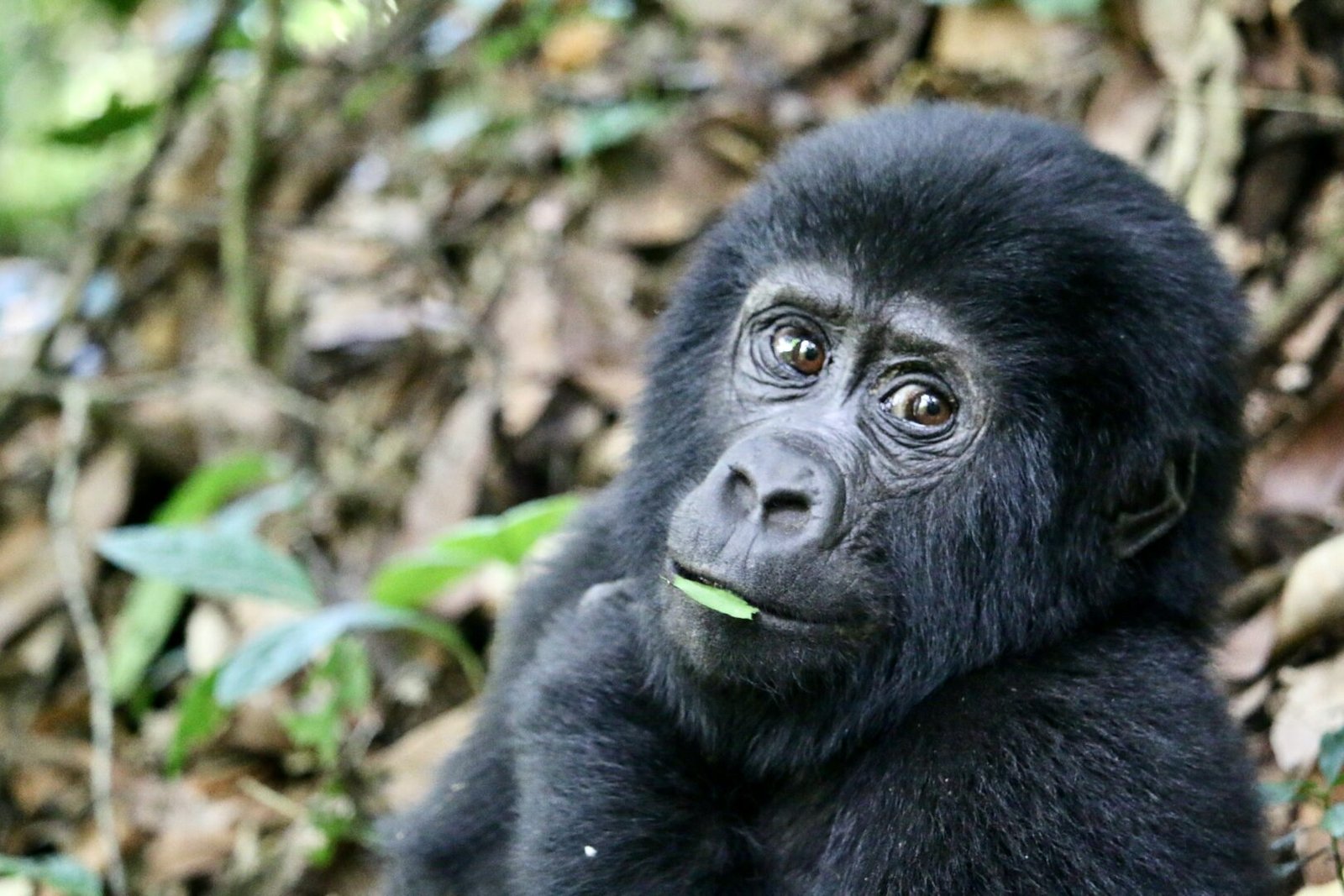
A calm appearance does not necessarily prove an absence of stress. Research on a habituated mountain gorilla family in Bwindi found changes in social cohesion, grooming and self-scratching during tourist visits, especially when people were very close. Self-scratching can be used as one behavioural indicator of stress, although it cannot establish an individual animal’s emotional condition by itself. Why Do Mountain Gorillas Look So Calm Around Researchers and Guides? Their visible behaviour may not fully reveal the effects of human proximity. Responsible observation therefore remains essential during Uganda gorilla trekking, Rwanda gorilla trekking holidays, Bwindi conservation safaris, gorilla trekking and habituation and private wildlife adventures.
Why Do Researchers and Ranger-Guides Spend Time With Gorillas?
Researchers, trackers and ranger-guides perform different but complementary functions. Researchers investigate gorilla ecology, behaviour and population dynamics; trackers help locate and monitor families; and ranger-guides supervise authorised visitor encounters while explaining wildlife behaviour and safety requirements. Why Do Mountain Gorillas Look So Calm Around Researchers and Guides? Repeated professional observation creates opportunities for selected gorillas to become familiar with carefully managed human activity. These visits also support conservation monitoring rather than entertainment performances. Discover Uganda gorilla trekking packages, Rwanda gorilla trekking, Bwindi Impenetrable National Park, gorilla habituation experiences and private African safari planning.
Are Gorillas Calmer Around Researchers Than Tourists?
Why Do Mountain Gorillas Look So Calm Around Researchers and Guides? Researchers may observe the same habituated families repeatedly under established field procedures, while tourists generally join shorter, ranger-supervised visits. However, it would be inaccurate to claim that gorillas are always calmer around researchers than tourists. Individual behaviour varies, and the number, distance and actions of human observers may influence responses. The important consideration is not simply whether a person is a researcher or tourist, but how the encounter is managed. Explore Uganda gorilla trekking, Rwanda gorilla trekking tours, Bwindi forest adventures, responsible trekking guidelines and luxury gorilla safaris.
Why Safe Viewing Distances Matter Around Calm Gorillas
Even when mountain gorillas appear relaxed, tourists must follow official viewing regulations. Uganda Wildlife Authority’s current guidelines specify a minimum distance of ten metres between visitors and gorillas. Ranger-guides also enforce health precautions, limits on visitor behaviour and instructions for unexpected approaches. Why Do Mountain Gorillas Look So Calm Around Researchers and Guides? Habituation allows controlled observation but does not eliminate risks from close human contact, including possible transmission of respiratory infections. Visitors must never touch gorillas, offer food or encourage close approaches. Learn more through Uganda gorilla trekking rules, Bwindi trekking experiences, Rwanda gorilla holidays, guided Uganda safaris and responsible safari bookings.
Gorilla Trekking Versus Gorilla Habituation: What Is the Difference?
Standard gorilla trekking involves visiting a fully habituated gorilla family with an authorised observation period of up to one hour once the family is located. Uganda’s Gorilla Habituation Experience, organised in the Rushaga sector of Bwindi, offers up to four hours of regulated observation with a family still undergoing habituation. Why Do Mountain Gorillas Look So Calm Around Researchers and Guides? These two experiences illustrate different stages of familiarisation with human presence. Families undergoing habituation may respond less predictably, and neither experience guarantees a particular interaction. Compare Uganda gorilla trekking, gorilla habituation safaris, combined trekking and habituation, three-day habituation tours and permit booking assistance.
Where Can Tourists Observe Habituated Mountain Gorillas?
Bwindi Impenetrable National Park, Uganda
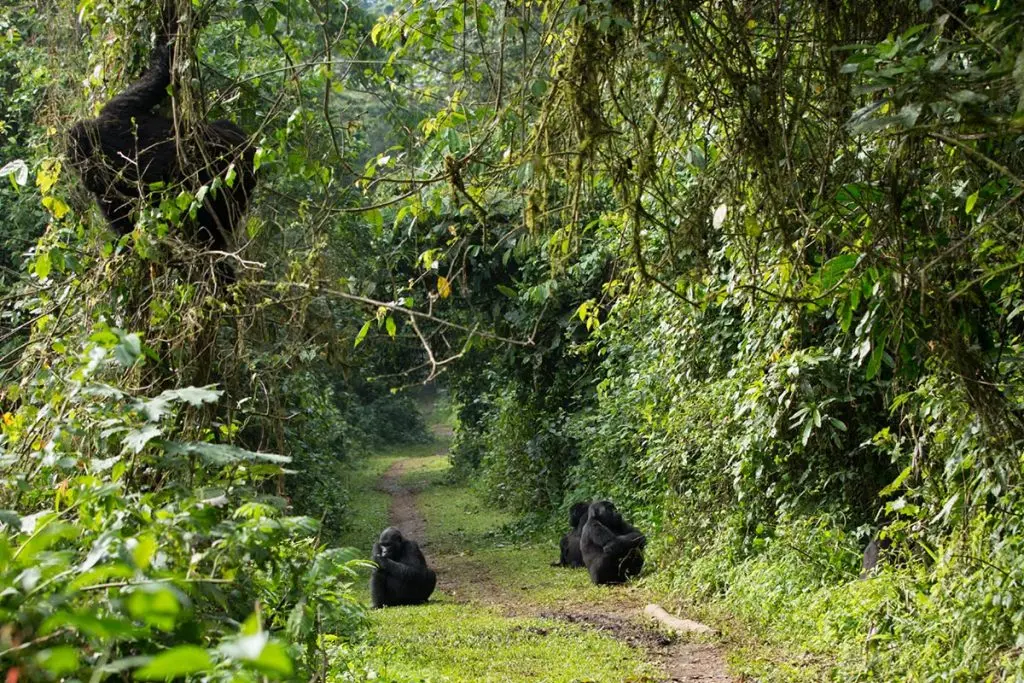
Bwindi Impenetrable National Park offers exceptional opportunities to observe habituated mountain gorilla families within southwestern Uganda’s rainforest. Its Buhoma, Ruhija, Rushaga and Nkuringo sectors provide regulated trekking experiences where visitors may witness silverbacks resting, mothers caring for infants or juveniles playing. Why Do Mountain Gorillas Look So Calm Around Researchers and Guides? Bwindi’s long-standing conservation and monitoring programmes provide important context for understanding habituation. Discover Bwindi gorilla trekking, Uganda gorilla safari packages, three-day Bwindi gorilla safaris, gorilla habituation experiences and luxury Uganda trekking holidays.
Mgahinga Gorilla National Park, Uganda
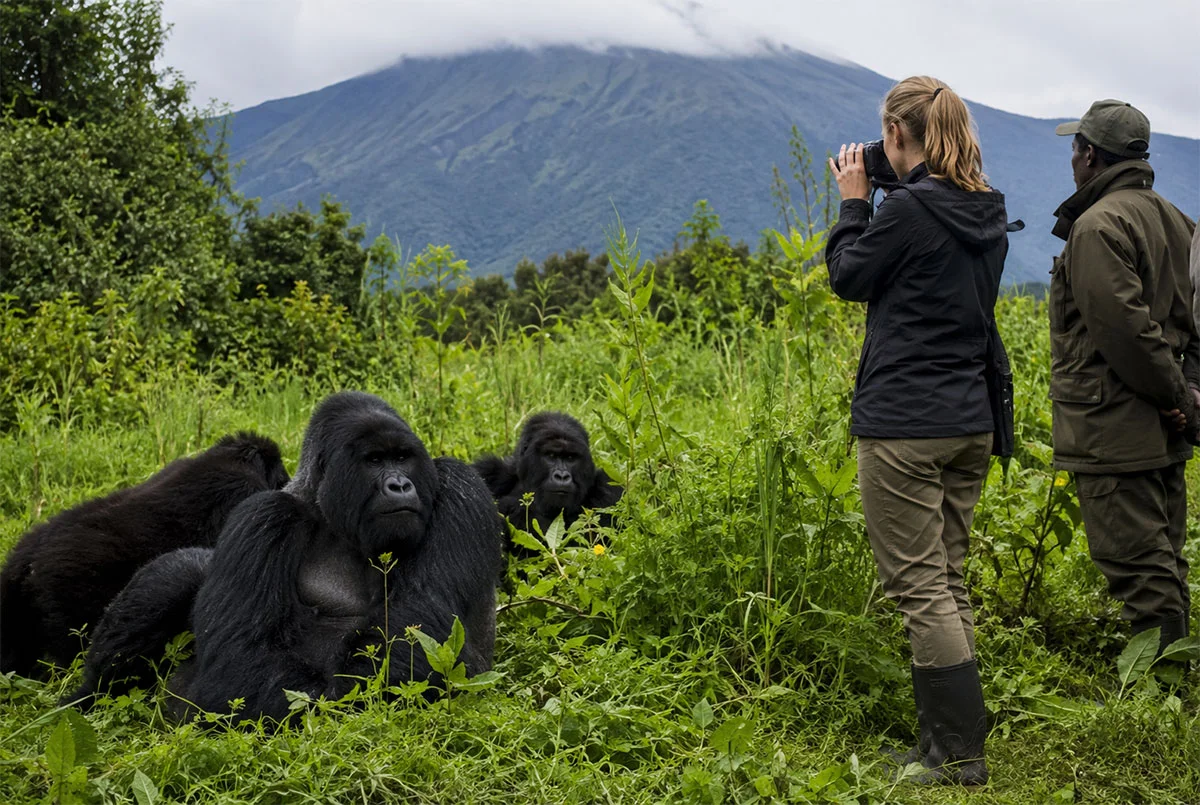
Mgahinga Gorilla National Park protects mountain gorillas within Uganda’s spectacular Virunga Mountains. Its bamboo forests, volcanic slopes and montane vegetation offer opportunities to observe natural gorilla family behaviour under professional supervision. Visitors may encounter gorillas feeding or resting while accustomed to controlled observation, although individual responses vary. Discover Mgahinga Gorilla National Park, Uganda gorilla trekking, private gorilla safari packages, luxury gorilla holidays and Nextgen Safaris.
Volcanoes National Park, Rwanda
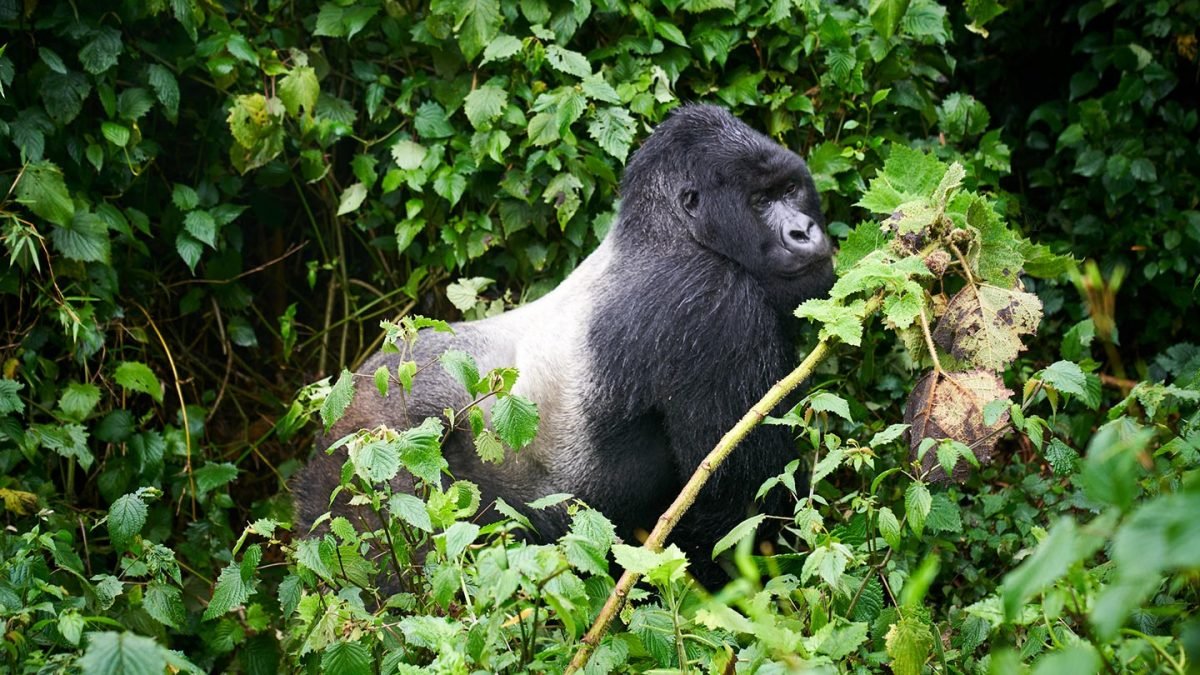
Volcanoes National Park is Rwanda’s principal destination for observing wild mountain gorillas. Its long history of mountain gorilla research and conservation has contributed significantly to scientific understanding of habituation and family behaviour. Why Do Mountain Gorillas Look So Calm Around Researchers and Guides? Visitors may observe habituated families continuing their natural activities under ranger supervision, but behaviour remains unpredictable. Explore Rwanda gorilla trekking tours, Rwanda gorilla trekking guides, luxury Rwanda gorilla safaris, romantic Rwanda honeymoon experiences and private gorilla holiday planning.
Frequently Asked Questions About Gorillas Around Researchers and Guides
Why Do Mountain Gorillas Look So Calm Around Researchers and Guides?
Habituated mountain gorillas become accustomed to repeated, controlled human observation. Some continue feeding, resting and interacting with their families while researchers and ranger-guides monitor them. Explore Uganda gorilla trekking and Rwanda gorilla tours.
Do Mountain Gorillas Trust Researchers?
Gorillas can become familiar with managed human presence, but calm behaviour does not necessarily establish trust or affection in the human sense. Discover Bwindi gorilla trekking and gorilla habituation experiences.
How Do Rangers Make Gorillas Comfortable Around Humans?
Rangers and trackers follow established observation procedures while monitoring gorilla behaviour. The habituation process gradually familiarises selected families with carefully managed visits. Explore Uganda gorilla habituation.
Can Mountain Gorillas Recognise Individual Researchers?
Repeated encounters may create familiarity with human observers, but researchers cannot assume every gorilla recognises particular guides or researchers individually. Discover Rwanda gorilla trekking.
Are Mountain Gorillas Naturally Friendly to Humans?
Mountain gorillas are wild primates, and their responses vary according to individual experience and circumstances. Habituation should not be mistaken for domestication or friendliness. Explore gorilla trekking safety rules.
Why Do Silverbacks Stay Calm Around Rangers?
Some habituated silverbacks tolerate controlled observation while continuing normal activities. However, a calm posture does not guarantee an absence of stress or defensive responses. Discover Uganda silverback trekking.
Do Baby Gorillas Become Accustomed to Researchers?
Young gorillas born into habituated families may encounter researchers and trackers throughout development. Their responses still vary between individuals. Explore Bwindi mountain gorilla safaris.
Does Gorilla Habituation Take Several Years?
It can. The process may take years depending on group responses, habitat and previous experience with human activity. There is no universal completion period. Explore Uganda gorilla habituation safaris.
Can Calm Mountain Gorillas Suddenly Become Aggressive?
Yes. Mountain gorillas remain wild animals and may respond defensively if disturbed or threatened. Visitors should always maintain the required distance and follow ranger instructions. Discover responsible gorilla trekking.
Where Can I Observe Habituated Mountain Gorillas?
Bwindi Impenetrable National Park, Mgahinga Gorilla National Park and Rwanda’s Volcanoes National Park offer regulated gorilla trekking encounters. Specific behaviours cannot be guaranteed. Explore Uganda gorilla safaris and Rwanda gorilla holidays.
Why Gorilla Research and Habituation Matter for Conservation
Why Do Mountain Gorillas Look So Calm Around Researchers and Guides? Their familiarity with controlled observation reflects decades of conservation work, scientific monitoring and carefully managed tourism. Researchers contribute information about population changes, social relationships, reproduction and health, while trained trackers and ranger-guides support wildlife protection and responsible visitor access. Habituation also presents challenges, particularly when human proximity creates behavioural disturbance or disease risks. Responsible conservation therefore requires balancing research and tourism benefits with the welfare of individual gorillas. Explore Uganda gorilla trekking, Rwanda gorilla trekking, Bwindi conservation tourism, gorilla habituation programmes and responsible African wildlife holidays.
Book Your Mountain Gorilla Trekking Safari With Nextgen Safaris
Why Do Mountain Gorillas Look So Calm Around Researchers and Guides? Their remarkable behaviour demonstrates the importance of habituation, professional conservation monitoring and carefully controlled wildlife encounters. Watching a silverback quietly feed, a mother nurse her infant or young gorillas interact naturally while experienced guides supervise the visit can become one of Africa’s most unforgettable wildlife experiences. Nextgen Safaris organises personalised gorilla trekking journeys in Uganda and Rwanda, combining professional safari planning, private transportation, carefully selected accommodation and assistance arranging official trekking permits. Discover Uganda gorilla trekking packages, Rwanda mountain gorilla safaris, Bwindi gorilla trekking holidays, luxury gorilla safari experiences and romantic African honeymoon adventures.
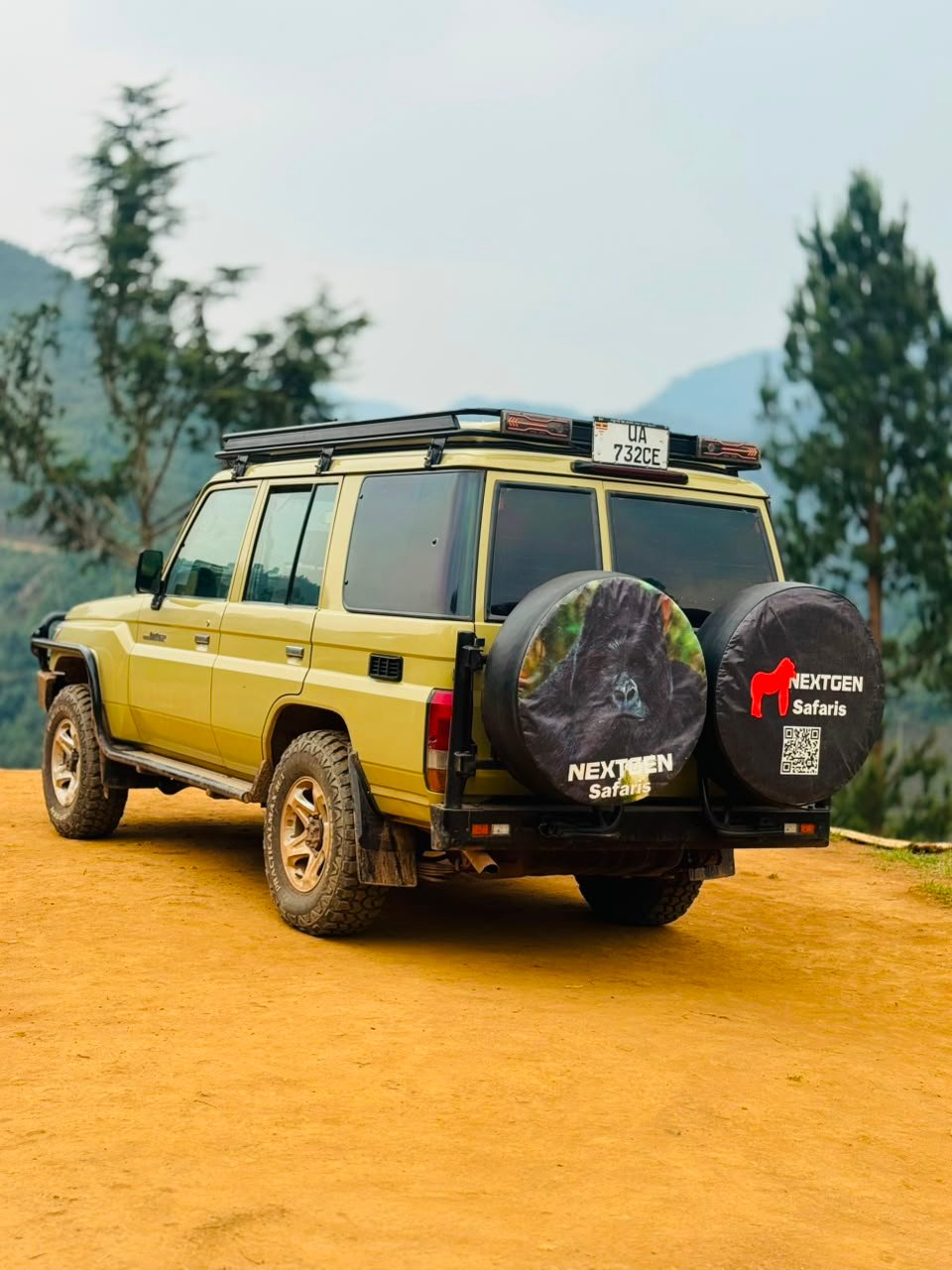
Whether you prefer a short gorilla trekking holiday from Kigali, a private Bwindi forest adventure or an extended Uganda and Rwanda wildlife safari, our team can customise your itinerary around your travel dates, accommodation preferences and budget. Every experience prioritises responsible wildlife observation, visitor safety and respect for the natural behaviour of mountain gorillas.