
Why Do Mountain Gorillas Stare at Tourists? 9 Amazing Reasons Behind Their Behaviour Revealed
Why Do Mountain Gorillas Stare at Tourists? Mountain gorillas sometimes look directly toward visitors because they are observing movement, assessing unfamiliar activity, remaining aware of their surroundings or responding to social situations. These intelligent primates rely on visual information, body language and communication signals to navigate their complex social environments. During a gorilla trekking encounter in Uganda or Rwanda, visitors may notice a powerful silverback looking in their direction, a mother briefly observing the group or a curious juvenile turning toward a camera. Understanding these behaviours makes Uganda gorilla trekking, Rwanda gorilla trekking, Bwindi gorilla safaris, luxury gorilla trekking holidays and private African wildlife adventures even more fascinating.
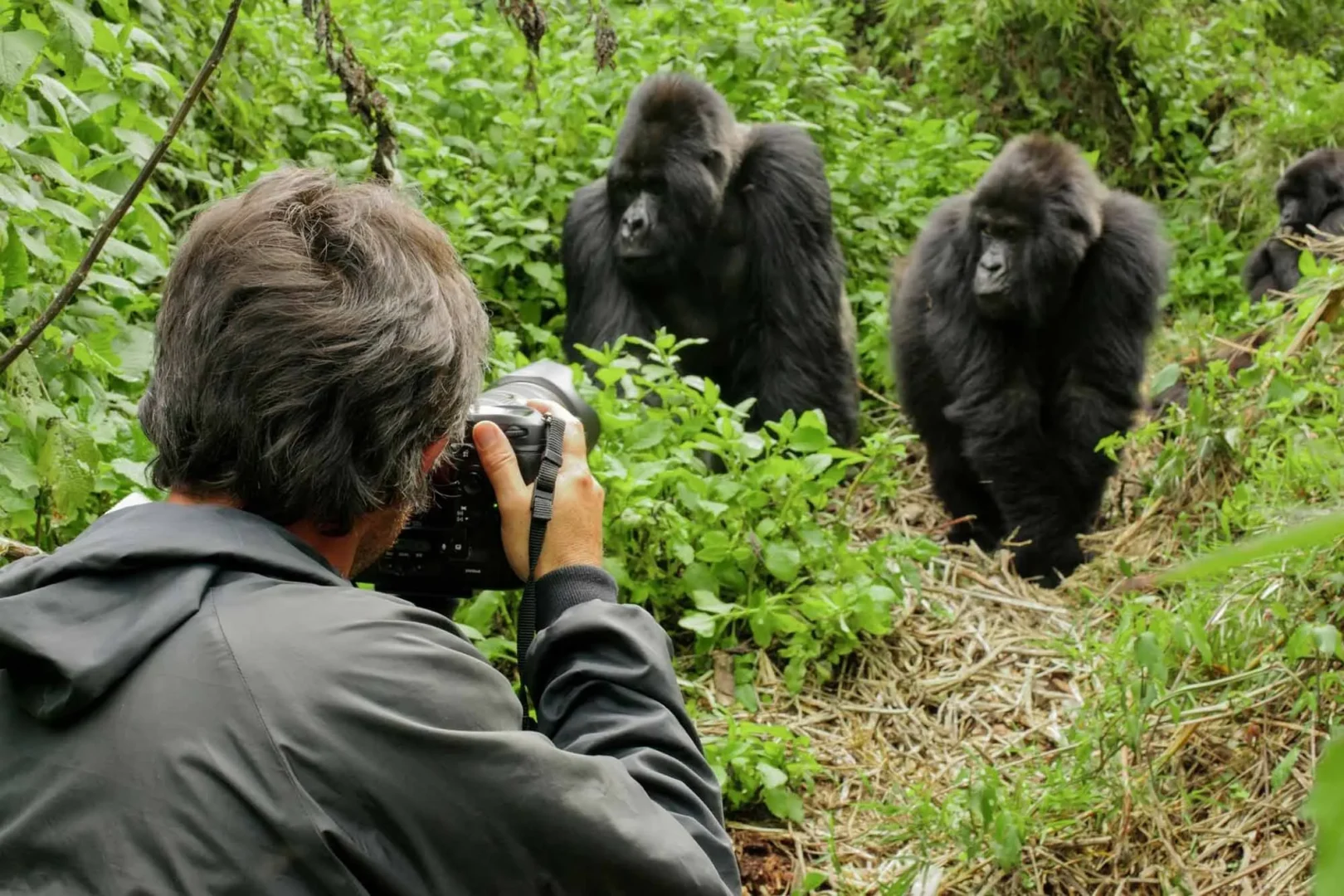
Why Do Mountain Gorillas Stare at Tourists? The answer is not always connected to aggression or danger. Mountain gorillas naturally observe other animals and activities taking place within their environment, and habituated families have gradually become accustomed to controlled human presence. However, prolonged direct eye contact can carry social significance, particularly when combined with threatening postures or other defensive signals. Visitors should therefore avoid deliberately staring into a gorilla’s eyes and follow the instructions of their ranger-guide. These precautions help protect everyone during guided mountain gorilla trekking, Uganda gorilla safari holidays, Rwanda mountain gorilla experiences, gorilla habituation safaris and romantic gorilla honeymoon adventures.
Why Do Mountain Gorillas Stare at Tourists? Understanding Gorilla Eye Contact
Why Do Mountain Gorillas Stare at Tourists? Gorilla eye contact forms part of a broader system of visual communication involving facial expressions, posture, head movements and attention toward surrounding activity. Looking toward another individual may provide information about its position, movements or behaviour. Researchers distinguish ordinary visual observation from more socially significant staring, because the duration and circumstances of eye contact can influence its meaning. A gorilla looking toward visitors should not automatically be described as angry, curious or friendly. Visitors exploring Bwindi gorilla trekking, Rwanda gorilla trekking packages, Uganda gorilla adventures, private gorilla trekking experiences and luxury primate safaris can learn to appreciate these differences.
Scientific observations have also found that mountain gorillas can increase visual scanning when tourists and accompanying personnel are present. This suggests that human presence may influence attention and behaviour even within habituated families. However, researchers cannot determine the exact motivation behind every individual glance. Why Do Mountain Gorillas Stare at Tourists? Their responses may involve environmental awareness, social communication and reactions to nearby movement. Understanding these possibilities helps visitors approach responsible gorilla tourism, Bwindi wildlife encounters, Rwanda gorilla holidays, Uganda trekking packages and private safari planning with realistic expectations.
1. Mountain Gorillas May Be Curious About Visitors
Curiosity is one possible explanation for why a mountain gorilla briefly looks toward tourists. Habituated gorillas regularly encounter small groups of people accompanied by trained rangers, yet they remain attentive to movements and changes in their surroundings. A visitor adjusting a camera, shifting position or moving through vegetation may attract a gorilla’s attention. Why Do Mountain Gorillas Stare at Tourists? In some cases, the animal may simply be investigating an unfamiliar movement rather than expressing aggression. However, apparent curiosity should never encourage tourists to approach or interact with gorillas. Discover these encounters through Uganda gorilla trekking, Rwanda gorilla safaris, Bwindi forest holidays, luxury gorilla tours and guided gorilla trekking experiences.
2. Silverbacks May Watch Tourists to Assess Their Surroundings
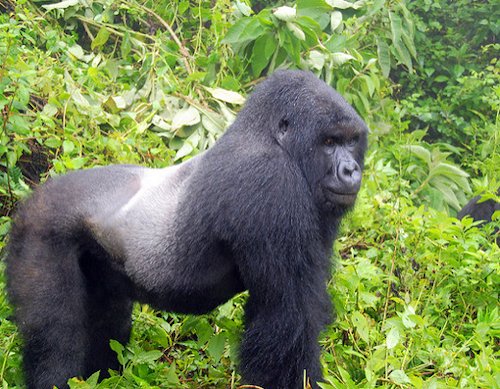
Dominant silverbacks play important protective roles within mountain gorilla families. They influence group movements, respond to potential threats and maintain close social relationships with other members. When people are nearby, a silverback may briefly observe their position or movements while remaining seated or feeding. Why Do Mountain Gorillas Stare at Tourists? Environmental monitoring may explain some of these observations, but it would be misleading to suggest that every silverback is constantly searching for danger. Much of their daily routine involves ordinary resting, feeding and social activity. Explore silverback gorilla encounters in Uganda, Bwindi gorilla family experiences, Rwanda gorilla adventures, luxury wildlife safaris and African primate holidays.
3. Mother Gorillas May Observe Visitors While Caring for Infants
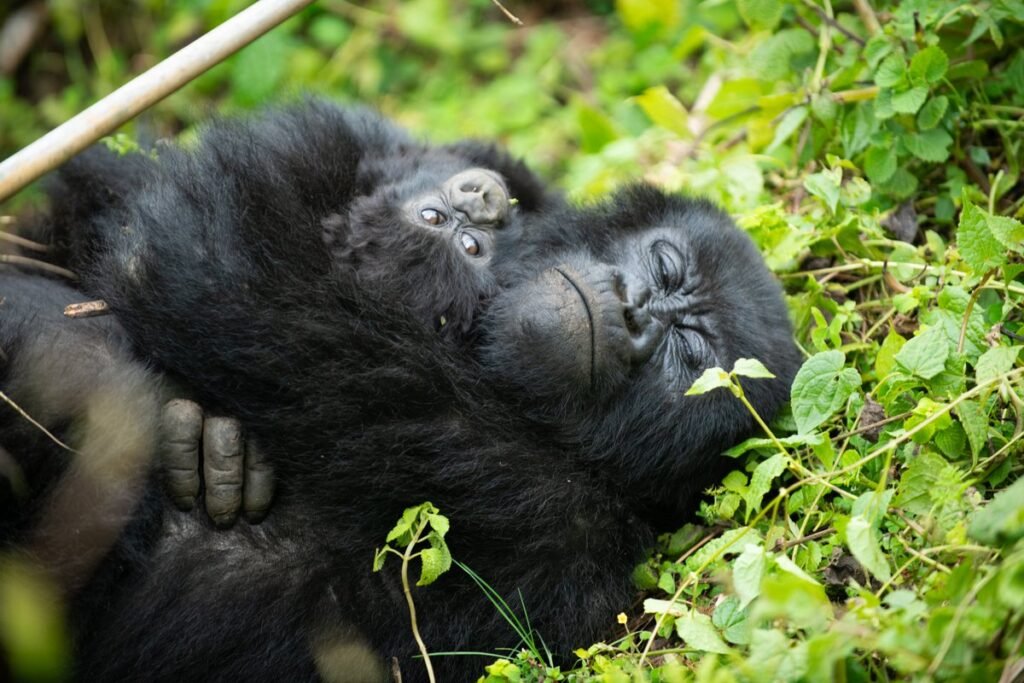
Mother mountain gorillas maintain close relationships with their infants, especially during early development. A mother carrying or nursing her baby may look toward nearby activity before returning to her normal behaviour. Such visual attention does not necessarily indicate distress, although maternal protection is an important part of gorilla family life. Why Do Mountain Gorillas Stare at Tourists? A female’s response may depend on her infant’s position, surrounding movements and the behaviour of other gorillas. Tourists should never attempt to approach mothers and babies, even when the animals appear relaxed. Learn about these encounters during Bwindi gorilla trekking, Uganda mountain gorilla safaris, Rwanda gorilla trekking tours, private forest adventures and romantic Rwanda gorilla honeymoons.
4. Baby Mountain Gorillas May Look at Tourists Out of Interest
Young mountain gorillas develop their understanding of the surrounding environment through observation, exploration and social experiences. As infants become more mobile, they may briefly look toward visitors before continuing to play, climb or interact with their mothers. Why Do Mountain Gorillas Stare at Tourists? Younger animals sometimes respond to unfamiliar activity differently from mature adults, although individual personalities and circumstances vary considerably. A juvenile turning toward a camera should not be interpreted as an invitation to touch or approach it. Visitors may observe these behaviours during Uganda gorilla trekking packages, Bwindi gorilla encounters, Rwanda mountain gorilla tours, gorilla habituation experiences and luxury African wildlife holidays.
5. Gorilla Staring Can Form Part of Social Communication
Mountain gorillas communicate through vocalisations, facial expressions, gestures and body postures. Eye direction may contribute information within these interactions, although its meaning depends on the surrounding context. Researchers have documented staring behaviours among mountain gorillas that can occur during social activities, including interactions associated with play and reconciliation. Why Do Mountain Gorillas Stare at Tourists? Their visual attention should therefore be interpreted carefully rather than reduced to a single emotional explanation. Trained guides can help visitors understand observable signals without claiming to know precisely what an animal is thinking. Explore mountain gorilla behaviour, Uganda gorilla trekking, Rwanda gorilla holidays, Bwindi forest safaris and private gorilla adventures.
6. Habituated Gorilla Families Are Familiar With Human Presence
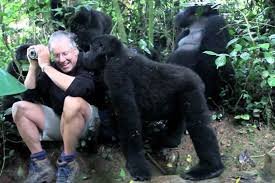
Gorilla habituation involves gradually allowing selected wild gorilla families to become accustomed to controlled human observation. This carefully managed process enables conservation personnel to monitor animals and, where authorised, allows tourists to visit them. Habituation does not mean that gorillas become domesticated or lose all responses to human activity. Why Do Mountain Gorillas Stare at Tourists? Even animals familiar with ranger-guided visits may monitor nearby people, especially when something changes unexpectedly. Visitors interested in understanding this process can explore Uganda gorilla habituation, gorilla habituation booking, Bwindi forest experiences, standard gorilla trekking and combined trekking and habituation safaris.
7. Can Direct Eye Contact Be Interpreted as a Threat?
Prolonged direct staring can carry confrontational significance in gorilla social behaviour, particularly when accompanied by tense postures or other defensive signals. This is one reason trekking guidelines advise visitors against deliberately maintaining direct eye contact. However, looking briefly toward a gorilla is not equivalent to challenging it, and a gorilla glancing at someone does not automatically indicate aggression. Why Do Mountain Gorillas Stare at Tourists? The meaning depends on the complete behavioural situation rather than eye contact alone. Visitors should avoid provoking responses and follow their ranger’s directions during Uganda gorilla trekking, Rwanda gorilla trekking tours, Bwindi forest safaris, guided gorilla encounters and luxury gorilla holidays.
8. Mountain Gorillas May Respond to Movement and Camera Activity
Tourists often carry cameras, binoculars and other equipment during gorilla trekking. Sudden movements, changing body positions and unfamiliar sounds can attract attention from nearby animals. A gorilla may look toward a visitor who raises a camera or adjusts position, although researchers cannot establish the precise meaning of every response. Why Do Mountain Gorillas Stare at Tourists? Changes in nearby activity provide one possible explanation. Visitors should move slowly, keep camera flashes switched off and avoid positioning themselves too close to gorillas. Responsible photography is especially important during Bwindi gorilla trekking, Rwanda mountain gorilla safaris, Uganda gorilla holidays, luxury photography safaris and private wildlife expeditions.
9. Some Gorilla Stares Are Simply Part of Normal Observation
Not every look from a mountain gorilla has an unusual meaning. Gorillas naturally monitor their surroundings while resting, feeding and interacting with companions. An animal may turn its head toward a sound, look briefly toward another family member or observe an area where tourists happen to be standing. Why Do Mountain Gorillas Stare at Tourists? Ordinary visual attention is an important explanation that prevents visitors from interpreting every glance as a warning or emotional connection. Appreciating natural behaviour makes Uganda gorilla trekking, Rwanda gorilla trekking experiences, Bwindi wildlife adventures, guided forest encounters and personalised African safaris more educational.
What Should You Do When a Mountain Gorilla Stares at You?
When a mountain gorilla looks directly toward you, the safest response is to remain calm and follow your ranger-guide’s instructions. Avoid deliberately holding prolonged eye contact, making sudden movements, shouting or attempting to attract the animal’s attention. If directed, lower your gaze and remain in a quiet, non-threatening position while the ranger evaluates the situation. Never run away or try to approach a gorilla for photographs. Why Do Mountain Gorillas Stare at Tourists? Their visual attention can have several explanations, making professional guidance essential. Prepare through Uganda gorilla trekking information, Rwanda gorilla trekking guides, Bwindi trekking planning, private safari arrangements and Nextgen Safaris.
Can a Gorilla Stare at You Before Charging?
A gorilla may display several behaviours during a tense encounter, including increased attention, vocalisations, chest beating or changes in posture. However, direct looking alone cannot reliably predict whether an animal will charge. Many mountain gorilla encounters proceed peacefully, particularly when visitors follow conservation rules and maintain appropriate distances. Why Do Mountain Gorillas Stare at Tourists? Understanding the broader behavioural context is more useful than treating a stare as an automatic warning. Rangers are trained to assess interactions and provide appropriate instructions. Visitors can plan guided Uganda gorilla trekking, Rwanda gorilla safaris, Bwindi gorilla holidays, luxury trekking experiences and private mountain gorilla adventures with these precautions in mind.
Where Can Tourists Observe Mountain Gorilla Behaviour?
Bwindi Impenetrable National Park, Uganda
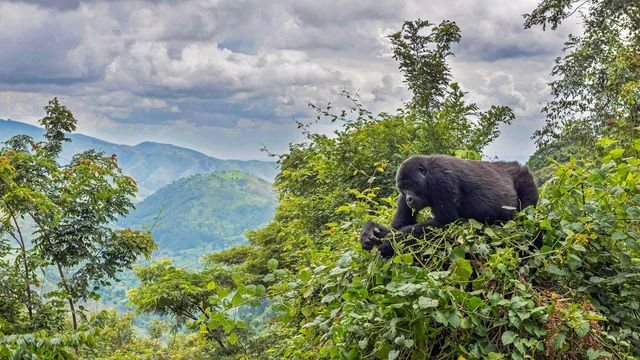
Bwindi Impenetrable National Park offers remarkable opportunities to observe mountain gorilla family behaviour within southwestern Uganda’s dense rainforest. Habituated groups occupy the Buhoma, Ruhija, Rushaga and Nkuringo trekking sectors, where visitors may encounter silverbacks, mothers, infants and juveniles. Why Do Mountain Gorillas Stare at Tourists? Their behaviour may become easier to understand when observed alongside feeding, resting and social interactions. Every encounter is different, and no particular response can be guaranteed. Explore Bwindi gorilla trekking, Uganda gorilla safari packages, three-day Bwindi trekking, gorilla habituation experiences and private Uganda safaris.
Mgahinga Gorilla National Park, Uganda
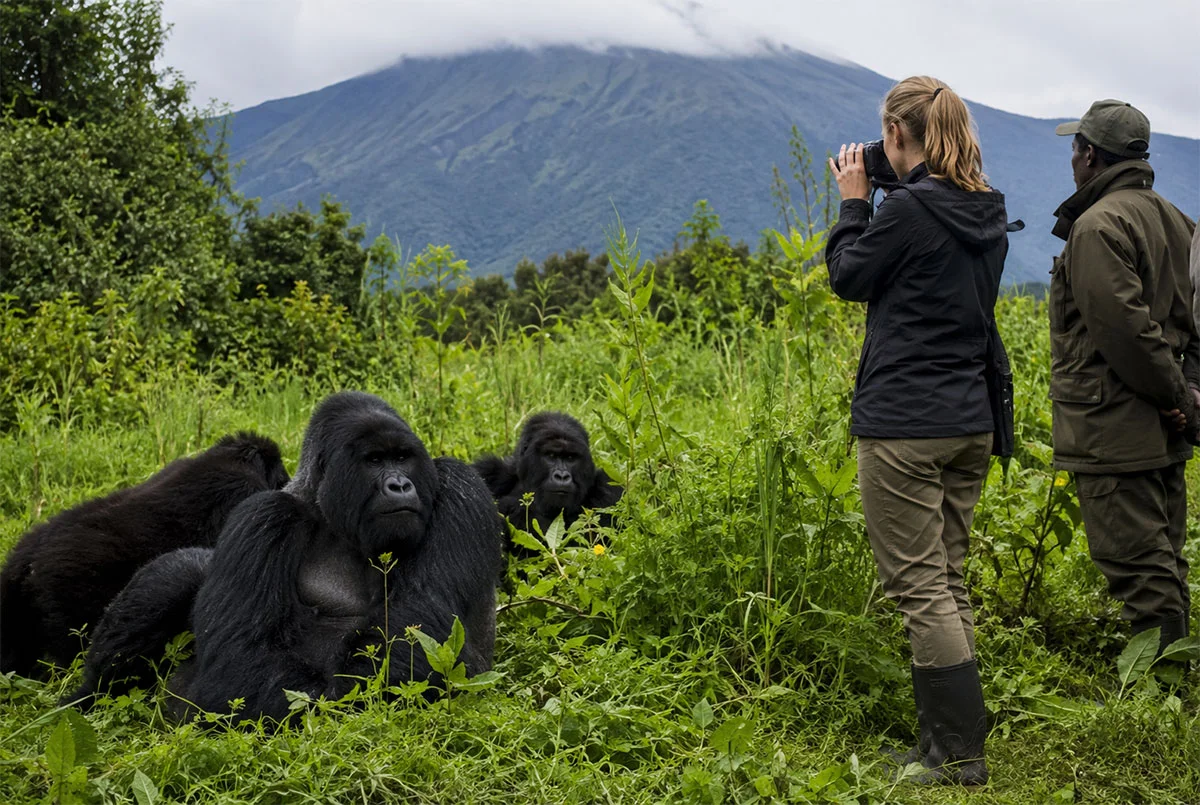
Mgahinga Gorilla National Park protects mountain gorilla habitat within Uganda’s spectacular Virunga Mountains. Its bamboo forests, volcanic landscapes and mountain vegetation provide a beautiful environment for natural wildlife observation. Visitors may witness gorillas looking toward nearby movements, communicating with companions or calmly continuing their feeding activities. As in other protected areas, the animals remain wild and their behaviour cannot be predicted. Discover Uganda mountain gorilla trekking, Mgahinga gorilla safaris, Uganda trekking packages, guided forest adventures and luxury gorilla holidays.
Volcanoes National Park, Rwanda
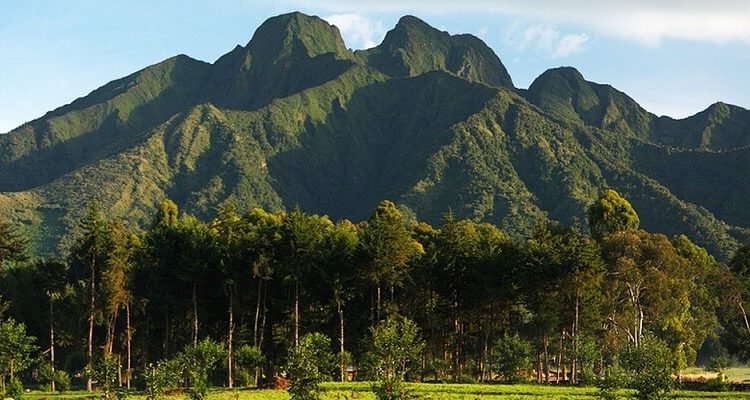
Volcanoes National Park is Rwanda’s leading destination for observing wild mountain gorillas. Habituated families inhabit its volcanic slopes and montane vegetation, allowing visitors to observe social relationships and natural behaviour under professional supervision. Why Do Mountain Gorillas Stare at Tourists? Their attention may reflect nearby activity, ordinary observation or social responses depending on the circumstances. Visitors must respect all ranger instructions throughout their encounter. Explore Rwanda gorilla trekking packages, three-day Rwanda gorilla safaris, luxury Rwanda gorilla holidays, romantic Rwanda honeymoon safaris and exclusive Rwanda gorilla experiences.
Why Gorilla Eye Contact Matters for Conservation
Research into gorilla visual attention helps conservationists understand how human presence may influence animal behaviour. Although habituation enables regulated tourism, it does not eliminate the possibility of disturbance. Maintaining appropriate distances, controlling visitor numbers and following health precautions help reduce pressure on gorilla families. Why Do Mountain Gorillas Stare at Tourists? Understanding that gorillas may monitor nearby people reinforces the importance of respectful observation. Visitors contribute to conservation by supporting responsible Uganda gorilla trekking, Rwanda gorilla safari programmes, Bwindi conservation tourism, professionally guided safaris and Nextgen Safaris.
Frequently Asked Questions About Why Mountain Gorillas Stare at Tourists
Why Do Mountain Gorillas Stare at Tourists?
Mountain gorillas may look toward tourists to observe movement, remain aware of their surroundings or respond to nearby activity. However, direct staring can also carry social significance, and its meaning depends on the circumstances. Explore Uganda gorilla trekking and Rwanda gorilla safaris.
Is It Dangerous When a Mountain Gorilla Stares at You?
Not necessarily. A brief glance does not automatically indicate aggression, although prolonged direct eye contact and defensive displays should be treated cautiously. Visitors should follow ranger instructions during Bwindi gorilla trekking.
Why Should Tourists Avoid Direct Eye Contact With Gorillas?
Prolonged direct staring can be interpreted as confrontational in some gorilla interactions. Avoiding deliberate eye contact helps reduce the possibility of misunderstanding or disturbance. Learn about responsible gorilla trekking.
Why Do Silverback Gorillas Stare at Tourists?
Silverbacks may observe visitors while remaining aware of their surroundings and family members. A stare alone does not establish that the animal feels threatened. Discover Uganda silverback encounters.
Can Baby Mountain Gorillas Stare at Tourists?
Yes. Young mountain gorillas may look toward visitors during exploration or social activity. However, their behaviour should never encourage direct human contact. Explore Rwanda gorilla trekking packages.
What Happens if You Look Directly Into a Gorilla’s Eyes?
A brief accidental glance does not necessarily cause a reaction. However, visitors should avoid deliberately maintaining prolonged eye contact and should follow their guide’s advice. Discover guided gorilla trekking holidays.
Do Gorillas Recognise Individual Tourists?
Habituated gorillas can become familiar with repeated human presence, but there is insufficient evidence to assume they recognise every individual tourist. Their responses depend on circumstances and experience. Explore gorilla habituation safaris.
Can Mountain Gorillas Stare Before Charging?
A gorilla may look toward a perceived disturbance before displaying defensive behaviour, but staring alone cannot predict a charge. Remain calm and follow ranger instructions. Explore Uganda gorilla trekking experiences.
Why Do Mountain Gorillas Stare at Tourists During Photography?
A gorilla may respond to camera movement, shifting positions or sounds associated with nearby visitors. Flash photography is prohibited, and tourists should avoid disturbing natural behaviour. Discover Bwindi wildlife safaris.
Where Is the Best Place to Observe Gorilla Behaviour Safely?
Bwindi Impenetrable National Park, Mgahinga Gorilla National Park and Rwanda’s Volcanoes National Park offer guided opportunities to observe habituated mountain gorillas. Visitors must follow official trekking rules. Explore Uganda gorilla trekking and Rwanda gorilla holidays.
Book Your Mountain Gorilla Trekking Safari With Nextgen Safaris
Why Do Mountain Gorillas Stare at Tourists? Their fascinating visual behaviour reveals how these intelligent primates observe their surroundings, respond to social interactions and remain aware of nearby activity. Watching a silverback quietly observe the forest, a mother care for her infant or a juvenile investigate its surroundings can become one of the most memorable experiences of an African safari. Nextgen Safaris organises personalised gorilla trekking journeys in Uganda and Rwanda, combining professional planning, private transportation, carefully selected accommodation and assistance arranging official trekking permits. Discover Uganda gorilla trekking packages, Rwanda mountain gorilla safaris, Bwindi gorilla trekking holidays, luxury gorilla trekking safaris and romantic Rwanda honeymoon experiences.
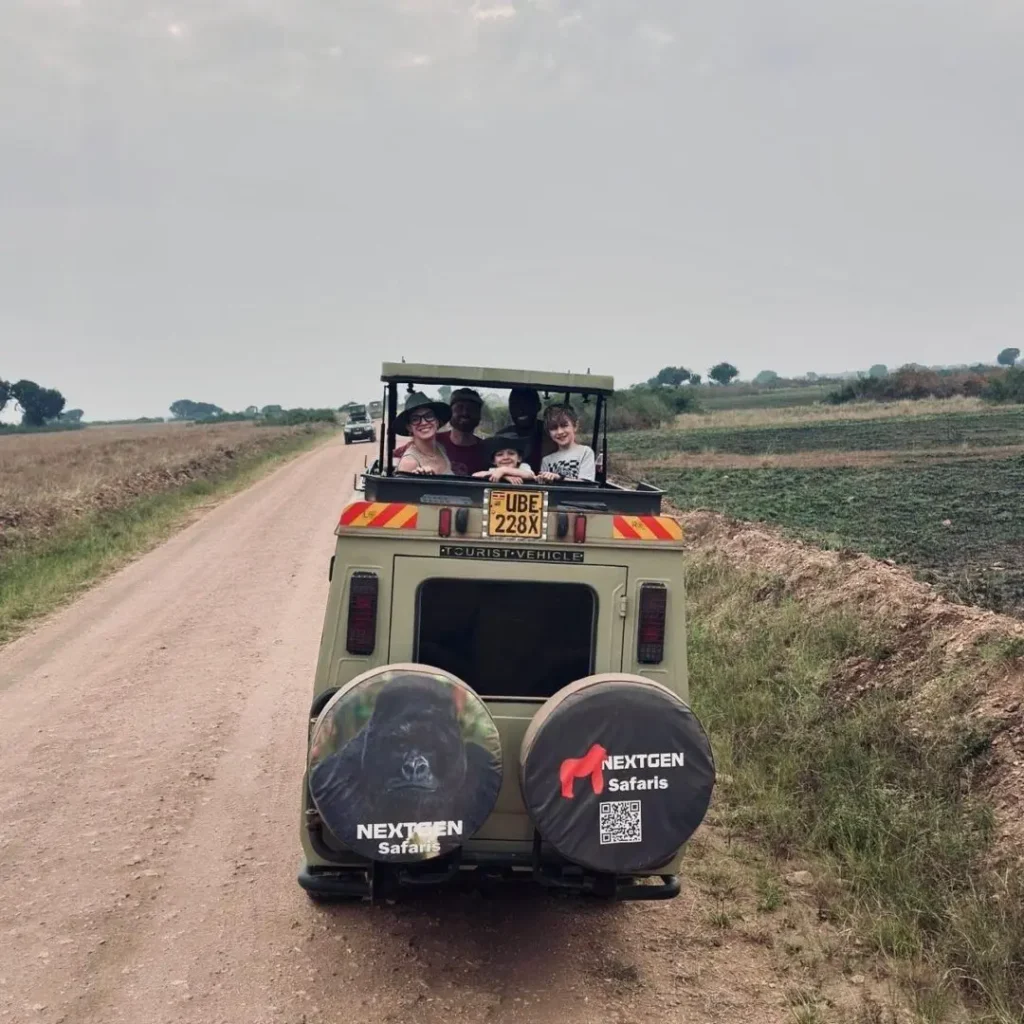
Whether you prefer a short gorilla trekking adventure from Kigali, an immersive Bwindi forest safari or a longer Uganda and Rwanda wildlife holiday, our team can customise your journey around your travel dates, preferred accommodation and budget. Every encounter prioritises responsible observation, visitor safety and the protection of wild mountain gorillas.