
Queen Elizabeth National Park Guide
Ultimate Queen Elizabeth National Park Guide: Wildlife, Tree-Climbing Lions, Kazinga Channel & Safari Planning
Queen Elizabeth National Park Guide is your complete introduction to one of Uganda’s most diverse and rewarding wildlife destinations. Located in western Uganda within the Albertine Rift, Queen Elizabeth National Park combines open savannah, crater lakes, wetlands, forests, volcanic landscapes, and the famous Kazinga Channel within one protected area. This extraordinary mixture of habitats supports elephants, buffaloes, hippos, lions, leopards, chimpanzees, antelopes, crocodiles, primates, and hundreds of bird species, making the park suitable for first-time safari travelers as well as experienced wildlife enthusiasts.
“`html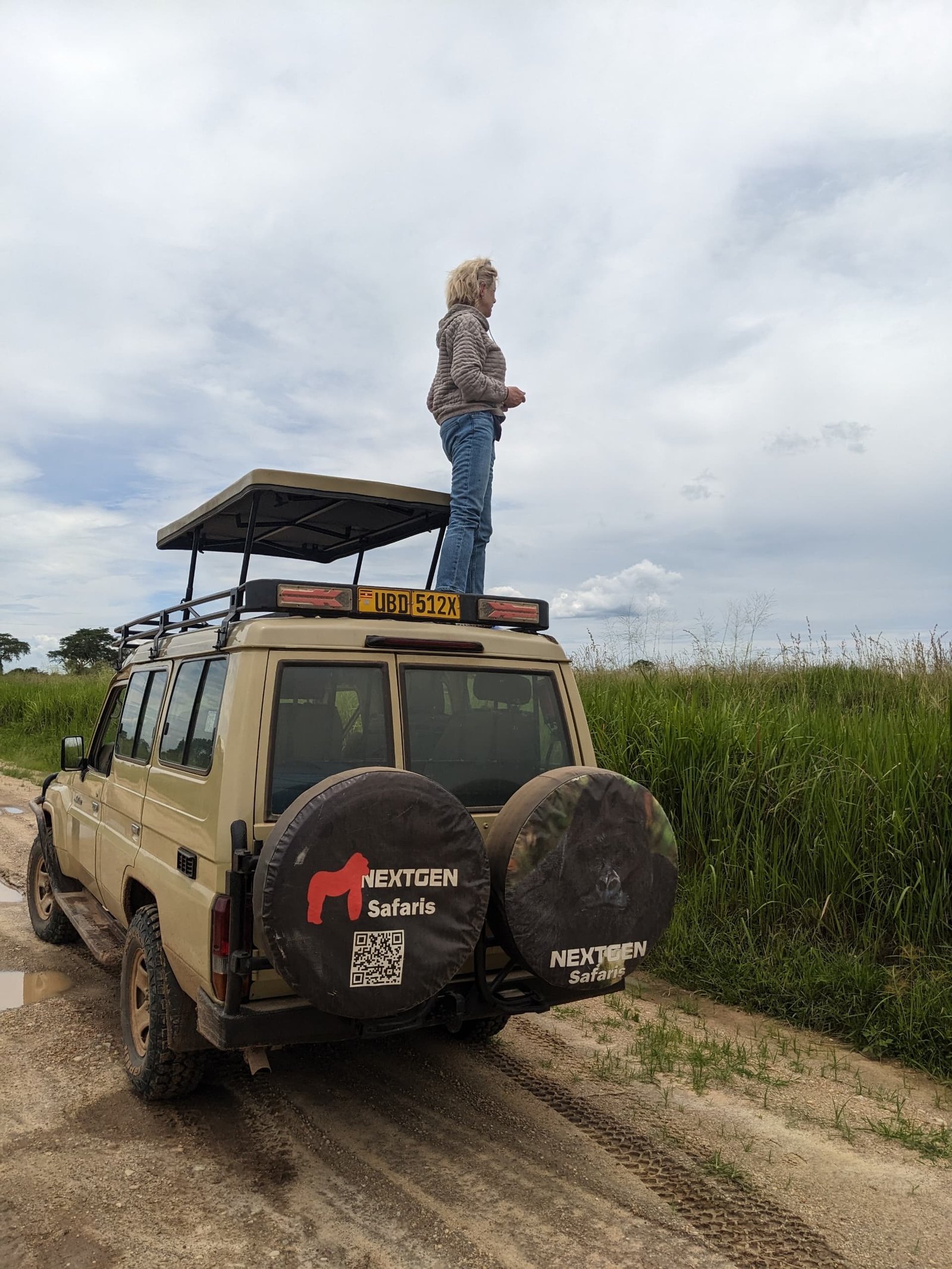
For travelers exploring Uganda with Nextgen Safaris, Queen Elizabeth National Park fits naturally into a journey that also includes chimpanzee trekking in Kibale National Park and mountain gorilla trekking in Bwindi Impenetrable National Park. Its geographical position makes it one of the most convenient wildlife stops on Uganda’s western safari circuit. Visitors can spend the morning searching for lions across the Kasenyi Plains, cruise the Kazinga Channel in the afternoon, explore volcanic crater landscapes, search for tree-climbing lions in Ishasha, and continue south toward Bwindi for gorilla trekking.
Uganda Wildlife Authority describes Queen Elizabeth as a highly biodiverse park covering approximately 1,978 square kilometres, with more than 95 mammal species and 600 bird species recorded across its varied ecosystems. The park includes savannah, wetlands, lakes, forest habitats, the Kazinga Channel and volcanic crater formations, creating one of Uganda’s richest combinations of scenery and wildlife.
Where Is Queen Elizabeth National Park?
Queen Elizabeth National Park lies in western Uganda and forms part of the greater Queen Elizabeth Conservation Area. The park stretches across a spectacular section of the Western Rift Valley between Lake George and Lake Edward, with the Rwenzori Mountains creating a dramatic backdrop in several areas. Kasese is one of the main gateway towns, while the Mweya Peninsula forms the central tourism hub for many game drives, boat cruises and lodge stays. Its location makes the park extremely convenient for travelers following the popular route from Kibale National Park toward Bwindi Impenetrable National Park.
The landscape is far more varied than many visitors expect from a traditional African wildlife park. Open grassland gives way to acacia woodland, wetlands, forest patches, crater lakes, escarpments and waterways. Geological activity helped shape many of the park’s defining features, including the Rift Valley floor, volcanic crater systems, Kyambura Gorge and the Kazinga Channel connecting Lakes George and Edward.
This diversity is one of the major reasons the park works so well within a longer Uganda safari. Instead of seeing only grassland wildlife, travelers experience several ecosystems during the same visit. Morning game drives can take place across open plains, while the afternoon may be spent on the water surrounded by hippos and elephants. The following day can bring forest exploration or a journey into the quieter Ishasha wilderness.
Why Visit Queen Elizabeth National Park?
The strongest reason to visit Queen Elizabeth National Park is variety. Few destinations in Uganda combine classic game drives, boat safaris, predator searches, chimpanzee trekking, birdwatching, crater scenery and easy connections to gorilla trekking within such a practical route. This makes the park particularly valuable for travelers who want a broad safari experience without constantly changing regions.
Wildlife is another major attraction. African elephants and buffaloes are frequently encountered, while Uganda kobs, waterbucks, warthogs, hippos, crocodiles and numerous smaller mammals occupy different parts of the ecosystem. Lions occur in several areas, with the Kasenyi Plains being particularly important for predator-focused game drives. Leopards and spotted hyenas are also present, although sightings depend heavily on movement, timing and good guiding. UWA identifies elephants, buffaloes, hippos, Uganda kobs, waterbucks, lions, leopards and hyenas among the park’s notable wildlife.
The park is also attractive because the safari does not have to remain inside a vehicle all day. A boat cruise provides a completely different perspective, while Kyambura Gorge introduces primate trekking and forest scenery. Crater routes add geological interest, and nearby community experiences can provide insight into local livelihoods, salt production and cultures surrounding the conservation area.
Game Drives in Queen Elizabeth National Park
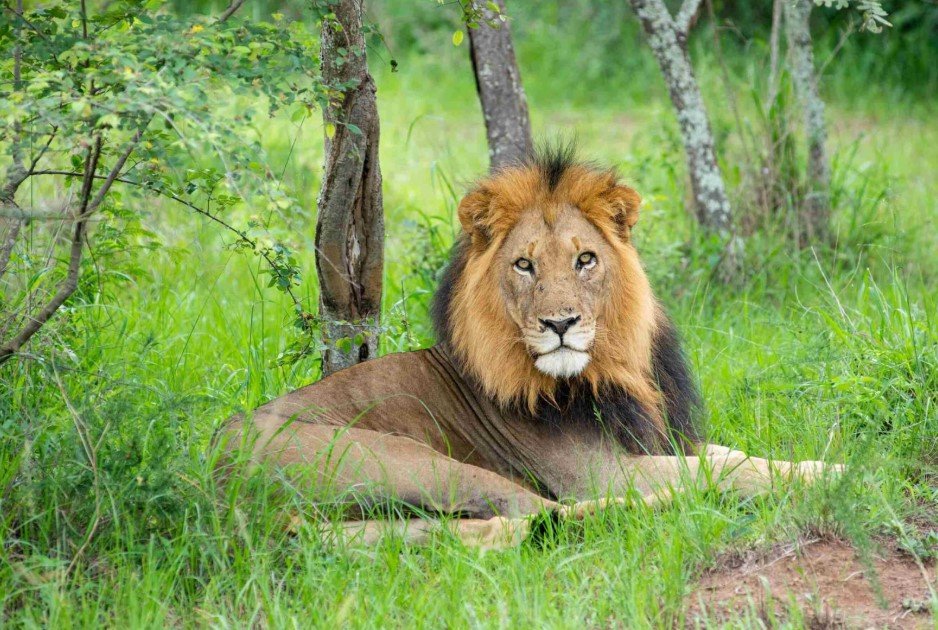
Game drives form the foundation of most Queen Elizabeth National Park safaris. The best-known game-viewing area is the Kasenyi Plains, where open grasslands support large concentrations of Uganda kobs and attract predators including lions. Early morning drives are particularly rewarding because temperatures are cooler and many animals remain active after the night. Late afternoon can also provide beautiful lighting, active wildlife and excellent photographic conditions.
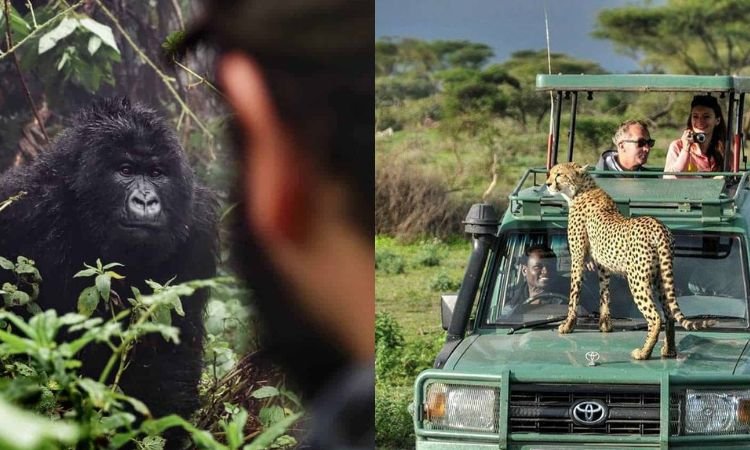
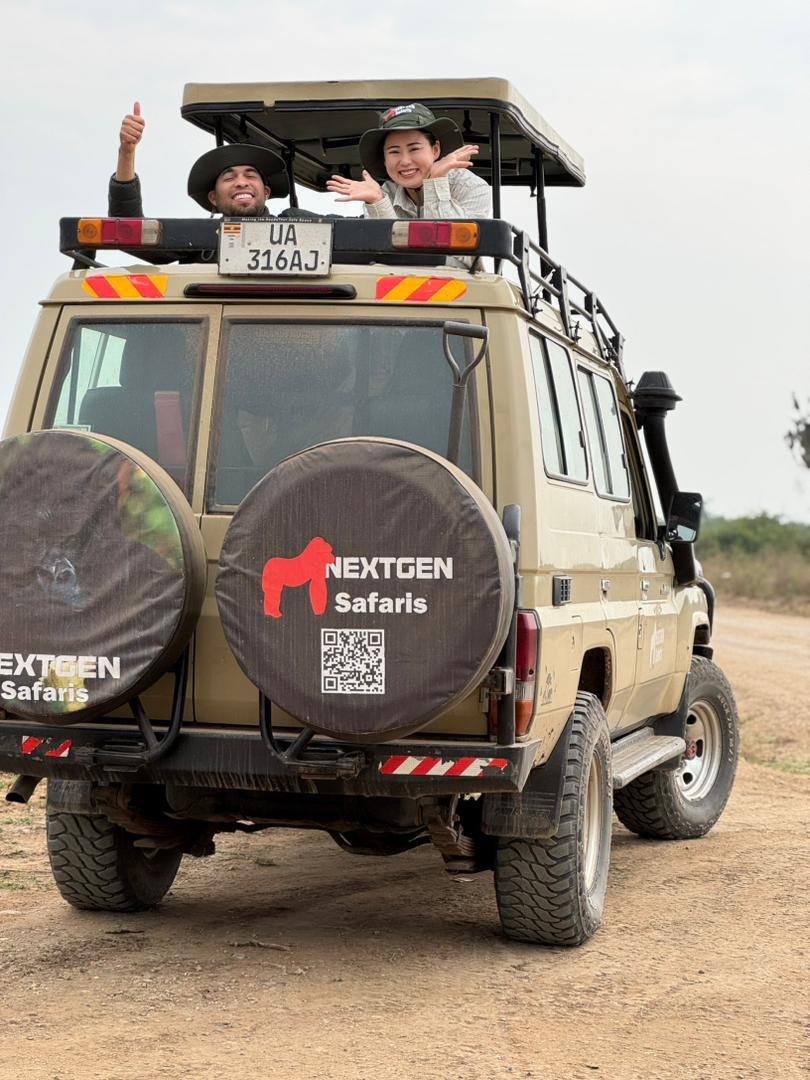
A professional driver-guide significantly improves the game-drive experience because safari success involves more than simply driving along the tracks. Guides monitor animal movements, interpret tracks and behavior, communicate with other professional guides and understand which habitats are likely to produce particular species. Wildlife remains completely wild, so no responsible operator should guarantee a specific lion, leopard or other predator sighting.
UWA identifies Kasenyi as the principal game-viewing area in central Queen Elizabeth National Park because of its open grassland and resident Uganda kob populations, which in turn support predators. Travelers with two or more nights should consider more than one game drive because wildlife conditions can change significantly between mornings and evenings.
Kazinga Channel Boat Safari
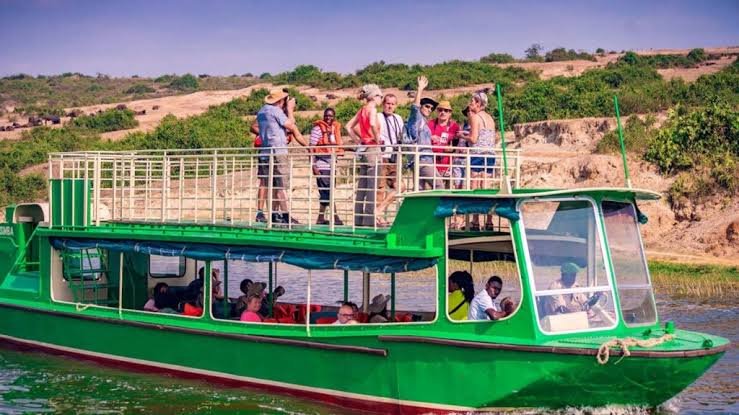
The Kazinga Channel boat safari is one of the defining experiences featured in any complete Queen Elizabeth National Park Guide. The channel connects Lake George with Lake Edward and passes through the heart of the protected landscape. Rather than searching across large plains from a safari vehicle, visitors travel slowly along the water where wildlife frequently gathers close to the shoreline.
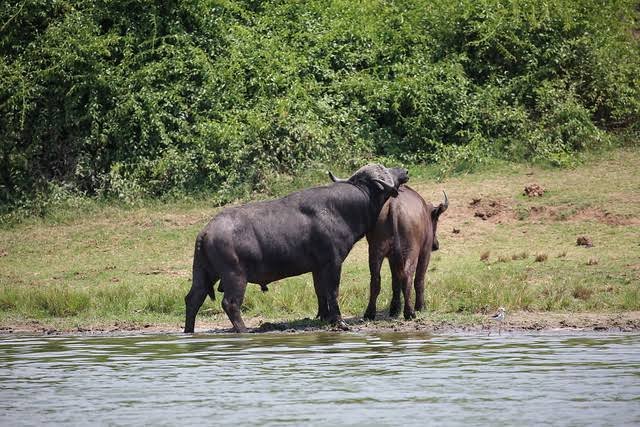
Hippos are among the dominant sights, often appearing in large groups in the water. Nile crocodiles can be seen along the banks, while elephants and buffaloes regularly approach the channel to drink, feed or cool themselves. Waterbucks and other mammals may also appear along the shore, while birdlife can be exceptionally rich. Uganda Wildlife Authority specifically highlights the channel for its hippos, crocodiles, elephants, buffaloes and abundant waterbirds.
The cruise works particularly well after a morning game drive. Travelers can return to their lodge for lunch before heading to the Mweya area for an afternoon boat experience. This creates a well-balanced safari day because the morning is spent exploring the savannah and the afternoon is spent observing wildlife from the water.
The current UWA online booking information lists the Queen Elizabeth National Park boat cruise at US$30 for foreign non-residents, although travelers should always reconfirm official rates when booking because conservation tariffs can change.
Tree-Climbing Lions of Ishasha
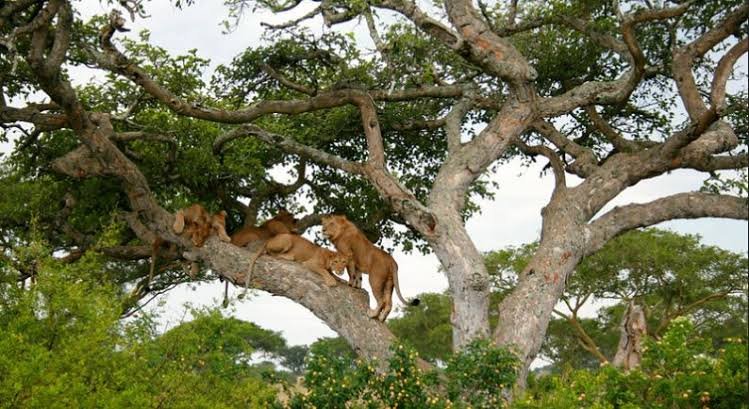
The Ishasha sector is one of the most famous areas of Queen Elizabeth National Park because of its tree-climbing lions. Located in the southern section of the park, Ishasha offers a quieter and more remote safari environment than the busier central regions around Mweya and Kasenyi. Large fig trees scattered across the plains occasionally provide resting places for lions, creating one of Uganda’s most distinctive wildlife scenes.
There are several theories about why lions climb trees, including escaping insects, avoiding heat at ground level and gaining a better view of the surrounding plains, but visitors should remember that the behavior is natural rather than guaranteed. Some game drives may reveal lions lying across large branches, while on other days they may remain on the ground or move elsewhere within their territory.
UWA describes Ishasha as Queen Elizabeth National Park’s southernmost sector and highlights both its classic game-viewing landscapes and its lions that frequently rest in fig trees. Buffaloes, elephants, hippos, topis and other animals also occur in the area.
Ishasha has another major advantage: it lies conveniently along the route toward Bwindi Impenetrable National Park. Travelers can therefore enjoy a morning or midday game drive while transferring from Queen Elizabeth toward Bwindi for mountain gorilla trekking. This makes Ishasha far more than an optional detour; it can become a natural part of an intelligently designed Uganda safari.
Chimpanzee Trekking in Kyambura Gorge
Queen Elizabeth National Park is not only about savannah wildlife. Kyambura Gorge creates one of the park’s most striking contrasts, with thick riverine forest cutting through the surrounding open landscapes. Visitors descend into the gorge with trained guides to search for chimpanzees and other primates, creating a forest experience very different from the park’s conventional game drives.
The gorge is roughly 100 metres deep in places and supports chimpanzees as well as other primates such as black-and-white colobus monkeys, olive baboons, red-tailed monkeys and blue monkeys. UWA documentation describes Kyambura Gorge as a forest-filled chasm extending toward the Kazinga Channel and identifies guided chimpanzee tracking as one of its principal experiences.
Chimpanzee sightings in Kyambura should not be treated exactly the same as those in Kibale National Park. Kibale remains the stronger destination for travelers whose primary objective is chimpanzee trekking, while Kyambura is particularly valuable for visitors who want to add a primate experience without leaving the Queen Elizabeth region.
For travelers building a complete Uganda safari, an excellent combination is Kibale for dedicated chimpanzee trekking, Queen Elizabeth for wildlife and Kazinga Channel, and Bwindi for mountain gorilla trekking. This creates a remarkably diverse primate and wildlife circuit.
Mweya Peninsula
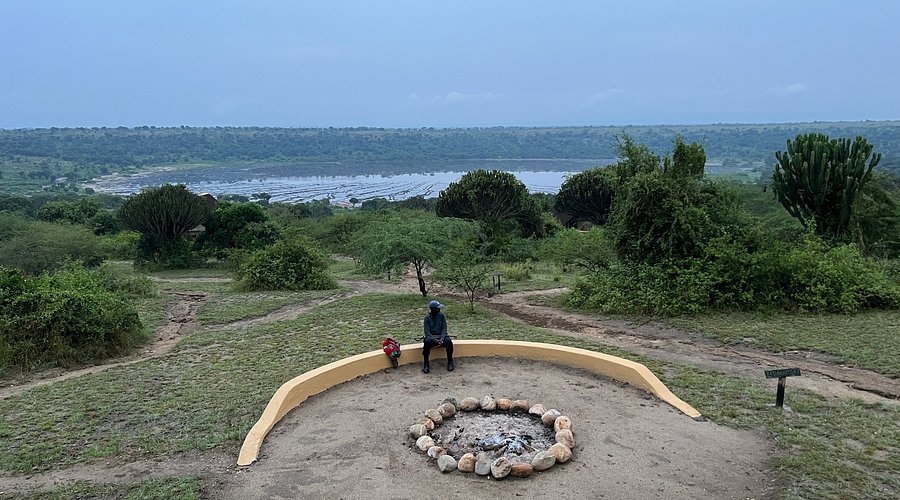
The Mweya Peninsula is one of the most important tourism areas inside Queen Elizabeth National Park. Positioned above the Kazinga Channel and Lake Edward landscapes, it provides convenient access to the boat cruise, central game-viewing routes and several accommodation options.
Because of its location, Mweya works extremely well as a base for first-time visitors. A traveler can begin an early game drive across Kasenyi, return for breakfast or lunch, and later reach the Kazinga Channel without spending unnecessary hours transferring between distant areas.
UWA documentation identifies Mweya Peninsula as the park’s main tourism hub and notes its elevated position overlooking the Kazinga Channel and Lake Edward. The area also contains the marina used for launch trips and visitor facilities.
Travelers staying around Mweya should nevertheless remember that Queen Elizabeth is a large park. Ishasha, for example, deserves separate time rather than being treated as a quick extension of a central game drive.
The Kasenyi Plains
The Kasenyi Plains should feature prominently in a first visit to Queen Elizabeth National Park. Their open grasslands are particularly important for Uganda kobs, which gather across the plains and provide prey for lions and other predators. This ecological relationship makes Kasenyi one of the better areas to search for large carnivores.
Early departures are normally recommended. Cooler conditions improve wildlife activity, while soft morning light creates excellent photographic opportunities across the open landscape. A patient game drive can reveal much more than predators, including buffaloes, elephants, warthogs, antelopes and substantial birdlife.
Travelers interested in photography should avoid treating the game drive like a race to collect species. Spending time watching elephants interact, Uganda kobs display territorial behavior or birds hunt across the grassland can create far stronger experiences than constantly moving between sightings.
Crater Lakes and Explosion Crater Drive
One of the most visually impressive features covered in this Queen Elizabeth National Park Guide is the park’s volcanic landscape. Numerous craters scattered through the northern section provide evidence of the powerful geological forces that helped shape the Albertine Rift.
The traditional crater drive passes extinct volcanic features containing lakes, grassland and forest. UWA describes a roughly 27-kilometre Crater Drive between Kabatoro and Crater gates, following the rims of several extinct craters.
These landscapes provide a completely different experience from game viewing. Travelers can stop at viewpoints, photograph crater lakes and appreciate how geology has influenced the ecology of western Uganda. The crater region is particularly valuable for visitors interested in landscapes and photography rather than wildlife alone.
Lake Katwe and Salt-Mining Experiences
Lake Katwe adds an important cultural dimension to a Queen Elizabeth National Park safari. Communities around the saline crater lake have a long history of extracting salt, and guided visits can introduce travelers to the traditional processes and economic importance of salt production in the region.
UWA documentation notes that people in Katwe have extracted salt from the lake for centuries and that local guides can introduce visitors to the process. This makes the area useful for travelers interested in connecting wildlife tourism with local livelihoods.
Community visits should be approached respectfully rather than as staged photo opportunities. A good guide explains the history, introduces visitors appropriately and ensures that tourism contributes positively to the local experience.
Maramagambo Forest
Maramagambo Forest offers another dramatic change of scenery within the wider Queen Elizabeth ecosystem. The forest lies below the Kichwamba Escarpment and supports primates, forest birds and several interesting natural features.
Guided walks can introduce visitors to vegetation and wildlife that would be difficult to experience during a standard game drive. UWA notes forest bird species, primates, crater lakes and the famous bat-cave area among the forest’s attractions.
Maramagambo is particularly suitable for travelers spending three or more nights around Queen Elizabeth because it expands the safari beyond the standard combination of Kasenyi and Kazinga Channel.
Birdwatching in Queen Elizabeth National Park
Birdwatching is one of Queen Elizabeth National Park’s greatest strengths. UWA records more than 600 bird species, an extraordinary total supported by the park’s variety of wetlands, lakeshores, forest, grassland, woodland and crater environments.
The Kazinga Channel provides opportunities to observe waterbirds while crater lakes can attract seasonal species. Forested areas offer an entirely different community of birds, and open savannah supports raptors and grassland species. For dedicated birders, Queen Elizabeth can therefore justify several days rather than a quick overnight stop.
Birdwatching can also easily be combined with mammal-focused activities. A knowledgeable guide can interpret both large wildlife and birdlife throughout the same safari rather than forcing travelers to choose between the two.
Best Time to Visit Queen Elizabeth National Park
Queen Elizabeth National Park can be visited throughout the year, but conditions change with Uganda’s wet and dry seasons. The drier months are generally preferred by travelers interested in easier road conditions and more predictable game drives. Vegetation may become less dense, potentially improving visibility in some areas, while animals often gather around dependable water sources.
The wetter periods transform the park into an exceptionally green landscape and can be rewarding for photography and birding. Rain does not normally continue throughout every day, although road conditions can become more challenging and safari plans sometimes require additional flexibility.
Travelers combining Queen Elizabeth with gorilla trekking in Bwindi or chimpanzee trekking in Kibale should consider the entire safari rather than selecting travel dates based only on one national park. The drier periods generally make forest trekking easier underfoot, while the greener seasons can offer beautiful scenery and quieter safari conditions.
How Long Should You Spend in Queen Elizabeth National Park?
For most first-time visitors, two nights is a practical minimum. This allows an afternoon or evening arrival, an early-morning game drive, a Kazinga Channel boat cruise and enough time to continue toward Ishasha or the next safari destination.
Three nights create a considerably richer experience. Travelers can add another game drive, explore crater landscapes, visit Kyambura Gorge, include community experiences or simply spend more time searching for predators without feeling pressured by the schedule.
Those incorporating Ishasha should ideally treat the southern sector as a meaningful safari stop rather than rushing straight through it. An overnight stay around Ishasha can provide both an evening and morning opportunity to search for tree-climbing lions before continuing toward Bwindi.
Getting to Queen Elizabeth National Park
Most travelers reach Queen Elizabeth National Park by road as part of a private Uganda safari. From Entebbe or Kampala, the route travels west toward the Albertine Rift. Many longer itineraries instead approach the park from Kibale National Park, which creates an excellent north-to-south safari sequence.
After Queen Elizabeth, travelers can continue through Ishasha toward Bwindi Impenetrable National Park. This is one of the most efficient routes in Uganda because each destination contributes something different: Kibale provides chimpanzees, Queen Elizabeth delivers savannah wildlife and boat safaris, Ishasha adds tree-climbing lions, and Bwindi provides mountain gorilla trekking.
Fly-in options are also possible using airstrips serving the region, depending on current flight schedules and the selected lodge. These are particularly useful for luxury travelers, honeymooners or visitors with limited time.
Queen Elizabeth National Park Entrance Fees and Safari Costs
Safari costs depend on nationality, vehicle type, activities, accommodation and the number of people traveling. UWA’s current online Queen Elizabeth National Park booking page lists adult park entrance at US$40 for foreign non-residents, US$30 for foreign residents and UGX 20,000 for East African Community residents. It also lists the standard boat cruise at US$30 for foreign non-residents.
These fees represent only part of the overall safari price. Travelers must also consider accommodation, transport, fuel, professional guiding, meals, additional activities and transfers from other destinations. Luxury lodge stays and fly-in arrangements will naturally cost much more than road-based budget or midrange trips.
Because Uganda Wildlife Authority periodically revises conservation tariffs, Nextgen Safaris confirms the applicable fees when preparing a final safari quotation rather than relying on old online prices.
Where to Stay in Queen Elizabeth National Park
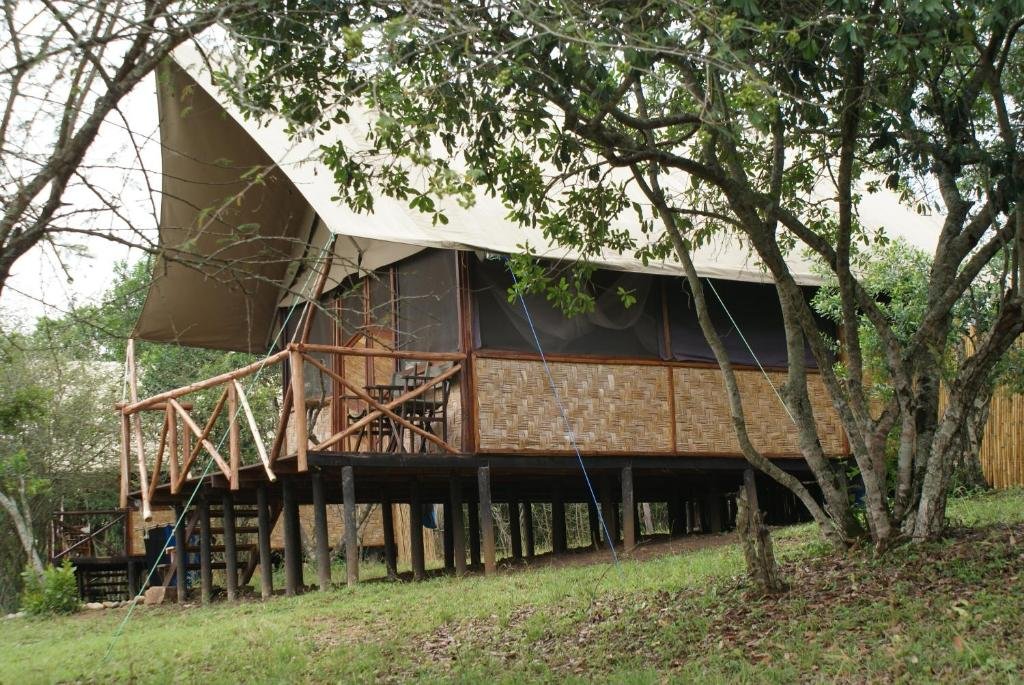
Accommodation ranges from simple safari camps and budget lodges to comfortable midrange properties and high-end safari lodges. The best choice depends not only on price but also on the activities planned for the following day.
Travelers focused on Kasenyi and the Kazinga Channel normally benefit from staying in or near the central park region. Those planning an early Ishasha game drive should consider accommodation farther south instead of attempting a very long pre-dawn transfer from Mweya.
Luxury travelers may prioritize privacy, exceptional views and premium service, while midrange travelers often seek comfortable rooms, good food and convenient positioning. Budget travelers can still enjoy an excellent safari by choosing a simpler property with sensible access to the park. Nextgen Safaris selects accommodation according to itinerary flow rather than merely choosing a hotel because it appears attractive online.
3-Day Queen Elizabeth National Park Safari Itinerary
Day 1: Entebbe or Kibale to Queen Elizabeth National Park
Begin your journey toward Queen Elizabeth National Park with your Nextgen Safaris driver-guide. Travelers arriving from Kibale enjoy a particularly scenic transfer through western Uganda, while those beginning in Entebbe undertake a longer journey through changing countryside and Rift Valley landscapes.
Depending on arrival time, explore part of the crater region or enjoy an evening game drive before continuing to your lodge for dinner and overnight.
Day 2: Kasenyi Game Drive and Kazinga Channel Boat Safari
Wake early for a game drive across the Kasenyi Plains, searching for lions, elephants, buffaloes, Uganda kobs, warthogs and other animals. Your guide will select routes according to recent wildlife movements and conditions.
Return for lunch before taking an afternoon boat cruise along the Kazinga Channel. Watch hippos, crocodiles, buffaloes, elephants and abundant birdlife around the shoreline before returning to your lodge for dinner.
Day 3: Ishasha Tree-Climbing Lions and Continue to Bwindi
After breakfast, travel south into the Ishasha sector for another game drive. Search the plains and large fig trees for the famous tree-climbing lions while also watching for topis, elephants, buffaloes and other wildlife.
Continue afterward toward Bwindi Impenetrable National Park, where you can spend the night before beginning your mountain gorilla trekking experience the following morning.
Combining Queen Elizabeth National Park with Gorilla Trekking
One of the strongest reasons to choose Queen Elizabeth is its location close to the route toward Bwindi. After wildlife viewing in the northern park and a Kazinga Channel cruise, travelers can continue through Ishasha and eventually reach one of Bwindi’s gorilla trekking sectors.
This creates an exceptional safari combination because the experiences are completely different. Queen Elizabeth introduces visitors to open savannah, lions, elephants and boat safaris, while Bwindi replaces open plains with dense rainforest and intimate mountain gorilla encounters.
Travelers with additional time can add Kibale before Queen Elizabeth, creating the outstanding route Kibale National Park → Queen Elizabeth National Park → Ishasha → Bwindi Impenetrable National Park. The journey combines chimpanzee trekking, wildlife safaris, boat cruising, tree-climbing lions and mountain gorilla trekking without repeatedly returning to Entebbe.
Queen Elizabeth National Park for Couples and Honeymooners
Queen Elizabeth works particularly well for couples because the safari can balance active wildlife experiences with slower moments. An early game drive can be followed by a relaxed lunch and afternoon boat cruise, while evenings can be spent enjoying views from the lodge.
Honeymooners can combine the park with romantic forest accommodation around Bwindi, chimpanzee trekking in Kibale and several quiet nights at Lake Bunyonyi. Luxury properties can also arrange private dinners, sundowners and other special experiences depending on availability.
The key is to avoid packing every possible activity into one day. Couples generally enjoy Queen Elizabeth more when they have at least two nights and enough time to appreciate both the park and their lodge.
Queen Elizabeth National Park for Families
The park can also work extremely well for families because many of its main activities do not require strenuous walking. Game drives and boat cruises allow children to experience wildlife comfortably while remaining within a vehicle or boat.
Parents should nevertheless consider daily driving times, heat, meal schedules and the attention span of younger children. Two-night stays are generally more enjoyable than changing accommodation every day.
Families continuing toward Bwindi should also check age restrictions for gorilla trekking well in advance so that suitable alternative arrangements can be made for children who are not eligible to trek.
Conservation and Responsible Safari Travel
Queen Elizabeth National Park supports wildlife while existing alongside numerous surrounding communities. This makes responsible tourism particularly important. Visitors should respect park regulations, never pressure guides to drive off designated routes illegally, avoid disturbing animals and maintain responsible behavior during both game drives and boat activities.
UWA is the government agency responsible for managing and protecting Uganda’s national parks and wildlife resources. Park fees contribute to conservation management, while tourism also creates employment and economic opportunities in communities around protected areas.
Responsible safari travel also means understanding that wildlife sightings are never guaranteed. A lion sleeping in a tree, leopard crossing a track or elephant herd approaching the channel is memorable precisely because the encounter is natural rather than staged.
Frequently Asked Questions About Queen Elizabeth National Park
1. Is Queen Elizabeth National Park worth visiting?
Yes, Queen Elizabeth National Park is one of the best safari destinations in Uganda because it combines game drives, boat safaris, crater landscapes, birdwatching, chimpanzee trekking in Kyambura Gorge, and the famous tree-climbing lions of Ishasha. Its location between Kibale National Park and Bwindi Impenetrable National Park also makes it easy to include within a longer Uganda safari combining chimpanzees, wildlife, and mountain gorilla trekking.
2. What animals can I see in Queen Elizabeth National Park?
Visitors may encounter African elephants, buffaloes, Uganda kobs, waterbucks, warthogs, hippos, Nile crocodiles, lions, leopards, hyenas, topis, and several primate species. Wildlife sightings vary naturally from day to day, but the park’s combination of savannah, wetlands, forests, lakes, and riverine habitats supports an impressive range of species. The Kazinga Channel is especially rewarding for hippos, elephants, buffaloes, crocodiles, and waterbirds.
3. Where can I see tree-climbing lions in Queen Elizabeth National Park?
The best-known area for tree-climbing lions is the Ishasha sector in the southern part of Queen Elizabeth National Park. Lions are sometimes seen resting on the branches of large fig trees, particularly during the warmer parts of the day. Sightings cannot be guaranteed because the lions move freely, but Ishasha remains one of Uganda’s most famous locations for observing this unusual behavior.
4. How many days do I need in Queen Elizabeth National Park?
Two nights is a good minimum for most travelers. This normally allows time for an early-morning game drive, an afternoon Kazinga Channel boat cruise, and an onward journey toward Ishasha or another destination. Three nights provide a more relaxed experience and make it easier to add crater exploration, Kyambura Gorge, another game drive, or a dedicated visit to the Ishasha sector.
5. What is the best time to visit Queen Elizabeth National Park?
Queen Elizabeth National Park can be visited throughout the year. The drier periods are often preferred for easier game drives and generally better road conditions, while the wetter seasons bring greener landscapes and can be excellent for photography and birdwatching. Travelers combining the park with chimpanzee trekking in Kibale and gorilla trekking in Bwindi should consider conditions across the entire safari route rather than choosing dates for Queen Elizabeth alone.
6. What is special about the Kazinga Channel?
The Kazinga Channel connects Lake George and Lake Edward and is one of the major highlights included in this Queen Elizabeth National Park Guide. Boat safaris along the channel provide excellent opportunities to see hippos, crocodiles, elephants, buffaloes, and numerous bird species along the shoreline. The cruise offers a completely different wildlife-viewing perspective from a game drive and is often one of the most relaxing experiences in the park.
7. Can I see chimpanzees in Queen Elizabeth National Park?
Yes. Chimpanzee trekking is available in Kyambura Gorge, a forested valley within the Queen Elizabeth ecosystem. The gorge offers a contrasting experience to the park’s open savannah and allows visitors to search for chimpanzees and other primates on foot. Travelers whose main goal is chimpanzee trekking may also include Kibale National Park, while Kyambura works particularly well as an additional primate experience during a Queen Elizabeth safari.
8. Can I combine Queen Elizabeth National Park with gorilla trekking?
Yes, and this is one of the best safari combinations in Uganda. After exploring Queen Elizabeth National Park, travelers can continue south through the Ishasha sector toward Bwindi Impenetrable National Park for mountain gorilla trekking. A popular route is Kibale National Park for chimpanzees, Queen Elizabeth for game drives and the Kazinga Channel, Ishasha for tree-climbing lions, and Bwindi for gorilla trekking.
9. Where should I stay in Queen Elizabeth National Park?
The best accommodation area depends on the activities included in your itinerary. Lodges around Mweya and the central park region are convenient for the Kazinga Channel and Kasenyi game drives, while travelers focusing on Ishasha may prefer to stay farther south. Queen Elizabeth offers budget, midrange, and luxury accommodation, so Nextgen Safaris can select a lodge according to your budget, preferred comfort level, and safari route.
10. Why book a Queen Elizabeth National Park safari with Nextgen Safaris?
Nextgen Safaris can design a private Queen Elizabeth National Park safari around your available time, budget, accommodation preference, and wider Uganda travel plans. Your itinerary can include Kasenyi game drives, the Kazinga Channel boat safari, crater landscapes, Kyambura Gorge, Ishasha tree-climbing lions, and onward travel to Bwindi for gorilla trekking or Kibale for chimpanzee trekking. The aim is to create a practical route that gives you enough time to enjoy the park without unnecessary rushing.
Book Queen Elizabeth National Park with Nextgen Safaris
This Queen Elizabeth National Park Guide demonstrates why the park deserves a central position in a Uganda safari. It combines some of the country’s strongest game viewing with the Kazinga Channel, Ishasha tree-climbing lions, chimpanzees in Kyambura Gorge, volcanic craters, wetlands, forests, birdlife and excellent connections to both Kibale and Bwindi.
With Nextgen Safaris, a Queen Elizabeth journey can be designed as a short standalone wildlife safari or incorporated into a longer Uganda adventure. A three-day safari can concentrate on Kasenyi, Kazinga Channel and Ishasha, while seven- to fourteen-day journeys can combine the park with Kibale chimpanzee trekking, Bwindi gorilla trekking, Lake Bunyonyi, Murchison Falls or Lake Mburo.
The strongest itinerary is not necessarily the one containing the most activities. It is the journey that provides enough time for an early game drive, a relaxed boat cruise, meaningful wildlife observation and sensible transfers between destinations. When Queen Elizabeth is positioned correctly within the wider safari route, it becomes the perfect bridge between Uganda’s chimpanzee forests and its mountain gorilla highlands.
From lions resting across the savannah and elephants approaching the Kazinga Channel to chimpanzees hidden within Kyambura Gorge and the tree-climbing lions of Ishasha, Queen Elizabeth offers an extraordinary range of experiences within one national park. Combined with mountain gorilla trekking in Bwindi Impenetrable National Park, it creates one of the most complete wildlife and primate journeys available in Uganda.