
Similarities between Gorillas and Humans
Fascinating Similarities Between Gorillas and Humans: Discover Our Remarkable Connection | Nextgen Safaris
The relationship between humans and gorillas is one of the most fascinating stories in the natural world. Although gorillas live deep within Africa’s forests and humans have developed modern societies across the globe, these incredible primates share many biological, emotional, and social characteristics. Understanding the Similarities between Gorillas and Humans allows us to appreciate how closely connected we are and why protecting gorillas is essential for preserving our shared natural heritage.
Gorillas are among our closest living relatives, belonging to the great ape family alongside chimpanzees, bonobos, orangutans, and humans. Millions of years of evolution have shaped both species differently, yet many similarities remain visible in our anatomy, communication, emotions, intelligence, and family relationships.
For travelers visiting Uganda and Rwanda, learning about the Similarities between Gorillas and Humans creates a deeper appreciation during gorilla trekking experiences. Observing mountain gorillas in their natural environment reveals behaviors that feel surprisingly familiar, from mothers caring for infants to individuals showing affection, curiosity, and social connections.
Nextgen Safaris creates unforgettable gorilla trekking experiences in Uganda and Rwanda, allowing travelers to witness these remarkable animals while learning about their behaviors, conservation, and the incredible connection between humans and gorillas.
Evolutionary Connection Between Gorillas and Humans
The foundation of the Similarities between Gorillas and Humans begins with our shared evolutionary history. Humans and gorillas belong to the same primate family and share a common ancestor that lived millions of years ago. Over time, different environmental conditions led humans and gorillas along separate evolutionary paths, but many characteristics remained similar.
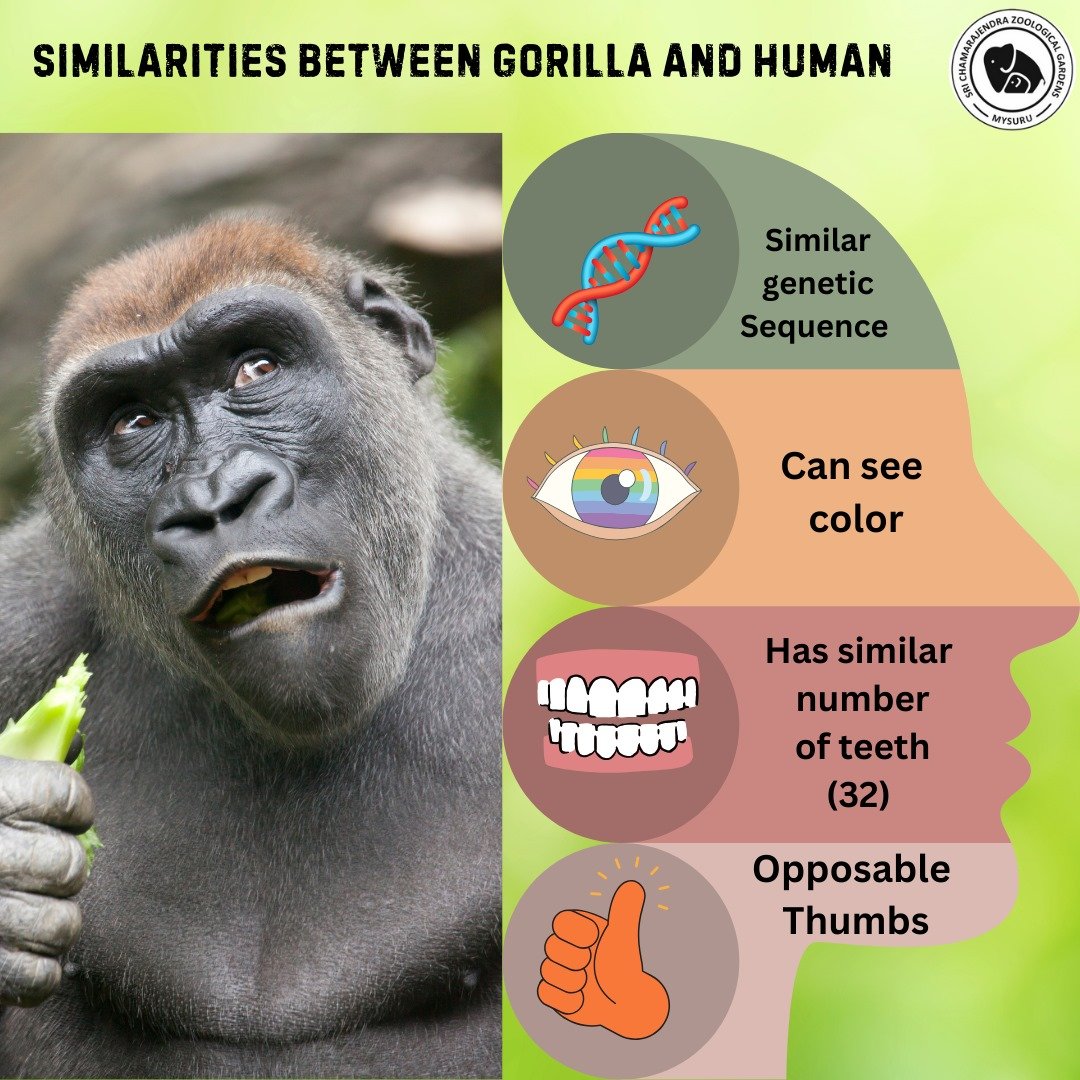
Gorillas and humans share a significant amount of genetic material, which explains why both species display comparable physical structures, emotional responses, and social behaviors. Their hands, eyes, facial expressions, and body movements reveal important connections between the two species.
This evolutionary relationship does not mean that gorillas are the same as humans, but it highlights the importance of understanding and respecting these intelligent animals. Studying gorillas helps scientists learn more about primate evolution and the development of human characteristics.
When visitors encounter mountain gorillas during trekking, many are surprised by how familiar their behaviors appear. The experience creates a powerful reminder that humans are connected to the natural world.
Similarities in Physical Appearance and Body Structure
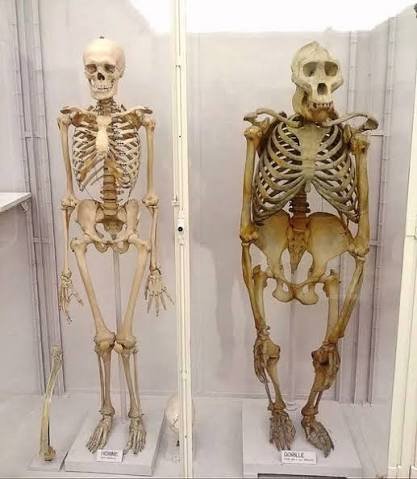
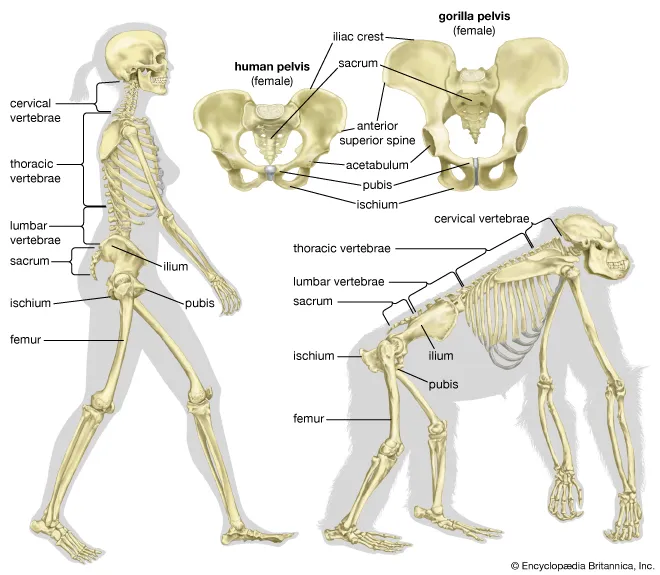
One of the most visible Similarities between Gorillas and Humans is their physical structure. Both species have similar body arrangements, including hands with fingers, forward-facing eyes, flexible shoulders, and expressive faces.
Like humans, gorillas have opposable thumbs that allow them to grasp objects, collect food, and interact with their environment. Their hands are highly developed and capable of performing detailed movements.

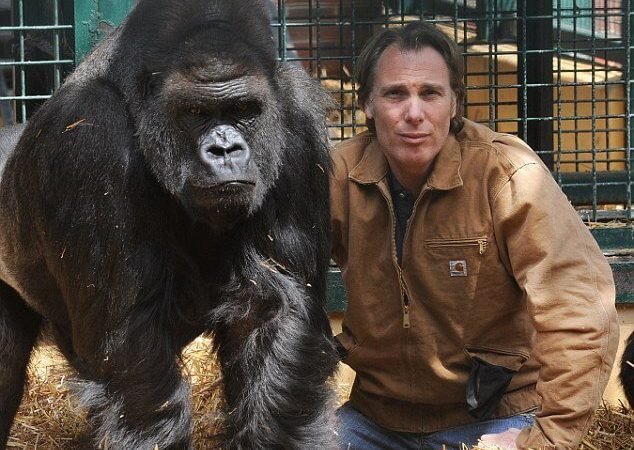
Gorillas and humans also share similar facial features. Their eyes are positioned forward, allowing depth perception, while their facial expressions communicate emotions such as happiness, curiosity, fear, and aggression.
Although gorillas are much larger and physically stronger than humans, their body structure reflects their close evolutionary relationship. Their ability to walk upright for short periods and use their hands for different tasks demonstrates the remarkable connection between the two species.
Similarities in Intelligence and Learning Ability
Another important aspect of the Similarities between Gorillas and Humans is intelligence. Gorillas are highly intelligent animals capable of learning, remembering, solving problems, and adapting to different situations.
Research has shown that gorillas can recognize individuals, understand social relationships, and learn new behaviors. They demonstrate curiosity and awareness of their surroundings, similar to humans.
Young gorillas learn by observing adults within their family groups. They watch how older members find food, communicate, interact socially, and respond to challenges. This learning process is similar to how human children acquire knowledge from parents and communities.
Gorillas have also demonstrated impressive cognitive abilities in research environments, including understanding symbols, gestures, and communication systems. These discoveries have changed the way scientists view animal intelligence and highlight the mental abilities shared between humans and gorillas.
Similarities in Emotions and Feelings
The emotional connection between humans and gorillas is one of the most touching examples of the Similarities between Gorillas and Humans. Gorillas experience a wide range of emotions, including happiness, sadness, affection, fear, excitement, and stress.
Gorilla families display strong emotional bonds. Mothers show deep affection toward their infants, carrying them, protecting them, and teaching them essential survival skills. This nurturing behavior closely resembles the relationship between human parents and children.
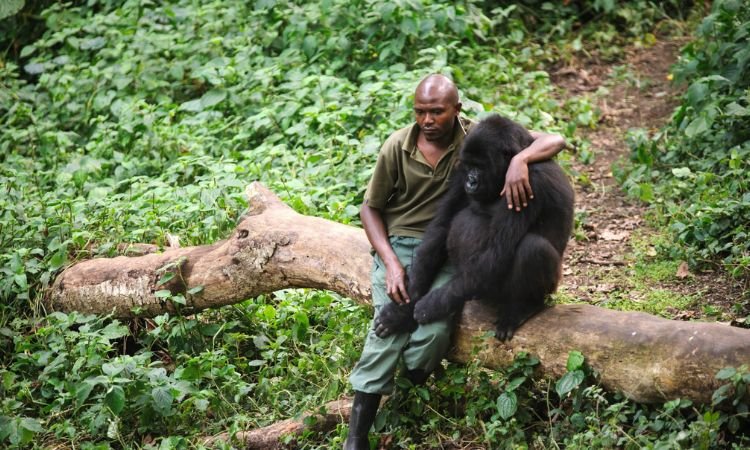
Gorillas also show signs of friendship and companionship. Members of a group spend time together, groom each other, rest together, and provide support during different situations.
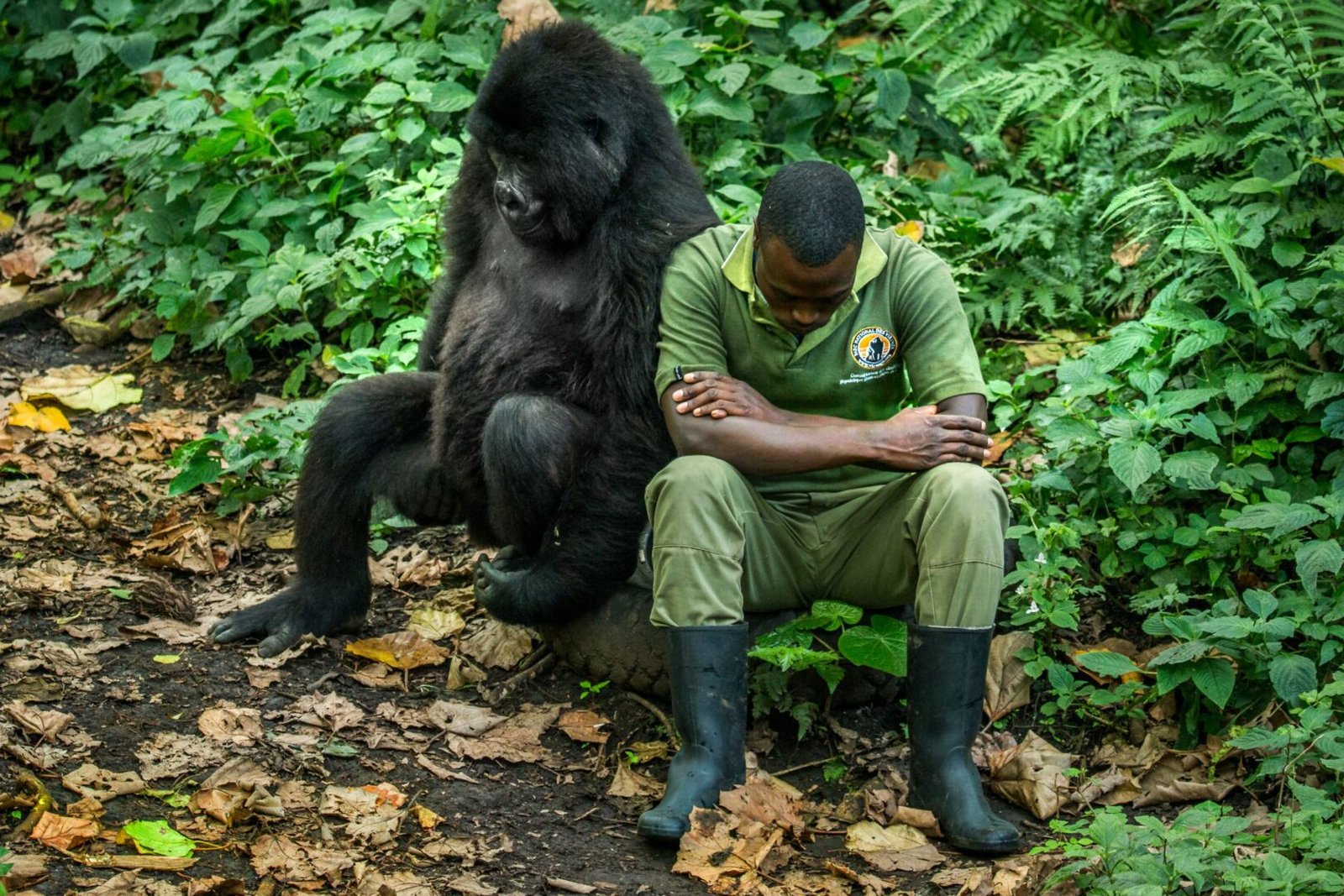
During gorilla trekking, visitors often notice these emotional behaviors. Seeing a mother gently caring for an infant or a silverback protecting his family creates a powerful connection between humans and these magnificent animals.
Similarities in Family Relationships
Family life is another remarkable example of the Similarities between Gorillas and Humans. Mountain gorillas live in organized family groups where individuals depend on each other for protection, learning, and social support.
A typical gorilla family is led by a dominant silverback who protects the group and maintains stability. Females care for infants, while younger gorillas learn important behaviors through interaction with older members. These relationships are similar to human families where parents provide protection, guidance, and emotional support to children.
Gorillas spend significant time together through grooming, playing, traveling, and resting. These activities strengthen relationships and maintain harmony within the group. The strong family bonds of gorillas demonstrate that social connections are not unique to humans but are deeply rooted in the lives of many primates.
Similarities in Communication and Expression
Communication is another fascinating area when exploring the Similarities between Gorillas and Humans. Although gorillas do not use human language, they communicate through sounds, gestures, facial expressions, and body movements. Gorillas use vocalizations to express different messages, including warnings, greetings, excitement, and social interactions. They also use body language, such as chest beating, posture changes, and facial expressions, to communicate feelings and intentions.
Humans also rely heavily on non-verbal communication. Facial expressions, gestures, and body movements play important roles in human interactions. Scientists studying gorilla communication have discovered that these animals are capable of understanding social signals and responding appropriately. Their communication abilities provide further evidence of their intelligence and emotional complexity.
Similarities in Social Behavior
Gorillas and humans are both highly social species. The Similarities between Gorillas and Humans are clearly visible in the way both species create relationships, cooperate, and live within communities. Gorilla groups depend on cooperation for survival. Individuals work together, protect each other, and maintain social order. Each member has a role within the family structure.
Humans also rely on communities, friendships, and family relationships. Cooperation allows both species to overcome challenges and maintain strong social networks. Gorillas spend time grooming each other, which strengthens relationships and reduces tension within the group. This behavior is similar to human activities that build trust and social connections.
Similarities in Parenting and Child Development
Parenting provides one of the strongest examples of the Similarities between Gorillas and Humans. Gorilla mothers invest significant time and energy in raising their young, just as human parents do.
Newborn gorillas depend entirely on their mothers for survival. Mothers provide warmth, protection, transportation, and nourishment during the early stages of life. As infants grow, they explore their surroundings while staying close to their families. Older gorillas help young individuals learn important social behaviors and survival skills.
This extended period of childhood development is similar to humans, where children require years of guidance and learning before becoming independent. The dedication gorilla mothers show toward their young reminds visitors of the universal importance of family care and protection.
Similarities in Problem Solving and Tool Use
Although chimpanzees are more famous for tool use, gorillas also demonstrate impressive problem-solving abilities. This is another interesting part of the Similarities between Gorillas and Humans. 8Gorillas can adapt to environmental challenges, remember locations, and use their intelligence to find food and navigate their surroundings.
They understand cause and effect and can make decisions based on their experiences. These abilities show that gorillas possess advanced cognitive skills. Human intelligence is more complex due to language, technology, and cultural development, but gorillas demonstrate many basic thinking abilities that connect them with humans.
Similarities in Health and Vulnerability to Diseases
Another important example of the Similarities between Gorillas and Humans is their biological vulnerability to certain diseases. Because gorillas and humans share close genetic connections, gorillas can be affected by some illnesses that affect people.
This is why strict health guidelines are followed during gorilla trekking. Visitors must maintain distance, avoid visiting when sick, and follow conservation rules designed to protect gorilla populations. Respiratory illnesses are particularly concerning because they can spread between humans and gorillas. Responsible tourism helps reduce these risks and ensures the survival of endangered mountain gorillas.
Why Understanding Gorilla Similarities Matters for Conservation
Understanding the Similarities between Gorillas and Humans helps create greater appreciation and support for conservation. When people recognize the intelligence, emotions, and social connections of gorillas, they become more motivated to protect them.
Mountain gorillas face threats from habitat loss, human activities, and environmental changes. Conservation programs in Uganda and Rwanda have helped protect these animals through research, habitat protection, and responsible tourism. Gorilla trekking provides important financial support for conservation efforts while allowing visitors to experience the beauty and intelligence of these incredible animals.
Frequently Asked Questions About Similarities Between Gorillas and Humans
What are the main Similarities between Gorillas and Humans?
The main Similarities between Gorillas and Humans include shared physical features, intelligence, emotions, social relationships, communication abilities, family bonds, and similar biological characteristics. Both species are great apes with a close evolutionary connection.
How closely are gorillas related to humans?
Gorillas and humans share a common ancestor that lived millions of years ago. They share a significant amount of genetic similarity, which explains many similarities in their body structure, emotions, intelligence, and social behaviors.
Do gorillas have emotions like humans?
Yes. Gorillas experience emotions such as happiness, sadness, affection, fear, curiosity, and stress. They form strong family bonds, show care toward their young, and demonstrate social behaviors similar to those seen in human families.
Do gorillas love and care for their families?
Yes. Family relationships are one of the strongest examples of the Similarities between Gorillas and Humans. Gorilla mothers protect and nurture their infants, while silverbacks defend and guide their family groups.
Are gorillas as intelligent as humans?
Gorillas are highly intelligent animals capable of learning, remembering, solving problems, and understanding social relationships. While human intelligence is more advanced due to language and technology, gorillas demonstrate impressive cognitive abilities.
Can gorillas communicate like humans?
Gorillas cannot speak human languages, but they communicate effectively through vocal sounds, gestures, facial expressions, and body movements. These communication methods show similarities with human non-verbal communication.
Do gorillas have personalities like humans?
Yes. Individual gorillas have unique personalities. Some may be playful, curious, confident, gentle, or more reserved, just like humans have different character traits.
Do gorillas recognize other individuals?
Yes. Gorillas can recognize members of their family groups and other individuals. They develop social relationships and remember interactions, which is an important example of their advanced social intelligence.
Why do gorillas look similar to humans?
Gorillas and humans share evolutionary history, which means they inherited some similar physical characteristics from a common ancestor. Features such as hands, eyes, facial expressions, and body structure reflect this connection.
Do gorillas and humans have similar hands?
Yes. Both gorillas and humans have hands with fingers and opposable thumbs that allow them to grasp objects. Gorillas use their hands for feeding, climbing, grooming, and interacting with their environment.
Do gorillas experience parenting like humans?
Yes. Gorilla parenting shows many similarities to human parenting. Mothers provide constant care, protection, and guidance while young gorillas learn important skills from their families.
Do gorillas form friendships?
Yes. Gorillas develop strong social relationships within their groups. They groom each other, spend time together, and provide support, showing similarities with human friendships and social connections.
Why are gorillas important for understanding human evolution?
Studying gorillas helps scientists understand primate evolution, human development, and the origins of behaviors such as communication, social bonding, and emotional expression.
Can visitors observe the Similarities between Gorillas and Humans during gorilla trekking?
Yes. During gorilla trekking in Uganda and Rwanda, visitors often observe human-like behaviors such as mothers caring for infants, family interactions, communication, and emotional expressions.
Where can I experience these similarities in Uganda and Rwanda?
Travelers can observe mountain gorillas in their natural habitat through gorilla trekking experiences in Uganda’s Bwindi Impenetrable National Park and Mgahinga Gorilla National Park, as well as Rwanda’s Volcanoes National Park.
Are gorillas peaceful animals like humans?
Gorillas are generally peaceful and gentle animals. Despite their incredible strength, they usually avoid conflict and focus on protecting their families and maintaining social harmony.
Do gorillas and humans share similar diseases?
Yes. Because of their close biological relationship, gorillas can be vulnerable to some diseases that affect humans, especially respiratory illnesses. This is why strict health guidelines are followed during gorilla trekking.
How does understanding gorilla similarities help conservation?
Recognizing the Similarities between Gorillas and Humans helps people develop greater respect and empathy toward gorillas. This encourages conservation support and protection of their natural habitats.
Can children learn about the similarities between gorillas and humans during a safari?
Yes. Gorilla and wildlife experiences provide valuable educational opportunities for children. They can learn about animal behavior, conservation, biology, and the connection between humans and nature.
How can I experience the human-like behaviors of gorillas with Nextgen Safaris?
Nextgen Safaris organizes unforgettable gorilla trekking experiences in Uganda and Rwanda where travelers can observe gorilla families, learn about their behaviors, and discover the incredible connection between humans and these amazing primates.
Experience the Human-Like World of Gorillas with Nextgen Safaris
The Similarities between Gorillas and Humans make gorilla trekking one of the most meaningful wildlife experiences in Africa. Observing these incredible primates in their natural habitat reveals their intelligence, emotions, family bonds, and remarkable behaviors. Nextgen Safaris offers unforgettable gorilla trekking experiences in Uganda and Rwanda, including adventures in Bwindi Impenetrable National Park, Mgahinga Gorilla National Park, and Volcanoes National Park.
Our expert guides help travelers understand gorilla behavior, conservation efforts, and the fascinating connection between humans and these endangered primates. Discover the incredible similarities we share with gorillas and experience a life-changing encounter with Africa’s gentle giants through Nextgen Safaris.