
The Nile River: Complete Guide to the World’s Most Famous River
The Nile River is one of the most significant river systems on Earth, both geographically and historically. Flowing through northeastern Africa, the Nile has sustained human civilization for thousands of years and continues to support millions of people today. It is widely known as the longest river in Africa and is often cited as the longest river in the world, a distinction that has made it a central subject in geography, history, and environmental studies.
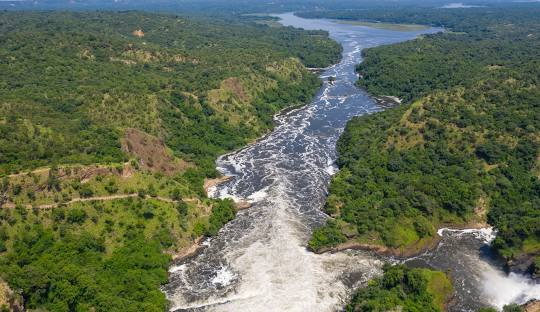
What makes the Nile River exceptional is not only its length, but its role as a lifeline in predominantly arid and semi-arid regions. Large stretches of the lands it crosses would be inhospitable without the river’s continuous flow. Agriculture, settlement patterns, trade routes, and political boundaries across northeastern Africa have all been shaped by the presence of the Nile.
From ancient civilizations to modern nation-states, the Nile River remains essential for irrigation, drinking water, hydroelectric power, transportation, and cultural identity. Even today, the rhythm of life along the Nile is closely tied to its waters, reinforcing its reputation as one of the most important rivers in human history.
Where Does the Nile River Start and End?
Understanding where the Nile River starts and ends requires looking at two major source systems rather than a single point. This complexity is one reason the Nile has fascinated explorers and scholars for centuries.
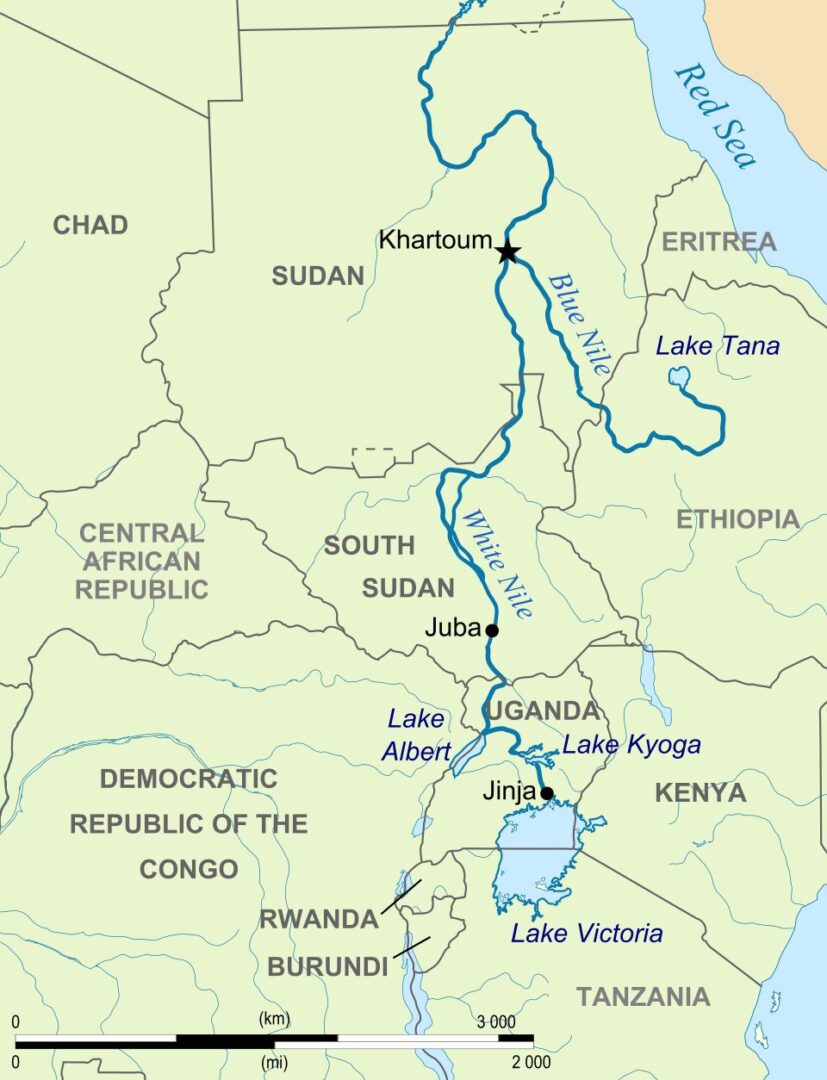
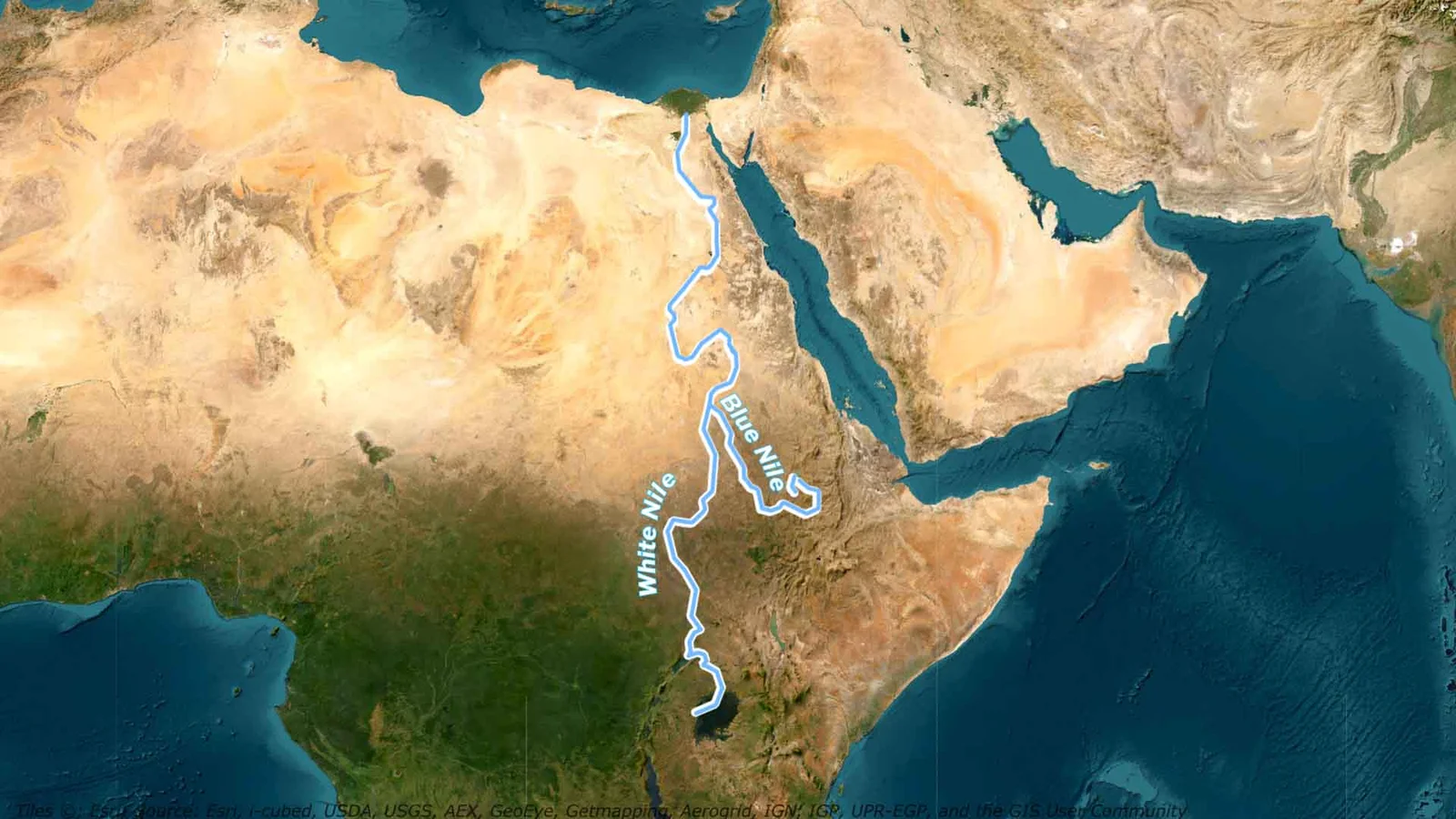
The Nile River begins in East Africa and flows northward for more than 6,600 kilometers before emptying into the Mediterranean Sea. Its northern endpoint is the Nile Delta in Egypt, one of the most fertile and densely populated regions in Africa.
The river’s southern origins are divided between two main sources:
- The White Nile, which originates from Lake Victoria, the largest lake in Africa by surface area
- The Blue Nile, which originates from Lake Tana in the Ethiopian Highlands
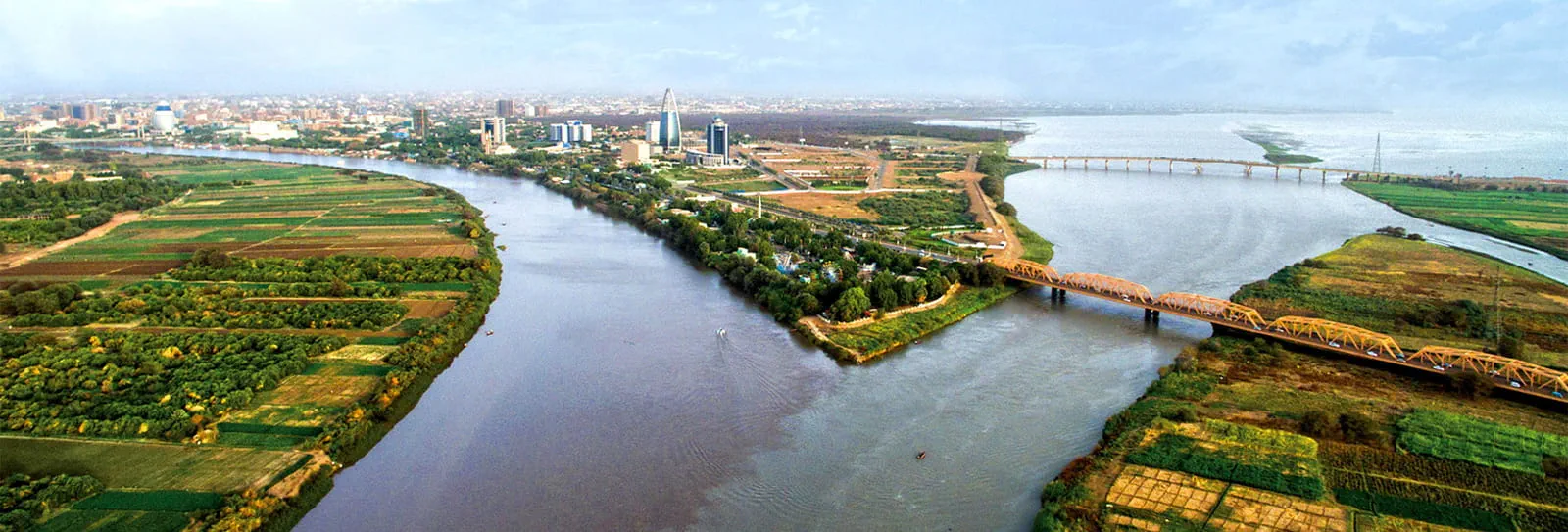
These two tributaries meet in Khartoum, Sudan, forming the main Nile that continues north through Sudan and Egypt. From there, the river spreads into multiple channels at the delta before reaching the Mediterranean Sea.
This long journey from equatorial Africa to the Mediterranean explains why the Nile is often described as a river that connects Africa from south to north, both geographically and culturally.
The White Nile and the Blue Nile Explained
The Nile River is formed by the convergence of two major tributaries, each with distinct characteristics, hydrology, and regional importance.
The White Nile
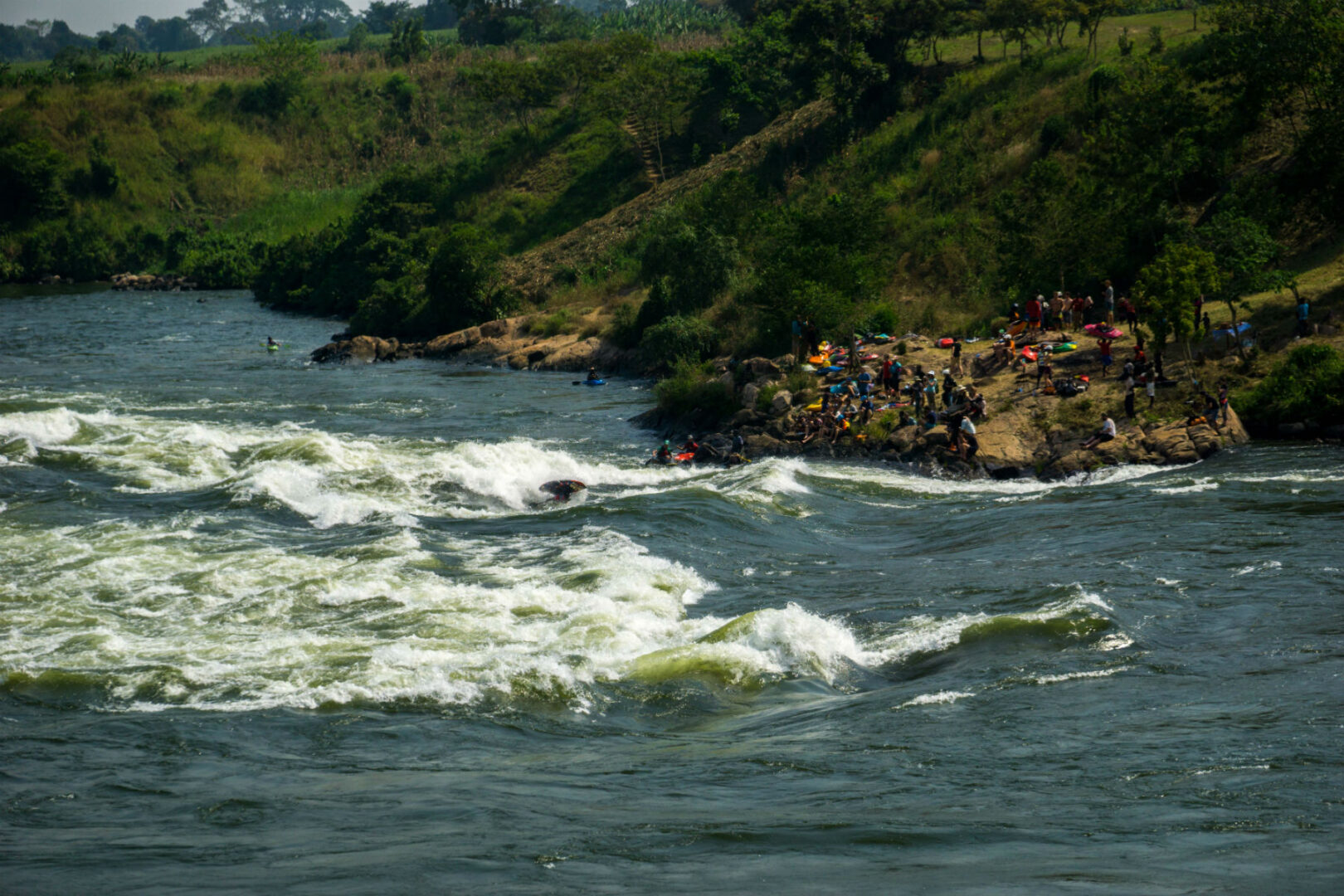
The White Nile is considered the longer and more stable of the two tributaries. It originates from Lake Victoria, which lies within Tanzania, Uganda, and Kenya. From the lake, the river flows through Uganda and South Sudan before reaching Sudan.
What makes the White Nile unique is its consistent year-round flow. Rainfall in the equatorial regions ensures that the White Nile provides a steady supply of water even during dry seasons. This reliability plays a crucial role in maintaining the Nile’s baseline water levels downstream.
Because of its length and stability, the White Nile is often described as the backbone of the Nile River system.
The Blue Nile
The Blue Nile begins at Lake Tana in Ethiopia and flows westward into Sudan, where it joins the White Nile at Khartoum. Although shorter than the White Nile, the Blue Nile contributes the majority of the Nile’s total water volume and fertile sediment, especially during the rainy season.
Seasonal monsoon rains in the Ethiopian Highlands cause the Blue Nile to swell dramatically, historically producing the annual floods that enriched farmland in Sudan and Egypt. These floods were essential to ancient agriculture and remain central to modern water management discussions.
Together, the White Nile and Blue Nile form a complementary system: one provides stability, the other provides volume and fertility.
Countries the Nile River Flows Through
The Nile River basin is one of the largest international river systems in the world. The river and its tributaries flow through eleven African countries, making it a shared resource of immense regional importance.
The countries connected to the Nile River system are:
- Egypt
- Sudan
- South Sudan
- Ethiopia
- Uganda
- Tanzania
- Kenya
- Rwanda
- Burundi
- Democratic Republic of the Congo
- Eritrea
Because the Nile flows across so many national borders, it is both a source of cooperation and political tension. Upstream countries contribute water through rainfall and tributaries, while downstream countries rely heavily on the river for survival.
This shared dependence makes the Nile River not just a natural feature, but a strategic and geopolitical artery that continues to shape diplomacy, development, and environmental policy across Africa.
What is special about Nile river?
The Nile River holds several unique characteristics and significance, making it one of the most remarkable rivers in the world:
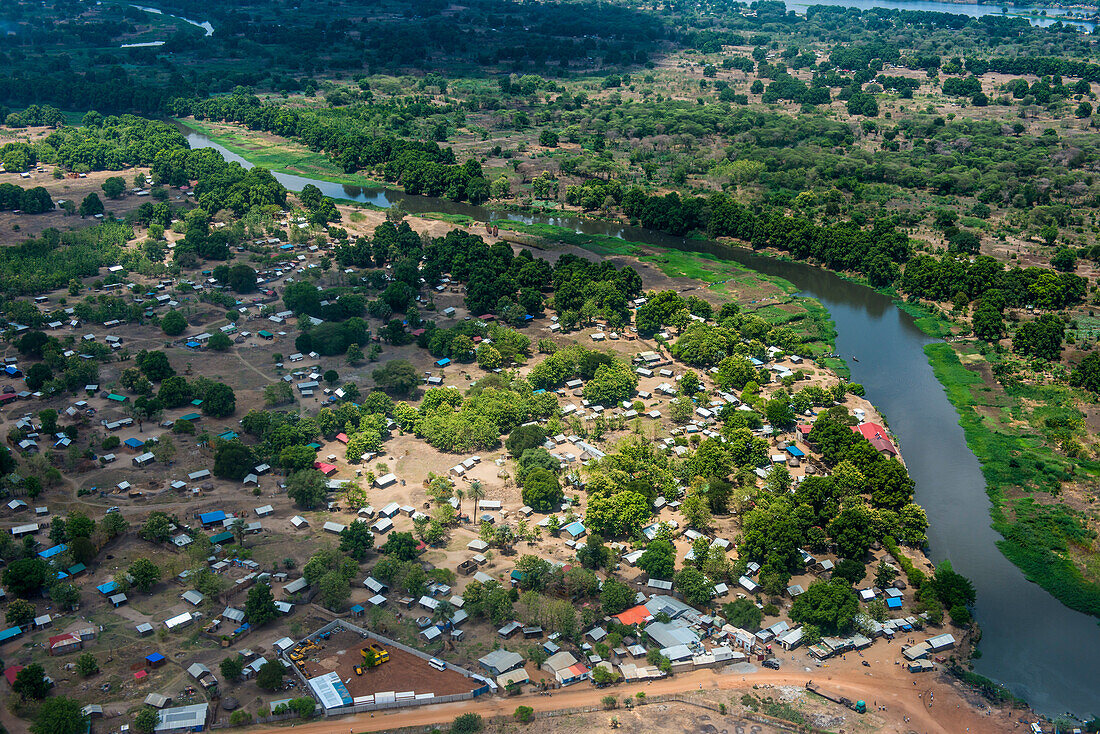
- Longest River: The Nile is commonly regarded as the longest river on Earth, stretching over 6,650 kilometers (4,130 miles) from its farthest sources to its delta on the Mediterranean Sea coast.
- Historical and Cultural Significance: The Nile has played a pivotal role in the development of ancient civilizations, particularly ancient Egypt. The river provided water, transportation, fertile soil from annual flooding, and served as a source of life and prosperity for the region’s inhabitants.
- Economic Importance: The Nile remains economically crucial for the countries it flows through. It supports agriculture through irrigation, provides fish as a food source, and serves as a vital transportation route. Additionally, the construction of hydroelectric dams along the Nile generates electricity for the region.
- Biodiversity: The Nile River and its surrounding ecosystem support a diverse array of flora and fauna. The river is home to numerous species of fish, birds, and other wildlife, many of which are endemic to the region.
- Tourism: The Nile attracts millions of tourists each year who come to explore its ancient historical sites, cruise its waters, and experience its unique culture and landscapes.
- Source of Conflict and Cooperation: The Nile’s waters are a source of contention and cooperation among the countries it flows through. Disputes over water rights, dam construction, and usage have arisen periodically, highlighting the geopolitical importance of the river.
- Hydrology: The Nile has two main tributaries, the White Nile and the Blue Nile, which converge in Sudan. The White Nile originates from Lake Victoria in Tanzania, while the Blue Nile begins at Lake Tana in Ethiopia. The unique hydrology of the Nile, with its annual flooding, has shaped the landscape and livelihoods of those living along its banks.
These factors collectively contribute to the special status of the Nile River as one of the most iconic and significant rivers in the world.
Which country owns the source of river Nile?
The source of the Nile River has historically been attributed to Lake Victoria, which is located primarily in Tanzania, with a smaller portion extending into Uganda and Kenya. Therefore, Tanzania can be considered the country where the primary source of the Nile, the White Nile, originates. Additionally, the Blue Nile, another major tributary of the Nile, begins at Lake Tana in Ethiopia. So, in a broader sense, Ethiopia also plays a significant role as the source of one of the Nile’s main tributaries.
Is the Nile in Egypt or Ethiopia?
The Nile River flows through both Egypt and Ethiopia, as well as several other countries in northeastern Africa. However, Egypt and Ethiopia are two of the most prominent countries along the course of the Nile.
Egypt is well-known for its historical and cultural association with the Nile, as the river has been central to the development of ancient Egyptian civilization. The Nile Delta in Egypt is one of the most densely populated areas in the country, and the river is essential for agriculture, transportation, and urban life in Egypt.
Ethiopia, on the other hand, is the source of the Blue Nile, one of the two main tributaries of the Nile River. The Blue Nile originates from Lake Tana in Ethiopia and contributes a significant amount of water to the Nile’s flow. Ethiopia has been involved in various projects related to the Nile, including the construction of dams for hydroelectric power generation.
So, while both Egypt and Ethiopia have important connections to the Nile, their roles and relationships with the river differ based on their geographic location and historical context.
Why the Nile River Is So Important
The importance of the Nile River cannot be overstated. In a region dominated by deserts and semi-arid landscapes, the Nile has functioned as a continuous source of life, stability, and development for thousands of years. Without the Nile, much of northeastern Africa would be sparsely populated or uninhabitable. Its waters make large-scale agriculture possible, support dense human settlement, and sustain ecosystems that would otherwise struggle to exist.
The Nile’s importance lies in its reliability. Unlike seasonal rivers that dry up for part of the year, the Nile provides a continuous flow of water, allowing farming communities to plan, cultivate, and harvest crops with relative predictability. This reliability has supported food security for millions of people and remains central to modern irrigation systems across Sudan and Egypt.
Beyond agriculture, the Nile is essential for drinking water, industrial use, transportation, and energy production. Many major cities are built directly along its banks, and in some countries, the vast majority of the population lives within a short distance of the river. In Egypt, for example, the Nile is not simply a river; it is the foundation of national survival.
Culturally, the Nile has shaped belief systems, traditions, and identities. It has been revered, personified, and celebrated in religious rituals, art, and literature. Even in the modern era, the Nile continues to influence political relationships, economic planning, and regional cooperation among the countries that share its waters.
The Nile River in Ancient and Modern History
The story of the Nile River is inseparable from the story of human civilization. In ancient times, the Nile made possible one of the world’s earliest and most influential civilizations: ancient Egypt. Annual flooding deposited nutrient-rich silt along the riverbanks, renewing farmland and enabling surplus food production. This agricultural abundance allowed Egyptian society to develop complex governance, architecture, religion, and trade networks.
The ancient Egyptians structured their calendar around the Nile’s flooding cycle and viewed the river as a divine gift. Temples, cities, and monuments were built in alignment with its flow, and the river served as the main transportation route for goods, people, and building materials. The Nile was not merely a resource; it was the organizing principle of society.
As history progressed, the Nile continued to play a central role through successive empires, colonial periods, and the formation of modern nation-states. Control over the Nile meant control over food production and economic power. In the twentieth century, technological advances transformed how the river was managed, shifting from reliance on natural flooding to engineered regulation.
In the modern era, the Nile is both a shared opportunity and a source of tension. Population growth, climate variability, and large infrastructure projects have increased pressure on the river’s resources. At the same time, international agreements and cooperative frameworks have emerged to manage its use more sustainably. The Nile’s historical role as a unifying force now extends into diplomacy, development planning, and environmental stewardship.
Is the Nile the Longest River in the World?
The Nile River is widely recognized as the longest river in the world, with an estimated length of approximately 6,650 kilometers. This measurement, taken from the most distant source of the White Nile to the Mediterranean Sea, has been accepted for generations and remains the basis for most educational references.
However, the question of whether the Nile is the longest river has become the subject of scientific debate. Some studies suggest that the Amazon River in South America may be slightly longer, depending on how its source is defined and measured. Differences in satellite data, hydrological interpretation, and mapping techniques have contributed to varying conclusions.
Despite this debate, the Nile’s status as the longest river in Africa is undisputed. More importantly, its significance does not rest solely on length. The Nile’s historical influence, cultural legacy, and ongoing importance to human life far exceed what can be measured in kilometers alone. Whether first or second in global rankings, the Nile remains one of the most important rivers on Earth.
The Aswan High Dam and Lake Nasser
One of the most transformative events in the modern history of the Nile River was the construction of the Aswan High Dam in southern Egypt during the 1960s. Built to control flooding, improve irrigation, and generate hydroelectric power, the dam fundamentally altered the natural behavior of the river.
The dam led to the creation of Lake Nasser, one of the largest artificial lakes in the world. This massive reservoir stores water for use during dry periods, ensuring year-round irrigation and reducing the risk of destructive floods downstream. It also provides a significant portion of Egypt’s electricity through hydropower generation.
While the benefits of the Aswan High Dam are substantial, its impacts have been complex. The dam reduced the natural flow of sediment that once fertilized farmlands along the Nile, increasing dependence on artificial fertilizers. It also led to the displacement of communities and altered aquatic ecosystems both upstream and downstream.
Today, the Aswan High Dam stands as a symbol of humanity’s ability to reshape natural systems — and a reminder of the trade-offs involved in large-scale environmental engineering. Its legacy continues to influence how the Nile is managed and how future projects along the river are evaluated.
Environmental and Political Challenges of the Nile River
Despite its historical stability, the Nile River today faces growing environmental and political pressures that did not exist at this scale in the past. Rapid population growth across the Nile Basin has dramatically increased demand for water for agriculture, industry, and domestic use. At the same time, climate variability has introduced uncertainty into rainfall patterns, particularly in the Ethiopian Highlands and equatorial regions where much of the river’s flow originates.
One of the most significant environmental challenges is reduced sediment flow. Large dams and water control structures have altered the Nile’s natural flooding cycles, limiting the downstream movement of nutrient-rich silt that once replenished agricultural land. This has increased reliance on chemical fertilizers and contributed to soil degradation in some areas. Water pollution from agricultural runoff, untreated sewage, and industrial discharge has further strained river ecosystems, affecting fish populations and water quality.
Politically, the Nile is one of the most sensitive transboundary river systems in the world. Eleven countries depend on its waters, yet their economic needs, development goals, and historical agreements differ greatly. Downstream nations, particularly Egypt and Sudan, rely heavily on consistent Nile flows, while upstream countries seek to harness the river for hydropower and development.
Large infrastructure projects, most notably Ethiopia’s Grand Ethiopian Renaissance Dam, have intensified debates over water security, timing of reservoir filling, and long-term flow management. These discussions reflect a broader challenge: balancing national development with regional cooperation. Institutions such as the Nile Basin Initiative aim to promote dialogue and shared management, but achieving consensus remains complex.
The future of the Nile depends on sustained cooperation, transparent data sharing, and adaptive strategies that recognize the river as a shared lifeline rather than a zero-sum resource.
Fascinating Facts About the Nile River
The Nile River is remarkable not only for its size and importance, but also for the many unique characteristics that set it apart from other rivers. One of its most unusual features is its northward flow, moving from equatorial Africa toward the Mediterranean Sea—an uncommon direction among the world’s major rivers. This flow pattern puzzled early explorers and contributed to centuries of debate about the river’s true source.
Another striking fact is the Nile’s age. Geological evidence suggests that parts of the Nile system are millions of years old, making it one of the most ancient river systems still influencing human civilization today. Its long-term stability is one reason dense populations have been able to settle along its banks for thousands of years.
The Nile Delta is another point of fascination. Spreading across northern Egypt, it forms one of the largest river deltas in the world and is visible from space. This delta has supported intensive agriculture since antiquity and remains one of Africa’s most productive regions despite increasing pressure from urbanization and sea-level rise.
Historically, the Nile was also a natural highway. Ancient boats traveled its length carrying stone, grain, and people, enabling trade and cultural exchange long before modern roads existed. Even today, the river continues to serve as a transportation route in several countries.
These facts illustrate why the Nile is not simply a river, but a dynamic system that continues to shape landscapes, economies, and societies across Africa.
Frequently Asked Questions About the Nile River
Which country owns the Nile River?
No single country owns the Nile River. It is an international river shared by eleven countries. Each nation has rights and responsibilities under international water law, and the river’s management depends on cooperation rather than ownership.
Where exactly does the Nile River begin?
The Nile has two main sources. The White Nile originates from Lake Victoria in East Africa, while the Blue Nile begins at Lake Tana in Ethiopia. These tributaries merge in Sudan to form the main Nile that flows north to the Mediterranean Sea.
Is the Nile River the longest river in the world?
The Nile is widely regarded as the longest river in the world at approximately 6,650 kilometers. Although some studies suggest the Amazon River may be slightly longer depending on measurement methods, the Nile remains the longest river in Africa and one of the most significant globally.
Why is the Nile so important to Egypt?
Egypt relies almost entirely on the Nile for fresh water. The river supports agriculture, drinking water supplies, industry, and energy production. Without the Nile, large-scale settlement in Egypt would not be possible.
Why do Nile River disputes occur?
Disputes arise because multiple countries depend on the same river for development and survival. Differences in water usage, dam construction, and historical agreements have made the Nile a sensitive political issue requiring ongoing negotiation.
The nile river facts
where does the nile river start and end
10 facts about the nile river
nile river countries
what are the 11 countries that the river nile flows through
blue nile river
25 facts about the nile river
is the nile river the longest river in the world
GENERAL INFORMATION
ENTRY REQUIREMENTS:
All visitors to Uganda must have a valid passport with at least 4 consecutive blanks pages. Any applicable visa and/or relevant documentation are the responsibility of the traveller. For further information on Visa requirements visitors are advised to contact their nearest Uganda Embassy or Consulate.
LANGUAGE:
English
TIME:
GMT +3
VOLTAGE:
220 Volts/AC50Hz. Sockets are UK style, 3 pin square plugs. Power is from the UMEME in the city/major towns and generator with inverter back up in the Safari Lodges and Camps.
CURRENCY:
Foreign currency must be changed at the Bank, Bureau de Change, and Hotel/Safari lodge/Camp/Resort. Major Credit Cards, Master card, Visa, American Express, are usually accepted throughout the country. Where credit cards are accepted, the payment will normally be recorded in US$ regardless of the card’s default currency.
CLOTHING:
Dress is mainly informal and should be comfortable as well as practical. Something warm should be brought along for early morning and evenings. Safari clothes are available from hotels/lodges/camps.
BAGGAGE:
Where possible, travel light. Baggage space on safari is limited to medium suitcase or soft bag per person plus reasonable amount of hand luggage. There is 15 Kilogram per person limit on all flights to the wildlife sanctuaries. Excess luggage must be stored in your arrival hotel.
WATER:
You will find many different of opinion of what is safe and what is not. We recommend for peace of mind, to drink local Bottled Mineral water. It is important to drink plenty of water especially during the hotter months. We would recommend that guests drink at least 2 to 3 liters of water per day to limit the effects of dehydration.
HEALTH;
East Africa is a safe and secure destination; however, it is a good idea to take a few precautions. Kindly consult your GP or local doctor at least 6 weeks before you travel, with regards:
Malaria prophylactics. East Africa is a known malaria area and preventive measures are essential. You are advised to take one of the recommended anti-malarial drugs. Be sure to wear long sleeved shorts and trousers after sunset and spray the exposed parts of your body with a mosquito repellent spray
Remember to protect yourself from direct sun rays with sunscreen cream or safari hat.
DIETARY REQUIREMENTS:
For those guests with specific dietary requirement, please ensure we are notified prior to travel
GRATUITIES:
As a guideline and dependent on how happy you are, we would suggest the following:
The General Hotel/Lodge/Camp Staff – Approximately U$ 10.00 per person per day
Driver Guides – Approximately US$ 15.00 to US$ 20.00 per person per day
PHOTOGRAPHY:
Please be careful when photographing public buildings, airports, bridges, the national flag and people in uniform. Ensure that you have sought permission before photographing local people and their villages. If in doubt, please check with your guide.
Read about
10 Things you Should NOT DO on an African Safari.
What to expect on a safari in Uganda.
Bwindi Impenetrable National Park
How to Choose the Best Tour Operate for Your Safari in Africa
12-Day Gorilla Tracking in Bwindi
Some of our African Safaris
1 Day Jinja Ultimate tour Experience
1 Day White Water Rafting in Jinja
3 Days Bwindi Gorilla Habituation via Rwanda
3 Day Birding Safaris and Photography in Uganda
3 Day Safari to Queen Elizabeth National Park
3 Day fly in Gorilla Trekking Safari from Masai Mara
3 Day Grand Gorilla Trekking Safari
4 Day Chimpanzee and Gorilla Trekking Safari
4 Day Murchison Falls and Jinja tour