
What Happens When Two Silverbacks Meet? 9 Incredible Facts About Mountain Gorilla Encounters
What Happens When Two Silverbacks Meet? Deep within the mist-covered forests of Uganda, Rwanda, and the Democratic Republic of Congo, encounters between mature male mountain gorillas can produce some of the most fascinating displays of animal behaviour in Africa. These powerful primates may respond to one another through chest beating, vocalisations, threatening postures, peaceful interactions, or, occasionally, physical confrontations. Understanding these encounters reveals how silverbacks communicate, maintain social relationships, and protect their families. Visitors exploring mountain gorilla trekking in Uganda, Bwindi Impenetrable National Park, and Rwanda gorilla trekking tours can learn about these remarkable behaviours during professionally guided wildlife experiences.
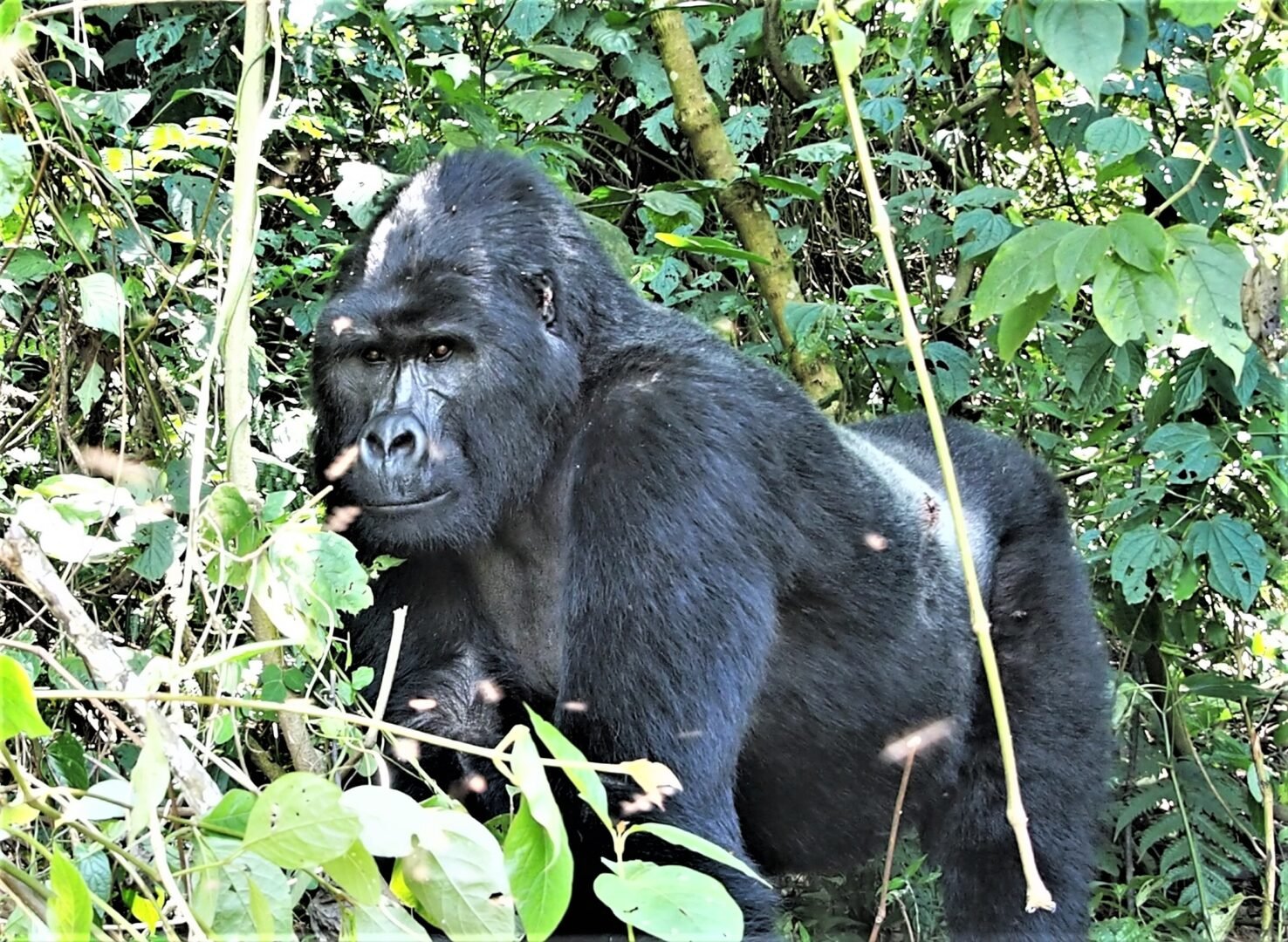
What Happens When Two Silverbacks Meet? Contrary to the popular belief that two powerful males must immediately fight, many encounters involve communication and assessment rather than serious violence. Mountain gorillas possess complex social relationships, and the outcome depends on factors such as familiarity, group composition, reproductive competition, and location. Sometimes one male withdraws, while other encounters involve displays, close contact, or even friendly behaviour. Understanding these possibilities can enrich a gorilla trekking safari in Bwindi, a private gorilla trekking holiday, or a romantic gorilla safari for couples.
What Happens When Two Silverbacks Meet in the Wild?
When two silverback gorillas encounter one another, their initial reactions often depend on whether they belong to the same family, neighbouring families, or previously separated groups. Silverbacks living within one established family may coexist peacefully under a dominance hierarchy. Encounters between unfamiliar males from different groups can create more tension, particularly when females or dependent infants are present. A dominant male may respond with heightened attention, intimidating displays, or vocalisations. Visitors interested in mountain gorilla social behaviour, gorilla families in Uganda, and wild gorilla encounters can discover the complexity of these relationships.
What Happens When Two Silverbacks Meet? The situation does not follow one predictable pattern. Some encounters remain entirely non-physical, with the animals communicating from a distance. Others involve chasing, threatening gestures, or close approaches. Serious fighting is possible, but it represents only one potential outcome. Gorillas also maintain memories of previous social relationships, which can influence their responses when groups encounter one another again. These interactions make mountain gorilla trekking experiences especially educational.
Incredible Facts About Encounters Between Silverback Gorillas
Silverbacks May Begin With Chest-Beating Displays
One of the most recognisable behaviours during male gorilla encounters is chest beating. A silverback may stand upright and rapidly strike his chest with cupped hands, producing a distinctive drumming sound. Scientific research suggests that the acoustic properties of chest beats provide information about the male’s body size. Such displays may allow competing males to assess one another before deciding whether to approach or withdraw. Visitors exploring gorilla trekking in Bwindi, mountain gorilla behaviour, and Rwanda mountain gorilla safaris sometimes have opportunities to hear these remarkable sounds.

What Happens When Two Silverbacks Meet? Chest beating can communicate strength and presence without physical contact. However, it is not always a sign that a fight is about to begin. Gorillas use chest beats in several social contexts, and the response of another male may depend on his size, motivation, and familiarity with the individual displaying. Learning to distinguish these signals from direct aggression enhances the experience of guided mountain gorilla trekking.
Silverbacks May Use Intimidating Body Language
During tense encounters, silverbacks can communicate through posture, movement, and facial expressions. A male may adopt an upright stance, move deliberately toward a rival, push through vegetation, or combine physical displays with loud vocalisations. These actions communicate agitation or competitive intentions and can sometimes discourage another individual from approaching further. Such displays are important components of silverback gorilla behaviour and can occur during mountain gorilla group interactions.
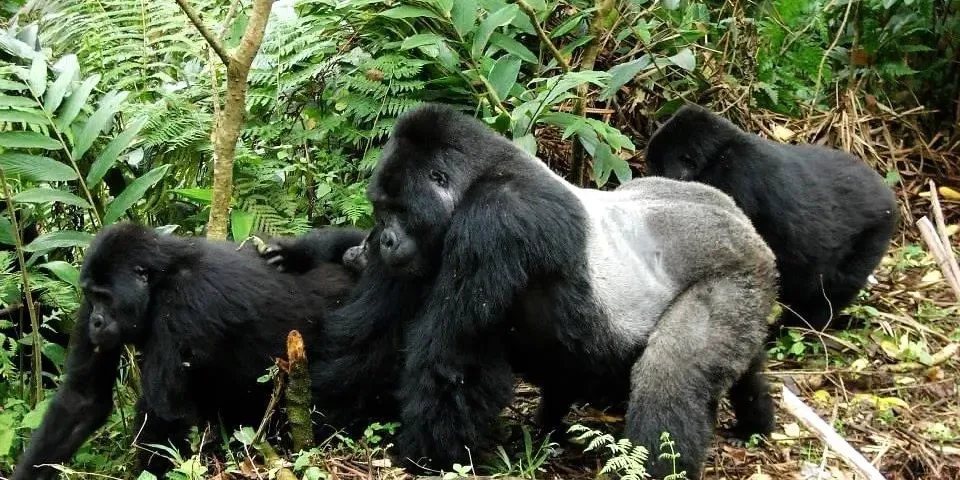
What Happens When Two Silverbacks Meet? A dramatic display may end with one male withdrawing rather than fighting. Avoiding direct combat can reduce the risk of injury for both individuals. Gorillas may therefore communicate their physical capabilities without immediately resorting to violence. This combination of strength and behavioural flexibility is among the fascinating aspects of mountain gorilla encounters in Rwanda and Uganda gorilla safaris.
Two Silverbacks Can Fight Over Reproductive Opportunities
Competition involving adult females is an important factor in encounters between male mountain gorillas. When unfamiliar groups meet, some females may have opportunities to transfer between groups. Rival males may attempt to influence these movements, and competition can produce chasing, threatening displays, or physical confrontation. These situations are particularly important when examining mountain gorilla family structure and the changing relationships within gorilla groups in Bwindi.
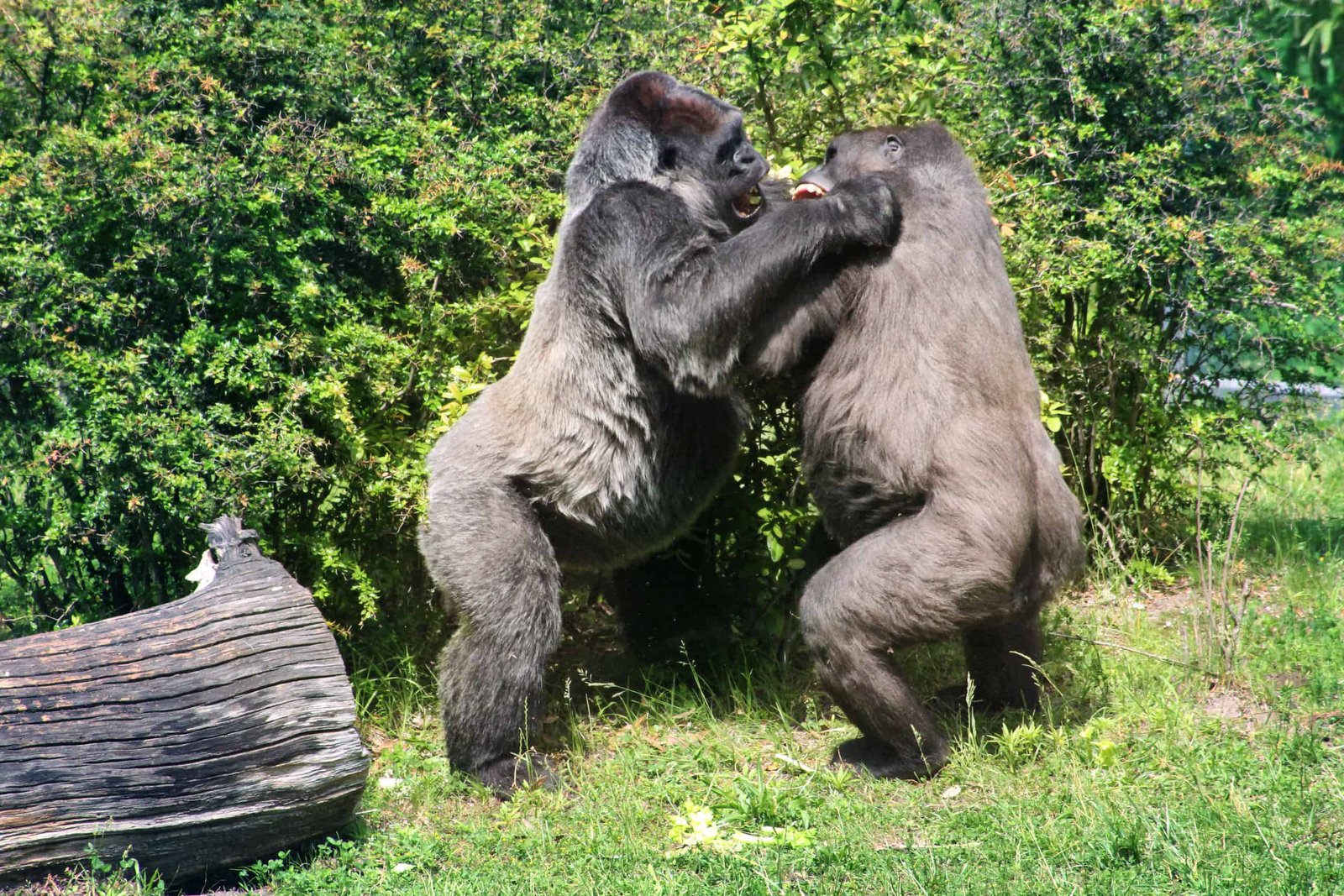
What Happens When Two Silverbacks Meet? The encounter may influence which females remain with their existing group or move to another. However, females are not passive participants in these social changes. Their relationships, reproductive circumstances, and individual choices can affect group transfers. Some encounters lead to changes in group membership without serious fighting, while others become more intense. These fascinating relationships demonstrate why gorilla trekking tours in Uganda offer more than a simple wildlife sighting.
Silverback Encounters Do Not Always Become Violent
Although silverbacks are powerful animals capable of inflicting serious injuries, many encounters between groups do not escalate to severe physical combat. Some involve vocalisations and threatening displays, while others include brief approaches followed by separation. Gorillas can also demonstrate friendly behaviour during encounters, particularly when individuals have established social relationships. This behavioural flexibility challenges the misconception that mature male gorillas constantly fight for dominance.
What Happens When Two Silverbacks Meet? Their responses reflect the particular circumstances rather than an automatic desire for confrontation. Familiarity can influence behaviour, and groups that previously belonged to the same family may interact more peacefully than unfamiliar groups. Visitors exploring Rwanda gorilla trekking experiences, Uganda’s mountain gorilla forests, and gorilla family relationships can gain valuable insights into these social connections.
Some Silverbacks Engage in Dangerous Physical Fights
Serious physical confrontations occasionally occur between competing silverbacks. During such encounters, males may bite, strike, push, or attempt to overpower one another. Their enormous size, powerful muscles, and strong jaws can make these confrontations dangerous. Severe injuries and fatalities have been documented in wild gorilla populations, although these outcomes are much less common than displays and less intense interactions. Such behaviour forms part of the complex natural history of mountain gorillas in Africa.
What Happens When Two Silverbacks Meet? Physical fighting becomes one possible outcome when competitive displays fail to resolve an encounter. However, a silverback does not automatically challenge every male he sees. His reaction may be influenced by reproductive opportunities, social experience, group relationships, and the position of the encounter within a familiar home range. Understanding these factors helps visitors appreciate authentic silverback gorilla behaviour during responsible gorilla trekking safaris.
Silverbacks May Protect Infants During Encounters
Protecting dependent infants is an important aspect of mountain gorilla family defence. Young gorillas are vulnerable during some encounters involving unfamiliar adult males, and infanticide has been documented in wild mountain gorilla populations. Resident silverbacks may respond defensively when potential threats approach their groups. These protective interactions influence the survival prospects of infants and the stability of mountain gorilla families.
What Happens When Two Silverbacks Meet? If dependent infants are present, the encounter may become particularly significant for their mothers and resident males. Adult females may remain close to familiar group members, while males respond to unfamiliar competitors. Not every meeting represents a danger to infants, but serious conflicts can have substantial consequences. These relationships are central to understanding gorilla conservation in Uganda and the importance of protecting stable gorilla populations.
Familiar Silverbacks May Recognise Previous Relationships
Mountain gorillas demonstrate remarkable social memory and can maintain relationships that extend beyond their immediate family groups. When a large group separates into smaller units, individuals may continue recognising familiar gorillas during later encounters. Research has found that groups originating from the same former group can show greater levels of friendly behaviour toward one another in certain situations.
What Happens When Two Silverbacks Meet? Their previous relationships can influence whether the encounter becomes tense or peaceful. Former group members may tolerate one another more readily than completely unfamiliar rivals, although location and other circumstances remain important. This demonstrates that mountain gorilla social intelligence extends beyond the boundaries of individual families. Visitors learning about gorilla families in Volcanoes National Park may find these social histories particularly fascinating.
8. Encounters Can Influence Gorilla Family Movements
Mountain gorilla groups use overlapping forest home ranges, but they do not move randomly without regard for neighbouring families. Research indicates that groups can adjust their movements in response to encounters and may show stronger defensive behaviour in important parts of their home ranges. A meeting with unfamiliar silverbacks can therefore influence where a group travels, feeds, or spends time afterward.
What Happens When Two Silverbacks Meet? One group may move away, change its daily route, or temporarily avoid the immediate area. Research published in 2026 found changes in travel distance, movement, and group cohesion following intergroup encounters in Rwanda. These findings demonstrate the flexibility of mountain gorilla ranging behaviour and help explain why trekking routes in Bwindi Impenetrable National Park vary from day to day.
Two Silverbacks Can Live Peacefully Within One Family
Not every meeting between silverbacks involves males from different families. Some mountain gorilla groups naturally contain multiple mature males living together. One silverback generally occupies the dominant position, while others remain subordinate and participate in the group’s social relationships. These multi-male families demonstrate that adult male coexistence is an established feature of mountain gorilla society.
What Happens When Two Silverbacks Meet? When the males are familiar members of the same family, their interactions may involve peaceful feeding, resting, social communication, or occasional dominance-related tension. Subordinate silverbacks do not necessarily challenge the dominant male continuously. Their presence can also influence family stability during leadership changes. These relationships make gorilla trekking in Uganda and Rwanda mountain gorilla trekking particularly rewarding for wildlife enthusiasts.
Do Silverback Gorillas Fight Over Territory?
Mountain gorillas do not defend completely exclusive territories with rigid boundaries in the same way as some other animals. Their home ranges can overlap considerably, allowing neighbouring groups to encounter one another. Nevertheless, research has identified territorial tendencies, including increased aggression in the central portions of established home ranges. These findings show that territorial behaviour among mountain gorillas is more flexible than a simple distinction between territorial and non-territorial animals.
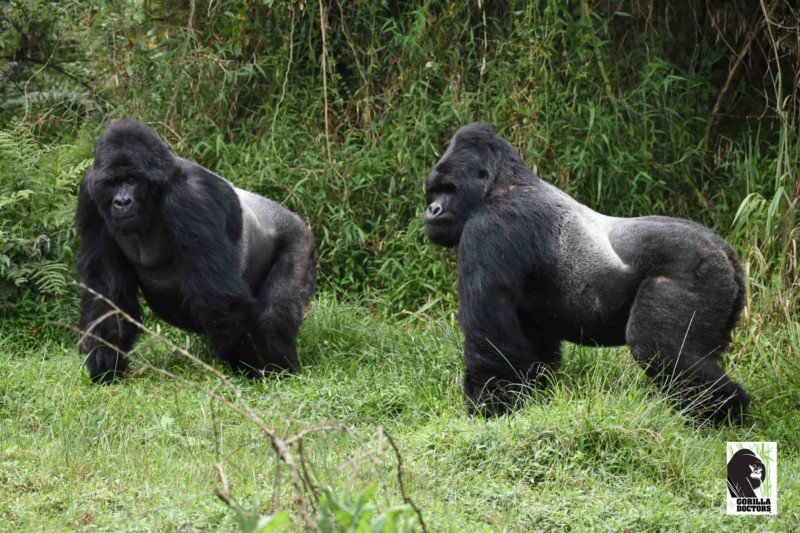
What Happens When Two Silverbacks Meet? The location can influence the likelihood of an aggressive response. Encounters near an important core area may generate different reactions from encounters toward the edges of familiar ranges. Existing social relationships also matter. Visitors interested in Bwindi’s gorilla habitats and mountain gorilla behaviour in Rwanda can discover how forest ecology and social organisation influence gorilla movements.
What Happens After Two Silverbacks Separate?
Following an encounter, both males may return to their existing social groups and resume ordinary daily activities. Feeding, resting, grooming, and travelling remain central to mountain gorilla life. However, particularly intense encounters can influence later group movement and the distance maintained between neighbouring families. Responses vary, and it would be misleading to assume that every encounter permanently changes a group’s home range.
What Happens When Two Silverbacks Meet? The consequences may extend beyond the encounter itself, especially when females transfer, injuries occur, or established social relationships change. In other cases, the groups separate without obvious lasting disruption. Understanding these outcomes adds depth to mountain gorilla trekking holidays and helps travellers appreciate the natural lives of these endangered primates.
Where Can You Observe Silverback Gorilla Behaviour in Africa?
Bwindi Impenetrable National Park, Uganda
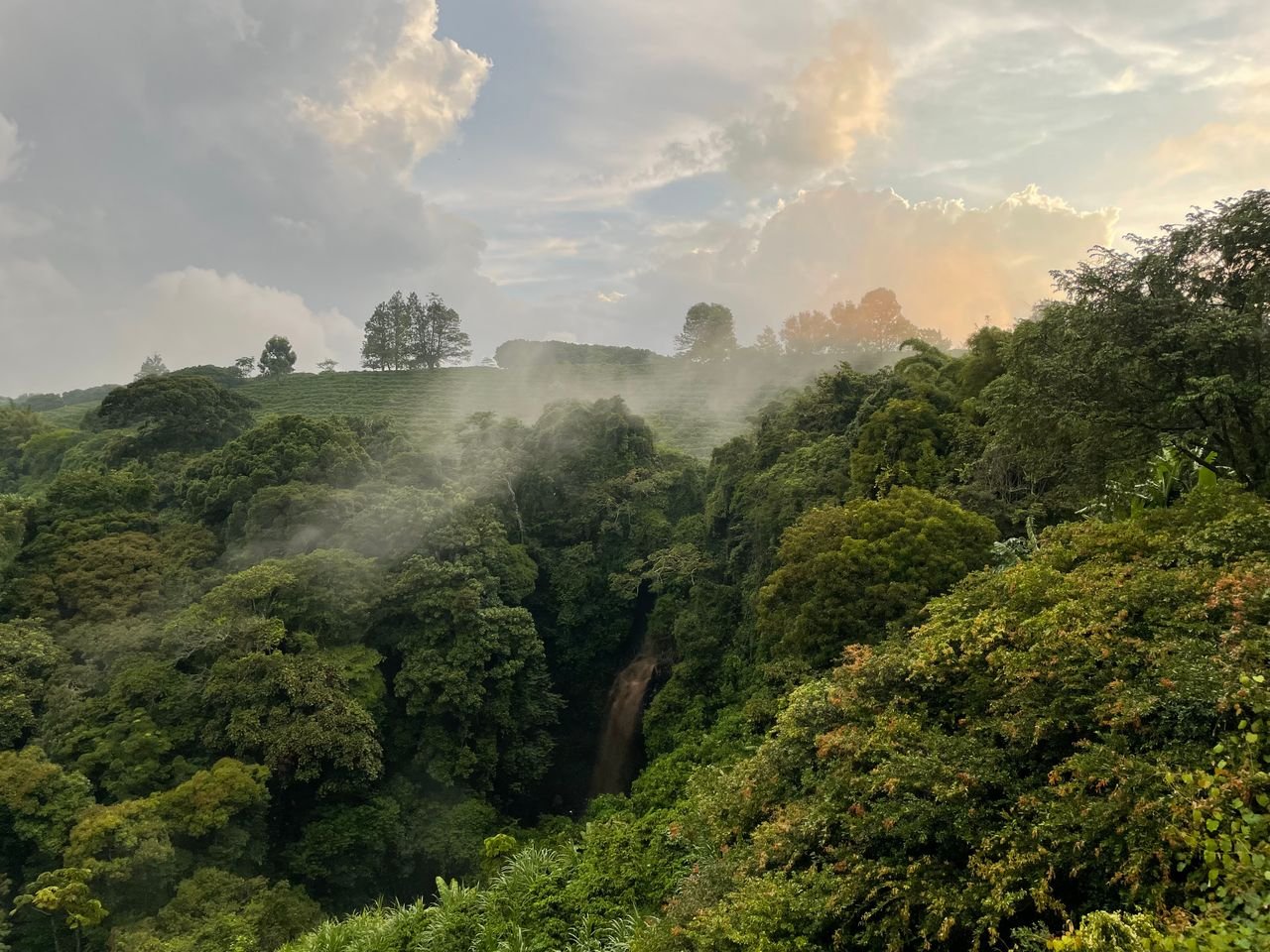
Bwindi Impenetrable National Park offers exceptional opportunities to observe mountain gorillas in their natural habitat. Its Buhoma, Ruhija, Rushaga, and Nkuringo trekking sectors provide access to habituated gorilla families under ranger supervision. Visitors can organise Uganda gorilla trekking tours, explore gorilla trekking packages, and arrange gorilla trekking permits before travelling.
Mgahinga Gorilla National Park, Uganda
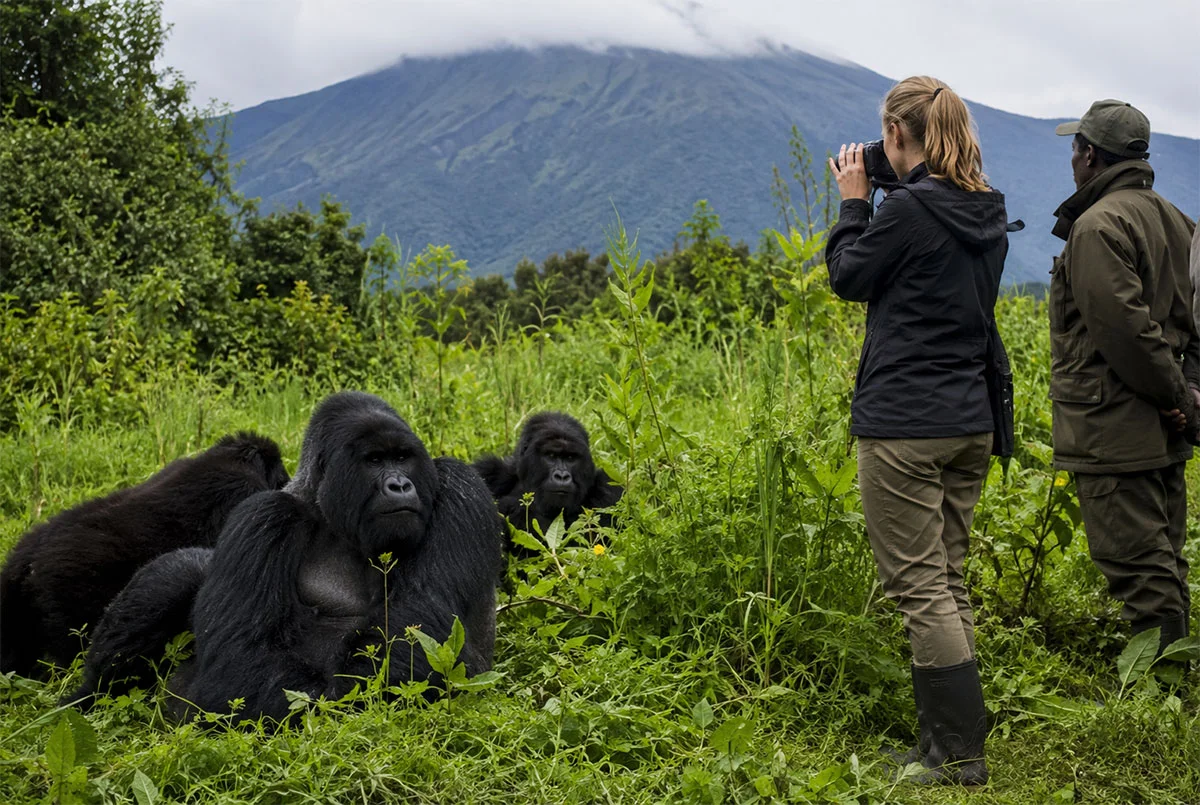
Mgahinga Gorilla National Park protects part of the beautiful Virunga mountain ecosystem in southwestern Uganda. The park provides another destination for observing mountain gorilla family relationships in a forest landscape dominated by volcanic mountains. Travellers can combine Uganda gorilla trekking experiences with personalised Uganda wildlife safaris and relaxing extensions to Lake Bunyonyi.
Volcanoes National Park, Rwanda
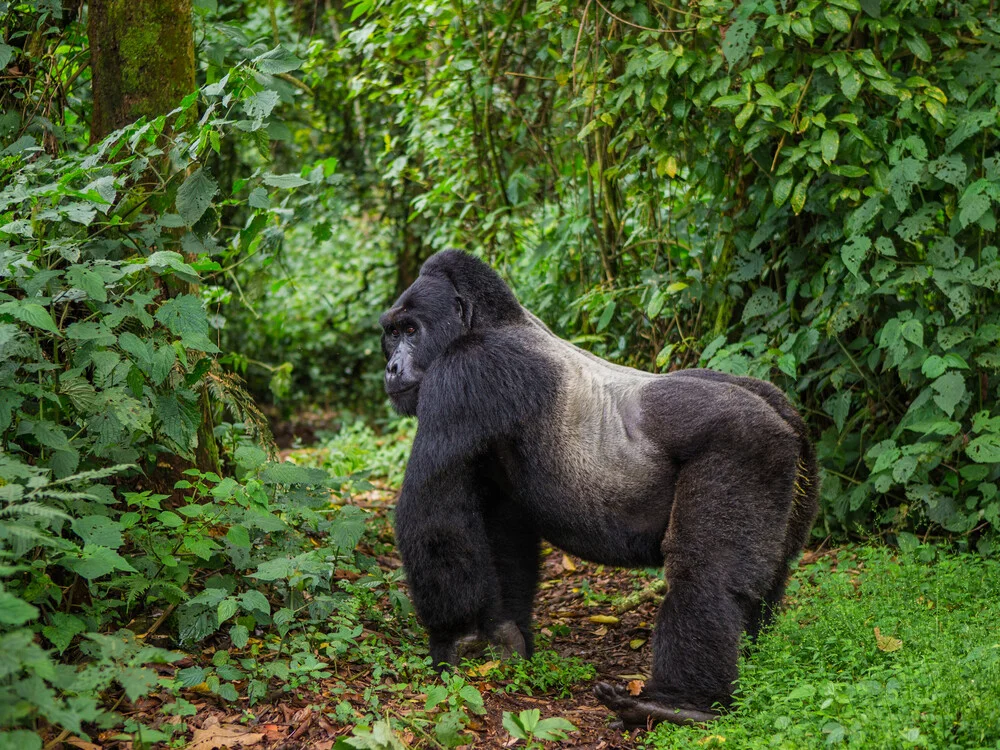
Rwanda’s Volcanoes National Park is an important destination for studying and observing mountain gorilla society. Its habituated groups offer opportunities to observe silverbacks, mothers, juveniles, and infants within their natural forest environment. Visitors can arrange Rwanda gorilla trekking tours, explore gorilla trekking from Kigali, or combine a luxury wildlife experience with a romantic Rwanda honeymoon.
Can Tourists Witness Two Silverbacks Fighting During Gorilla Trekking?
Tourists may occasionally observe displays or interactions involving multiple silverbacks during a guided gorilla trek, but dramatic confrontations are unpredictable. A standard trekking permit does not guarantee that visitors will witness particular behaviours, and responsible tourism never involves provoking animals into aggressive encounters. Most gorilla observations involve ordinary activities such as feeding, resting, moving through vegetation, and interacting with family members.
What Happens When Two Silverbacks Meet? If an unexpected confrontation occurs near visitors, trained rangers will assess the situation and provide instructions to protect both people and gorillas. Tourists should remain calm, avoid sudden movements, maintain the required distance, and follow the guides’ directions. A well-organised Uganda gorilla trekking safari or Rwanda gorilla trekking experience prioritises animal welfare and visitor safety above dramatic photography.
Frequently Asked Questions About Two Silverbacks Meeting
What Happens When Two Silverbacks Meet in the Wild?
Two silverbacks may communicate through chest beating, vocalisations, physical displays, or close approaches. Some encounters are peaceful, while others involve aggression or fighting. Their behaviour depends on familiarity, social relationships, and competitive circumstances. Learn more through mountain gorilla trekking tours.
Do Silverbacks Always Fight When They Meet?
No. Many encounters between silverbacks involve displays or peaceful interactions rather than serious physical fights. Familiar males may tolerate one another, and some adult males coexist within the same family. Discover more about gorilla family behaviour.
Can Two Silverbacks Live Together in One Family?
Yes. Multi-male mountain gorilla groups can contain several mature silverbacks living together. One usually occupies the dominant position, while others maintain subordinate roles. These relationships can be observed during Uganda mountain gorilla trekking.
Why Do Silverbacks Beat Their Chests at Each Other?
Chest beating can communicate information about a male’s size and competitive ability. These displays may reduce uncertainty during encounters and sometimes help avoid direct combat. Visitors can learn about gorilla communication during guided gorilla trekking in Bwindi.
Can One Silverback Kill Another Silverback?
Yes. Fatal confrontations between adult male gorillas have been documented, although most encounters do not end in death. Serious fights can cause injuries that affect survival and social relationships. Explore mountain gorilla behaviour for additional insights.
Do Silverbacks Fight Over Female Gorillas?
Competition involving females can contribute to encounters between adult males. Female transfers may occur during interactions between groups, and rival males may attempt to influence these movements. Discover more through gorilla trekking experiences in Rwanda.
Are Two Silverbacks Stronger Than One?
Two mature males collectively possess considerable physical strength, but the outcome of an encounter cannot be predicted simply from the number of silverbacks present. Age, health, relationships, and behaviour all matter. Explore Uganda gorilla safari experiences.
Do Silverbacks Recognise Each Other After Separation?
Mountain gorillas can maintain social relationships beyond their immediate groups. Research indicates that previously connected families may demonstrate greater tolerance during later encounters. This highlights the complexity of mountain gorilla intelligence and social behaviour.
What Happens When Two Silverbacks Meet Near Baby Gorillas?
An encounter involving unfamiliar males can create risks for dependent infants, particularly if serious aggression develops. Resident silverbacks may respond defensively, while mothers maintain close contact with their youngsters. Learn about gorilla families in Bwindi.
Where Can Tourists See Multiple Silverback Gorillas?
Habituated gorilla groups in Uganda’s Bwindi and Mgahinga national parks and Rwanda’s Volcanoes National Park sometimes contain multiple silverbacks. Visitors can explore Uganda gorilla trekking packages and Rwanda gorilla trekking tours to plan their wildlife encounters.
Is It Dangerous When Two Silverbacks Meet Near Tourists?
An active confrontation can create safety risks, particularly if the gorillas move unexpectedly. Visitors must follow ranger instructions and never attempt to approach, separate, or provoke the animals. Responsible gorilla trekking safaris are conducted under professional supervision.
Book Your Mountain Gorilla Trekking Safari With Nextgen Safaris
Discovering What Happens When Two Silverbacks Meet? provides a remarkable introduction to the intelligence, physical strength, and complex social relationships of mountain gorillas. Although dramatic encounters cannot be guaranteed, watching a silverback communicate with his family, rest beside youngsters, or move through the rainforest offers an unforgettable wildlife experience.
At Nextgen Safaris, we help travellers arrange personalised Uganda gorilla trekking holidays, Rwanda gorilla trekking tours, luxury fly-in gorilla safaris, and gorilla trekking and habituation experiences. Our safari planning covers accommodation, transport, permits, and experienced guides for an exceptional African wildlife adventure.