
Ziwa Rhino Sanctuary – The Complete Guide to Rhino Tracking in Uganda
What Is Ziwa Rhino Sanctuary?
Ziwa Rhino Sanctuary is Uganda’s only location where visitors can track wild rhinos on foot. Located in Nakasongola District along the main route between Kampala and Murchison Falls National Park, Ziwa plays a critical conservation role in restoring Uganda’s rhino population.
Uganda once had native populations of both black and white rhinos. However, by the early 1980s, rhinos had been wiped out in the country due to poaching and civil unrest. Ziwa Rhino Sanctuary was established in 2005 as a protected breeding and reintroduction project aimed at restoring rhinos to Uganda’s national parks.
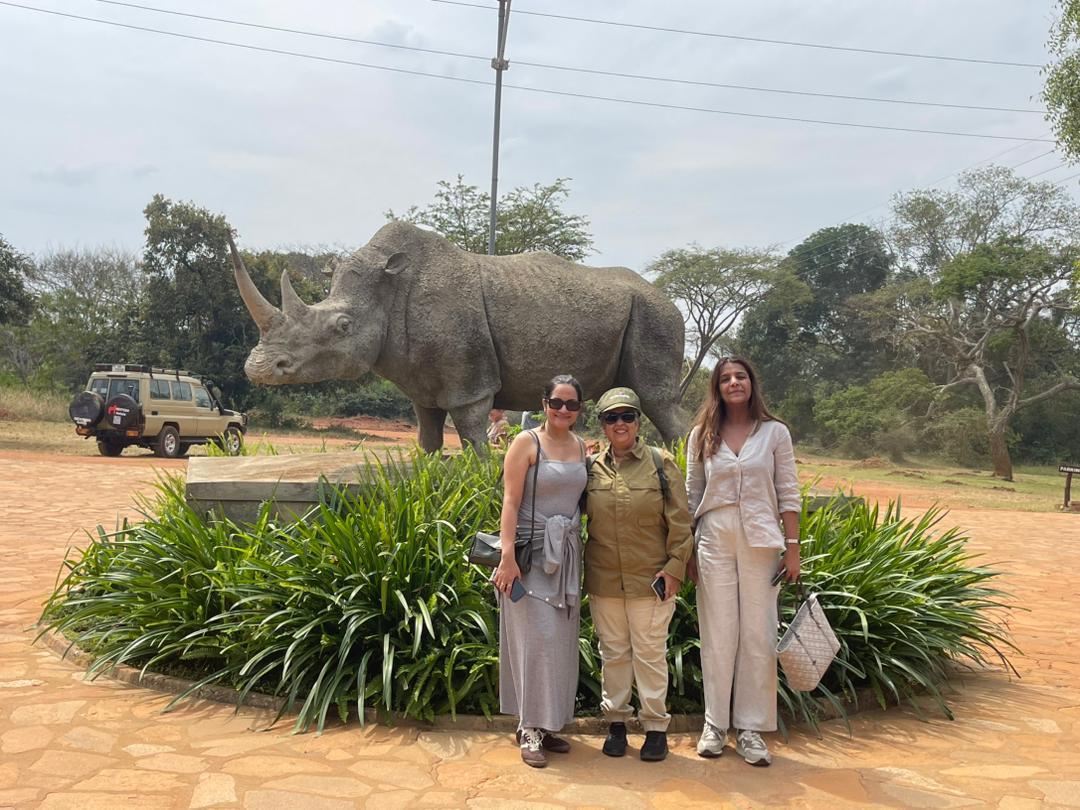
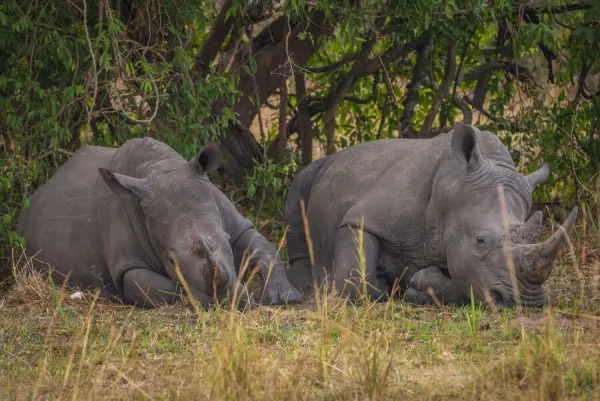
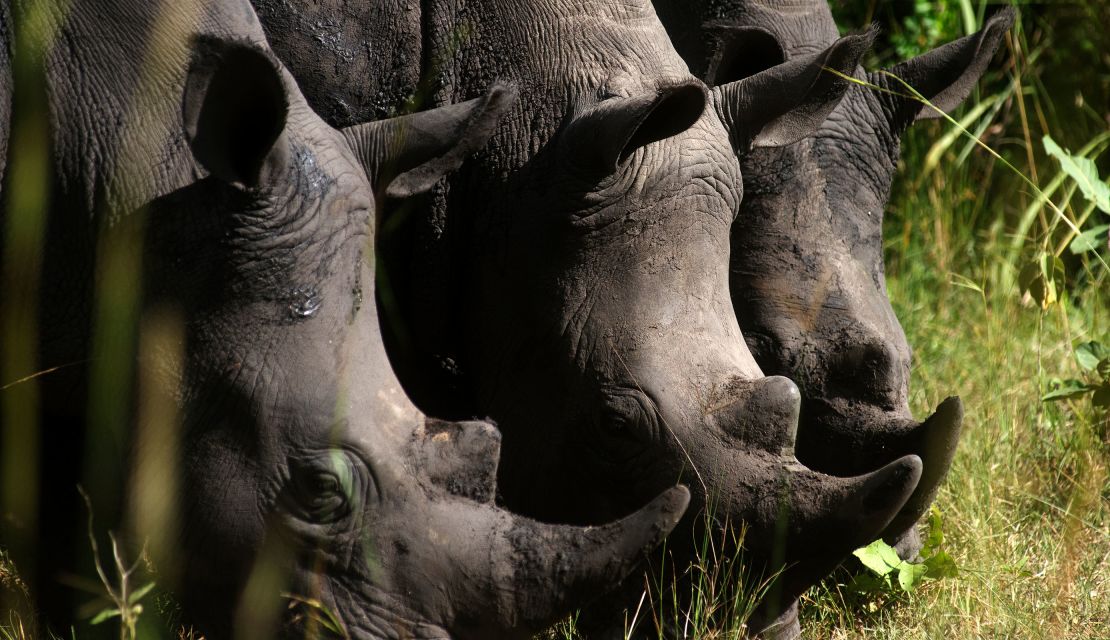
Today, Ziwa Rhino Sanctuary is home to a growing population of southern white rhinos and represents one of the most successful wildlife conservation efforts in East Africa.
For travelers, Ziwa Rhino Sanctuary offers something rare: the opportunity to walk on foot with experienced rangers and observe rhinos safely in their natural habitat.
Where Is Ziwa Rhino Sanctuary Located?
Ziwa Rhino Sanctuary is located in Nakasongola District in central Uganda, approximately 176 kilometers north of Kampala along the Kampala–Gulu Highway. The drive from Kampala or Entebbe International Airport typically takes about three hours under normal road conditions, making it one of the most accessible wildlife destinations in Uganda.
Its strategic location along the main route to Murchison Falls National Park is one of the reasons Ziwa Rhino Sanctuary has become a core component of northern Uganda safari itineraries. Travelers heading toward Murchison Falls naturally pass near Ziwa Rhino Sanctuary, which makes the sanctuary not only geographically convenient but also logistically efficient. Instead of adding extra travel time, a stop at Ziwa enhances the journey north with a meaningful conservation experience.
For travelers arriving in Entebbe after long-haul international flights, Ziwa Rhino Sanctuary often becomes the first true wildlife encounter in Uganda. The drive north gradually transitions from urban landscapes to open savannah and rural countryside, creating a soft introduction to Uganda’s ecological diversity. This positioning makes Ziwa Rhino Sanctuary an ideal first-day safari activity, especially for 8-day, 10-day, or 12-day Uganda safari circuits.
Ziwa’s location also plays a critical role in Uganda’s effort to restore its Big Five wildlife identity. Historically, Uganda was home to lions, leopards, elephants, buffalo, and rhinos across several national parks. While most of these species remain well represented in parks like Murchison Falls and Kidepo Valley, rhinos were lost entirely during decades of poaching and political instability. Today, Ziwa Rhino Sanctuary stands as the foundation of Uganda’s rhino restoration story.
Because of its accessibility, conservation purpose, and placement along the main safari corridor, Ziwa Rhino Sanctuary is not an optional detour. It is a strategic wildlife stop that bridges conservation, history, and safari experience in one location.
Ziwa Rhino Sanctuary Park Entrance Fee (Updated Information)
Understanding the park entrance structure at Ziwa Rhino Sanctuary is important when planning your visit.
The current general park entrance fee for international visitors is USD 60 per person.
This entrance fee provides official access to the sanctuary and contributes directly to rhino conservation, security operations, habitat management, and ranger services. Because Ziwa Rhino Sanctuary operates as a private conservation initiative rather than a government national park, fees are structured to directly sustain rhino protection and breeding programs.
It is important to note that the park entrance fee is separate from activity fees. Rhino tracking, shoebill excursions, night walks and other guided experiences may carry additional charges depending on the activity selected.
For travelers researching “Ziwa Rhino Sanctuary entrance fee” or “Ziwa Rhino Sanctuary park entry cost,” clarity is essential:
The USD 60 fee grants access to the sanctuary itself.
Guided rhino tracking is typically charged separately.
Fee updates can occur periodically based on operational costs and conservation needs. Therefore, confirming current rates at the time of booking is always advisable, especially for larger groups or self-drive travelers arranging activities independently.
When comparing wildlife destinations in Uganda, Ziwa’s entrance structure reflects its conservation-focused mission. The sanctuary’s funding model ensures that visitor contributions directly support rhino protection rather than general park revenue distribution.
For safari itineraries heading toward Murchison Falls National Park, this entrance fee becomes part of the broader northern Uganda safari cost structure and should be factored into planning from the outset.
Why Ziwa Rhino Sanctuary Is So Important for Uganda
Ziwa Rhino Sanctuary is more than a wildlife viewing site. It is the epicenter of Uganda’s rhino recovery mission.
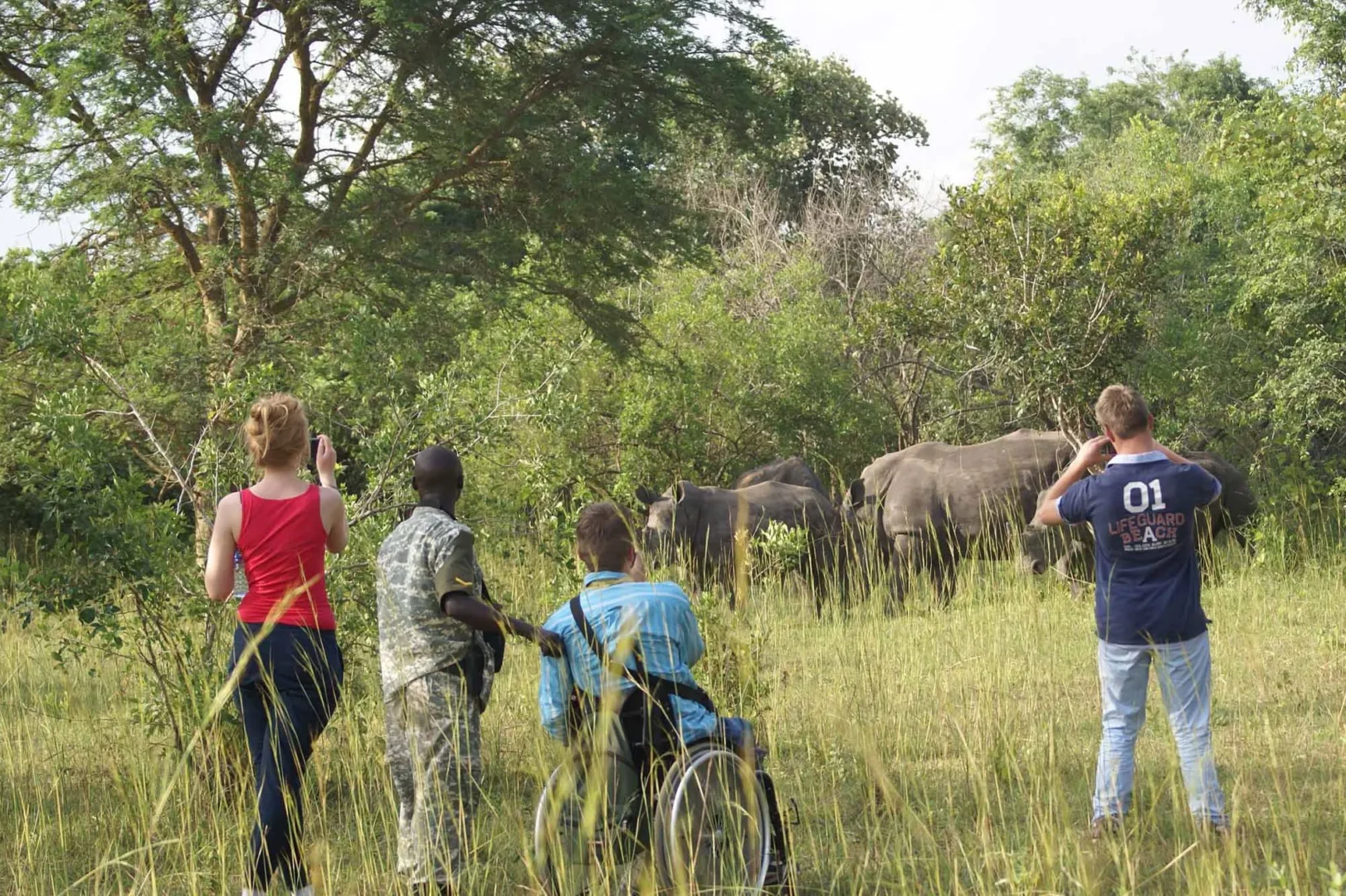
By the early 1980s, both the eastern black rhino and the northern white rhino had disappeared from Uganda due to uncontrolled poaching and armed conflict. National parks that once supported healthy rhino populations were left without this iconic species. The loss of rhinos was not only ecological but symbolic, as it removed Uganda from the list of destinations where travelers could see the complete Big Five in the wild.
Ziwa Rhino Sanctuary was established in 2005 as a private conservation initiative with a clear objective: to reintroduce rhinos to Uganda in a controlled, protected environment and gradually rebuild a sustainable population. The sanctuary began with a small number of southern white rhinos under heavy security. Since then, the population has grown steadily through careful breeding management and constant monitoring.
Unlike traditional national parks, Ziwa Rhino Sanctuary operates under 24-hour armed protection to ensure that poaching risk remains minimal. Rangers monitor the rhinos continuously, and conservation strategies focus on maintaining genetic diversity while allowing natural behavior within a semi-wild ecosystem. This careful balance between protection and freedom is what makes Ziwa’s conservation model effective.
The long-term vision extends beyond the sanctuary boundaries. As rhino numbers increase, the ultimate goal is to reintroduce rhinos into larger national parks such as Murchison Falls National Park. When this becomes viable, Uganda will once again host fully free-ranging rhinos in its major protected areas, restoring the country’s authentic Big Five safari status.
For travelers, visiting Ziwa Rhino Sanctuary is not simply about ticking off a species. It is direct participation in one of East Africa’s most significant conservation recovery projects. The entrance fees and tracking experiences contribute to maintaining ranger salaries, habitat management, and anti-poaching infrastructure.
In this way, Ziwa Rhino Sanctuary represents a rare intersection between tourism and tangible conservation impact.
Rhino Tracking at Ziwa – What Makes It Unique
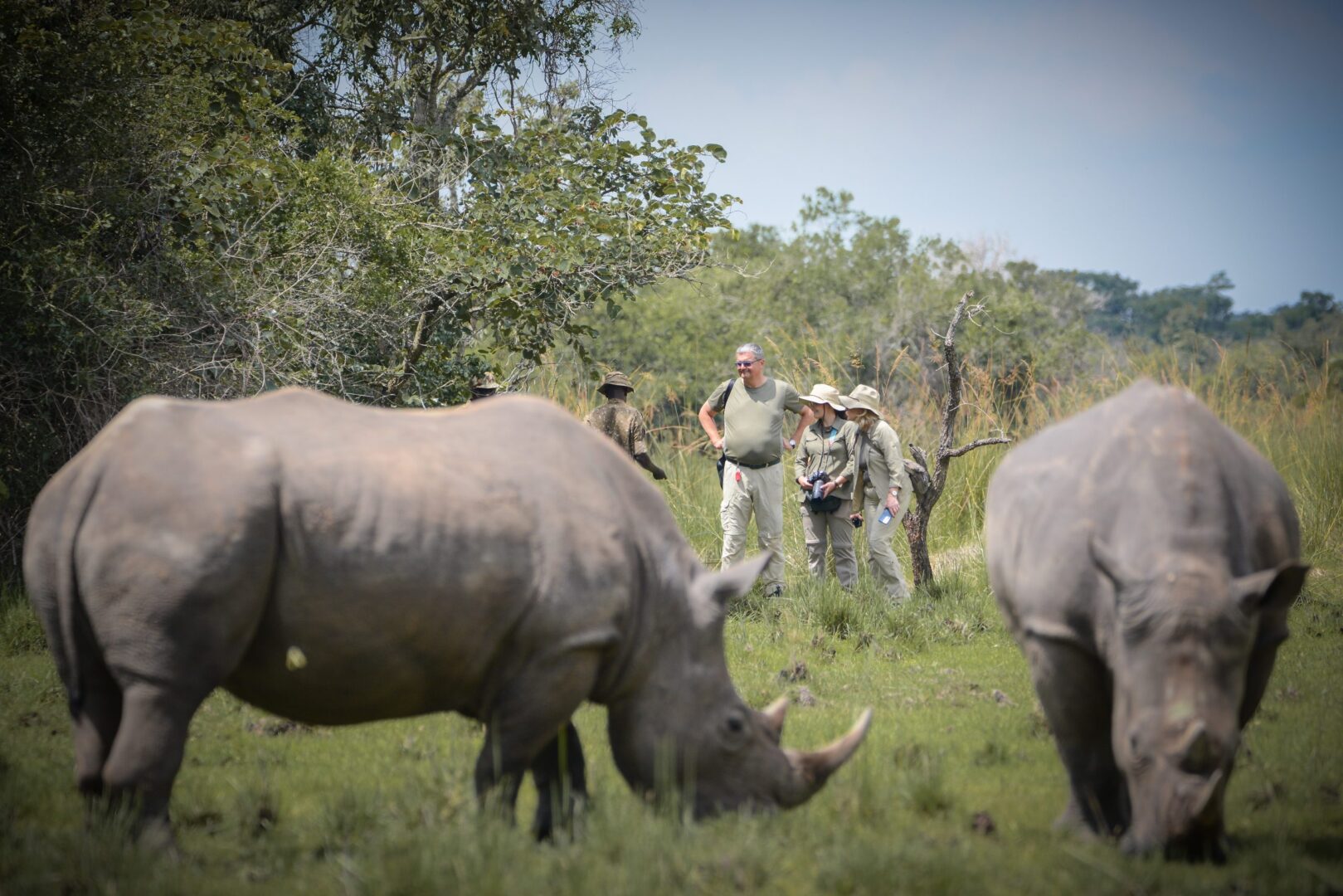
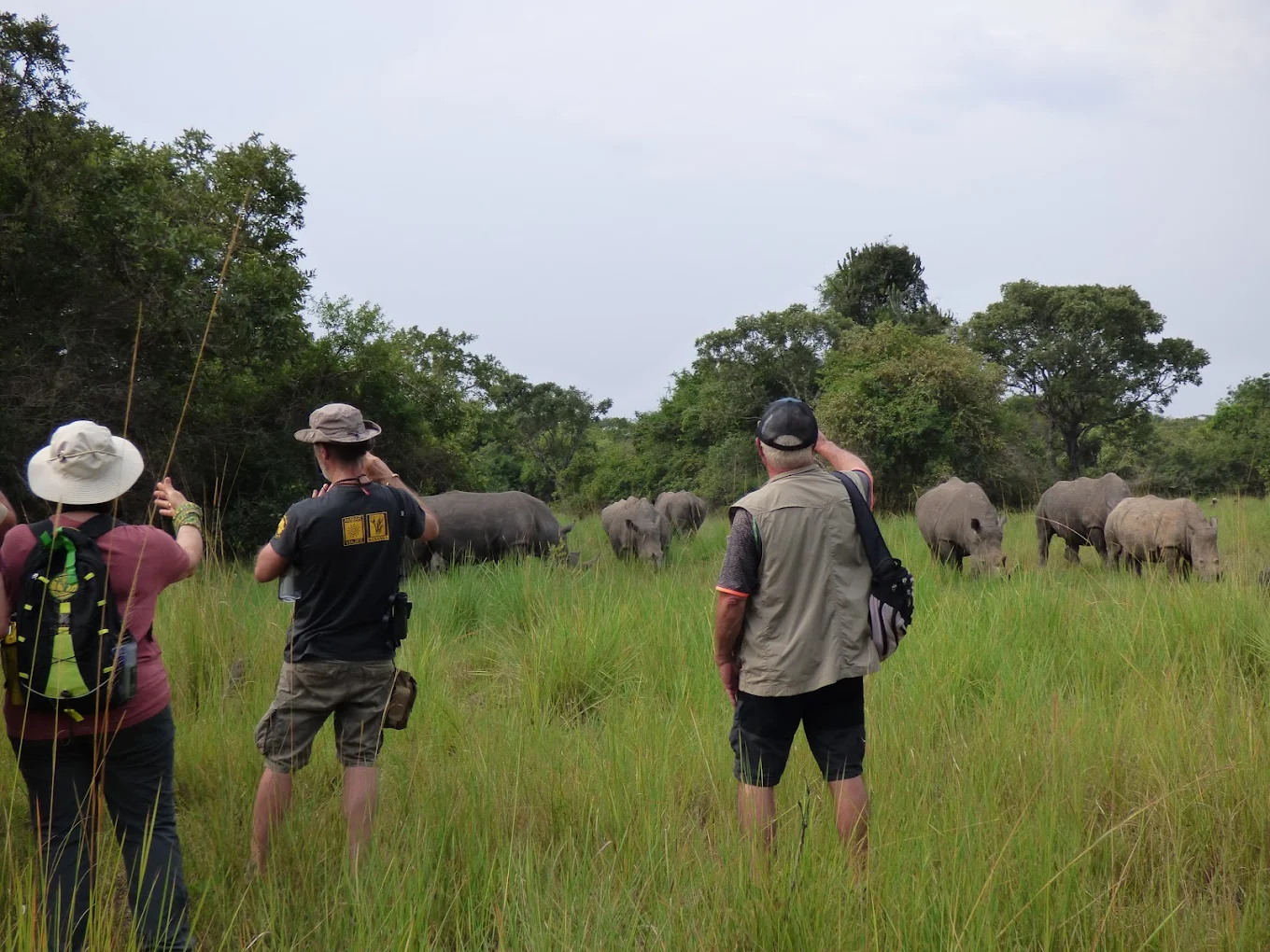
The defining experience at Ziwa Rhino Sanctuary is rhino tracking on foot. This is not a game drive where animals are viewed from the safety of a vehicle. It is a guided walking safari across open savannah in search of free-ranging white rhinos.
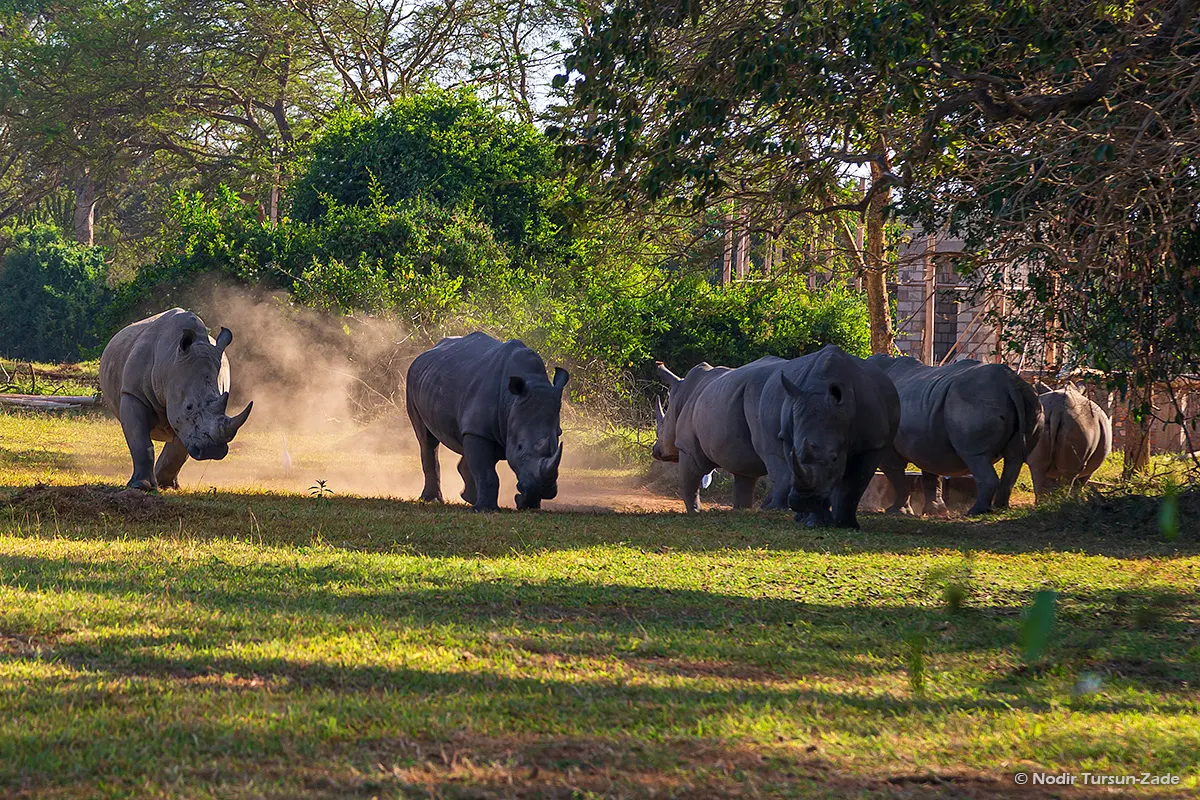
Before setting out, visitors receive a briefing from trained ranger guides who explain safety procedures, rhino behavior, and tracking techniques. Once in the field, the experience becomes immersive. Guests walk through grassland and lightly wooded areas, scanning the terrain for signs such as footprints and fresh grazing marks. The trackers, who monitor the rhinos daily, guide the group toward the current location of a rhino family.
When the rhinos are found, visitors observe them at a carefully controlled distance. White rhinos are generally calm grazers, often seen feeding steadily or resting in small groups. Unlike predators that move unpredictably, white rhinos exhibit slower, deliberate behavior, which makes close observation possible without tension or haste.
The tracking experience usually lasts between one and two hours depending on the rhinos’ location and terrain conditions. Because the sanctuary is designed specifically for rhino conservation, sightings are consistent and intimate. There is no long search across vast landscapes as in larger national parks. Instead, the experience is focused and educational.
Standing on foot in the presence of one of Africa’s largest land mammals creates a powerful connection that cannot be replicated from inside a safari vehicle. The sense of scale, the sound of grazing, and the proximity to such a massive animal leave a lasting impression. For many travelers, rhino tracking in Uganda at Ziwa becomes one of the most memorable wildlife encounters of their entire safari.
What makes this experience particularly unique is that Ziwa Rhino Sanctuary is currently the only place in Uganda where rhinos can be seen in the wild. Without Ziwa, travelers would need to leave the country to encounter rhinos on foot.
This combination of conservation significance, walking safari immersion, and reliable sightings makes rhino tracking at Ziwa Rhino Sanctuary one of the most distinctive wildlife experiences in East Africa.
Is Rhino Tracking at Ziwa Safe?
Safety is one of the most common concerns travelers have when considering rhino tracking in Uganda. At Ziwa Rhino Sanctuary, safety is not treated as an afterthought; it is the foundation of the entire operation.

Ziwa Rhino Sanctuary was established not only as a conservation breeding ground but also as a high-security sanctuary. The rhinos are under continuous monitoring by trained ranger teams who track their movements daily. In addition to ecological monitoring, the sanctuary operates with 24-hour armed anti-poaching protection units. This security structure ensures that both wildlife and visitors remain protected at all times.
Every rhino tracking experience begins with a structured safety briefing. Ranger guides explain the behavior of white rhinos, appropriate walking distances, positioning within the group, and how to respond calmly if a rhino shifts direction. White rhinos are generally non-aggressive grazers, but they are still powerful wild animals. Clear communication and disciplined group movement are therefore essential.
During the walk, the ranger guides control the pace and positioning. Guests do not approach rhinos independently, and no one moves ahead of the guide. The tracking route is carefully chosen based on the rhinos’ most recent location, terrain conditions, and weather. Because the sanctuary is open savannah rather than dense forest, visibility is usually clear, which further enhances safety.
The distance maintained between visitors and rhinos is deliberate. Close enough for meaningful observation, but far enough to ensure the animal does not feel threatened. Rangers read body language constantly, and if a rhino shows signs of discomfort, positioning is adjusted immediately.
Unlike large national parks where animals roam across vast unfenced landscapes, Ziwa Rhino Sanctuary operates as a controlled conservation zone. This allows staff to maintain constant awareness of rhino locations and behavioral patterns. For this reason, Ziwa Rhino Sanctuary is widely regarded as one of the safest locations in Africa to observe white rhinos on foot.
For travelers asking, “Is rhino tracking at Ziwa safe?” the answer lies in its structure. Professional guides, armed protection, controlled proximity, and consistent monitoring create an environment where risk is minimized without diminishing the authenticity of the experience.
Ziwa Rhino Sanctuary Fees and Costs
Understanding Ziwa Rhino Sanctuary fees is important when planning a Uganda safari. The primary cost associated with visiting Ziwa is the rhino tracking fee, which covers entry into the sanctuary and participation in the guided tracking experience.
Rhino tracking fees generally include park entry, the services of trained ranger guides, security oversight, and a direct contribution toward rhino conservation and habitat management. Because Ziwa operates as a private conservation initiative, revenue generated from tourism plays a direct role in funding ranger salaries, anti-poaching patrols, veterinary care, and breeding programs.
Pricing may vary slightly depending on residency category, whether a visitor is an international traveler, East African resident, or citizen. Fees are periodically updated by sanctuary management to reflect operational costs and conservation needs. For this reason, it is always advisable to confirm current Ziwa Rhino Sanctuary fees at the time of planning.
In addition to rhino tracking, Ziwa offers several optional activities that expand the experience beyond a single wildlife encounter. Shoebill canoe excursions are particularly popular for birding enthusiasts seeking one of Africa’s most iconic and prehistoric-looking birds. Guided nature walks introduce visitors to smaller mammals and ecological features of the sanctuary. Birding safaris attract ornithologists due to the sanctuary’s impressive diversity of wetland and savannah bird species. Night walks, conducted with trained guides, reveal nocturnal wildlife behavior rarely seen during daytime visits.
Because Ziwa Rhino Sanctuary is privately managed, its fee structure reflects the true cost of wildlife protection rather than subsidized national park pricing. Visitors should understand that their tracking fee is not simply an entrance charge but a contribution toward rebuilding Uganda’s rhino population.
For travelers researching “Ziwa Rhino Sanctuary cost” or “rhino tracking price in Uganda,” it is important to view the fee within the context of conservation impact and exclusive on-foot access to white rhinos.
Best Time to Visit Ziwa Rhino Sanctuary
Ziwa Rhino Sanctuary can be visited year-round, but seasonal variations influence walking comfort and photographic conditions.
The dry seasons, typically from June to September and December to February, provide firmer ground and clearer walking paths. During these months, vegetation is less dense, making rhino tracking slightly easier in terms of visibility. The reduced rainfall also means less mud underfoot, which many travelers appreciate during longer walks.
However, the sanctuary’s open savannah ecosystem means that rhino tracking remains consistent even during Uganda’s green seasons. Unlike forest environments where heavy rainfall can limit access, Ziwa’s terrain allows for reliable year-round tracking. Rain may increase grass growth and soften the ground, but sightings remain strong because the rhinos are monitored daily.
Early morning is generally considered the best time of day for rhino tracking. Temperatures are cooler, which makes walking more comfortable. White rhinos are often more active in the morning hours before the heat intensifies. Photographic conditions are also better during early light, with softer shadows and clearer visibility.
For travelers combining Ziwa Rhino Sanctuary with Murchison Falls National Park, a morning rhino trek followed by an afternoon transfer north represents one of the most efficient safari flows in Uganda. This sequence avoids unnecessary backtracking and uses daylight hours effectively.
When evaluating the best time to visit Ziwa Rhino Sanctuary, the key takeaway is flexibility. The sanctuary’s design allows for dependable wildlife encounters throughout the year, with seasonal differences influencing comfort rather than the likelihood of seeing rhinos.
How Ziwa Rhino Sanctuary Fits into a Uganda Safari
Ziwa Rhino Sanctuary is rarely visited as a standalone destination. Instead, it functions as a strategic and ecological bridge within a broader Uganda safari itinerary.
Most Uganda safari circuits that include northern parks naturally pass through the corridor where Ziwa is located. This makes it an organic inclusion in multi-day safari routes rather than an added detour. Travelers heading from Entebbe toward Murchison Falls National Park frequently incorporate rhino tracking at Ziwa as their first structured wildlife encounter.
In 8 days Uganda safari itineraries, Ziwa typically appears on Day 1 or Day 2. After arrival and recovery in Entebbe, travelers drive north and experience rhino tracking before continuing to Murchison Falls. This sequencing introduces visitors to Uganda’s wildlife in a controlled, immersive format before transitioning into larger savannah game drives.
In 10 days Uganda wildlife and primate safaris, Ziwa plays a more symbolic role. These longer circuits often include chimpanzee trekking in Kibale Forest, gorilla trekking in Bwindi Impenetrable Forest, and classic savannah wildlife viewing in Queen Elizabeth National Park or Murchison Falls. Within that structure, Ziwa represents the missing piece of the Big Five puzzle. Without rhinos, Uganda’s Big Five safari remains technically incomplete. Including Ziwa restores that balance.
For travelers combining gorilla trekking and Murchison Falls, Ziwa becomes especially logical. The north–south safari flow in Uganda can be demanding in terms of road travel. Ziwa offers a meaningful stop that breaks up longer transfers while adding conservation depth to the journey. Rather than being a rest stop, it becomes a purposeful wildlife experience that enhances itinerary pacing.
Self-drive safaris heading north often rely heavily on Ziwa as well. Travelers renting 4×4 vehicles from Entebbe or Kampala frequently plan their first wildlife activity at Ziwa Rhino Sanctuary before continuing toward larger national parks. The sanctuary’s clear road access and structured tracking times make it ideal for independent travelers seeking reliable wildlife encounters without navigating complex park systems immediately.
For visitors traveling from the United States, Europe, or other long-haul markets, Ziwa serves another function. It acts as a gentle wildlife introduction. Unlike expansive game drives where animal sightings depend on timing and luck, rhino tracking at Ziwa is focused and guided. This predictability helps build early confidence, especially for travelers new to East Africa.
Perhaps most importantly, Ziwa Rhino Sanctuary is the only place in Uganda where rhinos can currently be seen in a semi-wild conservation setting. While lions, elephants, buffalo, and leopards roam multiple national parks, rhinos are confined to Ziwa. For this reason, Uganda’s Big Five safari identity depends on Ziwa’s inclusion.
Without Ziwa Rhino Sanctuary, Uganda remains a four-of-five wildlife destination. With Ziwa, the country regains its full Big Five narrative.
This is why experienced safari planners rarely design northern Uganda itineraries without incorporating Ziwa Rhino Sanctuary. It is not simply an activity; it is a structural component of a complete Uganda safari.
Wildlife & Birdlife at Ziwa Rhino Sanctuary
While Ziwa Rhino Sanctuary is best known for rhino tracking in Uganda, the sanctuary supports a surprisingly diverse ecosystem beyond its flagship species.
The open savannah landscape, interspersed with acacia woodland and seasonal wetlands, creates a mosaic habitat that attracts both large mammals and an impressive range of birdlife. This ecological diversity makes Ziwa Rhino Sanctuary more than a single-species destination.
Mammals at Ziwa Rhino Sanctuary
The primary attraction remains the southern white rhinoceros. These rhinos roam freely within the sanctuary’s protected boundaries, breeding naturally and forming small social groups. Observing them on foot is the sanctuary’s defining experience.
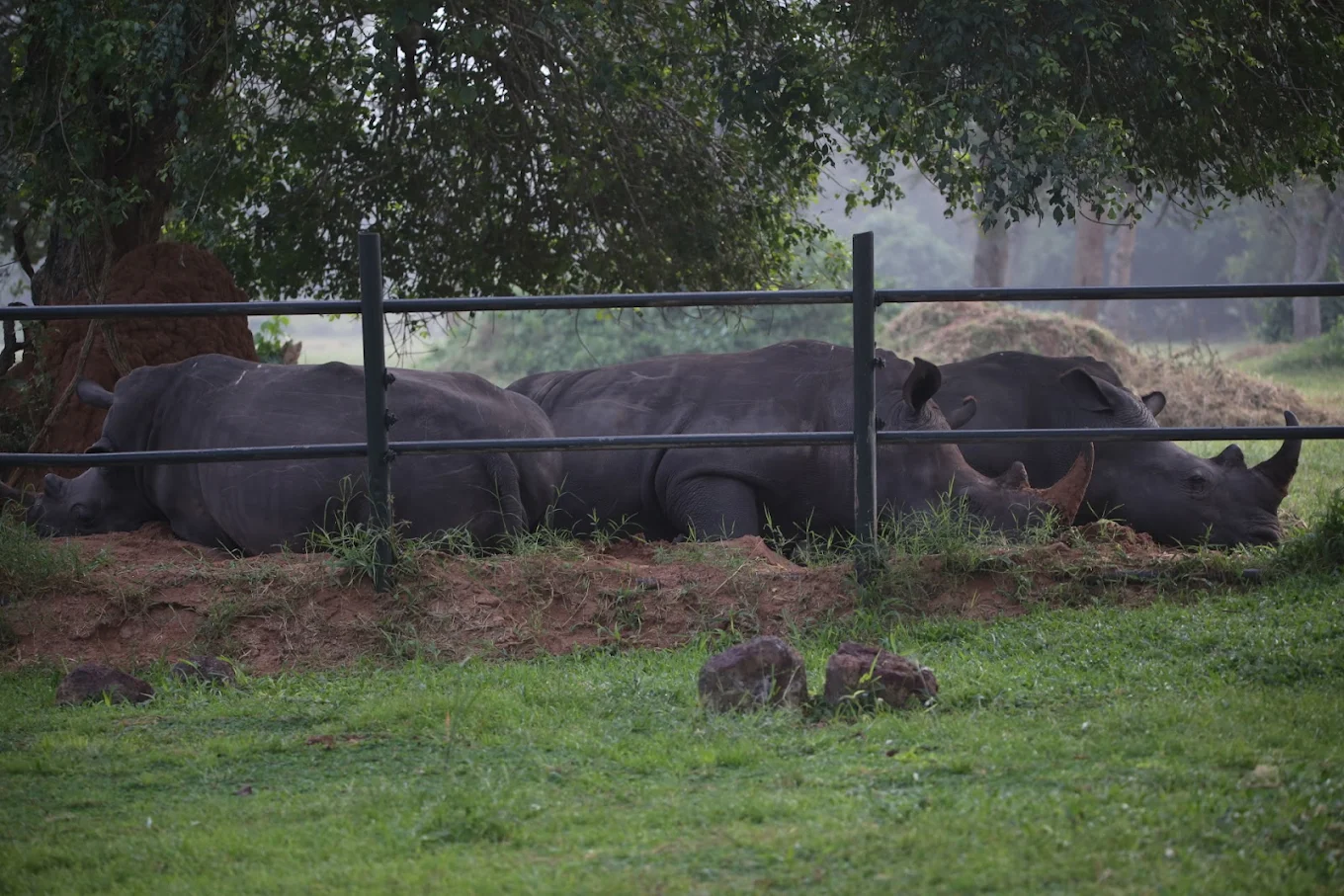
However, Ziwa Rhino Sanctuary also hosts several other mammal species that enhance the overall wildlife encounter. Uganda kob, bushbuck, oribi, and waterbuck are frequently seen grazing across the grasslands. Warthogs move confidently through the open terrain, often accompanied by oxpeckers. Primates such as vervet monkeys and black-and-white colobus monkeys inhabit woodland patches within the sanctuary.
Although Ziwa is not designed as a predator reserve, smaller carnivores and nocturnal species inhabit the area and may be encountered during guided night walks. The sanctuary’s management prioritizes rhino protection, but the surrounding ecosystem remains dynamic and naturally balanced.
For travelers searching “animals at Ziwa Rhino Sanctuary” or “what wildlife can you see at Ziwa,” it is important to understand that while rhinos are the highlight, the sanctuary functions as a broader savannah habitat with multiple species present.
Birdlife at Ziwa Rhino Sanctuary
Ziwa Rhino Sanctuary is also one of Uganda’s notable birding locations. The sanctuary and its adjacent wetlands support over 300 recorded bird species, making it a strong secondary destination for ornithologists.
The shoebill stork, one of Africa’s most iconic and sought-after birds, is often spotted in the wetland areas near Ziwa Rhino Sanctuary. Shoebill canoe excursions provide an opportunity to search for this prehistoric-looking species in quiet backwaters. This combination of rhino tracking and shoebill tracking makes Ziwa particularly appealing to travelers who value varied wildlife experiences.
Other bird species commonly recorded include saddle-billed storks, grey crowned cranes, African fish eagles, and various kingfishers. Woodland areas support hornbills and barbets, while grassland habitats attract lapwings and weavers.
For birding safaris in Uganda, Ziwa Rhino Sanctuary is often underestimated. Yet its accessibility and species diversity make it an excellent addition to broader Uganda birding circuits.
The ecological value of Ziwa Rhino Sanctuary extends beyond rhino conservation. It represents a functioning savannah and wetland ecosystem that continues to evolve alongside its growing rhino population.
Ziwa Rhino Sanctuary vs Murchison Falls – What’s the Difference?
One of the most common planning questions travelers ask is whether they should visit Ziwa Rhino Sanctuary or go directly to Murchison Falls National Park. Understanding the difference between the two clarifies why they are complementary rather than competing destinations.
Ziwa Rhino Sanctuary is a focused conservation reserve centered on rhino protection and breeding. The experience is intimate, structured, and on foot. Visitors walk across open savannah with ranger guides and observe rhinos at close range. The scale is smaller, the objective is specific, and the encounter is immersive.
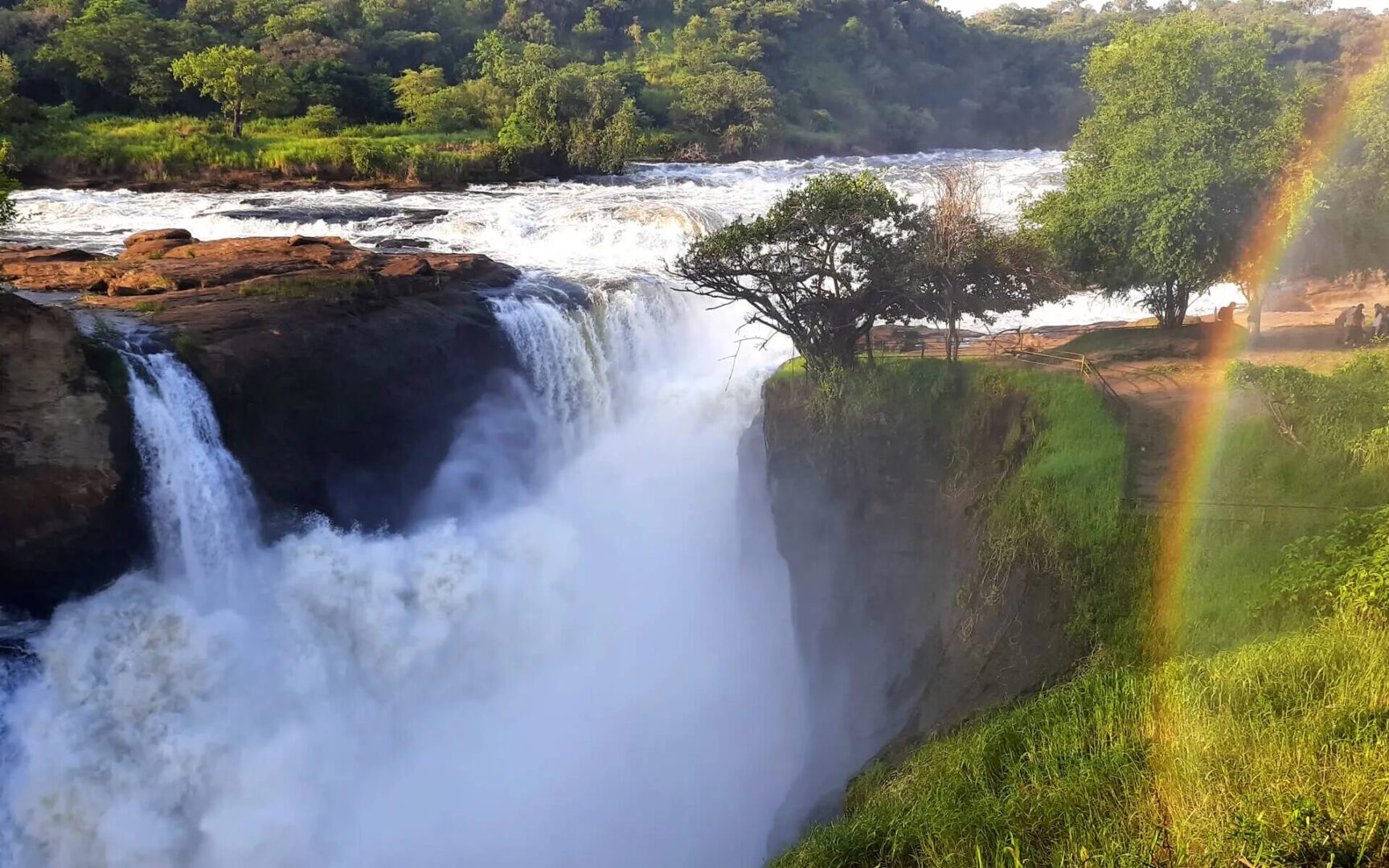
Murchison Falls National Park, by contrast, is Uganda’s largest national park and offers expansive savannah ecosystems, large predator populations, elephant herds, giraffes, buffalo, and the dramatic waterfall where the Nile forces through a narrow gorge. Wildlife viewing there is primarily conducted via 4×4 game drives and boat cruises along the Nile.
The scale difference is significant. Murchison Falls spans thousands of square kilometers, while Ziwa operates within a controlled sanctuary boundary. In Murchison, wildlife sightings depend on timing, movement patterns, and guide expertise. At Ziwa, rhino encounters are deliberate and guided with high reliability.
Another key difference lies in species availability. Murchison Falls does not currently host wild rhinos. Therefore, travelers seeking a complete Uganda Big Five safari must include Ziwa Rhino Sanctuary in their itinerary. Without Ziwa, the rhino component is absent.
In terms of experience style, Ziwa offers walking safari immersion, while Murchison offers vehicle-based exploration and river-based viewing. One emphasizes conservation intimacy; the other emphasizes landscape scale and species variety.
For most travelers, the ideal approach is not choosing between Ziwa and Murchison Falls but combining them logically. A morning rhino tracking experience at Ziwa followed by an afternoon transfer to Murchison Falls creates a seamless progression from focused conservation to expansive wilderness.
For those researching “Ziwa Rhino Sanctuary vs Murchison Falls,” the correct answer is rarely either-or. Ziwa completes what Murchison cannot offer, and Murchison expands what Ziwa cannot provide.
Together, they form one of Uganda’s most balanced northern safari circuits.
Accommodation Options at Ziwa Rhino Sanctuary
While many travelers visit Ziwa Rhino Sanctuary as a stopover en route to Murchison Falls National Park, the sanctuary also offers comfortable overnight accommodation for those who want a more immersive experience.
Staying overnight at Ziwa transforms the visit from a transit stop into a dedicated conservation stay. It allows guests to participate in early morning rhino tracking, evening nature walks, and optional shoebill excursions without time pressure.
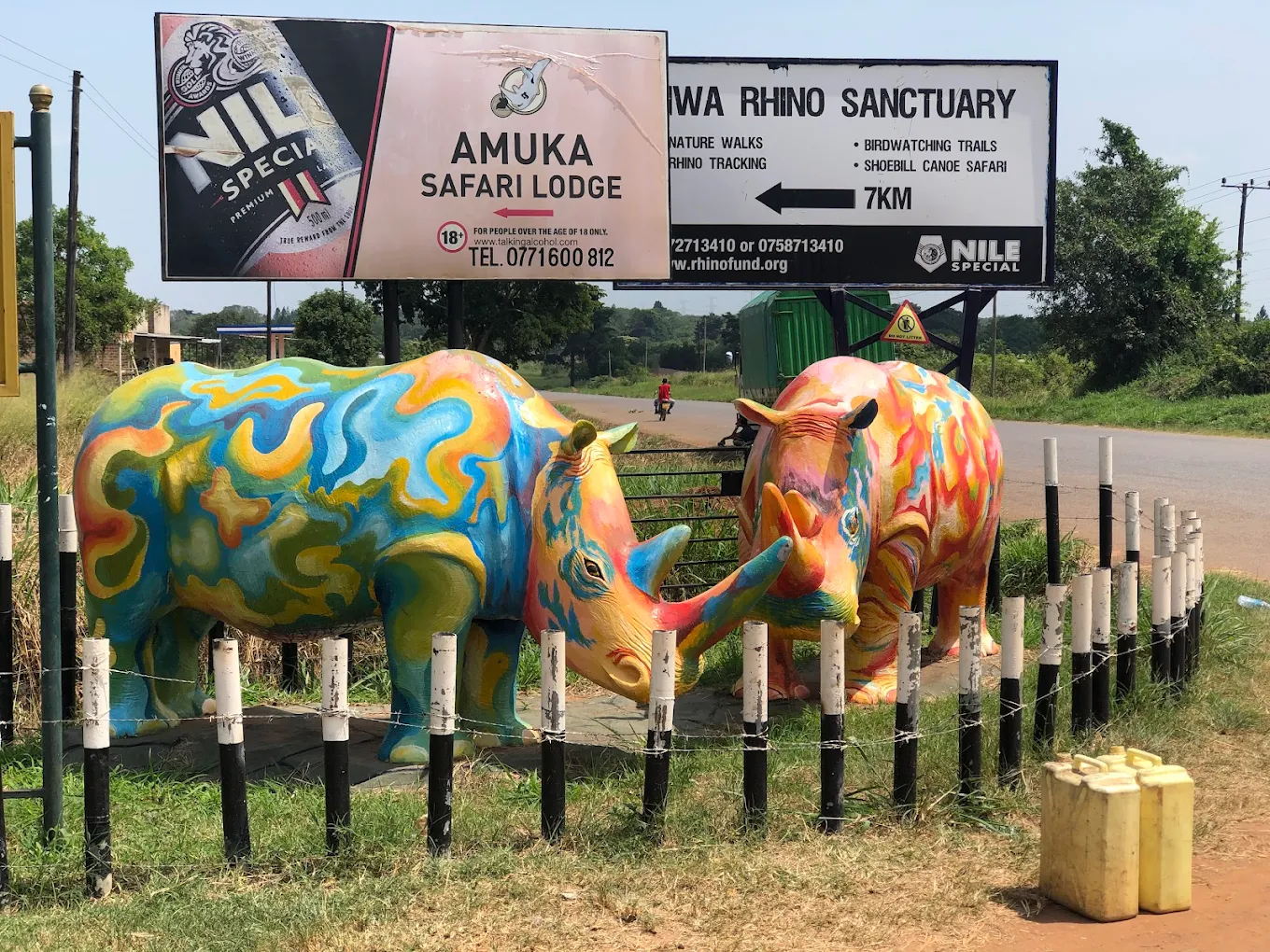
The primary accommodation option within the sanctuary is Amuka Safari Lodge. Designed in a relaxed safari style, the lodge offers spacious cottages set within natural surroundings. Rooms are positioned to provide privacy and views across the savannah landscape. The lodge includes a restaurant serving locally inspired cuisine, a swimming pool, and shaded outdoor spaces ideal for rest after tracking activities.
For travelers seeking a mid-range to upper-mid-range experience, Amuka Safari Lodge provides a comfortable balance between wilderness immersion and essential amenities. It is particularly convenient for those arriving late in the day from Entebbe or those who wish to begin rhino tracking early the following morning.
In addition to the main lodge, there are guest cottages and camping options available for travelers on tighter budgets or self-drive safaris. Camping at Ziwa offers a more rustic but authentic bush experience, often favored by overland travelers and independent explorers.
Staying overnight at Ziwa Rhino Sanctuary is especially beneficial for:
Travelers breaking the journey between Kampala and Murchison Falls
Birders interested in early morning wetland activity
Visitors seeking a quieter wildlife introduction before entering major national parks
Photographers wanting softer light conditions without rushed transfers
Accommodation at Ziwa is not luxury-focused in the way some high-end safari lodges are. Instead, it prioritizes simplicity, comfort, and proximity to conservation activities. For many travelers, that authenticity is precisely the appeal.
When researching “where to stay at Ziwa Rhino Sanctuary” or “Ziwa Rhino Lodge accommodation,” it is important to understand that the experience is conservation-centered rather than resort-oriented.
Ziwa Rhino Sanctuary – Frequently Asked Questions
This section is designed to capture AI Overviews and Featured Snippets while addressing real traveler concerns clearly and concisely.
What is Ziwa Rhino Sanctuary known for?
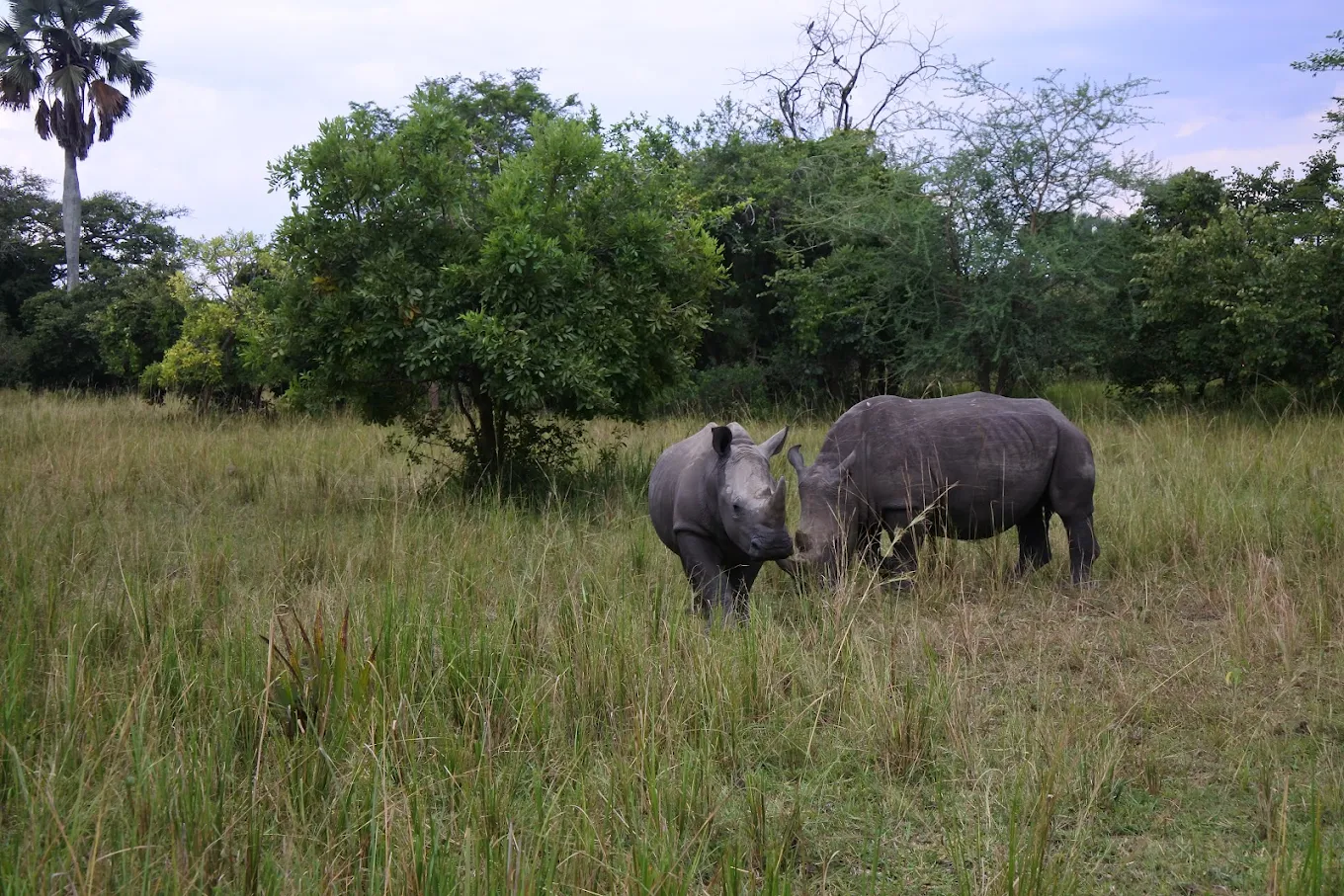
Ziwa Rhino Sanctuary is known for being the only place in Uganda where visitors can track wild white rhinos on foot. It is a protected conservation area established to restore Uganda’s rhino population and plays a central role in rebuilding the country’s Big Five wildlife identity.
How far is Ziwa Rhino Sanctuary from Kampala?
Ziwa Rhino Sanctuary is approximately 176 kilometers north of Kampala. The drive typically takes around three hours depending on traffic and road conditions. It is located along the main highway toward Murchison Falls National Park.
How long does rhino tracking at Ziwa take?
Rhino tracking at Ziwa Rhino Sanctuary generally lasts between one and two hours. The duration depends on how far the rhinos have moved within the sanctuary and terrain conditions on the day of the visit.
Is Ziwa Rhino Sanctuary worth visiting?
For travelers interested in completing a Uganda Big Five safari or experiencing wildlife on foot, Ziwa Rhino Sanctuary is absolutely worth visiting. It provides a close, guided encounter with white rhinos that cannot be experienced elsewhere in Uganda.
Can you see rhinos in Murchison Falls National Park?
Currently, rhinos are not present inside Murchison Falls National Park. Ziwa Rhino Sanctuary is the only location in Uganda where rhinos can be observed in a semi-wild conservation setting.
Is rhino tracking at Ziwa safe?
Yes. Rhino tracking at Ziwa Rhino Sanctuary is conducted under strict supervision by trained ranger guides. The sanctuary operates with 24-hour armed protection, and safety briefings are provided before each tracking session.
What is the best time to visit Ziwa Rhino Sanctuary?
Ziwa can be visited year-round. Dry seasons between June and September and December to February provide firmer walking conditions, but rhino tracking remains consistent throughout the year.
Do you need to book Ziwa Rhino Sanctuary in advance?
While Ziwa is less restrictive than national park permits, booking rhino tracking in advance is recommended during peak safari seasons to ensure preferred time slots, especially for larger groups.
Can Ziwa Rhino Sanctuary be visited as a day trip?
Yes. Ziwa Rhino Sanctuary can be visited as a day trip from Kampala or Entebbe, though most travelers include it as part of a longer Uganda safari en route to northern parks.
Is Ziwa Rhino Sanctuary suitable for self-drive travelers?
Yes. Ziwa is accessible via well-maintained highway roads and is frequently included in self-drive Uganda safari itineraries heading north toward Murchison Falls.
What wildlife can you see besides rhinos at Ziwa?
In addition to white rhinos, visitors may encounter Uganda kob, bushbuck, warthogs, vervet monkeys, and a wide variety of bird species including the shoebill stork.
How much does Ziwa Rhino Sanctuary cost?
The primary cost is the rhino tracking fee, which includes park entry, ranger guidance, and conservation contributions. Fees may vary by residency category and are periodically updated.