
Differences Between Chimpanzees and Gorillas
Fascinating Guide to Differences Between Chimpanzees and Gorillas: Discover Their Unique Behaviors, Habitats, and Lives | Nextgen Safaris
Africa is home to some of the world’s most fascinating primates, with chimpanzees and gorillas being among the most admired wildlife species. Although both animals belong to the great ape family and share many similarities with humans, they have remarkable differences in their appearance, behavior, habitat, diet, communication, social structure, and survival strategies. Understanding the Differences Between Chimpanzees and Gorillas provides travelers and wildlife enthusiasts with a deeper appreciation of these intelligent and endangered primates.
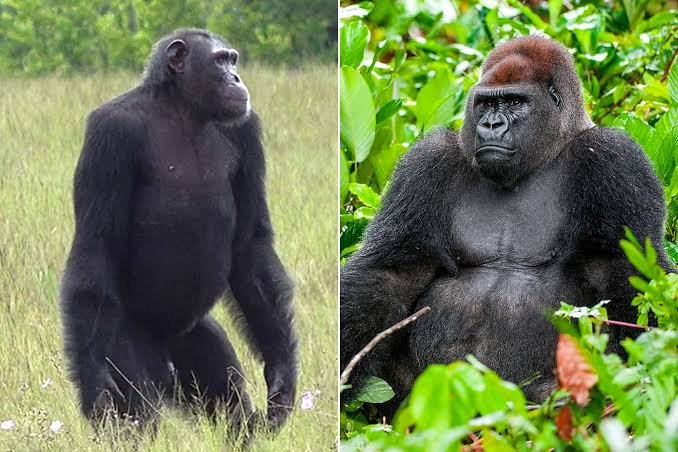
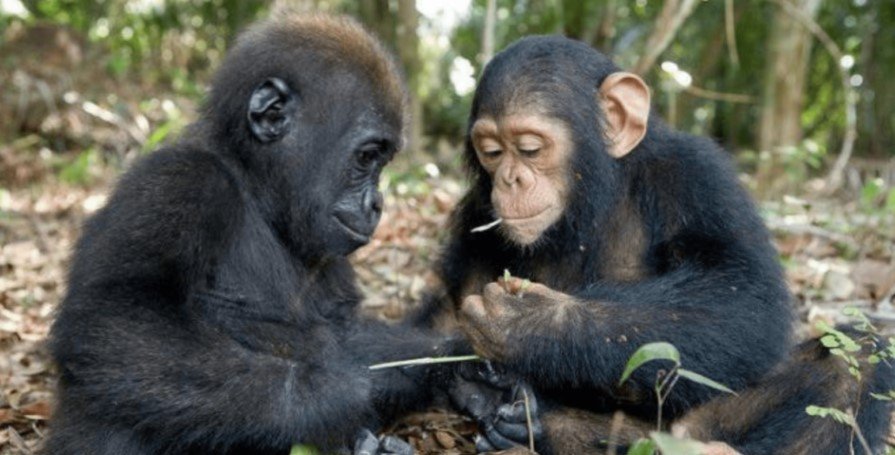
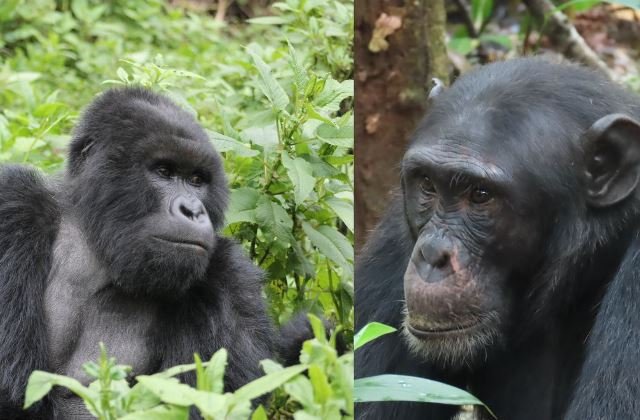
Chimpanzees and gorillas are often confused because they both live in African forests and share similarities such as strong family bonds, advanced communication abilities, and impressive intelligence. However, they represent two distinct branches of the great ape family, each with unique characteristics shaped by millions of years of evolution.
For travelers visiting Uganda and Rwanda, discovering the Differences Between Chimpanzees and Gorillas makes wildlife experiences even more meaningful. Uganda is one of Africa’s best destinations for both mountain gorilla trekking and chimpanzee tracking, offering visitors the opportunity to observe these incredible animals in their natural habitats.
Nextgen Safaris creates unforgettable primate experiences that allow travelers to explore Bwindi Impenetrable National Park, Kibale Forest National Park, Mgahinga Gorilla National Park, and other remarkable destinations where these great apes thrive.
Evolutionary Relationship Between Chimpanzees and Gorillas
Understanding the Differences Between Chimpanzees and Gorillas begins with their evolutionary history. Both chimpanzees and gorillas are members of the great ape family, which also includes humans, orangutans, and bonobos. They do not have tails and share many physical and behavioral similarities with humans.
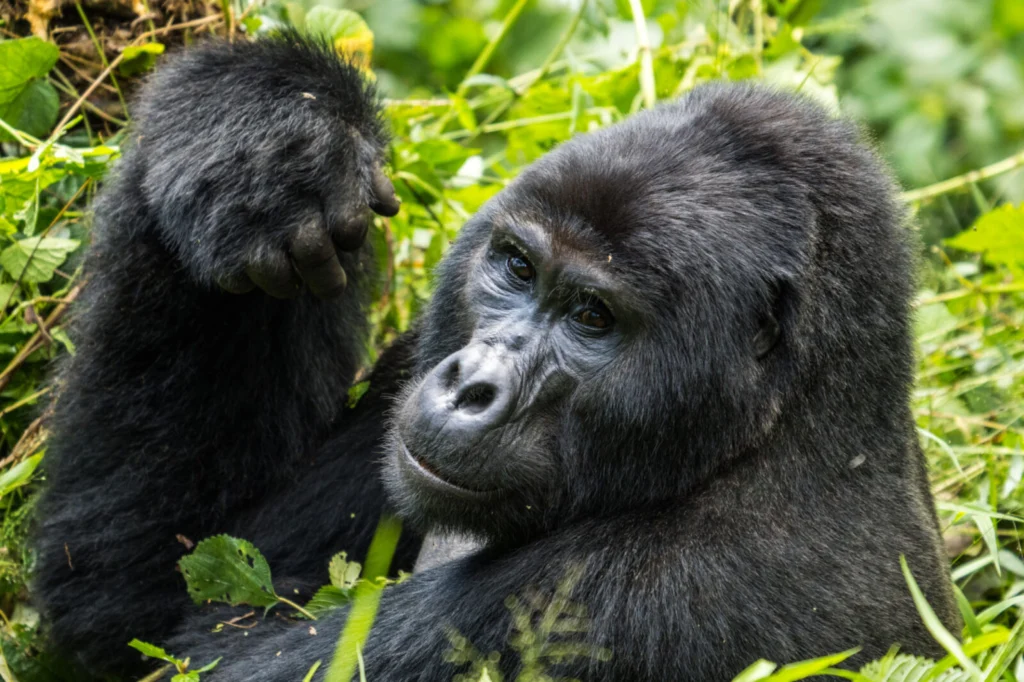
Gorillas are the largest living primates and belong to the genus Gorilla. They are divided into two main species: eastern gorillas and western gorillas. Mountain gorillas, which travelers commonly encounter during trekking experiences in Uganda and Rwanda, are a subspecies of eastern gorillas.
Chimpanzees belong to the genus Pan and are considered some of humans’ closest living relatives. They share approximately 98% of their DNA with humans, making them highly intelligent and capable of complex social behaviors, problem-solving, and communication.
Although both species share a common ancestor, they evolved differently over millions of years. Their unique environments, diets, and social needs shaped the differences visitors observe today.
Physical Differences Between Chimpanzees and Gorillas
One of the most noticeable Differences Between Chimpanzees and Gorillas is their physical appearance. Gorillas are much larger and stronger than chimpanzees, while chimpanzees have smaller bodies and more agile movements.
Adult male mountain gorillas, especially silverbacks, can weigh between 120 and 200 kilograms and possess incredible physical strength. Their broad shoulders, muscular arms, large chests, and powerful bodies help them protect their families and navigate forest environments.
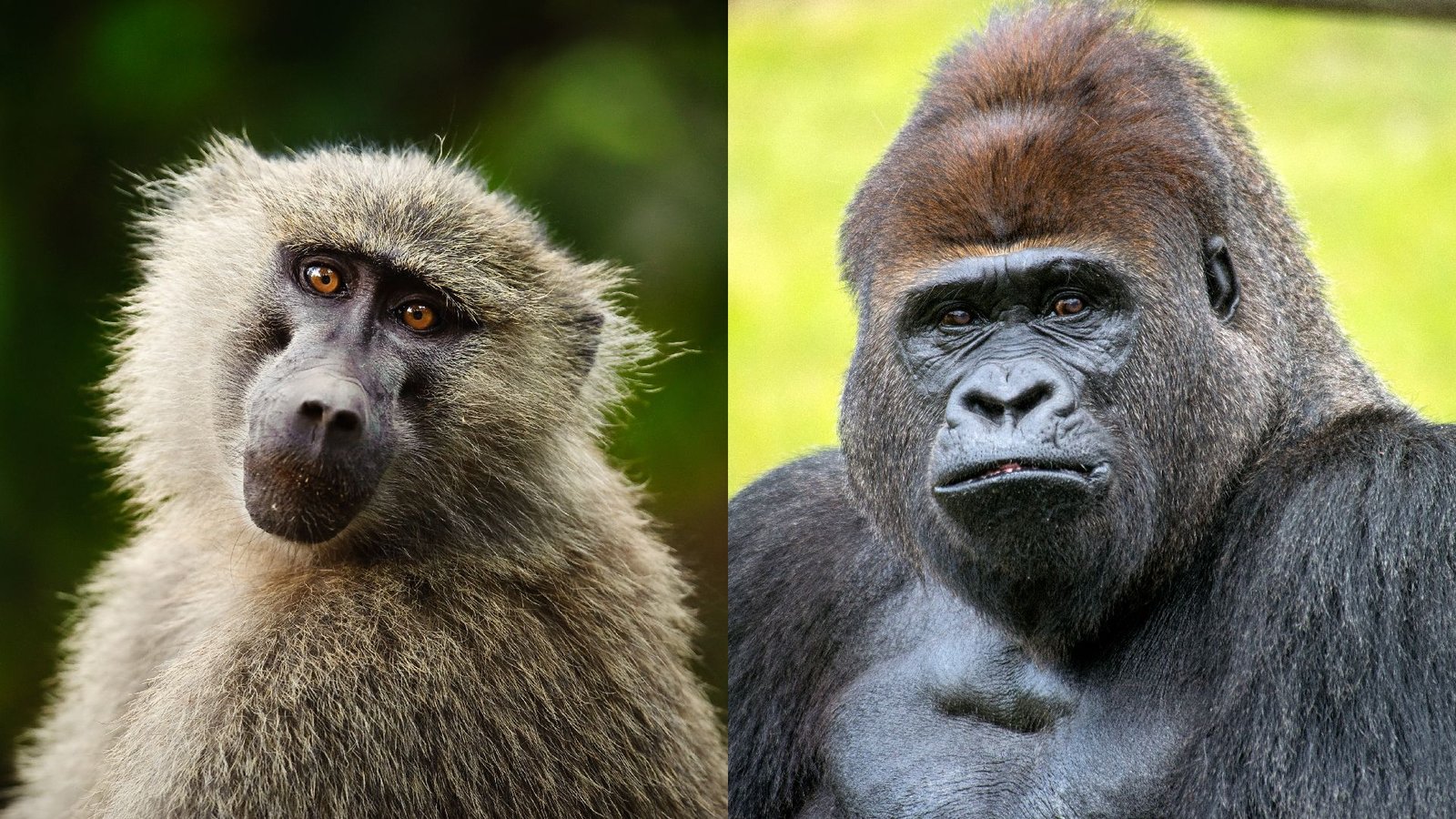
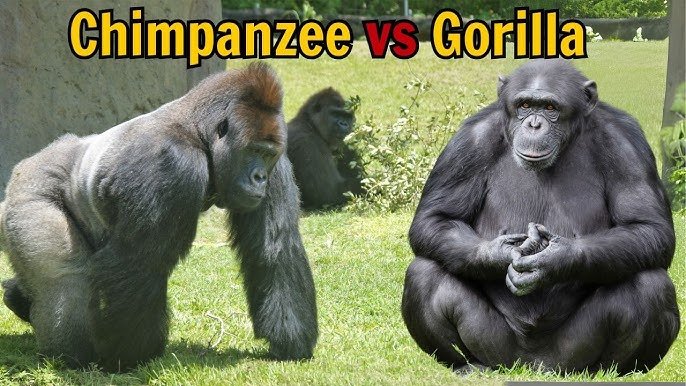
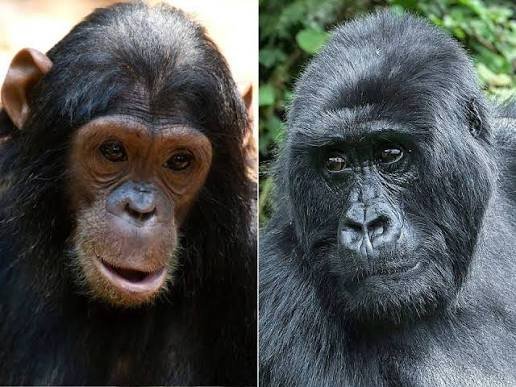
Chimpanzees are significantly smaller, with adult males usually weighing between 40 and 60 kilograms. They have slimmer bodies, longer arms, and highly flexible movements that allow them to climb trees, swing through branches, and travel quickly through forest habitats.
Gorillas typically move using their knuckles when walking on the ground, while chimpanzees are more adaptable and frequently move between the forest floor and trees. Their different body structures reflect their unique lifestyles and survival strategies.
Size and Strength Comparison Between Chimpanzees and Gorillas
The difference in size and strength is one of the clearest examples of the Differences Between Chimpanzees and Gorillas. Gorillas are among the strongest animals in the world relative to their body size.
A silverback gorilla’s strength allows it to defend its family from threats, compete with other males, and protect younger members of the group. Their powerful muscles and large size make them dominant within their social groups.
Chimpanzees are not as physically powerful as gorillas, but they compensate through intelligence, teamwork, and adaptability. Chimpanzees are excellent problem solvers and often work together to achieve goals, including finding food and defending their communities. While gorillas rely more on physical strength and leadership, chimpanzees rely heavily on social intelligence and cooperation.
Differences in Habitat and Distribution
Another important part of the Differences Between Chimpanzees and Gorillas is where they live. Both species inhabit African forests, but they prefer different environments.
Mountain gorillas live in high-altitude forests, particularly in the Virunga volcanic mountains and Bwindi Impenetrable National Park. These environments are cooler, misty, and covered with dense vegetation. Uganda and Rwanda provide some of the world’s best opportunities to observe mountain gorillas in their natural habitat.
Chimpanzees prefer tropical rainforests and woodland environments. In , Kibale Forest National Park is one of the most famous chimpanzee tracking destinations because of its large chimpanzee population and excellent research programs.
While gorillas spend much of their time on the forest floor, chimpanzees are more comfortable moving through trees. Their habitats influence their behavior, feeding habits, and daily activities.
Differences in Diet and Feeding Behavior
Diet is another fascinating aspect of the Differences Between Chimpanzees and Gorillas. Although both species mainly eat plant-based foods, their feeding habits are different.
Gorillas are primarily herbivores. Mountain gorillas feed on leaves, stems, roots, shoots, flowers, and occasionally small insects. Their large size requires them to consume significant amounts of vegetation every day.
Chimpanzees have a more varied diet. They eat fruits, leaves, seeds, flowers, insects, and occasionally hunt small animals such as monkeys. Their ability to use tools and cooperate during hunting demonstrates their advanced intelligence. Gorillas usually spend much of their day calmly feeding through vegetation, while chimpanzees are often more active and energetic during feeding activities.
Differences in Social Structure and Family Life
The social organization of chimpanzees and gorillas reveals some of the most interesting Differences Between Chimpanzees and Gorillas. Gorillas live in stable family groups led by a dominant silverback. The silverback protects the group, makes decisions about movement, and maintains peace among members. Gorilla families usually include females, infants, juveniles, and sometimes younger males.
The bond within gorilla families is extremely strong. Members spend time grooming, resting, feeding, and traveling together. The silverback plays a central role in creating security and stability.
Chimpanzee societies are more flexible and complex. They live in communities that can include many individuals, but members often separate into smaller groups and reunite later. Their social relationships involve alliances, competition, communication, and cooperation. Chimpanzees have complex social politics, with individuals forming friendships and alliances that influence their position within the group.
Differences in Communication and Intelligence
Communication is one of the most fascinating areas when exploring the Differences Between Chimpanzees and Gorillas. Both species communicate through sounds, facial expressions, body movements, and physical interactions. Gorillas communicate using vocalizations such as grunts, hoots, and chest-beating displays. Their communication is often focused on maintaining group relationships, expressing emotions, and warning others.
Chimpanzees have highly developed communication abilities. They use dozens of vocal sounds, gestures, and facial expressions to interact with each other. Researchers have documented chimpanzees using tools, solving problems, and learning behaviors from one another. While gorillas are intelligent and emotionally complex, chimpanzees generally demonstrate greater tool use and more advanced problem-solving abilities.
Differences in Behavior and Temperament
The temperament of these animals provides another interesting comparison. Understanding behavioral Differences Between Chimpanzees and Gorillas helps travelers appreciate their unique personalities.
Gorillas are generally calm, gentle, and peaceful animals. Despite their enormous strength, they usually avoid conflict unless threatened. During gorilla trekking, visitors often observe gorillas resting, feeding, playing, and caring for family members.
Chimpanzees are more energetic, curious, and active. They spend more time climbing, exploring, communicating, and interacting with others. Their behavior can sometimes appear more unpredictable because of their highly social nature. Both species demonstrate emotions such as affection, protection, curiosity, and social bonding.
Differences Between Gorilla Trekking and Chimpanzee Tracking
For travelers visiting Uganda and Rwanda, experiencing both species provides a complete primate adventure. The Differences Between Chimpanzees and Gorillas are reflected in the tracking experiences offered by each species. Gorilla trekking usually involves hiking through dense forests to find habituated gorilla families. Visitors spend limited time observing these gentle giants while learning about conservation and family structures.
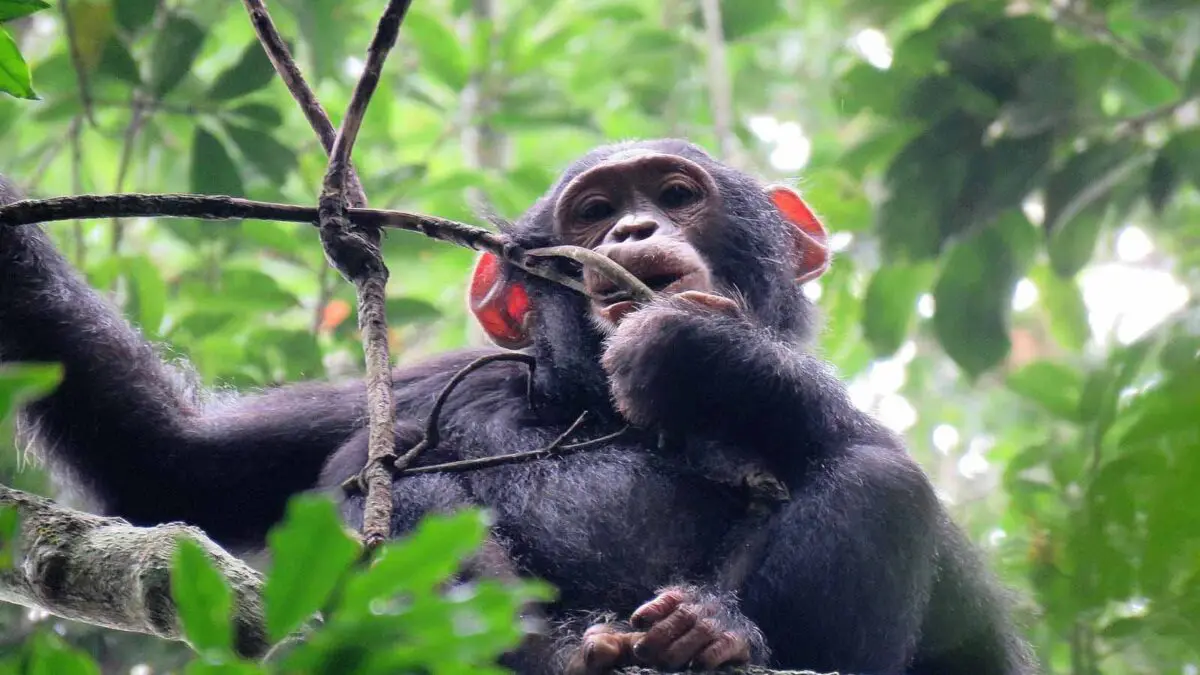
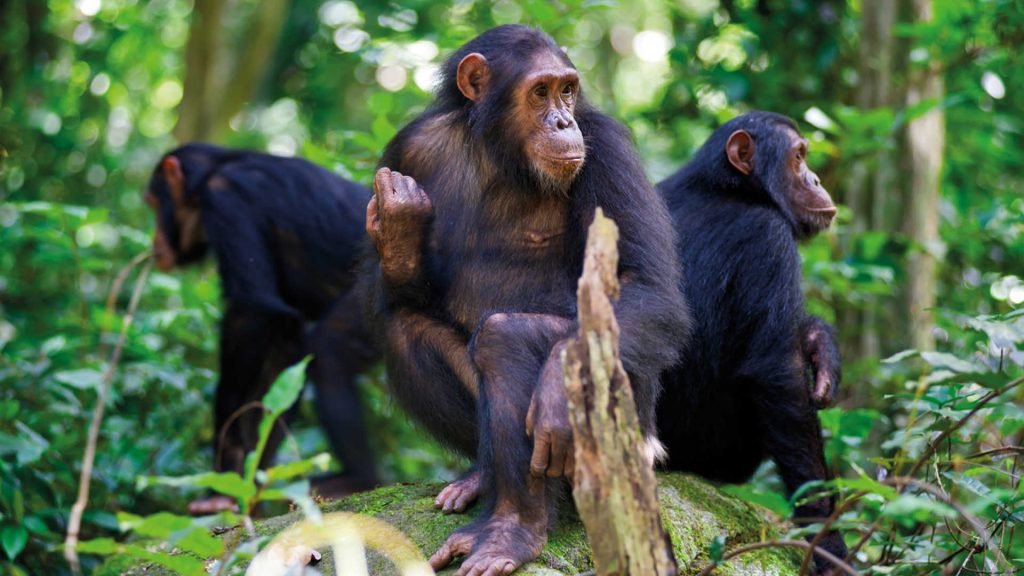
Chimpanzee tracking is often more dynamic because chimpanzees move quickly through forests and communicate actively. Visitors may hear them calling before seeing them and often observe energetic interactions. Uganda is unique because travelers can combine gorilla trekking in Bwindi with chimpanzee tracking in Kibale Forest, creating an extraordinary primate safari experience.
Conservation Challenges Facing Chimpanzees and Gorillas
Both chimpanzees and gorillas face serious conservation challenges, making awareness of the Differences Between Chimpanzees and Gorillas important for protecting them. Mountain gorillas have suffered from habitat loss, human conflict, and historical threats. Conservation efforts in Uganda and Rwanda have helped increase their populations through protection, research, and responsible tourism.
Chimpanzees face challenges including deforestation, illegal wildlife trade, and habitat destruction. Conservation programs focus on protecting forests and reducing threats to chimpanzee communities. Tourism plays an important role in supporting conservation. Gorilla trekking and chimpanzee tracking generate funds that contribute to wildlife protection and local community development.
Frequently Asked Questions About Differences Between Chimpanzees and Gorillas
What are the main Differences Between Chimpanzees and Gorillas?
The main Differences Between Chimpanzees and Gorillas include their size, behavior, habitat, diet, social structure, and communication. Gorillas are much larger and stronger, while chimpanzees are smaller, more agile, and known for advanced problem-solving abilities and tool use.
Are chimpanzees and gorillas the same animal?
No. Although chimpanzees and gorillas are both great apes and share similarities with humans, they are different species with unique physical characteristics, behaviors, and lifestyles. They belong to separate branches of the great ape family.
Which is bigger between a chimpanzee and a gorilla?
Gorillas are much larger than chimpanzees. Adult male gorillas, especially silverbacks, can weigh more than 150 kilograms, while chimpanzees usually weigh between 40 and 60 kilograms.
Are gorillas stronger than chimpanzees?
Yes. Gorillas are significantly stronger due to their larger bodies, powerful muscles, and massive build. However, chimpanzees are highly intelligent and use teamwork, problem-solving, and agility to survive.
Which is more intelligent between chimpanzees and gorillas?
Both species are highly intelligent, but chimpanzees are generally considered more advanced in areas such as tool use, problem-solving, and complex social interactions. Gorillas demonstrate strong emotional intelligence, communication skills, and family relationships.
Do chimpanzees and gorillas live in the same places?
Chimpanzees and gorillas both live in African forests, but they usually occupy different habitats. Mountain gorillas live in high-altitude forests such as Bwindi Impenetrable National Park and Volcanoes National Park, while chimpanzees prefer tropical rainforests such as Kibale Forest National Park.
What do gorillas eat compared to chimpanzees?
Gorillas mainly eat vegetation such as leaves, stems, roots, and shoots. Chimpanzees have a more varied diet that includes fruits, leaves, seeds, insects, and occasionally small animals.
Do chimpanzees and gorillas have the same social structure?
No. Gorillas usually live in stable family groups led by a dominant silverback. Chimpanzees live in larger communities with flexible social relationships, alliances, and changing group structures.
Which animal is more aggressive, a chimpanzee or a gorilla?
Gorillas are generally calm and peaceful animals despite their strength. Chimpanzees can display more aggressive behavior because of their complex social competition and territorial interactions.
Can chimpanzees and gorillas communicate with humans?
Both chimpanzees and gorillas communicate through sounds, gestures, facial expressions, and body movements. Chimpanzees have demonstrated advanced communication abilities, while gorillas show strong emotional communication within their families.
Can I see both chimpanzees and gorillas on one Uganda safari?
Yes. Uganda is one of the best destinations for experiencing both species. Travelers can enjoy gorilla trekking in Bwindi Impenetrable National Park and chimpanzee tracking in Kibale Forest National Park as part of a combined primate safari.
What is the difference between gorilla trekking and chimpanzee tracking?
Gorilla trekking involves hiking through forests to observe mountain gorilla families, usually in a calm and intimate setting. Chimpanzee tracking is often more active because chimpanzees move quickly, climb trees, and communicate frequently.
Which experience is better, chimpanzee tracking or gorilla trekking?
Both experiences are unique. Gorilla trekking offers a powerful encounter with large, peaceful family groups, while chimpanzee tracking provides an energetic experience filled with movement, communication, and social interactions.
Are chimpanzees and gorillas endangered?
Yes. Both species face conservation challenges caused by habitat loss, human activities, and other threats. Conservation programs in Uganda and Rwanda help protect their habitats and populations.
Why is it important to understand the Differences Between Chimpanzees and Gorillas?
Understanding the Differences Between Chimpanzees and Gorillas helps travelers appreciate their unique behaviors, support conservation efforts, and develop greater respect for these incredible African primates.
Where can I see mountain gorillas in Africa?
Mountain gorillas can be seen in Uganda’s Bwindi Impenetrable National Park and Mgahinga Gorilla National Park, Rwanda’s Volcanoes National Park, and parts of the Democratic Republic of Congo.
Where is the best place to see chimpanzees in Uganda?
Kibale Forest National Park is considered one of the best places in Africa for chimpanzee tracking because it has a large population of habituated chimpanzees and excellent research programs.
Can families experience chimpanzee and gorilla safaris?
Yes. Families can enjoy primate safaris, although gorilla trekking has a minimum age requirement of 15 years. Nextgen Safaris can design family-friendly itineraries with suitable wildlife and cultural activities.
How do chimpanzees and gorillas help the environment?
Both species play important roles in maintaining forest ecosystems. They contribute to seed dispersal, forest regeneration, and maintaining biodiversity in their natural habitats.
How can I experience chimpanzees and gorillas with Nextgen Safaris?
Nextgen Safaris organizes customized Uganda and Rwanda primate safaris that include gorilla trekking, chimpanzee tracking, wildlife experiences, luxury accommodation, and expert guides for an unforgettable African adventure.
Experience Chimpanzees and Gorillas with Nextgen Safaris
Understanding the Differences Between Chimpanzees and Gorillas makes every wildlife encounter more meaningful. These incredible primates represent some of Africa’s most valuable natural treasures, each with unique behaviors, personalities, and survival stories.]
Nextgen Safaris specializes in creating unforgettable Uganda and Rwanda primate adventures. Travelers can experience mountain gorilla trekking in Bwindi Impenetrable National Park, chimpanzee tracking in Kibale Forest National Park, and other wildlife experiences across East Africa.
Our expert team provides personalized itineraries, professional guides, comfortable transportation, and carefully selected accommodations to ensure every journey is memorable. Discover the fascinating world of great apes and experience their remarkable differences through an unforgettable African adventure with Nextgen Safaris.