
Top Places to Visit in Uganda (2026–2030 Honest Travel Guide)
Uganda is one of Africa’s most rewarding countries to explore, not because it offers a single headline attraction, but because of how seamlessly nature, wildlife, adventure, and culture flow together across the landscape. This guide to the best places to visit in Uganda is written by local safari specialists who know the country beyond maps and marketing, and who understand how Uganda is actually experienced on the ground.
Often described as the “Pearl of Africa,” Uganda rewards travelers who take time to explore it properly. From the shores of Lake Victoria and the forests surrounding Entebbe, through the adventure capital of Jinja and the savannahs of Murchison Falls, to the rainforests of Kibale Forest National Park and Bwindi Impenetrable National Park, Uganda reveals itself gradually. Each region adds a new layer of experience, whether it is wildlife, culture, or scenery, making it one of the most diverse destinations on the continent.
This Places to Visit in Uganda travel guide is intentionally honest. Uganda is not a destination of luxury highways and quick hops between highlights; it is a country best discovered through well-planned routes, realistic travel times, and an appreciation for how landscapes change from one region to the next. When explored thoughtfully, the journey itself becomes part of the experience, offering encounters with rural life, national parks, and communities that many travelers remember as vividly as the wildlife.
What makes Uganda exceptional is the balance it offers. Few countries allow visitors to track chimpanzees and gorillas in ancient rainforests, raft the source of the Nile, search for tree-climbing lions, hike snow-capped mountains, and relax beside crater lakes, all within one coherent itinerary. These are not isolated experiences; they connect naturally when Uganda is explored in the right order and at the right pace.
In this guide, we take you through the places to visit in Uganda in a logical travel sequence, starting and ending in Entebbe and moving through the country in a way that makes sense geographically and experientially. Rather than listing destinations without context, we explain why each place matters, who it is best suited for, and how it fits into a wider journey. Whether you are planning your first visit or returning to see more of the country, this guide is designed to help you understand not just where to go, but how to experience Uganda properly.
The Best Way to Explore Uganda for First-Time Visitors
The best way to explore Uganda is not by rushing between isolated highlights, but by following a well-planned loop that allows the country to unfold gradually. Uganda rewards travelers who move with the landscape rather than against it, experiencing natural transitions instead of repeating long distances on the same roads. This approach is central to effective Uganda itinerary planning and is the reason experienced travelers and local specialists design routes that flow in a circular journey rather than back-and-forth transfers.
Most journeys naturally begin and end in Entebbe, which sits calmly on the shores of Lake Victoria and serves as Uganda’s main international entry point. Starting here allows travelers to recover from long flights in a relaxed environment before heading inland, while ending the journey in Entebbe provides a smooth and logical conclusion without unnecessary detours. This structure minimizes travel fatigue and ensures that time is spent experiencing Uganda rather than retracing steps.
As the journey moves away from Lake Victoria, Uganda’s landscapes change in a way that feels organic and immersive. The lakeside environment around Entebbe gives way to rolling countryside and river systems as travelers head east toward Jinja or north toward Murchison Falls. Savannah landscapes gradually dominate, bringing classic wildlife viewing and open horizons. From there, the route transitions naturally into forested regions such as Kibale Forest National Park, where dense rainforest replaces grassland and introduces a completely different rhythm of travel.
Continuing south and west, the scenery becomes more dramatic and elevated. The savannahs of Queen Elizabeth National Park blend into the mountainous rainforests of Bwindi Impenetrable National Park, where gorilla trekking takes place in cooler, mist-covered terrain. This gradual shift from lake shores to savannah, then to forest and mountains, is one of Uganda’s greatest strengths as a destination. It allows travelers to experience remarkable diversity without feeling as though they are jumping between disconnected regions.
A looping route also makes logistical sense. Roads in Uganda vary in condition, and long return drives on the same route can be tiring and inefficient. By moving forward in a circular path, each travel day brings new scenery, new communities, and new ecosystems. This is why the best way to explore Uganda is not determined by distance alone, but by flow, balance, and realistic pacing.
For first-time visitors, this approach transforms the journey into a cohesive story rather than a collection of highlights. Each destination builds on the last, creating context and contrast that deepen the overall experience. When Uganda is explored in this way, the country feels expansive yet connected, adventurous yet manageable, and richly varied without ever becoming overwhelming.
This travel logic forms the foundation of any successful Uganda travel route, ensuring that visitors see the country at its best while traveling comfortably and meaningfully from start to finish.
Entebbe – Uganda’s Gateway and Gentle Beginning
Most travelers think of Entebbe simply as the place where flights land and depart, but in reality, Entebbe is one of the most important stops on any well-designed Uganda journey. Its location on the northern shores of Lake Victoria gives it a calm, almost island-like atmosphere that makes it ideal for easing into the country after long international flights. Starting a trip here allows visitors to slow down, reset their body clocks, and begin their Uganda experience without immediate pressure or long road transfers.
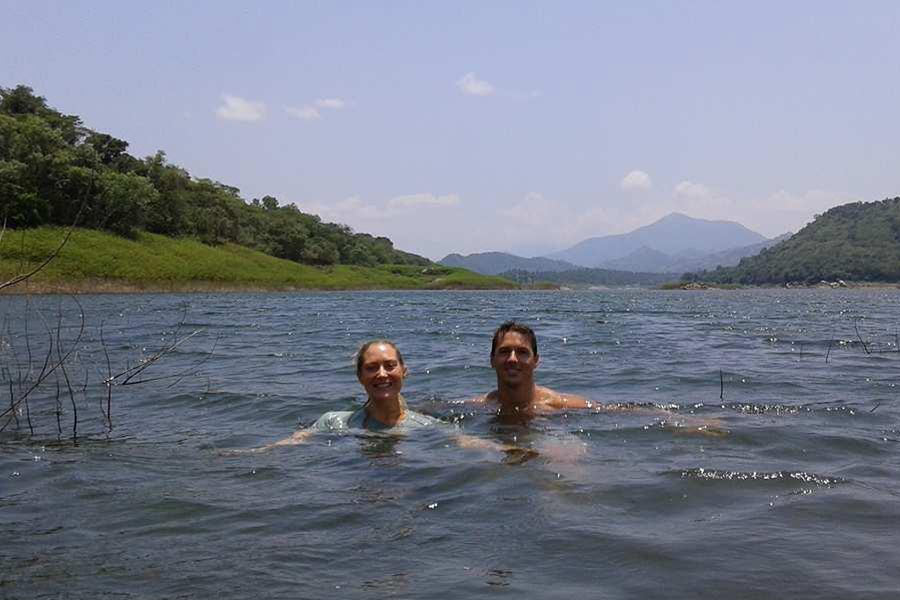

Entebbe’s value lies in its simplicity. Quiet roads, lakeside hotels, and green surroundings make it one of the easiest places in Uganda to recover from travel fatigue. Instead of rushing straight into the interior, spending time here helps travelers adjust physically and mentally, which makes the rest of the journey far more enjoyable. This is especially important for those planning physically demanding activities later in the trip, such as chimpanzee or gorilla trekking.
Beyond rest, Entebbe offers meaningful early wildlife encounters. The surrounding wetlands are among the best places in Uganda to look for the elusive shoebill, a prehistoric-looking bird that many travelers consider a highlight in its own right. Boat excursions and guided walks introduce visitors to Uganda’s birdlife and ecosystems gently, setting the tone for deeper wildlife experiences further inland. These early encounters also help travelers appreciate Uganda’s biodiversity before reaching the national parks.
Entebbe is best suited for travelers who value a soft landing into Africa, first-time visitors to Uganda, and those who prefer a gradual start rather than immediate long drives. It is not about ticking attractions off a list, but about creating balance. By beginning here, the journey starts calmly and intentionally, which is exactly how Uganda is best experienced.
Jinja – White Water Rafting and the Source of the Nile
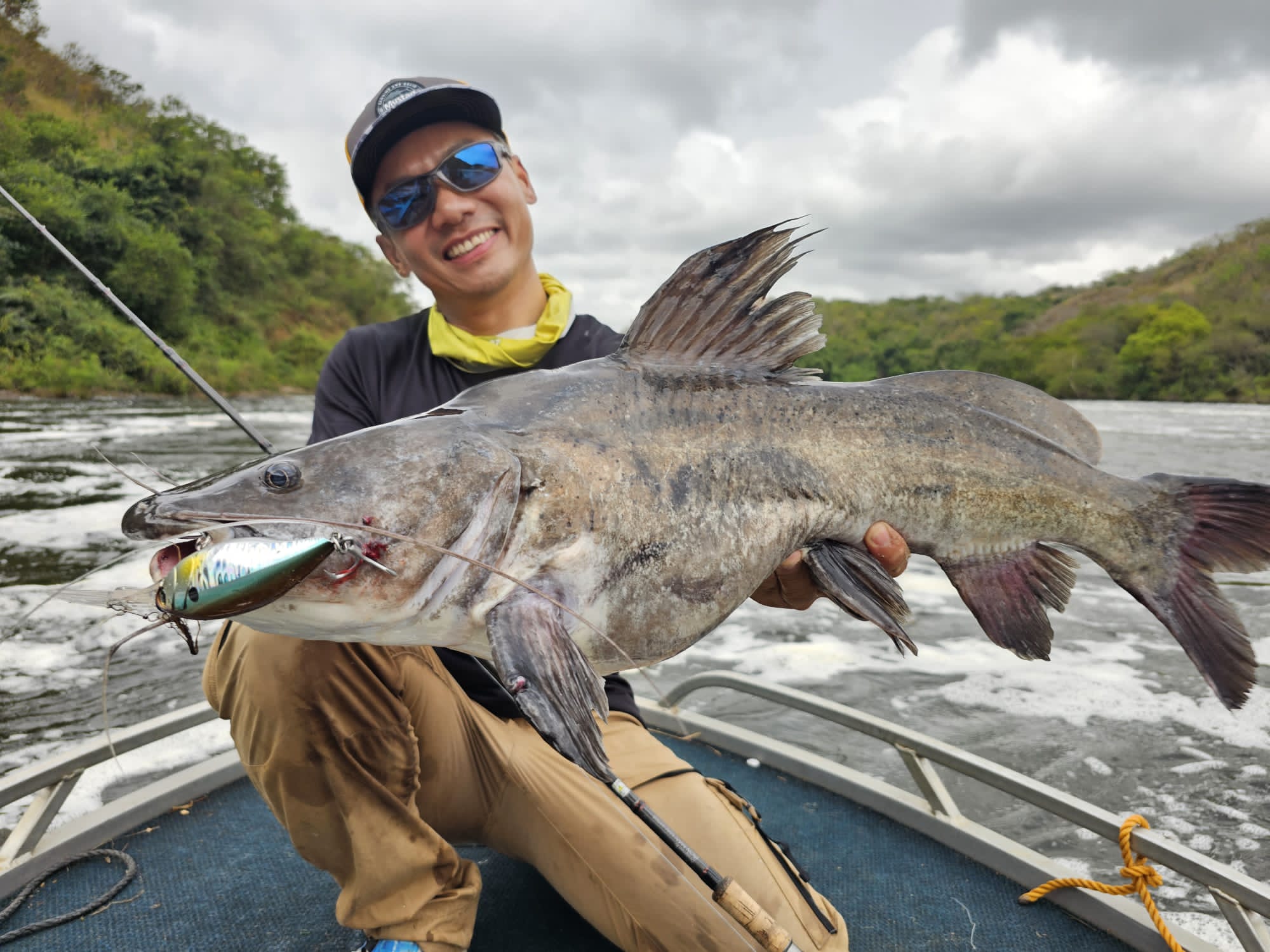
From Entebbe, the journey naturally moves east toward Jinja, a town that represents a complete shift in energy and atmosphere. Where Entebbe is quiet and restorative, Jinja is vibrant, youthful, and driven by adventure. It is widely regarded as the adventure capital of Uganda and is most famous as the home of the Source of the Nile, where the world’s longest river begins its journey north.
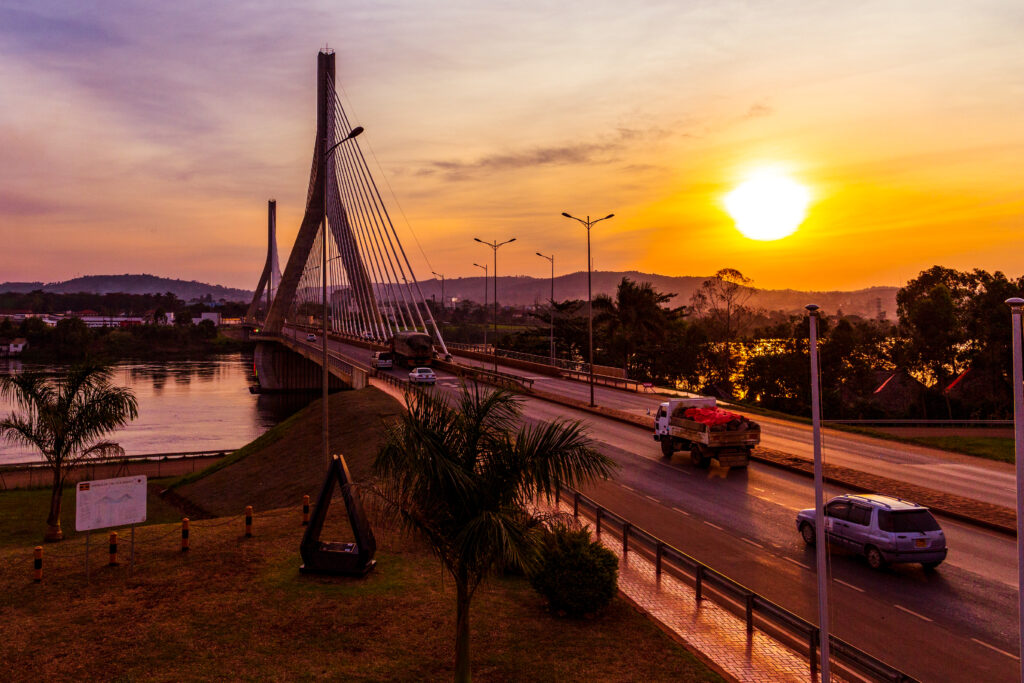
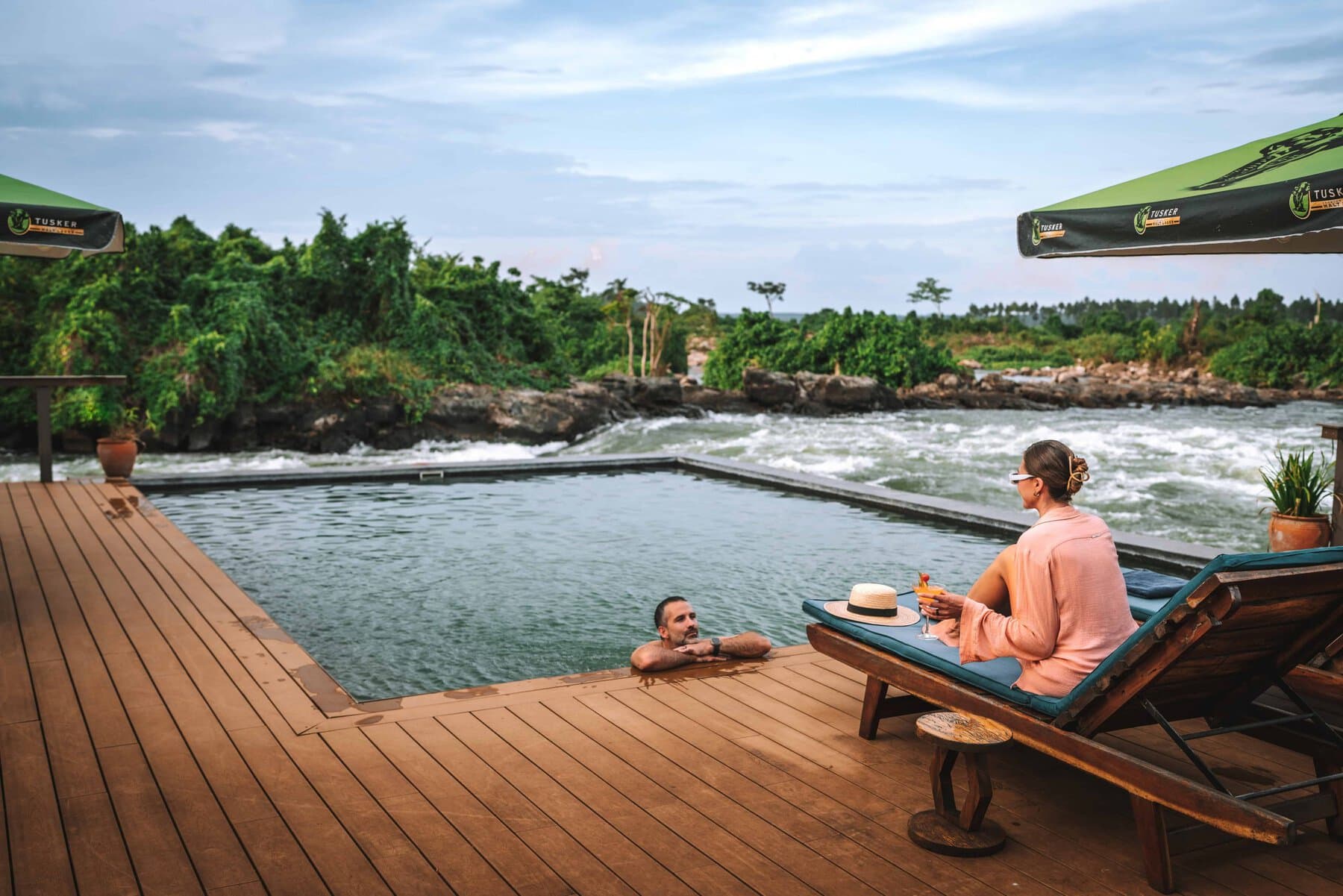
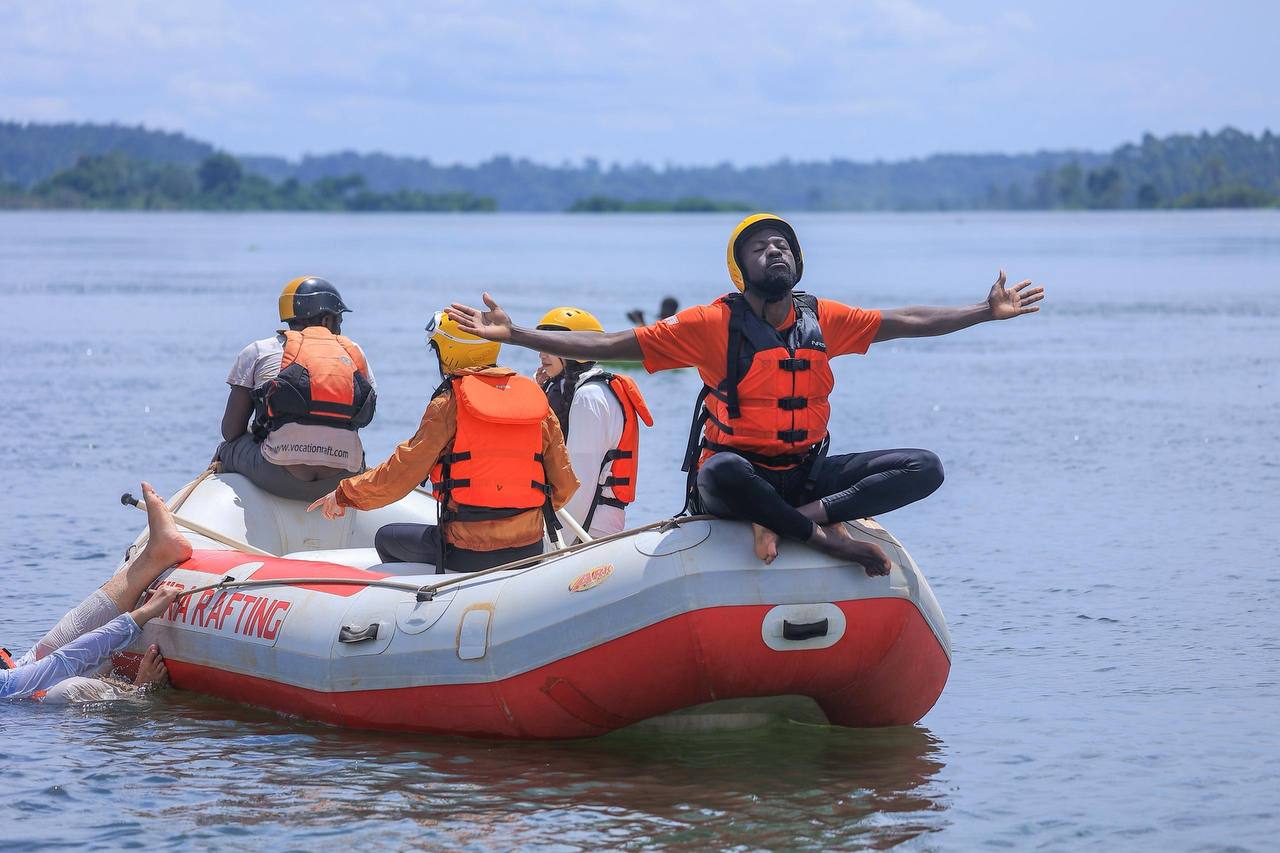
Jinja’s global reputation comes largely from white water rafting on the Nile. The stretch of river here offers some of the best commercially rafted rapids in the world, ranging from moderate to high-grade sections. For adrenaline seekers, this is one of the most thrilling experiences in East Africa. At the same time, it is important to be honest: rafting on the Nile is physically demanding and not suited to everyone. While safety standards are high, travelers who are uncomfortable with strong currents or intense adventure activities may prefer gentler river experiences such as kayaking, boat cruises, or riverside walks.
What makes Jinja special is that adventure is not limited to rafting alone. The town blends history, culture, and river life in a way that feels relaxed rather than extreme. Visiting the source of the Nile is a symbolic moment for many travelers, offering a sense of connection to one of Africa’s most important natural features. Cafés, lodges, and riverfront viewpoints make it easy to enjoy the area even without participating in high-adrenaline activities.
Jinja is best suited for active travelers, younger visitors, and anyone looking to add a sense of excitement and contrast to their Uganda itinerary. It works particularly well early in the journey, when energy levels are high and the transition from international travel has already been softened by time in Entebbe. Together, these two destinations create a balanced opening to Uganda, combining rest, nature, and adventure before the journey continues toward the country’s national parks and wilderness areas.
Ziwa Rhino Sanctuary – Uganda’s Only Rhino Tracking Experience
Ziwa Rhino Sanctuary plays a unique and deeply important role in Uganda’s wildlife story. Once extinct in the country due to poaching and conflict, rhinos are slowly being reintroduced through long-term conservation efforts based at Ziwa. Visiting the sanctuary is not simply about seeing wildlife; it is about understanding how conservation works in practice and why Uganda’s wildlife recovery has required patience, protection, and community involvement.
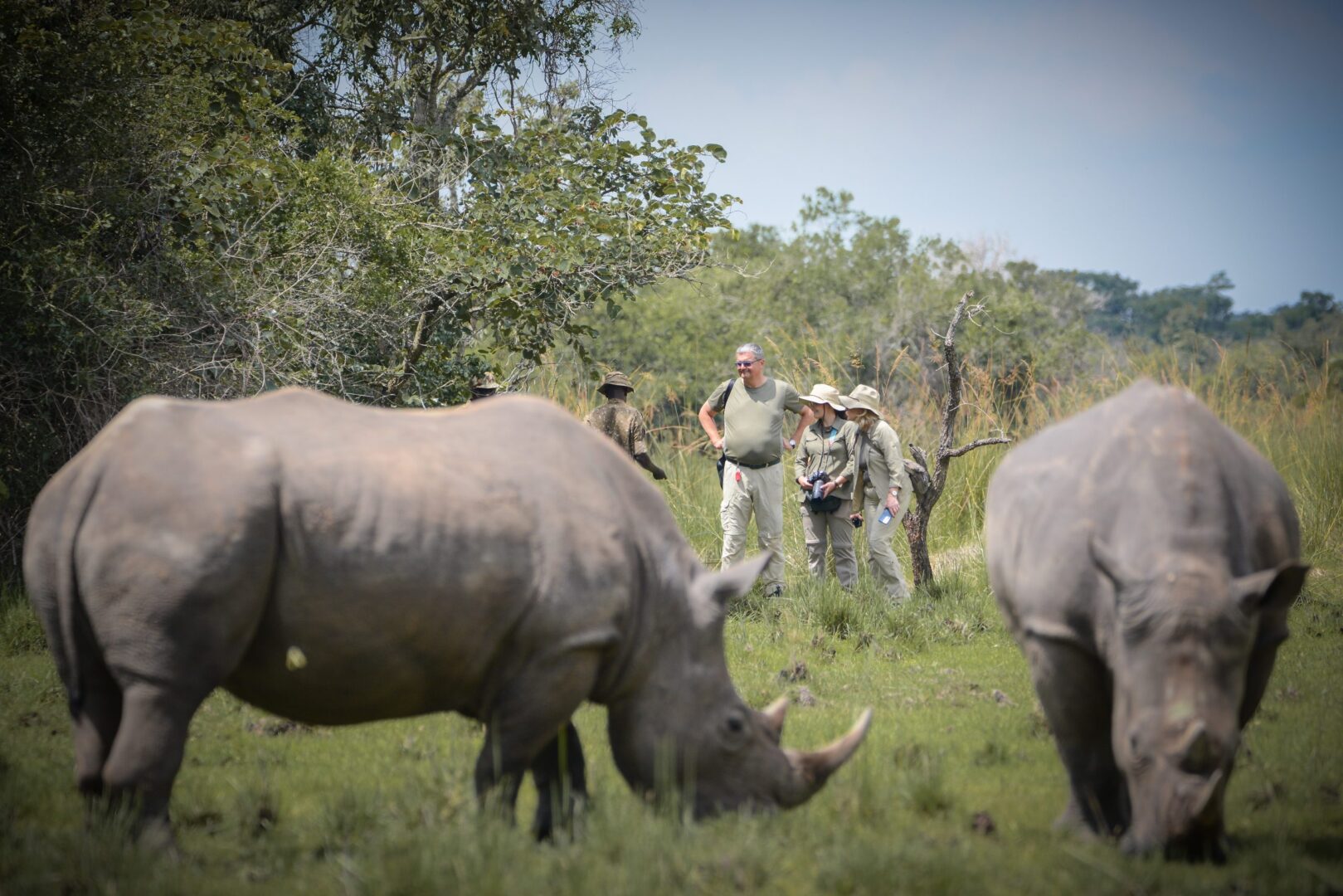
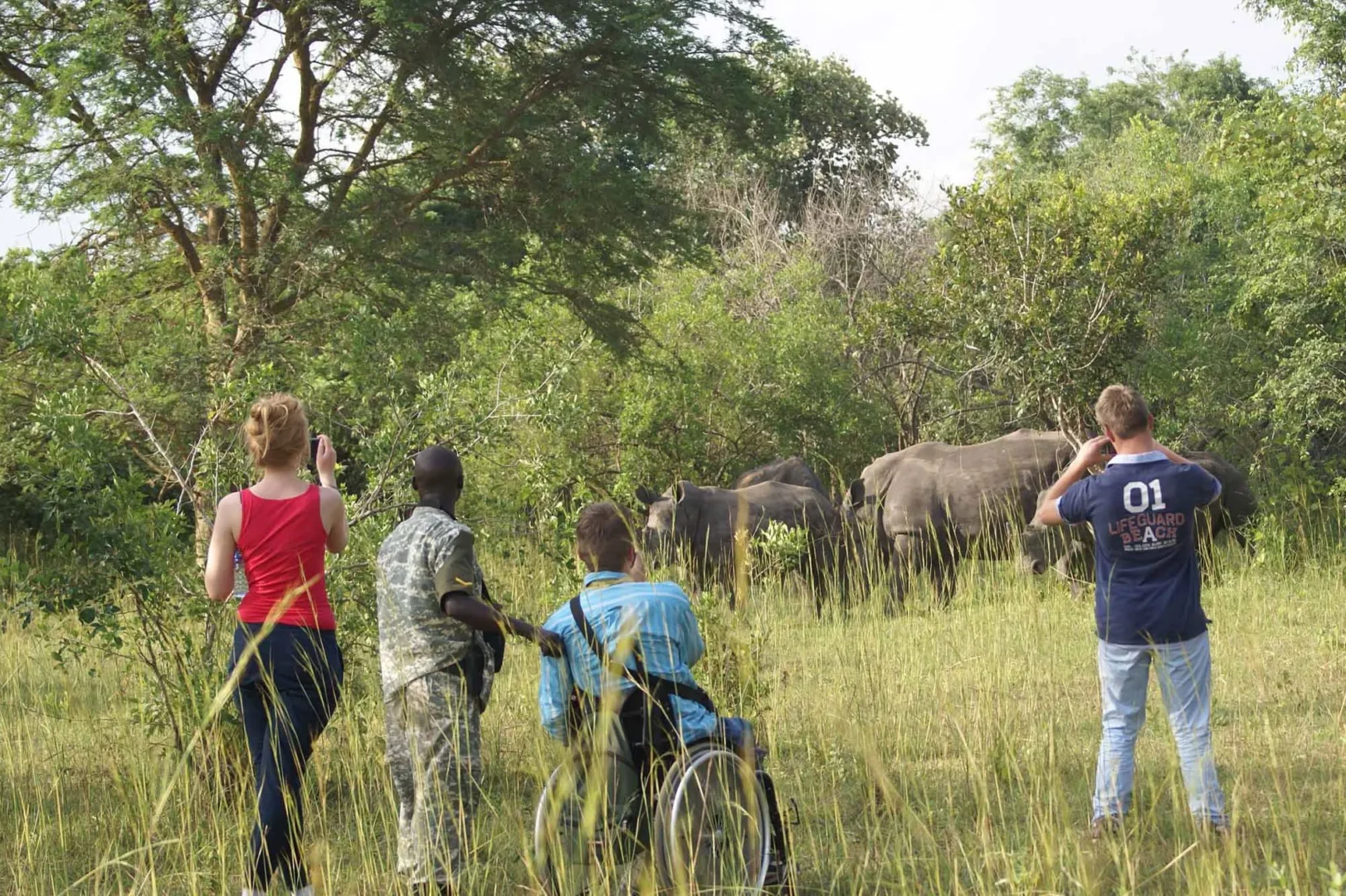
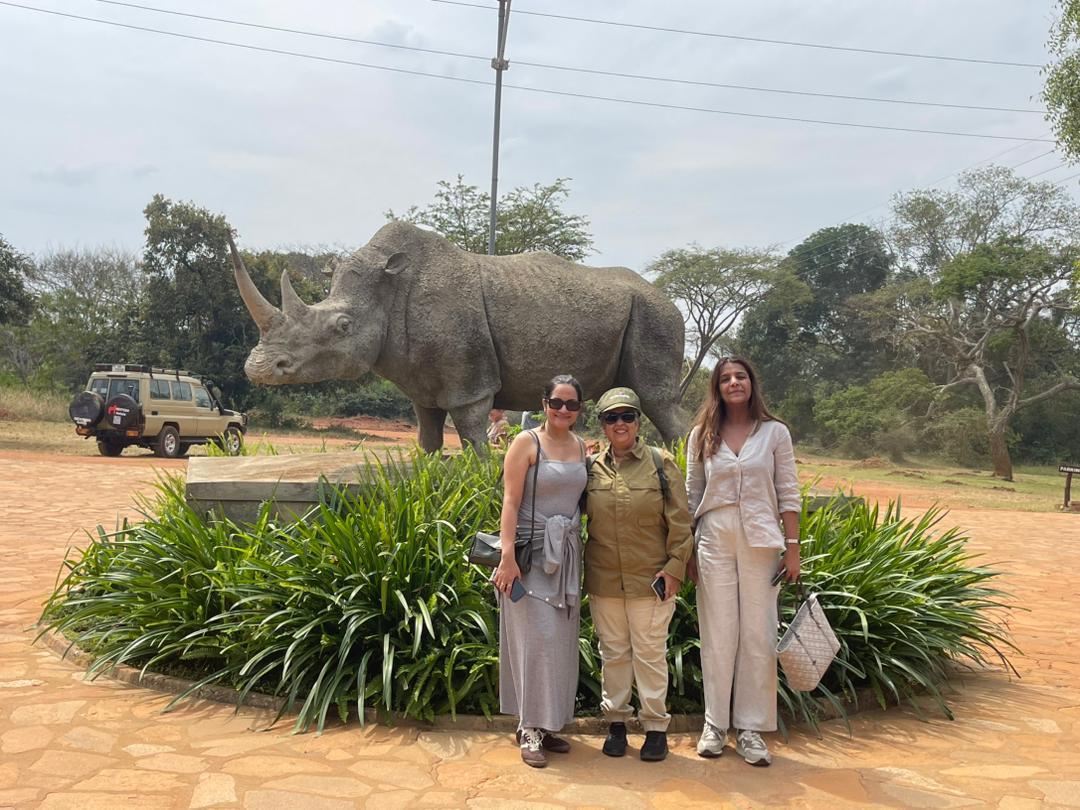
Rhino tracking at Ziwa is done entirely on foot, accompanied by trained rangers who interpret tracks, behavior, and the surrounding ecosystem as you move through open savannah and woodland. This experience feels very different from vehicle-based game drives. Being on the ground with Africa’s largest land mammals creates a strong sense of connection and respect, and it offers insight into how closely monitored and protected these animals remain. For many travelers, this is one of the most memorable wildlife encounters in Uganda because of its intimacy and educational depth.
Ziwa Rhino Sanctuary’s location makes it a strategic and logical stop when traveling north toward Murchison Falls National Park. Breaking the journey here allows travelers to avoid long, uninterrupted driving days while adding a meaningful conservation experience to the itinerary. It transforms what could be a simple transfer day into an active and rewarding part of the journey.
Ziwa Rhino Sanctuary is best suited for travelers interested in conservation, photography, and immersive wildlife experiences rather than classic safari sightings alone. It also works exceptionally well for first-time visitors who want to understand Uganda’s broader wildlife context before entering large national parks. By the time travelers continue north, they do so with a deeper appreciation of the effort behind Uganda’s conservation success.
Murchison Falls National Park – Uganda’s Most Dramatic Landscape
Murchison Falls National Park is where Uganda’s landscapes reach their most dramatic expression. The park is defined by the power of the Nile River, which is forced through a narrow rock gorge before plunging violently into the river below. This natural spectacle is not only visually striking but also symbolic of the raw energy that defines the park.
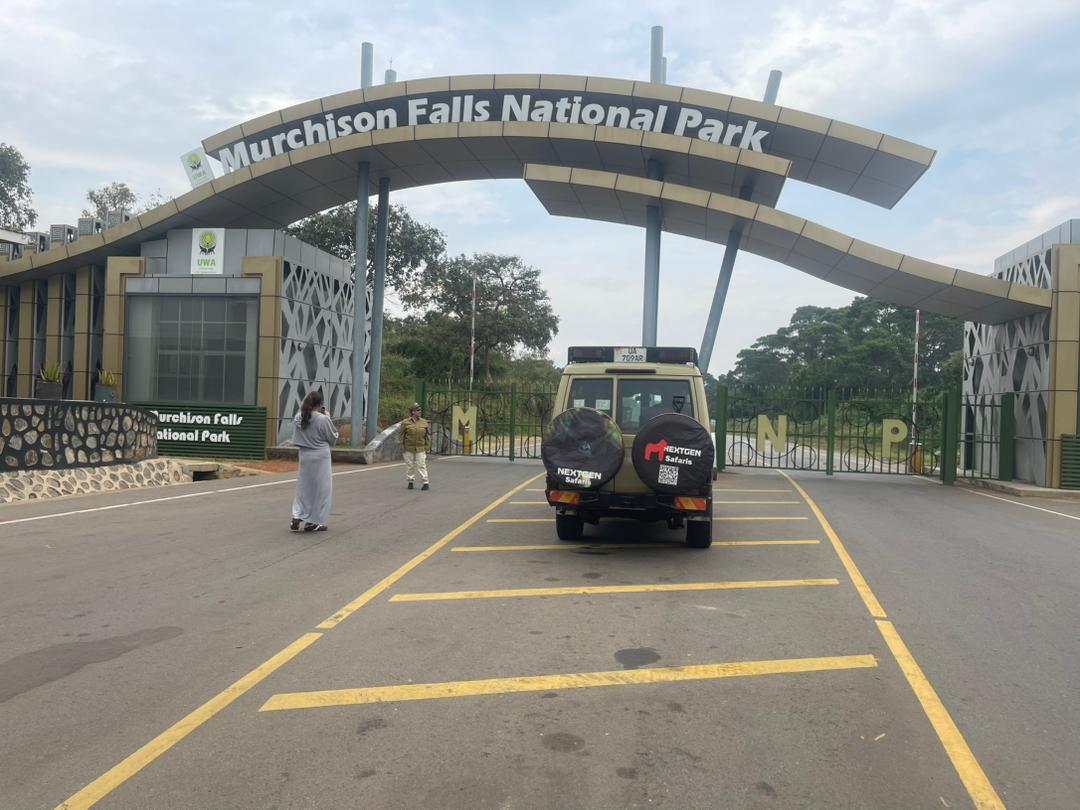
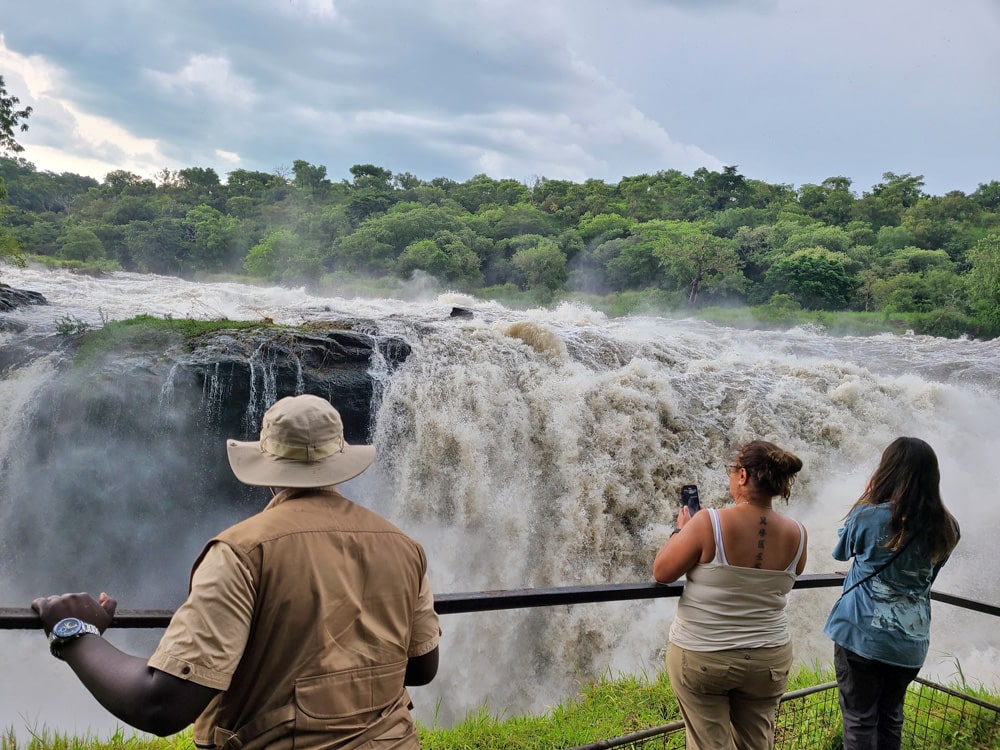
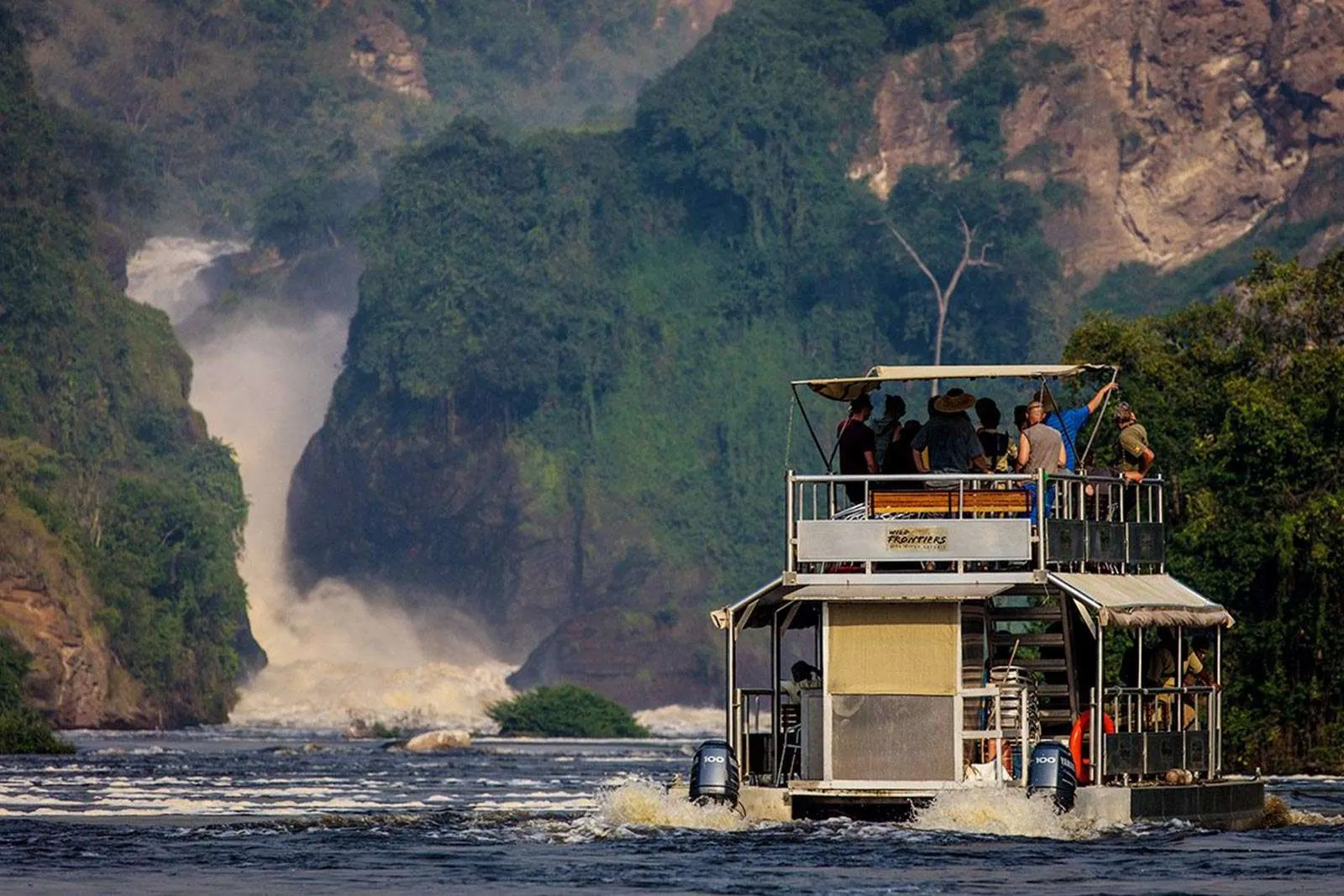
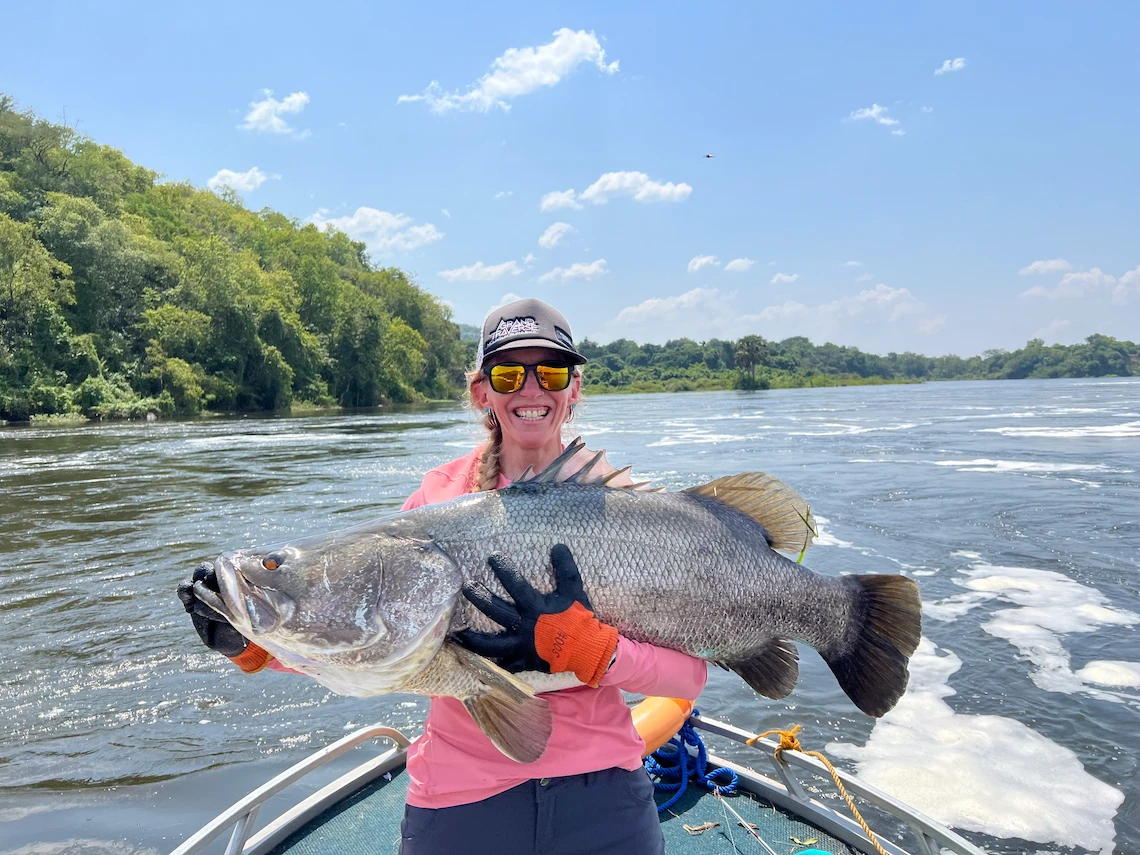
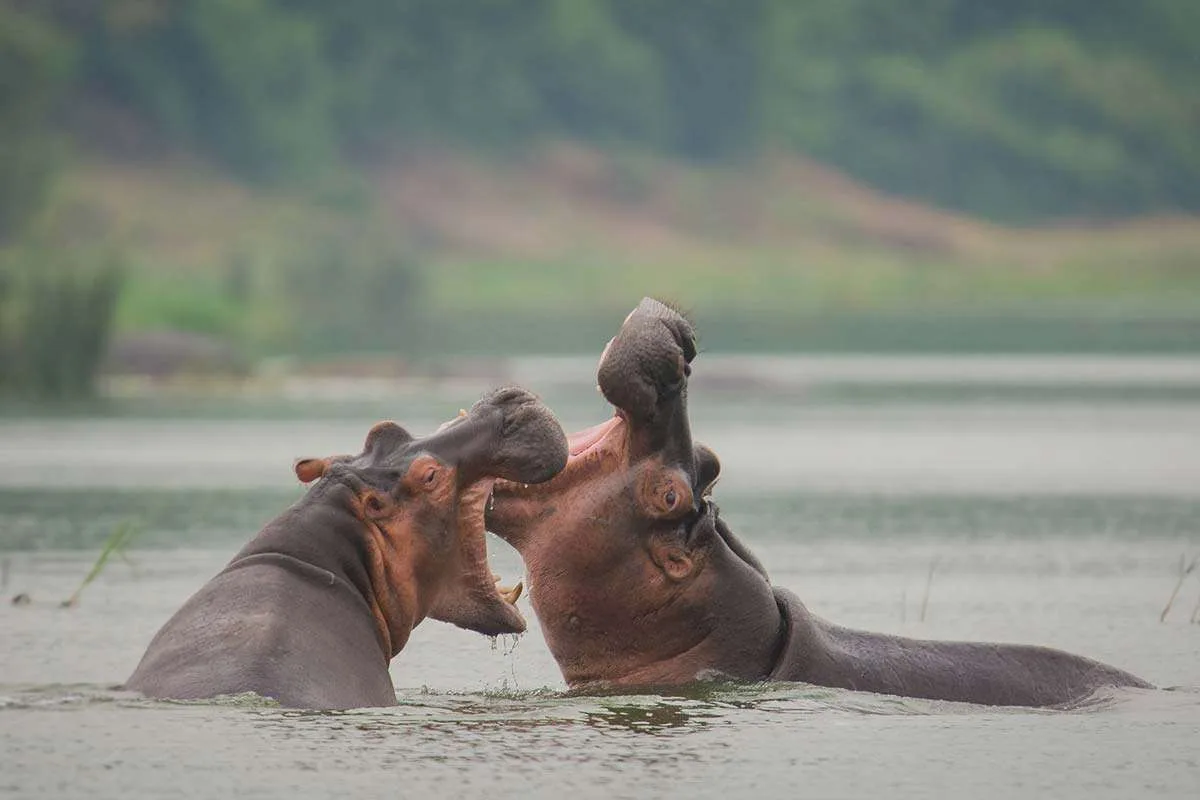
Murchison Falls National Park offers a rare combination of experiences that few parks in East Africa can match. Traditional game drives take place across open savannah where giraffes, elephants, buffalo, lions, and antelope are regularly seen. These drives feel expansive and classic, offering wide horizons and strong wildlife density. In contrast, the Nile introduces a completely different safari rhythm through boat cruises that glide past hippos, crocodiles, and dense birdlife along the riverbanks.
The boat safari toward the base of Murchison Falls is one of Uganda’s most iconic experiences. From the water, travelers gain a new perspective on the park, watching wildlife approach the river to drink and cool off while the roar of the falls grows louder in the distance. This contrast between calm river movement and explosive natural force is what gives the park its character and lasting impact.
Murchison Falls National Park is best suited for travelers seeking variety within a single destination. It appeals to those who want both strong wildlife viewing and unique landscapes without feeling repetitive. As a result, it forms a cornerstone of many Uganda itineraries, offering a powerful introduction to the country’s national parks before the journey transitions toward forested regions and primate tracking further south.
Kibale National Park – Chimpanzee Capital of the World
Kibale National Park marks a clear transition in the Uganda journey, moving from open savannah into dense tropical rainforest. This park is internationally recognized as the best place for chimpanzee trekking in Uganda, offering encounters that are energetic, unpredictable, and deeply immersive. Unlike gorilla trekking, which is often quiet and contemplative, chimpanzee tracking is dynamic, fast-paced, and filled with sound and movement.

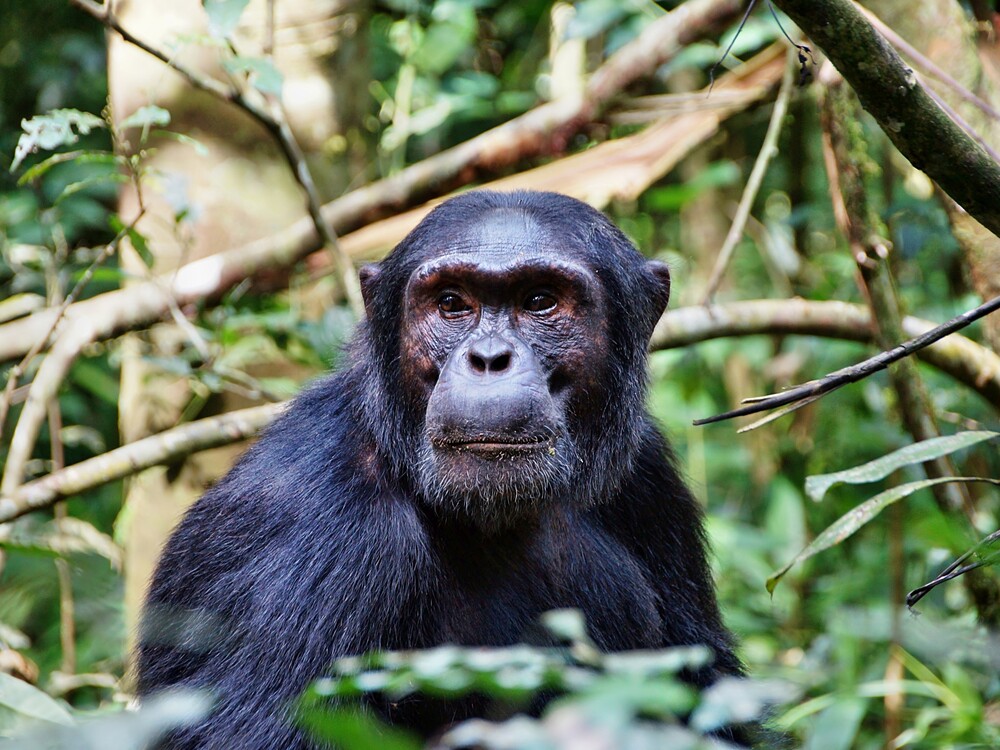
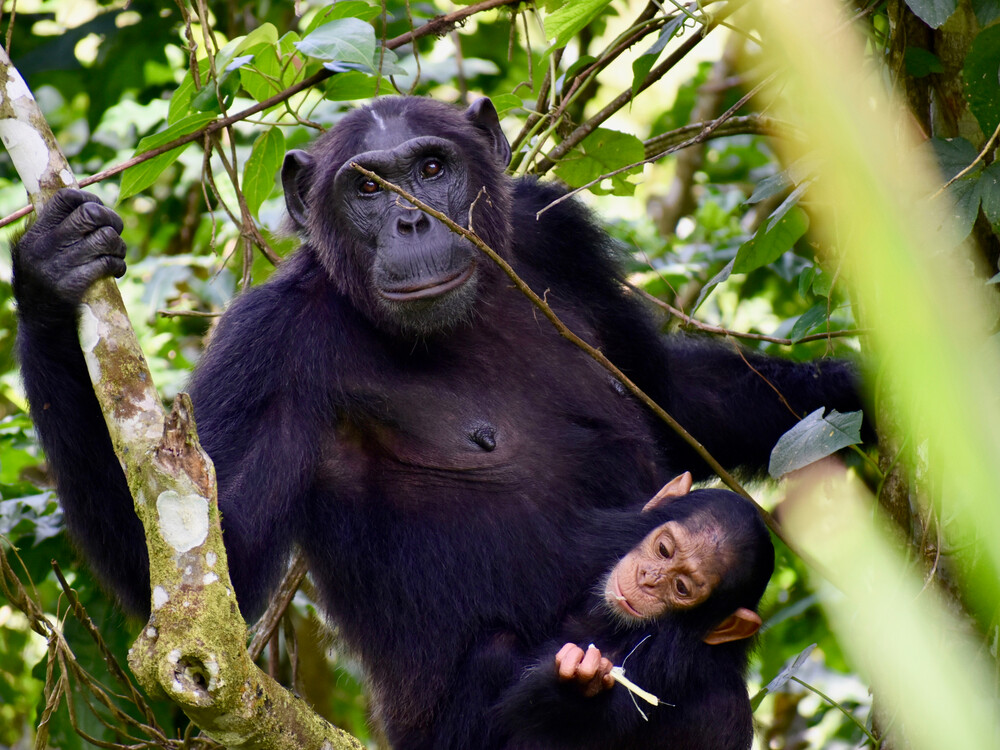
chimpanzee trekking in Uganda behave very differently from gorillas, and this contrast is one of the reasons Kibale National Park is such an important stop. Chimpanzees live in large, fluid communities and move quickly through the forest canopy, communicating constantly through calls, screams, and drumming. Tracking them involves active walking and listening, following vocalizations as much as footprints. This creates a sense of participation rather than observation, making the experience feel raw and immediate.
The forest itself plays a central role in the experience. Tall fig trees, thick undergrowth, and filtered light create an atmosphere that feels ancient and alive. Even outside of chimpanzee encounters, Kibale offers exceptional biodiversity, with numerous primate species, birds, and insects encountered during forest walks. The immersion here is total, offering a sharp contrast to the open landscapes experienced earlier in the journey.
Kibale National Park fits perfectly before Queen Elizabeth National Park because it acts as a natural bridge between forest and savannah ecosystems. After the intensity and energy of chimpanzee trekking, travelers emerge into wide plains and waterways, making the transition feel logical and balanced. This sequencing prevents the journey from feeling repetitive and keeps each destination distinct.
Queen Elizabeth National Park – Uganda’s Most Diverse Safari Park
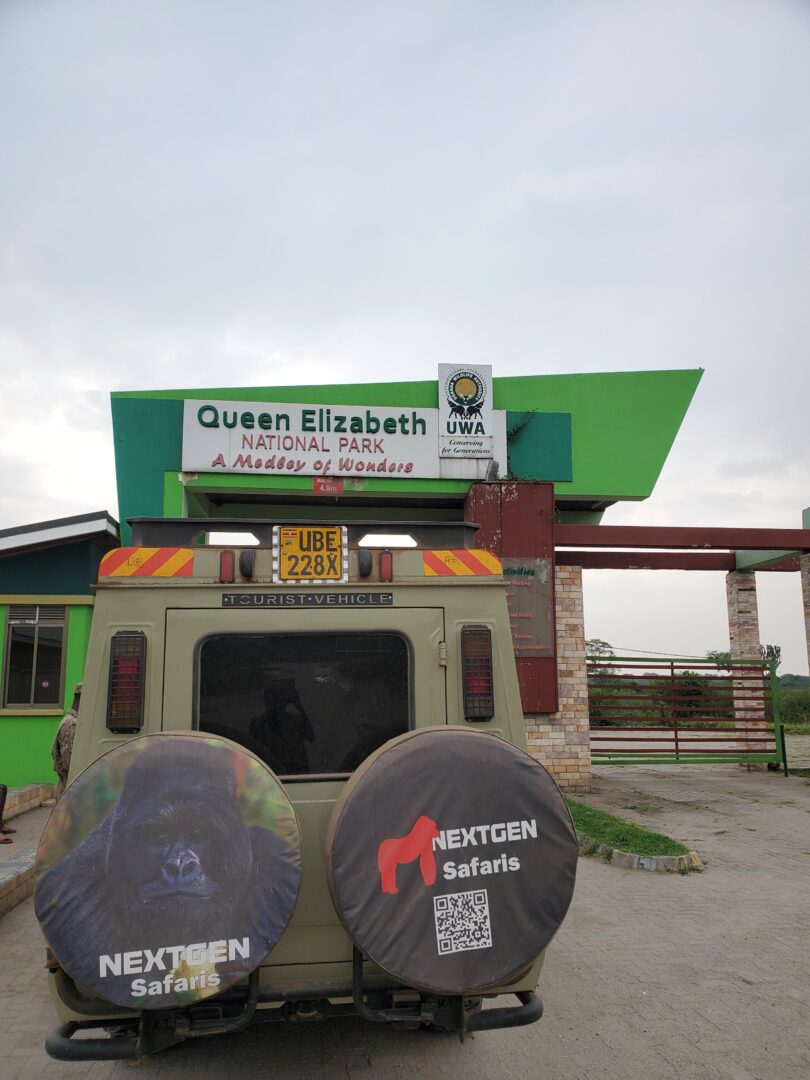
Queen Elizabeth National Park is widely regarded as Uganda’s most diverse national park, both in terms of landscapes and wildlife. Stretching from crater-dotted plains to wetlands, forests, and open savannah, the park offers constant visual change and a strong sense of scale. It is one of the few places in Uganda where no two safari days feel the same.


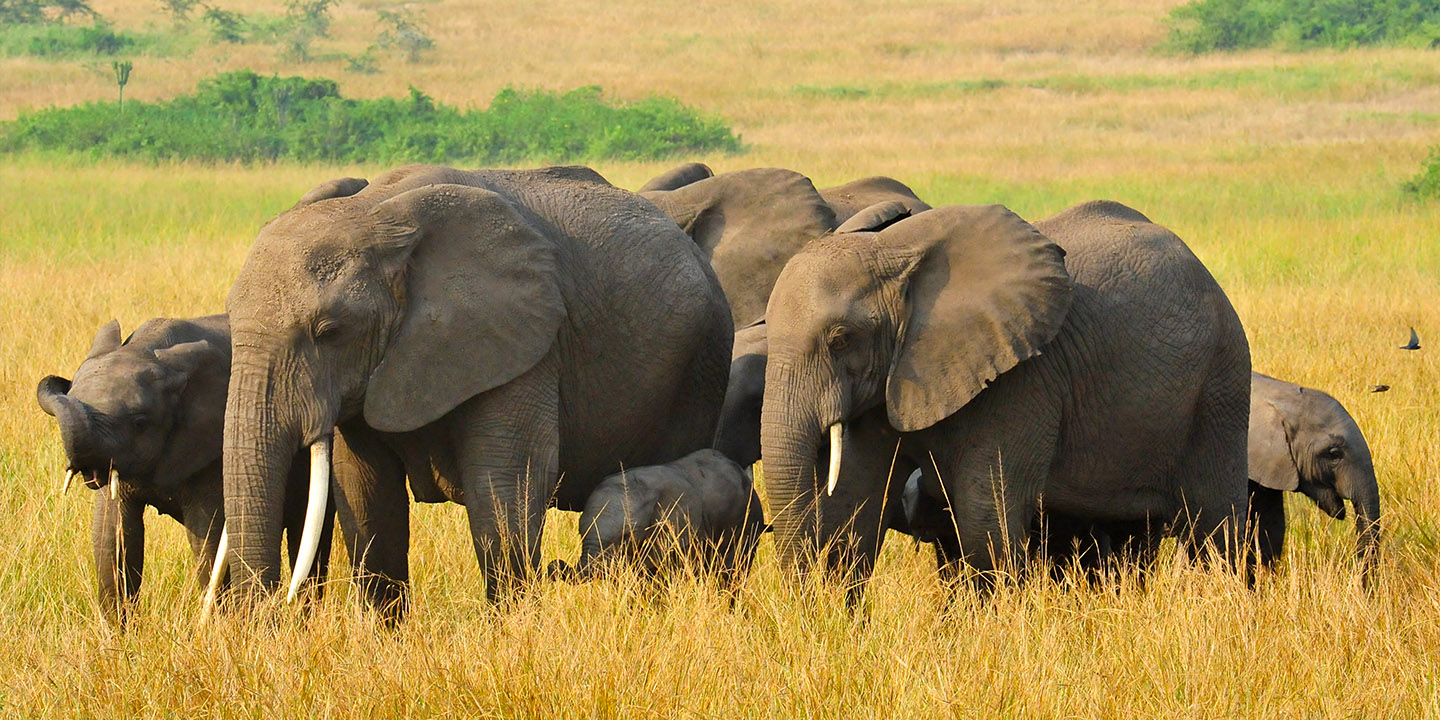
A defining feature of the park is the Kazinga Channel, a natural waterway connecting Lake Edward and Lake George. Boat safaris along the channel provide close-up views of hippos, elephants, buffalo, and prolific birdlife, often at distances far closer than those possible on game drives. This water-based experience adds depth and variety to wildlife viewing, breaking the rhythm of vehicle-only safaris.
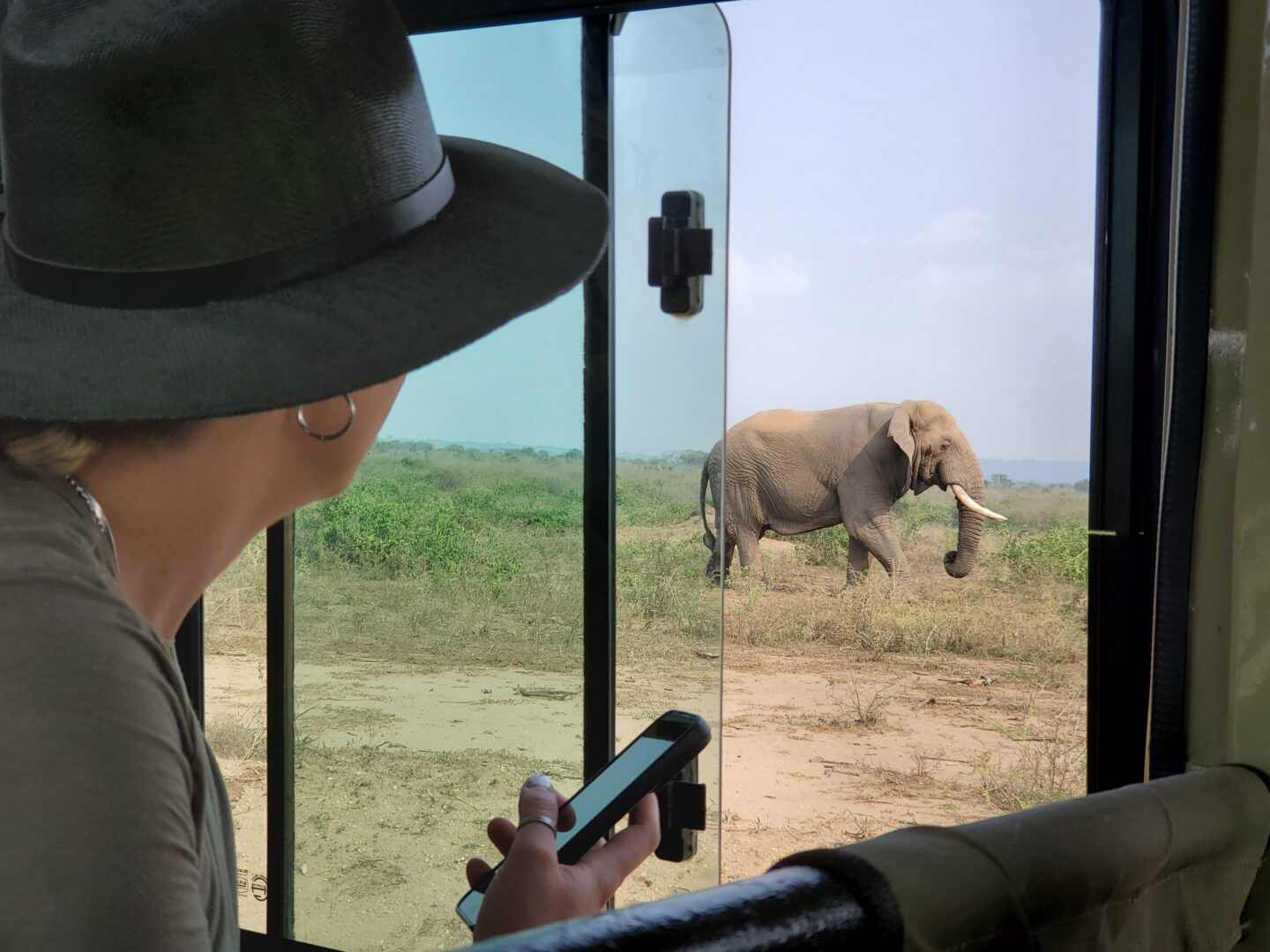
Game drives in Queen Elizabeth Elizabeth National Park reveal a broad mix of species, from lions and leopards to large herds of antelope and elephants. The changing landscapes from open plains to wooded areas and crater lakes create ideal conditions for diverse wildlife and photography. This variety is what makes the park especially appealing to travelers who want a classic safari experience without monotony.
Queen Elizabeth National Park is best suited for travelers looking for balance. It works equally well for first-time safari visitors and those who have already experienced other African parks, offering enough diversity to remain engaging while fitting seamlessly into a broader Uganda itinerary.
Ishasha Sector – Tree-Climbing Lions of Uganda
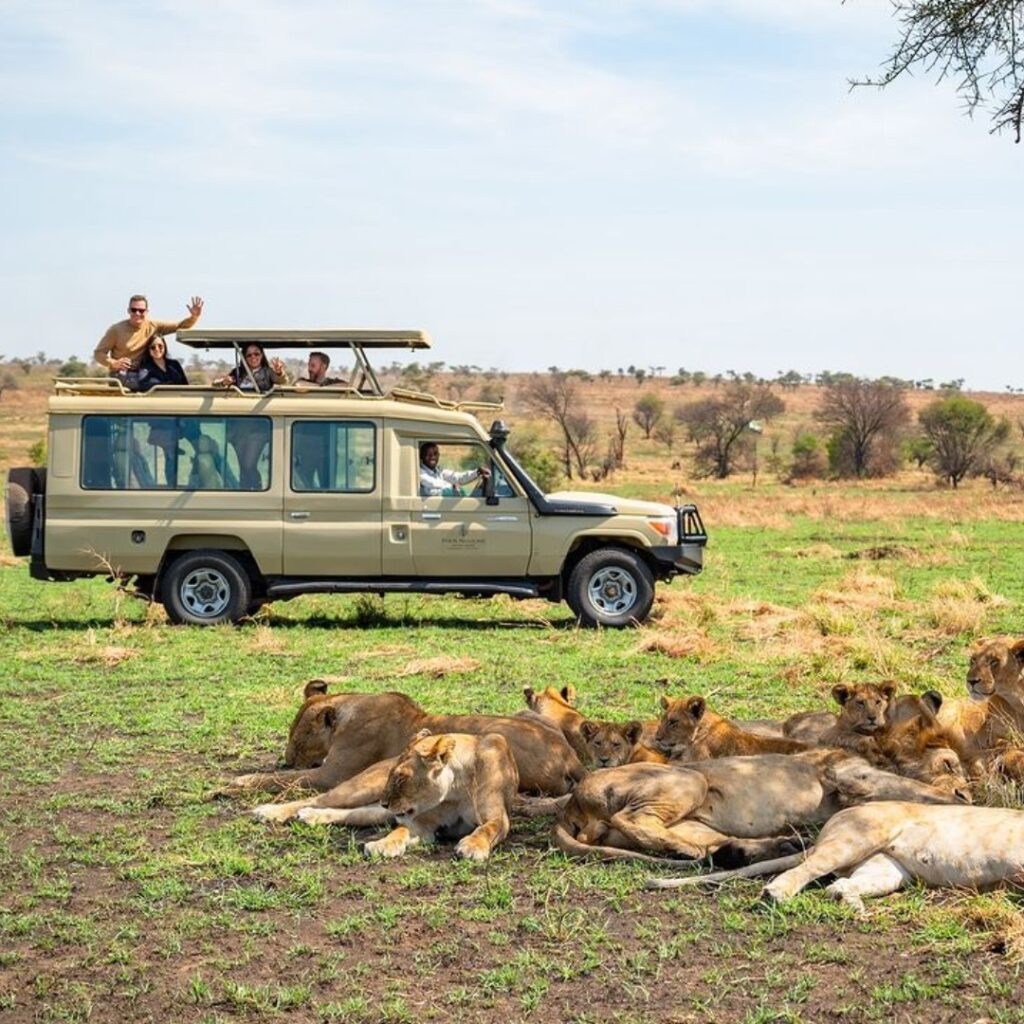
The southern Ishasha Sector of Queen Elizabeth National Park is one of Uganda’s most unusual wildlife regions and one of the few places in Africa where tree-climbing lions can be seen with some consistency. These lions are often found resting in the branches of large fig trees, a behavior believed to be linked to temperature regulation, insect avoidance, and vantage positioning.
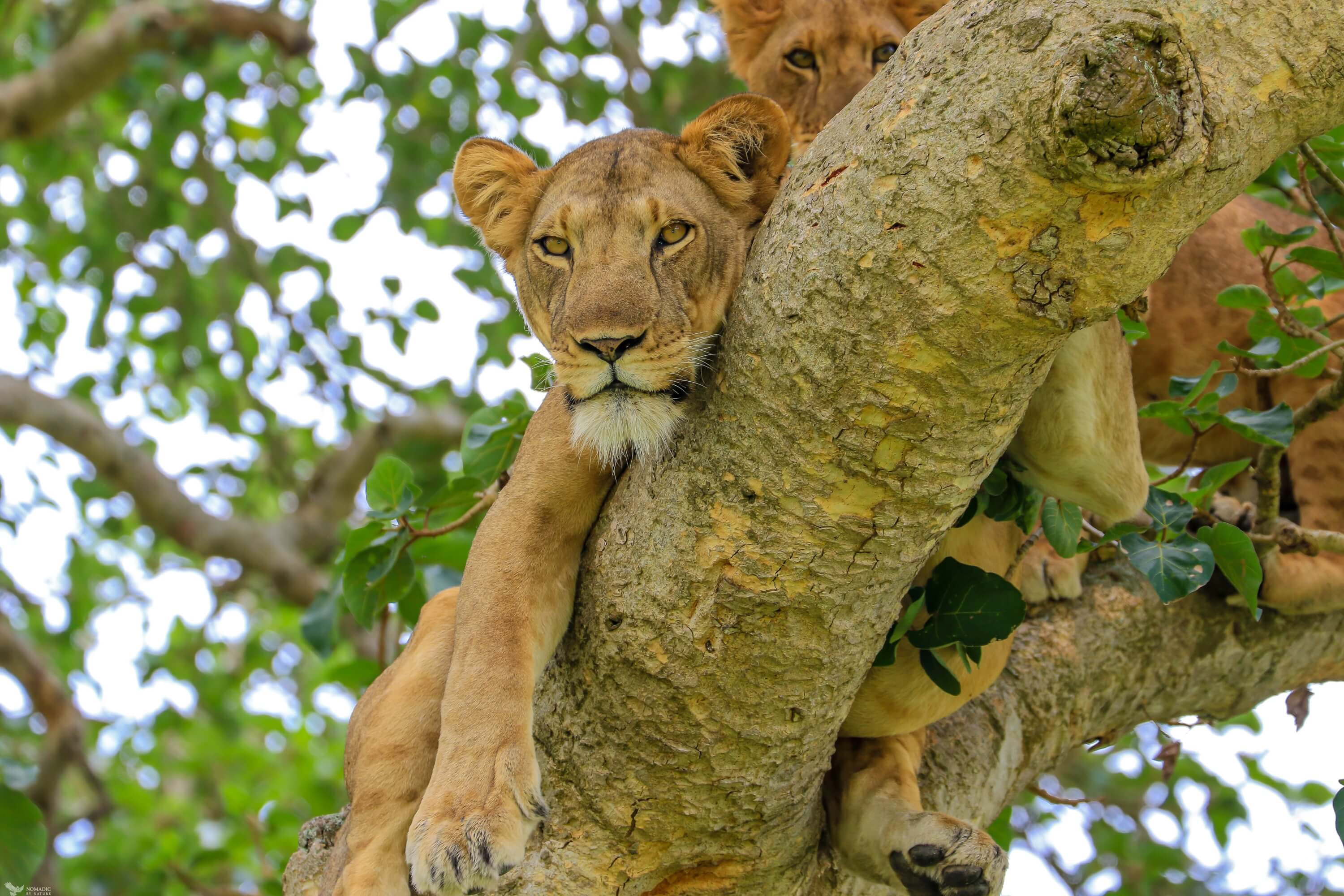
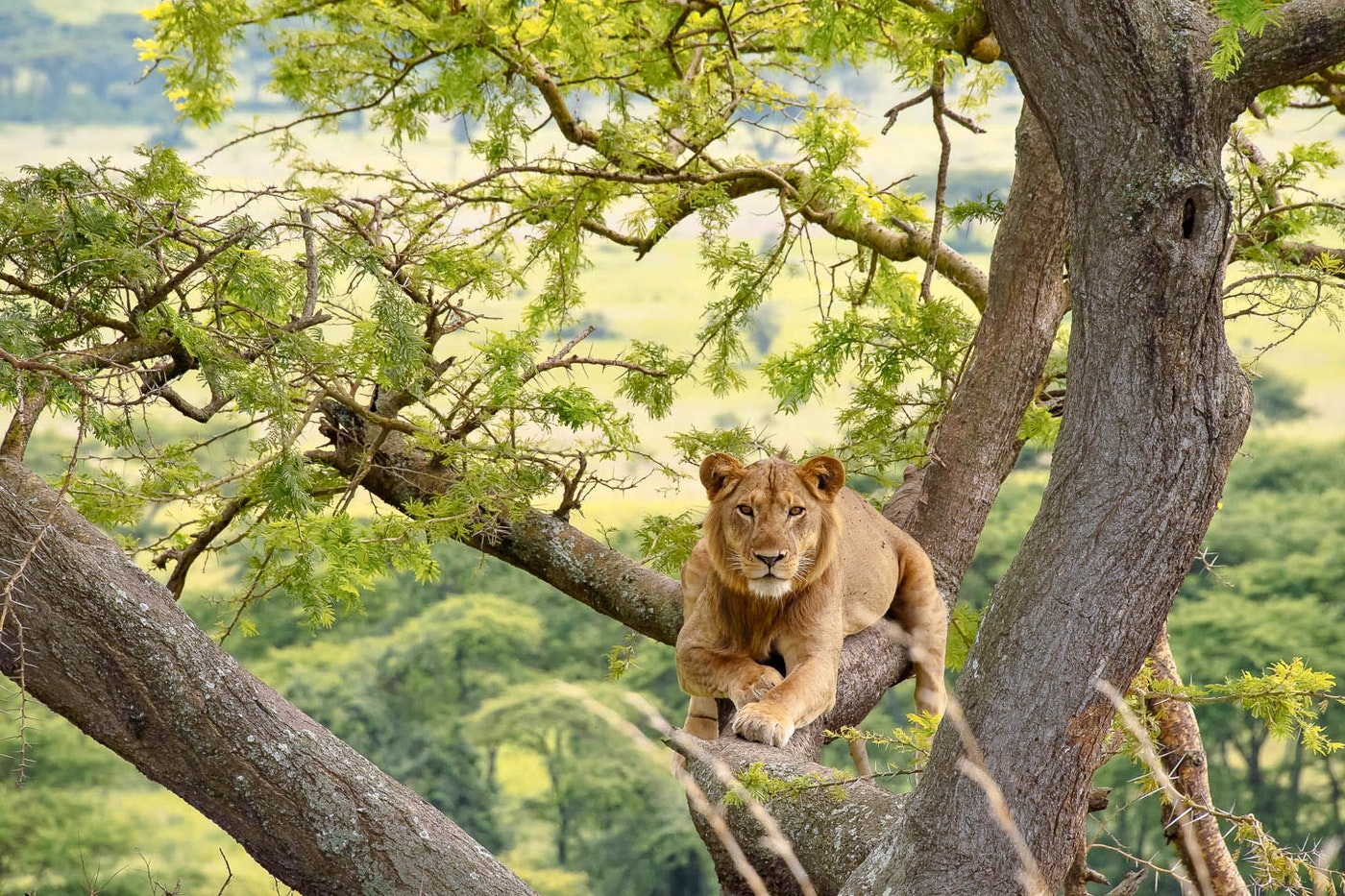
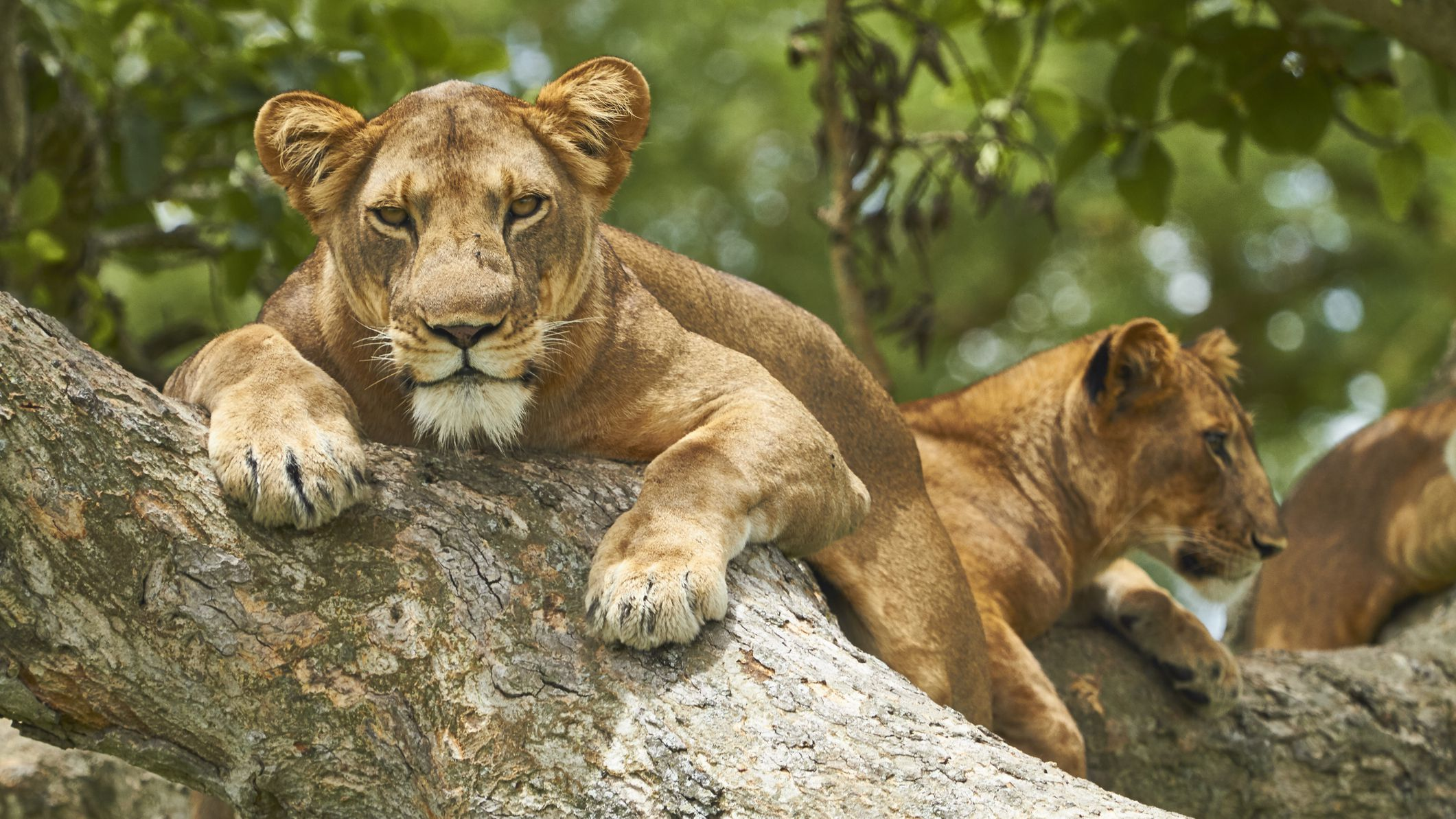
Seeing lions in trees creates a completely different safari experience from traditional sightings on open plains. The landscape in Ishasha is quieter, more remote, and less crowded than other parts of the park, which enhances the feeling of discovery. Wildlife encounters here feel more intimate and less predictable, rewarding patience rather than speed.
Lion sightings in Ishasha are seasonal and influenced by prey movement and vegetation patterns, which makes timing and local knowledge important. This unpredictability is exactly why the sector remains special. It is not a guaranteed spectacle, but when the conditions align, the experience is unforgettable.
Travelers should not skip Ishasha because it adds a unique behavioral dimension to the safari journey. It also acts as a natural transition toward the forests of Bwindi Impenetrable National Park, making it both logistically and experientially valuable. For those following a well-designed Uganda travel route, Ishasha represents one of the country’s most rewarding detours.
Bwindi Impenetrable National Park – Gorilla Trekking Heart of Africa
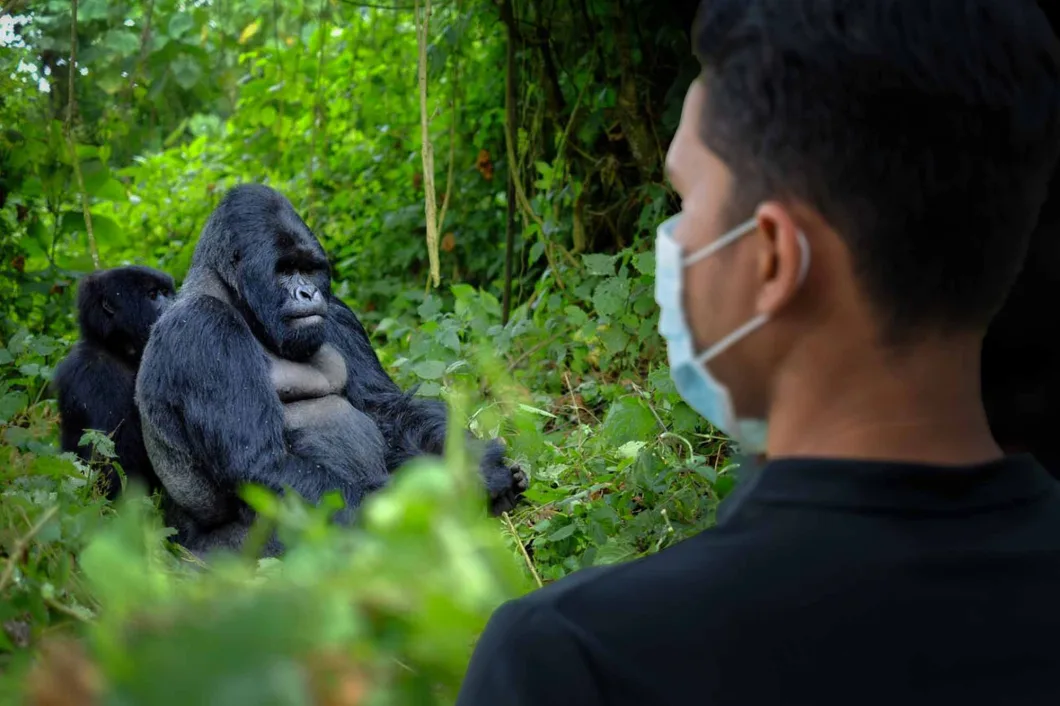
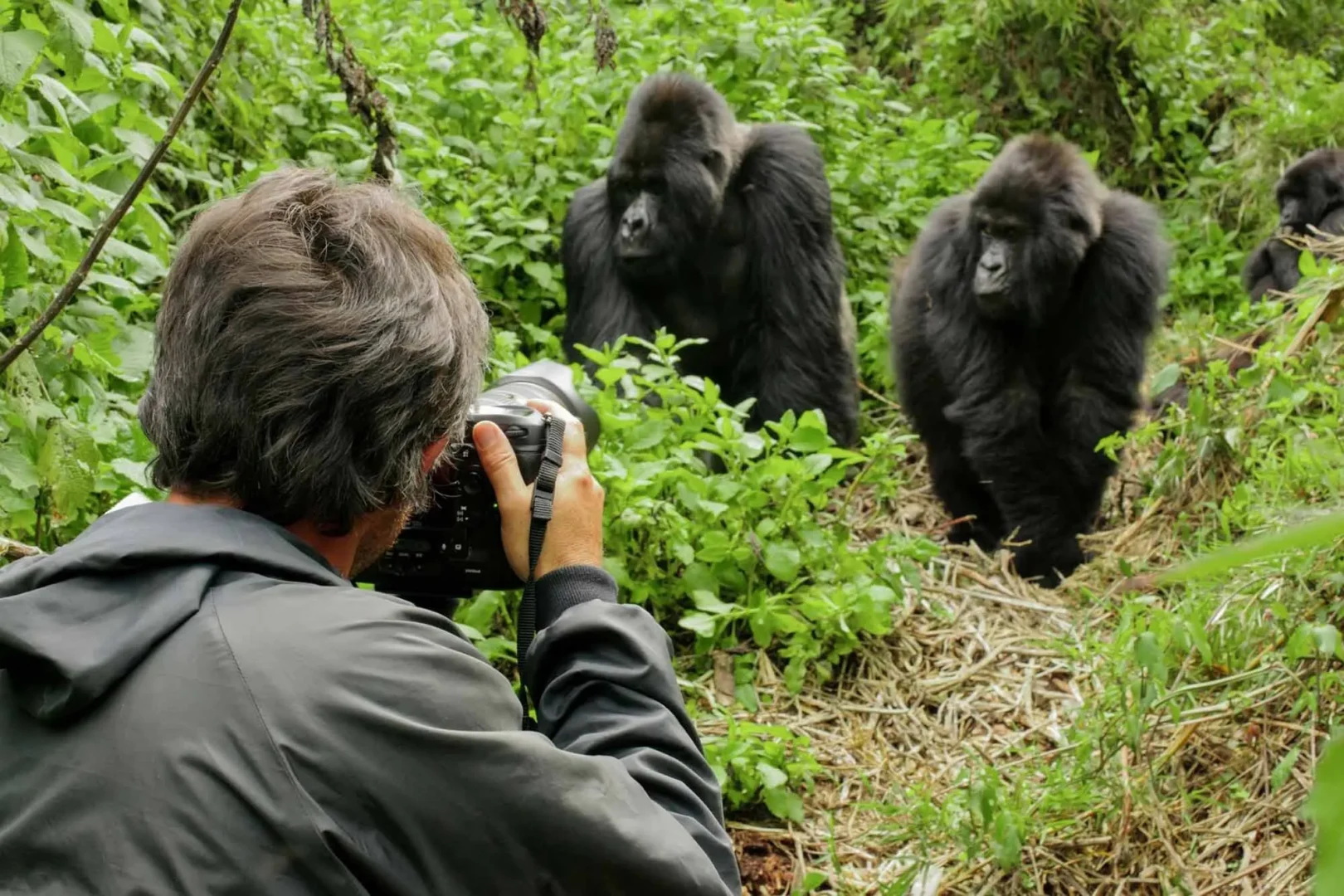
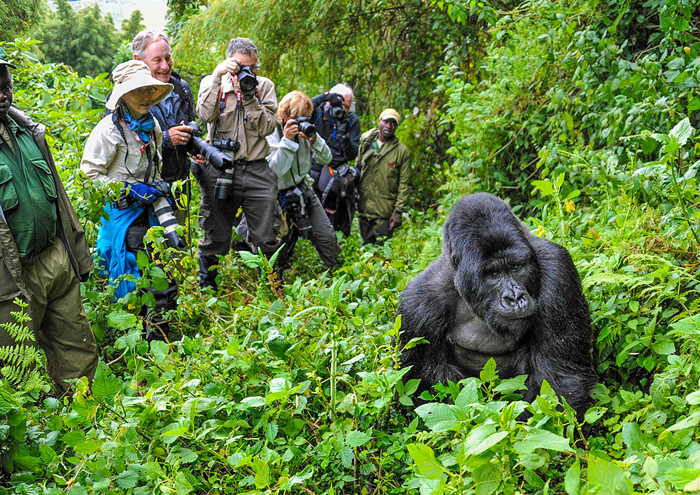
Bwindi Impenetrable National Park is the emotional and symbolic heart of Uganda’s tourism offering. This ancient rainforest protects nearly half of the world’s remaining mountain gorillas and offers one of the most powerful wildlife experiences available anywhere on the planet. Gorilla trekking in Bwindi is not simply an activity; it is a moment that reshapes how travelers understand nature, conservation, and their own place within it.
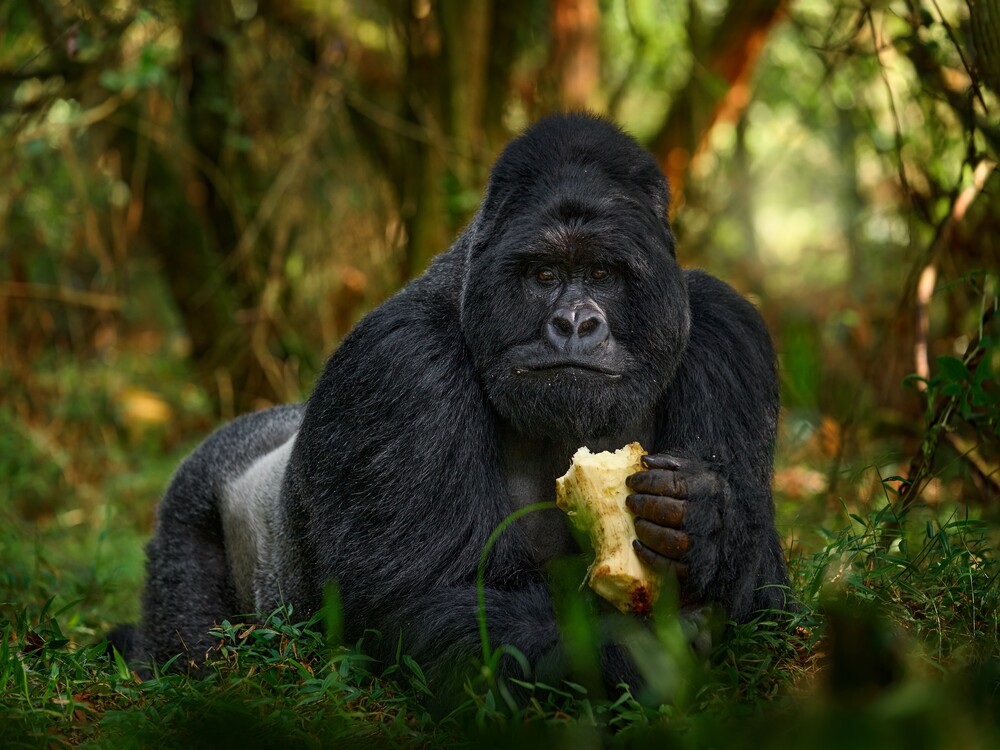
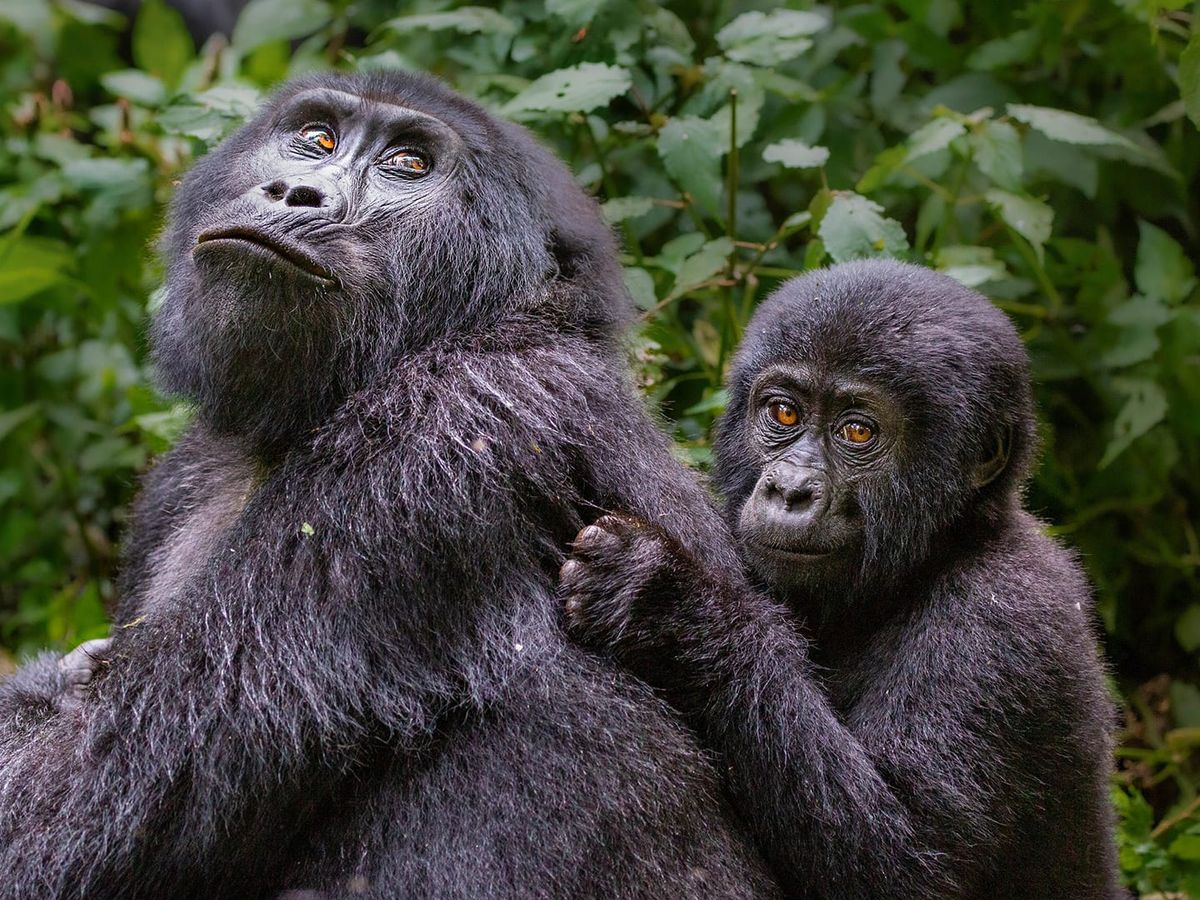
The emotional weight of encountering mountain gorillas in their natural habitat is difficult to put into words. Standing quietly in the forest while a gorilla family goes about its daily life creates a sense of connection that is both humbling and profound. Eye contact, shared space, and the calm presence of these animals leave a lasting impression that many travelers describe as life-changing. This depth of experience is what places Bwindi gorilla trekking in a category of its own.
At the same time, it is important to be honest about the physical reality. Gorilla trekking in Bwindi can be demanding. The forest is steep, dense, and often muddy, with trek durations varying depending on the location of the gorilla family. This challenge is part of what makes the experience meaningful, but it requires realistic expectations and proper preparation. Porters, guides, and careful pacing make the trek accessible to most travelers, but it is not a passive activity.
Bwindi Impenetrable National Park is widely regarded as Uganda’s crown jewel because it combines emotional impact, conservation success, and natural beauty in a single destination. The park represents decades of protection and community involvement, showing how tourism can support both wildlife and local livelihoods. For many visitors, everything that comes before and after in the journey revolves around this one experience, making Bwindi Impenetrable National Park the defining chapter of any Uganda itinerary.
Lake Bunyonyi – Rest, Romance, and Reflection
After the intensity of gorilla trekking, the journey naturally slows at Lake Bunyonyi, one of the most peaceful and scenic destinations in the country. Surrounded by terraced hills and dotted with small islands, Lake Bunyonyi offers a complete contrast to the physical demands and emotional highs of Bwindi. This shift in pace is intentional and essential to a well-balanced Uganda journey.
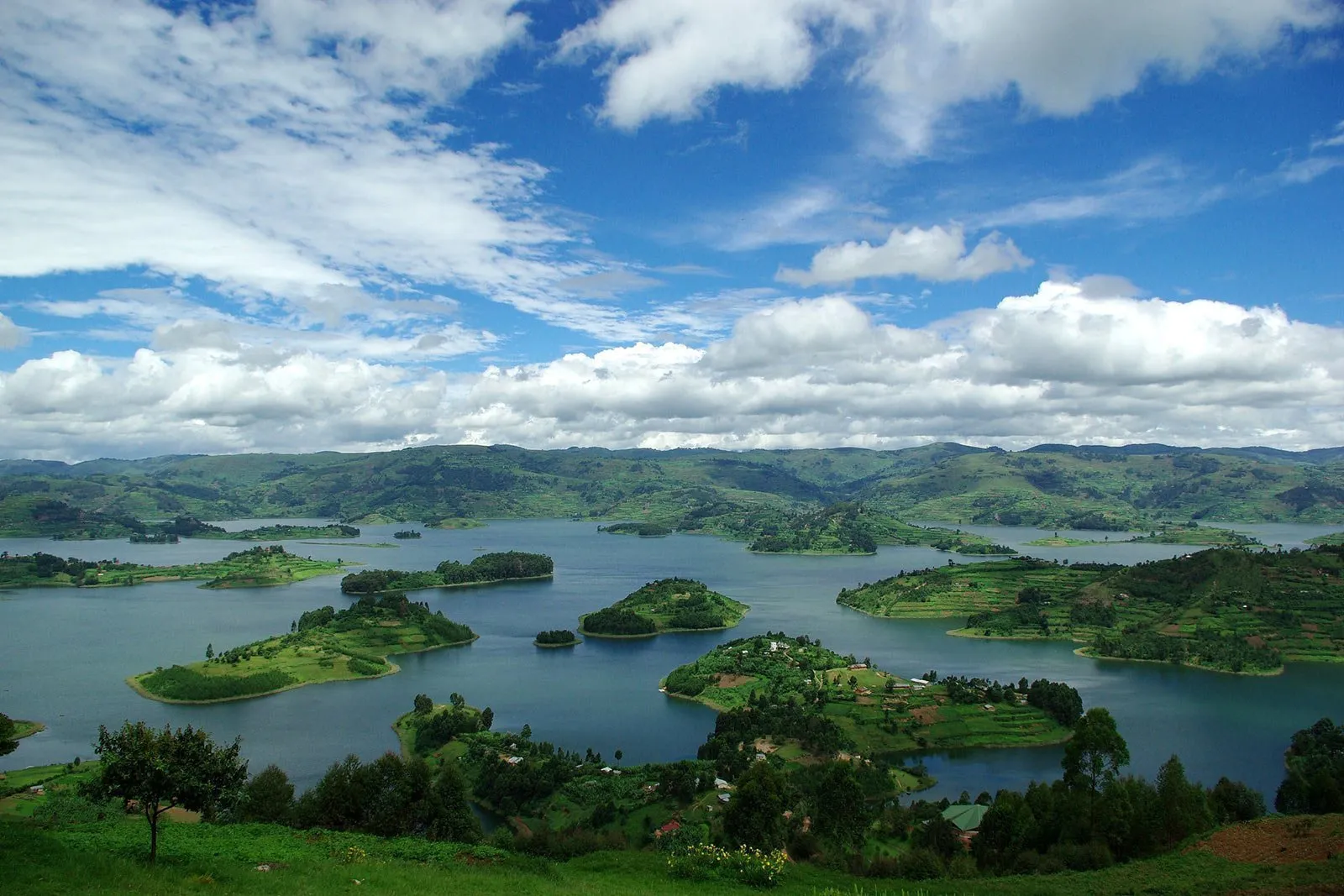
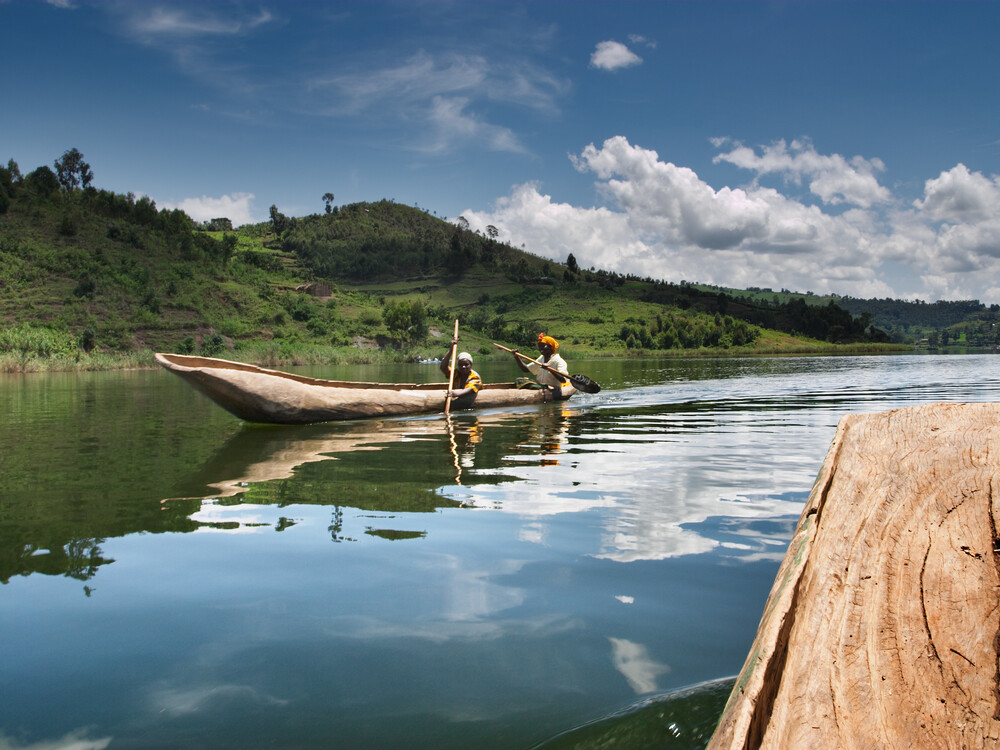
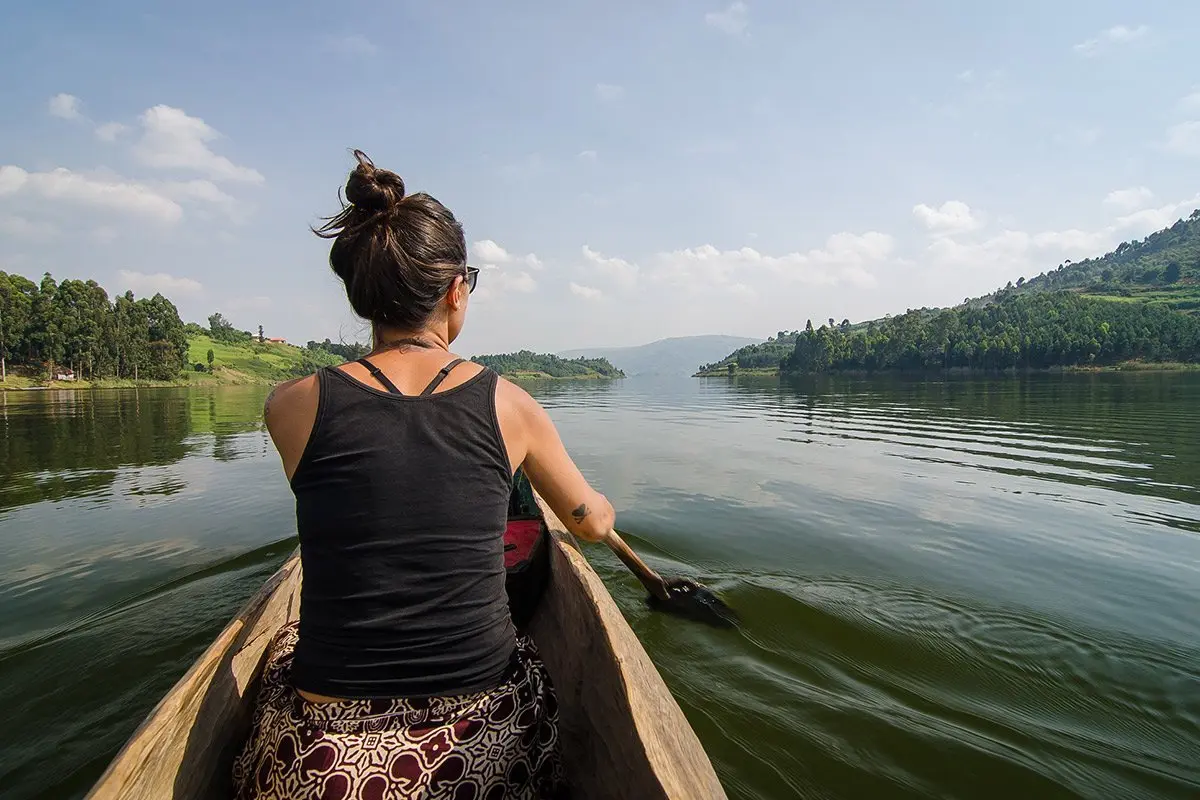
Lake Bunyonyi is the perfect place to rest after gorilla trekking because it removes any sense of urgency. There are no game drives to chase and no schedules dictated by wildlife movement. Instead, time is shaped by the rhythm of the lake, gentle boat rides, quiet viewpoints, and long moments of stillness. This allows travelers to process the gorilla experience rather than rushing immediately into the next activity.
The scenery around the lake is soothing and expansive, making it one of the best places to relax in Uganda. Mornings are often misty and calm, afternoons warm and reflective, and evenings peaceful. For couples, photographers, and slow travelers, Lake Bunyonyi offers space for connection and reflection without distraction.
Lake Bunyonyi is best suited for travelers who appreciate tranquility and natural beauty over constant activity. It works particularly well as a recovery point in the itinerary, restoring energy and balance before the journey continues toward lighter safari experiences or the return to Entebbe. In this way, it acts as both a pause and a gentle transition, reinforcing the thoughtful flow that defines the best way to explore Uganda.
Lake Mburo National Park – A Soft Safari Finale
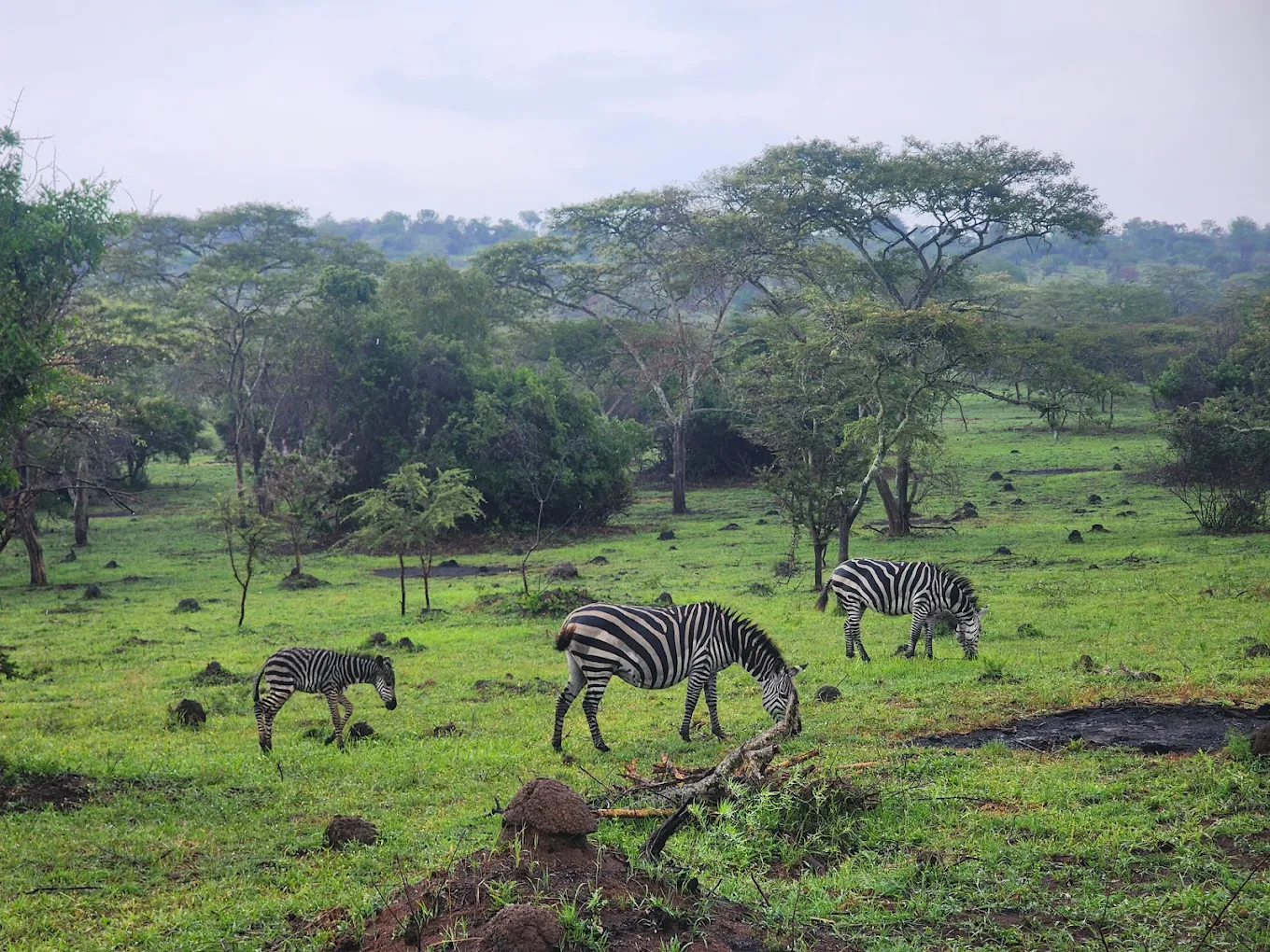
Lake Mburo National Park offers a gentle and refreshing conclusion to a well-paced Uganda journey. Smaller and more intimate than the country’s larger parks, Lake Mburo National Park is defined by open savannah, rolling hills, and a striking presence of zebras that immediately set it apart from other wildlife areas. The landscape feels calm and accessible, making wildlife encounters feel unhurried and personal.

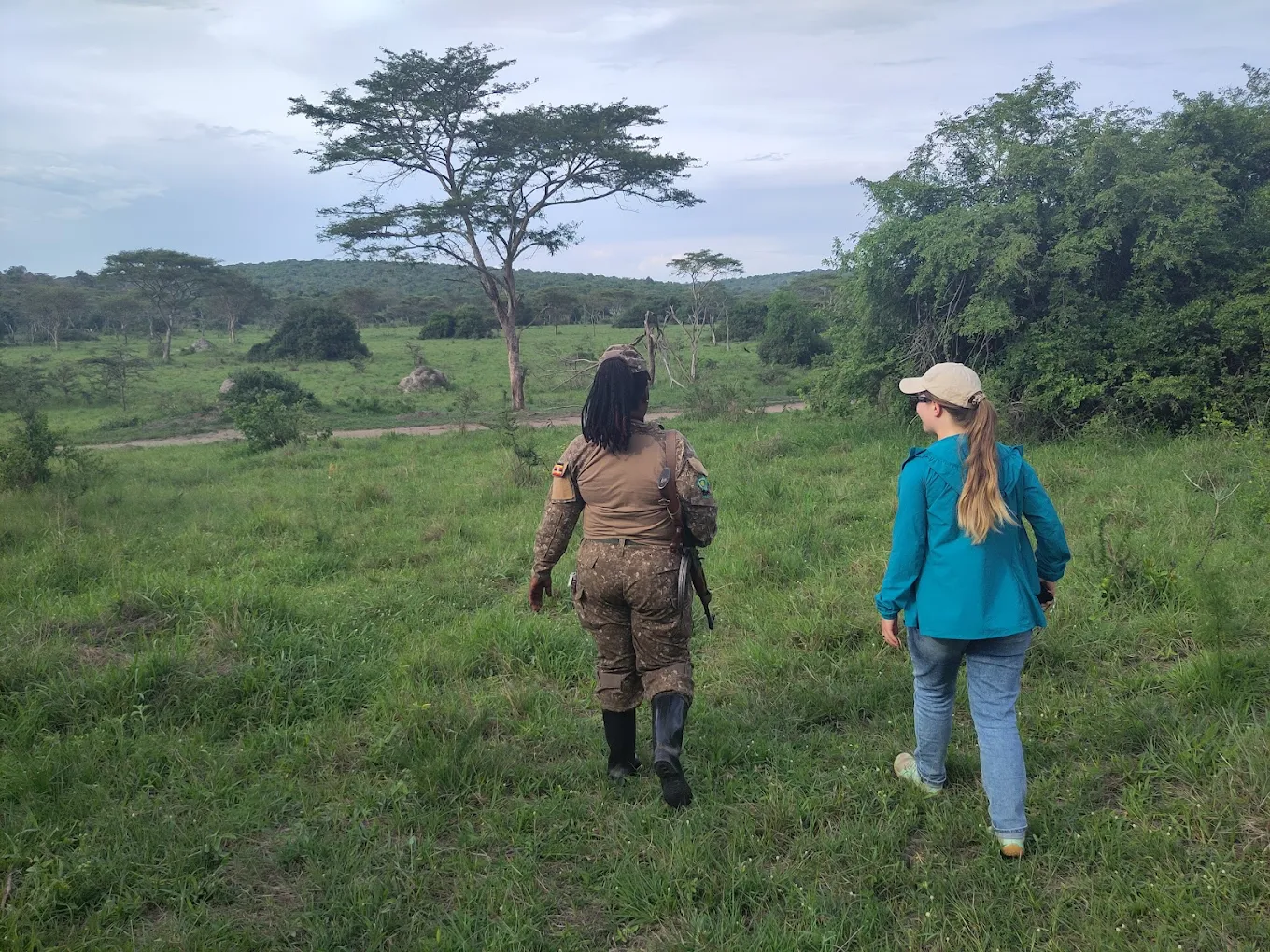
One of Lake Mburo National Park’s defining features is its emphasis on low-impact safari experiences. Walking safaris allow visitors to explore the park on foot, guided by rangers who interpret tracks, behavior, and the surrounding ecosystem at ground level. This creates a different kind of connection to wildlife one based on awareness and proximity rather than distance. Cycling safaris, another unique option here, add an active but relaxed way to move through the landscape, offering encounters with plains game in a quiet, unobtrusive manner.
Wildlife viewing in Lake Mburo National Park is less about big predators and more about harmony between animals and terrain. Zebras, impala, buffalo, and eland are commonly seen against wide skies and acacia-dotted plains, creating a sense of openness that contrasts beautifully with the forests and mountains experienced earlier in the journey. This simplicity is intentional and restorative, allowing travelers to slow down as the adventure winds toward its end.
Lake Mburo’s location makes it especially practical. Sitting close to the main route back to Entebbe, it serves as an ideal final national park stop without adding long or difficult travel days. As a result, it works perfectly as a soft safari finale engaging without being demanding, memorable without being overwhelming.
Uganda Equator at Kayabwe – A Symbolic Pause Before Departure
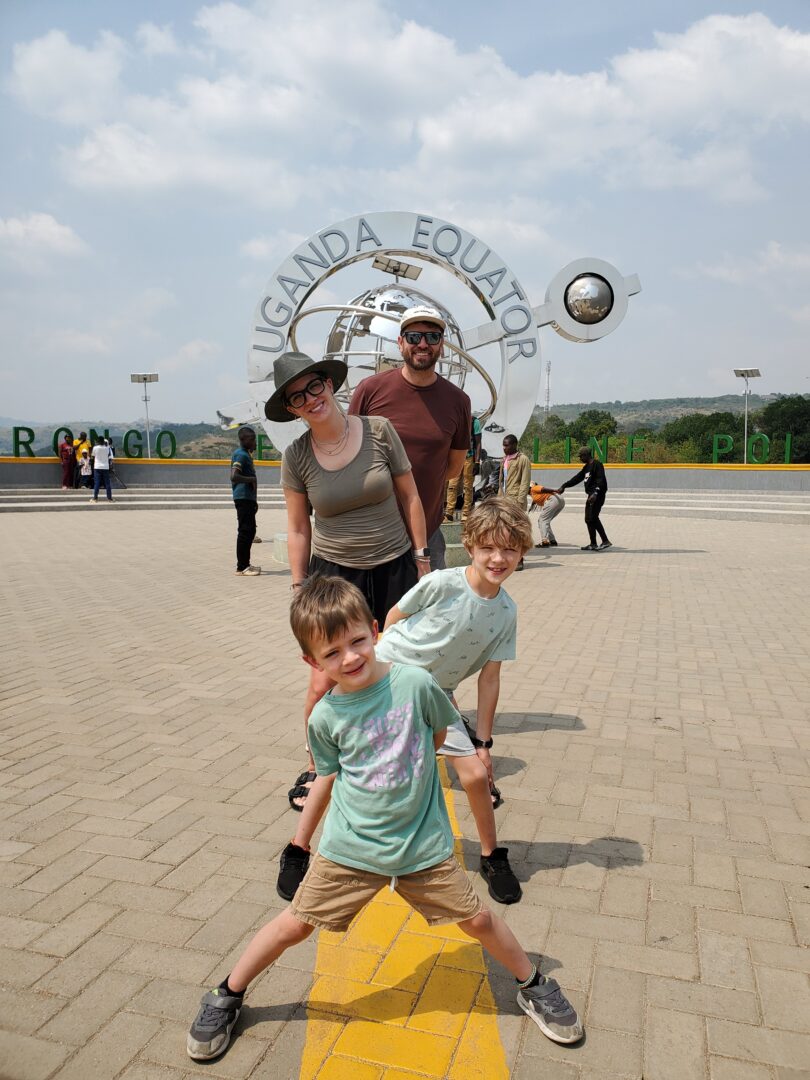
The Uganda Equator at Kayabwe Equator marks a meaningful moment near the end of many Uganda journeys. While the equator itself is more symbolic than scientifically dramatic, stopping here carries a sense of closure and reflection that resonates with travelers. It is less about geography and more about marking the distance traveled both physically and experientially.
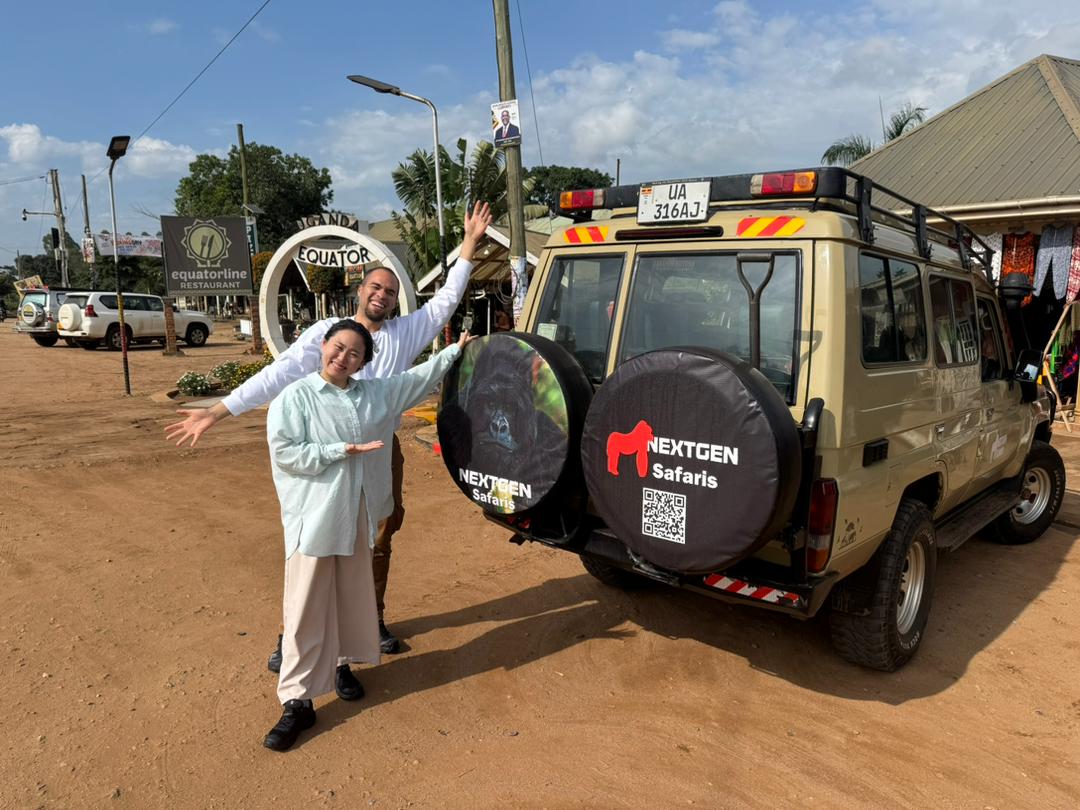
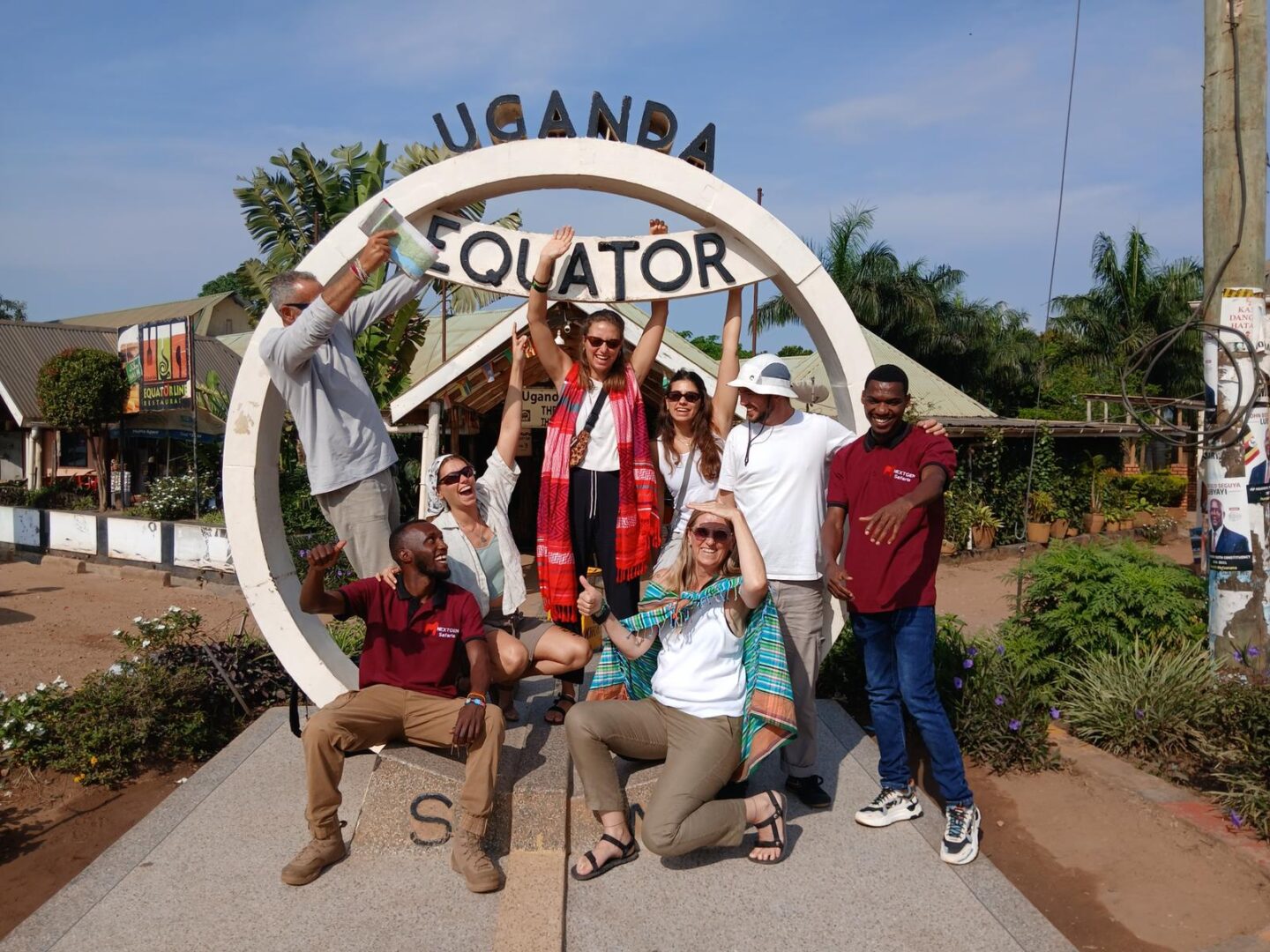
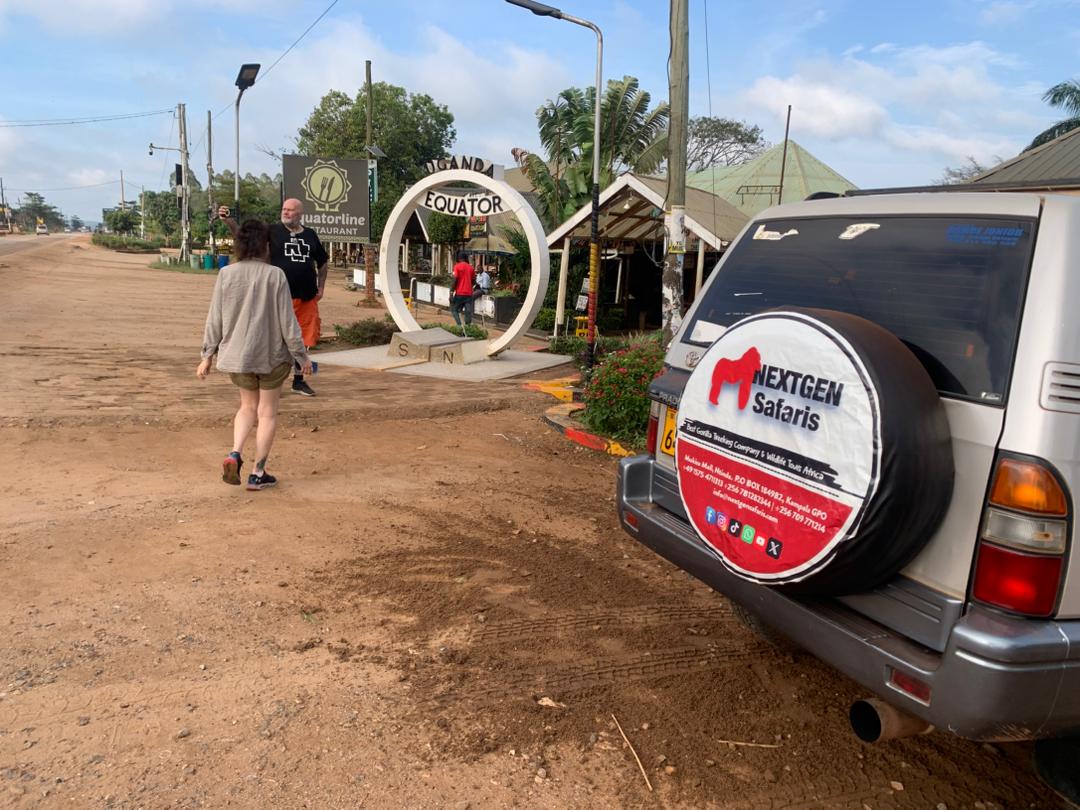
At Kayabwe, travelers pause briefly to stand between hemispheres, capture photographs, and reflect on the journey through Uganda’s varied landscapes. The stop is light and unhurried, offering a mental transition from exploration back to departure. Local crafts and demonstrations add cultural context, turning the equator crossing into a moment of connection rather than a simple roadside stop.
The value of the equator lies in its symbolism. After days or weeks of moving through lakes, savannahs, forests, and mountains, this pause serves as a reminder of how far the journey has carried you. It provides a final opportunity to absorb the experience before returning to Entebbe and preparing for onward travel.
As a final memory moment, the Uganda Equator at Kayabwe completes the loop that began at Lake Victoria. It reinforces the sense of a journey thoughtfully designed from start to finish, where each stop—no matter how brief, adds meaning to the overall experience of exploring Uganda.
Who Should Visit Uganda
Uganda is a destination that rewards curiosity, patience, and a genuine interest in nature and culture. It is not a country designed for hurried sightseeing or surface-level travel, but for travelers who value depth and variety. For the right kind of visitor, Uganda is not just worth visiting, it often becomes one of the most meaningful travel experiences in Africa.
Adventure travelers are particularly well suited to Uganda. The country offers a rare mix of physical and experiential challenges, from tracking primates through dense rainforest to rafting powerful sections of the Nile and hiking mountainous terrain. These experiences are not staged or overly polished; they feel real, immersive, and earned. Travelers who enjoy being active participants rather than passive observers tend to connect deeply with what Uganda offers.
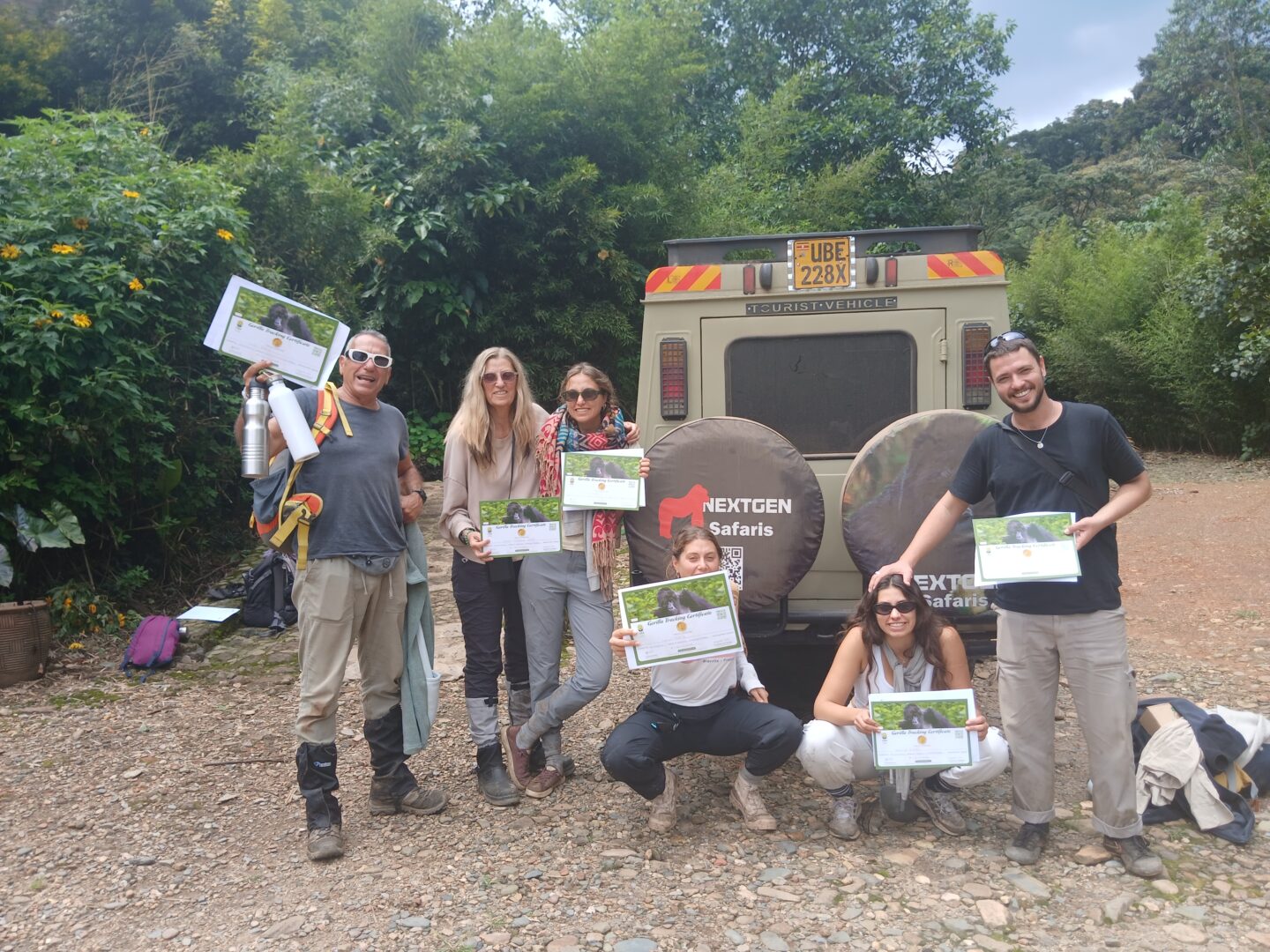
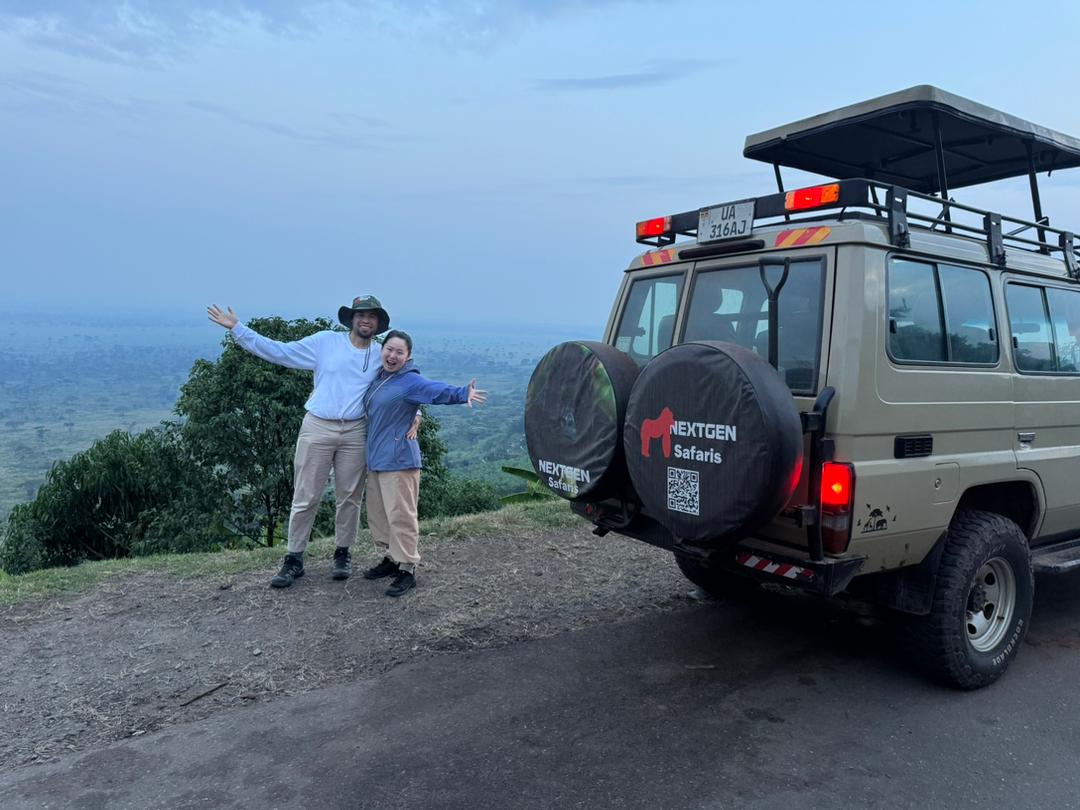
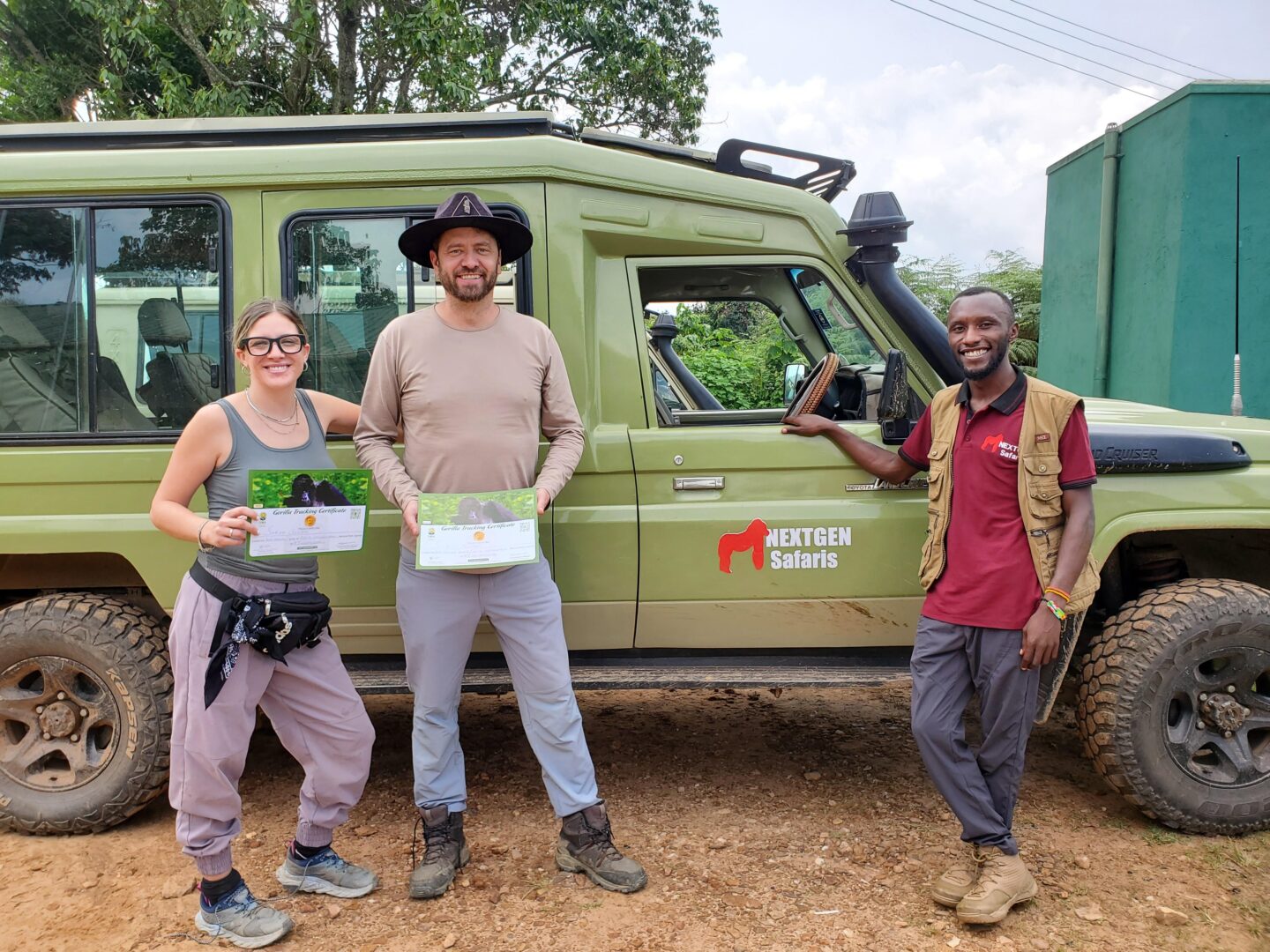
Wildlife lovers will find Uganda exceptionally rewarding, especially those interested in primates and ecological diversity. Few destinations allow travelers to encounter mountain gorillas, chimpanzees, classic savannah wildlife, and rare bird species within a single country. Uganda’s wildlife experiences are often more intimate than those in more heavily visited safari destinations, which appeals to travelers seeking authenticity rather than spectacle.
Uganda is also ideal for slow travelers, those who prefer fewer destinations experienced more deeply. The country’s landscapes change gradually, and the journey between places is as important as the destinations themselves. Rural life, roadside scenes, and shifting ecosystems all become part of the experience. Travelers who enjoy taking time to absorb their surroundings often find Uganda especially fulfilling.
For first-time visitors to Africa, Uganda offers a balanced and welcoming introduction to the continent. It combines iconic African wildlife with a sense of safety, warmth, and cultural openness that puts many travelers at ease. English is widely spoken, local communities are approachable, and the country’s tourism infrastructure is well suited to guided exploration. When planned thoughtfully, Uganda provides both adventure and reassurance, making it an excellent choice for those new to African travel.
Ultimately, Uganda is best for travelers who want their journey to feel meaningful rather than rushed, immersive rather than curated. For those who value connection to wildlife, landscapes, and people, Uganda consistently proves not only worth visiting, but unforgettable.
Best Time to Visit Uganda (2026–2030)
Understanding the best time to visit Uganda depends less on strict seasons and more on what kind of experience a traveler is seeking. Uganda sits on the equator, which means temperatures remain relatively stable throughout the year, but rainfall patterns shape travel conditions, scenery, and wildlife experiences. This makes Uganda travel seasons more nuanced than a simple “good” or “bad” time to go.
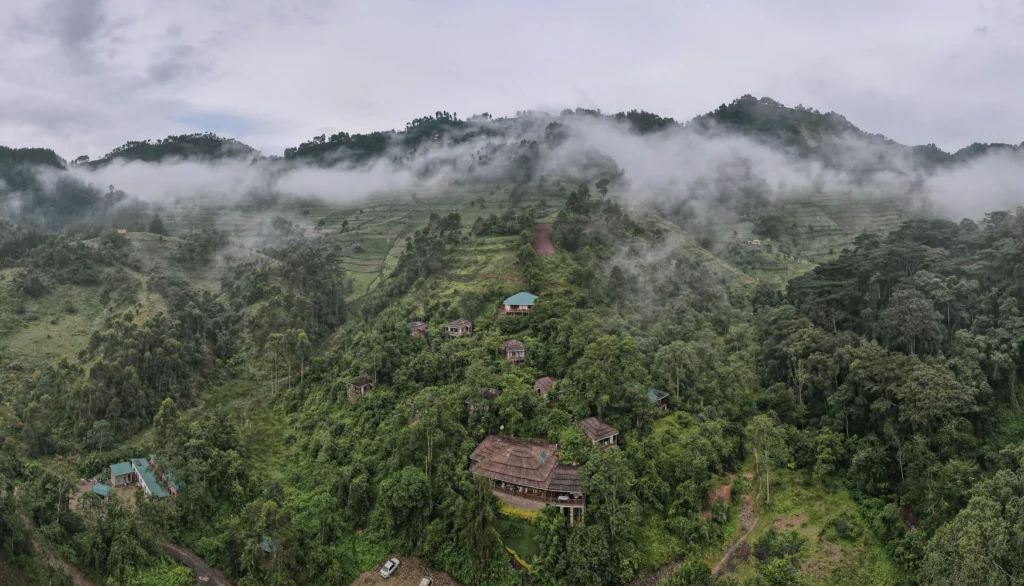
The drier months, typically from June to September and December to February, are often considered the most comfortable for travel. Roads are generally in better condition, hiking trails are less muddy, and wildlife viewing in savannah parks can be slightly easier as animals concentrate around water sources. These periods are popular with travelers, which means some areas particularly gorilla trekking regions can feel busier, and permits are in higher demand.
The greener months, from March to May and October to November, offer a very different but equally rewarding experience. Rainfall transforms the landscapes into lush, vibrant scenery, especially in forested regions. While some roads may be slower to navigate, the countryside feels alive, photography conditions improve dramatically, and visitor numbers tend to be lower. For travelers who value atmosphere and quieter experiences over perfect road conditions, this can be an ideal time to explore.
Gorilla trekking is possible year-round in Uganda, and the experience itself does not diminish outside the dry seasons. While treks during wetter months may involve muddier trails, the forests are at their most beautiful, and the sense of immersion can be even stronger. Because gorilla permits are limited daily, trekking experiences remain controlled regardless of season.
Ultimately, the best time to visit Uganda comes down to personal priorities. Travelers focused on ease of movement and classic safari conditions may prefer the drier months, while those drawn to rich scenery, fewer crowds, and a slower pace often find the greener seasons more rewarding. Uganda’s strength lies in the fact that it remains compelling throughout the year, allowing travelers to choose timing based on preference rather than restriction.
Why Travel Uganda with Local Specialists
Traveling through Uganda is as much about understanding context as it is about reaching destinations. Distances between parks can appear short on a map, but road conditions, terrain, and regional variation mean that travel time is a key factor in itinerary planning. Local specialists understand which routes are realistic, which roads change with the seasons, and how to pace journeys so that travel days remain part of the experience rather than a burden.
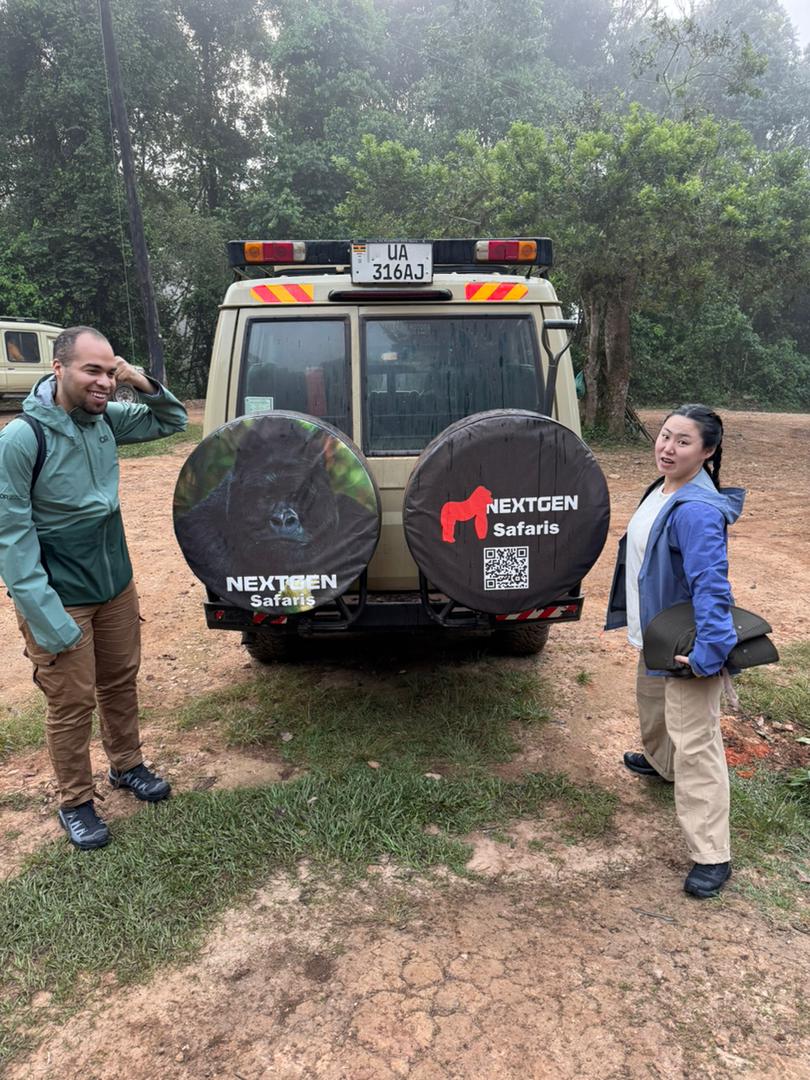
Permits are another critical consideration, particularly for gorilla and chimpanzee trekking. These permits are limited, regulated by wildlife authorities, and tied to specific dates and locations. Accurate handling of permits requires up-to-date knowledge of availability, park logistics, and trekking sectors. Misjudging this can disrupt an entire itinerary, which is why local expertise matters quietly but significantly.
Uganda’s infrastructure varies widely between regions. While main highways are generally reliable, access roads to national parks can be rough and affected by weather. Local specialists plan around these realities, adjusting routes and timings to match conditions rather than relying on assumptions. This leads to smoother journeys and more realistic expectations for travelers.
Perhaps most importantly, traveling Uganda well requires an understanding of what the country offers—and what it does not. Uganda is not a destination of constant luxury or instant gratification. It is a place of depth, contrast, and reward for those who travel with patience and curiosity. Local specialists help bridge the gap between expectation and reality, ensuring that visitors experience Uganda as it truly is, not as an oversimplified version.
This grounded approach builds trust naturally. By aligning logistics, permits, and pacing with real conditions on the ground, travelers are able to focus on the experience itself, confident that their journey reflects both the beauty and the realities of exploring Uganda properly.
Frequently Asked Questions About Visiting Uganda
Is Uganda safe to visit?
Uganda is generally considered a safe destination for travelers, particularly those exploring the country through organized routes and national parks. The tourism infrastructure is well established, English is widely spoken, and Ugandans are known for their warmth and hospitality. As with any destination, awareness and good planning matter, but for most visitors, safety concerns are far outweighed by the richness of the experience. National parks and key travel corridors are well managed, and guided travel significantly enhances both safety and comfort.
How many days do you need in Uganda?
The ideal length of time in Uganda depends on how deeply you want to explore the country. Short trips of 7–8 days can focus on one or two highlights, such as gorilla trekking and a savannah park. However, to experience Uganda properly combining wildlife, landscapes, and culture, a journey of 10 to 14 days allows for a balanced pace without rushing. Longer itineraries reward travelers who want to move slowly and see how the country changes from region to region.
Is Uganda good for first-time safari travelers?
Uganda is an excellent choice for first-time safari travelers, especially those looking for more than classic game drives. It offers a gentle introduction to Africa through friendly communities, manageable travel distances, and a wide range of experiences. Gorilla and chimpanzee trekking provide deeply personal wildlife encounters, while savannah parks add the familiarity of traditional safaris. When planned well, Uganda feels adventurous but approachable, making it a strong starting point for African travel.
What should I not miss in Uganda?
While Uganda offers many rewarding destinations, a few experiences stand out as truly unmissable. Gorilla trekking in Bwindi Impenetrable National Park is often the emotional highlight. A boat safari along the Nile in Murchison Falls National Park reveals a completely different side of African wildlife. Chimpanzee trekking in Kibale National Park adds energy and immersion, while quieter moments at Lake Bunyonyi or Lake Mburo bring balance and reflection. Together, these experiences capture Uganda’s essence.
Plan Your Uganda Journey with a Local Specialist
If you want to experience Uganda properly — at the right pace, with the right route — speak to a local specialist who understands the country on the ground. Thoughtful planning makes the difference between rushing through highlights and enjoying a connected journey where landscapes, wildlife, and culture unfold naturally.
Begin a private planning conversation and shape an itinerary that reflects how you want to travel, how much time you have, and what you most want to experience in Uganda.
Request a Custom Uganda Safari