
Uganda Fly-in Safari
Uganda Fly-in Safari – Unforgettable Luxury Gorilla & Wildlife Flying Adventure
A Uganda Fly-in Safari is one of the most comfortable and time-efficient ways to experience mountain gorillas, chimpanzees, savannah wildlife and Uganda’s remote national parks without spending a large part of the holiday on long overland transfers. Instead of driving every major section of the country, travelers use scheduled or private charter flights between Entebbe and strategically located safari airstrips, then continue by private 4×4 vehicle to their lodge and wildlife activities. Uganda’s domestic aviation network currently provides access to major safari regions including Bwindi Impenetrable National Park, Queen Elizabeth National Park, Murchison Falls, Kibale and Kidepo Valley.
The greatest advantage of an Uganda Fly-in Safari is not simply luxury—it is time. Uganda is a beautiful country to explore by road, but many of its most important safari destinations are separated by substantial driving distances. Bwindi lies deep in southwestern Uganda, Kidepo is approximately 700 kilometres from Kampala, and Queen Elizabeth is around 410 kilometres west of the capital. Domestic aviation allows travelers with limited holiday time to spend more hours trekking gorillas, watching wildlife or relaxing at a lodge and fewer hours transferring between distant regions.
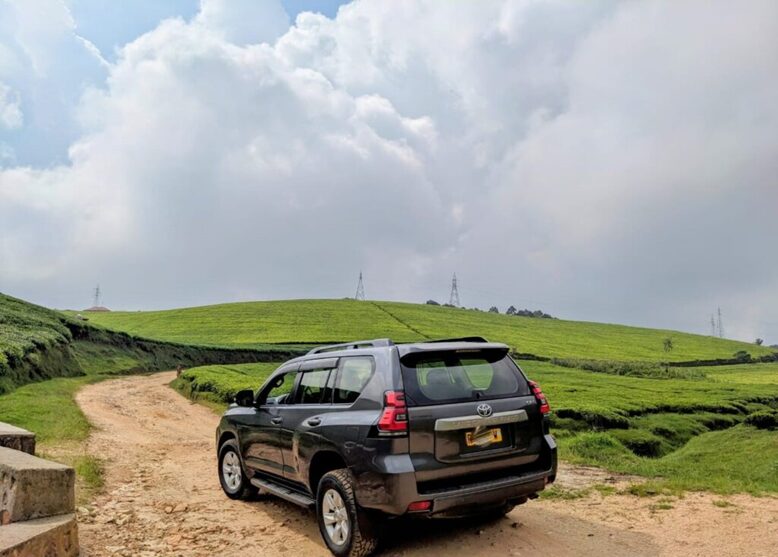
A fly-in safari does not eliminate road travel completely, nor should it. Once travelers land at a bush airstrip, a private safari vehicle generally completes the transfer to the lodge and remains available for game drives and local activities. In destinations such as Queen Elizabeth and Bwindi, this combination works especially well because flights remove the longest highway sections while short scenic road transfers preserve the feeling of exploring Uganda on the ground.
Nextgen Safaris can design a Uganda Fly-in Safari according to the traveler’s available time, preferred accommodation, gorilla permit sector, wildlife priorities and desired level of exclusivity. Flights can be combined with luxury lodges, private 4×4 transfers, gorilla trekking, chimpanzee tracking, game drives, boat cruises, birding and photography to create a seamless safari without turning the journey into a constant series of airport connections.
What Is a Uganda Fly-in Safari?
A Uganda Fly-in Safari is a safari in which domestic flights replace some of the longer road transfers between Entebbe and Uganda’s major wildlife destinations. The flights normally use smaller aircraft designed to operate from regional or bush airstrips, after which travelers are met by a guide or lodge representative and transferred by road to their accommodation.
Uganda Civil Aviation Authority currently manages thirteen upcountry aerodromes in addition to Entebbe International Airport, including Kisoro, Kasese, Pakuba and Kidepo, all of which are relevant to safari travel. Domestic safari airlines also use other strategically positioned airstrips depending on destination, schedule, passenger numbers and operating conditions.
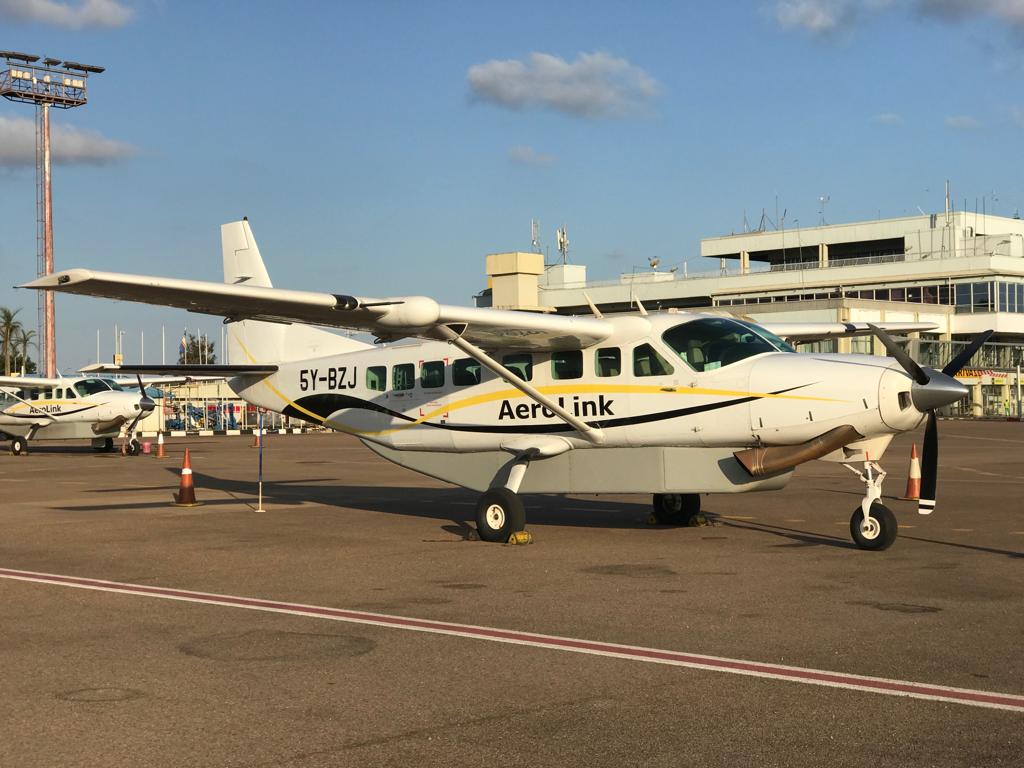
Scheduled flights are usually the most economical flying option because several passengers share the aircraft. Private charter flights provide greater flexibility over timing, routing and sometimes airstrip choice, although they are considerably more expensive. AeroLink currently offers both scheduled services and private charters, with charter flights designed for travelers whose route or timing does not fit the scheduled network.
A fly-in safari should therefore not be confused with an aerial sightseeing tour. The aircraft is primarily transportation, while the safari itself continues on the ground through gorilla trekking, wildlife drives, boat safaris and lodge stays.
Why Choose a Uganda Fly-in Safari?
The most obvious reason to choose a Uganda Fly-in Safari is the reduction in long-distance driving. Uganda’s western safari circuit is incredibly scenic, but travelers trying to visit Murchison Falls, Kibale, Queen Elizabeth and Bwindi within a limited holiday can otherwise spend substantial portions of several days on the road.
Flying can transform those logistics. AeroLink’s current 2026 information, for example, shows Entebbe–Kihihi and Entebbe–Kisoro services reaching southwestern Uganda in roughly an hour and fifteen minutes on direct scheduled sectors, while its April 2026 Bwindi guidance emphasizes that flying can save travelers a large portion of the time otherwise spent reaching the gorilla region by road.
This is particularly valuable for luxury travelers, honeymooners, senior travelers, families and visitors arriving in Uganda for only a few days. Someone with four nights available may reasonably prioritize a direct flight to the Bwindi region, whereas the same journey by road could consume much of the first and final days.
Flying can also reduce fatigue before physically demanding activities. Arriving near Bwindi after a short flight and lodge transfer can feel very different from reaching the forest after a full day of driving and then beginning a gorilla trek early the following morning.
Uganda Fly-in Safari to Bwindi Impenetrable National Park
Bwindi is one of the most important destinations for an Uganda Fly-in Safari because mountain gorilla trekking is frequently the central reason international travelers visit Uganda. Scheduled domestic flights connect Entebbe with Kihihi and Kisoro, providing access to different areas of southwestern Uganda. AeroLink’s current 2026 schedule lists daily services to both airstrips, while Uganda Wildlife Authority confirms scheduled Entebbe–Kihihi air access to Bwindi’s northern side.
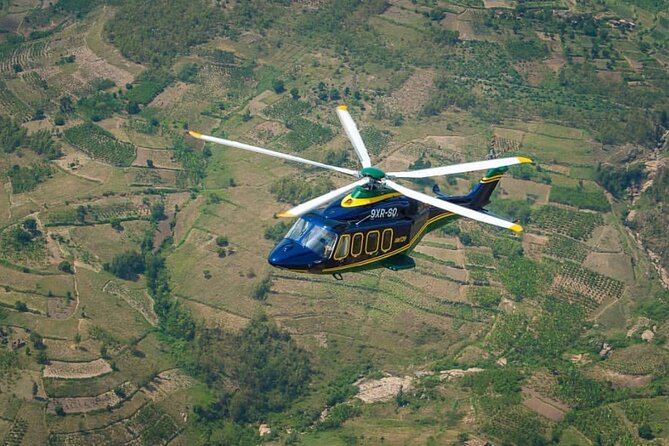
Choosing the correct airstrip requires understanding the traveler’s confirmed gorilla trekking sector. Kihihi is particularly useful for the northern side of Bwindi and provides convenient access toward Buhoma and other nearby areas. Kisoro is generally more appropriate for travelers staying in the southern Bwindi region around Rushaga or Nkuringo and for travelers continuing toward Mgahinga. AeroLink’s current lodge listings similarly group southern Bwindi properties such as Four Gorillas Lodge, Gorilla Heights, Ichumbi Gorilla Lodge, Nkuringo Bwindi Gorilla Lodge and Rushaga Gorilla Camp under Kisoro access.
This is an important planning detail. A fly-in safari is intended to reduce difficult transfers, so choosing the wrong airstrip and then spending several additional hours reaching the lodge defeats much of its purpose. Nextgen Safaris can coordinate the gorilla permit, trekking sector, lodge and flight so all four elements work together.
Kihihi Airstrip for a Bwindi Fly-in Safari
Kihihi is one of the most important safari airstrips in western Uganda and a major gateway to the northern side of Bwindi. Uganda Wildlife Authority states that the park’s northern frontier is served by daily scheduled flights from Entebbe to Kihihi, followed by a 4×4 road transfer to the lodge.
AeroLink’s current 2026 schedule shows multiple Entebbe–Kihihi departures on many dates, although one mid-morning frequency is excluded during the listed low-season months of March, April, May and November. The airline also currently advertises onward internal connections between Kihihi and Kasese, allowing travelers to link Bwindi with Queen Elizabeth National Park and the Kibale region by air.
This makes Kihihi particularly useful for a premium Uganda Fly-in Safari combining gorilla trekking with wildlife. Rather than flying back to Entebbe between every park, travelers may sometimes connect between regional airstrips, subject to the operating timetable, minimum passenger requirements and confirmation for the intended travel date.
Kisoro Airstrip for Rushaga, Nkuringo and Mgahinga
Kisoro is the other major southwestern gateway and is especially relevant for travelers whose gorilla permits and lodges are based in southern Bwindi or around Mgahinga. AeroLink’s current schedule includes Entebbe–Kisoro services and explicitly notes that flight operations are influenced by prevailing weather conditions, with services concentrated during morning and mid-morning periods.
This operational detail matters because Kisoro lies in a mountainous region where local weather can influence aviation more noticeably than at some lower-elevation airstrips. A good fly-in safari therefore leaves sensible time between domestic flights and major international departures rather than relying on extremely tight connections.
For travelers staying around Rushaga, Nkuringo, Lake Mutanda or the wider Kisoro region, however, flying can save a tremendous amount of time compared with driving from Entebbe. It can also create a particularly attractive luxury combination involving a morning flight, scenic transfer through the southwestern highlands and a relaxed lodge arrival before the following day’s gorilla trek.
Uganda Fly-in Safari to Queen Elizabeth National Park
Queen Elizabeth National Park is highly suitable for a Uganda Fly-in Safari because travelers can access the region through Kasese, while Uganda Wildlife Authority also identifies Kasese, Mweya and Kihihi for scheduled or chartered access depending on the area of the park being visited.
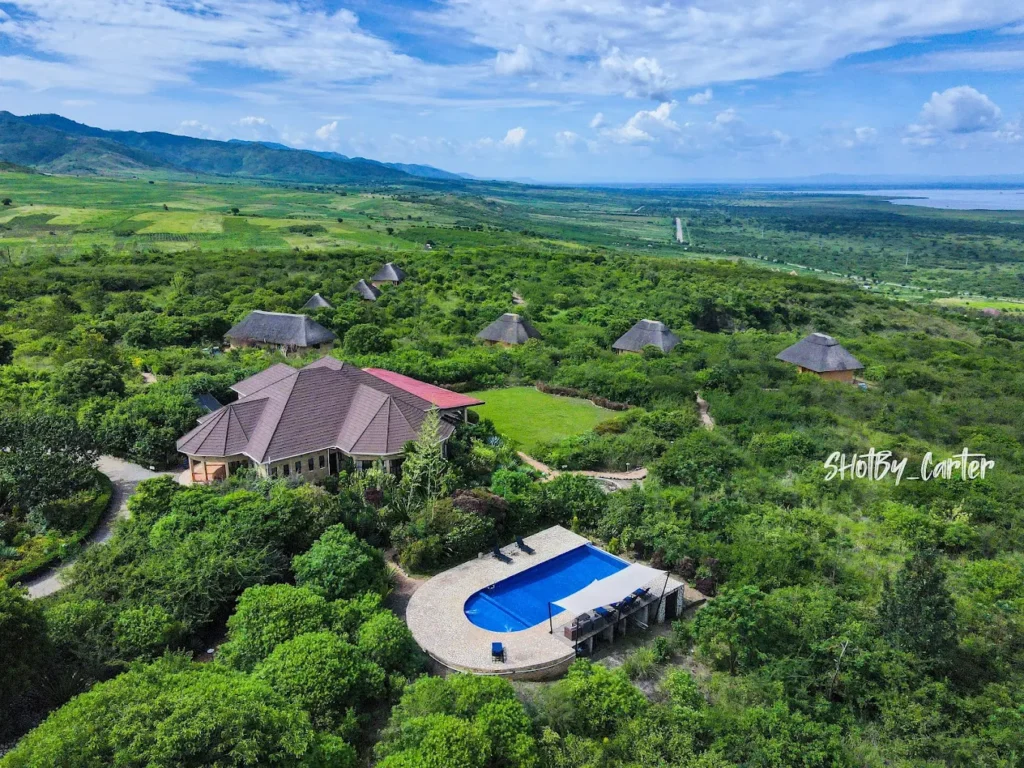
AeroLink’s 2026 timetable currently lists Entebbe–Kasese services, with a direct scheduled sector of approximately one hour and fifteen minutes on relevant departures. It also lists internal connections between Kasese and Kihihi or Kisoro, making it possible to combine Queen Elizabeth with Bwindi without automatically returning to Entebbe.
Once on the ground, a private 4×4 can take travelers toward Kasenyi, the Kazinga Channel, Kyambura, Mweya or onward toward Ishasha depending on the safari plan. Flying therefore does not reduce the actual wildlife experience. Travelers can still enjoy game drives, boat safaris and scenic transfers through the park while avoiding the much longer road journey from central Uganda.
Fly-in Safari to the Ishasha Sector
Ishasha is particularly important for travelers combining Queen Elizabeth with Bwindi because the sector lies along the southern route toward gorilla country. Uganda Wildlife Authority identifies Kihihi as one of the flight-access options for the Ishasha area.
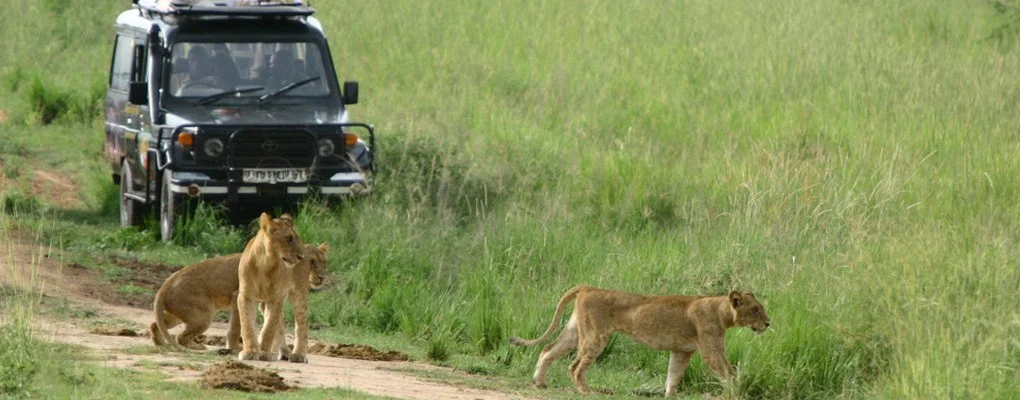
This makes it possible to structure a Uganda Fly-in Safari around tree-climbing lion country and mountain gorillas without returning to Entebbe between the two experiences. The traveler can fly into the region, continue by private vehicle through Ishasha and eventually reach Bwindi, or reverse the journey.
For photography-focused travelers, this approach can be especially valuable because time saved on highway transfers can instead be allocated to additional morning or afternoon game drives. For luxury travelers, the journey also feels more coherent: flying handles the long distances while the most scenic and wildlife-rich local sections remain overland.
Uganda Fly-in Safari to Kibale National Park
Kibale does not currently have a major scheduled airstrip directly inside the national park. Uganda Wildlife Authority states that travelers can fly from Entebbe or Kajjansi to Kasese Airstrip, followed by approximately two hours of road transfer to the Kibale area. Chartered flight options to Fort Portal may also be available.
This means a Uganda Fly-in Safari to Kibale should be planned differently from Bwindi. The flight removes the long drive from Kampala or Entebbe toward western Uganda, but a meaningful road transfer remains after landing. That is still valuable for travelers who want chimpanzee trekking without devoting most of the day to reaching the region by road.
Kasese also provides a convenient gateway for combining Kibale with Queen Elizabeth. Instead of flying separately for every attraction, a luxury safari can land at Kasese, explore Kibale, continue overland toward Queen Elizabeth and then potentially fly or drive onward toward Bwindi. This mixed flight-and-road approach is often more efficient than trying to fly every possible sector.
Uganda Fly-in Safari to Murchison Falls National Park
Murchison Falls is another major destination that can be reached by air. AeroLink’s current 2026 safari flight information lists Pakuba, Bugungu and Chobe as airstrip options in the Murchison region. Its published schedule currently shows an Entebbe departure to these airstrips at 13:00, with the scheduled sector listed at approximately one hour; the airline notes minimum passenger requirements for these services.
The choice of airstrip should match the accommodation and safari activities. AeroLink’s current destination information associates Pakuba Airstrip with Pakuba Lodge and Paraa Safari Lodge, Bugungu with properties including Nile Safari Lodge and Murchison River Lodge, and Chobe Airstrip with Chobe Safari Lodge.
Uganda Civil Aviation Authority also identifies Pakuba as strategically positioned for tourism in the Murchison Falls region and notes rehabilitation work undertaken on its runway and perimeter infrastructure.
For visitors with limited time, flying can therefore transform Murchison from a destination requiring a substantial road transfer into an accessible short safari extension featuring game drives, the Nile and Murchison Falls.
Uganda Fly-in Safari to Kidepo Valley National Park
Kidepo is arguably the destination where a Uganda Fly-in Safari offers its greatest logistical advantage. Uganda Wildlife Authority describes Kidepo as Uganda’s most remote national park, situated approximately 700 kilometres from Kampala in the northeastern Karamoja region.
The park’s remoteness is part of its appeal, but reaching it entirely by road requires considerably more time than reaching many western Uganda destinations. Domestic aviation changes that equation. AeroLink currently lists Kidepo Valley among the destinations in its Uganda network, and Uganda Civil Aviation Authority lists Kidepo among the country’s upcountry aerodromes.
Flying allows travelers to arrive much closer to the wilderness and spend their available days exploring the Narus and Kidepo valleys rather than crossing much of Uganda by road. For honeymooners, luxury travelers, photographers and repeat African safari visitors, this can make a remote Kidepo extension substantially more realistic.
Flights and schedules should nevertheless be confirmed for the specific travel dates because domestic safari services can depend on demand, minimum passenger numbers and seasonal operating arrangements.
Scheduled Flights Versus Private Charter Flights
A Uganda Fly-in Safari can use either scheduled domestic flights or private charters. Scheduled flights generally provide better value because the cost of the aircraft is shared among multiple passengers. They work especially well on established routes such as Entebbe to Kihihi, Kisoro and Kasese.
Private charter flights provide a different level of flexibility. AeroLink states that its charter services can be customized for travelers whose preferred route or timing falls outside its scheduled network, including airstrips outside normal scheduled operations.
Charters can be particularly useful for families, small private groups, photographers carrying specialist equipment, high-end travelers with limited time or itineraries involving unusual combinations of remote destinations. They can also reduce the need to structure the entire safari around published departure times.
However, a charter is not automatically the best option simply because it is more exclusive. On routes with convenient scheduled services, the additional cost may provide little practical benefit. Nextgen Safaris can compare the options based on the actual itinerary.
Uganda Fly-in Safari and Luxury Lodges
A Uganda Fly-in Safari combines naturally with Uganda’s luxury lodge network because both are designed to maximize comfort and time in the destination. A traveler can fly to Kihihi and continue toward a premium Bwindi property, reach Kasese for luxury stays around Queen Elizabeth or Kibale, or use the Murchison airstrips to reach Nile-side accommodation without completing the entire journey from Entebbe overland.
Luxury is not simply about choosing the most expensive lodge. The airstrip, lodge and wildlife activity need to work geographically. A high-end property located several hours from the chosen landing point may produce poorer logistics than a slightly different lodge positioned near the correct activity area.
This is particularly important around Bwindi, where gorilla permit sectors determine the most practical accommodation and flight gateway. The entire journey should therefore be designed as one system rather than purchasing the flight, permit and lodge independently.
Uganda Fly-in Safari for Gorilla Trekking
A short Uganda Fly-in Safari for gorilla trekking is one of the most practical safari options for travelers who want to prioritize Bwindi without undertaking a full Uganda road circuit. Current scheduled services reach Kihihi and Kisoro from Entebbe, providing access to both northern and southern gorilla regions.
The traveler can arrive in Uganda, overnight around Entebbe when necessary, fly southwest the following morning and continue by private 4×4 to the lodge. Gorilla trekking is then undertaken according to the confirmed permit, followed by another night near the forest before flying back toward Entebbe.
Although this makes a short gorilla safari possible, sufficient time should still be allowed around the trek. Flying into the region and attempting to trek immediately is generally poor planning because gorilla briefings begin according to park schedules and flight or weather changes could compromise the arrangement.
The strongest fly-in gorilla safari therefore saves time without creating a fragile itinerary.
Uganda Fly-in Safari for Seniors
A Uganda Fly-in Safari can be especially attractive to senior travelers because it reduces some of the longest road transfers while preserving access to Uganda’s major wildlife experiences. Flying to Kihihi instead of spending most of a day driving toward Bwindi, for example, can leave travelers substantially more rested before a gorilla trek.
Aircraft size, boarding arrangements and personal mobility still require consideration. AeroLink’s current conditions ask travelers to notify the airline in advance regarding disabilities, physical challenges, illnesses or advanced-age mobility needs when assistance could be required.
For senior guests, Nextgen Safaris can combine flights with carefully selected ground transfers, accessible rooms, private vehicles and slower pacing. The goal is not to eliminate every road journey but to remove the sections that add fatigue without significantly improving the safari.
Uganda Fly-in Safari for Families
Families can also benefit from a Uganda Fly-in Safari, particularly when younger travelers may find eight-hour road days difficult. Flying reduces extended periods in the vehicle and can provide children with more time at lodges, pools and wildlife activities.
The luggage rules of small safari aircraft require careful preparation, however. Families accustomed to traveling with several hard-shell suitcases cannot assume the same baggage arrangements that apply on international wide-body flights.
AeroLink’s current conditions state a 15-kilogram total luggage allowance per passenger in soft bags, including hand baggage. Excess baggage is carried only subject to aircraft space and operating conditions. These rules should always be reconfirmed when flights are booked because airline policies can change.
Packing intelligently therefore becomes an important part of family fly-in safari planning.
Luggage Allowance on a Uganda Fly-in Safari
Luggage is one of the biggest differences between international air travel and a Uganda Fly-in Safari. Small safari aircraft have stricter limitations because baggage compartments, payload and aircraft balance matter considerably more than on large commercial jets.
AeroLink currently publishes an allowance of 15 kg per person in soft bags, including hand luggage. Its booking information says excess baggage may be charged and remains subject to space availability.
Soft-sided duffel bags are consequently far more suitable than large rigid suitcases. Travelers undertaking a longer African trip can often arrange storage for excess luggage in Entebbe while taking only essential safari clothing and equipment on the domestic flight.
Photographers should be especially careful because professional camera equipment can consume much of the weight allowance. Equipment requirements should be discussed before ticketing rather than arriving at the airstrip with unexpectedly heavy bags.
What Aircraft Are Used on Uganda Fly-in Safaris?
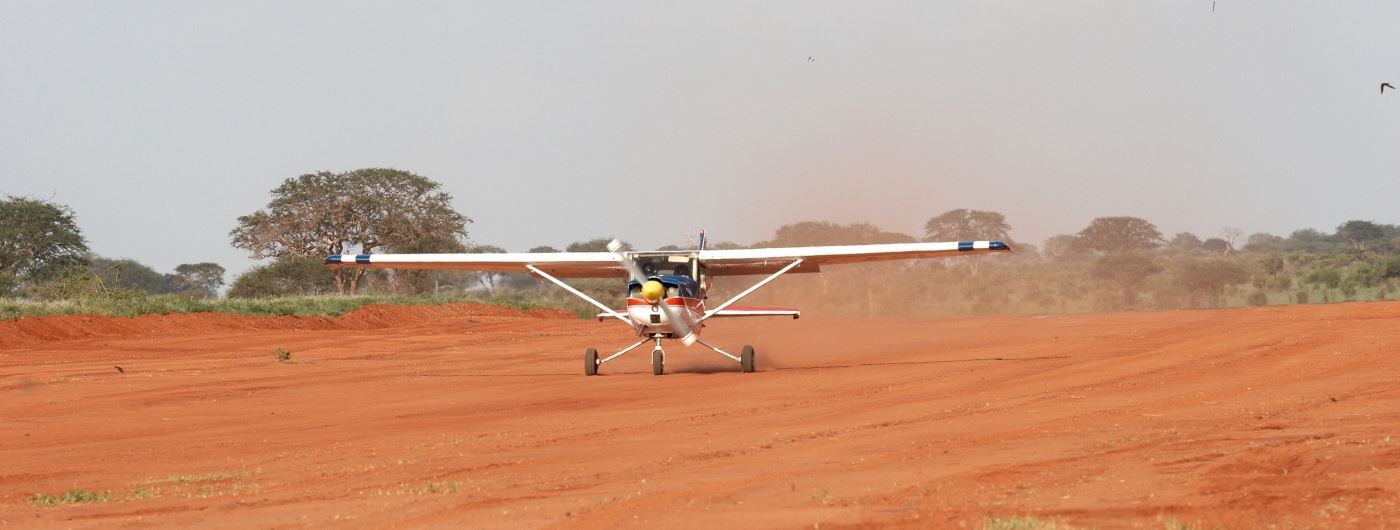
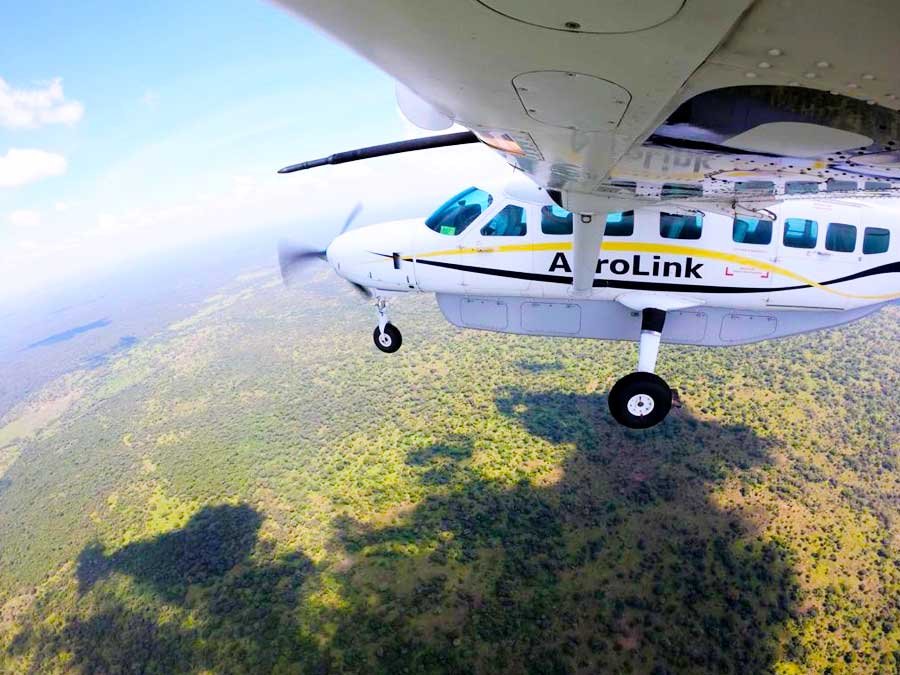
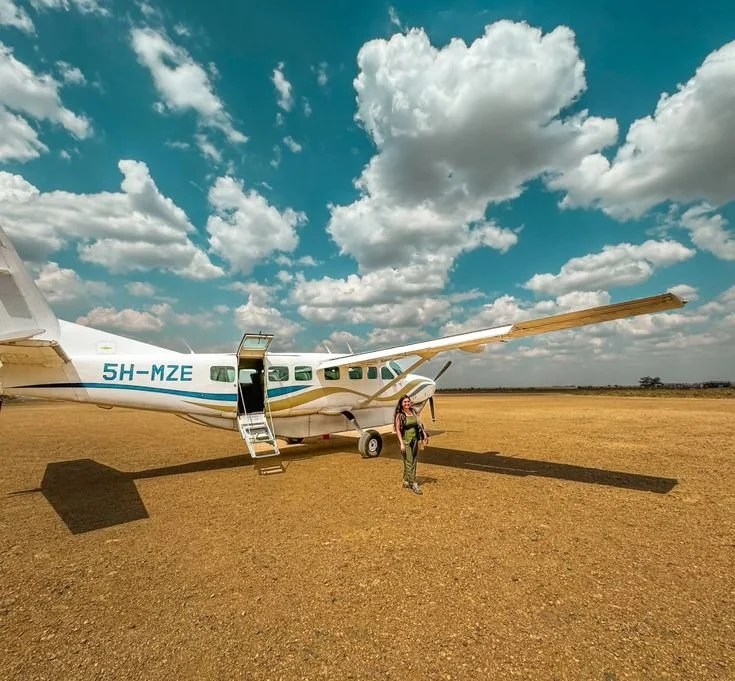
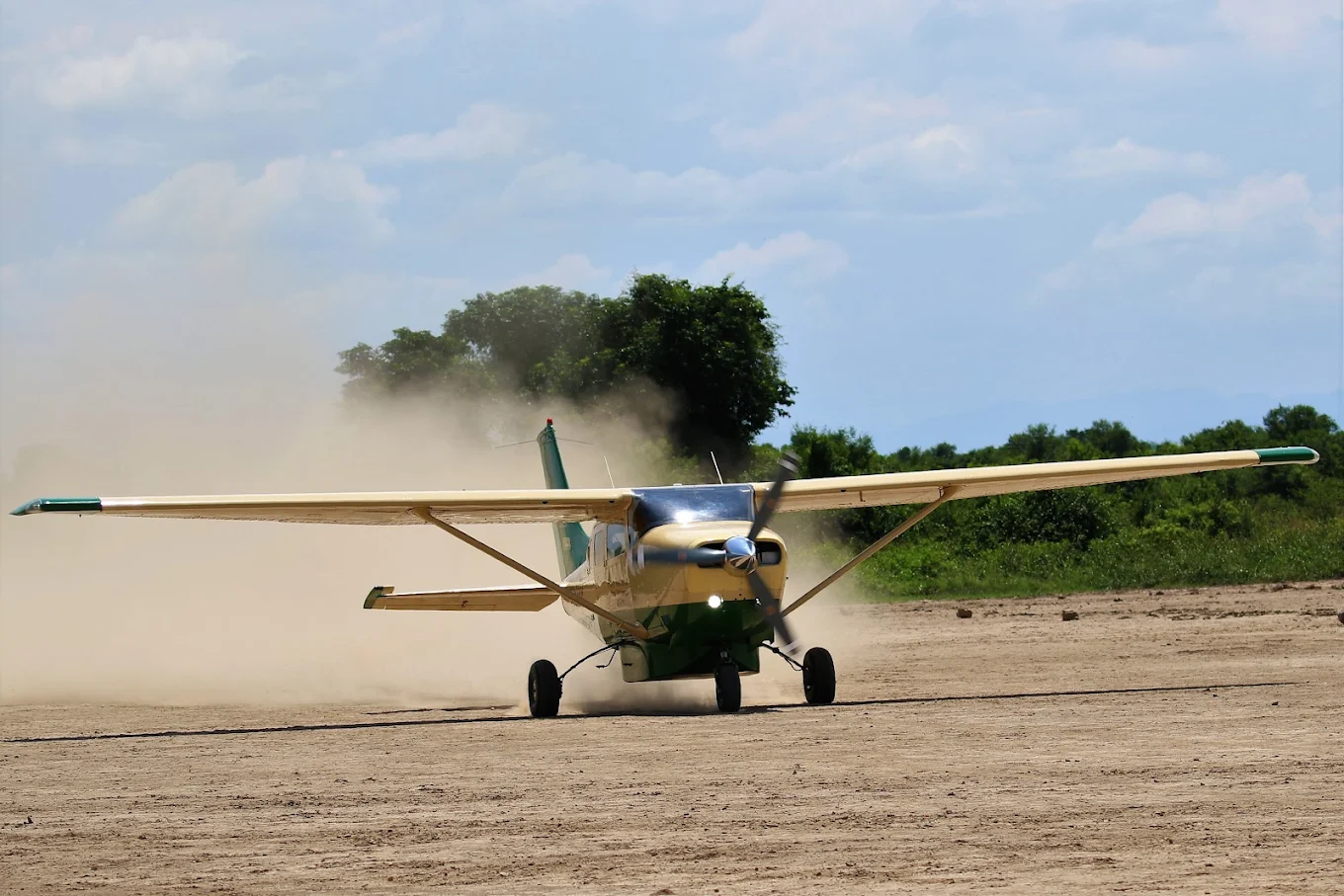
Domestic safari flights normally use smaller aircraft suited to regional and bush airstrips. AeroLink currently identifies the Cessna Grand Caravan C208B within its fleet and describes its aircraft as suitable for short take-offs, landings and the region’s bush airstrips.
Travelers should expect a different flying experience from an international jet. Cabins are smaller, seating arrangements are more intimate and the aircraft may make intermediate stops depending on routing and passenger requirements.
For many travelers, this becomes part of the safari experience. Flying at lower altitude can provide remarkable views of Uganda’s lakes, highlands, farmland, wetlands and wilderness areas, although weather and flight routing determine what will actually be visible. Passengers uncomfortable with small aircraft should discuss this before booking so they know what to expect.
Are Uganda Fly-in Safari Flights Direct?
Not every Uganda Fly-in Safari flight operates as a nonstop point-to-point service. Safari aircraft frequently combine passengers traveling to different airstrips, and the route may therefore involve intermediate stops or connections.
This is why published journey times should be treated as schedule guidance rather than guarantees about the exact experience on every date. AeroLink itself states that flight schedules and airports of origin or destination can be changed.
Regional connections can nevertheless be extremely valuable. Current schedules, for example, advertise connections between Kasese and Kihihi/Kisoro, while Murchison services list potential internal connections toward Kasese and Kihihi subject to minimum passenger requirements.
A well-designed safari therefore works around confirmed operating times rather than assuming every requested route will function exactly like a commercial airline shuttle.
Fly-in Safari Versus Road Safari in Uganda
Neither a Uganda Fly-in Safari nor an overland safari is universally better. The correct choice depends on the traveler’s available time, budget and interests.
Road safaris allow visitors to watch Uganda change gradually as they pass towns, villages, farmland, tea plantations, lakes and highlands. They also make it easier to visit attractions located between major national parks. For travelers with ten or fourteen days, these journeys can be an enjoyable part of the safari.
Flying becomes more attractive when the transfer itself adds little value relative to the time it consumes. Kidepo is the clearest example because of its remote location. Entebbe to Bwindi is another popular flight sector for travelers with limited time.
Many of the best Uganda journeys therefore use a hybrid safari—flying the longest sections while retaining beautiful overland links such as Kibale to Queen Elizabeth or Queen Elizabeth through Ishasha to Bwindi.
Can You Combine a Fly-in Safari with Game Drives?
Absolutely. A Uganda Fly-in Safari changes how travelers reach the national park; it does not replace game drives once they arrive. The traveler is normally met at the airstrip by a safari vehicle and then continues toward the lodge or directly into the wildlife area depending on arrival time.
In Queen Elizabeth, this means travelers can still enjoy Kasenyi game drives, Kazinga Channel boat experiences and Ishasha wildlife viewing. In Murchison Falls, a fly-in guest can enjoy game drives and Nile boat safaris exactly as an overland guest would.
This is why Nextgen Safaris can provide private ground transportation as an integral part of the fly-in package. The aircraft solves the long-distance transfer, while the 4×4 remains essential for the actual wildlife experience.
Can You Combine Gorilla Trekking, Chimpanzees and Wildlife by Air?
Yes, and this is one of the strongest ways to use a Uganda Fly-in Safari. Travelers can use Kasese for access toward Kibale or Queen Elizabeth and Kihihi or Kisoro for the Bwindi region. AeroLink’s current route information explicitly lists internal flight connections between Kasese and the southwestern Bwindi airstrips, subject to operating requirements.
However, flying every individual sector is not always necessary. Kibale and Queen Elizabeth connect naturally by road, while Queen Elizabeth and Bwindi can form an excellent scenic overland route through Ishasha.
A high-quality fly-in itinerary therefore uses aviation strategically. It should not add flights simply because the traveler is booking a luxury safari.
Best Time for a Uganda Fly-in Safari
A Uganda Fly-in Safari can be arranged throughout much of the year, but individual schedules and weather conditions should always be checked when booking. Some services have seasonal frequency differences. AeroLink’s current Kihihi and Kasese timetable, for example, excludes one mid-morning frequency during March, April, May and November, while Kisoro operations are specifically influenced by prevailing weather conditions.
Travelers should therefore avoid building extremely tight international connections around a domestic bush flight. An overnight stay in Entebbe before an important international departure can provide useful protection against weather, operational or schedule changes.
This is particularly important for luxury travel. A relaxed journey with sensible buffers usually feels far more premium than an itinerary that is technically possible but vulnerable to a small delay.
Is a Uganda Fly-in Safari Expensive?
A Uganda Fly-in Safari generally costs more than completing the same route entirely by road because domestic flight tickets, airstrip transfers and private ground arrangements must be added to the safari. Private charter flights increase the cost further.
Whether that additional expense represents good value depends on the traveler. Someone with three or four days available may gain enormous value from flying because it allows the holiday to focus on wildlife rather than transport. A traveler with two weeks may reasonably choose scenic road transfers and allocate more budget toward accommodation or additional activities.
The best approach is therefore to calculate the value of time as well as money. Nextgen Safaris can provide both road and fly-in alternatives where appropriate so travelers can see how the different arrangements affect journey time, comfort and overall safari cost.
Who Should Choose a Uganda Fly-in Safari?
A Uganda Fly-in Safari is particularly suitable for luxury travelers, honeymooners, senior guests, families, photographers, business travelers adding a short safari to a work trip and anyone with limited holiday time.
It is also exceptionally useful for repeat visitors who want to concentrate on a specific remote destination. A photographer returning specifically for Kidepo, for example, may prefer to fly directly to the region rather than repeating a long road journey already experienced on an earlier trip.
Travelers with mobility concerns may benefit from fewer long road transfers, although suitability for small aircraft and boarding arrangements should be discussed individually.
The ideal fly-in traveler is therefore not defined by budget alone. The strongest reason to fly is when aviation meaningfully improves the safari.
Is a Uganda Fly-in Safari Worth It?
For many travelers, a Uganda Fly-in Safari is absolutely worth it, particularly when visiting Bwindi, Kidepo or combining several distant regions within a relatively short holiday. Domestic flights can turn long transfer days into much shorter travel periods and allow more nights to be spent where the wildlife experiences actually take place.
The key is intelligent route design. Flying Entebbe to Bwindi can be extremely valuable; flying several unnecessarily short sectors simply because aircraft are available may add cost and airport time without improving the trip.
Uganda’s current aviation infrastructure makes this type of safari increasingly practical. UCAA manages regional aerodromes including Kisoro, Kasese, Pakuba and Kidepo, while established safari airlines operate scheduled and charter services linking Entebbe with major tourism regions.
When these flights are combined with private ground transportation, suitable lodges and properly coordinated activity permits, the result can be one of the most comfortable ways to explore Uganda.
Frequently Asked Questions About Uganda Fly-in Safari
1. What is a Uganda Fly-in Safari?
A Uganda Fly-in Safari is a safari that uses domestic flights to connect Entebbe with major wildlife destinations such as Bwindi, Queen Elizabeth, Murchison Falls and Kidepo. After landing at a regional airstrip, travelers continue by private 4×4 vehicle to their lodge and safari activities. This style of travel reduces long road transfers while preserving game drives, gorilla trekking, chimpanzee tracking and boat safaris.
2. Is a Uganda Fly-in Safari worth it?
Yes, a Uganda Fly-in Safari can be very worthwhile for travelers who value time, comfort and convenience. Flying is particularly useful when visiting distant destinations such as Bwindi or Kidepo, where road transfers can take many hours. The biggest advantage is that more of the holiday can be spent enjoying wildlife, lodges and activities instead of completing long highway journeys.
3. Which destinations can I visit on a Uganda Fly-in Safari?
A Uganda Fly-in Safari can include Bwindi Impenetrable National Park, Queen Elizabeth National Park, Kibale National Park, Murchison Falls National Park and Kidepo Valley National Park. Kihihi and Kisoro are commonly used for the Bwindi region, Kasese provides access toward Queen Elizabeth and Kibale, while different airstrips serve Murchison Falls. Kidepo can also be reached by air, making remote northeastern Uganda much easier to include.
4. Can I do gorilla trekking on a Uganda Fly-in Safari?
Yes, gorilla trekking is one of the most popular reasons to book a Uganda Fly-in Safari. Travelers can fly from Entebbe toward Kihihi or Kisoro and continue by road to Bwindi or the wider southwestern gorilla region. The correct airstrip should be matched with the confirmed gorilla trekking sector and lodge location. Nextgen Safaris can coordinate the domestic flight, gorilla permit, accommodation and private ground transfer as one complete arrangement.
5. What is the difference between Kihihi and Kisoro on a Uganda Fly-in Safari?
Both Kihihi and Kisoro are important gateways for a Uganda Fly-in Safari to southwestern Uganda, but they generally serve different areas. Kihihi is particularly convenient for the northern Bwindi region, including Buhoma and nearby areas. Kisoro is usually more suitable for southern Bwindi around Rushaga and Nkuringo and for travelers continuing toward Mgahinga. Choosing the correct airstrip helps reduce unnecessary road travel after landing.
6. Can a Uganda Fly-in Safari include chimpanzee tracking?
Yes, a Uganda Fly-in Safari can include chimpanzee tracking in Kibale National Park. Travelers can fly toward Kasese and then continue by private road transfer to the Kibale area. A particularly efficient safari can combine Kibale with Queen Elizabeth National Park before continuing toward Bwindi. Not every short sector needs to be flown, so Nextgen Safaris can combine domestic flights with scenic road transfers where this creates a better overall journey.
7. How much luggage can I carry on a Uganda Fly-in Safari?
Luggage allowances on a Uganda Fly-in Safari are normally lower than on international flights because smaller safari aircraft have stricter weight and storage limitations. Soft-sided bags are usually preferable to large hard-shell suitcases, and current airline limits should always be checked when booking. Travelers carrying professional camera equipment or large amounts of luggage should inform Nextgen Safaris early so baggage arrangements or alternative options can be considered.
8. Is a Uganda Fly-in Safari suitable for seniors and families?
Yes, a Uganda Fly-in Safari can be particularly suitable for senior travelers and families because it reduces some of Uganda’s longest road journeys. Seniors may arrive more rested before activities such as gorilla trekking, while children avoid spending entire days inside a vehicle. Mobility requirements, child needs and aircraft boarding considerations should be discussed in advance so the flights, lodges and ground transfers can be selected appropriately.
9. Is a Uganda Fly-in Safari more expensive than a road safari?
A Uganda Fly-in Safari generally costs more than an entirely road-based safari because domestic flight tickets and airstrip transfers are added to the overall package. Private charter flights cost considerably more than scheduled services. However, the additional cost can provide excellent value when it saves a full day of driving or makes a remote destination possible within a limited holiday. The best option depends on available time, budget and preferred comfort level.
10. How can I book a Uganda Fly-in Safari with Nextgen Safaris?
You can book a Uganda Fly-in Safari with Nextgen Safaris as a private, customized journey based on your travel dates, preferred destinations, accommodation level and available time. The safari can combine scheduled or private flights with gorilla trekking, chimpanzee tracking, private game drives, boat safaris and luxury lodge stays. Nextgen Safaris can coordinate the flights, airstrip transfers, private 4×4 vehicle, permits and accommodation to create a smooth fly-in safari through Uganda.
Book Your Uganda Fly-in Safari with Nextgen Safaris
A Uganda Fly-in Safari with Nextgen Safaris can be customized around the destinations you want to experience, the amount of time available and the level of comfort you prefer. Your journey can use scheduled safari flights or private charters to reduce selected long-distance transfers while maintaining a dedicated 4×4 safari vehicle for lodge transfers, game drives and local exploration.
Nextgen Safaris can coordinate flights to Kihihi or Kisoro for Bwindi, Kasese for Queen Elizabeth and access toward Kibale, suitable Murchison Falls airstrips such as Pakuba, Bugungu or Chobe, and flight arrangements toward remote Kidepo Valley, depending on current schedules and availability. Current aviation routes and frequencies can change, so every flight should be reconfirmed for the actual travel dates before the safari is finalized.
Your fly-in experience can be combined with mountain gorilla trekking in Bwindi or Mgahinga, chimpanzee tracking around Kibale, private game drives in Queen Elizabeth and Murchison Falls, Kazinga Channel and Nile boat safaris, luxury lodge stays, birdwatching, photography and wilderness experiences in Kidepo.
Rather than flying simply for the sake of luxury, Nextgen Safaris can identify where domestic aviation actually improves the route, then preserve scenic road sections where driving provides a richer experience. The result is a carefully balanced journey that saves time without losing the sense of traveling through Uganda.
Book your Uganda Fly-in Safari with Nextgen Safaris and experience mountain gorillas, chimpanzees, lions, elephants, the River Nile and Uganda’s remote wilderness through a seamless combination of safari flights, private 4×4 transportation and carefully selected lodges.