
Ultimate Uganda Wildlife Safari
Ultimate Uganda Wildlife Safari: An Extraordinary Journey Through the Pearl of Africa
Ultimate Uganda Wildlife Safari is an extraordinary journey through one of Africa’s most diverse and rewarding wildlife destinations. Uganda brings together open savannahs, tropical rainforests, wetlands, volcanic mountains, crater lakes and the mighty River Nile within one compact country. Travellers can watch lions crossing golden plains, observe elephants beside a river, cruise among hippos and crocodiles, follow chimpanzees through a tropical forest and trek into the mountains for a close encounter with endangered mountain gorillas. Few destinations provide such a wide variety of wildlife experiences within a single carefully designed itinerary.
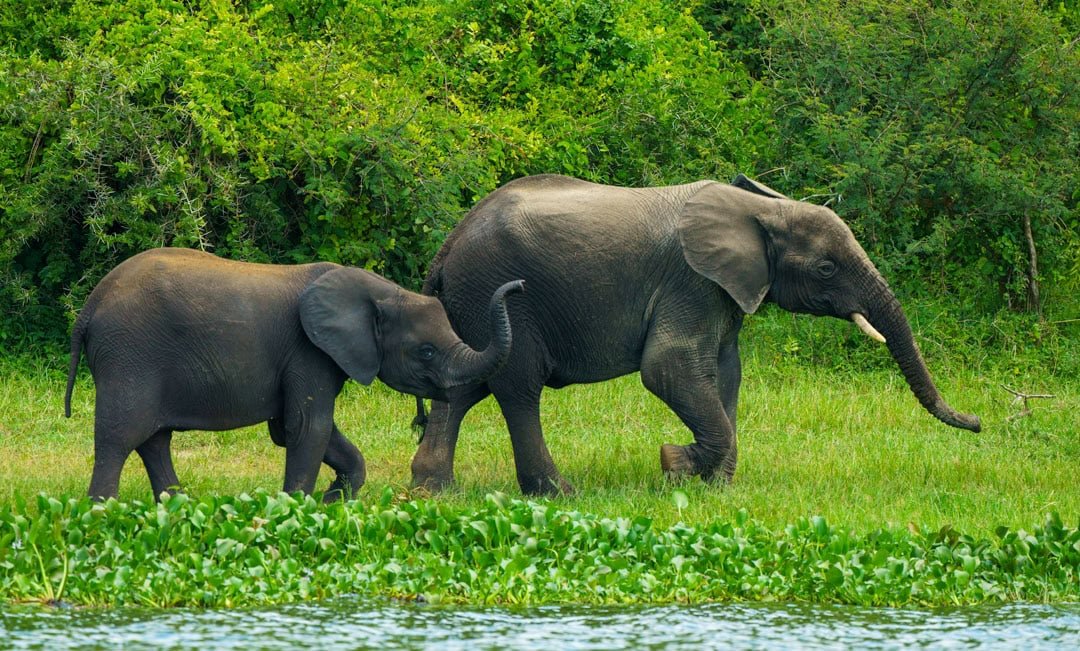
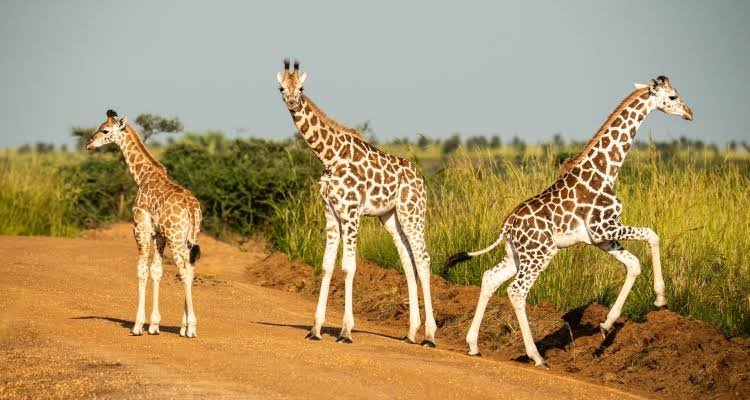
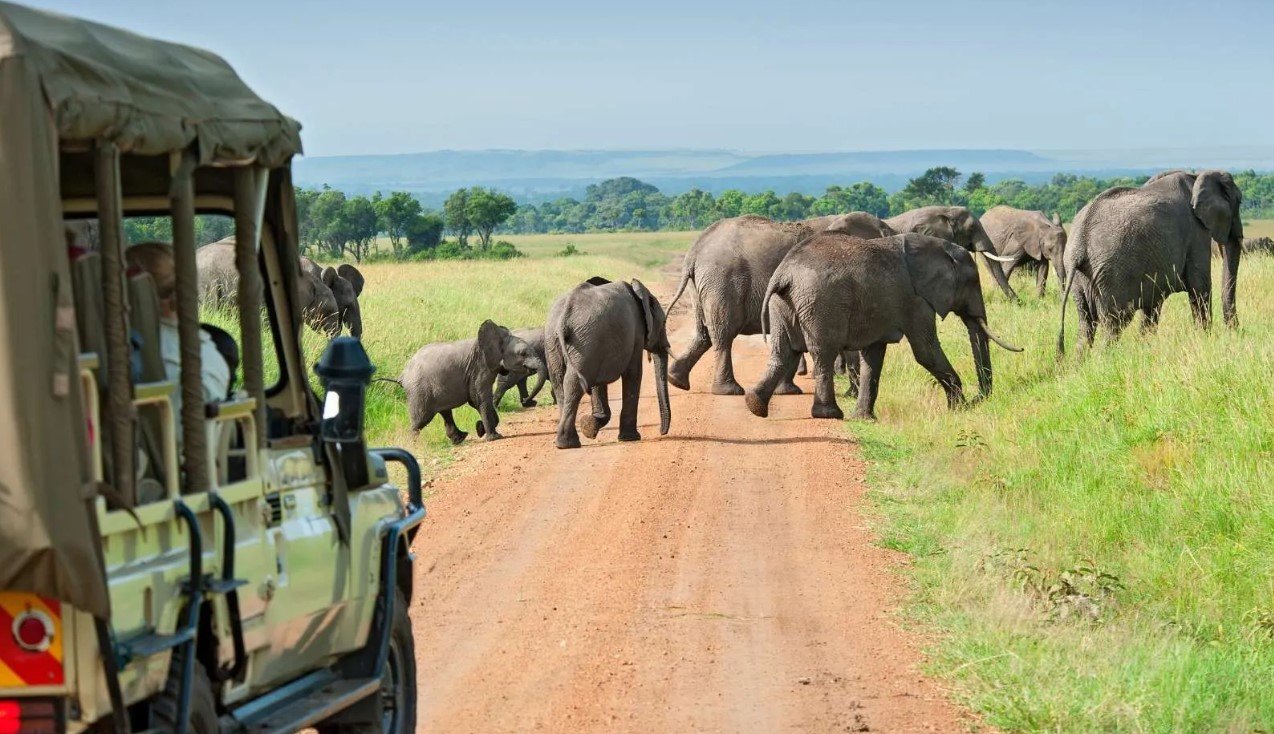
Uganda’s wildlife value extends far beyond its most famous animals. The country supports more than 18,000 recorded plant and animal species, including more than 1,000 bird species, globally important populations of mountain gorillas and chimpanzees, and recovering populations of buffaloes, zebras, waterbucks, giraffes and other large mammals. The 2026 State of Wildlife Resources report confirmed significant increases in several herbivore populations, demonstrating the importance of Uganda’s protected landscapes and continuing conservation work.
A successful wildlife safari should not simply move visitors through the greatest possible number of parks. It should create enough time for morning and evening game drives, boat safaris, guided walks, photography, relaxation and unexpected wildlife encounters. Nextgen Safaris designs each Ultimate Uganda Wildlife Safari around the traveller’s interests, budget, preferred accommodation and available number of days. The journey can focus entirely on savannah wildlife or combine the traditional safari experience with gorillas, chimpanzees, birdwatching and cultural encounters.
Why Choose Uganda for a Wildlife Safari?
Uganda is a remarkable safari destination because its protected areas represent several different ecosystems. Uganda Wildlife Authority manages ten national parks, including Murchison Falls, Queen Elizabeth, Kidepo Valley, Lake Mburo, Bwindi Impenetrable, Kibale, Mgahinga Gorilla, Semuliki, Mount Elgon and Rwenzori Mountains national parks. Together, these parks protect savannahs, forests, mountains, rivers, lakes and wetlands supporting an exceptional variety of wildlife.
The country is especially attractive to travellers who want more than a conventional game drive. Murchison Falls combines wildlife viewing with the River Nile and a powerful waterfall, Queen Elizabeth National Park offers the Kazinga Channel and the tree-climbing lions of Ishasha, Kidepo Valley provides remote wilderness, and Lake Mburo allows visitors to explore selected areas on foot. Kibale and Bwindi add intimate primate encounters that completely change the character of a traditional African safari.
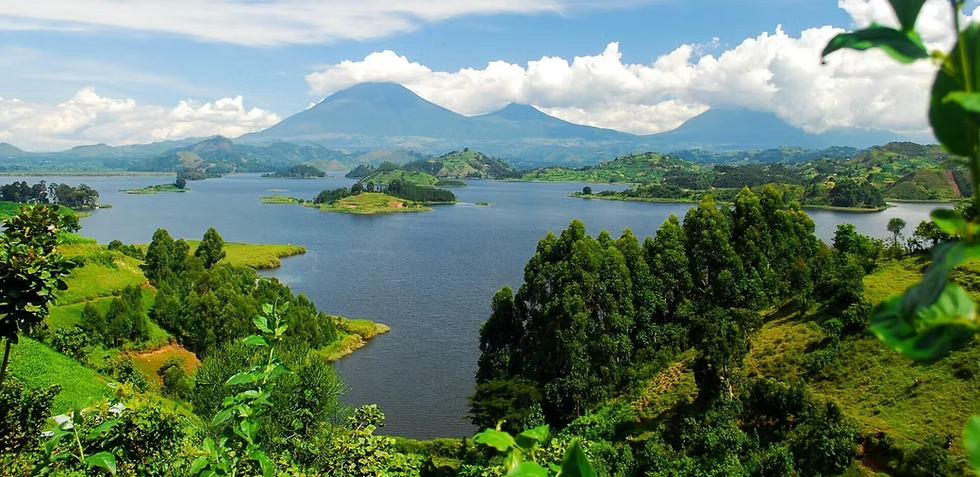
Uganda also offers a strong sense of progression as travellers move between destinations. The landscape changes from the wetlands around Entebbe to the savannahs of Murchison, the tea-covered hills of Fort Portal, the volcanic crater region around Queen Elizabeth and the mountainous forests of southwestern Uganda. These journeys make travelling between parks part of the experience rather than simply time spent reaching the next lodge.
Wildlife Conservation in Uganda
Uganda’s wildlife has experienced both serious historical decline and important recovery. The country’s 2026 wildlife report recorded buffalo numbers increasing from 32,235 during 2021–2022 to 41,548 during 2023–2025. Hippopotamus numbers rose from 8,226 to 9,026, zebras increased from 17,762 to 20,942, topis increased from 1,805 to 3,809, and Nubian giraffes increased from 2,414 to 2,519 during the same reporting periods.
Southern white rhinoceros numbers under conservation management also increased from 43 to 61, while Uganda’s mountain gorilla population remained stable at 459. The estimated chimpanzee population across major forest ecosystems increased from 5,072 to 6,075. These encouraging figures show that conservation investment, habitat protection, wildlife monitoring and managed species recovery can produce meaningful results.
However, conservation challenges remain. The 2026 report recorded declines in monitored elephant and lion populations and identified habitat fragmentation, agricultural expansion, invasive plants, climate variability, illegal wildlife use and human-wildlife conflict among the continuing threats to biodiversity. Travellers joining an Ultimate Uganda Wildlife Safari therefore become part of a wider conservation economy in which park fees, permits, lodge employment and community tourism help create value from keeping wildlife and habitats protected.
Murchison Falls National Park Wildlife Safari
Murchison Falls National Park is one of the most important destinations on an Ultimate Uganda Wildlife Safari. Covering approximately 3,840 square kilometres, it is Uganda’s largest national park and protects an impressive mixture of open savannah, woodland, riverine forest and wetland habitats. The Victoria Nile crosses the park before forcing its water through a narrow rocky gorge and dropping into the turbulent pool below Murchison Falls.
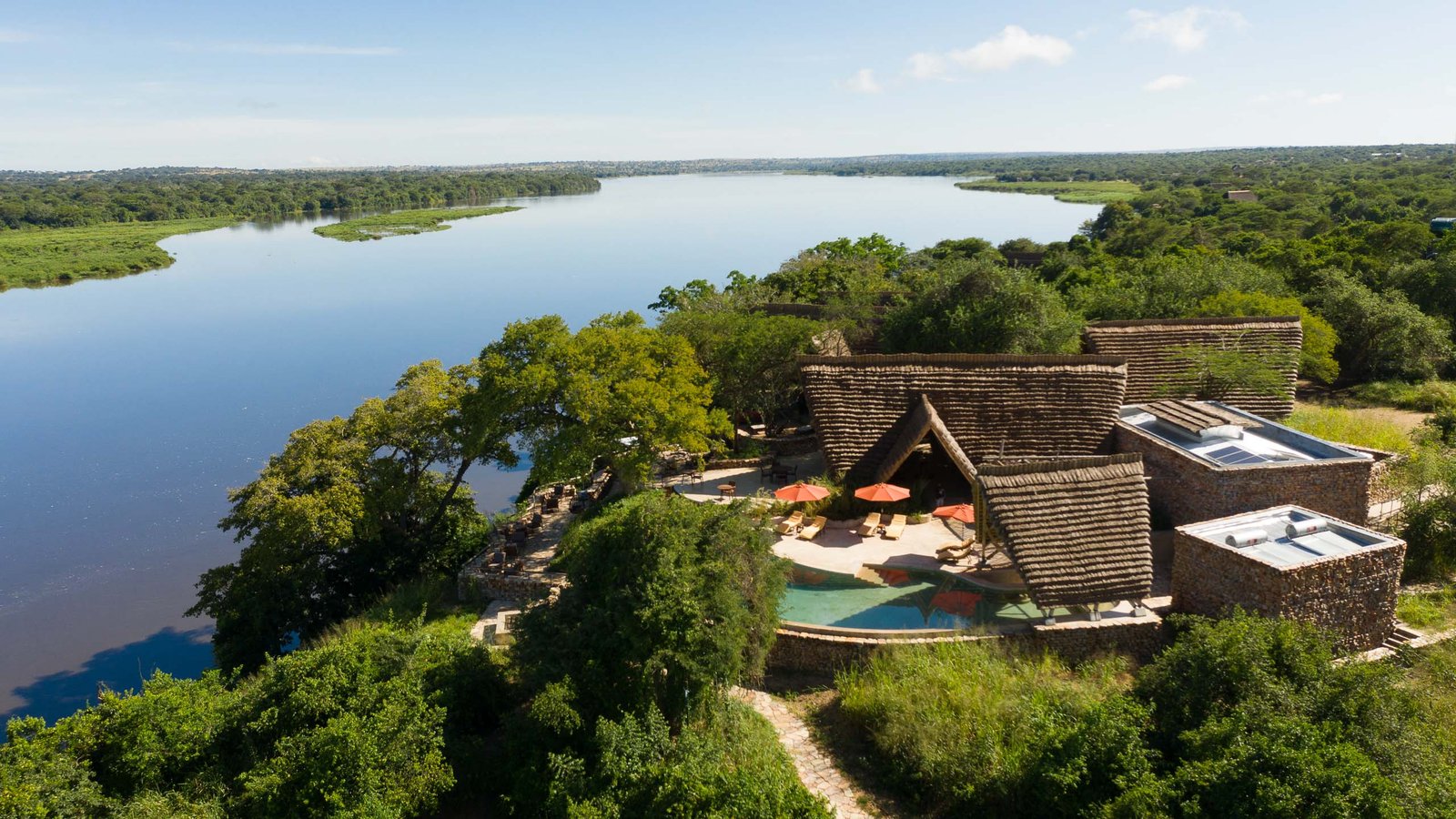
Wildlife viewing is especially rewarding on the northern side of the Nile, where open plains provide habitat for elephants, buffaloes, Uganda kobs, hartebeests, oribis, giraffes, warthogs and several predators. Lions may be found resting in the grass or following antelope herds, while leopards are more secretive and usually require patience, experienced guiding and favourable conditions. The park’s variety of habitats supports an officially reported 144 mammal species and more than 550 bird species.
A morning game drive should be combined with a boat journey on the Nile. As the boat travels towards the falls, visitors frequently observe hippos, Nile crocodiles, elephants, buffaloes and waterbirds along the riverbanks. The experience changes from calm wildlife viewing to dramatic scenery as the vessel approaches the base of the falls, where the Nile’s power becomes visible through rising mist, turbulent water and the surrounding rocky cliffs.
The Murchison Falls Boat Safari
The boat safari is one of the defining experiences of Murchison Falls National Park. Wildlife gathers near the river to drink, feed and cool down, creating opportunities to observe animals without following them across the savannah. Elephants may stand at the edge of the water, buffaloes rest along muddy banks, hippos surface around the vessel and crocodiles remain motionless in the sun before slipping quietly into the Nile.
Travellers may also consider a downstream journey towards the Lake Albert Delta. This quieter section of the river passes through papyrus wetlands and is particularly attractive to birdwatchers searching for the shoebill and other aquatic species. A private boat provides greater flexibility for photographers, while scheduled departures offer a more affordable experience for ordinary safari travellers.
The waterfall should also be visited from the top. From this viewpoint, visitors see the wide Nile suddenly compressed between rocks before exploding through the gorge. Including both the river cruise and the top-of-the-falls visit provides a complete understanding of the landscape and prevents Murchison from becoming only another game-drive destination.
Queen Elizabeth National Park Wildlife Safari
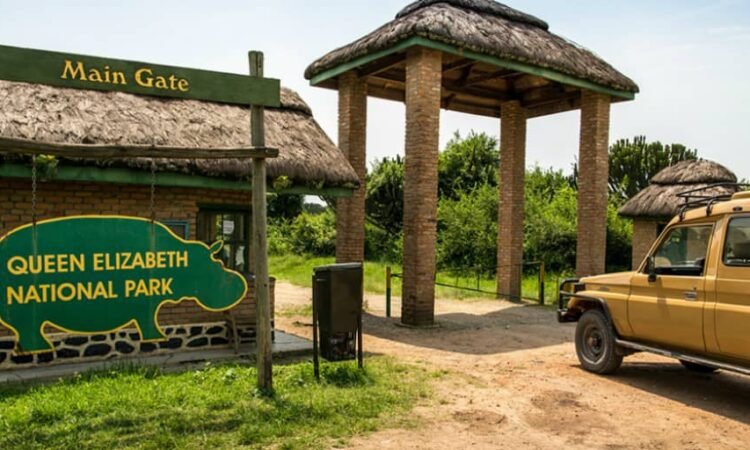
Queen Elizabeth National Park is one of Uganda’s most varied and accessible wildlife destinations. The park covers approximately 1,978 square kilometres and protects savannah, wetlands, forests, crater lakes and the shores of Lakes Edward and George. Uganda Wildlife Authority records more than 95 mammal species and over 600 bird species, making the park particularly valuable for travellers interested in both large mammals and birdwatching.
The Kasenyi Plains are among the main game-viewing areas. Large numbers of Uganda kobs support predators, while elephants, buffaloes, waterbucks and warthogs move through the surrounding grasslands. Lions may be observed resting in the open or following antelope herds, and leopards are occasionally seen around thickets and channels. Wildlife movements change according to rainfall, vegetation and the availability of water, making early morning and late afternoon particularly productive periods.
Queen Elizabeth fits naturally between Kibale and Bwindi, allowing travellers to combine chimpanzees, savannah wildlife and mountain gorillas within one efficient route. At least two nights are recommended so that a game drive and Kazinga Channel cruise can be enjoyed without rushing through the park.
Kazinga Channel Boat Safari
The Kazinga Channel is a natural waterway approximately forty kilometres long connecting Lake George and Lake Edward. It attracts large concentrations of hippos as well as elephants, buffaloes, crocodiles and numerous waterbirds. Because animals often gather close to the banks, the boat safari creates excellent opportunities for observation and photography from a low position near the water.
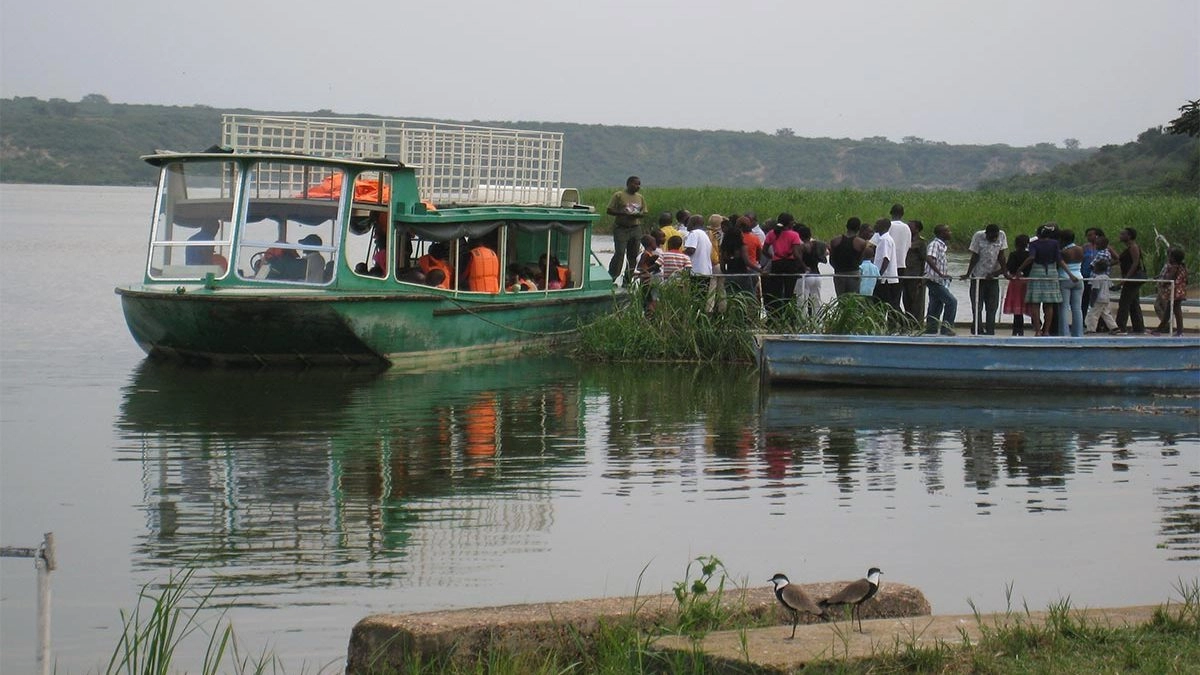
The experience is especially rewarding during warm afternoons when animals approach the channel to drink and cool down. Elephant herds may enter the shallow water, buffaloes rest in mud, and hippo groups fill sections of the channel with movement and sound. African fish eagles, kingfishers, herons, pelicans, storks and other birds add constant interest between larger wildlife sightings.
Travellers should carry binoculars, camera protection and a light layer against wind or rain. A private boat can be arranged for specialist photographers or families wanting additional flexibility, while scheduled cruises remain an excellent choice for most visitors.
Ishasha Tree-Climbing Lions
The Ishasha sector forms the southern part of Queen Elizabeth National Park and is famous for lions that sometimes rest in large fig trees. This unusual behaviour has become one of Uganda’s most recognised wildlife attractions, although tree sightings can never be guaranteed because the lions remain completely wild and choose where to rest according to temperature, disturbance and hunting conditions.
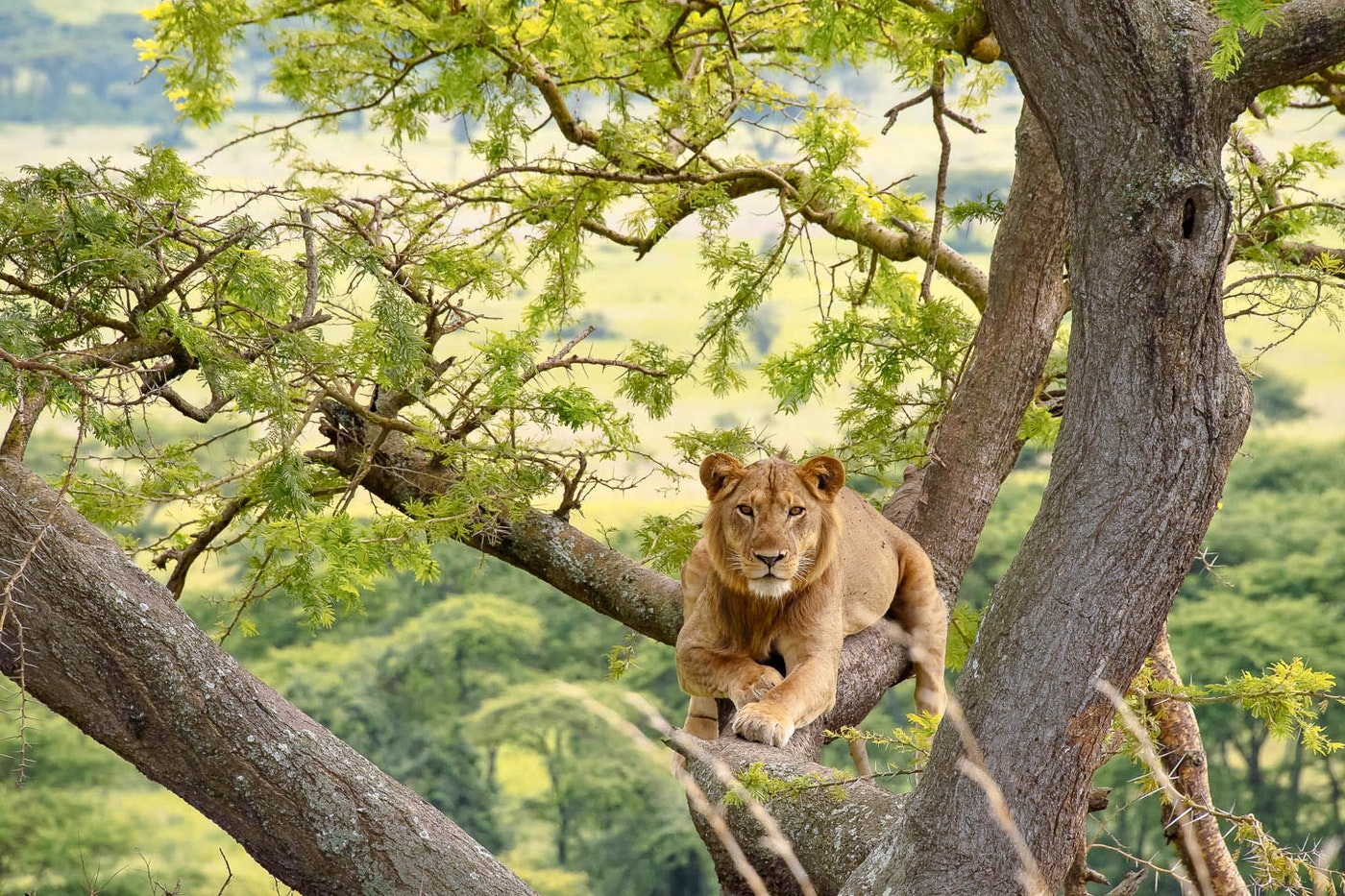
Ishasha should not be treated only as a quick road connection between Queen Elizabeth and Bwindi. Its open plains support topis, Uganda kobs, buffaloes, elephants and other wildlife, while the lower level of traffic can create a more peaceful safari atmosphere. Spending several hours on a slow game drive gives visitors a better chance of finding the resident lion prides and appreciating the wider landscape.
An overnight stay in or near Ishasha may be worthwhile for photographers, wildlife enthusiasts and travellers following a slower itinerary. Those continuing directly to Bwindi should still leave enough time for a meaningful game drive rather than passing through the sector in the middle of the day.
Kidepo Valley National Park Wildlife Safari
Kidepo Valley National Park offers Uganda’s most remote and dramatic savannah experience. Located in the Karamoja region near the borders with Kenya and South Sudan, the park covers approximately 1,442 square kilometres and rises from around 914 metres to 2,750 metres above sea level. Uganda Wildlife Authority records more than 77 mammal species and approximately 476 bird species within this rugged protected landscape.
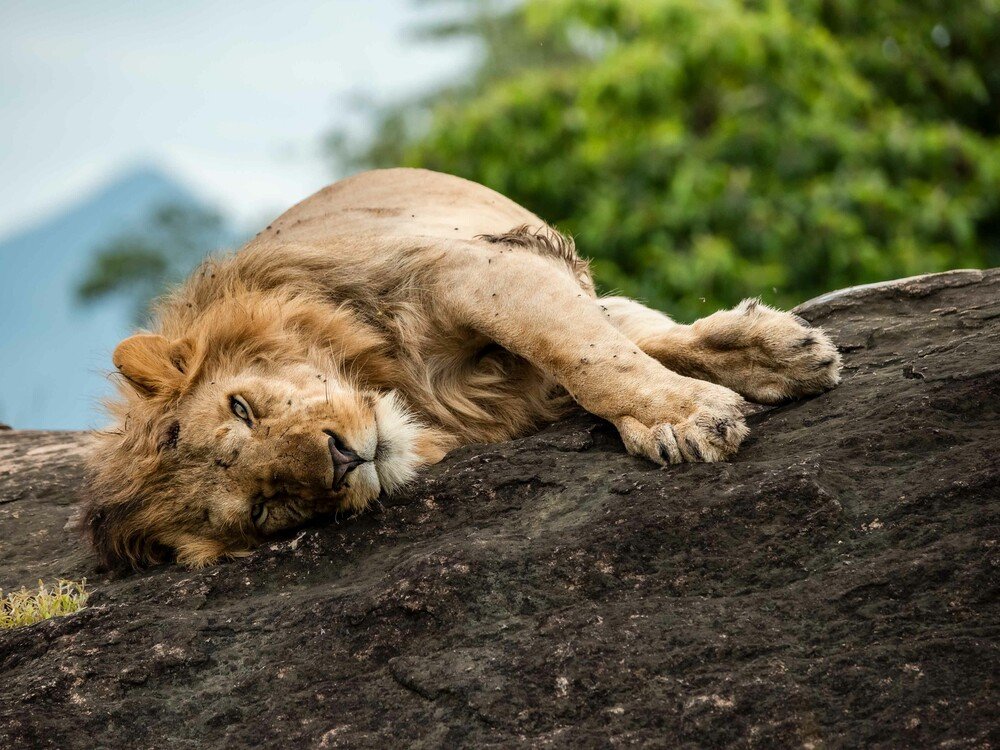
The Narus Valley is the principal wildlife-viewing area, particularly during dry periods when permanent water attracts buffaloes, elephants, zebras, giraffes, hartebeests and other herbivores. Lions may rest on rocky outcrops or move through the grasslands, while expansive views towards distant mountains create some of Uganda’s finest landscape photography.
Kidepo is also the only Ugandan national park where wild ostriches are regularly associated with the destination. Its northern and semi-arid wildlife character differs significantly from the greener western parks, making it an excellent addition for experienced safari travellers. Road journeys require sufficient time, while scheduled or chartered flights provide a more efficient option for travellers with limited days.
Lake Mburo National Park Wildlife Safari
Lake Mburo National Park is Uganda’s most accessible savannah park and is located between Kampala and Mbarara. Covering approximately 370 square kilometres, it protects a mosaic of lakes, wetlands, woodland, rocky ridges and open grassland. Wetlands occupy about twenty percent of the park and form part of a larger interconnected lake and swamp system.
The park is particularly known for zebras, impalas, elands, buffaloes, waterbucks, topis, warthogs and hippos. Uganda Wildlife Authority identifies Lake Mburo as the country’s only protected area with a naturally occurring impala population, while the absence of elephants has allowed woodland habitats to develop differently from Uganda’s larger savannah parks. Leopards and hyenas occur but are more difficult to observe.
Lake Mburo offers more than vehicle-based wildlife viewing. Guided walking safaris allow visitors to experience the landscape from the ground, while boat trips provide views of hippos, crocodiles and waterbirds. Its position close to the main highway makes it an ideal first or final safari stop between Entebbe and southwestern Uganda.
Gorilla Trekking as Part of a Uganda Wildlife Safari
Although a wildlife safari is often associated with lions, elephants and game drives, mountain gorilla trekking is one of Uganda’s most important wildlife experiences. Bwindi Impenetrable National Park protects approximately 459 mountain gorillas and extends across steep ridges and valleys covered by one of Africa’s most biologically diverse ancient forests. The park also supports around 120 mammal species, more than 350 bird species and over 200 butterfly species.
A gorilla trek begins with a ranger briefing before visitors enter the forest in groups assigned to habituated gorilla families. The walking time depends on the location of the gorillas, terrain and weather. Once the family is located, ordinary trekking permits allow a regulated viewing period during which visitors may observe feeding, resting, grooming and family interactions.
Including Bwindi transforms an ordinary savannah itinerary into an Ultimate Uganda Wildlife Safari. Travellers can move from observing elephants and lions in Queen Elizabeth National Park to walking through a mountain forest for one of Africa’s most intimate wildlife encounters. The route through Ishasha creates a natural connection between the two experiences.
Chimpanzee Tracking and Forest Wildlife
Kibale National Park is Uganda’s leading chimpanzee destination and provides an energetic contrast to gorilla trekking. Chimpanzees move through the forest in flexible communities, communicating through calls and travelling between feeding areas. Their speed, intelligence and complex social behaviour make each encounter unpredictable and fascinating.
Chimpanzee tracking can be incorporated between Murchison Falls and Queen Elizabeth National Park. The wider Kibale region also offers other primates, birds, crater-lake scenery and community experiences around Bigodi. Travellers with a deeper interest in primates may select the longer chimpanzee habituation experience, which provides more time in the forest than standard tracking.
Uganda’s 2026 wildlife report estimated the country’s chimpanzee population at 6,075 across major forest ecosystems, while Bwindi alone was confirmed to support 426 chimpanzees following a dedicated 2025 census. These findings reinforce Uganda’s importance as a destination for both savannah and forest wildlife conservation.
Birdwatching on an Ultimate Uganda Wildlife Safari
Uganda is one of Africa’s leading birdwatching destinations because several ecological regions meet within the country. Forest species, savannah birds, wetland specialists, Albertine Rift endemics and migratory species can all be included within a carefully planned itinerary. The 2026 wildlife report confirms that Uganda supports more than 1,000 recorded bird species.
Queen Elizabeth National Park has more than 600 recorded species, Murchison Falls officially reports more than 550, Kidepo has approximately 476, Bwindi supports more than 350 and Lake Mburo records over 315. These totals make it possible to enjoy productive birding without creating a specialist itinerary, although dedicated birdwatchers should use experienced guides and spend longer in each habitat.
The shoebill is one of Uganda’s most sought-after birds and may be searched for in papyrus wetlands such as Mabamba and the Lake Albert Delta. Forest birders may focus on Bwindi, Kibale and Semuliki, while Kidepo introduces species associated with drier northeastern environments. Early starts, patient observation and good binoculars are essential for a rewarding birding experience.
Best Time for an Ultimate Uganda Wildlife Safari
Uganda is open for wildlife tourism throughout the year. The relatively dry periods from June to September and December to February are popular because roads are often easier to navigate, vegetation in some savannah areas becomes less dense and forest trekking trails may be firmer. These months also coincide with stronger international demand, meaning lodges, gorilla permits and chimpanzee permits should be booked early.
The wetter months generally occur from March to May and again around September to November, although exact rainfall differs between regions. The countryside becomes greener, bird activity can be excellent and fewer safari vehicles may be present in some areas. Rain usually falls in showers rather than continuing throughout every day, but travellers should prepare for muddy forest trails and slower travel on unpaved roads.
Wildlife does not disappear during the rainy season. In some parks, animals spread across wider areas as seasonal water becomes available, while dry conditions can concentrate wildlife around rivers and permanent water sources. The best time should therefore be selected according to the traveller’s preferred landscapes, activities, budget and tolerance for rain rather than through one universal recommendation.
Best Uganda Wildlife Safari Itinerary for Five Days
A five-day wildlife journey should focus on destinations that can be combined without excessive driving. One suitable route includes Queen Elizabeth National Park and Bwindi, allowing travellers to enjoy game drives, the Kazinga Channel, Ishasha and mountain gorilla trekking. The journey can begin in Entebbe and end in Kigali, or operate in the opposite direction, depending on international flights and permit availability.
Another five-day option combines Murchison Falls National Park with a rhino conservation experience and Nile wildlife. This programme provides sufficient time for game drives, a boat cruise, the waterfall and a relaxed return journey. Five days are not enough to combine Murchison, Queen Elizabeth and Bwindi comfortably by road.
Best Uganda Wildlife Safari Itinerary for Seven Days
A seven-day itinerary can combine Kibale, Queen Elizabeth and Bwindi. Travellers begin with chimpanzee tracking, continue to the Kasenyi Plains and Kazinga Channel, drive through Ishasha and finish with gorilla trekking. This is one of Uganda’s strongest short itineraries because it combines two great ape encounters with classic savannah wildlife.
The route should provide two nights around Kibale, two nights in Queen Elizabeth and two nights near the selected Bwindi trekking sector. The final departure may be arranged through Kigali to reduce the return drive, although ending in Entebbe remains possible with an early departure or an additional night.
Best Uganda Wildlife Safari Itinerary for Ten Days
Ten days allow travellers to enjoy a more complete western Uganda circuit. A well-designed route can include Murchison Falls, Kibale, Queen Elizabeth and Bwindi. The itinerary provides Nile wildlife, chimpanzee tracking, game drives, boat safaris and gorilla trekking within one continuous journey.
Lake Mburo may be added as a final stop when the route returns to Entebbe, although each major destination should still receive enough time. Domestic flights can replace selected road transfers for travellers seeking greater comfort, but a well-paced road journey reveals more of Uganda’s landscapes and communities.
Best Uganda Wildlife Safari Itinerary for Fourteen Days
A fourteen-day safari provides enough time to explore Uganda without changing accommodation every night. A complete itinerary can include Murchison Falls, Kibale, Queen Elizabeth, Bwindi and Lake Mburo, with additional time for rhino conservation, Bigodi Wetland Sanctuary, Ishasha, community activities or a second primate trek.
Travellers interested in remote wilderness may use part of the itinerary for Kidepo Valley, particularly when domestic flights are available. Birders and photographers may prefer to remain longer in productive destinations instead of adding more parks. The strength of a two-week safari lies in depth, flexibility and the ability to respond to wildlife conditions without rushing.
Luxury, Mid-range and Budget Wildlife Safaris
Luxury Uganda safaris focus on private vehicles, efficient transfers, excellent guides and carefully chosen lodges. High-end properties may offer spacious cottages, private dining, forest or savannah views and personalised service. Domestic flights between Entebbe, Murchison, Kasese, Kihihi or Kisoro can reduce long transfers and create more time for wildlife activities.
Mid-range safaris offer an excellent balance between comfort and cost. Travellers stay in well-located lodges with private bathrooms, good meals and dependable service while enjoying the same major park activities. The vehicle, guide and itinerary quality should never be compromised simply to reduce the accommodation category.
Budget safaris use simpler lodges, guesthouses or permanent tents while protecting essential elements such as safe transport, permits, park fees and professional guiding. Group travel can reduce the cost per person, although private budget safaris remain possible for couples and small groups willing to travel by road.
Family Uganda Wildlife Safaris
Uganda can provide a highly rewarding family safari when driving times and activity ages are planned carefully. Game drives and boat safaris in Murchison Falls, Queen Elizabeth and Lake Mburo allow children to observe elephants, giraffes, zebras, hippos and other animals without demanding forest walks.
Older children who meet official age requirements may participate in gorilla or chimpanzee trekking, while younger family members can join alternative nature and community activities. Private vehicles are particularly valuable because the family can control departure times, rest stops and the length of each game drive.
Accommodation should provide suitable room arrangements, flexible meals and enough space to relax between activities. Spending at least two nights in major destinations creates a better family experience than moving to another lodge every morning.
Photography on a Uganda Wildlife Safari
Uganda offers photographers a combination of open landscapes, river wildlife, forest primates and dramatic weather. A private vehicle is recommended because it allows the guide to position the vehicle according to light, animal movement and the photographer’s equipment. Morning and late-afternoon drives normally provide softer light and more active wildlife.
Boat safaris create excellent low-angle views of elephants, hippos, crocodiles and birds. Forest photography requires greater preparation because gorillas and chimpanzees may be encountered in dark, humid conditions. Cameras should perform well at higher ISO settings, while lenses and equipment must be protected from rain and condensation.
Photographers should avoid packing more equipment than they can manage comfortably. A versatile telephoto lens, a second camera body where available, spare batteries, memory cards and waterproof protection normally provide a practical foundation for an Ultimate Uganda Wildlife Safari.
What to Pack for a Uganda Wildlife Safari
Travellers should pack lightweight neutral clothing, comfortable closed shoes, a hat, sunscreen, insect repellent and a light jacket for cool mornings. Long sleeves and trousers provide protection from sun, insects and vegetation. A waterproof jacket should remain accessible during every season because showers can develop quickly.
Forest trekking requires strong hiking footwear, quick-drying trousers, gloves, gaiters and a small daypack. Cameras, passports, permits and spare clothing should be kept inside waterproof bags. Binoculars improve wildlife and bird observation even for visitors who are not specialist birdwatchers.
Soft-sided luggage is generally easier to fit into safari vehicles and small aircraft. Travellers using domestic flights should confirm luggage restrictions before departure. Laundry services at lodges make it possible to pack lightly even for itineraries lasting ten days or longer.
Responsible Wildlife Tourism in Uganda
Responsible safari behaviour begins with following the instructions of driver-guides and park rangers. Visitors should never request that a guide drive off authorised tracks, crowd an animal, separate a mother from its young or approach wildlife at an unsafe distance. Quiet observation often creates better encounters than aggressively pursuing animals for photographs.
Primate rules are especially important because gorillas and chimpanzees can be vulnerable to human illnesses. Travellers should report symptoms honestly, maintain the instructed distance, avoid flash photography and never eat close to the animals. Every visitor should remove litter and avoid damaging plants or habitats.
Supporting locally connected lodges, community guides, porters, craft producers and conservation projects helps ensure that tourism benefits people living near protected areas. Uganda Wildlife Authority also uses community programmes, collaborative management and revenue-sharing approaches to connect protected-area conservation with surrounding livelihoods.
Frequently Asked Questions About an Ultimate Uganda Wildlife Safari
What is included in an Ultimate Uganda Wildlife Safari?
An Ultimate Uganda Wildlife Safari normally includes airport transfers, transportation in a customised safari vehicle, accommodation, meals specified in the itinerary, park entrance fees, scheduled game drives, boat safaris and the services of a professional driver-guide. When gorilla trekking or chimpanzee tracking is included, the relevant permits should also appear clearly in the quotation.
The exact inclusions depend on the itinerary and accommodation category. Domestic flights, international flights, visa costs, travel insurance, personal expenses, premium drinks, laundry and gratuities may be excluded unless specifically stated. Nextgen Safaris provides a detailed proposal so travellers can understand every included activity and cost before confirming the journey.
How many days do I need for an Ultimate Uganda Wildlife Safari?
The ideal duration for an Ultimate Uganda Wildlife Safari is usually between seven and fourteen days. Seven days can comfortably combine Kibale National Park, Queen Elizabeth National Park and Bwindi Impenetrable National Park, giving travellers chimpanzee tracking, game drives, a Kazinga Channel cruise and gorilla trekking.
Ten to fourteen days provide a more complete journey and may include Murchison Falls National Park, Lake Mburo National Park, rhino tracking and additional cultural or community experiences. Travellers with only five days should focus on one or two nearby destinations rather than attempting to cover the entire country too quickly.
What are the best national parks for an Ultimate Uganda Wildlife Safari?
The strongest parks for an Ultimate Uganda Wildlife Safari depend on the traveller’s interests. Murchison Falls National Park is excellent for elephants, giraffes, lions, Nile boat safaris and the dramatic waterfall. Queen Elizabeth National Park offers game drives, the Kazinga Channel, crater landscapes and opportunities to search for the tree-climbing lions of Ishasha.
Kibale National Park is Uganda’s leading chimpanzee destination, while Bwindi Impenetrable National Park provides mountain gorilla trekking. Lake Mburo National Park is ideal for zebras, impalas and walking safaris, while Kidepo Valley National Park offers a remote wilderness experience with dramatic scenery and fewer safari vehicles.
What is the best time for an Ultimate Uganda Wildlife Safari?
An Ultimate Uganda Wildlife Safari can be enjoyed throughout the year. June to September and December to February are popular because rainfall is generally lower, forest trails may be firmer and road conditions are often easier. These months are suitable for game drives, gorilla trekking, chimpanzee tracking and photography.
The wetter months from March to May and September to November also provide rewarding experiences. The countryside becomes greener, visitor numbers may be lower and birdwatching can be excellent. Travellers visiting during these periods should prepare for occasional rain, muddy forest trails and slower travel on some unpaved roads.
Can an Ultimate Uganda Wildlife Safari include gorilla trekking?
An Ultimate Uganda Wildlife Safari can easily include gorilla trekking in Bwindi Impenetrable National Park or Mgahinga Gorilla National Park. Gorilla trekking adds a deeply personal forest encounter to traditional savannah activities such as game drives and boat cruises.
A popular itinerary combines Kibale chimpanzees, Queen Elizabeth National Park and Bwindi gorillas. This route allows travellers to move naturally from rainforest primates to savannah wildlife before completing the journey with a mountain gorilla encounter. Gorilla permits should be secured early because availability is limited.
Can I include chimpanzee tracking in an Ultimate Uganda Wildlife Safari?
Chimpanzee tracking is one of the most rewarding additions to an Ultimate Uganda Wildlife Safari. Kibale National Park is normally the preferred destination because of its established tracking programme, remarkable primate diversity and convenient location within Uganda’s western safari circuit.
The experience can be included before Queen Elizabeth National Park and Bwindi. Travellers who want more time with chimpanzees may choose the habituation experience, which involves a longer period in the forest. Ordinary chimpanzee tracking is suitable for most first-time visitors and can often be combined with Bigodi Wetland Sanctuary on the same day.
Is an Ultimate Uganda Wildlife Safari suitable for families?
An Ultimate Uganda Wildlife Safari can be designed successfully for families when the itinerary considers the ages, energy levels and interests of the children. Game drives, boat safaris and shorter wildlife activities in Murchison Falls, Queen Elizabeth and Lake Mburo are particularly enjoyable for families.
Older children may join gorilla or chimpanzee trekking when they meet the official minimum-age requirements. Younger children can participate in alternative nature walks, cultural visits and lodge activities. A private vehicle, spacious accommodation and at least two nights in major destinations create a more comfortable family safari.
How much does an Ultimate Uganda Wildlife Safari cost?
The price of an Ultimate Uganda Wildlife Safari depends on the number of travel days, group size, accommodation category, park activities, permits, vehicle type and whether domestic flights are included. Budget packages use simpler accommodation, while mid-range journeys offer comfortable lodges and private facilities. Luxury safaris may include premium properties, fly-in transfers and highly personalised services.
Gorilla and chimpanzee permits are important fixed costs that influence the final price. Solo travellers generally pay more per person because they do not share vehicle and guide expenses, while couples, families and groups can divide these costs. Nextgen Safaris prepares each quotation according to the exact itinerary rather than using one general price for every traveller.
Is an Ultimate Uganda Wildlife Safari safe?
An Ultimate Uganda Wildlife Safari is generally safe when organised through a responsible operator and conducted according to park rules. Wildlife activities are led by trained driver-guides and park rangers who understand animal behaviour, road conditions and the requirements of each protected area.
Travellers should remain inside the vehicle where instructed, avoid approaching wildlife independently and follow all gorilla and chimpanzee trekking rules. Comprehensive travel insurance, suitable clothing, personal medication and realistic travel schedules also contribute to a safer journey. Nextgen Safaris provides local support throughout the itinerary and adjusts arrangements when conditions require it.
Why book an Ultimate Uganda Wildlife Safari with Nextgen Safaris?
Booking an Ultimate Uganda Wildlife Safari with Nextgen Safaris gives travellers access to local knowledge, personalised planning and dependable safari operations. Our team arranges accommodation, wildlife activities, primate permits, private transport, professional driver-guides and realistic travel times between Uganda’s national parks.
Every safari is designed around the traveller’s budget, available days, preferred comfort level and wildlife priorities. Whether the journey focuses on savannah animals, gorillas, chimpanzees, birdwatching, photography or family travel, Nextgen Safaris creates a carefully paced itinerary that maximises time in the wilderness while avoiding unnecessary rushing.
Book Your Ultimate Uganda Wildlife Safari With Nextgen Safaris
An Ultimate Uganda Wildlife Safari is more than a journey between national parks. It is an opportunity to experience the River Nile, open savannahs, tropical forests, crater lakes and mountain landscapes while encountering some of Africa’s most remarkable wildlife. From elephants in Murchison Falls and lions in Queen Elizabeth to zebras in Lake Mburo, chimpanzees in Kibale and mountain gorillas in Bwindi, Uganda offers a safari of exceptional variety.
Nextgen Safaris creates personalised wildlife journeys for solo travellers, couples, families, honeymooners, private groups, birdwatchers and photographers. Our team arranges comfortable accommodation, professional driver-guides, reliable four-wheel-drive safari vehicles, park activities, domestic flights and primate permits where required. Each route is carefully designed to reduce unnecessary driving and provide enough time for wildlife viewing.
Your safari can begin and end in Entebbe or use an open route between Entebbe and Kigali. It may focus on a five-day wildlife escape, a seven-day gorilla and chimpanzee adventure, a ten-day western circuit or a complete fourteen-day exploration. Accommodation can be selected from budget, mid-range, luxury or exclusive high-end properties according to your preferred travel style.
Contact Nextgen Safaris today and let our local experts design your unforgettable Uganda wildlife journey. We will create a carefully paced safari combining extraordinary animal encounters, beautiful landscapes, knowledgeable guiding and the personalised service needed to experience the Pearl of Africa with confidence.