
Uganda Safari Photography
Uganda Safari Photography – Spectacular Wildlife, Gorilla & Landscape Photography Guide
Uganda Safari Photography offers photographers one of Africa’s most diverse opportunities to capture mountain gorillas, chimpanzees, lions, elephants, giraffes, hippos, birds, volcanic landscapes, tropical rainforests, wetlands and sweeping savannah within a single destination. Uganda’s protected areas range from the mist-covered forests of Bwindi and Mgahinga to the open landscapes of Murchison Falls, Queen Elizabeth, Lake Mburo and remote Kidepo Valley. This extraordinary ecological diversity makes Uganda particularly appealing to photographers who want to return home with a portfolio containing far more than conventional savannah wildlife.
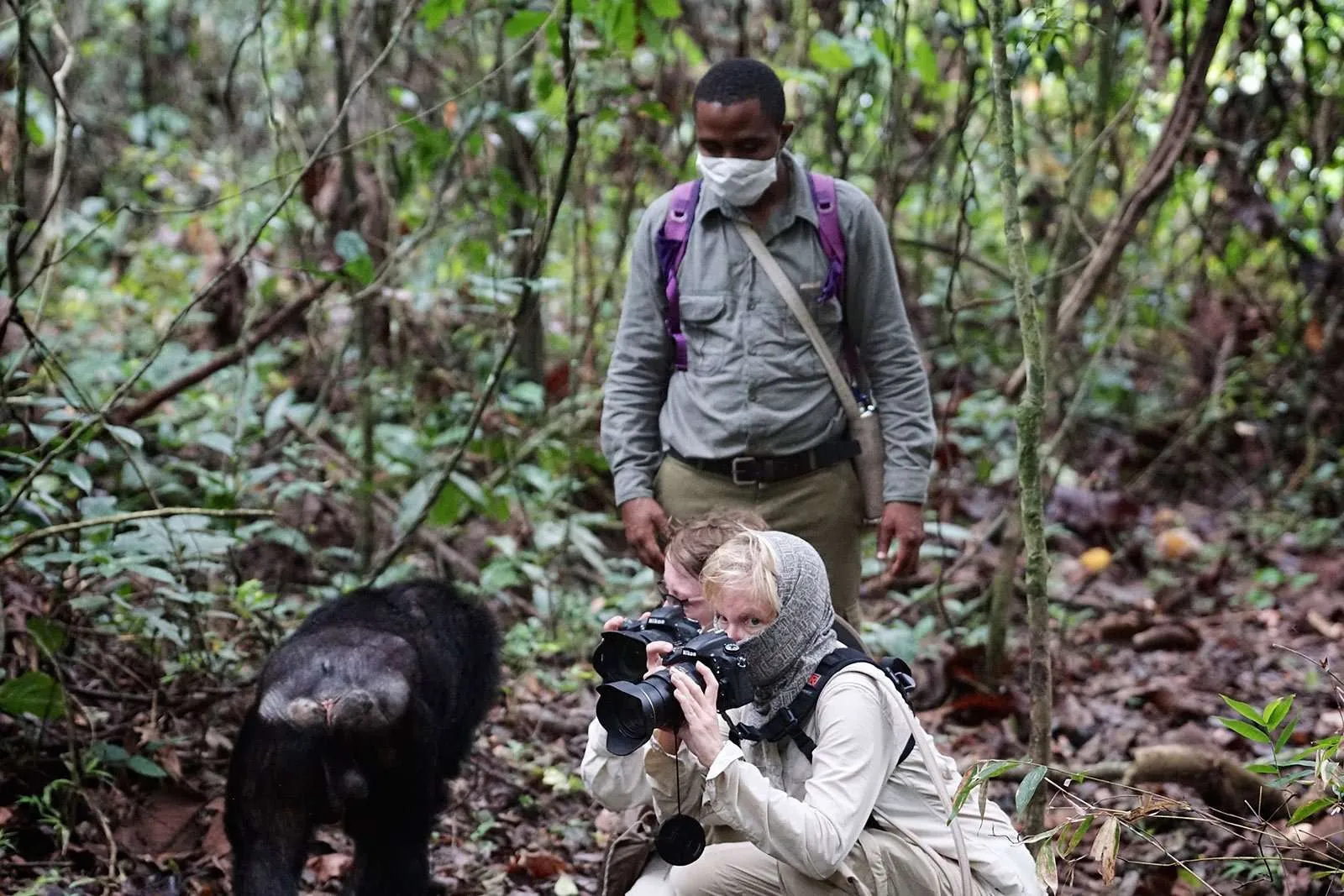
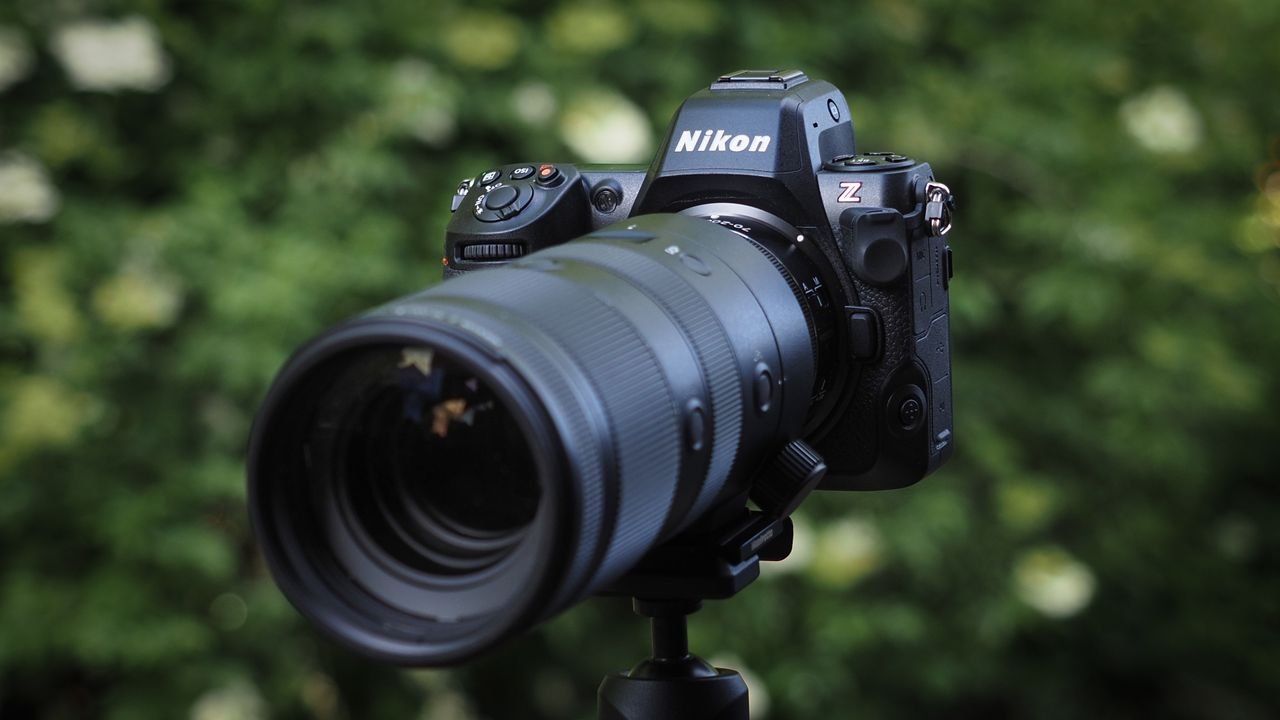
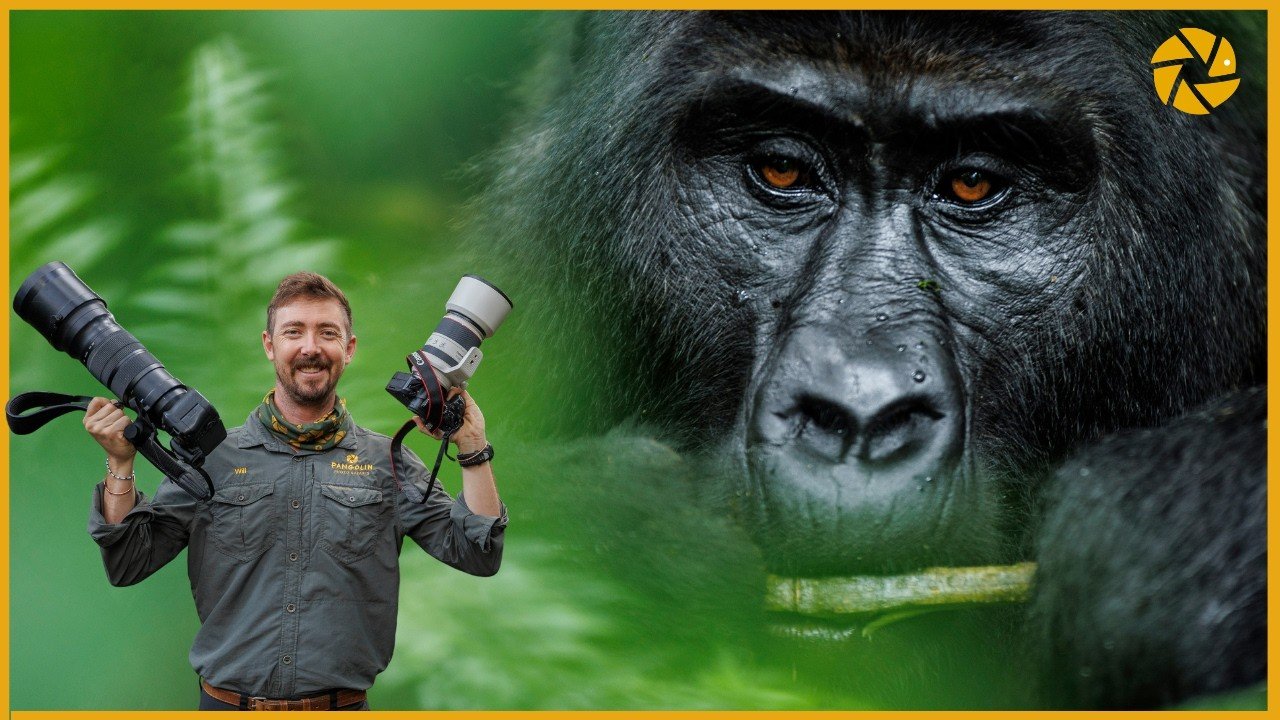
A carefully designed Uganda Safari Photography experience should be different from a standard sightseeing safari. Photographers often need more time at individual sightings, better positioning of the safari vehicle, early departures when light is softer, sufficient room for cameras and lenses, and a guide who understands that photographing one lion for forty minutes may be more valuable than rushing away to add another species to a wildlife checklist. Successful safari photography depends heavily on patience, light, animal behavior, composition and the ability to remain with a promising subject long enough for something interesting to happen.
Uganda is especially rewarding because the photographic environment changes continuously as the journey progresses. One morning can be spent photographing chimpanzees beneath Kibale’s forest canopy, another can involve elephants moving across Queen Elizabeth National Park, and another afternoon may be devoted to hippos, buffaloes and birds along the Kazinga Channel. Eventually, photographers can enter Bwindi Impenetrable National Park for intimate mountain gorilla portraits, while Murchison Falls provides giraffes, the Nile and dramatic river landscapes. Kidepo Valley adds huge skies and distant mountains that give wildlife photographs a very different sense of scale.
Nextgen Safaris can design a private photography-focused safari around the subjects you most want to photograph, your camera equipment and the amount of time you want to spend in each destination. Whether your priority is gorilla portraiture, birds in flight, predators, primates, dramatic landscapes or a broad Uganda wildlife portfolio, an Uganda Safari Photography tour can be structured around photographic opportunities rather than treating photography as a secondary part of an ordinary safari.
Why Choose Uganda for Safari Photography?
Uganda is exceptionally rewarding for photographers because it combines rainforest, savannah, wetland, river, mountain and volcanic ecosystems within one country. This diversity creates opportunities to photograph everything from great apes hidden beneath dense forest canopy to giraffes standing beneath enormous East African skies. Wildlife photography can therefore change dramatically from one park to another, forcing photographers to adapt their lenses, exposure choices and creative approach throughout the journey.
This variety gives Uganda Safari Photography a visual range that is difficult to achieve in destinations dominated mainly by open savannah. In Bwindi, photography becomes intimate and technically demanding because dark gorilla fur is surrounded by lush vegetation and constantly changing forest light. In Kidepo, photographers encounter almost the opposite environment: enormous open spaces, distant mountains and cleaner backgrounds that encourage wider wildlife compositions. Queen Elizabeth provides savannah, crater scenery and wetlands, while Murchison introduces large mammals against the River Nile and dramatic landscapes surrounding the falls.
The result is a photography safari where every destination presents a different creative challenge. Rather than returning home with hundreds of similar photographs, travelers can build a portfolio combining wildlife portraits, animal behavior, environmental compositions, landscapes, birds, primates and river scenes.
Gorilla Photography in Bwindi Impenetrable National Park
Mountain gorillas are among the most compelling subjects available during an Uganda Safari Photography journey. Gorilla trekking in Uganda takes place in Bwindi Impenetrable National Park and Mgahinga Gorilla National Park, with Bwindi divided into different trekking sectors such as Buhoma, Ruhija, Rushaga and Nkuringo. The trek itself can vary considerably in length because the gorillas move naturally through their habitat, meaning photographers must be prepared to carry their equipment through steep and sometimes challenging forest terrain.
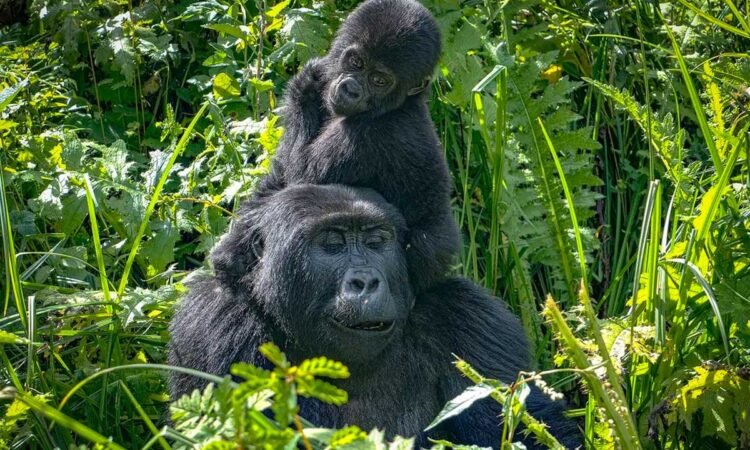
From a photographic perspective, the limited period spent with the gorillas makes preparation extremely important. Camera settings should already be reasonably configured before the family is encountered rather than spending valuable minutes navigating menus after arriving. Gorilla photography frequently takes place under thick forest canopy where available light can be limited, so cameras with good high-ISO performance and lenses capable of working effectively in lower light can provide a major advantage.
A medium telephoto zoom is particularly versatile because gorilla encounters can include both intimate portraits and wider environmental compositions. Photographers should resist the temptation to fill every frame with a silverback’s face. A mountain gorilla surrounded by bamboo, vines and deep forest can communicate far more about its environment than a tightly cropped portrait alone.
Patience becomes one of the most important photographic skills. A resting gorilla may suddenly lift its head, a juvenile may begin playing nearby or a silverback may move into a shaft of soft forest light. Anticipating these moments rather than continuously firing the shutter often produces stronger and more meaningful photographs.
Photographing Gorillas in Difficult Forest Light
Forest photography is one of the technical challenges that makes Uganda Safari Photography particularly interesting. Bwindi contains dense vegetation and uneven lighting, with subjects sometimes moving from a bright opening into heavy shade within seconds. Dark gorilla fur creates an additional exposure challenge because cameras may react strongly to bright leaves or patches of sky and leave the animal underexposed.
Photographers should be comfortable raising ISO when necessary rather than allowing shutter speed to drop too far. A gorilla may appear calm, but hands, eyes, heads and juveniles can move quickly. Image stabilization can help control camera movement, but it cannot freeze the animal itself, meaning a sufficiently fast shutter speed remains important.
Checking exposure periodically can prevent an entire series from being unintentionally too dark. Exposure compensation may become particularly useful when a gorilla occupies most of the frame but is surrounded by much brighter vegetation. Photographers working in manual exposure or manual exposure with Auto ISO can also adapt efficiently when they understand their camera well.
The strongest gorilla photographs frequently depend on the eyes. When vegetation, subject position and lighting align, focusing accurately on the nearest visible eye can create an exceptionally powerful portrait that communicates intelligence, personality and emotion.
Mgahinga Gorilla and Golden Monkey Photography
Mgahinga Gorilla National Park offers another rewarding destination for Uganda Safari Photography, particularly for photographers interested in combining primates with spectacular Virunga scenery. The volcanic landscape gives images a very different atmosphere from Bwindi, and the park provides opportunities to photograph mountain gorillas, golden monkeys and dramatic highland environments.
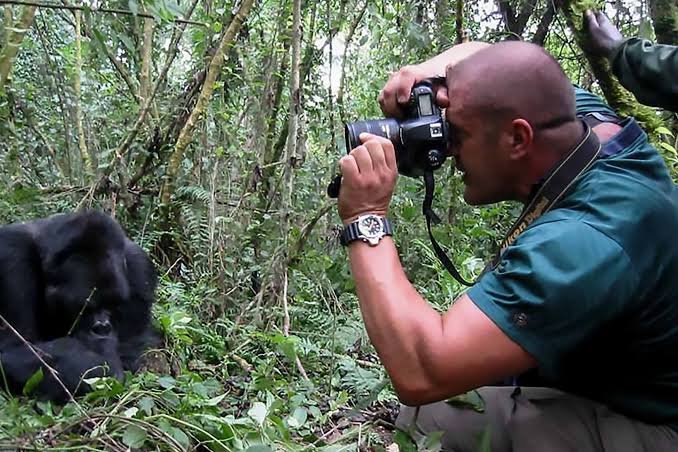
Golden monkeys create a completely different technical challenge from mountain gorillas because they tend to be much more active. Their movement through bamboo vegetation requires faster shutter speeds, responsive autofocus and the ability to react quickly when an animal appears briefly in an open position.
Their golden-orange fur also contrasts beautifully with green bamboo and forest vegetation, producing colorful photographs when the light is favorable. Photographers should watch for individuals feeding, jumping between branches or interacting with other members of the group because behavior often creates stronger images than simple portraits.
Mgahinga’s mountain scenery provides another reason to carry a wider lens. Landscapes showing volcanic slopes, mist and highland vegetation can add valuable context to a broader Uganda photography portfolio.
Chimpanzee Photography in Kibale National Park
Chimpanzee photography is another major reason to include Kibale National Park in an Uganda Safari Photography journey. Kibale is Uganda’s best-known chimpanzee tracking destination and provides photographers with the opportunity to work in dense rainforest conditions where chimpanzees may move quickly through trees, vegetation and forest clearings.
Chimpanzees can be technically more difficult to photograph than gorillas because they are highly mobile, energetic and unpredictable. A photographer may have only a few seconds to capture an individual climbing, running, feeding or interacting with another chimpanzee. Autofocus responsiveness and the ability to adjust exposure quickly therefore become particularly important.
A flexible telephoto zoom is often more useful than an extremely long fixed lens because subject distance changes constantly. Wide apertures can help in low forest light and may also soften distracting vegetation behind the animal.
Photographers should listen as carefully as they look. Chimpanzee calls can indicate where the community is moving, and experienced trackers may recognize behavior suggesting that animals are about to descend from trees or cross through a clearing. Being ready before the chimpanzee enters an open position can produce much stronger results than reacting after the moment has already begun.
Queen Elizabeth National Park Photography
Queen Elizabeth National Park is one of the most versatile destinations for Uganda Safari Photography because it combines open savannah, wetlands, crater landscapes, waterways, abundant wildlife and exceptional birdlife. The park provides photographers with opportunities for everything from close animal portraits to broad environmental compositions showing wildlife within the surrounding landscapes.
Morning and late-afternoon game drives can be especially rewarding because lower-angle light creates richer texture in fur, grass and dust. Elephants can be photographed moving through open country, antelopes can be isolated against clean grassland backgrounds and predators can be framed within wide landscapes rather than appearing only as tight headshots.
A private photography vehicle becomes especially valuable here because even a small change in position can dramatically improve the background or light. Photographers may want to wait for an elephant to walk into a better composition or remain with lions until they begin interacting rather than leaving immediately after the first photograph.
Queen Elizabeth also combines naturally with the Kazinga Channel and Ishasha, allowing photographers to capture wildlife from vehicles, boats and different savannah environments within the same broader destination.
Kazinga Channel Photography
The Kazinga Channel provides one of the strongest water-based wildlife photography experiences in Uganda. Hippos, crocodiles, buffaloes, elephants and numerous birds can be encountered along the channel, allowing photographers to work with subjects from a completely different perspective than during vehicle-based game drives.
Boat photography often provides relatively low shooting angles across the water, which can make wildlife photographs feel more intimate. Hippos photographed close to water level, elephants standing along the shoreline and birds reflected in calmer sections of the channel can create compelling compositions.
A telephoto zoom is usually more practical than an extremely long fixed lens because the distance between the boat and wildlife changes constantly. Photographers should also maintain sufficiently fast shutter speeds to compensate for both animal movement and the slight motion of the boat.
Bird photographers may find the Kazinga Channel particularly productive because numerous waterbirds can be photographed in natural feeding and resting environments. The ability to capture mammals, birds, water and landscape elements during a single excursion makes this one of the most productive sections of an Uganda Safari Photography tour.
Photographing the Tree-Climbing Lions of Ishasha
The Ishasha Sector is famous for its tree-climbing lions and provides one of Uganda’s most distinctive predator photography opportunities. Lions may occasionally be seen resting high in large fig trees, creating images that look completely different from conventional lion photographs taken on the ground.
Sightings can never be guaranteed because the animals move freely through their territory. Photography-focused travelers should therefore allow sufficient time in Ishasha rather than treating it as a brief stop while driving between Queen Elizabeth and Bwindi.
When lions are found in trees, photographers should consider both close portraits and wider environmental compositions. A tightly framed lion can reveal expression and detail, while an image showing the entire tree, surrounding savannah and animal together tells the much more distinctive story of Ishasha.
Spending a night within or near the sector creates opportunities for additional game drives when the light may be more favorable and wildlife activity more interesting.
Murchison Falls National Park Photography
Murchison Falls National Park is one of the strongest destinations for Uganda Safari Photography because it combines large mammals, broad savannah, the River Nile and dramatic waterfall scenery. The northern game-viewing areas provide classic East African wildlife photography, while the river introduces an entirely different visual dimension.
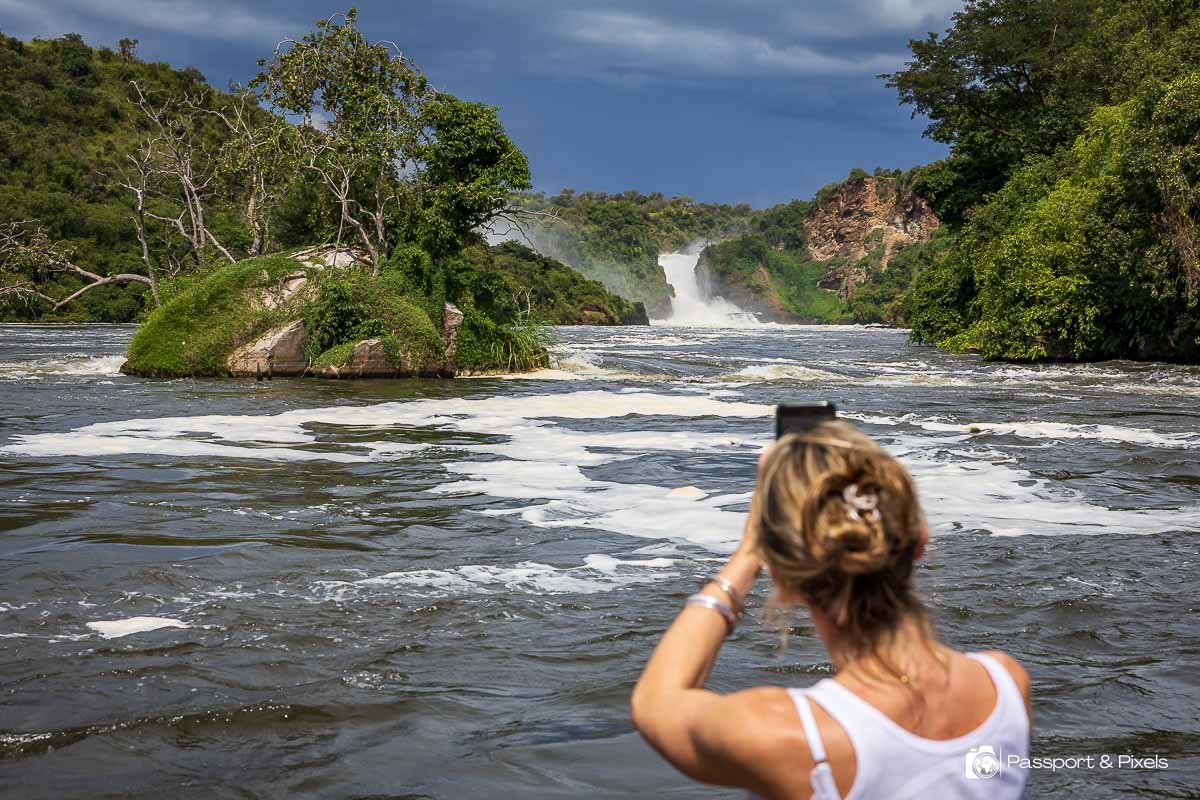
Giraffes are particularly attractive photographic subjects in Murchison because their height and shape work beautifully against open landscapes and distant vegetation. Elephants, buffaloes and antelopes can also be photographed within wide savannah settings that provide cleaner backgrounds than dense woodland environments.
The Nile creates additional opportunities for environmental photography. Wildlife approaching the river can be framed with water in the composition, while reflections and riverbank vegetation introduce more visual variety.
Murchison Falls itself provides powerful landscape photography involving rushing water, rock formations, spray and the surrounding gorge. Carrying a wider lens ensures photographers do not return home with excellent wildlife portraits but few images showing the dramatic environment in which the safari took place.
Nile Boat Safari Photography in Murchison Falls
A Nile boat safari creates excellent opportunities for photographing hippos, crocodiles, elephants, waterbirds and other wildlife along the riverbanks. The constantly changing distance between boat and subject makes a telephoto zoom particularly useful.
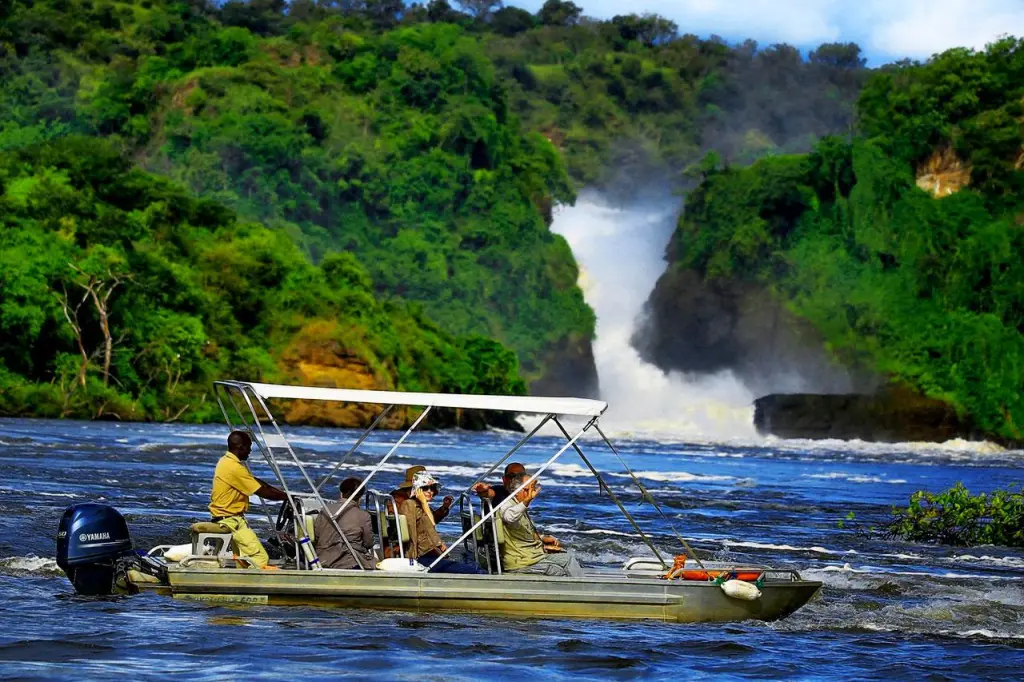
Photographers should pay close attention to shutter speed because the boat can move even when it appears relatively steady. Long focal lengths exaggerate small movements, meaning a shutter speed that works perfectly from a stationary safari vehicle may not always be sufficient on the river.
The boat also provides opportunities for layered compositions where wildlife, vegetation and the Nile are visible together. Rather than photographing every animal as an isolated subject, photographers can create images showing how wildlife interacts with the river ecosystem.
Approaching Murchison Falls also provides an excellent moment to switch from wildlife photography to wider landscape compositions, capturing the scale and dramatic power of the Nile as it moves toward the gorge.
Kidepo Valley National Park – Uganda’s Wilderness Photography Destination
Kidepo Valley National Park is one of Uganda’s finest destinations for photographers who want broad wilderness landscapes and uncluttered wildlife compositions. Its remote northeastern location creates an atmosphere that feels very different from the more frequently traveled western safari circuit.
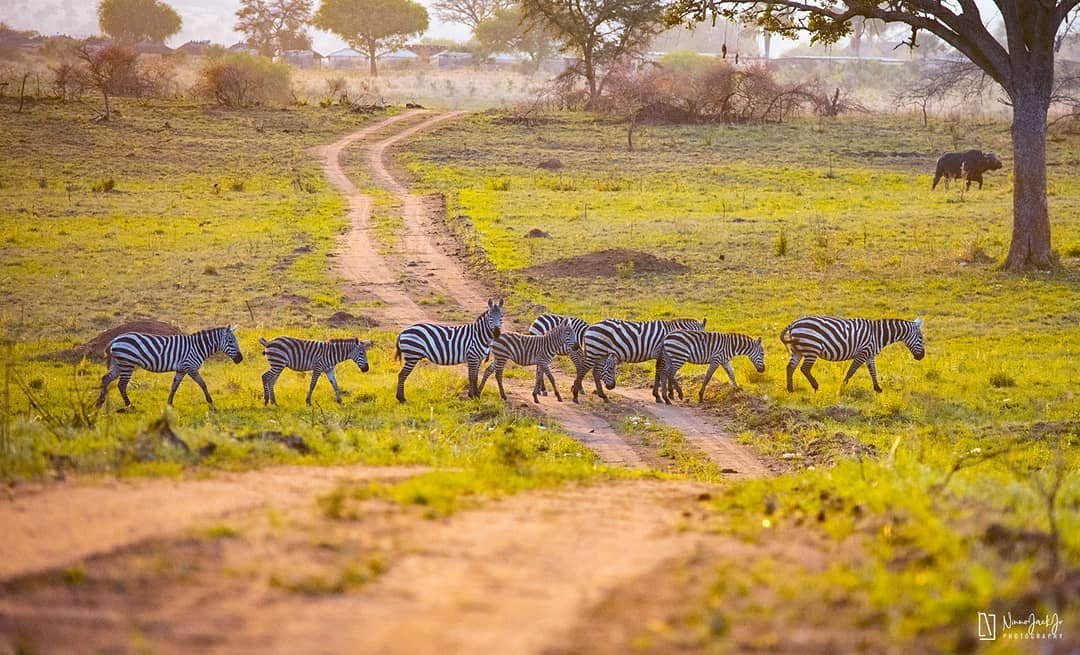
Kidepo’s greatest photographic advantage is space. Wildlife can be framed against mountains, sweeping grassland and enormous skies rather than being isolated from its environment. Elephants, buffaloes, lions and antelopes can all become part of wider compositions in which the landscape is as important as the animal itself.
This approach can be particularly rewarding for experienced safari photographers who already have many conventional close-up wildlife portraits. Kidepo encourages environmental photography that communicates scale, wilderness and the relationship between wildlife and habitat.
Spending several nights is important because light, weather and animal activity can change dramatically between mornings and evenings. A photography safari should therefore treat Kidepo as a destination rather than merely adding it as a quick extension.
Lake Mburo National Park Photography
Lake Mburo National Park adds another valuable photographic environment to an Uganda Safari Photography journey. The park is especially associated with zebras, antelopes, acacia woodland and extensive birdlife, creating scenes that differ from Uganda’s larger savannah parks.
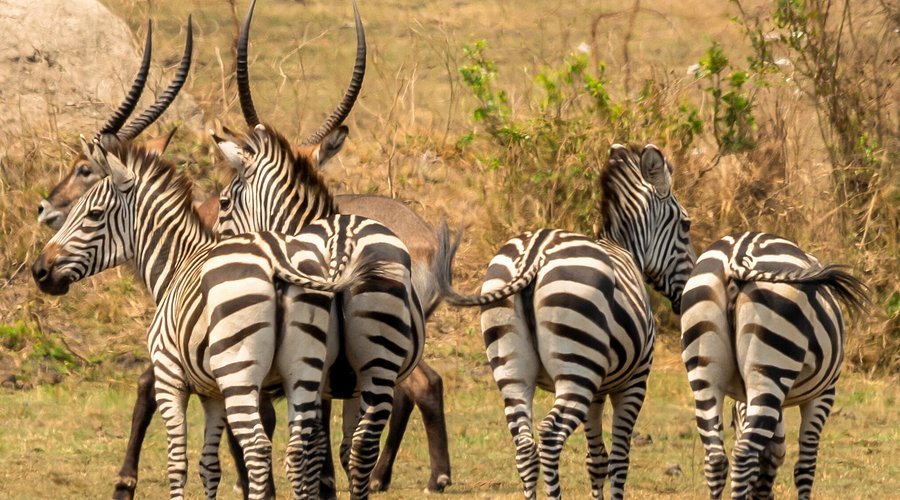
Zebras provide particularly strong photographic possibilities because their patterns work beautifully in both close portraits and minimalist compositions. Small groups walking through open grass can create elegant images, while individual zebras positioned against uncluttered backgrounds allow photographers to emphasize shape and contrast.
The park can also be rewarding for bird photography, particularly around wetland and acacia habitats. Photographers interested in smaller subjects should therefore carry appropriate longer lenses even when Lake Mburo is positioned near the end of a broader wildlife itinerary.
Rather than treating Lake Mburo purely as a stop between Bwindi and Entebbe, allowing dedicated photography time can add an entirely different visual character to the final safari portfolio.
Bird Photography in Uganda
Bird photography can become a major component of Uganda Safari Photography even for travelers who initially planned their journey around larger mammals. Uganda’s mixture of rainforest, savannah, wetland and mountain ecosystems supports extraordinary avian diversity, giving photographers opportunities to capture everything from large waterbirds to small forest species.
Queen Elizabeth, Murchison Falls, Kidepo and Lake Mburo all provide strong bird photography opportunities, while Kibale and Bwindi introduce forest species requiring a completely different approach. Wetland environments often allow clearer views of larger birds, whereas forest photography requires patience, fast autofocus and the ability to work in lower light.
Bird photographers normally benefit from longer focal lengths than those concentrating mainly on elephants or gorillas. Fast shutter speeds become particularly important when photographing birds in flight, while smaller forest species may require careful positioning and patience.
Photographers with a serious birding interest should communicate this before the safari begins. A guide searching mainly for lions and elephants will naturally make different decisions from one who understands that a particular bird species deserves significant time and attention.
Landscape Photography in Uganda
Wildlife may dominate an Uganda Safari Photography journey, but Uganda’s landscapes deserve equal photographic attention. Bwindi offers mist-covered rainforest and steep green ridges, Mgahinga provides dramatic volcanoes, Murchison brings the Nile and waterfall, Queen Elizabeth offers crater scenery, while Kidepo places wildlife beneath rugged mountains and expansive skies.
A wider-angle lens should therefore remain part of the photographer’s equipment. Relying entirely on long wildlife lenses can result in a collection of excellent animal portraits without enough images explaining the environment in which those animals were encountered.
Landscape images also strengthen visual storytelling. A close elephant portrait becomes more meaningful when combined with another frame showing elephants moving through the broader savannah or approaching a river.
Road journeys between national parks can also produce strong landscape images of highlands, tea-growing regions, crater areas and rural scenery, although all roadside photography stops should be coordinated safely with the driver-guide.
Best Camera Lenses for Uganda Safari Photography
There is no single perfect lens for Uganda Safari Photography because photographic subjects range from relatively close mountain gorillas to distant birds and large mammals across open savannah. For many photographers, a flexible telephoto zoom provides the best balance because it allows quick reframing as animals approach, move away or change position.
Medium telephoto focal lengths are particularly useful for gorillas and chimpanzees, where an extremely long lens can sometimes be too restrictive. Savannah wildlife and bird photography often benefit from additional reach, especially when regulations or animal behavior prevent closer approaches.
A standard or wide zoom should also remain accessible for landscapes, lodges, people and environmental compositions. Carrying only long telephoto equipment can severely limit the visual story.
Photographers should prioritize equipment they already understand. Knowing how to adjust autofocus mode, exposure compensation, shutter speed and ISO quickly is far more valuable than purchasing a new camera immediately before the safari and learning it during an important wildlife encounter.
Camera Settings for Wildlife Photography in Uganda
Camera settings should respond to the subject rather than follow one formula throughout the safari. For moving wildlife, shutter speed is usually one of the most important considerations because subject movement can destroy sharpness even when the camera itself is stable.
Fast-moving birds, chimpanzees and running antelopes generally require considerably faster shutter speeds than resting elephants or gorillas. Aperture then determines how much depth of field is available and how strongly the subject is separated from its background.
Auto ISO can be extremely useful when light changes rapidly, particularly in forest environments where subjects move between shade and brighter openings. Manual exposure combined with Auto ISO can give photographers direct control over both shutter speed and aperture while allowing the camera to adjust sensitivity.
The most important habit during Uganda Safari Photography is to anticipate rather than react. Wildlife rarely waits while photographers change settings after something interesting has already begun.
Photographing Wildlife from a Safari Vehicle
Vehicle setup can strongly influence the quality of safari photography. Photographers need enough space for cameras and lenses, clear shooting positions and a guide who understands that vehicle orientation affects both light and background.
The difference between an ordinary photograph and a strong one may involve moving only a few metres. An elephant photographed against clean grassland can look far more powerful than the same animal positioned against another vehicle, dense branches or a distracting road.
A private safari vehicle provides a major advantage because photographers can remain at productive sightings longer. The guide can also make small positioning adjustments where park regulations and animal welfare permit.
Nextgen Safaris can design an Uganda Safari Photography journey around private 4×4 transportation so that photographic priorities influence the pace of game drives instead of being treated as an inconvenience.
Morning and Evening Light for Uganda Safari Photography
Light has a major influence on wildlife photography, making early mornings and late afternoons particularly valuable in open safari environments. Lower-angle sunlight can create richer colors, stronger texture and more dimensional photographs than harsh overhead midday light.
Animals may also be active during these cooler periods, improving opportunities for behavior photography. Lions may move between resting areas, elephants may travel toward water and antelopes may become more active across open plains.
This does not mean photographers should stop taking pictures during the middle of the day. Cloud cover, unusual wildlife behavior and rare encounters can produce excellent photographs at any hour. Forest destinations such as Bwindi and Kibale also behave differently because tree cover alters light throughout the day.
A photography safari should therefore prioritize favorable light while remaining flexible enough to respond to wildlife opportunities whenever they occur.
Photography During Uganda’s Wetter Months
Rain should not automatically be considered a disadvantage for Uganda Safari Photography. Wet vegetation can produce rich colors, cloud cover can soften harsh contrast and rain itself can create atmospheric wildlife photographs that look very different from conventional dry-season images.
Forest environments may become especially dramatic when mist and moisture surround gorillas or chimpanzees. Savannah landscapes can also appear more vibrant during greener periods, providing colorful backgrounds for wildlife.
The main challenge is equipment protection. Waterproof camera covers, dry bags, lens cloths and reliable storage for spare batteries and memory cards become especially important.
Photographers should therefore choose travel months according to the style of images they want rather than assuming only dry-season conditions can produce strong photographs.
Ethical Wildlife Photography in Uganda
Responsible Uganda Safari Photography should always place wildlife welfare ahead of obtaining a photograph. National-park rules, ranger instructions and viewing distances exist to protect both animals and visitors, and photographers should never pressure guides to approach wildlife illegally or create unnecessary disturbance for the sake of a cleaner image.
This principle becomes especially important with primates. Gorilla and chimpanzee tourism operates through carefully managed habituation and controlled viewing systems. Photographers should follow ranger instructions concerning distance, movement, noise and any restrictions applying during the encounter.
Ethical photography ultimately produces stronger storytelling because photographs showing genuine natural behavior are more meaningful than images created by stressing or manipulating wildlife.
A professional photography safari should therefore combine creative ambition with respect for the animals and ecosystems that make the photographs possible.
Uganda Safari Photography for Professional Photographers
Professional photographers may require much more flexibility than conventional safari travelers. They may want repeated visits to the same location, longer periods with common species, particular vehicle positions and enough nights in one park to work with changing light and animal behavior.
For this reason, a professional Uganda Safari Photography journey should be designed around subjects rather than simply around a list of national parks. A photographer building a primate portfolio may prioritize Bwindi, Mgahinga and Kibale, while a large-mammal photographer may spend more time in Queen Elizabeth, Murchison Falls and Kidepo.
Professional filming, commercial photography or specialized productions can involve additional permissions and regulations beyond ordinary tourist photography. These requirements should therefore be identified early and confirmed with the relevant authorities before travel.
Uganda Safari Photography for Beginners
Beginners do not need professional-level equipment to enjoy Uganda Safari Photography. A modern mirrorless or DSLR camera paired with a useful zoom lens can produce excellent images when the photographer understands basic exposure, focus and composition.
Uganda is also an excellent destination for learning because subjects range from relatively slow elephants to fast-moving birds and primates. Each environment naturally teaches different photographic skills.
Beginners should practice essential controls before traveling. Being able to change shutter speed, aperture, ISO and autofocus settings quickly is far more useful than learning complicated camera functions during a lion sighting.
A private safari can also provide beginners with more time to experiment because the vehicle does not need to leave immediately simply because other passengers want to move on.
How Many Days Are Best for Uganda Safari Photography?
The ideal length of an Uganda Safari Photography journey depends on the number of subjects and ecosystems the photographer wants to cover. A shorter trip of around five to seven days can concentrate on two complementary destinations such as Queen Elizabeth National Park and Bwindi, combining savannah wildlife, the Kazinga Channel, possible Ishasha lions and mountain gorilla photography.
Around ten days provides enough time to include Kibale, Queen Elizabeth, Ishasha, Bwindi and potentially Lake Mburo. This creates a more varied portfolio featuring chimpanzees, mammals, waterbirds, landscapes and gorillas without moving between parks every single day.
Photographers wanting Murchison Falls as well should generally consider a longer safari because the additional time allows meaningful photography around the Nile rather than simply adding another park name to the itinerary.
Kidepo requires even more consideration because of its remote northeastern location. Photographers particularly interested in wilderness landscapes should either dedicate enough additional days to the region or consider domestic flights where these improve the overall logistics.
The key principle is to spend enough time in each destination to allow repeated photographic opportunities. Wildlife photography rewards patience, and staying three nights in a productive park can often produce much better results than visiting three different parks for one night each.
What to Pack for Uganda Safari Photography
A successful Uganda Safari Photography journey requires good equipment protection without carrying unnecessary weight. Photographers should bring camera bodies they know well, appropriate telephoto and wider lenses, several batteries, multiple memory cards, cleaning materials and practical rain protection.
A second camera body can be valuable because changing lenses repeatedly in dusty savannah or damp forest environments can be inconvenient. A backup body also provides protection against equipment failure when traveling through remote areas where replacement cameras may not be readily available.
For gorilla and chimpanzee trekking, equipment weight becomes particularly important. Carrying too much gear through steep or muddy terrain can quickly become exhausting. A carefully selected camera and lens combination is generally more useful than bringing every possible piece of equipment.
A laptop or other backup system can be valuable during longer photography safaris. Creating at least two copies of important files protects against card failure, loss or accidental deletion.
Why a Private Safari Is Best for Uganda Safari Photography
A private safari is one of the most important investments for serious Uganda Safari Photography because photographers often have very different priorities from conventional sightseeing travelers.
A standard safari group may be satisfied after several minutes with an elephant or lion, while a photographer may want to remain until the animal moves into better light, interacts with another individual or enters a cleaner background. The same applies to birds, primates and virtually every wildlife subject.
Private transportation allows the guide to understand these priorities. Early departures, patient observation, better vehicle positioning and camera equipment organization can become part of the safari rather than creating conflict with other guests.
The result is usually fewer rushed sightings, more time working with animal behavior and a substantially stronger collection of photographs.
Is Uganda Safari Photography Worth It?
Yes. Uganda Safari Photography is exceptionally worthwhile because relatively few destinations provide such dramatically different photographic subjects within one country. Photographers can move from tropical rainforest to open savannah, major river systems, wetlands, volcanic mountains and remote wilderness without leaving Uganda.
A single journey can produce intimate mountain gorilla portraits, energetic chimpanzee images, lions in Ishasha, elephants along the Nile, hippos on the Kazinga Channel, giraffes in Murchison Falls, zebras in Lake Mburo, birds across multiple ecosystems and dramatic landscapes from Kidepo or Mgahinga.
The greatest strength is the contrast between those images. The finished portfolio can tell the story of an entire destination rather than repeatedly presenting the same type of wildlife setting.
For professional photographers, enthusiastic amateurs, bird photographers, content creators and beginners who simply want exceptional images from Africa, Uganda provides enough subject diversity to justify a dedicated photography safari.
Frequently Asked Questions About Uganda Safari Photography
Is Uganda a good destination for Uganda Safari Photography?
Yes, Uganda Safari Photography is especially rewarding because the country combines mountain gorillas, chimpanzees, lions, elephants, giraffes, hippos, zebras, birds, rivers, rainforests and dramatic landscapes within one destination. Photographers can work in completely different environments, from the dense forests of Bwindi and Kibale to the open savannah of Queen Elizabeth, Murchison Falls and Kidepo Valley. This variety makes Uganda an excellent destination for photographers who want both close wildlife portraits and wider environmental images.
What are the best places for Uganda Safari Photography?
The best destinations for Uganda Safari Photography include Bwindi Impenetrable National Park for mountain gorillas, Kibale National Park for chimpanzees, Queen Elizabeth National Park for lions, elephants and the Kazinga Channel, Murchison Falls National Park for giraffes, Nile wildlife and landscapes, Kidepo Valley for wilderness photography and Lake Mburo for zebras and birdlife. The best combination depends on whether the photographer is most interested in primates, mammals, birds, landscapes or a complete wildlife portfolio.
Can I photograph mountain gorillas during Uganda Safari Photography?
Yes, mountain gorilla photography can be one of the greatest highlights of Uganda Safari Photography. Gorilla trekking takes place in Bwindi Impenetrable National Park and Mgahinga Gorilla National Park, where photographers enter the forest with guides and trackers to locate habituated gorilla families. Forest light can be challenging, so photographers should be comfortable working at higher ISO settings and with relatively fast shutter speeds. A versatile medium telephoto zoom is often especially useful for both portraits and wider environmental compositions.
What camera lens is best for Uganda Safari Photography?
There is no single perfect lens for Uganda Safari Photography because subjects vary greatly in size and distance. A versatile telephoto zoom is excellent for general wildlife, while medium telephoto focal lengths can work particularly well with gorillas and chimpanzees. Longer lenses are useful for birds and distant animals, while a wide or standard zoom should also be carried for landscapes, lodges and environmental wildlife images. Photographers should prioritize lenses they know how to use quickly rather than carrying too much unfamiliar equipment.
Is a private safari vehicle better for Uganda Safari Photography?
Yes, a private vehicle is highly recommended for serious Uganda Safari Photography because photographers usually need more time at sightings than ordinary safari travelers. A photographer may want to wait for better light, cleaner backgrounds, animal interaction or a particular behavior instead of leaving immediately after seeing the animal. A private 4×4 also provides more room for camera bodies, telephoto lenses and bags. Nextgen Safaris can structure photography journeys around private transportation so photographic priorities influence the pace of the safari.
What is the best time for Uganda Safari Photography?
Uganda Safari Photography can be rewarding throughout the year, and the best period depends on the images a photographer wants to create. Drier periods can make road travel and some trekking conditions easier, while greener periods can provide rich vegetation, dramatic clouds and more atmospheric landscapes. Rain should not automatically be considered a disadvantage because wet foliage, mist and soft light can produce beautiful primate and wildlife photographs. Photographers should choose travel dates according to subjects, landscapes and preferred conditions rather than only pursuing dry weather.
Is Uganda Safari Photography suitable for professional photographers?
Yes, Uganda Safari Photography is highly suitable for professional wildlife photographers because itineraries can be designed around specific subjects rather than conventional sightseeing schedules. Professional photographers may want repeated visits to a productive location, several nights in one park, specialized vehicle positioning and longer periods with common animals waiting for interesting behavior. Commercial filming and some professional productions may require additional permissions, so those requirements should be identified and confirmed before travel.
Is Uganda Safari Photography good for beginners?
Yes, beginners can enjoy Uganda Safari Photography without owning extremely expensive equipment. A modern DSLR or mirrorless camera combined with a useful zoom lens can produce excellent images when the photographer understands basic shutter speed, autofocus, aperture and ISO. Uganda provides an excellent learning environment because subjects range from slow-moving elephants to active chimpanzees and birds in flight. A private safari also gives beginners more time to experiment with camera settings and composition without feeling rushed by unrelated travelers.
What should I pack for Uganda Safari Photography?
For Uganda Safari Photography, photographers should pack their main camera body, suitable telephoto and wider lenses, several batteries, plenty of memory cards, lens-cleaning materials and reliable protection against rain and dust. A second camera body can be valuable for reducing lens changes and providing backup in case of equipment failure. Gorilla and chimpanzee trekking also require comfortable hiking equipment, so camera gear should remain manageable. A laptop, portable storage device or another backup system is useful for protecting photographs during longer journeys.
How difficult is gorilla photography on an Uganda Safari Photography tour?
Gorilla photography can be technically challenging because the animals often live beneath dense forest canopy where light levels change quickly. During Uganda Safari Photography, photographers may need to work with higher ISO settings, wider apertures and sufficiently fast shutter speeds to keep dark gorilla fur sharp. Vegetation can also interfere with autofocus and composition. The challenge is part of what makes gorilla photography so rewarding, because successful images can capture extraordinary facial expressions, family behavior and the atmosphere of Uganda’s rainforest.
Can I photograph chimpanzees during Uganda Safari Photography?
Yes, chimpanzee photography in Kibale can be an important part of Uganda Safari Photography. Chimpanzees are usually much more active than gorillas, so photographers should be prepared for rapid movements, changing distances and difficult forest light. Fast autofocus and higher shutter speeds can be especially useful when chimpanzees climb, run or interact. Listening to trackers and anticipating where the chimpanzees may move can also help photographers position themselves before an important moment occurs.
Is Queen Elizabeth National Park good for Uganda Safari Photography?
Yes, Queen Elizabeth National Park is one of the strongest destinations for Uganda Safari Photography because it combines savannah wildlife, wetlands, crater scenery, birdlife and the Kazinga Channel. Photographers can capture elephants, antelopes, buffaloes, predators and numerous birds during game drives before switching to water-based photography on the channel. The Ishasha Sector can also provide opportunities to search for the famous tree-climbing lions, creating images that differ greatly from conventional ground-level lion photography.
Is Murchison Falls good for Uganda Safari Photography?
Murchison Falls National Park is excellent for Uganda Safari Photography because it combines classic wildlife with one of Uganda’s most dramatic river landscapes. Photographers can work with giraffes, elephants, antelopes and other savannah animals before taking a Nile boat safari to photograph hippos, crocodiles, birds and wildlife along the riverbanks. The falls themselves also create strong landscape compositions involving rushing water, rock, mist and the Nile gorge, making Murchison especially useful for photographers wanting more than animal portraits.
How many days are best for Uganda Safari Photography?
Around 7 to 14 days works well for many Uganda Safari Photography journeys, although serious photographers may benefit from even more time. A shorter safari can focus on Queen Elizabeth and Bwindi, while ten days allows Kibale, Queen Elizabeth, Bwindi and Lake Mburo to be combined more comfortably. Longer trips can include Murchison Falls or remote Kidepo Valley. Photography usually improves when travelers spend several nights in productive destinations rather than changing parks every day, because repeated sessions provide different light and wildlife behavior.
How can I book Uganda Safari Photography with Nextgen Safaris?
You can book Uganda Safari Photography with Nextgen Safaris as a private journey designed around the wildlife and landscapes you most want to photograph. The safari can include mountain gorillas in Bwindi or Mgahinga, chimpanzees in Kibale, lions and elephants in Queen Elizabeth, the Kazinga Channel, Nile wildlife in Murchison Falls, zebras in Lake Mburo and wilderness photography in Kidepo. Nextgen Safaris can arrange private 4×4 transportation, photography-friendly pacing, suitable accommodation and enough time at wildlife sightings to create a stronger photographic experience.
Book Your Uganda Safari Photography Tour with Nextgen Safaris
An Uganda Safari Photography tour with Nextgen Safaris can be privately designed around the animals, landscapes and photographic subjects you most want to capture. The journey can also take into account the amount of camera equipment you are carrying, your preferred accommodation level and how long you want to remain at productive wildlife sightings.
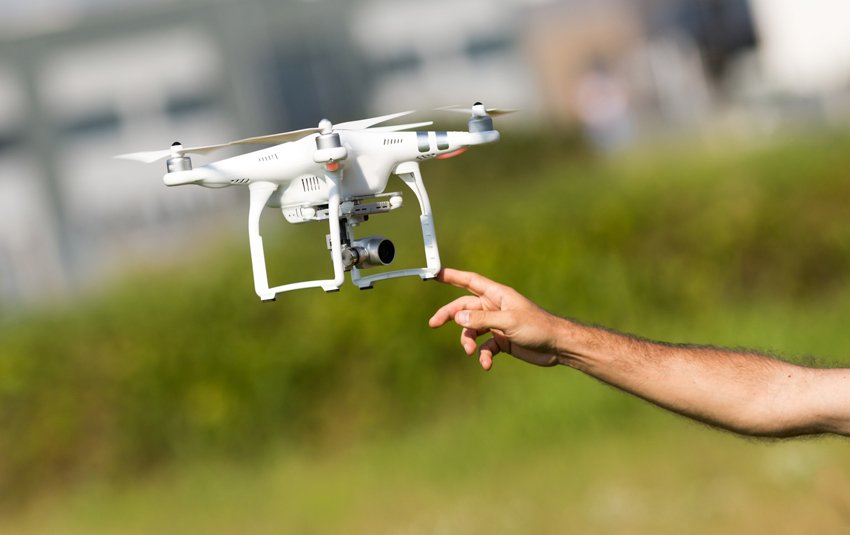
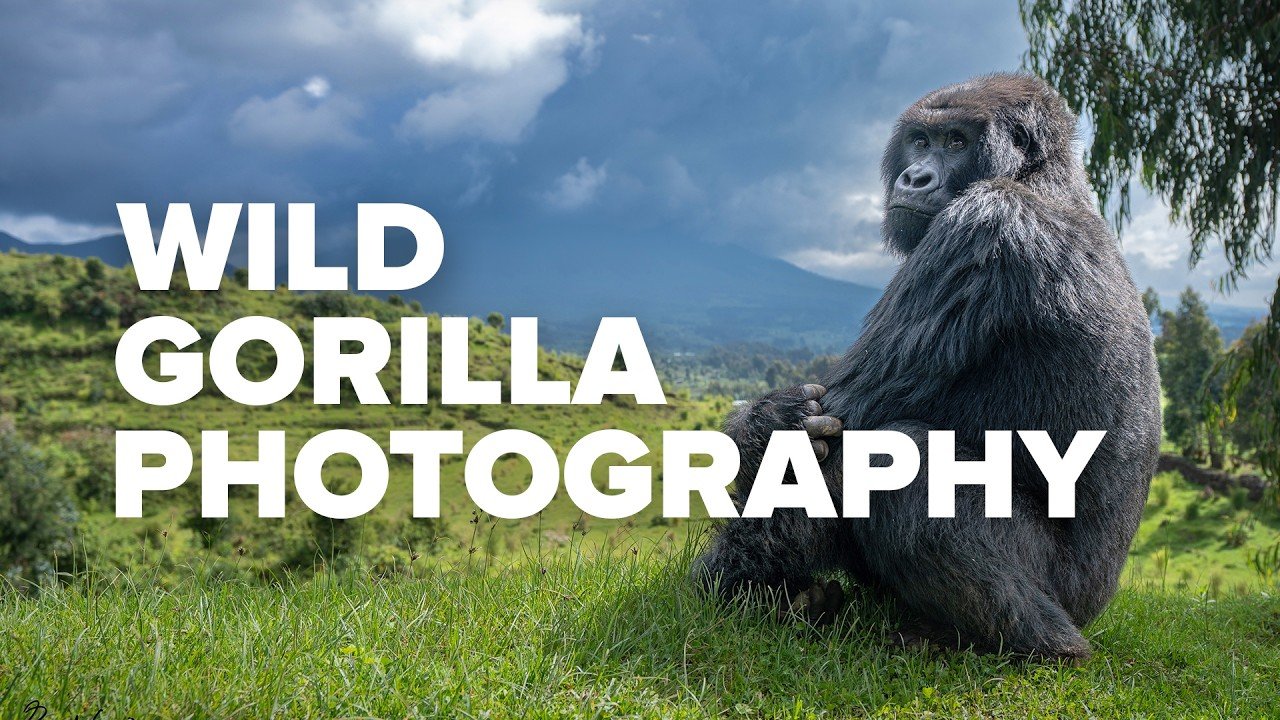
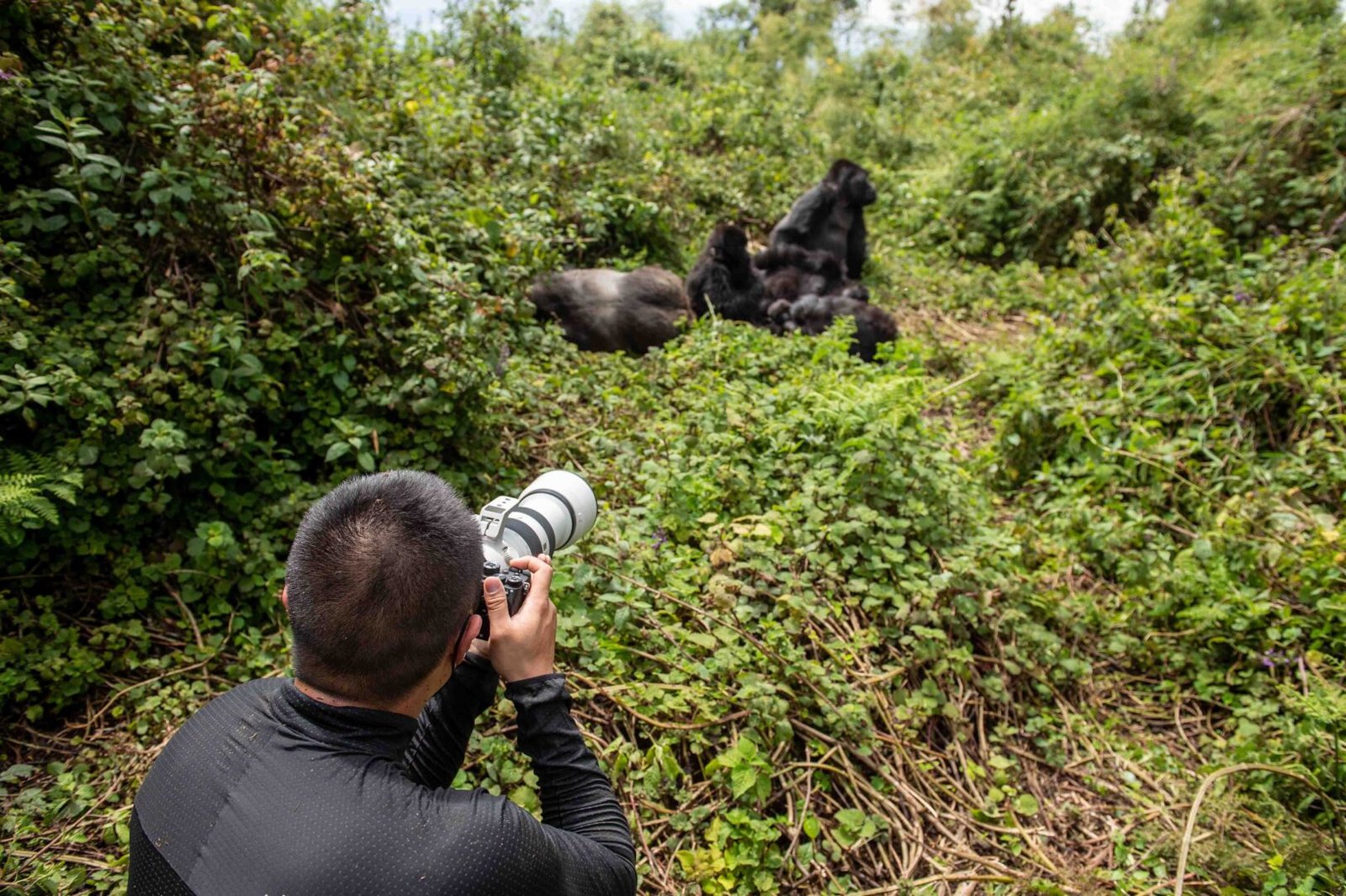
Your photography safari can include mountain gorillas in Bwindi or Mgahinga, chimpanzees in Kibale, lions and elephants in Queen Elizabeth National Park, wildlife along the Kazinga Channel, giraffes and the River Nile in Murchison Falls, zebras and birds in Lake Mburo and the extraordinary wilderness landscapes of Kidepo Valley.
Nextgen Safaris can arrange private 4×4 safari transportation with enough room for camera equipment, professional driver-guide services, carefully selected accommodation and a safari pace that prioritizes good light, patient wildlife observation and meaningful time in the most productive photographic destinations. Whether you are a professional wildlife photographer, passionate enthusiast, bird photographer, travel content creator or simply a traveler who wants exceptional photographs from Africa, your journey can be customized around your creative priorities.
Book your Uganda Safari Photography tour with Nextgen Safaris and capture mountain gorillas, chimpanzees, lions, elephants, giraffes, birds, the River Nile and Uganda’s spectacular landscapes on a private safari created specifically for photography.