Uganda Safari Prices Explained
Ultimate Uganda Safari Prices Explained: Smart Guide to Gorilla Permits, Accommodation, Transport & Safari Costs
Understanding Uganda Safari Prices Explained properly is important before comparing safari packages because there is no single fixed price for travelling through Uganda. Two safaris lasting the same number of days can have completely different prices depending on accommodation, number of travellers, gorilla and chimpanzee permits, safari vehicle, destinations visited, domestic flights, activities, season, and whether the journey is private or shared. A three-day gorilla safari, for example, can sometimes have a higher daily cost than a longer wildlife safari because the gorilla permit represents a significant fixed expense.
For general planning, travellers can expect a budget Uganda safari to fall around US$200–US$350 per person per day, a comfortable mid-range journey around US$350–US$650 per person per day, and a luxury safari from approximately US$700 to US$1,500 or considerably more per person per day. These figures are only planning ranges rather than fixed quotations. Specialist activities, premium accommodation, private charter flights, single-room supplements, and exclusive experiences can push the cost higher, while travelling with more people can reduce the price per person because certain expenses are shared.
This detailed Uganda Safari Prices Explained guide from Nextgen Safaris breaks down what travellers are actually paying for when they book a Uganda safari. Instead of simply giving one headline figure, we explain gorilla permits, chimpanzee permits, safari vehicles, fuel, guides, accommodation, park fees, meals, boat cruises, domestic flights, group size, seasonality, and other expenses that determine the final quotation. Understanding these components makes it much easier to compare safari proposals fairly and select a journey that provides the right balance between price, comfort, and experience.
How Much Does a Uganda Safari Cost?
The total cost of a Uganda safari depends first on the style of travel you choose. Budget safaris generally use practical accommodation and focus spending on important wildlife experiences rather than luxury facilities. Mid-range safaris offer a stronger balance between comfort and price, often combining private safari transportation with comfortable lodges and full-board meals while travelling through the national parks. Luxury safaris place greater emphasis on premium accommodation, exceptional locations, personalised service, private experiences, and sometimes domestic flights to reduce long road transfers.
A useful way to understand Uganda Safari Prices Explained is to separate fixed costs from flexible costs. Gorilla permits, chimpanzee permits, many conservation fees, and certain scheduled activities are relatively fixed. Accommodation, transportation style, room category, domestic flights, itinerary length, and additional experiences provide more flexibility. This means that two travellers can enjoy exactly the same gorilla trekking experience while staying in completely different accommodation categories and paying very different total safari prices.
Safari prices should therefore be compared according to what is actually included rather than by looking only at the final figure. A quotation that appears cheaper may exclude permits, park activities, airport transfers, meals, or certain conservation fees. Another quotation may initially appear higher but already include almost every major safari expense. At Nextgen Safaris, we encourage travellers to consider the complete itinerary and inclusions before deciding whether one safari is genuinely more expensive than another.
Uganda Safari Price Ranges at a Glance
| Safari Style | Approximate Planning Cost Per Person Per Day |
|---|---|
| Budget Uganda Safari | US$200–US$350 |
| Mid-Range Uganda Safari | US$350–US$650 |
| Luxury Uganda Safari | US$700–US$1,500+ |
| Fly-In Luxury Safari | Often US$1,000–US$2,000+ |
| Gorilla Safari | Varies significantly because of permit costs |
These are broad planning estimates rather than fixed package prices. International flights, visas, travel insurance, personal expenses, gratuities, premium drinks, and some specialist activities may be separate depending on the itinerary.
Uganda Gorilla Trekking Permit Prices Explained
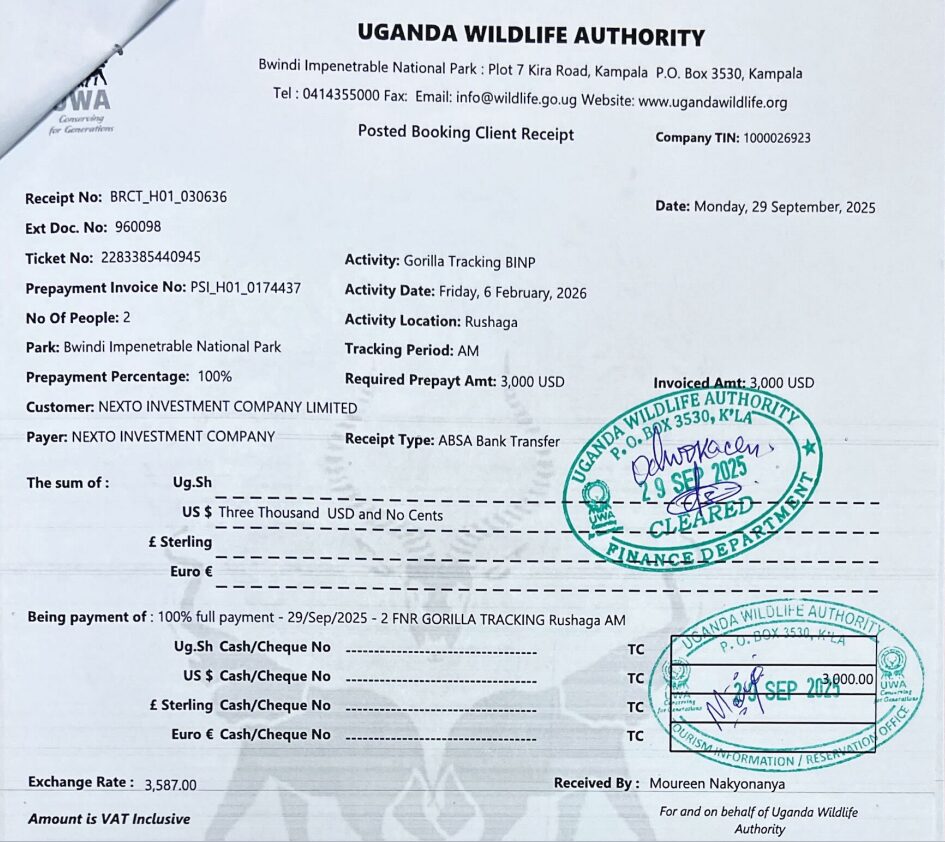
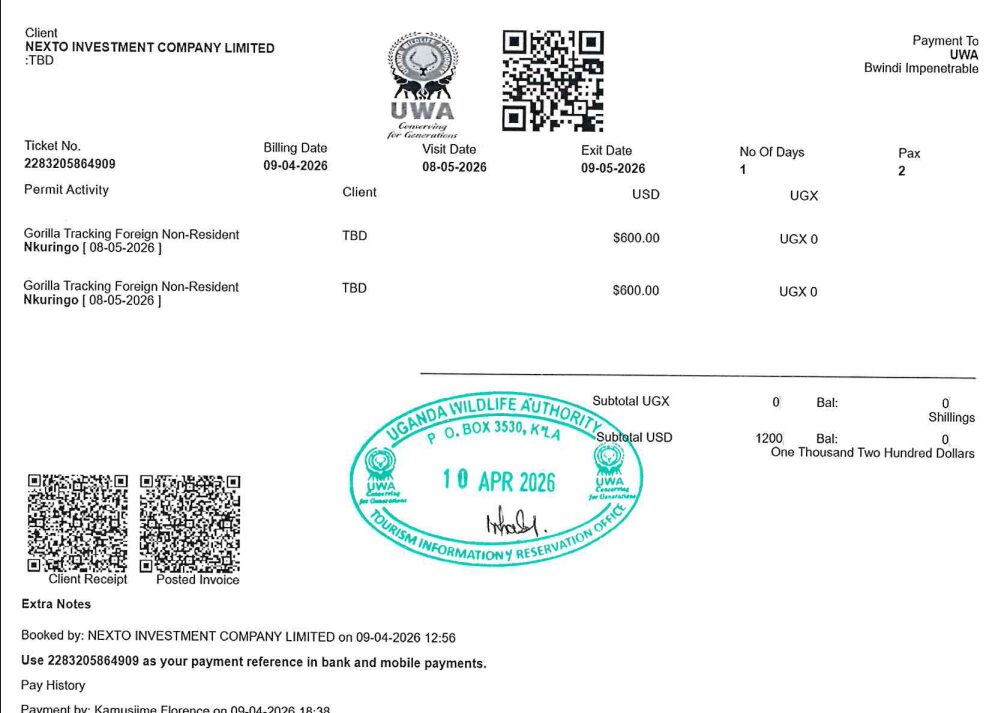
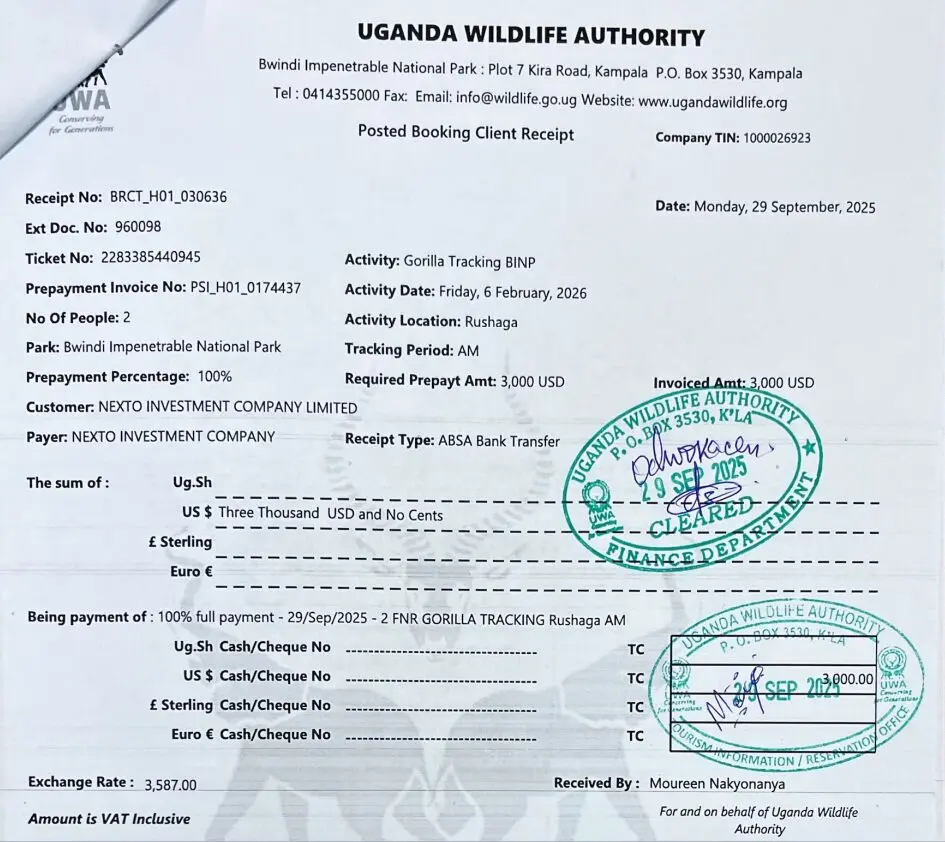
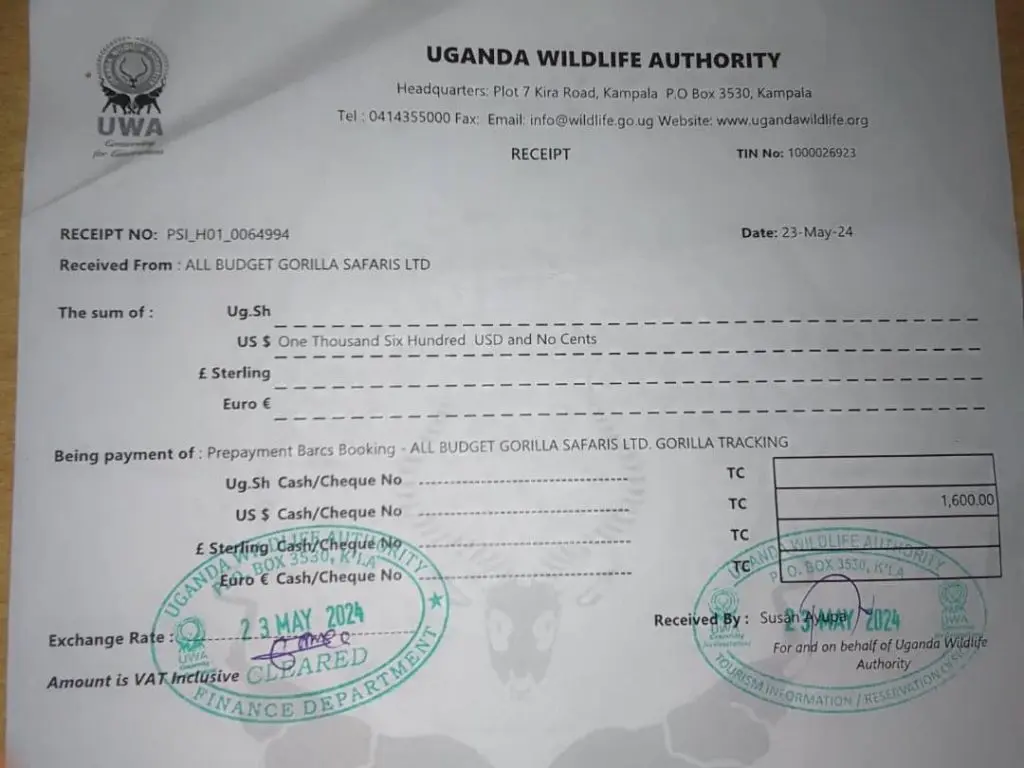
Gorilla trekking is often one of the largest individual expenses on a Uganda safari. For foreign non-residents, Uganda’s standard gorilla trekking permit remains US$800 in 2026. Uganda Wildlife Authority introduced discounted low-season rates of US$600 for foreign non-residents and US$500 for foreign residents during April, May, and November. The discounted permits cannot be rescheduled, so travellers considering these rates should understand the booking conditions before confirming their journey.
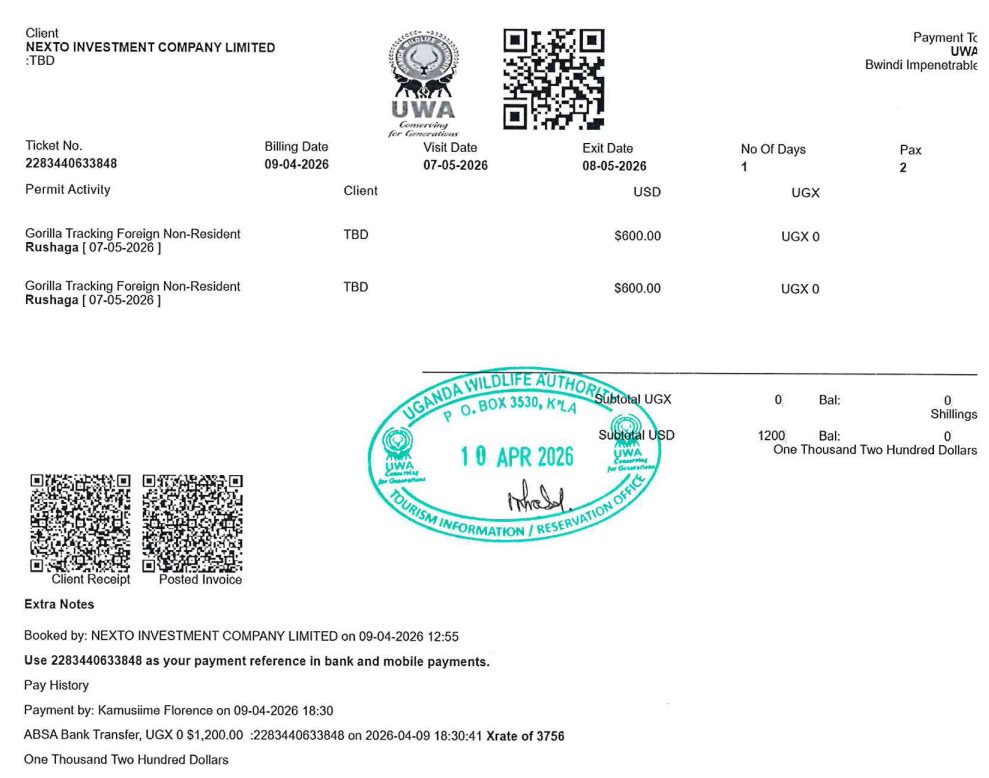
This is an important part of Uganda Safari Prices Explained because the permit price applies to each person trekking. For a couple, two standard foreign non-resident gorilla permits represent US$1,600 before accommodation, transportation, meals, and other safari services are added. For a family or private group of four eligible trekkers, the same permits represent US$3,200. This helps explain why a seemingly short three-day gorilla safari can still have a substantial overall cost.
The permit should also be understood as more than simply an entrance ticket into Bwindi Impenetrable National Park or Mgahinga Gorilla National Park. Gorilla tourism operates within a highly controlled conservation system involving rangers, trackers, monitoring, visitor management, and protection of endangered mountain gorillas. Travellers should therefore consider the permit as the core conservation and wildlife experience around which the rest of the gorilla safari is organised.
Uganda Gorilla Habituation Prices Explained
Travellers seeking more time around mountain gorillas may consider the Gorilla Habituation Experience in Bwindi Impenetrable National Park. Under the tariff applying through 2026, the foreign non-resident permit has been US$1,500. Uganda Wildlife Authority has announced that from 1 January 2027 the foreign non-resident Gorilla Habituation Experience permit will increase to US$1,800, while the foreign resident price becomes US$1,600.
This difference has a major effect on the total safari budget. A couple travelling in 2027 and choosing gorilla habituation instead of regular trekking would allocate US$3,600 simply to the two foreign non-resident habituation permits. The experience is therefore particularly attractive to passionate primate enthusiasts, photographers, and travellers who value additional observation time enough to allocate a larger portion of their budget to one exceptional wildlife activity.
When considering Uganda Safari Prices Explained, it is useful to prioritise experiences before accommodation upgrades. Some travellers would rather spend money on gorilla habituation and stay in a comfortable mid-range lodge, while others may prefer standard gorilla trekking combined with a premium luxury property. Neither approach is automatically better; the correct choice depends on what matters most to the individual traveller.
Uganda Chimpanzee Trekking Permit Prices Explained
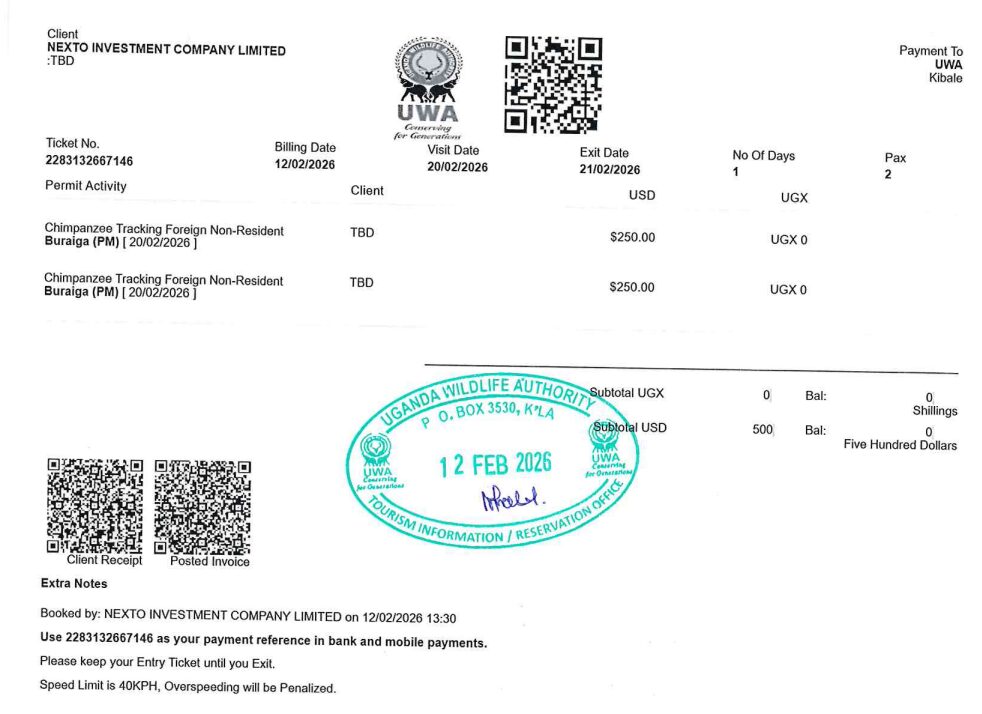
Chimpanzee trekking is another specialist activity that influences the total Uganda safari price. Kibale National Park is Uganda’s best-known chimpanzee destination and can be combined naturally with Queen Elizabeth National Park and Bwindi on a western Uganda safari circuit. Under the tariff structure applying during 2026, Kibale chimpanzee tracking for foreign non-residents has been US$250 per person, while Uganda Wildlife Authority has announced an increase to US$300 from 1 January 2027.
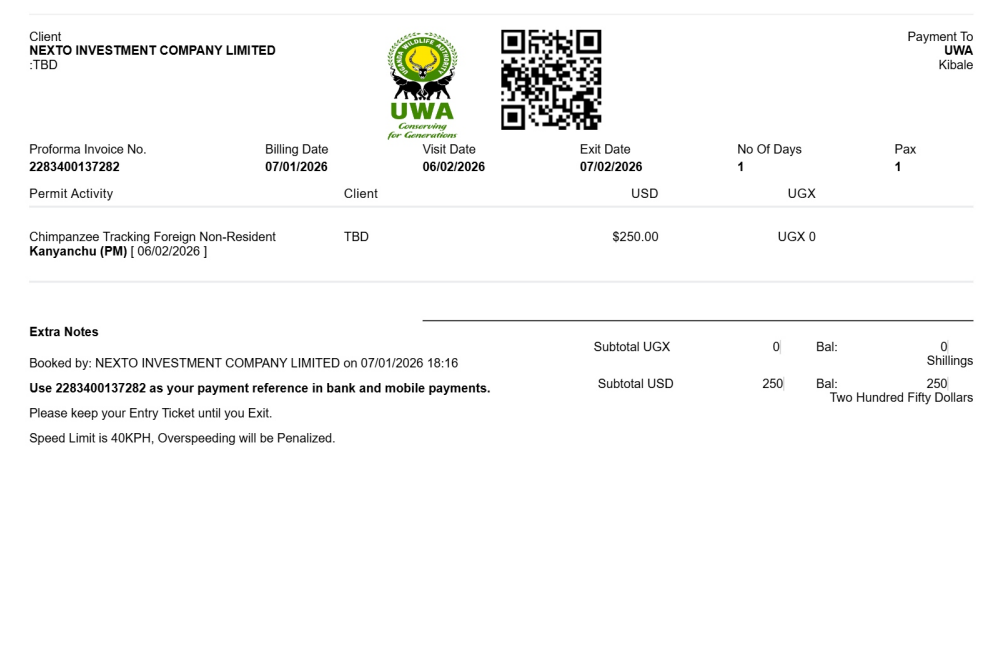
UWA also introduced a low-season foreign non-resident chimpanzee tracking rate of US$200 during April, May, and November. This gives travellers planning around these periods an opportunity to reduce the cost of combining gorilla and chimpanzee experiences. For example, the announced low-season combination for a foreign non-resident can reduce the permit component compared with paying the ordinary gorilla and chimpanzee rates, although the conditions and availability should always be checked when booking.
Chimpanzee habituation is another option for travellers wanting a longer and more immersive primate experience. Uganda Wildlife Authority’s revised tariff lists the foreign non-resident chimpanzee habituation fee at US$400 from 1 January 2027, compared with the previous US$300 level. These permit changes illustrate why safari quotations should always be based on the traveller’s exact year and dates rather than relying on an old price found online.
Why Gorilla Safaris Cost More Than Wildlife-Only Safaris
The easiest way to understand Uganda Safari Prices Explained is to compare a gorilla safari with a conventional wildlife journey. Game drives certainly involve park fees, transportation, guides, accommodation, and other expenses, but they do not usually contain an individual fixed activity costing hundreds of dollars per traveller. Gorilla trekking immediately adds a substantial permit cost to every eligible person participating.
A short safari also has fewer days over which fixed transportation expenses can be distributed. Imagine a private vehicle travelling from Entebbe or Kigali towards Bwindi, transporting travellers to their lodge, remaining available throughout the trip, and completing the return journey. Whether the safari lasts three days or part of a longer circuit, there are still fuel, guide, vehicle, and operational costs associated with reaching the gorilla region.
This explains why comparing only the daily price can sometimes be misleading. A three-day gorilla journey may have a higher cost per day than a seven-day wildlife safari, yet much of that difference comes from the fixed gorilla permit rather than expensive accommodation or excessive operator charges. Looking at individual components gives travellers a much clearer picture.
Accommodation and Uganda Safari Prices
Accommodation is one of the most flexible components of a safari quotation. Uganda offers everything from practical guesthouses and budget camps to comfortable mid-range safari lodges, luxury tented camps, boutique properties, and exclusive forest lodges. The accommodation category chosen across seven, ten, or fourteen nights can substantially change the final safari price.
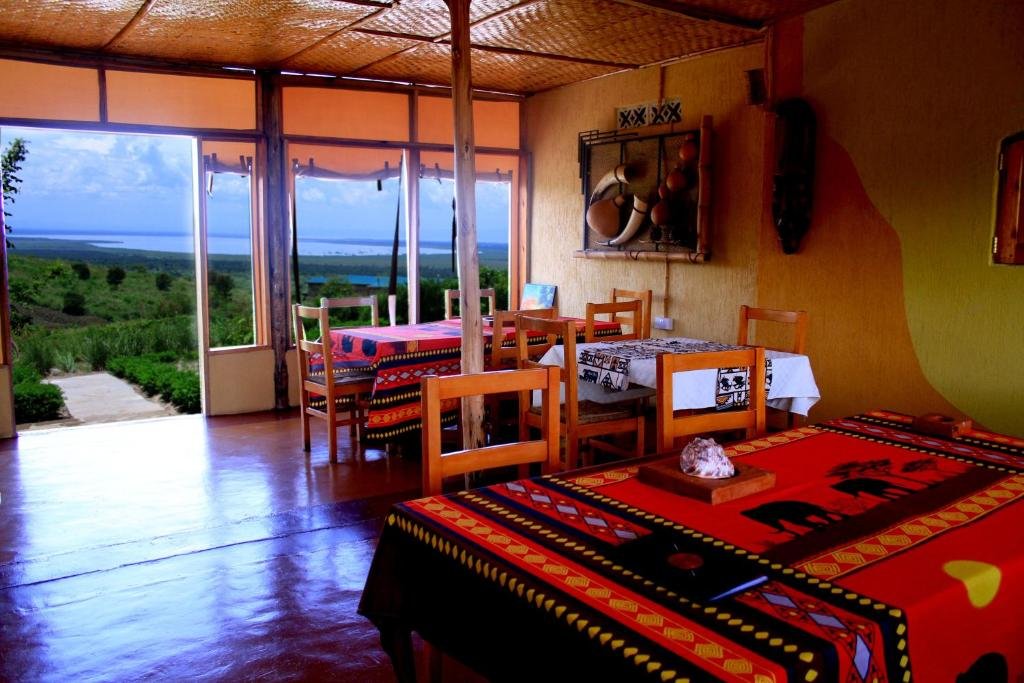

Budget accommodation concentrates on providing a clean, safe, functional place to sleep without expensive additional facilities. Mid-range lodges generally offer private en-suite rooms, attractive settings, dependable meals, comfortable common areas, and a stronger overall level of service. Luxury properties may provide exceptional locations, large suites, private decks, fireplaces, swimming pools, spas, personalised dining, highly attentive service, and a more exclusive atmosphere.
Location is equally important when discussing Uganda Safari Prices Explained. A lodge positioned close to a gorilla trekking trailhead or productive wildlife area may sometimes cost more than another property further away, but the better location can reduce transfer times and improve the experience. Choosing accommodation based purely on the lowest room price can therefore create hidden costs in extra driving, early starts, and reduced time for activities.
Safari Vehicle, Fuel and Driver-Guide Costs
A safari vehicle is another major part of the final price, particularly on a private road safari. Uganda itineraries can cover considerable distances between Entebbe, Murchison Falls, Kibale, Queen Elizabeth, Bwindi, and other destinations. The vehicle must cover these distances, operate game drives within national parks, carry luggage, and remain available throughout the itinerary.
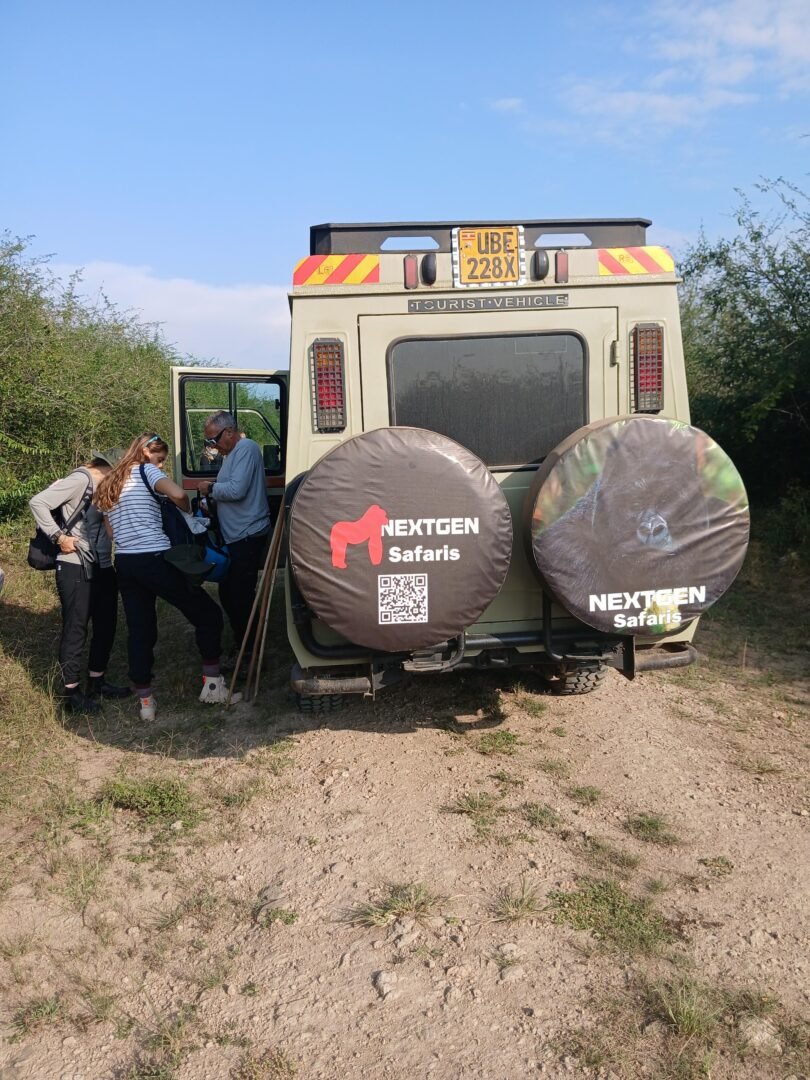
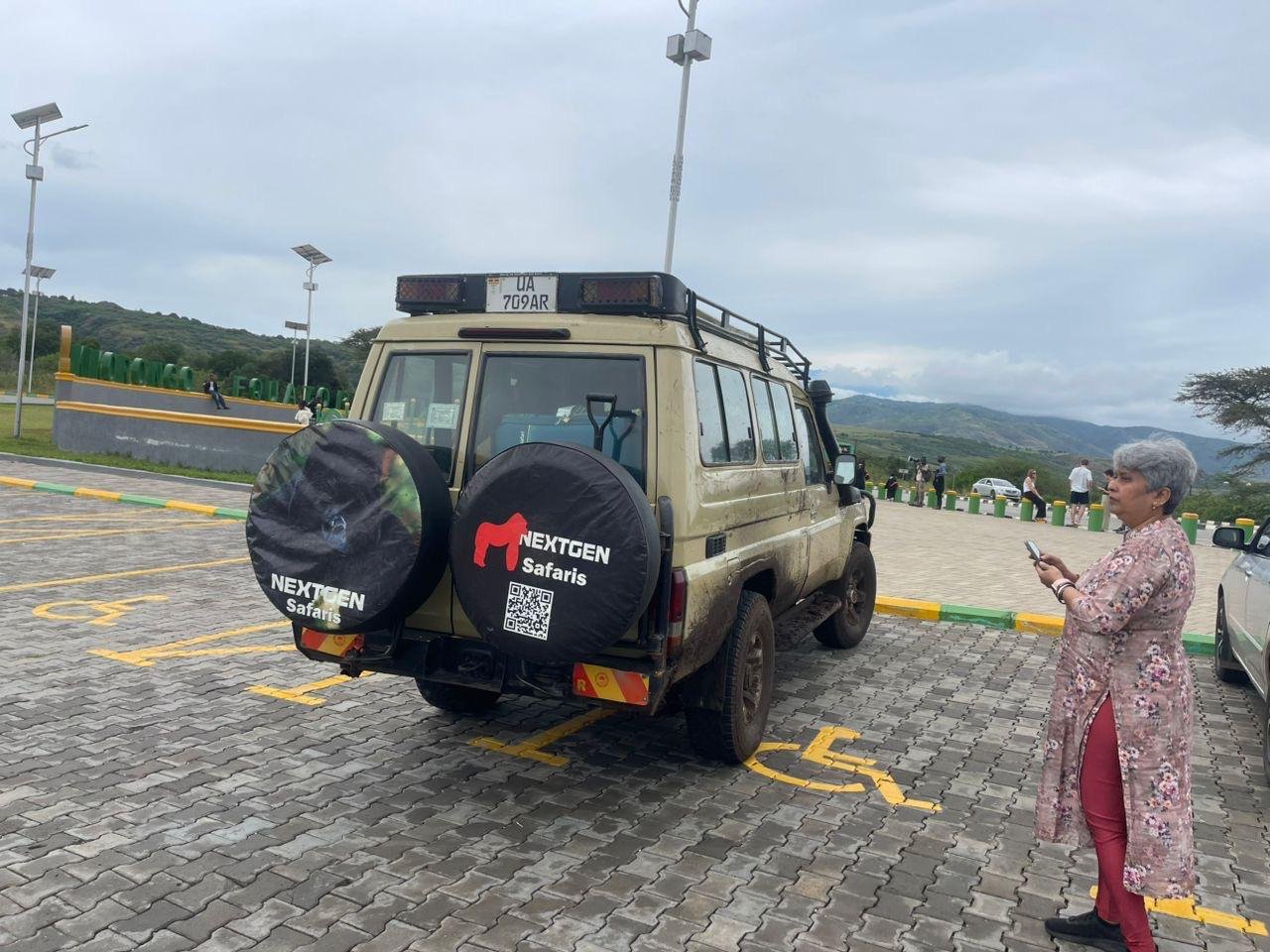
Fuel consumption can be substantial on longer routes, particularly when using four-wheel-drive safari vehicles designed for national park conditions. The quotation must also account for vehicle maintenance, tyres, servicing, insurance, operational expenses, and the professional driver-guide who accompanies travellers throughout their journey. These costs exist whether the vehicle carries one traveller or several people.
This is why group size is so important when looking at Uganda Safari Prices Explained. A solo traveller may effectively carry most of the private vehicle and guide cost alone. Two travellers split these fixed expenses, while four or six travellers can divide them further. The difference between solo and small-group prices does not necessarily mean the solo traveller is being charged unfairly; it often reflects how fixed transport expenses are distributed.
How Group Size Affects Uganda Safari Prices
Travelling as a couple, family, or private group can considerably improve the value of a Uganda safari. Accommodation and permits remain largely individual expenses, but transportation, guides, fuel, and certain logistical costs can be divided between several travellers. As the group becomes larger, the shared component of the cost per person generally decreases.
A couple therefore normally pays less per person than a solo traveller using the same vehicle and following the same route. A family of four or group of friends may achieve additional savings, particularly on a long road safari. However, a larger group may require a larger vehicle, additional rooms, or multiple vehicles depending on its size, so prices do not continue falling indefinitely.
When requesting quotations, travellers should always provide the exact number of adults and children, room requirements, and ages of younger travellers. This allows Nextgen Safaris to calculate the price accurately and determine suitable vehicles and accommodation rather than giving an unrealistic generic estimate.
Park Entrance Fees and Conservation Charges
National park fees form another component of safari pricing. Visitors travelling through destinations such as Queen Elizabeth National Park, Murchison Falls National Park, Lake Mburo National Park, Kidepo Valley National Park, Bwindi, Kibale, and Mgahinga may encounter different conservation charges depending on the park, visitor category, vehicle, and activity.
A professionally prepared safari quotation normally incorporates the relevant park costs associated with the planned itinerary when they are listed as included. Travellers comparing quotations should check this carefully because a safari price that excludes conservation charges may appear cheaper at first but require additional payments during the journey.
Uganda Wildlife Authority is the government agency responsible for managing Uganda’s national parks and protected wildlife areas, and tariff structures can be revised. The Authority’s current rates page already carries a 2026–2027 tariff update, demonstrating why operators need to price journeys according to the actual travel date.
Boat Safaris and Additional Activities
Game drives are only one part of a Uganda wildlife safari. Many itineraries include boat cruises, nature walks, cultural activities, birdwatching, community experiences, crater-lake excursions, golden monkey tracking, hiking, or adventure activities. Each additional experience can influence the final price.
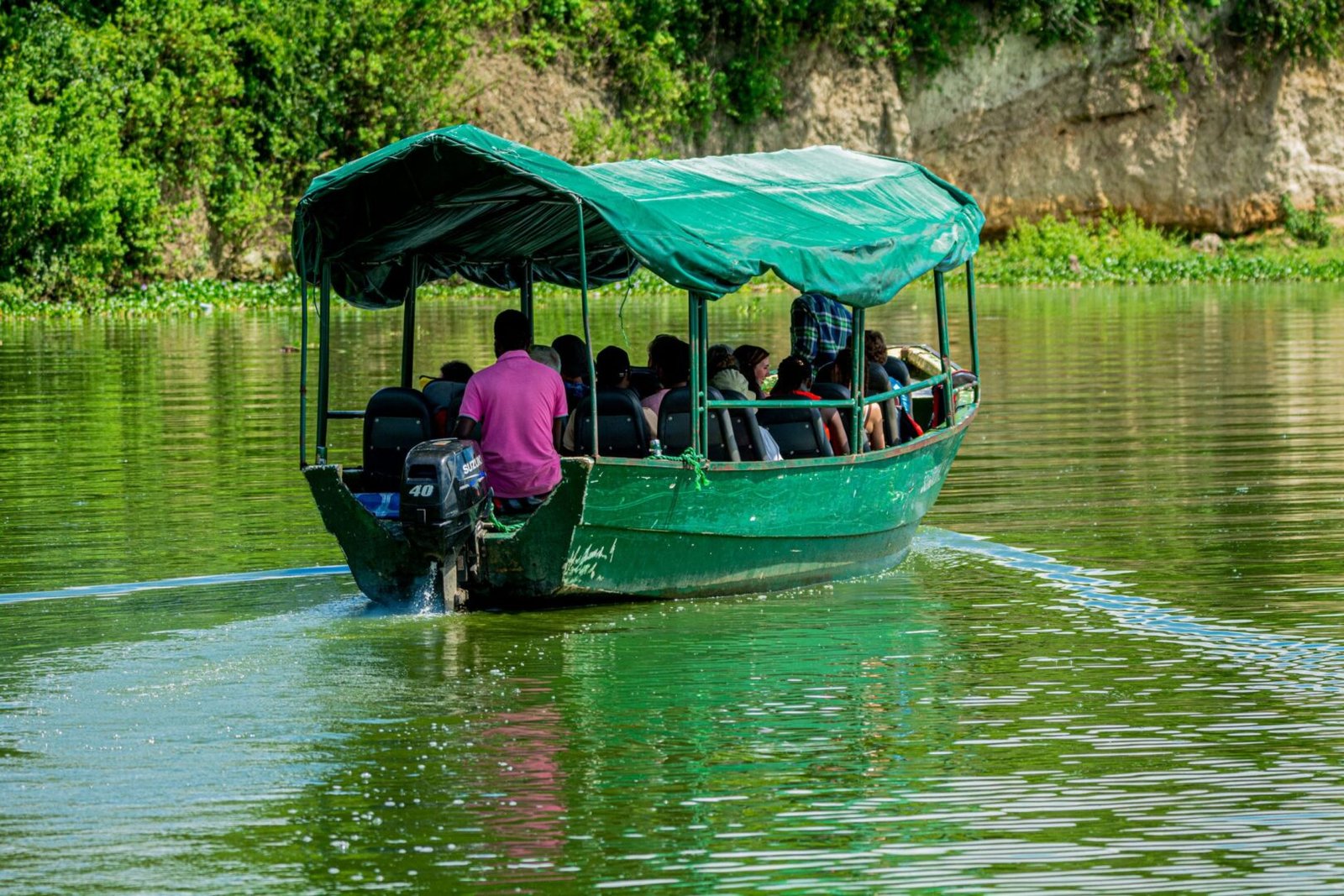
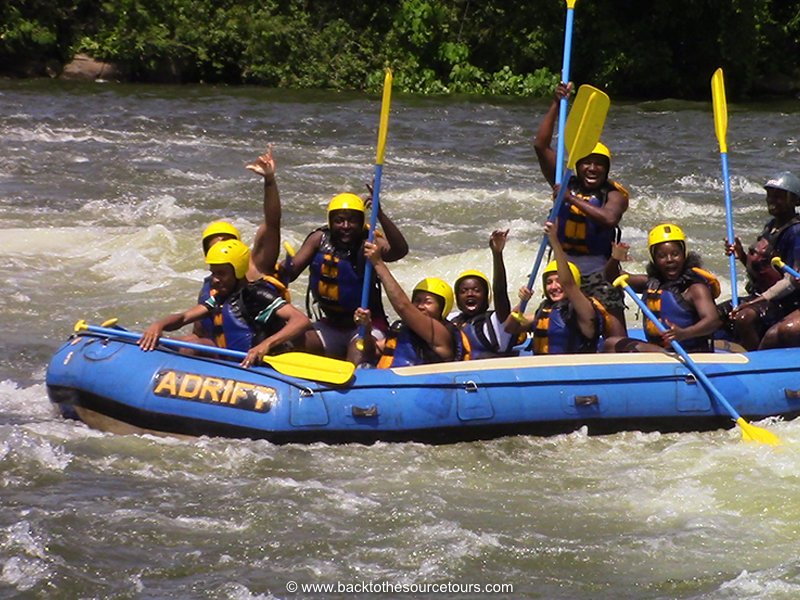
The Kazinga Channel cruise in Queen Elizabeth National Park is frequently combined with a game drive because it provides a completely different wildlife perspective, while boat experiences in Murchison Falls National Park allow travellers to explore the Nile and see wildlife along the river. Adding these activities increases the safari cost, but it also increases the variety and depth of the journey.
A good approach to Uganda Safari Prices Explained is therefore to ask not simply, “How many days am I getting?” but “What am I doing during those days?” A seven-day safari with gorillas, chimpanzees, game drives, boat cruises, and specialist experiences cannot reasonably be compared directly with a seven-day itinerary containing fewer paid activities.
Road Safaris Versus Fly-In Safari Prices
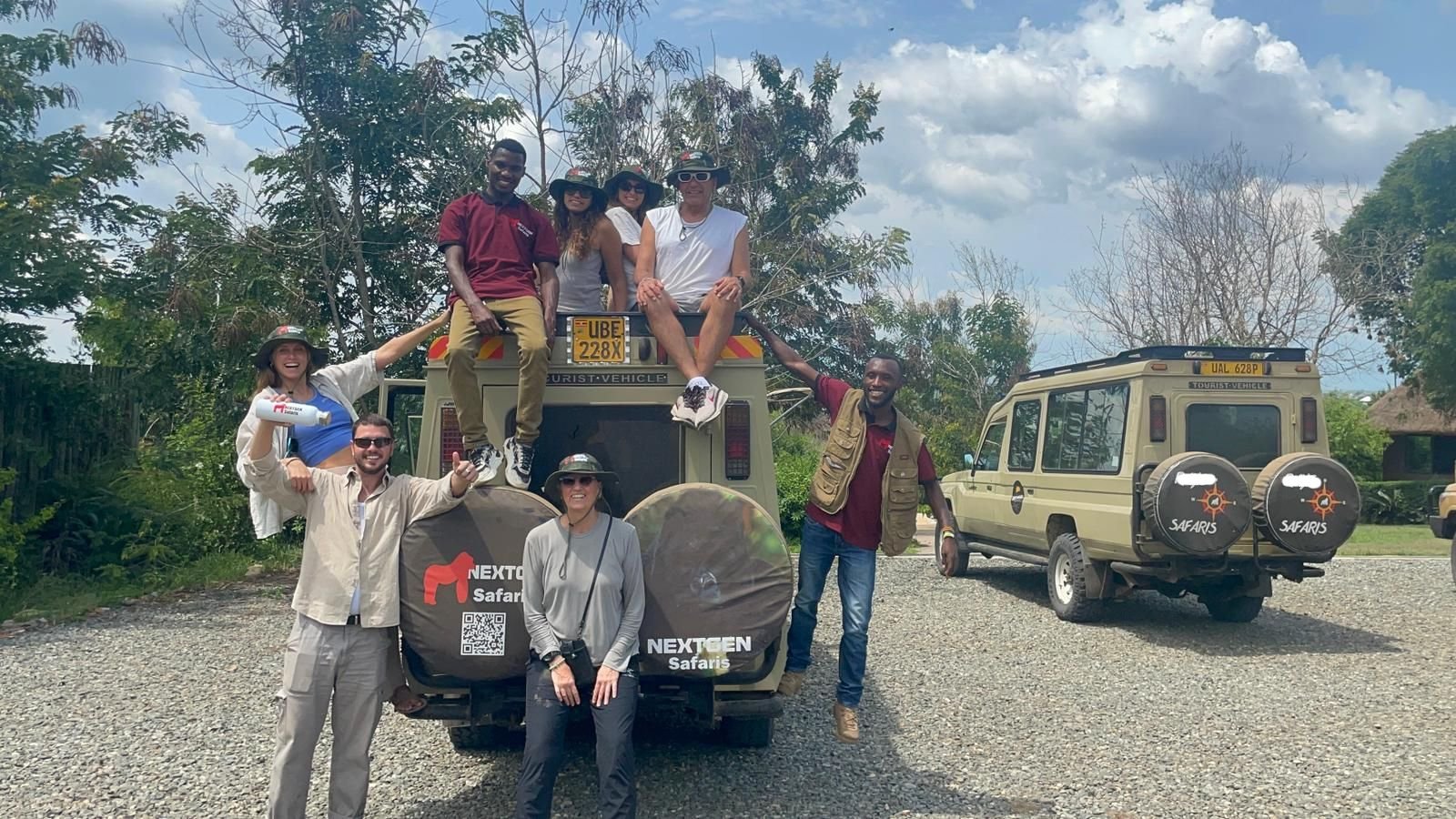
Road safaris are often the most practical option for travellers who want to experience Uganda’s landscapes and keep their overall budget manageable. A private road journey allows travellers to move between national parks with the same driver-guide while seeing countryside, towns, farms, villages, hills, and other landscapes between destinations.
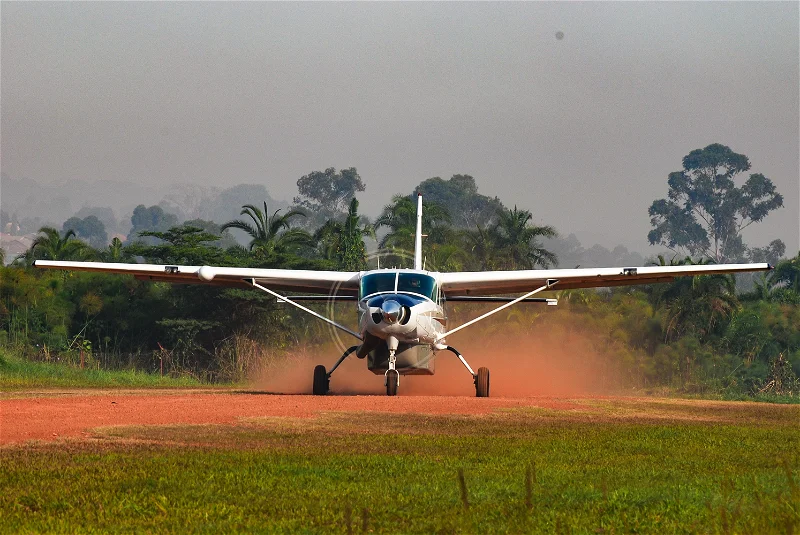
Fly-in safaris offer a different style of experience. Domestic flights can significantly reduce long road transfers and are particularly attractive to luxury travellers, honeymooners, older guests, and visitors with limited time. However, airfare, airstrip transfers, baggage restrictions, and sometimes additional vehicle arrangements at the destination increase the total cost.
A fly-in journey can therefore reach US$1,000–US$2,000 or more per person per day when combined with premium lodges and private services. This does not mean flying is unnecessarily expensive; the traveller is paying partly for time, convenience, and comfort. A well-designed itinerary can also combine flights and road travel to achieve a balance between cost and convenience.
Budget Uganda Safari Prices Explained
A budget Uganda safari is designed around value rather than luxury. Travellers generally stay in simpler accommodation, may share certain transport arrangements, and concentrate their spending on essential wildlife experiences. Budget travel can be particularly attractive for visitors whose main dream is seeing mountain gorillas and who are comfortable giving up premium lodge facilities to make the experience more affordable.
Around US$200–US$350 per person per day can provide a useful planning range for many budget journeys, although gorilla and chimpanzee permits can push particular days well above that average. Short private safaris can also cost more per day because vehicle and guide expenses are spread across fewer days.
Budget should not mean removing important safety, conservation, or operational standards. Reliable transportation, professional guiding, realistic travel times, appropriate accommodation, and confirmed permits remain essential. The best savings normally come from selecting practical accommodation, travelling with companions, simplifying the route, and avoiding unnecessary upgrades.
Mid-Range Uganda Safari Prices Explained
Mid-range safaris are popular because they balance comfort with value. Travellers normally stay in comfortable lodges or permanent tented camps with private bathrooms, good meals, attractive settings, and reliable service. Private 4×4 safari transportation is common, giving travellers greater flexibility for game drives, photography, and rest stops.
A useful planning range is approximately US$350–US$650 per person per day, depending on itinerary, group size, accommodation, activities, and whether high-cost permits are included. A mid-range gorilla and chimpanzee journey will naturally be more expensive than a mid-range wildlife-only itinerary because the primate permits are added to otherwise similar ground costs.
For many travellers, this category provides one of the strongest combinations of comfort and experience. Instead of paying primarily for elaborate lodge facilities, more of the budget can remain focused on activities, national parks, good guiding, and a private safari vehicle while still providing comfortable accommodation every night.
Luxury Uganda Safari Prices Explained
Luxury safaris begin around US$700 per person per day and can exceed US$1,500 considerably depending on the properties, flights, private services, and activities selected. Uganda has increasingly sophisticated luxury lodges around major destinations, including premium forest properties close to gorilla trekking areas and high-end safari accommodation overlooking wildlife landscapes.
The difference between mid-range and luxury is not simply a larger bedroom. Luxury prices can reflect exceptional location, limited room numbers, privacy, design, premium meals, personalised service, private experiences, spa facilities, beautiful views, domestic flights, and a higher staff-to-guest ratio. The most exclusive properties can represent several hundred or even more than a thousand dollars per person per night before specialist activities are considered.
Luxury travellers should therefore ask what the upgrade actually provides. In some locations, paying more creates a genuinely exceptional experience because of location and service. In others, a carefully chosen mid-range property may already provide everything the traveller needs. Nextgen Safaris can balance different accommodation categories within the same itinerary rather than automatically selecting the most expensive lodge every night.
Solo Traveller Prices Versus Couples and Groups
Solo travel deserves special attention in Uganda Safari Prices Explained because private safari costs are structured differently for one traveller. A solo guest still requires a safari vehicle, driver-guide, fuel, airport transfers, and many of the same logistical arrangements required for two travellers. Accommodation may also apply a single supplement or charge a room rate that would otherwise be shared by two guests.
The result is that the cost per person can be considerably higher for a private solo safari. This is particularly noticeable on longer road itineraries where transportation accounts for a significant percentage of the total price. The gorilla permit itself does not become more expensive for travelling alone; it is the fixed surrounding services that create the difference.
Solo travellers can manage costs by choosing comfortable rather than premium accommodation, using a shorter and more logical route, joining a suitable scheduled departure where available, or carefully combining road travel with other transport options. Private solo safaris remain attractive to travellers who value flexibility, photography freedom, and personalised guiding.
Does the Travel Season Affect Uganda Safari Prices?
Seasonality can influence accommodation prices and availability, particularly at sought-after lodges. Popular travel months may experience stronger demand, meaning travellers have fewer choices if they book late. Premium rooms, specific lodges, and convenient accommodation near gorilla trekking areas may sell out, potentially forcing travellers to choose a more expensive alternative.
Uganda Wildlife Authority’s introduction of discounted low-season gorilla and chimpanzee permits has also made seasonality more directly relevant to primate safari pricing. During April, May, and November, the 2026 low-season foreign non-resident rates are US$600 for gorilla tracking and US$200 for chimpanzee tracking, compared with the ordinary rates applicable outside those discounted periods.
For travellers who are flexible about dates and comfortable with the possibility of wetter conditions, these periods can create meaningful savings, especially when several people are trekking. However, price should be balanced with weather preferences, lodge availability, photography interests, and the overall style of journey desired.
What Is Normally Included in a Uganda Safari Price?
A well-prepared safari quotation may include accommodation, specified meals, safari transportation, fuel, a professional driver-guide, airport transfers, park entrance fees, scheduled activities, boat cruises, and primate permits where explicitly stated. The exact inclusions should always be written clearly because every itinerary is different.
International flights are normally separate, while visas, travel insurance, personal purchases, premium drinks, optional activities, gratuities, laundry at some properties, and additional nights before or after the safari may also be excluded. Travellers should never assume that a gorilla permit is included simply because the itinerary mentions gorilla trekking.
One of the most useful lessons from Uganda Safari Prices Explained is to compare inclusions line by line. A US$4,500 package containing a gorilla permit, chimpanzee permit, full-board accommodation, private 4×4 vehicle, park fees, and boat safari may represent better value than a US$3,800 quotation where several of those items still have to be paid separately.
Why Some Uganda Safari Quotes Are Much Cheaper
When two safari companies provide significantly different prices for apparently similar itineraries, there is usually a reason. Accommodation category is one of the biggest differences, but the vehicle, room type, meals, activities, permits, park fees, route, and guide arrangements can also vary. Simply reading the destination names is not enough to establish that two safaris are identical.
A cheaper quotation may use basic accommodation outside convenient safari areas, omit activities, exclude permits, use shared transportation, provide fewer meals, or involve a different vehicle standard. Conversely, a higher quotation may contain unnecessary luxury upgrades that the traveller does not actually value. Neither the lowest nor highest price should automatically be considered the best.
Travellers should request clarification whenever an unusually large difference appears. Ask specifically about the gorilla permit, chimpanzee permit, accommodation names, meal plans, vehicle type, park fees, boat cruises, transfers, and any payments required locally. Transparency is one of the best ways to protect your safari budget.
How to Reduce Your Uganda Safari Cost Without Ruining the Experience
The most effective way to reduce costs is to optimise the itinerary rather than remove the experiences you travelled to Uganda to enjoy. Choosing comfortable mid-range or budget accommodation can reduce costs considerably while allowing you to retain gorilla trekking, chimpanzee tracking, wildlife safaris, and boat cruises. Travelling with a partner or small group also distributes transportation expenses more efficiently.
Choosing a logical safari route is equally important. Excessive backtracking increases fuel consumption, guide time, and driving hours without adding meaningful experiences. Combining Kibale, Queen Elizabeth, and Bwindi in geographical sequence, for example, can make better operational sense than moving repeatedly between distant regions.
Travellers with flexible dates can also explore the official low-season primate permit discounts. The most important principle, however, is to protect the experiences that inspired the journey. Saving money by removing the gorilla trek from a safari designed around seeing mountain gorillas would defeat the purpose of travelling to Uganda.
Uganda Safari Prices for 2027 and Future Travel
Travellers planning well ahead should understand that prices can change between booking years. Uganda Wildlife Authority announced that from 1 January 2027 the foreign non-resident gorilla trekking permit remains US$800, while gorilla habituation rises to US$1,800, Kibale chimpanzee tracking rises to US$300, and chimpanzee habituation rises to US$400.
UWA also suspended its previous seven-day unpaid permit reservation window effective 1 March 2026. Under the revised system, operators secure permits upon full payment at booking rather than holding them unpaid for seven days. This is especially important when planning popular gorilla trekking dates because travellers may need to confirm permits promptly once availability is established.
Accommodation rates, domestic flights, fuel, park fees, and other tourism services may also be revised over time. For this reason, travellers planning for 2027, 2028, or later should treat older safari quotations as references rather than guaranteed current prices.
Why Book Your Uganda Safari With Nextgen Safaris?
At Nextgen Safaris, we believe understanding the price is just as important as receiving the quotation. Our approach to Uganda Safari Prices Explained is to help travellers understand how their accommodation, permits, transportation, activities, group size, and route combine to create the total safari cost. This allows us to design journeys around actual priorities rather than simply presenting one package and expecting every traveller to accept it.
We can create budget, mid-range, luxury, family, honeymoon, solo, private, gorilla trekking, chimpanzee, wildlife, birdwatching, and multi-country itineraries. Accommodation can be adjusted, routes can be simplified, and activities can be prioritised depending on what the traveller values most. A guest wanting excellent wildlife experiences with practical accommodation requires a different quotation from someone seeking premium lodges and domestic flights.
The objective is not simply to create the cheapest Uganda safari. It is to create strong value by combining sensible logistics, suitable accommodation, important wildlife experiences, reliable transportation, and knowledgeable guiding. When the itinerary has been designed properly, travellers can understand exactly where their safari budget is going and why.
Frequently Asked Questions About Uganda Safari Prices Explained
1. How much does a Uganda safari cost?
When looking at Uganda Safari Prices Explained, a budget safari may start from around US$200–US$350 per person per day, while a comfortable mid-range safari may cost around US$350–US$650 per person per day. Luxury safaris can start from around US$700 per person per day and rise significantly depending on lodge category, domestic flights, private services, permits, and activities. The final cost depends on your exact itinerary, number of travellers, accommodation, transport, and experiences included.
2. Why are gorilla safaris in Uganda expensive?
A major part of Uganda Safari Prices Explained is the cost of gorilla trekking permits, which are charged per person and can represent a large percentage of the total safari price. In addition to the permit, travellers also need transport to the gorilla region, accommodation, meals, guides, fuel, and other operational services. This is why even a short gorilla safari may have a relatively high daily price compared with a longer wildlife-only journey.
3. What is normally included in Uganda safari prices?
A typical Uganda safari price may include accommodation, specified meals, safari transportation, fuel, a professional driver-guide, airport transfers, park entrance fees, wildlife activities, boat cruises, and primate permits where clearly stated. One of the most important lessons from Uganda Safari Prices Explained is to check inclusions carefully because international flights, visas, travel insurance, gratuities, personal expenses, premium drinks, and optional activities may be excluded.
4. How can I reduce the cost of a Uganda safari?
Travellers can reduce costs by choosing practical budget or mid-range accommodation, travelling with a partner or small group, using a logical safari route, avoiding unnecessary domestic flights, and prioritising the experiences that matter most. Uganda Safari Prices Explained also shows that shared costs such as vehicles, guides, and fuel become cheaper per person when several travellers are travelling together. The aim should be to reduce unnecessary expenses without removing the main experiences that inspired your Uganda safari.
5. Why do Uganda safari prices vary between tour operators?
Different quotations can vary because operators may use different lodges, vehicles, meal plans, routes, activities, guide arrangements, and inclusions. When studying Uganda Safari Prices Explained, travellers should compare proposals line by line rather than looking only at the final price. A cheaper itinerary may exclude permits, park fees, meals, or activities, while a higher quotation may already include most major safari expenses, making it better value overall.
Get a Personalised Uganda Safari Price Today
The most important lesson from Uganda Safari Prices Explained is that there is no single answer to the question, “How much does a Uganda safari cost?” A safari price is built from individual components: permits, accommodation, transportation, fuel, guides, conservation fees, meals, activities, domestic flights, and operational arrangements. Change one of these components and the final price can change significantly.
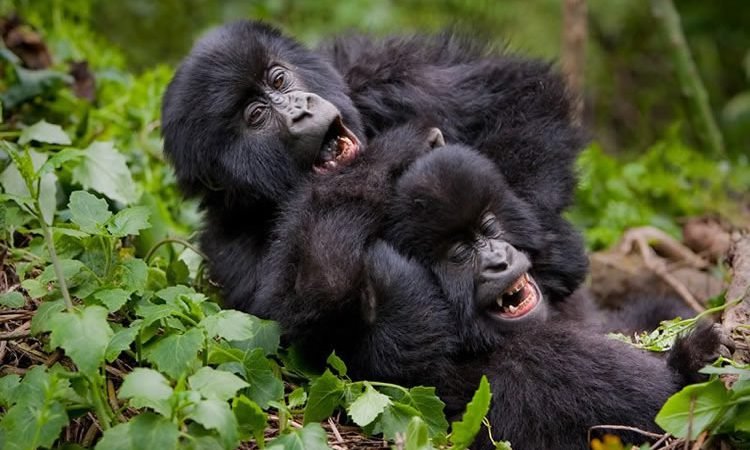
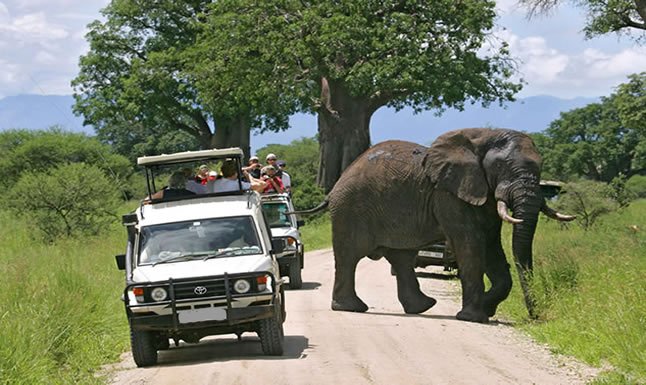
A traveller spending seven days in Uganda on a practical mid-range safari will have a completely different budget from a traveller staying at exclusive luxury lodges and flying between national parks. Likewise, a wildlife-only journey will cost differently from an itinerary containing gorilla trekking, gorilla habituation, chimpanzee tracking, and other specialist experiences. Understanding these differences makes it easier to choose the right safari rather than simply chasing the lowest advertised price.
At Nextgen Safaris, we create personalised quotations based on your exact travel dates, number of travellers, preferred accommodation category, destinations, and experiences. Tell us whether you are looking for a budget, mid-range, or luxury safari and which experiences matter most to you, and we can build a transparent itinerary around your priorities. Start planning your Uganda safari today and receive a price designed around the journey you actually want to experience.