
Uganda Walking Safari
Uganda Walking Safari – Incredible Guided Wildlife & Nature Adventure
An Uganda Walking Safari offers a completely different way to experience the country’s wildlife and landscapes. Instead of observing everything through the windows or pop-up roof of a safari vehicle, travelers step into the environment with an experienced guide or ranger and begin noticing the smaller details that are easily missed on a conventional game drive. Animal tracks, fresh dung, insects, medicinal plants, bird calls, bones, feeding signs and the movement of wildlife through the landscape suddenly become part of the safari. Uganda is particularly interesting for walking because its protected areas range from open savannah and acacia woodland to wetlands, tropical forest and mountain ecosystems. Uganda Wildlife Authority currently manages ten national parks as well as wildlife reserves and sanctuaries across these varied environments.
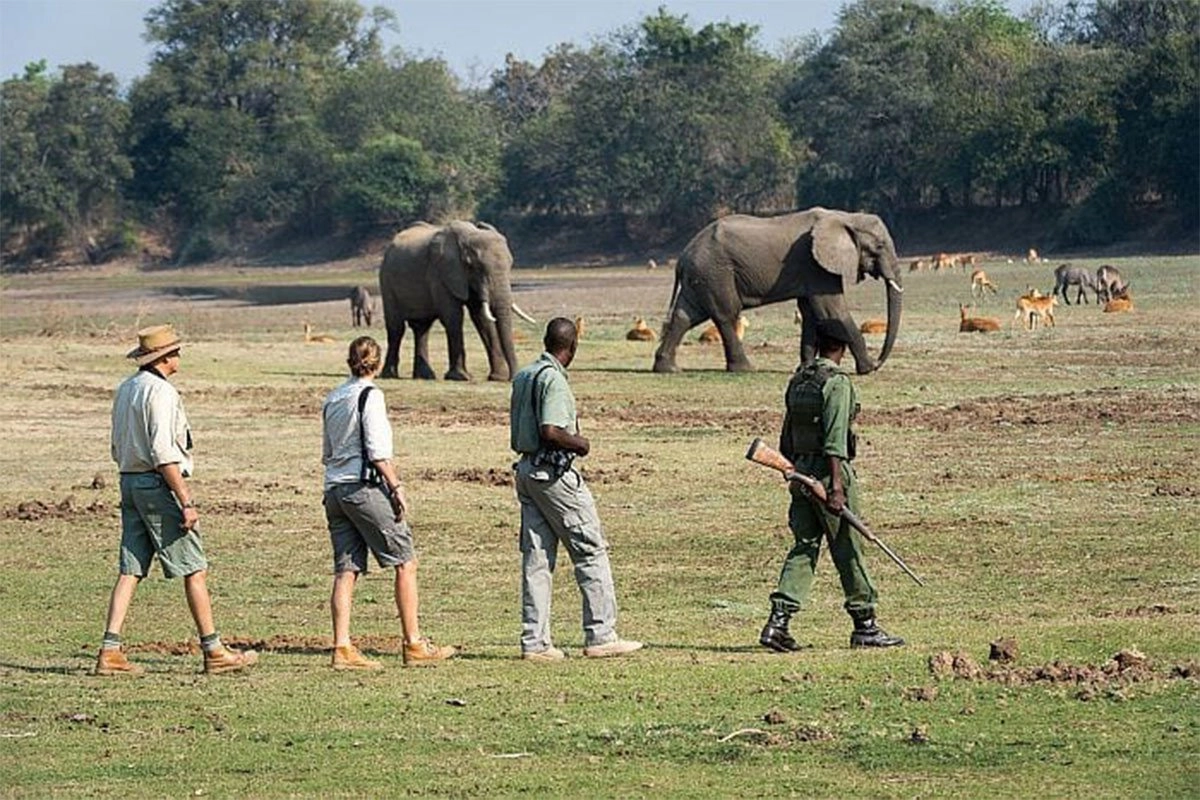
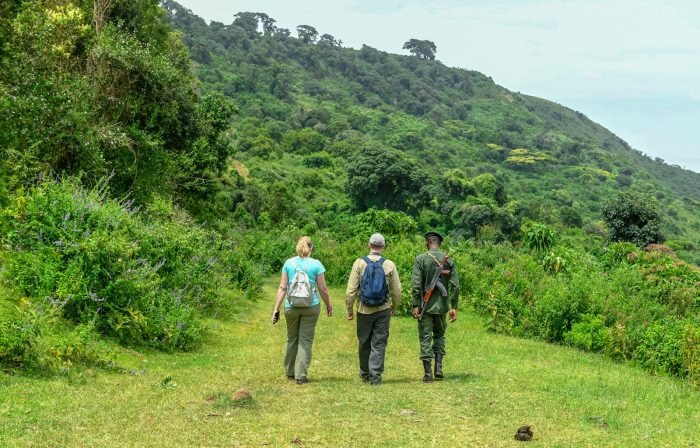
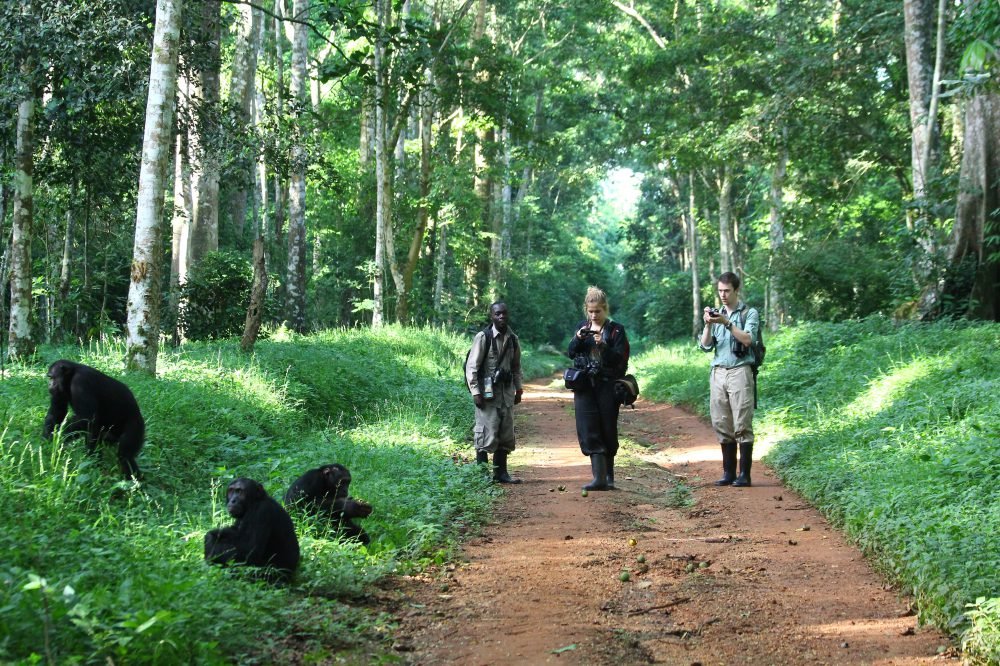
A well-planned Uganda Walking Safari does not mean abandoning traditional game drives. In many cases, walking is most rewarding when combined with vehicle-based wildlife viewing, boat safaris and other experiences. A morning may begin quietly on foot following zebra and antelope tracks in Lake Mburo National Park before an afternoon boat safari, while another journey may combine guided nature walks in remote Kidepo Valley with conventional game drives across the Narus Valley. Uganda Wildlife Authority specifically lists guided walking safaris among Lake Mburo’s visitor experiences, while its Kidepo park literature has long included nature walks around Apoka and through parts of the valley.
The appeal is immersion rather than extreme adventure. Walking slows the safari down, encourages travelers to observe how ecosystems work and creates a strong sense of connection with the landscape. Wildlife is approached only according to the instructions of trained guides and park authorities, and visitors should never attempt independent walking in wildlife areas where it is not permitted. Nextgen Safaris can incorporate suitable walking activities into a private Uganda journey according to fitness level, interests, park regulations and the type of wildlife experience each traveler wants.
What Is an Uganda Walking Safari?
An Uganda Walking Safari is a professionally guided experience in which visitors explore designated wildlife or natural areas on foot instead of remaining inside a safari vehicle. The exact style varies considerably between destinations. In Lake Mburo, walking can mean exploring savannah and woodland where zebras, impalas and other wildlife occur. Kidepo has traditionally offered nature walks within its vast northeastern landscapes, while Ziwa Rhino Sanctuary provides specialized rhino trekking and nature walks. Other Ugandan destinations offer forest trekking, mountain hiking or primate tracking that involve substantial walking but should not automatically be confused with a classic savannah bush walk.
The objective is not to walk as close as possible to dangerous animals. A properly managed walking safari emphasizes interpretation, safe positioning, observation and understanding the environment. Guides may identify footprints, explain how animals use vegetation, interpret alarm calls or show signs indicating where wildlife has recently passed. The pace is generally much slower than a normal hike because the purpose is discovery rather than covering the greatest possible distance.
This distinction is important for travelers researching Uganda Walking Safari experiences online. Gorilla trekking in Bwindi, chimpanzee tracking in Kibale and mountain trekking on Mount Elgon all involve walking, but the experience and objective are different. A classic walking safari normally emphasizes the wider ecosystem and wildlife encountered naturally along the route, whereas primate trekking focuses on locating a particular habituated animal group and mountain trekking focuses primarily on completing a trail or reaching a landscape objective. Kibale’s official chimpanzee tracking walks, for example, can last approximately two to five hours depending on chimpanzee movements, weather and terrain.
Why Choose a Walking Safari in Uganda?
The greatest advantage of an Uganda Walking Safari is perspective. Safari vehicles are excellent for covering large areas and approaching wildlife safely, but they naturally encourage travelers to look farther into the landscape for large mammals. Walking shifts attention downward, sideways and into the immediate surroundings. A footprint in sand may reveal that a zebra or antelope crossed earlier that morning, while damaged vegetation can show where an animal was feeding. Bird calls become easier to notice, insects become interesting subjects and plants that seemed like an anonymous green background from a vehicle suddenly become part of the story.
Walking can also make ordinary wildlife encounters feel surprisingly powerful. Seeing a zebra from a safari vehicle is exciting, but observing it while standing quietly on foot creates a completely different awareness of distance, wind direction, movement and animal behavior. This is one reason Lake Mburo has become particularly associated with guided walking safaris. UWA promotes the park specifically for exploring on foot as well as by boat and game-drive vehicle, alongside its populations of zebras and impalas and more than 315 recorded bird species.
For photographers and birders, slowing down may also reveal subjects that would otherwise be passed quickly. For families with older children, active couples and repeat African safari travelers, a guided walk provides a refreshing contrast to spending many consecutive hours inside a 4×4. The most rewarding approach is usually to combine both styles rather than declaring walking superior to driving.
Best Places for an Uganda Walking Safari
The strongest destinations for a classic Uganda Walking Safari are not necessarily the same parks travelers would choose for game drives. Lake Mburo National Park is the clearest mainstream choice because Uganda Wildlife Authority explicitly promotes guided walking safaris there. Kidepo Valley National Park has also offered guided nature walks within its wilderness landscape, particularly around Apoka and selected valley areas. Ziwa Rhino Sanctuary provides a more specialized on-foot experience built around rhino trekking as well as nature walks.
Travelers should not assume that unrestricted bush walking is permitted throughout every Ugandan national park. Wildlife density, terrain, conservation rules and ranger operations differ between protected areas, and walking routes or activity arrangements can change. Nextgen Safaris should therefore confirm the precise walking activity available for the travel dates rather than promising that visitors can simply leave their vehicle anywhere inside a park.
Lake Mburo National Park – The Best Classic Uganda Walking Safari
For many travelers, Lake Mburo National Park is the strongest destination for a classic Uganda Walking Safari. Uganda Wildlife Authority promotes guided walking safaris as one of the park’s principal experiences alongside game drives and boat safaris. Lake Mburo is also Uganda’s most accessible savannah national park from Kampala and is especially known for zebras and impalas. Its mixture of wetlands, open savannah and woodland creates a varied environment that works extremely well for slower exploration on foot.
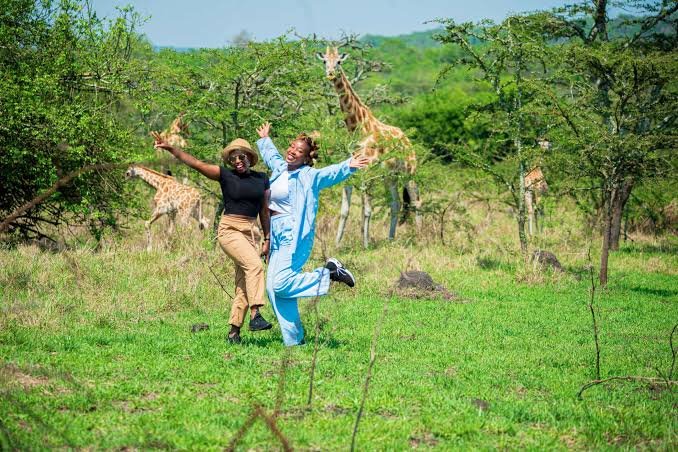
Walking here changes how travelers experience familiar safari animals. Zebras become particularly impressive on foot because their alert posture and herd behavior are easier to appreciate when the walker is part of the same landscape rather than elevated inside a vehicle. Impalas, bushbuck, warthogs and numerous birds may also contribute to the walk depending on the route, season and wildlife movements. Sightings are never guaranteed, and the ranger determines safe distances and direction of travel.
The official Lake Mburo park brochure also describes guided walking around Rwonyo and a Salt Lick Walk, where visitors can explore on foot toward a natural salt lick used by wildlife. This illustrates the educational value of a walking safari: rather than simply locating animals, visitors learn why wildlife concentrates in certain places and how geography, water, vegetation and minerals influence animal movement.
Lake Mburo is particularly easy to incorporate into a longer Uganda safari because it sits between Kampala/Entebbe and the southwestern tourism circuit. Travelers returning from Bwindi can spend one or two nights around the park and finish their safari with walking, zebras and a slower-paced wilderness experience before heading back toward Entebbe.
Walking Among Zebras in Lake Mburo
Zebras are among the animals most strongly associated with the Uganda Walking Safari experience in Lake Mburo. UWA identifies the park as one of Uganda’s best places for zebras and also notes substantial zebra populations in both Lake Mburo and Kidepo.
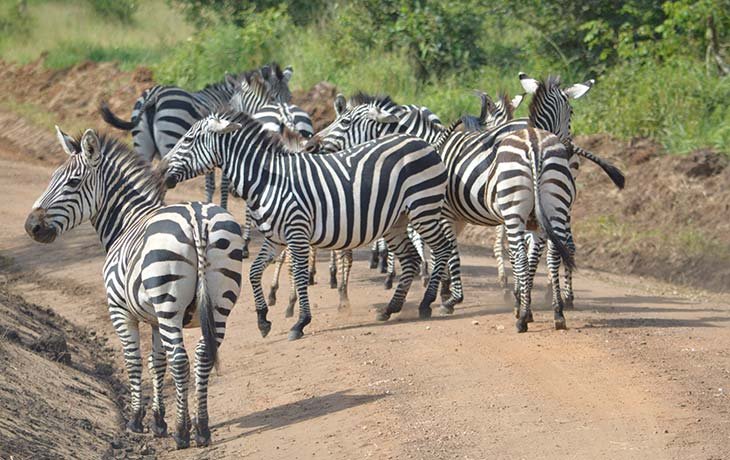
The attraction is not simply standing close to a zebra. A guided walk provides time to watch how groups remain alert, how individuals respond to sound and movement and how different grazing species use the same savannah. Photographers can also create environmental images showing wildlife within the grasslands rather than relying entirely on images taken from a vehicle window.
Visitors must always allow the ranger to determine the safe approach. Wildlife remains wild, and animals may alter direction or move away before travelers obtain the photograph they imagined. Accepting that uncertainty is part of a genuine walking safari and is far preferable to disturbing an animal simply to create a closer encounter.
Kidepo Valley Walking Safari
Kidepo Valley National Park offers a completely different Uganda Walking Safari atmosphere. Located in northeastern Uganda, Kidepo is the country’s most remote national park and covers approximately 1,442 square kilometres of semi-arid valley, savannah and mountain landscapes. UWA currently lists more than 77 mammal species and 476 bird species for the park, while its earlier official visitor material describes short nature walks around Apoka with opportunities to encounter wildlife such as zebras, hartebeests and reedbucks.
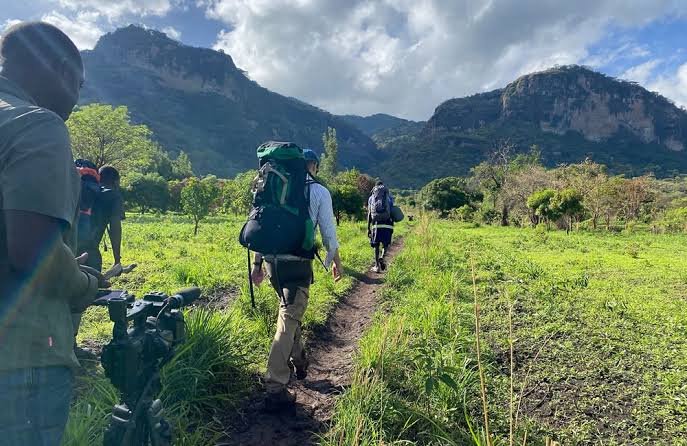
The scale of Kidepo is what makes walking particularly memorable. In Lake Mburo, vegetation and rolling terrain can make the experience feel intimate; in Kidepo, the walker is surrounded by enormous plains and distant mountain ranges. The activity becomes as much about wilderness and landscape as about individual animals.
Kidepo also contains large mammals including lions, buffaloes, elephants, zebras and giraffes, so walking must be conducted strictly under authorized guidance and in designated areas. Visitors should never interpret the availability of nature walks as permission to walk independently around the park.
Because activity options and ranger routes can change, current walking arrangements should be reconfirmed for the exact travel dates. This is particularly important in Kidepo because wildlife management has been evolving: UWA began reintroducing southern white rhinos to a secure sanctuary inside the park in March 2026, initially placing translocated animals under close ranger and veterinary monitoring. That conservation development should not be presented as an automatic walking-rhino experience unless UWA specifically makes such an activity available.
Rhino Tracking on Foot at Ziwa Rhino Sanctuary
Rhino tracking provides one of Uganda’s most specialized wildlife experiences on foot. Uganda Wildlife Authority continues to list Rhino Trekking, nature walks, night walks, birdwatching and other activities at Ziwa Rhino Sanctuary. The experience differs from a normal savannah walk because the principal objective is locating southern white rhinos under controlled guidance rather than simply exploring a landscape in search of whatever appears.
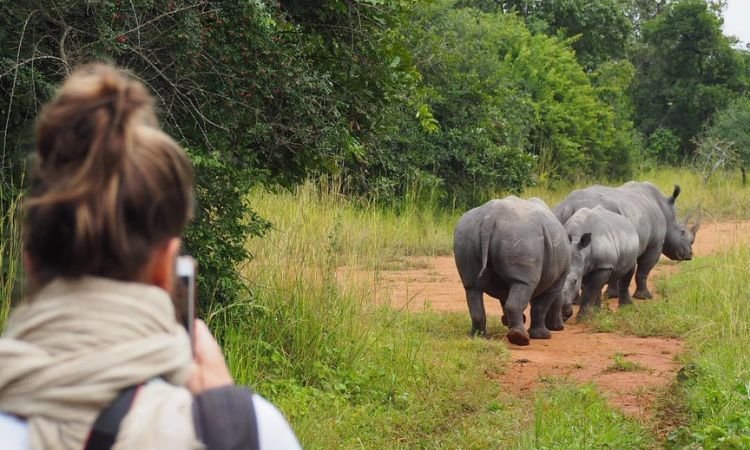
Walking in rhino habitat demands strict attention to guide instructions. Visitors may be asked to remain together, change direction or stop depending on the position and behavior of the animals. The objective is to observe without interfering with natural behavior, and the guide controls the encounter rather than the visitor determining how close to move.
Uganda’s rhino conservation story is also changing. In March 2026, UWA began moving rhinos from Ziwa to a newly established secure sanctuary in Kidepo Valley National Park as part of a wider national restoration strategy. The authority stated that eight rhinos were planned for the Kidepo transfer program. For this reason, older claims that Ziwa is Uganda’s only location with rhinos should no longer be repeated, even though Ziwa remains an established destination for guided rhino trekking.
For travelers driving toward Murchison Falls, Ziwa can fit naturally into the northern safari route and add an important walking component before traditional game drives and Nile experiences.
Is Gorilla Trekking an Uganda Walking Safari?
Gorilla trekking certainly involves substantial walking, but it is better described as primate trekking rather than a classic Uganda Walking Safari. The primary objective is to locate an assigned habituated mountain gorilla family with trackers and rangers rather than exploring open wildlife habitat generally. Trekking takes place in forested environments where terrain, weather and the gorillas’ movements influence how long visitors walk.
The distinction matters for SEO and for travelers. Someone searching specifically for an Uganda Walking Safari may want a guided savannah bush walk where tracks, plants and various animals form the experience. Someone searching for gorilla trekking is normally interested specifically in reaching mountain gorillas. Combining both is excellent, but the activities should not be presented as identical.
A strong Uganda journey can therefore include a gorilla trek in Bwindi and a genuine walking safari in Lake Mburo. This creates two very different experiences on foot: one centered on great apes in rainforest and another centered on savannah ecology and wildlife observation.
Chimpanzee Tracking and Forest Walking
Chimpanzee tracking in Kibale is another walking-based activity that complements an Uganda Walking Safari without being exactly the same thing. UWA currently states that chimpanzee tracking walks from Kanyanchu Visitor Centre typically last about two to five hours depending on animal movement, weather and terrain.
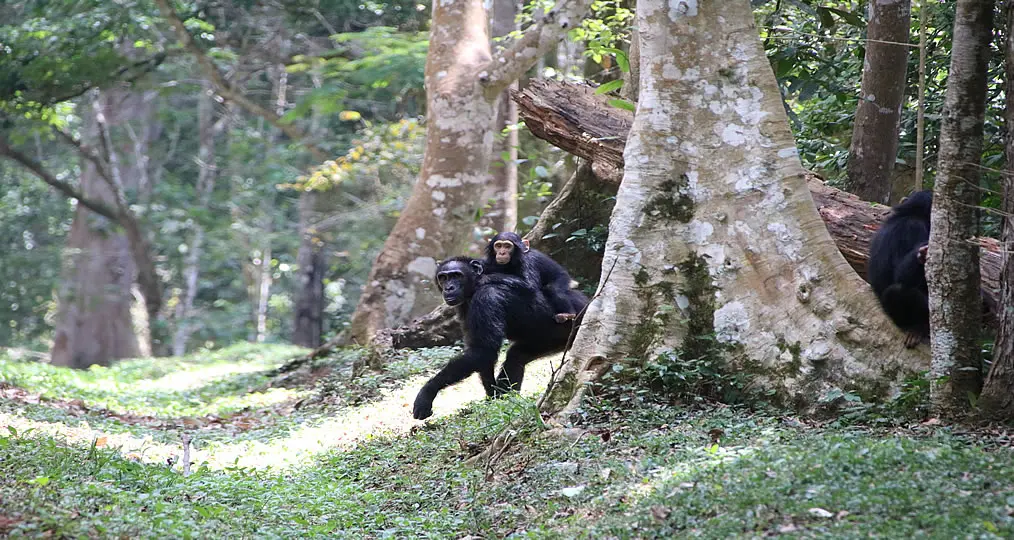
The forest environment creates different demands from savannah walking. Visibility may be limited, paths can be uneven and chimpanzees may move quickly through vegetation. Participants focus heavily on calls, movement above the canopy and tracker instructions.
Combining Kibale with Lake Mburo produces a particularly interesting contrast. Travelers experience tropical forest on foot while searching for primates, then later walk through open savannah looking for zebras, antelopes, birds and signs of other wildlife.
This is one reason Uganda works so well for active travelers: walking does not have to mean repeating the same experience in every destination.
Mountain Walking and Trekking in Uganda
Travelers interested primarily in long-distance walking can extend the concept beyond wildlife bush walks into Uganda’s mountain environments. Mount Elgon National Park contains forest, valleys, waterfalls, caves, moorland and Afro-alpine vegetation, with trails leading toward Wagagai Peak at 4,321 metres and the mountain’s enormous caldera. UWA describes Mount Elgon as a quieter trekking alternative to some of East Africa’s better-known mountains.
Mount Elgon should therefore be presented as a trekking or hiking extension rather than a conventional wildlife walking safari. The main reward is landscape, vegetation, altitude and the journey through different ecological zones, even though wildlife and more than 300 bird species occur within the park.
For active travelers, combining several walking styles can create an outstanding holiday: a guided wildlife walk in Lake Mburo, gorilla trekking in Bwindi and mountain trekking on Mount Elgon. Each involves traveling on foot, but each reveals Uganda from a completely different perspective.
Wildlife You May Encounter on an Uganda Walking Safari
Wildlife encountered on an Uganda Walking Safari depends entirely on the location. Lake Mburo is strongly associated with zebras and impalas, while Kidepo supports zebras, hartebeests and many other savannah mammals. Ziwa offers specialized rhino trekking, while forest-based walking experiences elsewhere may involve primates, forest birds and smaller wildlife.
Sightings should always be described as possibilities rather than guarantees. Animals move according to water, food, weather and disturbance, and a walking safari may sometimes produce fewer large-mammal sightings than a game drive. That does not make the activity unsuccessful. Tracks, insects, birdlife, plants, dung, bones and distant wildlife all help interpret the ecosystem.
For visitors accustomed to judging safaris by how many animals they photograph, this slower approach can initially feel unusual. Yet it is often precisely what makes the experience memorable. Walking teaches travelers to read the landscape instead of simply waiting for the guide to announce another animal.
Birdwatching During an Uganda Walking Safari
Walking is particularly valuable for birdwatchers because slower movement makes it easier to hear calls and observe smaller species. Lake Mburo alone has more than 315 recorded bird species according to UWA, while Kidepo has more than 476.
Birding on foot provides much greater flexibility than birding from a vehicle. The group can stop beside flowering vegetation, scan woodland edges or remain quietly where repeated calls suggest an interesting bird is nearby. Guides can also interpret habitat preferences that become much clearer while moving slowly through the environment.
Photographers should remember that walking places practical limits on how much equipment is comfortable to carry. A versatile telephoto lens is often more useful than carrying several very heavy lenses over uneven terrain.
For serious birders, a walking safari can become an important component of a wider Uganda birding tour rather than merely a recreational add-on.
Uganda Walking Safari Photography
Photography on an Uganda Walking Safari is fundamentally different from photographing wildlife from a vehicle. There is no vehicle roof to support a heavy lens, movement must be quieter and the photographer may need to react quickly while still following the ranger’s instructions.
A relatively flexible camera setup is usually more practical than carrying an enormous collection of equipment. Medium telephoto focal lengths can work well for larger mammals, while a wider lens can capture landscapes, tracks, vegetation and the relationship between travelers and the environment.
The greatest photographic opportunity may be environmental storytelling rather than close portraits. A zebra framed within Lake Mburo’s grassland or a walking group beneath Kidepo’s huge sky can communicate far more about the experience than another tightly cropped wildlife image.
No photograph should ever take priority over safety or animal welfare. Visitors should never move away from the ranger or change position independently simply because they believe a better photograph is available.
Is an Uganda Walking Safari Safe?
A properly organized Uganda Walking Safari is conducted under controlled conditions with authorized guides or rangers who understand the terrain, wildlife and applicable protected-area rules. The visitor’s responsibility is to listen carefully and follow instructions immediately.
Walking in wildlife country is fundamentally different from hiking through an ordinary recreational park. Animals can change direction unexpectedly, visibility may be reduced by vegetation and environmental conditions can change quickly. The guide therefore determines where the group walks, when it stops and when it changes direction.
Travelers should also be realistic about their own health and mobility. Heat, uneven ground, altitude and long periods standing can make an apparently short walk more demanding than expected. Anyone with significant health or mobility concerns should discuss them with an appropriate medical professional and with the safari planner before booking strenuous activities.
Safety also means accepting that sometimes the guide will avoid a wildlife encounter altogether. A professional walking safari is successful when it respects the animals and returns guests safely, not when it forces every possible sighting.
Fitness Required for an Uganda Walking Safari
Most short wildlife walking experiences do not require elite fitness, but travelers should be comfortable walking on natural, uneven ground. The physical demands differ greatly between a short Lake Mburo nature walk, several hours of rhino trekking and a mountain trekking experience on Mount Elgon.
A useful planning question is not simply “Can I walk?” but “How long can I comfortably walk over uneven terrain in warm conditions while remaining attentive to my surroundings?” Travelers who normally walk regularly at home will generally find shorter safari walks manageable, while those with limited mobility should request gentler options.
Nextgen Safaris can structure an Uganda Walking Safari according to the traveler rather than expecting everyone to complete the same distance. Shorter guided experiences can be combined with vehicle safaris for seniors, families or travelers who want the immersion of walking without turning their entire holiday into a hiking expedition.
Uganda Walking Safari for Seniors
An Uganda Walking Safari for seniors can be highly rewarding when the activity is chosen according to mobility and fitness rather than age alone. A short, slower nature walk may provide a wonderful break from long vehicle journeys, particularly when the terrain is manageable and enough time is allowed.
Senior travelers should communicate any difficulty with steep slopes, uneven ground or prolonged standing before the safari begins. The correct activity may be a shorter Lake Mburo walk instead of a more demanding forest or mountain trek.
Private safari planning helps significantly because there is no need to match the pace of an unrelated group. A walking experience can also be scheduled between less demanding game drives and boat safaris, creating variety without making every day physically intensive.
The principle should always be comfort and realistic pacing rather than trying to prove fitness through unnecessarily strenuous activities.
Uganda Walking Safari with Children
Families can also include walking experiences, but the children’s ages, attention span and ability to follow instructions are critical. Wildlife walking is not the same as taking children on a normal countryside stroll because participants must remain quiet when instructed and stay with the group.
Families with younger children may be better served by game drives and boat safaris unless an age-appropriate short nature experience is specifically available. UWA’s conservation tariff documentation has previously included guided short nature walks for children in certain contexts, demonstrating that not every walking experience needs to be long or demanding. Actual age rules and availability should still be reconfirmed for the chosen destination before booking.
Older children and teenagers who are interested in animals can gain enormous educational value from learning to recognize footprints, dung, feathers, nests and different plants.
A private family safari gives the guide more freedom to keep explanations engaging and prevent the activity from becoming too long for younger participants.
What to Wear on an Uganda Walking Safari
Comfortable closed walking shoes are one of the most important items for an Uganda Walking Safari. They should already be broken in before travel and provide enough grip for uneven or occasionally wet ground. Lightweight long trousers help protect the legs from vegetation, while breathable shirts are generally more practical than heavy safari clothing.
Neutral clothing is useful because walking safaris are about blending calmly into the environment rather than attracting attention. A hat, sunscreen and enough drinking water are important during exposed savannah walks, while lightweight rain protection becomes useful during wetter periods or forest activities.
Travelers should avoid carrying unnecessary equipment. A small daypack with water, camera equipment, rain protection and personal essentials is usually more comfortable than a large backpack.
Your guide should provide destination-specific advice before the activity because clothing suitable for Lake Mburo’s savannah may differ considerably from what is needed in highland or forest environments.
Best Time for an Uganda Walking Safari
Uganda can support nature and wildlife experiences throughout the year, but drier periods are generally easier for many walking activities because trails and savannah ground can be firmer. UWA identifies June to August and December to February as major dry-season periods that are also favorable for wildlife viewing in Uganda’s savannah reserves.
This does not mean wetter months should automatically be avoided. Rain can produce greener scenery, clearer air and excellent photography, while bird activity and vegetation may be especially interesting. The trade-off is that trails can become muddy and some walks physically more demanding.
The best month therefore depends on destination and priorities. Someone combining Lake Mburo walking with gorilla trekking may evaluate conditions differently from someone concentrating on remote Kidepo or Mount Elgon trekking.
Nextgen Safaris can match travel timing with the overall route rather than selecting dates according to one walking activity alone.
Morning or Afternoon Walking Safari?
Early morning is often an excellent time for an Uganda Walking Safari because temperatures are generally more comfortable and wildlife activity can be interesting before the heat builds. Light can also be attractive for photography, particularly in open savannah.
Late afternoon can provide another rewarding window as temperatures begin to fall and softer light returns. The actual walking schedule, however, depends on the protected area, authorized activity times, weather and ranger arrangements.
Travelers should avoid insisting on arbitrary times if the ranger advises differently. Wildlife movements, route conditions or safety considerations may make one period more appropriate than another.
The advantage of a private safari is that other game drives, boat cruises and transfer times can be organized around the walking activity instead of forcing everything into a rigid schedule.
Walking Safari Versus Game Drive
An Uganda Walking Safari and a game drive should be seen as complementary experiences. A game drive allows travelers to cover much greater distances, remain protected within a vehicle and search effectively for large mammals such as lions, elephants and buffaloes. Walking sacrifices distance in exchange for detail and immersion.
From a vehicle, the safari is often dominated by what can be seen. On foot, smell, sound, texture and signs of wildlife become more important. A track in the dust or an alarm call from a bird can become part of the experience even when the animal responsible is not visible.
Travelers should therefore avoid replacing every game drive with walking. A balanced journey might include conventional game viewing in Queen Elizabeth or Murchison Falls while reserving Lake Mburo or Kidepo for dedicated walking.
This combination creates a much broader understanding of Uganda’s wildlife than relying on either method alone.
Walking Safari Versus Gorilla Trekking
The difference between an Uganda Walking Safari and gorilla trekking comes down mainly to purpose. On a walking safari, travelers explore the landscape and encounter whatever the ecosystem reveals. On a gorilla trek, guides and trackers are specifically searching for a habituated gorilla family.
The emotional experience is also different. Gorilla trekking builds toward a highly anticipated primate encounter, while a bush walk rewards curiosity throughout the entire journey. A footprint, bird call or distant zebra can be as important as reaching a final destination.
Travelers should not choose between the two unless time is extremely limited. Uganda is particularly valuable because both experiences can be combined within one country.
A safari that includes gorillas in Bwindi and savannah walking in Lake Mburo demonstrates two dramatically different ways of exploring African wilderness on foot.
How Long Should an Uganda Walking Safari Be?
A walking component can be incorporated into a short safari, but travelers whose main interest is Uganda Walking Safari experiences should consider enough time to explore more than one environment. Lake Mburo alone can provide a classic savannah walk, while Kidepo adds a much more remote wilderness atmosphere and Ziwa can introduce specialist rhino tracking.
Longer journeys can combine wildlife walking with forest primate trekking and perhaps mountain hiking, producing a highly active Uganda experience without requiring every day to involve strenuous exercise.
The most important factor is not the total number of walking hours. Repeatedly moving between distant destinations simply to say that several walks were completed can make the holiday exhausting. A stronger approach is to choose two or three complementary environments and combine walks with comfortable lodges, game drives and boat safaris.
Responsible Walking Safaris in Uganda
Responsible Uganda Walking Safari experiences should always respect wildlife, ranger instructions and designated routes. Travelers should never deliberately approach animals beyond the distance allowed by the guide, block wildlife movement or attempt to recreate dramatic encounters seen on social media.
Walking also creates an opportunity to understand conservation at a smaller scale. Seeing tracks, grazing patterns and plants can help visitors appreciate that conservation protects entire ecosystems rather than only charismatic animals.
Waste should never be left behind, vegetation should not be removed and wildlife should not be fed. Noise should be kept under control when animals are nearby.
The most authentic walking safari is one in which travelers leave the landscape exactly as they found it while taking home a greater understanding of how that ecosystem functions.
Frequently Asked Questions About Uganda Walking Safari
1. What is an Uganda Walking Safari?
An Uganda Walking Safari is a guided wildlife experience where travelers explore selected natural areas on foot instead of remaining inside a safari vehicle. Depending on the destination, the walk may focus on zebras, antelopes, birdlife, animal tracks, plants, rhino tracking or general ecosystem interpretation. The experience is led by an authorized guide or ranger who manages safety, explains the environment and helps guests understand wildlife behavior.
2. Where are the best places for an Uganda Walking Safari?
Some of the best places for an Uganda Walking Safari include Lake Mburo National Park, Kidepo Valley National Park and Ziwa Rhino Sanctuary. Lake Mburo is especially well known for guided walking among savannah wildlife, while Kidepo offers a more remote wilderness experience. Ziwa provides a specialized rhino-tracking walk. The best destination depends on the traveler’s interests, fitness and the wider Uganda safari route.
3. Is Lake Mburo National Park good for an Uganda Walking Safari?
Yes, Lake Mburo National Park is one of the strongest destinations for an Uganda Walking Safari. Guided walks can provide opportunities to see zebras, impalas, warthogs, birds and other wildlife while learning about tracks, feeding signs and vegetation. Lake Mburo is also easy to combine with game drives and boat safaris, making it an excellent choice for travelers who want both vehicle-based and walking wildlife experiences.
4. Can I see zebras on an Uganda Walking Safari?
Yes, zebras are among the most memorable animals you may encounter during an Uganda Walking Safari, particularly in Lake Mburo National Park. Seeing zebras while walking through the same savannah creates a very different experience from observing them from a vehicle. Visitors can watch herd behavior, movement and alertness while maintaining the safe distance determined by the guide. Wildlife sightings are never guaranteed, but Lake Mburo offers excellent opportunities.
5. Is rhino tracking part of an Uganda Walking Safari?
Yes, guided rhino tracking at Ziwa Rhino Sanctuary can be incorporated into an Uganda Walking Safari. Visitors walk with trained guides who locate southern white rhinos and manage the encounter according to wildlife and safety rules. Rhino tracking is more specialized than a general nature walk because the main objective is locating rhinos, but it remains one of Uganda’s most exciting large-mammal experiences on foot.
6. Is an Uganda Walking Safari safe?
An Uganda Walking Safari can be safely enjoyed when it is conducted with authorized guides or rangers and visitors follow all instructions. Walking in wildlife areas is very different from ordinary hiking because animals move freely and can behave unpredictably. The guide determines the route, safe viewing distances and when the group should stop or change direction. Visitors should never walk independently in protected wildlife areas where unguided access is not permitted.
7. Do I need to be very fit for an Uganda Walking Safari?
You do not need to be extremely fit for every Uganda Walking Safari, because some guided walks are relatively short and relaxed. However, travelers should be comfortable walking on uneven natural terrain and spending time outdoors in warm or changing conditions. More demanding forest, mountain or longer wilderness walks require higher fitness levels. Nextgen Safaris can match the walking experience with your age, mobility, fitness and preferred activity level.
8. What should I wear for an Uganda Walking Safari?
For an Uganda Walking Safari, wear comfortable closed walking shoes, lightweight long trousers, breathable shirts and a sun hat. Neutral-colored clothing is practical in wildlife environments, while a lightweight rain jacket can be useful during wetter periods. Carry sunscreen, drinking water and only essential camera equipment in a small daypack. Comfortable, already broken-in footwear is particularly important because safari walking takes place on natural rather than paved terrain.
9. Can an Uganda Walking Safari be combined with gorilla trekking?
Yes, an Uganda Walking Safari can be combined with gorilla trekking to create a highly varied Uganda adventure. Travelers can trek mountain gorillas in Bwindi or Mgahinga and later enjoy a traditional savannah walking experience in Lake Mburo. The activities are different: gorilla trekking focuses specifically on locating a habituated gorilla family, while a walking safari focuses on the wider landscape, wildlife signs, birds, plants and animals encountered naturally along the way.
10. How can I book an Uganda Walking Safari with Nextgen Safaris?
You can book an Uganda Walking Safari with Nextgen Safaris as a private, customized journey designed around your travel dates, fitness, age and preferred activities. Your safari can combine guided walking in Lake Mburo, rhino tracking at Ziwa, suitable nature walks in Kidepo, gorilla trekking, chimpanzee tracking, birdwatching, boat safaris and private game drives. Nextgen Safaris can balance walking with comfortable accommodation and vehicle-based safari experiences to create a rewarding Uganda adventure.
Book Your Uganda Walking Safari with Nextgen Safaris
An Uganda Walking Safari with Nextgen Safaris can be designed as a private journey combining carefully selected walking experiences with Uganda’s major wildlife and primate attractions. Depending on your interests and current activity availability, your safari can include guided walking in Lake Mburo, nature walks in the Kidepo landscape, rhino trekking at Ziwa, forest-based primate experiences and longer trekking adventures in Uganda’s mountain regions. Lake Mburo is officially promoted by UWA for guided walking safaris, while Ziwa continues to list rhino trekking and nature walks among its visitor activities.
Nextgen Safaris can adapt the experience according to fitness, age, walking preference, photographic interests and the amount of time you want to spend outside the safari vehicle. Walking activities can be balanced with private 4×4 game drives, boat safaris, gorilla trekking, chimpanzee tracking, birdwatching and comfortable lodge stays so the journey remains varied rather than physically exhausting. For active travelers, the route can emphasize longer walking experiences and diverse habitats. For couples, families or seniors, the walking component can remain shorter and more relaxed while still offering the intimacy of exploring African wildlife country on foot.
Most importantly, every wildlife walk should follow current protected-area rules and authorized guiding arrangements. Nextgen Safaris can confirm the appropriate experience during planning rather than assuming that walking is allowed in every section of every national park. Book your Uganda Walking Safari with Nextgen Safaris and discover zebras, antelopes, birds, rhinos, tracks, savannah landscapes and Uganda’s remarkable wilderness from a completely different perspective—on foot, with experienced guidance and a private safari designed around you.