
Uganda Safari with Children
Uganda Safari with Children – Amazing Family Wildlife & Gorilla Adventure Guide
A Uganda Safari with Children can become one of the most memorable family holidays in Africa, combining elephants, giraffes, zebras, hippos, lions, primates, boat safaris, beautiful lakes and some of East Africa’s most dramatic landscapes. Uganda is particularly suitable for families because its wildlife experiences are not limited to long game drives. Parents can combine traditional safaris with boat cruises, short nature experiences, cultural encounters and relaxed lodge stays, while older children and teenagers may qualify for more adventurous activities such as chimpanzee or mountain gorilla trekking. Uganda Wildlife Authority manages a diverse national-park network that includes savannah, rainforest, wetlands and mountain habitats, giving families considerable flexibility when designing their journey.
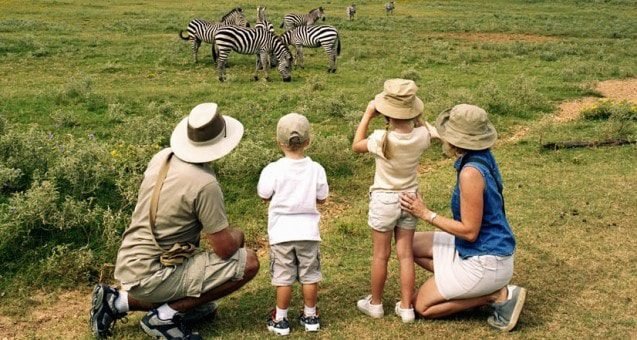
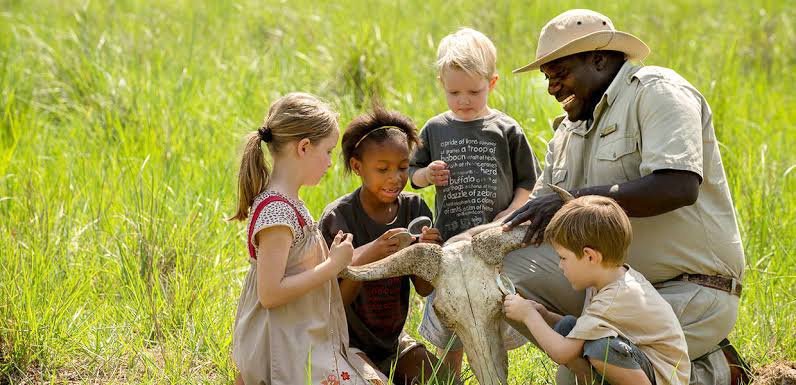
The key to creating a successful Uganda Safari with Children is not trying to fit every famous attraction into one trip. Young travelers generally enjoy wildlife more when days are varied, road journeys are broken into manageable stages and there is enough time for swimming, resting, eating and simply enjoying the lodge. A private family safari can therefore be far more comfortable than a rigid group itinerary because departure times, rest stops, meals and activities can be adapted around the children. A good family journey might include zebras in Lake Mburo, elephants and hippos in Queen Elizabeth National Park, chimpanzees for eligible older children in Kibale and mountain gorillas for teenagers aged 15 and above.
Nextgen Safaris can design an Uganda Safari with Children around the ages of the children, the family’s available travel time, preferred accommodation category and the activities that genuinely interest everyone. Families with toddlers require a very different itinerary from families traveling with teenagers, so age should influence everything from driving distances and room configurations to the choice of national parks and daily activities.
Is Uganda Good for a Safari with Children?
Yes, Uganda can be an excellent destination for families because many of its signature wildlife experiences are naturally suited to children. Game drives allow families to search for wildlife from a safari vehicle, while boat excursions provide a more relaxed way to observe animals and birds from the water. Uganda Wildlife Authority currently promotes game drives and boat cruises in several national parks, including Murchison Falls, Queen Elizabeth and Lake Mburo, creating plenty of safari experiences that do not require strenuous walking.
Children often respond particularly well to safari days with variety. Spending an entire week completing long game drives can become tiring, but Uganda allows parents to alternate driving with boat trips, scenic stops and shorter activities. A morning searching for elephants can be followed by an afternoon boat cruise, while another day might involve seeing zebras before continuing to a lodge with time to relax. This variety is one of the strongest reasons to plan an Uganda Safari with Children instead of treating the family safari as a smaller version of an adult itinerary.
What Ages Are Best for an Uganda Safari with Children?
There is no single perfect age for a family safari because most savannah wildlife experiences can be enjoyed by children of many ages when the itinerary is appropriate. Families traveling with younger children should normally emphasize shorter game drives, boat safaris, comfortable lodges and manageable transfer days. Older children can generally participate in longer wildlife activities and may be more interested in birdwatching, photography, animal behavior and conservation.
Age becomes particularly important for primate trekking. Under Uganda Wildlife Authority’s July 2024 gorilla and chimpanzee tracking guidelines, the minimum age for gorilla tracking is 15 years, while the minimum age for chimpanzee tracking is 12 years. Families should therefore never book a gorilla-focused itinerary assuming younger children will simply be allowed to participate once they arrive.
A successful Uganda Safari with Children should instead provide worthwhile alternatives. If parents and an older teenager undertake gorilla trekking, younger children can remain with an appropriately arranged caregiver or participate in another suitable activity organized in advance. The same principle applies in Kibale when some children are below the official chimpanzee tracking age.
Gorilla Trekking on an Uganda Safari with Children
Mountain gorilla trekking is one of Uganda’s greatest wildlife experiences, but it requires careful family planning. Uganda Wildlife Authority’s current tracking guidelines set the minimum age at 15 years, which means eligible teenagers can potentially trek with their parents in Bwindi Impenetrable National Park or Mgahinga Gorilla National Park.
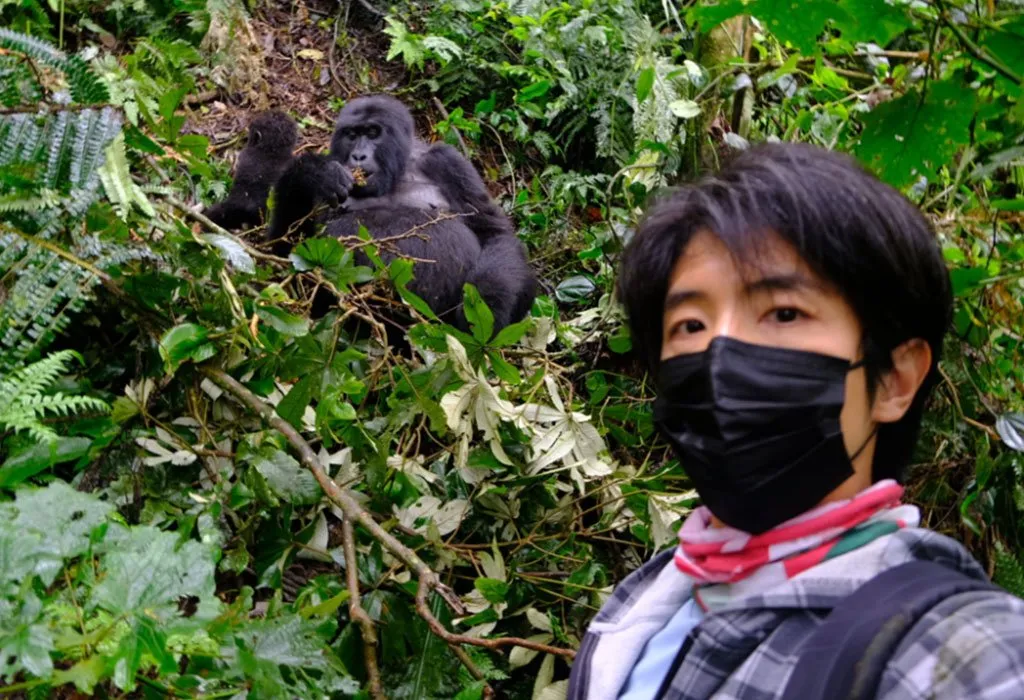
For a family with teenagers, gorilla trekking can become the emotional highlight of an Uganda Safari with Children. The experience involves entering mountain forest with professional trackers and guides and walking until the assigned habituated gorilla family is located. The trek can be physically demanding because the terrain may include slopes, mud, roots and dense vegetation, so being old enough does not automatically mean every teenager will find the activity easy.
Families should discuss fitness honestly before booking permits. A 15-year-old who regularly hikes may enjoy the challenge greatly, while another teenager of the same age may struggle with several hours of forest walking. Proper hiking footwear, long trousers, rain protection and a manageable daypack should be part of the preparation.
For children under 15, the itinerary should never create the feeling that they have simply been excluded from the most important day of the holiday. Families can plan a suitable parallel experience and then spend the remainder of the afternoon together at the lodge.
Bwindi Impenetrable National Park for Families
Bwindi Impenetrable National Park is the leading destination for families whose eligible teenagers want to experience mountain gorilla trekking. The forest is one of Uganda’s major gorilla habitats, and a visit introduces children to a completely different ecosystem from the savannah parks.
Families should normally avoid arriving in Bwindi late at night and trekking early the following morning. Spending sufficient time around the forest gives everyone a chance to rest before the trek and makes the experience considerably less stressful. The location of the lodge should also correspond with the assigned trekking area because an unnecessarily long drive before an early-morning briefing is particularly inconvenient when traveling as a family.
A three-night stay can work beautifully for an Uganda Safari with Children. The first day is for arrival, the second can contain the gorilla trek for eligible family members and the third can provide time together before moving onward. Families with younger children can use the same period for selected age-appropriate experiences while the trekking members are in the forest.
Chimpanzee Tracking with Children in Kibale
Kibale National Park is another outstanding primate destination, but families need to understand its separate age restriction. Uganda Wildlife Authority’s current published gorilla and chimpanzee management guidelines specify a minimum age of 12 years for chimpanzee tracking and viewing. This differs from gorilla trekking, where the minimum age is 15.
For eligible children and teenagers, chimpanzee tracking can be fascinating because the experience feels much more dynamic than observing wildlife from a vehicle. Chimpanzees are vocal and mobile, and families may hear calls through the forest before seeing the animals. Kibale is Uganda’s best-known chimpanzee tracking destination, with a large habituated community around the Kanyanchu area.
Parents should still consider their children’s walking ability. Being 12 or older satisfies the age requirement, but forest walking can still involve uneven ground and changing weather. Younger family members who cannot participate should have another plan arranged rather than waiting without a meaningful activity.
Queen Elizabeth National Park – Excellent for Families
Queen Elizabeth National Park is one of the strongest destinations for an Uganda Safari with Children because families can experience abundant wildlife largely from the comfort of their safari vehicle or a boat. Uganda Wildlife Authority describes it as an exceptionally biodiverse safari destination containing open landscapes, wetlands and abundant wildlife.
Game drives give children opportunities to search for elephants, buffaloes, antelopes, warthogs and predators while learning how to identify wildlife. Giving children binoculars can make the experience much more interactive because they become active participants rather than simply passengers waiting for adults to point out animals.
Queen Elizabeth also fits well geographically between Kibale and Bwindi. Families can therefore build a logical western Uganda circuit in which chimpanzees, savannah wildlife and gorillas are connected without excessive backtracking. This makes the park especially useful for families with older children and teenagers.
Kazinga Channel Boat Safari with Children
The Kazinga Channel experience can become one of the most enjoyable activities on an Uganda Safari with Children because it provides a break from driving while keeping wildlife at the center of the day. Families can remain seated while observing hippos, birds and other animals around the water, creating a more relaxed safari environment than another several-hour vehicle excursion. Queen Elizabeth National Park’s waterways are among its defining wildlife habitats.
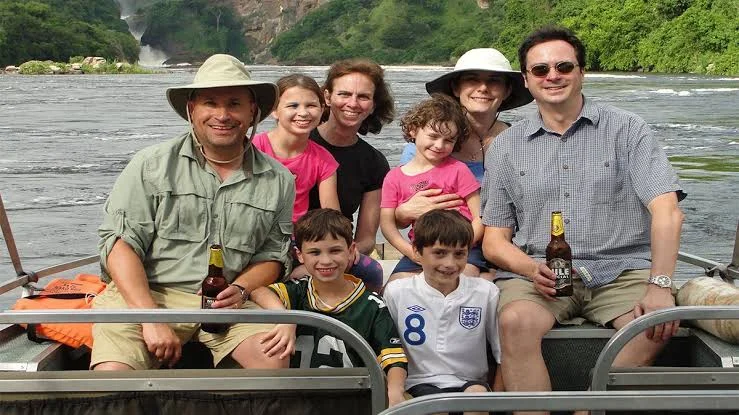
Children often enjoy boat safaris because wildlife encounters can happen continuously along the banks and in the water. Hippos are especially memorable for younger travelers, while older children may become interested in crocodiles, waterbirds and animal behavior.
For families, alternating a morning game drive with an afternoon boat safari is generally more enjoyable than scheduling two lengthy game drives on the same day. It creates variety while still delivering a full wildlife experience.
Murchison Falls National Park with Children
Murchison Falls National Park is an excellent choice for families wanting a traditional wildlife safari combined with the Nile. Uganda Wildlife Authority promotes both game drives and boat cruises as key experiences within the park, giving families several ways to explore without depending on long walks.
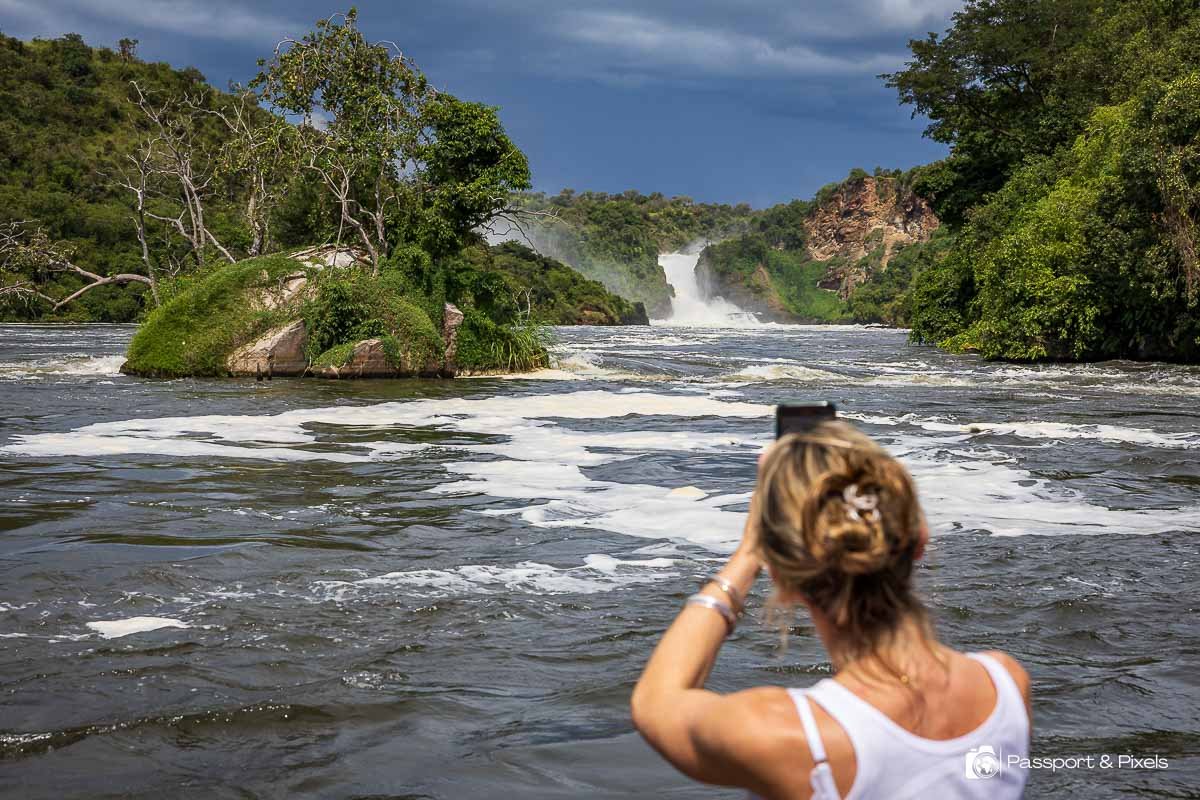
Children can look for giraffes, elephants, buffaloes and other savannah wildlife during game drives before experiencing an entirely different environment along the Nile. The river journey can be particularly engaging for children because hippos, crocodiles, waterbirds and other animals may appear along the way.
The main consideration is travel time. Murchison lies north of Kampala, while many other major family safari destinations lie in western and southwestern Uganda. Families attempting to combine Murchison, Kibale, Queen Elizabeth and Bwindi should therefore allow enough days rather than squeezing the complete circuit into one week.
Lake Mburo National Park – One of the Best Parks for Younger Children
Lake Mburo National Park is particularly useful when planning an Uganda Safari with Children because it is relatively accessible from Kampala and provides several styles of wildlife viewing. Uganda Wildlife Authority highlights game drives, boat safaris and guided walking safaris, and the park is especially well known for zebras and impalas.
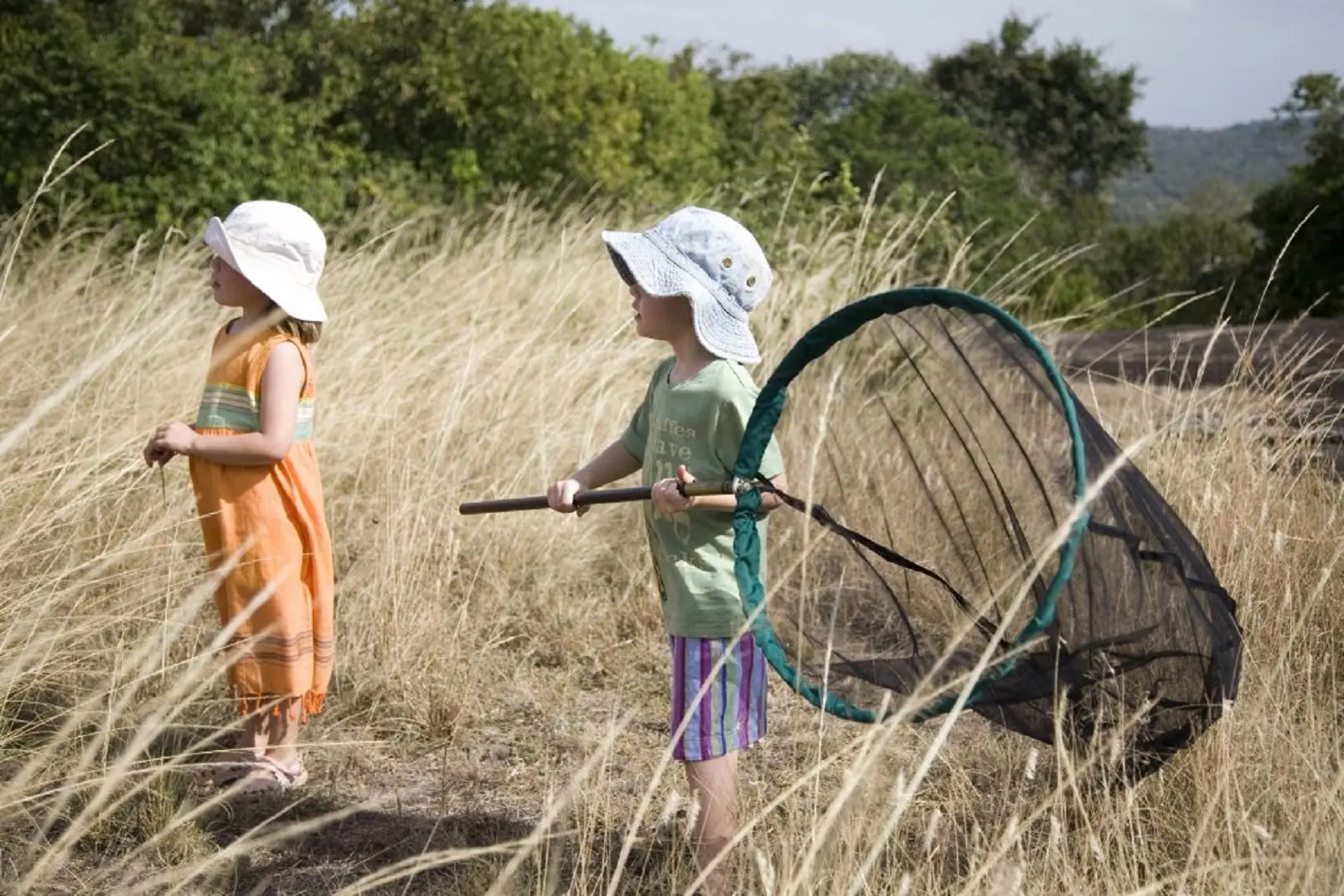
Zebras can be particularly exciting for younger children because they are instantly recognizable, while the park’s smaller scale can make wildlife outings feel more manageable than extremely long safari days. Families can concentrate on vehicle and boat activities when traveling with younger children and consider other experiences only when age, park rules and family comfort make them appropriate.
Lake Mburo also works wonderfully as the final safari stop on the journey from southwestern Uganda toward Entebbe. Instead of completing one very long drive after Bwindi, families can break the journey with another night surrounded by wildlife.
Kidepo Valley National Park for Adventurous Families
Kidepo Valley National Park can be spectacular for families with older children who have more time available. Uganda Wildlife Authority highlights the park’s remote wilderness, lions, elephants, buffaloes, birdlife and distinctive northeastern landscapes.
The challenge for a family itinerary is distance. Kidepo lies far from Uganda’s main western gorilla and chimpanzee circuit, so attempting to include it alongside Bwindi, Queen Elizabeth and Kibale can create too much road travel unless the holiday is long or flights are used strategically.
Families with teenagers who enjoy wilderness and photography may find Kidepo extraordinary. Families with very young children or limited travel time will generally obtain a better balance by concentrating on western Uganda, where destinations can be connected more logically.
Best Wildlife to See on an Uganda Safari with Children
Children can encounter an extraordinary range of animals during an Uganda Safari with Children. Depending on the parks included, families may see elephants, giraffes, zebras, buffaloes, hippos, crocodiles, antelopes, monkeys and numerous bird species, while eligible older children can add chimpanzees and mountain gorillas. Lake Mburo is particularly associated with zebras, while Queen Elizabeth and Murchison Falls deliver more extensive savannah wildlife experiences.
The best family safari should avoid turning wildlife into a checklist. Children often remember unusual behaviors more vividly than simply counting species: an elephant using its trunk, a hippo opening its mouth, monkeys playing or zebras moving together across the plains.
A knowledgeable private guide can make these moments educational without turning the holiday into a classroom. Stories about tracks, animal behavior and ecosystems can help children understand what they are seeing while keeping the experience engaging.
Make Game Drives Shorter and More Interesting for Children
Long game drives can be exciting for adults but exhausting for young children. Families should therefore consider shorter wildlife outings with breaks rather than automatically scheduling six or eight continuous hours in a vehicle.
Morning drives can focus on finding wildlife while children are fresh and interested, followed by breakfast, lunch or lodge time. Another shorter activity can then be planned later. The exact rhythm depends on the park and wildlife priorities, but flexibility should always be built into an Uganda Safari with Children.
A private vehicle makes this much easier. Parents are not forced to remain on a game drive because unrelated guests want another two hours, and the guide can adapt stops around family needs whenever park rules and logistics permit.
Choose a Private Safari Vehicle for Families
Private transportation is one of the most valuable upgrades for a family safari. Children need restroom stops, snacks and movement breaks more frequently than adults, while parents may want to return to the lodge when younger children become tired.
With a private vehicle, the guide becomes dedicated to the family rather than dividing attention among several unrelated travelers. Children can ask questions freely, parents can organize belongings more easily and the safari does not depend on a large group’s schedule.
Longer road journeys also become more comfortable because the family can stop when necessary. For this reason, Nextgen Safaris can structure an Uganda Safari with Children around private 4×4 transportation rather than expecting young travelers to adapt to a fixed shared itinerary.
Choosing Family-Friendly Safari Lodges
The best family safari lodge is not always the most expensive property. Parents should consider room configuration, location, meal flexibility, safe spaces for children and the distance between rooms and the main lodge. Family rooms, adjoining rooms or suitable multi-bed arrangements can make a substantial difference.
Location is equally important. A lodge requiring an additional two hours of driving every activity day may look attractive online but make the actual holiday unnecessarily tiring. Around gorilla areas, accommodation should be coordinated with the permit location, while savannah lodges should ideally provide practical access to the main game-viewing areas.
Families with very young children should also ask about lodge-specific child policies before confirmation. Individual properties may have their own rules for pools, walking around unfenced grounds, dining arrangements and occupancy, and these can change over time.
Safety on an Uganda Safari with Children
Wildlife safaris require children to follow instructions carefully because national parks contain wild animals rather than controlled zoo environments. Parents should reinforce the guide’s instructions about remaining inside vehicles when required, keeping appropriate distances from wildlife and avoiding independent movement around safari lodges.
Many safari properties are located in or near wildlife areas, so children should never assume that lodge grounds are the same as a conventional city hotel. Families should follow each property’s escort and movement rules, particularly after dark.
Health preparation should also be completed before departure. Parents should discuss travel vaccinations, malaria prevention and any child-specific medical considerations with a qualified travel-health professional well before the journey. Medication, allergies and dietary requirements should be communicated to the safari operator and relevant lodges in advance.
Meals and Snacks During a Family Safari
Food can strongly influence how well children enjoy a safari. Parents should communicate allergies, vegetarian requirements, intolerances and other dietary needs before arrival so lodges have time to prepare suitable alternatives.
Children may also become hungry between standard meal times, especially after early safari departures. Carrying suitable snacks and drinking water in the vehicle can make long travel days much easier.
A good Uganda Safari with Children should also avoid scheduling every dinner extremely late. Families with younger children may prefer earlier meals, and private arrangements can sometimes make this easier depending on the lodge.
What to Pack for an Uganda Safari with Children
Packing for children should emphasize comfort rather than fashion. Lightweight clothing works well for many safari days, while a warmer layer is useful for early mornings and higher-altitude destinations. Comfortable closed shoes, sun hats, sunscreen and rain protection should be included according to the season and activities.
Eligible teenagers undertaking gorilla or chimpanzee trekking need proper walking shoes, long trousers, long sleeves and suitable rain protection because primate tracking takes place in natural forest terrain. UWA’s tracking rules and guidelines emphasize controlled access to these wildlife encounters, including specific minimum ages.
Binoculars can be one of the best things to give children on safari. A simple wildlife notebook or camera can also encourage them to identify animals, remember sightings and become more involved in the journey.
Parents should also pack familiar essentials rather than assuming every preferred child product will be easy to purchase near remote national parks.
Best Time for an Uganda Safari with Children
Uganda can be visited throughout the year, but family travel dates are often influenced by school holidays. The ideal period depends on the parks, activities and family’s tolerance for rain rather than one universally perfect month.
Families planning gorilla or chimpanzee trekking should remember that these forest experiences involve natural terrain regardless of the season. Chimpanzee experiences operate year-round, although conditions and animal movements can vary.
For families, the overall itinerary is often more important than chasing perfect weather. A well-paced holiday with two-night stays and manageable drives will usually be more enjoyable than a rushed itinerary during a supposedly ideal safari month.
Uganda Safari with Toddlers and Young Children
An Uganda Safari with Children under about six years old should usually be simpler and slower. Parents can concentrate on Lake Mburo, Queen Elizabeth or selected Murchison experiences where wildlife can be seen from vehicles and boats instead of building the trip around trekking.
Long travel days should be minimized. Two or three nights in each destination gives young children time to settle into unfamiliar surroundings and prevents the family from packing every morning.
Parents should also build free time into the itinerary. A child may enjoy watching monkeys around the lodge grounds or drawing animals after lunch just as much as completing another scheduled safari activity.
Uganda Safari with Children Aged 7 to 11
Children in this age range can often become highly engaged with wildlife when given opportunities to participate. Binoculars, wildlife lists, photography and guide-led animal identification can make game drives much more interesting.
They remain below Uganda Wildlife Authority’s current minimum age of 12 for chimpanzee tracking and 15 for gorilla tracking, so a family safari should focus on wildlife parks, boats, suitable nature experiences and cultural activities rather than building expectations around primate trekking.
Queen Elizabeth and Lake Mburo are particularly useful because families can combine several types of wildlife activity without requiring difficult forest trekking. Murchison Falls can also be excellent when the overall itinerary allows enough time for the northern route.
Uganda Safari with Teenagers
Teenagers can experience a much broader version of Uganda. From age 12, they may meet UWA’s minimum age requirement for chimpanzee tracking, while those aged 15 and above may qualify for mountain gorilla trekking.
This makes a teenage family safari potentially extraordinary. Kibale can introduce chimpanzees, Queen Elizabeth provides game drives and boat wildlife, and Bwindi can deliver the mountain gorilla encounter. Older teenagers interested in photography, conservation or biology may find the journey especially meaningful.
Physical ability should still be considered. Age eligibility does not guarantee that a child will enjoy several hours of strenuous forest trekking, so families should discuss fitness and expectations before permits are purchased.
How Many Days Are Best for an Uganda Safari with Children?
A 5- to 7-day Uganda Safari with Children works well when families concentrate on two or three destinations. For younger children, Lake Mburo and Queen Elizabeth can create a particularly manageable wildlife itinerary, while families with eligible teenagers can build a shorter route around Queen Elizabeth and Bwindi.
Around 8 to 10 days provides a better pace for families wanting Kibale, Queen Elizabeth and Bwindi. This gives enough time to avoid changing accommodation every night and allows rest periods between major activities.
A 12- to 14-day family safari can incorporate Murchison Falls before continuing through western Uganda. Longer journeys should use the additional days to slow the pace rather than simply adding as many destinations as possible.
Suggested 7-Day Uganda Safari with Children
A seven-day Uganda Safari with Children can begin in Entebbe before traveling toward Lake Mburo National Park. Lake Mburo provides zebras, impalas, game drives and boat-based wildlife experiences while being one of Uganda’s more accessible savannah parks.
The family can then continue toward Queen Elizabeth National Park for two or three nights, combining shorter game drives with a boat safari and plenty of time at the lodge.
Families with teenagers aged 15 or above can continue toward Bwindi for gorilla trekking, while families with younger children can use the final days for additional wildlife and scenic experiences instead. The itinerary should always be adjusted around the actual ages of the children.
Suggested 10-Day Uganda Safari with Children
Ten days allows families to include more of Uganda without making the journey excessively rushed. Begin with a relaxed Entebbe arrival before traveling toward Kibale. Children aged 12 and above who are comfortable with forest walking may participate in chimpanzee tracking under current UWA minimum-age rules.
Continue to Queen Elizabeth National Park for game drives and a boat safari before traveling south toward Bwindi. Teenagers aged 15 and above may qualify for gorilla trekking, while younger family members follow a pre-arranged alternative program.
After Bwindi, Lake Mburo can provide a final, more relaxed wildlife stop before the family returns toward Entebbe. This route combines rainforest, savannah and water-based safari experiences without forcing the family to cross the entire country repeatedly.
How Much Does an Uganda Safari with Children Cost?
The cost of an Uganda Safari with Children depends on family size, the ages of the children, number of travel days, accommodation category, room configuration, transportation and specialist activities such as gorilla and chimpanzee trekking. Families with teenagers participating in primate activities will naturally have different costs from families traveling with young children whose itinerary focuses primarily on game drives and boat safaris.
Accommodation also has a major influence on price because some families require multiple rooms while others can use family cottages or interconnected units. Private safari transportation creates another cost, but it usually provides significant practical value when traveling with children.
Parents should therefore request a family-specific quotation rather than trying to estimate the trip from an adult per-person safari price. Nextgen Safaris can structure the journey according to the children’s ages and use accommodation that provides an appropriate balance between comfort and overall budget.
Why a Private Uganda Family Safari Works Better
A private safari gives parents the flexibility to respond to their children rather than forcing children to follow a predetermined group schedule. If a child becomes tired, hungry or needs a break, the family has far greater control over the day.
Private guiding also allows the safari to become educational in a natural way. A guide can spend more time explaining animals that interest the children, help identify tracks or birds and answer the continuous questions that often make family travel so enjoyable.
For this reason, the quality of an Uganda Safari with Children depends as much on the guide and daily pacing as it does on the number of famous parks included.
Is an Uganda Safari with Children Worth It?
Yes. An Uganda Safari with Children can be an extraordinary family experience because it gives young travelers an opportunity to encounter wildlife within functioning natural ecosystems rather than only through screens or zoos. Uganda’s national parks provide game drives, boat safaris, birdlife, primates and landscapes that can appeal to very different ages and interests.
The strongest family safari is the one designed around the children who are actually traveling. Younger children may remember zebras, hippos and boat rides most vividly, while teenagers may return home talking about chimpanzees or mountain gorillas. Parents can experience the same wildlife while watching their children discover Africa for the first time.
Uganda therefore works best when families resist the temptation to rush. Fewer destinations, carefully selected lodges, a private vehicle and enough rest can create a much richer holiday than an itinerary designed simply to collect national parks.
Frequently Asked Questions About Uganda Safari with Children
Is Uganda a good destination for an Uganda Safari with Children?
Yes, an Uganda Safari with Children can be an excellent family holiday because the country combines game drives, boat safaris, primates, beautiful scenery and comfortable safari lodges. Families can see elephants, giraffes, zebras, buffaloes, hippos, lions, monkeys and many bird species across different national parks. The strongest Uganda Safari with Children should be planned around the children’s ages, with shorter driving days, enough rest time and activities that keep younger travelers interested rather than following an adult safari schedule.
What is the best age for an Uganda Safari with Children?
There is no single perfect age for an Uganda Safari with Children because game drives and many boat-based wildlife experiences can be enjoyed by families with children of different ages. Younger children generally benefit from shorter game drives and more lodge time, while teenagers can participate in longer activities and more adventurous experiences. Age becomes especially important for primate trekking: Uganda Wildlife Authority’s published guidelines set the minimum age at 15 years for gorilla tracking and 12 years for chimpanzee tracking.
Can children go gorilla trekking in Uganda?
Children can participate in gorilla trekking only when they meet the official minimum-age requirement. Uganda Wildlife Authority currently states that the minimum age for tracking and viewing mountain gorillas is 15 years. Families planning an Uganda Safari with Children should therefore arrange alternative activities and suitable supervision for younger children while parents and eligible teenagers undertake gorilla trekking in Bwindi Impenetrable National Park or Mgahinga Gorilla National Park.
Can children go chimpanzee trekking on an Uganda Safari with Children?
Yes, older children may participate in chimpanzee tracking if they meet Uganda Wildlife Authority’s age requirement. The current published minimum age for chimpanzee tracking and viewing is 12 years, compared with 15 years for gorilla tracking. This makes Kibale National Park an excellent addition to an Uganda Safari with Children traveling with teenagers or older school-age children who are comfortable walking through natural forest terrain.
What are the best national parks for an Uganda Safari with Children?
Some of the best destinations for an Uganda Safari with Children include Queen Elizabeth National Park, Lake Mburo National Park, Murchison Falls National Park, Kibale National Park and Bwindi Impenetrable National Park. Families with younger children may prefer wildlife parks where most experiences involve game drives and boat safaris, while families traveling with eligible teenagers can add chimpanzee and gorilla trekking. The ideal combination should depend on the children’s ages, interests and tolerance for longer road journeys.
Is Queen Elizabeth National Park good for families with children?
Yes, Queen Elizabeth National Park is one of the strongest destinations to include on an Uganda Safari with Children because families can experience wildlife largely from a safari vehicle and on the Kazinga Channel. Children can search for elephants, buffaloes, antelopes, warthogs and other animals during game drives while enjoying a completely different perspective from the water during a boat safari. The combination of vehicle-based and boat-based activities helps keep family safari days varied and reduces the need for strenuous walking.
Is Lake Mburo National Park suitable for an Uganda Safari with Children?
Yes, Lake Mburo National Park can work particularly well on an Uganda Safari with Children, especially for families interested in zebras, antelopes and a relatively relaxed wildlife experience. Its location also makes it useful for breaking the journey between southwestern Uganda and Entebbe. Families can concentrate on suitable game-drive and boat experiences while allowing younger children more time to rest between activities. This makes Lake Mburo an excellent beginning or final stop on a family safari.
How many days are best for an Uganda Safari with Children?
Around 7 to 10 days works very well for many families planning an Uganda Safari with Children. Seven days can concentrate on two or three destinations such as Lake Mburo, Queen Elizabeth and Bwindi, while ten days can comfortably include Kibale, Queen Elizabeth, Bwindi and Lake Mburo. Families wanting Murchison Falls as well should consider approximately 12 to 14 days so the trip does not become dominated by long transfers. For children, a slower safari with fewer destinations is often more enjoyable than trying to visit every national park.
What should children pack for an Uganda Safari with Children?
For an Uganda Safari with Children, pack lightweight comfortable clothes, closed walking shoes, a warm layer for cooler mornings, a sun hat, sunscreen, insect repellent and lightweight rain protection. Children participating in forest trekking should have proper walking shoes, long trousers and long-sleeved shirts. Binoculars can be especially useful because they help children become actively involved in spotting animals. Families should also carry any essential medications, familiar personal items and suitable snacks for longer driving days.
Is an Uganda Safari with Children safe?
An Uganda Safari with Children can be planned safely when families travel with experienced guides and follow national-park and lodge instructions. Children should understand that safari areas contain wild animals and should never leave vehicles or move around lodge grounds without following the guide’s or lodge staff’s directions. Parents should also arrange appropriate travel-health advice before departure and communicate allergies, medications, dietary requirements or other important needs to the safari company in advance.
Should we book a private safari vehicle when traveling with children?
Yes, a private vehicle is highly recommended for an Uganda Safari with Children because it provides much more flexibility than a shared safari. Families can stop when children need a restroom break, snacks or time to stretch, while game drives can sometimes be shortened if younger travelers become tired. A private driver-guide can also spend more time explaining wildlife to children and adapting the safari around their interests. This flexibility can make a major difference to the overall quality of a family trip.
Can an Uganda Safari with Children include gorillas and wildlife?
Yes, an Uganda Safari with Children can combine gorilla trekking with traditional wildlife experiences when some family members meet the age requirements. Parents and teenagers aged 15 or above can potentially undertake gorilla tracking, while younger children follow an alternative program. The family can then travel together through destinations such as Queen Elizabeth National Park or Lake Mburo for game drives and boat experiences, creating a safari that includes something memorable for every age group.
What can younger children do while parents go gorilla trekking?
When planning an Uganda Safari with Children under the gorilla trekking age, families should arrange a suitable alternative activity and supervision in advance. Depending on the lodge, location, child’s age and available services, younger children may spend time at the lodge or participate in an appropriate local or nature-based activity. The exact arrangement should be confirmed before travel rather than assumed on trekking morning. This allows parents to enjoy the gorilla experience while ensuring younger children remain comfortable and properly supervised.
Is an Uganda Safari with Children suitable for teenagers?
Yes, Uganda is particularly rewarding for families traveling with teenagers. On an Uganda Safari with Children aged 12 and above, eligible travelers may participate in chimpanzee tracking, while those aged 15 and above may also meet the minimum age for gorilla tracking. Teenagers can therefore combine chimpanzees, wildlife game drives, boat safaris and, once old enough, mountain gorillas, creating an unusually diverse family adventure.
How can we book an Uganda Safari with Children with Nextgen Safaris?
You can book an Uganda Safari with Children with Nextgen Safaris as a private family itinerary designed around your children’s ages, school-holiday dates, preferred accommodation and the amount of driving your family is comfortable with. The safari can include Queen Elizabeth National Park, Murchison Falls, Lake Mburo, Kibale and Bwindi, with gorilla and chimpanzee activities included only for travelers who meet the applicable age requirements. Nextgen Safaris can structure the journey with private transportation, family-friendly pacing, appropriate accommodation and enough relaxation time to create an enjoyable African safari for both parents and children.
Book Your Uganda Safari with Children with Nextgen Safaris
An Uganda Safari with Children with Nextgen Safaris can be designed specifically around your children’s ages, interests, school-holiday dates, preferred accommodation and the amount of road travel your family is comfortable with. Families can concentrate on easy wildlife viewing in Lake Mburo, Queen Elizabeth and Murchison Falls or create a more adventurous itinerary for older children that includes chimpanzee tracking and mountain gorilla trekking.
Nextgen Safaris can arrange a private 4×4 safari vehicle, professional driver-guide, family-appropriate accommodation, game drives, boat safaris and primate experiences for children who meet the official age requirements. Uganda Wildlife Authority currently sets the minimum age at 12 years for chimpanzee tracking and 15 years for gorilla tracking, making age-specific itinerary design particularly important for families.
Whether you are traveling with young children seeing their first zebra, school-age children fascinated by elephants and hippos, or teenagers ready for their first great-ape trek, the safari can be structured to keep the journey exciting without overwhelming the family.
Book your Uganda Safari with Children with Nextgen Safaris and experience elephants, giraffes, zebras, hippos, spectacular national parks and, for eligible teenagers, Uganda’s extraordinary chimpanzees and mountain gorillas on an amazing family adventure.