
Rwanda Safari in February
Rwanda Safari in February – Amazing Gorilla Trekking & Wildlife Adventure Guide
A Rwanda Safari in February is an excellent way to combine mountain gorilla trekking, Big Five game viewing, chimpanzee tracking, rainforest adventures and the spectacular scenery of the Land of a Thousand Hills. February sits within an interesting seasonal transition in Rwanda. A recent Rwanda Development Board report characterizes December through February as the country’s short dry season, while Visit Rwanda notes that the longer rainy period generally begins around mid-February. In practical terms, travelers can often experience relatively dry conditions during parts of February while still needing to prepare for showers, particularly later in the month and in Rwanda’s mountainous forests.
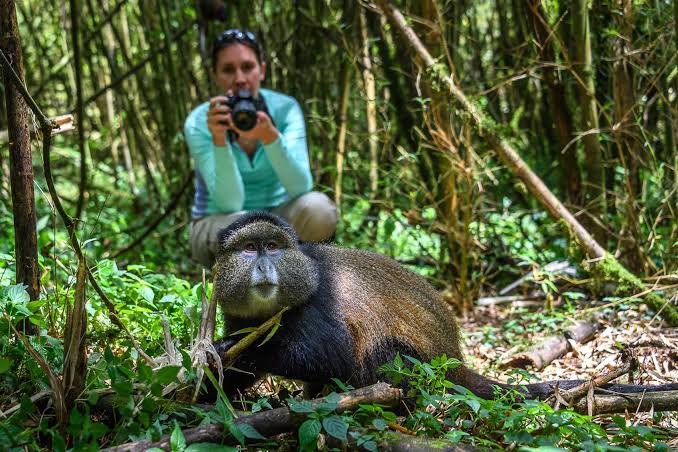
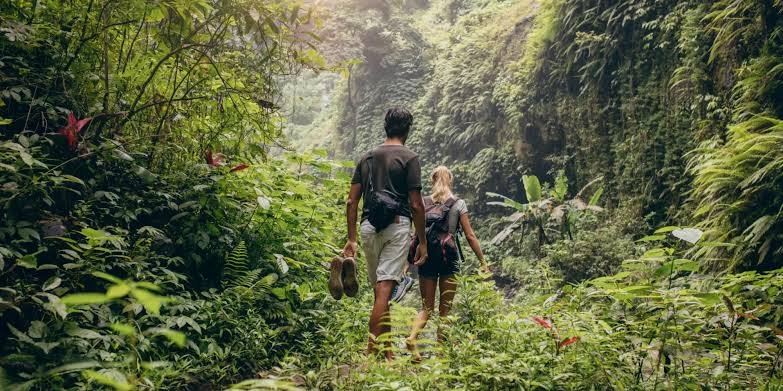
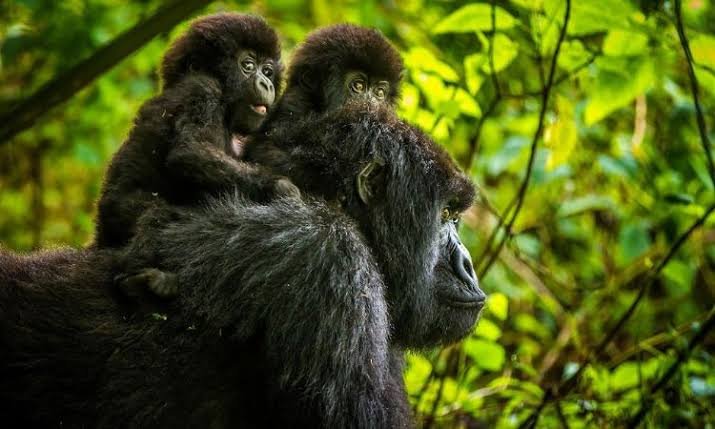
For many travelers, the main reason to plan a Rwanda Safari in February is mountain gorilla trekking in Volcanoes National Park. The protected area in northwestern Rwanda preserves the steep slopes of the Virunga Massif and a mosaic of bamboo forest, evergreen vegetation, grassland, swamp and heath that provides habitat for endangered mountain gorillas. The current standard international gorilla trekking permit costs US$1,500 per person per trek, while the minimum trekking age is 15 years.
February is equally rewarding for travelers who want to experience Rwanda beyond the gorillas. Akagera National Park provides open savannah, woodland, wetlands and lakes where the Big Five and numerous other mammals can be encountered, while Nyungwe adds chimpanzee tracking and the famous canopy walkway. Lake Kivu provides a scenic opportunity to slow down between the forest regions. Rwanda’s official tourism platform itself promotes a nine-day circuit combining Akagera, Nyungwe, Lake Kivu and Volcanoes National Park, demonstrating how naturally these destinations work together.
Is February a Good Time for a Rwanda Safari?
Yes, February is a very good time for a Rwanda safari, particularly for travelers interested in gorilla trekking, wildlife viewing and a complete multi-park journey. The month generally falls within Rwanda’s shorter drier period, although conditions begin becoming more transitional toward the middle and end of February. Rwanda Development Board climate information describes December to February as a short dry season, while Visit Rwanda places the beginning of the longer rainy season around mid-February. Travelers should therefore expect favorable travel conditions alongside the possibility of increasingly frequent showers as the month progresses.
This seasonal position can make a Rwanda Safari in February especially interesting. Early February may feel similar to January, with comparatively dry conditions across many parts of the country, while later February can introduce more cloud, rain and greener landscapes. The weather is not identical throughout Rwanda because Akagera’s eastern plains are warmer and lower than the mountainous regions around Volcanoes National Park and Nyungwe. A traveler can therefore experience warm sunshine on an Akagera game drive and much cooler, wetter conditions while trekking through the Virunga highlands.
February also works particularly well for travelers who want a balanced safari. Rather than flying to Rwanda solely for a one-day gorilla trek, visitors can spend several days moving through distinct ecosystems. Akagera provides classic vehicle-based game viewing, Nyungwe introduces an ancient rainforest environment, Lake Kivu provides scenic relaxation and Volcanoes National Park completes the journey with Rwanda’s signature mountain gorilla experience.
Rwanda Weather in February
Weather is one of the most important considerations when planning a Rwanda Safari in February. A recent Rwanda Development Board environmental report describes December through February as the country’s short dry season, whereas Visit Rwanda states that the longer rainy season begins around mid-February and continues until May. Rather than treating one exact date as a weather switch, travelers should understand February as a transitional month in which conditions can gradually move from comparatively dry toward wetter patterns.
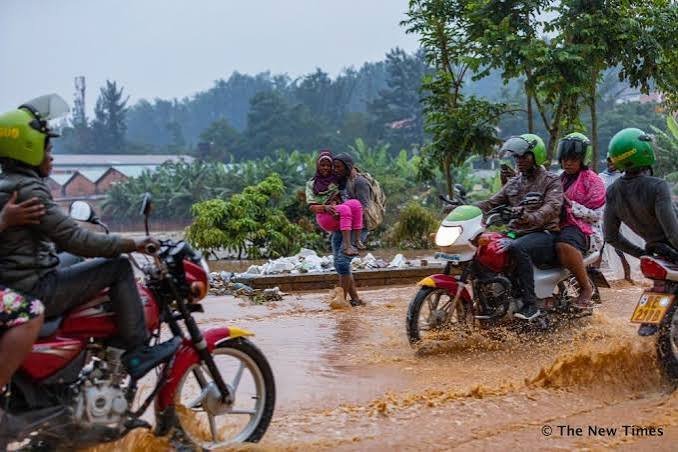
Regional variation is equally important. Akagera National Park occupies relatively warm, low-lying eastern Rwanda, while Volcanoes National Park lies in the elevated northwest. Nyungwe is another highland rainforest environment where rain can occur regardless of the broader seasonal calendar. Visit Rwanda describes Akagera as a warm, low-lying landscape of savannah, woodland, wetland and lakes, while Volcanoes National Park protects steep mountain slopes within the Virunga Massif.
Visitors should therefore pack for changing conditions. Lightweight clothing is useful during warm daytime periods, while evenings can feel considerably cooler. Visit Rwanda recommends light daytime clothing, sun protection and a light sweater for cooler evenings. For forest activities, a lightweight waterproof jacket and dependable hiking footwear should remain part of the packing list even if the safari begins during a dry and sunny week.
Early February vs Late February in Rwanda
There can be a meaningful difference between traveling during early and late February. Early February generally sits more firmly within the short dry-season pattern described by Rwanda Development Board. This can make it attractive for travelers hoping for comparatively easier road conditions and less frequent rainfall while moving between Kigali, Akagera, Nyungwe and Volcanoes National Park.
Late February becomes increasingly transitional because Visit Rwanda places the start of the long rainy season around the middle of the month. This does not mean that every afternoon suddenly becomes wet or that safari activities stop. Instead, visitors should simply expect a greater possibility of showers and potentially muddier forest trails as the month progresses.
Neither period should automatically be considered better. Travelers who prioritize drier conditions may prefer the beginning of the month, while photographers and visitors who enjoy richer green scenery may appreciate later February. Mountain gorillas, chimpanzees and Akagera wildlife remain the central attractions throughout the month, so the quality of the safari depends much more on itinerary design, guiding and individual wildlife encounters than on selecting one exact February week.
Gorilla Trekking in Rwanda in February
Mountain gorilla trekking is usually the highlight of a Rwanda Safari in February. The activity takes place in Volcanoes National Park, where visitors hike with trained guides and trackers through the Virunga environment in search of an assigned habituated gorilla family. Volcanoes National Park protects mountain gorillas among bamboo forest, evergreen vegetation and volcanic highlands dominated by peaks including Karisimbi, Bisoke, Sabyinyo, Gahinga and Muhabura.
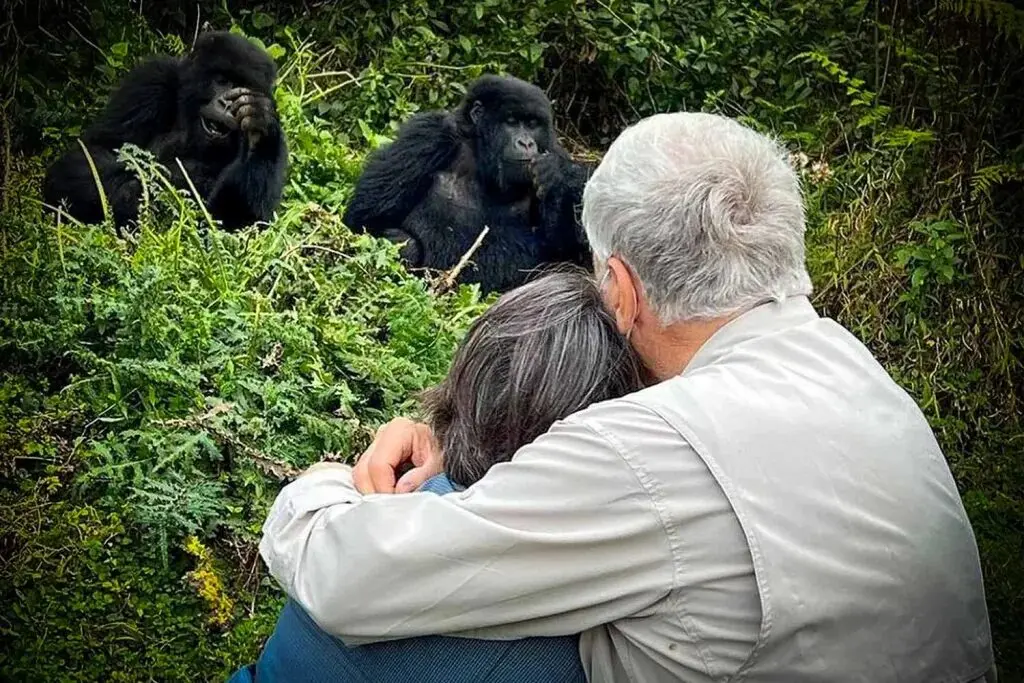
February can offer favorable trekking conditions, particularly earlier in the month, but visitors should never assume the forest will be completely dry. Mountain environments generate localized weather, and gorilla trekking naturally takes place through vegetation that can remain damp even after several rain-free days. Long trousers, long sleeves and sturdy walking boots are therefore valuable regardless of whether the trek is scheduled for February, July or November.
The duration of a gorilla trek cannot be predicted precisely because the animals move naturally throughout their habitat. Some gorilla families may be located after a relatively moderate walk, while others require longer hikes through steep forest. The physical challenge is part of the experience, but travelers can discuss fitness considerations with Nextgen Safaris when planning the itinerary so the journey can be organized realistically.
Once the gorillas are located, visitors experience an extraordinary period observing family interactions in the forest. Watching a silverback protect his group, juveniles play around vegetation or adults calmly feed nearby is one of the most intimate wildlife experiences available in Africa.
Rwanda Gorilla Permit in February
The current standard international permit for gorilla trekking in Rwanda costs US$1,500 per person per day, and participants must be at least 15 years old. Special categories are available for some Rwandan and East African Community residents, but international travelers should budget according to the standard published rate unless they qualify for another category.
A Rwanda Safari in February should ideally be planned around the confirmed gorilla permit rather than treating the trek as something to arrange after hotels have already been booked. Gorilla permits are date-specific, meaning the rest of the itinerary should flow logically around the confirmed trekking day.
Nextgen Safaris can arrange the permit as part of a private Rwanda safari and then coordinate accommodation near Volcanoes National Park, road transfers and additional destinations. This approach is particularly useful for travelers adding Akagera, Nyungwe or Lake Kivu because it avoids unnecessary changes later in the booking process.
Travelers planning two separate gorilla treks should likewise secure both dates before finalizing the full route. A second trek can provide an entirely different family encounter, but each trek requires its own permit and should therefore be considered carefully within the overall safari budget.
Golden Monkey Tracking in February
Golden monkey tracking is an excellent addition to a Rwanda Safari in February, especially for travelers staying two or three nights around Volcanoes National Park. Rwanda promotes golden monkeys alongside its wider primate-tracking experiences, giving visitors another opportunity to explore the Virunga forest after their mountain gorilla trek.
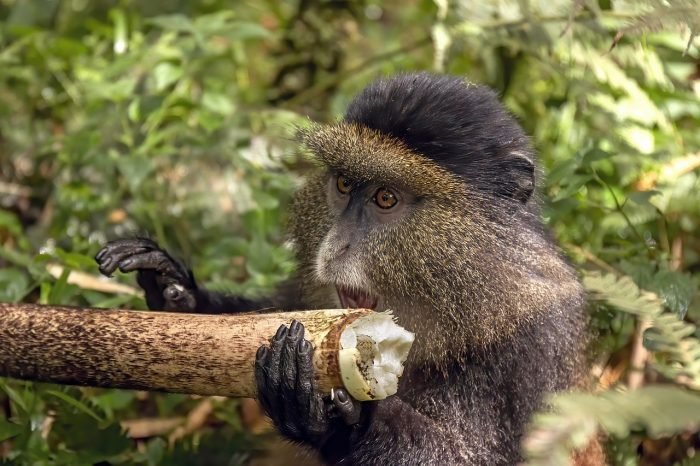
The experience differs considerably from gorilla trekking. Golden monkeys are smaller, highly active primates that often move quickly through bamboo vegetation. Their constant movement creates an energetic trekking and photography experience and provides a strong contrast to the quieter moments travelers often experience when sitting near a mountain gorilla family.
Adding golden monkey tracking can also improve the pace of a Volcanoes stay. Rather than arriving one afternoon, trekking gorillas the following morning and immediately returning to Kigali, visitors can spend several nights around the Virunga region and experience more of northern Rwanda.
Akagera National Park Safari in February
Akagera National Park gives a Rwanda Safari in February the classic African safari experience that many travelers want alongside gorilla trekking. The park consists of savannah, woodland, wetlands and around a dozen lakes, creating excellent habitat diversity. Visitors may encounter buffaloes, elephants, giraffes, zebras, antelopes, baboons, monkeys and numerous bird species during game drives.
Akagera is also once again home to the Big Five following conservation-led reintroductions of lions and eastern black rhinos. Rwanda’s official tourism information confirms that lions have bred successfully and that black rhinos were restored to the ecosystem, allowing travelers to search for lion, leopard, elephant, buffalo and rhino within the same national park.
February can be an attractive month for Akagera because the park’s eastern location usually feels warmer than Rwanda’s mountainous regions. The relatively open landscapes also create a completely different safari atmosphere from Volcanoes and Nyungwe. Travelers can spend one day watching large mammals from a safari vehicle and another walking through highland forest in search of primates.
Wildlife sightings should always be treated realistically. Even though Akagera contains the Big Five, there is never a guarantee of seeing all five species on one drive. A quality safari should also appreciate giraffes, zebras, antelopes, primates, birds and the broader landscape.
Game Drives in Akagera in February
Game drives are one of the best ways to experience Akagera during February. The park’s mixture of plains, woodland and wetland means longer drives can move through several ecological zones, increasing the variety of wildlife and scenery encountered. Its largely open character makes it particularly suitable for traditional vehicle-based game viewing.
Early departures can be especially enjoyable because temperatures are usually comfortable and wildlife may be active before the heat increases. Guides search different habitats for giraffes, elephants, buffaloes, zebra herds, antelopes, predators and other wildlife while interpreting animal behavior and the landscape.
For a well-paced Rwanda Safari in February, spending two nights in Akagera is generally stronger than attempting to drive from Kigali, complete a safari and immediately begin another transfer. Two nights provide more time for a proper game drive and allow travelers to experience the park without treating it as a rushed stop.
Big Five Safari in Rwanda in February
Rwanda’s ability to combine mountain gorillas and the Big Five is one of the country’s strongest safari advantages. Akagera contains lion, leopard, elephant, buffalo and rhino, while Volcanoes National Park protects the mountain gorillas that have made Rwanda internationally famous.
A Rwanda Safari in February can therefore provide a surprisingly complete wildlife journey. Travelers do not have to choose between traditional savannah game viewing and primate trekking. Instead, the itinerary can begin in Akagera and progress toward Rwanda’s mountainous western and northern regions.
The real value is the contrast. Open plains and safari vehicles give way to ancient rainforest, volcanic mountains and trekking on foot. Within one relatively compact destination, travelers can experience dramatically different versions of African wildlife tourism.
Chimpanzee Tracking in Nyungwe in February
Nyungwe provides another important primate experience for travelers extending their Rwanda Safari in February. Chimpanzees are found in Nyungwe National Park, where they live in social communities and move through the forest in search of food. Rwanda also has smaller chimpanzee populations in Gishwati, but Nyungwe remains one of the major destinations promoted for chimpanzee tracking.
Chimpanzee trekking feels very different from gorilla trekking. Chimps are extremely mobile and may move rapidly between trees and across sections of forest. Visitors may hear vocalizations before seeing the community, and the tracking experience can involve active walking while guides interpret movements and calls.
February travelers should prepare for possible wet conditions, especially toward the second half of the month. Nyungwe is a rainforest regardless of the national seasonal calendar, so sturdy footwear and rain protection remain essential.
Combining Nyungwe chimpanzees with Volcanoes mountain gorillas creates one of the strongest primate-focused safari routes in Africa. Golden monkey tracking can add a third distinctive primate encounter for travelers with enough time.
Nyungwe Canopy Walkway in February
The Nyungwe Canopy Walkway is one of the best activities to combine with chimpanzee tracking. The suspension bridge extends approximately 160 metres and reaches around 70 metres above the forest, giving visitors a remarkable elevated perspective over part of the rainforest. It can be accessed on guided routes that include the Igishigishigi Trail.
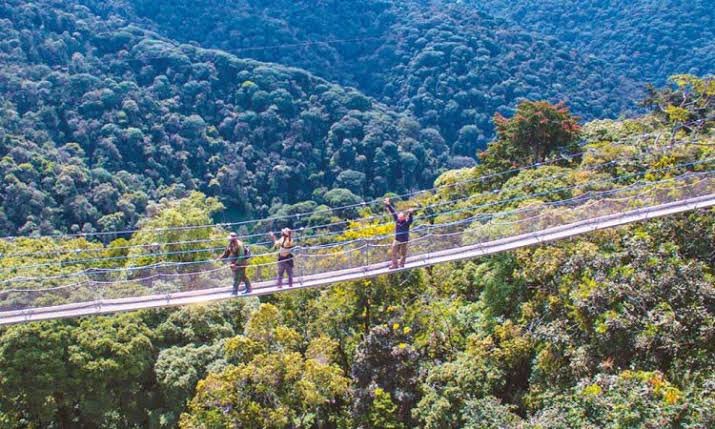
The canopy experience allows travelers to appreciate Nyungwe differently from a chimpanzee trek. Instead of concentrating primarily on locating primates, visitors can observe forest structure, scenery, plants and birdlife while walking through one of Rwanda’s most important natural environments.
A two-night Nyungwe stay is usually preferable. Travelers can dedicate one morning to chimpanzees and another part of the stay to the canopy walkway rather than trying to combine a major road transfer and several demanding activities within one day.
Lake Kivu in February
Lake Kivu provides a natural relaxation point within a longer Rwanda Safari in February. Located in western Rwanda and surrounded by mountainous scenery, the lake can be integrated between Nyungwe and Volcanoes National Park, creating a more comfortable progression through the western side of the country.
Rwanda’s official nine-day national park circuit combines Akagera, Nyungwe, Lake Kivu and Volcanoes National Park, showing the practical value of using Lake Kivu as part of a complete Rwanda route rather than viewing it as an isolated beach destination.
Travelers can spend time enjoying the landscape or add selected activities such as kayaking. Visit Rwanda notes that Lake Kivu’s water temperatures remain between approximately 23°C and 27°C throughout the year, supporting recreational experiences along the lake.
Including a lakeside stay can make the safari feel less rushed. After chimpanzee tracking or before mountain gorilla trekking, a slower afternoon overlooking Lake Kivu gives travelers time to recover and appreciate Rwanda beyond its national parks.
Kigali During a Rwanda Safari in February
Kigali serves as the main arrival and departure gateway for most February safaris. For travelers arriving after a long international flight, spending the first night in the city can create a much more comfortable beginning than immediately starting a long road transfer.
Kigali also works strategically within Rwanda’s safari circuit. Akagera lies east of the capital, while Volcanoes National Park is reached by traveling north. Rwanda’s official six-day safari and gorilla itinerary combines two days in Akagera, a day in Kigali and a Volcanoes National Park gorilla experience, illustrating how easily these regions can be linked.
Depending on flight schedules, travelers can also reserve part of the final day for Kigali sightseeing, shopping or lunch before transferring to Kigali International Airport. This creates a gentler ending than returning from a national park immediately before an international departure.
Rwanda Safari in February for Birdwatching
Birdlife can be another major attraction during a Rwanda Safari in February, especially when travelers combine Akagera and Rwanda’s forest destinations. Akagera alone has around 490 recorded bird species, supported by its mixture of wetlands, woodland, savannah and lakes.
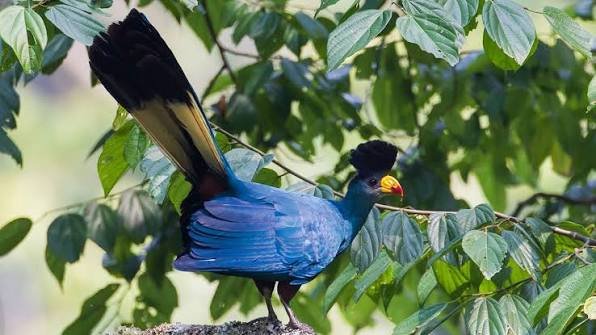
Nyungwe and Volcanoes add entirely different highland and forest habitats, meaning even travelers who are not dedicated birders can encounter impressive species throughout the journey. Carrying binoculars greatly improves the experience, both for birds and for wildlife that may remain some distance from the safari vehicle.
Dedicated birding travelers should allow additional time rather than expecting ordinary game drives to provide the same depth as specialist birding excursions. Rwanda’s ecological variety rewards slower observation.
What to Pack for a Rwanda Safari in February
Packing for a Rwanda Safari in February requires preparation for both warm savannah and cool highland environments. Lightweight clothing works well during warm daytime periods, while a light sweater or fleece is valuable during cooler evenings. Visit Rwanda specifically recommends sun protection such as hats and sunglasses while noting that evenings generally become cooler.
For gorilla and chimpanzee tracking, sturdy hiking boots, long trousers and long-sleeved shirts are among the most useful items. A lightweight waterproof jacket should remain inside the daypack even during an apparently dry period because forest and mountain weather can change rapidly.
Travelers should also consider insect repellent, sunscreen, binoculars, camera equipment and waterproof protection for electronics. Packing several lightweight layers is usually more practical than carrying extremely heavy clothing because temperatures can change significantly as the safari moves from Akagera to higher parts of Rwanda.
Photography During a Rwanda Safari in February
A Rwanda Safari in February offers tremendous photographic variety. Akagera provides open wildlife scenes with giraffes, elephants, zebras and savannah landscapes, while Volcanoes National Park introduces dense forest, mountain gorillas and dramatic Virunga scenery. Nyungwe creates darker rainforest conditions, and Lake Kivu adds broad landscapes and water-based compositions.
Photographers should avoid using one equipment strategy for every destination. Longer lenses can be valuable on Akagera game drives, while primate photography often occurs at much closer distances and beneath lower forest light. Heavy equipment can also become difficult to carry on steep trekking trails.
Most importantly, the gorilla encounter should remain an experience rather than becoming only a photography session. Spending some of the viewing period simply observing the animals without constantly looking through a camera can make the trek much more memorable.
Rwanda Safari in February for Families
A Rwanda Safari in February can work very well for families when the itinerary is structured according to the ages of the children. Akagera is particularly attractive because most wildlife viewing takes place from a safari vehicle, allowing children to experience giraffes, elephants, zebras and other animals without strenuous trekking.
Families planning gorilla trekking must remember that Rwanda’s official minimum age is currently 15 years. Younger children cannot participate in the standard gorilla trek, so alternative arrangements need to be planned while adults and eligible teenagers enter Volcanoes National Park.
Family itineraries should also avoid unnecessary movement. Spending two nights in Akagera and two or three nights around Volcanoes generally creates a more comfortable experience than changing hotels every day. Families with additional time can include Lake Kivu or Nyungwe according to the children’s interests and fitness levels.
Rwanda Safari in February for Couples and Honeymooners
February can be particularly attractive for couples because Rwanda naturally combines adventure with slower scenic experiences. A mountain gorilla trek can become the emotional highlight of the journey, while Akagera introduces private wildlife viewing and Lake Kivu creates space for relaxation between more active safari days.
A honeymoon Rwanda Safari in February should not necessarily include every possible attraction. A carefully paced itinerary with several nights in selected destinations usually feels far more luxurious than constantly packing and checking out of lodges.
Couples with around seven days can combine Akagera and Volcanoes, while those with nine or ten days can add Nyungwe and Lake Kivu. The official Rwanda national park circuit demonstrates that all three national parks and Lake Kivu can be incorporated into one coherent journey.
Luxury Rwanda Safari in February
Rwanda is exceptionally well suited to luxury safari travel. A luxury Rwanda Safari in February can combine private guiding, carefully selected accommodation and a slower travel pace through Akagera, Nyungwe, Lake Kivu and Volcanoes National Park.
The strongest luxury itinerary is not simply the itinerary containing the most expensive lodges. True value comes from smooth logistics, privacy, excellent guiding and enough time to enjoy each location. Spending several nights around Volcanoes, for example, allows travelers to relax after gorilla trekking rather than immediately beginning another road transfer.
Gorilla permit availability should still anchor the itinerary. Because the permit is date-specific and currently costs US$1,500 for international visitors, accommodation and trekking dates should be coordinated rather than booked independently.
How Many Days Are Best for a Rwanda Safari in February?
A short Rwanda Safari in February of three to four days works well for travelers primarily interested in mountain gorilla trekking. Such a route normally includes Kigali, Volcanoes National Park, the gorilla trek and perhaps golden monkey tracking before returning to the capital.
Around six to seven days gives travelers significantly more variety. Rwanda’s official six-day itinerary combines Akagera National Park, Kigali and Volcanoes National Park with gorilla tracking, demonstrating that savannah wildlife and gorillas can be included comfortably within approximately one week.
Travelers with nine to ten days can create a more complete journey involving Akagera, Nyungwe, Lake Kivu and Volcanoes National Park. Visit Rwanda publishes a nine-day “National Park Trio plus Lake Kivu” circuit featuring the Big Five, gorillas and chimpanzees.
The best itinerary is therefore determined by priorities. Gorilla-focused visitors need only a few days, while travelers wanting to understand Rwanda’s wildlife diversity should allow at least a week.
Suggested 7-Day Rwanda Safari in February
A rewarding seven-day Rwanda Safari in February can begin with arrival in Kigali and a relaxed overnight stay before traveling east to Akagera National Park. Spending two nights in Akagera provides enough time for a meaningful game drive and a proper introduction to Rwanda’s savannah wildlife.
The safari can then travel across Rwanda toward Volcanoes National Park. Two or three nights around the Virunga region allow travelers to complete the mountain gorilla trek and optionally add golden monkey tracking before returning to Kigali.
This route is especially strong for first-time visitors because it focuses on two dramatically different ecosystems without making the week unnecessarily complicated. Akagera provides Big Five wildlife and classic safari landscapes, while Volcanoes provides the mountain gorillas that represent Rwanda’s most celebrated wildlife experience.
Suggested 10-Day Rwanda Safari in February
Travelers with ten days can experience Rwanda much more comprehensively. The Rwanda Safari in February can begin in Kigali before continuing to Akagera for game drives and wildlife viewing. From eastern Rwanda, the route can cross toward Nyungwe National Park for chimpanzee tracking and the canopy walkway.
After Nyungwe, continue toward Lake Kivu for a slower scenic stay before traveling north to Volcanoes National Park. Mountain gorilla trekking can form the grand finale of the journey, with golden monkey tracking added for travelers wanting another Virunga primate experience.
This route closely follows Rwanda’s established tourism circuit connecting Akagera, Nyungwe, Lake Kivu and Volcanoes National Park. Visit Rwanda describes its nine-day version as an epic circuit featuring the Big Five, gorillas, chimpanzees and more.
Rwanda Safari in February Cost
The cost of a Rwanda Safari in February depends on the number of travel days, accommodation category, number of guests, transportation arrangements and activities included. Mountain gorilla trekking represents one of the major fixed expenses because the standard international permit currently costs US$1,500 per person per trek.
A short Kigali and Volcanoes itinerary will naturally cost less than a longer circuit including Akagera, Nyungwe and Lake Kivu. Accommodation category can also create major price differences, particularly between comfortable mid-range properties and premium luxury lodges.
Travelers comparing quotations should therefore evaluate the actual inclusions rather than looking only at the final price. Gorilla permits, chimpanzee activities, park fees, accommodation, meals, private transportation and professional guiding can make two seemingly similar safari quotations very different.
Should You Book a Rwanda Safari in February Early?
Early planning is recommended when gorilla trekking is an essential part of a Rwanda Safari in February. Gorilla permits are issued for specific trekking dates, and travelers with fixed international flights have much less flexibility if their preferred date is unavailable.
Confirming the gorilla trek first makes the rest of the planning easier. Akagera, Nyungwe, Lake Kivu and Kigali can then be arranged around the fixed Volcanoes date in the most logical geographical order.
Early booking is also particularly useful for families requiring several rooms, couples wanting specific luxury properties and travelers planning more than one gorilla trek. It gives Nextgen Safaris greater flexibility to build a smooth itinerary rather than designing the journey around limited remaining availability.
Is a Rwanda Safari in February Worth It?
Yes. A Rwanda Safari in February is absolutely worth considering, particularly for travelers who want a good balance between generally favorable travel conditions and Rwanda’s major wildlife experiences. February sits within the short dry-season period described by Rwanda Development Board while also transitioning toward the rains around the middle of the month according to Visit Rwanda, creating an interesting mixture of comparatively dry travel and increasingly green scenery.
Rwanda’s greatest advantage is diversity. Akagera provides Big Five wildlife and open savannah, Nyungwe delivers chimpanzees and rainforest adventure, Lake Kivu offers scenic relaxation and Volcanoes National Park provides mountain gorilla trekking. These destinations can be linked efficiently within one relatively compact country.
For travelers with approximately seven to ten days, February can therefore provide a remarkably complete African wildlife holiday without forcing visitors to choose between gorillas, chimpanzees and traditional game viewing.
Frequently Asked Questions About Rwanda Safari in February
1. Is February a good time for a Rwanda Safari in February?
Yes, a Rwanda Safari in February can be an excellent choice for travelers interested in mountain gorillas, chimpanzees, Big Five wildlife and scenic travel across Rwanda. February often offers relatively favorable conditions for road travel and outdoor activities, especially earlier in the month. A Rwanda Safari in February can comfortably combine Volcanoes National Park, Akagera National Park, Nyungwe National Park, Lake Kivu and Kigali in one well-planned journey.
2. What is the weather like during a Rwanda Safari in February?
Weather during a Rwanda Safari in February can be relatively dry at the beginning of the month, with rainfall becoming more possible as the month progresses. Akagera is generally warmer, while Volcanoes National Park and Nyungwe can feel cooler because of their higher elevations. Travelers planning a Rwanda Safari in February should pack lightweight safari clothing, a warm layer, sturdy walking shoes and a waterproof jacket for changing conditions.
3. Can I go gorilla trekking on a Rwanda Safari in February?
Yes. Gorilla trekking is one of the main highlights of a Rwanda Safari in February and takes place in Volcanoes National Park. February can provide good trekking conditions, although the mountain environment means rain, mud and slippery trails are still possible. Travelers booking a Rwanda Safari in February should reserve their gorilla trekking date early and prepare with hiking boots, long trousers, long sleeves and suitable rain protection.
4. What wildlife can I see on a Rwanda Safari in February?
A Rwanda Safari in February can include mountain gorillas, chimpanzees, golden monkeys, elephants, buffaloes, giraffes, zebras, lions, rhinos, antelopes and numerous bird species. Akagera National Park offers the strongest traditional savannah wildlife experience, while Volcanoes National Park is famous for gorillas and golden monkeys. Nyungwe adds chimpanzees and other forest primates, making a Rwanda Safari in February suitable for both classic wildlife and primate enthusiasts.
5. Can I visit Akagera National Park during a Rwanda Safari in February?
Yes. Akagera National Park is one of the best destinations to include on a Rwanda Safari in February. Travelers can enjoy game drives across savannah, woodland, wetland and lakeside habitats while searching for elephants, buffaloes, giraffes, zebras, lions, rhinos and other wildlife. Combining Akagera with Volcanoes National Park gives a Rwanda Safari in February an excellent balance between Big Five-style game viewing and mountain gorilla trekking.
6. Can I visit Nyungwe during a Rwanda Safari in February?
Yes. Nyungwe National Park is an excellent addition to a Rwanda Safari in February, particularly for travelers interested in chimpanzee tracking, rainforest walks and the canopy walkway. Forest trails can still be wet even during relatively drier periods, so sturdy footwear and waterproof clothing remain important. Combining Nyungwe and Volcanoes creates a primate-focused Rwanda Safari in February featuring chimpanzees, golden monkeys and mountain gorillas.
7. How many days are best for a Rwanda Safari in February?
The ideal length of a Rwanda Safari in February depends on the number of destinations and activities you want to include. Three or four days can work for a short gorilla trekking trip, while six to seven days can combine Akagera National Park and Volcanoes National Park. Travelers wanting Akagera, Nyungwe, Lake Kivu and Volcanoes should consider around nine to ten days for a more complete Rwanda Safari in February.
8. What should I pack for a Rwanda Safari in February?
For a Rwanda Safari in February, pack sturdy hiking boots, long trousers, long-sleeved shirts, comfortable safari clothing, a lightweight waterproof jacket, sunscreen and insect repellent. A warm layer is useful for mornings and evenings around Volcanoes National Park and Nyungwe. Binoculars, a camera and waterproof protection for electronics can also improve the experience during a Rwanda Safari in February.
9. How much does a Rwanda Safari in February cost?
The cost of a Rwanda Safari in February depends on trip duration, accommodation category, group size, private transportation and the activities included. Gorilla trekking, chimpanzee tracking, Akagera game drives and luxury accommodation can significantly influence the total safari price. Nextgen Safaris can customize a Rwanda Safari in February according to your budget, preferred accommodation level and the destinations you want to explore.
10. How can I book a Rwanda Safari in February?
You can book a Rwanda Safari in February with Nextgen Safaris as a short gorilla trekking safari, a seven-day wildlife and gorilla journey or a longer complete Rwanda circuit. Your Rwanda Safari in February can include Kigali, Akagera National Park, Nyungwe National Park, Lake Kivu and Volcanoes National Park. Nextgen Safaris can customize the itinerary around your travel dates, budget, accommodation preferences and preferred wildlife experiences.
Book Your Rwanda Safari in February with Nextgen Safaris
A Rwanda Safari in February can be customized by Nextgen Safaris according to your travel dates, budget, preferred accommodation and the wildlife experiences you want to prioritize. Your journey can be designed as a short mountain gorilla safari or expanded into a complete Rwanda circuit connecting Kigali, Akagera National Park, Nyungwe National Park, Lake Kivu and Volcanoes National Park.
Nextgen Safaris can arrange private safari transportation, professional driver-guides, accommodation, Akagera game drives, Nyungwe chimpanzee tracking, the canopy walkway, Lake Kivu stays, golden monkey tracking and mountain gorilla trekking. Rwanda’s current standard international gorilla permit costs US$1,500 per person per trek, making permit availability one of the first elements that should be confirmed when designing the trip.
Whether you prefer a three-day gorilla adventure, a seven-day wildlife and gorilla safari, a complete nine- or ten-day Rwanda circuit, a family trip, honeymoon or private luxury journey, Nextgen Safaris can structure the itinerary around a realistic pace while taking February’s changing seasonal conditions into account.
Book your Rwanda Safari in February with Nextgen Safaris and experience mountain gorillas, chimpanzees, Big Five wildlife, Lake Kivu and Rwanda’s breathtaking landscapes on an amazing African safari.